
The usual prestige playbook breaks down when your school is small, there’s no AOA, and you’re aiming at derm, ortho, plastics, ENT, neurosurg, rad onc, or similar. You cannot “brand-name” your way in. You have to manufacture credibility from scratch.
Good news: it’s absolutely doable. Bad news: it’s not accidental. You need a deliberate, borderline obsessive strategy.
Let’s walk through what you do if this is actually your situation: small class, no AOA, gunning for a hyper-competitive field.
Step 1: Get brutally clear on what programs really see and care about
First, stop telling yourself stories about what “must” matter. Think like the PD reviewing your file at 10:30 pm with 50 more applications left.
Here’s what they actually see:
- School name and class size
- No AOA line anywhere (for you or anyone else at your school)
- USMLE/COMLEX scores
- Clerkship grades / MSPE language
- Research and publications
- Letters of recommendation
- Your personal statement / experiences
- Any away rotations / home department strength
They do not see: “potential,” “nice person,” or “my school doesn’t have AOA so I would have had it.” They see concrete things.
So your job, coming from a small, no-AOA school, is to make the file scream three messages:
- I can handle the academic and clinical intensity here.
- I already live inside this specialty. I’m not dabbling.
- People in this specialty who you trust will vouch for me.
Everything we talk about will feed one of those three.
Step 2: Replace “AOA” with an obvious academic signal
You don’t have AOA. Fine. Then the rest needs to be unambiguous.
If you’re early (pre-M3), this is harsh but true: your margin for error is basically zero.
Target profile that makes PDs forget about AOA:
- Step 2 CK: ideally ≥ 250 for the heavy-hitters (derm, ortho, plastics, ENT, neurosurg). 245+ is workable with strong other pieces.
- Clinical grades: mostly honors in core rotations; especially Medicine and Surgery.
- Class rank / quartile language in MSPE: top third at minimum, top quarter or better is ideal.
If you’ve already taken some hits, stop guessing; map it out against reality.
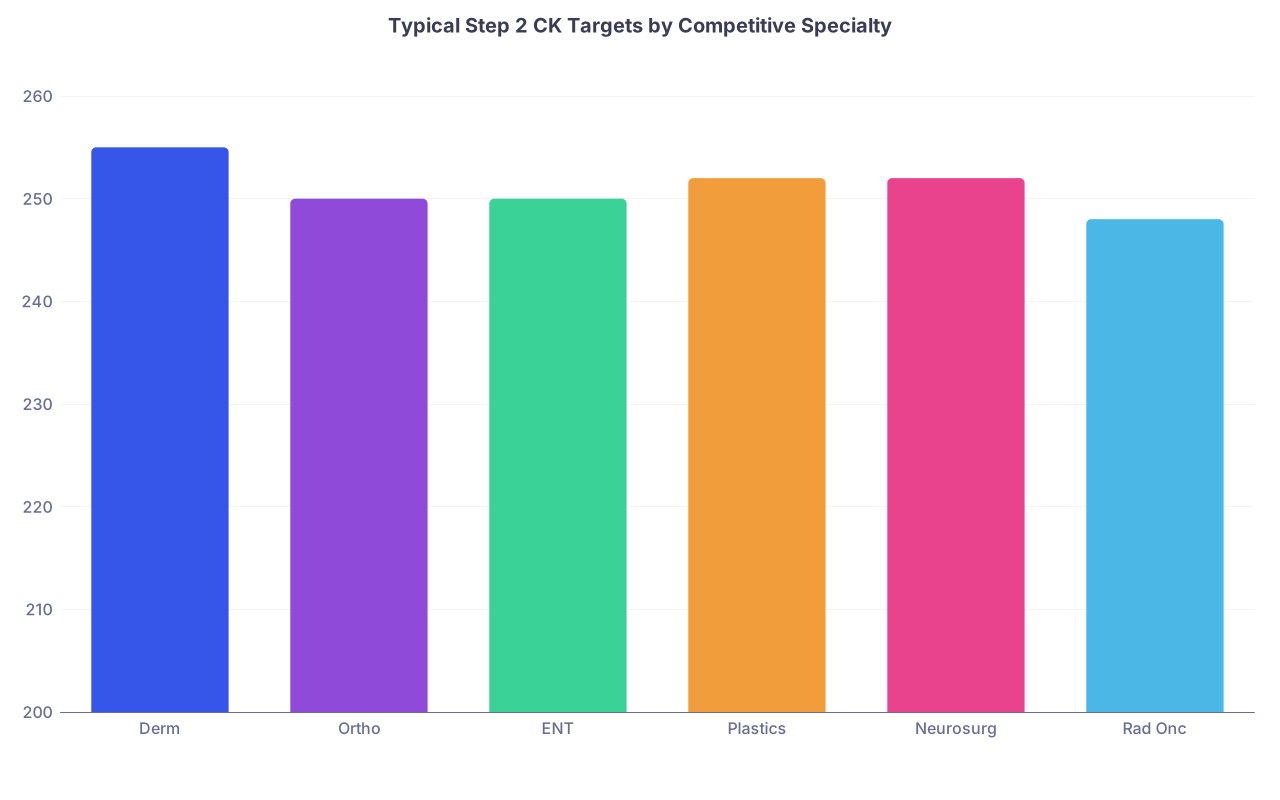
| Category | Value |
|---|---|
| Derm | 255 |
| Ortho | 250 |
| ENT | 250 |
| Plastics | 252 |
| Neurosurg | 252 |
| Rad Onc | 248 |
If your numbers are below those:
- You will need more programs on your list.
- You will need stronger research and letters.
- You may need to recalibrate which subset of that field you’re realistically competitive for (e.g., community-heavy ortho vs. top-5 academic ortho).
Do not waste time whining internally that “if my school had AOA, I’d be in it.” Programs don’t give you credit for hypothetical awards. They care if you look like their current residents on paper or better.
So: if Step 1 is done and Step 2 is ahead, treat Step 2 like your surrogate AOA. Dedicated, structured prep. Schedule it at a time that doesn’t compete with heavy research or your critical clinical rotations.
Step 3: Build a specialty identity early and loudly
From a small, no-AOA school, “I decided on derm in August of fourth year” is a death sentence. You don’t get to be late.
You need to look like “the [specialty] student” by the end of M2 or early M3.
Concrete moves:
- Join the specialty interest group, then actually do something: talk, workshop, journal club. Be visible.
- Find the one or two real specialty faculty at your institution (even if your department is tiny or weak) and become a familiar face. Show up. Ask about projects.
- Attach your name to ongoing research – anything: retrospective chart review, case report, QI project that touches the specialty.
Think “serial exposure,” not one-time events.
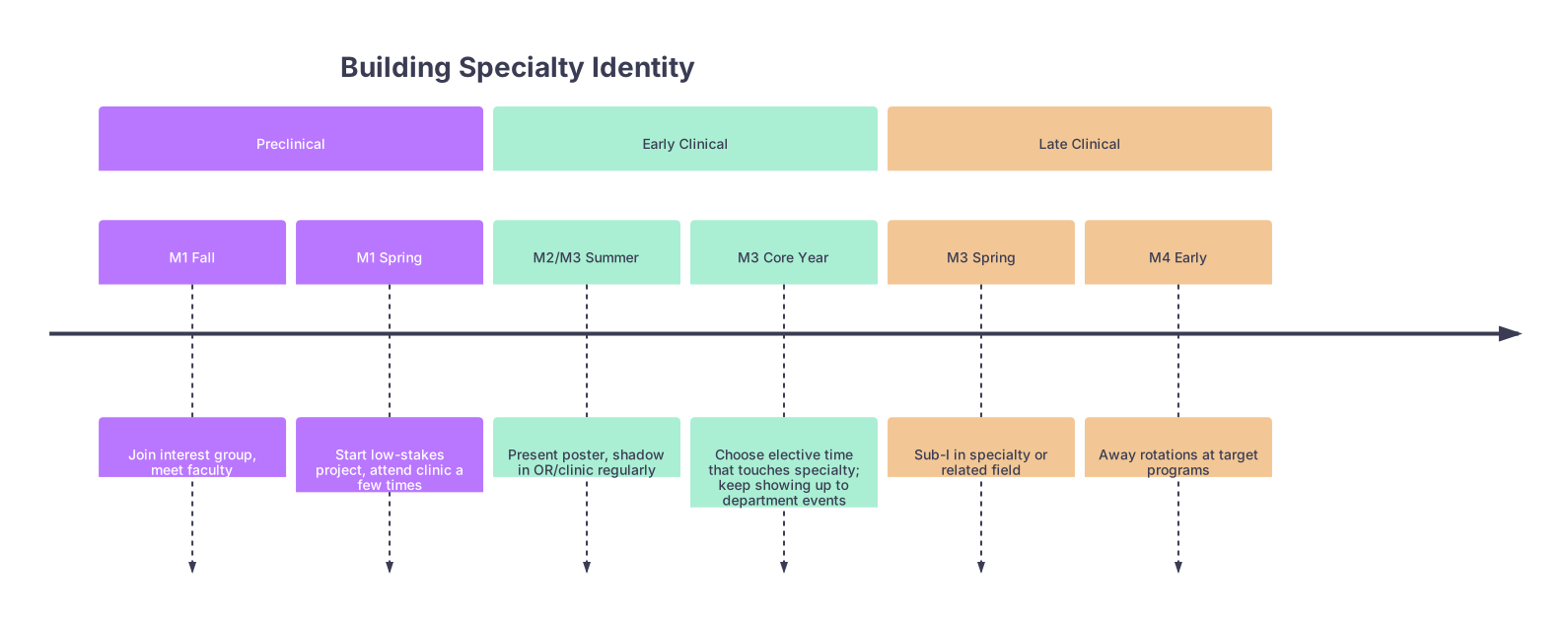
| Period | Event |
|---|---|
| Preclinical - M1 Fall | Join interest group, meet faculty |
| Preclinical - M1 Spring | Start low-stakes project, attend clinic a few times |
| Early Clinical - M2/M3 Summer | Present poster, shadow in OR/clinic regularly |
| Early Clinical - M3 Core Year | Choose elective time that touches specialty; keep showing up to department events |
| Late Clinical - M3 Spring | Sub-I in specialty or related field |
| Late Clinical - M4 Early | Away rotations at target programs |
If your school literally has no home department (e.g., no home derm):
- Attach yourself to adjacent fields: pathology, rheum, immunology for derm; neurology / neurosurg for neurorads; gen surg for surgical subspecialties.
- Use that as your base and start reaching out externally for projects (regional academic centers, alumni at bigger programs, online collaboratives).
Your file needs to prove you didn’t wake up last week and pick this field for the salary.
Step 4: Use research as your “big school” substitute
This is where people from small schools either separate themselves or disappear.
At big-name schools, the environment itself sells you. Where you’re from, the environment does not carry you. Your work has to.
Your goal is not “have research.” Your goal is: when a PD pulls up your PubMed, they pause and say, “Huh. They’ve actually been doing this.”
What that looks like:
- Multiple projects in the specialty or its immediate neighbors.
- At least a few accepted posters / abstracts.
- Ideally 1–2 peer-reviewed publications by the time ERAS hits (doesn’t have to be first-author on all; a mix is fine).
You do not need a basic science PhD-level portfolio, but you need a pattern.
| Metric | Minimum Target | Strong Target |
|---|---|---|
| Specialty-related projects | 2 | 4+ |
| Posters/abstracts presented | 1 | 3+ |
| Peer-reviewed publications | 0–1 | 2+ |
| Non-specialty research | Optional | Nice bonus |
How to get there from a small place:
- Say yes early. M1/M2 you are not too good for chart reviews and case reports. Those are your entry ticket.
- Work fast, be reliable. I’ve seen mediocre students get incredible letters just because they turned things around in 48 hours and actually learned how to do stats in R or clean data.
- Ask to be looped into multi-institutional projects. If your mentor has collaborators, ask, “Is there any way I can help with any of the multicenter work you’re doing?” That’s how your name shows up next to big institutions.
If your home department is weak or nonexistent in research:
- Cold email faculty at nearby academic centers in your state. Lead with specifics: “I read your paper on X; I’m a rising M2 interested in Y. Are there any existing projects I could help with doing [chart review / data collection / lit review]?”
- Use virtual research collaboratives (especially in derm, ortho, neurosurg and EM) – these sometimes actively seek medical student data abstractors.
You’re not trying to become a research god. You’re trying to look like someone who lives in that academic ecosystem, even if your school doesn’t.
Step 5: Letters of recommendation – your real AOA
A strong letter from a known name in the field is worth more than AOA. Read that again.
Your constraint at a small school is that big names are scarce. So you have to be strategic about where you place yourself.
Targets for your letter set for elite programs:
- 1 letter from a nationally visible faculty in the specialty (could be from an away rotation).
- 1 letter from your home specialty department (even if small, shows loyalty and what you’re like longitudinally).
- 1 letter from core clinical faculty (Medicine/Surgery) who can vouch for your work ethic and team function.
- Optional 4th: research mentor in the specialty, especially if they’re known.
To get a powerful letter, you need:
- Face time: clinics, ORs, research meetings, presentations.
- A defined narrative: “This student came in as X and grew into Y; they did Z concrete things.”
- Evidence: mini-presentations, draft sections you wrote, patients you followed.
At big-name places, some letters are “good by default” because of who signed them. You don’t have that luxury. Your writers need actual content.
Action plan:
- Identify 2–3 potential letter writers by early-ish third year.
- Ask them explicitly what you can do over the next 6–12 months to earn a really strong letter. Phrase it that way. Watch how they respond.
- Give them a packet when the time comes: CV, personal statement draft, list of 3–5 specific projects or patients you worked with them on, and your target specialty list.
The quiet, generic letter (“hardworking, pleasant, no concerns”) kills more applications than any missing AOA line.
Step 6: Away rotations – use them as auditions, not vacations
From a small, no-AOA school, aways are not optional ornaments. They’re risk and opportunity combined.
Think of aways as:
- Interview months.
- Live assessment of: can you keep up; are you someone they want around at 2 a.m.; do you fit their culture?
- Your chance to “borrow” the prestige and eyes of bigger institutions.

Practical advice:
- Do 2 aways in your target specialty if possible. Three if your school has no home department and the field is ultra-competitive (like derm, plastics).
- Choose one “reach” big-name academic program and one where your stats are solidly competitive and they historically take outside rotators.
- Time them early enough that letters from those aways can hit ERAS (July–September).
On the rotation:
- Show up early. Know the patient list cold. Be useful without being annoying.
- Volunteer for unsexy tasks: calling consults, chasing down imaging, tracking down outside records. Residents remember the student who saved them an hour more than the one who recited a textbook.
- Find the PD and APD, introduce yourself briefly, and then let your work speak. Do not hover.
Post-rotation:
- Ask directly for feedback. “Do you think I’d be a realistic applicant here?” If they hedge, pay attention.
- If they were enthusiastic, ask if they would feel comfortable writing you a strong letter. If yes, lock that down before you leave.
Good away performance can override the “small school, no AOA” bias in a way few other things can.
Step 7: Compensate for institutional prestige with volume and targeting
You’re not at Hopkins, MGH, UCSF. So you don’t play a “10 apps, see what happens” game. You play a volume and fit game.
For the very competitive specialties coming from your situation, you should be mentally prepared for:
- 60–80+ applications in derm, plastics, ENT, neurosurg.
- 40–60+ in ortho, rad onc, integrated vascular, etc.
Does everyone need those numbers? No. Do you, from a small, no-AOA school, aiming high? Probably.
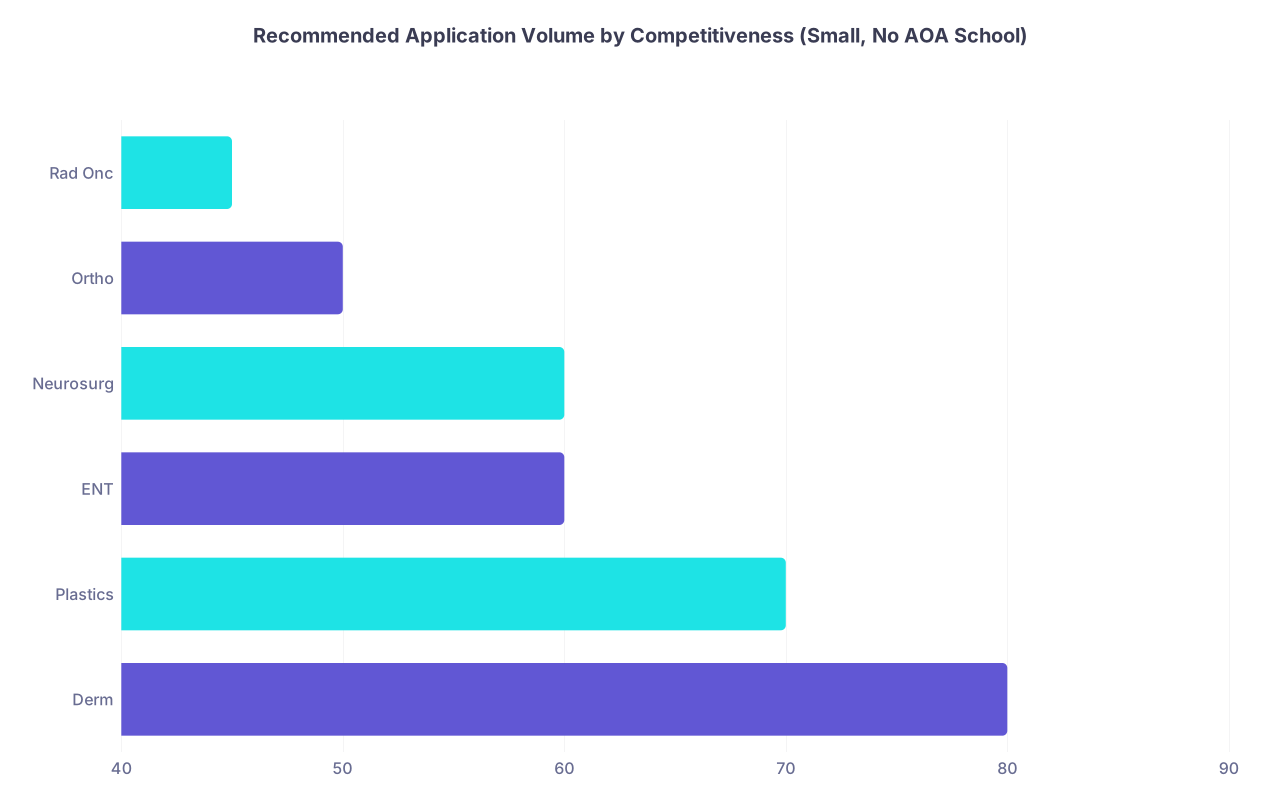
| Category | Value |
|---|---|
| Derm | 80 |
| Plastics | 70 |
| ENT | 60 |
| Neurosurg | 60 |
| Ortho | 50 |
| Rad Onc | 45 |
Targeting matters:
- Identify programs that explicitly say they consider DOs / non-AOA schools / IMGs favorably (even if you’re MD, this mentality helps).
- Look at resident rosters: how many are from low-prestige or small schools? If half their residents are Ivy and top-10, you’re swimming upstream.
- Prioritize places where your research mentors or letter writers have connections. Quiet backchannel emails from faculty matter more than anything on your personal statement.
Bottom line: you hedge risk with both volume and smart selection, not with magical thinking.
Step 8: Own the “no AOA” in your narrative without whining
Programs are not dumb. They know some schools don’t have AOA. They’ve seen it before.
What you must never do: complain, imply you were robbed of AOA, or write explanatory paragraphs about how “if we had AOA, I would have been…” That reads insecure.
What you can do:
- In the MSPE or school’s transcript, there is often a standard line: “Our institution does not have an AOA chapter.” That’s enough.
- In your personal statement or interviews, frame your school positively: small class means you were known personally, had more hands-on responsibility, and could work closely with faculty.
Example framing if asked:
“Our school doesn’t have AOA, so that wasn’t an option. What I can say is that in our internal rankings I’ve been consistently in the top [X%], and my Step 2 score and evaluations reflect the same work ethic I’ve carried throughout.”
Short. Confident. No drama.
Step 9: Fix the “I’m from a small place, can I really do this?” mindset
This part’s not soft. Programs can smell imposter syndrome on interview day.
You’re going to be sitting in a Zoom room or faculty lounge next to students from Stanford, Penn, Columbia, etc. If your internal narrative is “They belong here; I don’t,” you’ll talk and carry yourself like it.
You need a different story: “They had built-in advantages. I had constraints. I still produced this record.”
That’s not arrogance; that’s just factual for a lot of you at small, resource-limited schools.
To get there:
- Write down your actual accomplishments: scores, projects, letters, leadership, specific patients you influenced. Not fluff – real things you did. Look at that list before big interviews.
- Practice talking about your school like a strength: “We had fewer students, so on my surgery rotation I was first-assisting from early on,” instead of “We don’t have many subspecialty services.”
- Stop over-apologizing in emails and conversations. Professional, respectful, but not deferential to the point of sounding like you’re asking permission to exist.
You belong if your work holds up. Full stop.
Step 10: Have a parallel plan that doesn’t destroy you
I’m not going to lie: even with all of this, ultra-competitive fields are a dice roll. You can do everything right and still miss at the very top tier.
The grown-up move is to build a Plan B that you’d genuinely be okay with. Not thrilled maybe, but okay.
That might mean:
- Dual-applying to a related field (e.g., prelim medicine or surgery for one year, transitional years, or another specialty entirely).
- Identifying a range of programs where the main goal is “match somewhere,” not “only match at the top 5.”

If you’re going to dual apply:
- Talk to your mentors early. Some specialties get offended if you’re not all-in; others are realistic. The way you handle the conversation matters.
- Keep your application materials for each specialty distinct enough that they don’t read like copy-paste. PDs talk.
Plan B is not an admission of failure. It’s respect for how brutal the match can be in competitive fields.
Put it all together: what your next 6–18 months should actually look like
Here’s how this might look if you’re, say, end of M2 / start of M3 and serious about a competitive field:
Morning: excel on your current rotation. Show up early, pre-round, know your patients, read at night. Push for honors.
Afternoon/evening: 1–2 hours, 3–5 days a week, on specialty research or independent study for Step 2.
Once a week: show your face in specialty clinic/OR or at least at the department’s conference.
Once a month: meet with your primary specialty mentor to review progress, adjust plans, ask directly, “Where do I realistically stand?”
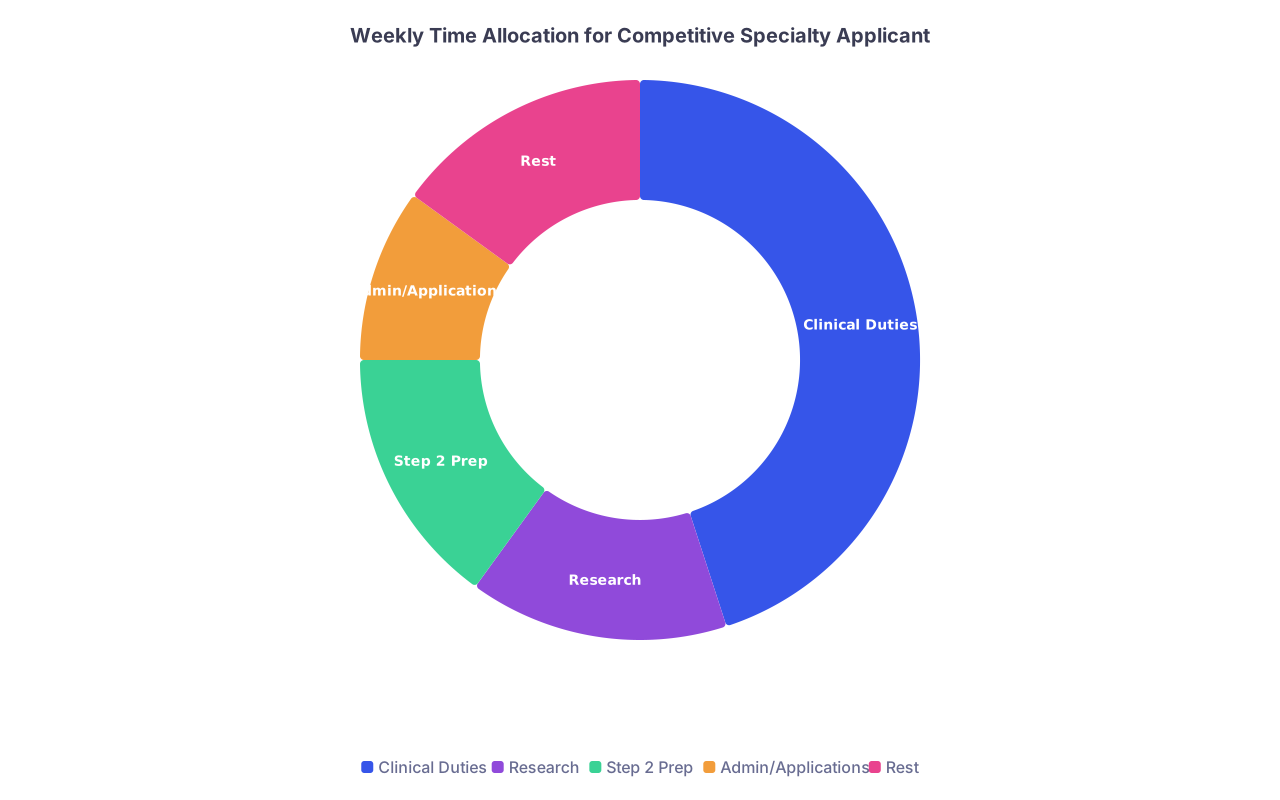
| Category | Value |
|---|---|
| Clinical Duties | 45 |
| Research | 15 |
| Step 2 Prep | 15 |
| Admin/Applications | 10 |
| Rest | 15 |
And yes, you need rest in there or you’ll burn out and start making stupid mistakes.
By the time ERAS opens, you want to be able to say:
- “My Step 2 is done and solid.”
- “I’ve got at least 3 letters lined up, including one or two big names.”
- “I’ve done 1–2 away rotations where I showed I can play at a high level.”
- “My research portfolio shows a clear specialty pattern.”
If you can say that honestly, the lack of AOA and the small school start become just part of your story, not the headline.
Final takeaways
- You compensate for “small class, no AOA” by being unambiguous everywhere else: scores, clinical performance, research, and letters.
- You use research and away rotations to borrow institutional credibility and get trusted people in the field to put their name next to yours.
- You act like you belong – because if you’ve done the work above, you do – while still having a realistic backup plan in your back pocket.