The worst part of a competitive specialty isn’t the match rate. It’s how brutally one bad month can mess with your head.
You’re sitting there thinking: “What if my only away rotation in ortho/derm/ENT/neurosurg/whatever just tanked my entire career?” And honestly, it feels like it did. Like that one attending’s lukewarm evaluation is now tattooed on ERAS forever and every PD is going to point at it and laugh.
Let’s walk straight into the nightmare scenario you’re imagining—and then I’ll tell you where the reality actually stops.
First: No, One Bad Away Doesn’t Automatically End Your Chances
Let me be blunt: programs in competitive fields absolutely care about aways. Some value them a lot. So yes, a bad or mediocre away matters.
But it’s not an automatic “you can never match in this specialty” stamp.
Here’s what programs actually see when they look at you:
- Your home rotation performance
- Your letters (home + away)
- Step 2 score
- Class rank / AOA / honors
- Research output, especially in that field
- Personal statement and story
- Interview performance (if you get there)
That away is one input. A loud one, sure. But still one.
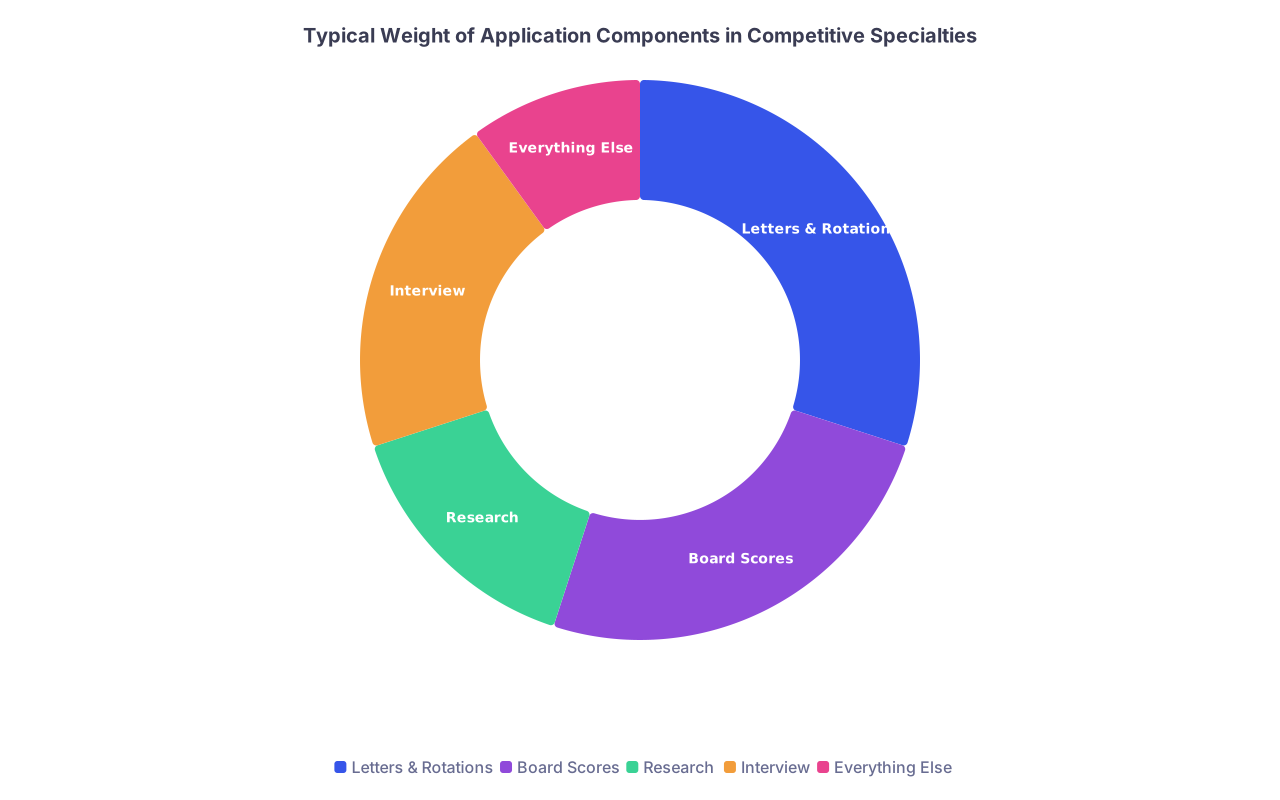
| Category | Value |
|---|---|
| Letters & Rotations | 30 |
| Board Scores | 25 |
| Research | 15 |
| Interview | 20 |
| Everything Else | 10 |
Notice what’s missing in that chart? “That one specific month that lives rent‑free in your head.” It’s rolled into letters and rotations, not the whole pie.
I’ve seen people match ortho with:
- A meh away where they got no interview
- A lukewarm letter replaced last-minute
- A narrative in their application that acknowledged growth after a rough month
Is that ideal? Absolutely not. But it happens. More than anyone on Reddit admits.
What “Went Poorly” Actually Means (And How Bad It Really Is)
When applicants say “my away went badly,” it usually falls into one of a few buckets. Some are survivable. Some are…rougher.

1. The “I Was Invisible” Month
Common in: derm, rad onc, plastics, ENT, ophtho.
You:
- Didn’t mess up majorly
- Weren’t aggressive enough about getting involved
- Didn’t get much facetime with the PD or big‑name attendings
Result:
- Generic or weak letter (“worked hard, pleasant, solid knowledge base”)
- No one strongly advocates for you
Impact:
- You probably just don’t get a big boost from that program
- Other programs won’t look at that and think, “disaster applicant”
- If the letter isn’t actively negative, most places just skim and move on
This is disappointing, not fatal.
2. The “You’re Fine, But Not a Superstar” Month
You:
- Showed up early, stayed late
- Knew the basics but weren’t blowing anyone away
- Maybe struggled with efficiency or OR flow or clinic pace
Result:
- Letter: “hardworking, reliable, would do well in residency” but not glowing
- Might still get an interview, depending on the program’s culture and how competitive you are on paper
Impact:
- You lose the “top tier applicant with killer away” narrative
- You shift into “solid, middle‑of‑the-pack” territory
- Which is still matchable, especially if your home program loves you
3. The “You Annoyed Someone Important” Month
This is the one that keeps people up at night.
You:
- Had visible tension with a chief or attending
- Made one or two comments that landed badly (“at my home program we do it this way,” or worse)
- Came off as disinterested, arrogant, or checked out at times
Result:
- You may get a letter that’s…not great
- That program probably won’t interview you
- If the specialty is very small and toxic, the story might travel
Impact:
- This can hurt, especially in tiny fields (plastics, neurosurg, some ENT circles)
- But even then, people gossip far less than applicants fear
- Most programs are too busy worrying about their own residents to orchestrate your career death
4. The True Nightmare: Red Flag Letter
Rare, but real.
You:
- Had professionalism issues (late repeatedly, talking back, inappropriate comments)
- Disappeared, skipped cases, or acted uninterested
- Said something borderline cruel about patients or staff
Result:
- Explicitly negative or very concerning letter
- Programs may actively avoid you
- Your dean’s office might even warn you about it
Impact:
- This can be damaging across the specialty
- But even then, it doesn’t always close every door
- You may need to pivot to: another away, a different field, or a backup plan
If you’re catastrophizing, ask yourself honestly: which category are you really in?
Most people who say “my away was awful” are in Category 1 or 2. Maybe soft 3. Almost never 4.
What PDs and Residents Actually Think About Aways
Here’s the part no one tells you because it’s not dramatic enough for Reddit.
| Use Case | What It Really Means |
|---|---|
| “Audition” | See if they like you as a coworker |
| Extended interview | Check if you’re normal day-to-day |
| Filter | Weed out people who are obviously not a fit |
| Tie-breaker | Decide between similarly strong applicants |
| Recruitment | Sell their program to good students |
Most PDs are not looking to destroy people. They’re trying to answer:
“Can I stand this person at 3 a.m. when the consults are piling up?”
So if you:
- Were kind to staff
- Didn’t roll your eyes or complain constantly
- Helped your co-rotators when they were drowning
- Owned your mistakes instead of blaming others
You’re already not in the “red flag” bucket.
I’ve heard PDs say versions of:
- “She wasn’t the strongest clinically yet, but I’d trust her in a crisis.”
- “He was a bit quiet but incredibly reliable. We can teach the rest.”
- “Her fund of knowledge was average, but she worked like crazy and never made excuses.”
Those people matched.
Were they the golden children? No. But you don’t have to be golden. You just can’t be radioactive.
Damage Control: What You Can Actually Do Now
You can’t go back and re-do the month. But you’re not helpless.

| Step | Description |
|---|---|
| Step 1 | Bad Away Rotation |
| Step 2 | Focus on Home Rotation |
| Step 3 | Request Different Letter Writers |
| Step 4 | Strengthen Rest of Application |
| Step 5 | Do Second Away Strategically |
| Step 6 | Optimize Research and Personal Statement |
| Step 7 | Ask For Strong Letters |
| Step 8 | Submit ERAS and Apply Broadly |
| Step 9 | Letter Concern? |
| Step 10 | Another Away Possible? |
1. Figure Out What Actually Went Wrong (Not Just In Your Head)
Talk to:
- A trusted resident from that rotation
- Your home program mentor
- Your dean or specialty advisor
Ask them directly:
- “Based on my evals and what you’ve heard, would you use that away letter?”
- “Does anything in my feedback sound like a real red flag or just ‘average’?”
You need signal, not your own anxiety feedback loop.
2. Be Strategic About Letters
If the away letter is:
- Generic but not negative → It can still be used, but don’t rely on it as your anchor
- Lukewarm and you know another attending loves you → Skip it if you can
- Concerning → Do not use it. Ask your dean’s office how to handle it
You want:
- 1–2 strong letters from your home specialty faculty
- 1 away letter that is at least “solid”
- Maybe 1 non-specialty letter (medicine, surgery, etc.) that raves about your work ethic
If someone hesitates when you ask for a letter or says, “Sure, I can write you a supportive letter,” that’s code for: don’t use them if you have other options.
3. If You Can Do Another Away, Treat It Like A Controlled Redemption Arc
I know, you’re thinking: “What if I screw up again?”
But a second away can:
- Provide a better letter
- Show that the first was a fluke
- Help you re-learn how to be a student without flinching every time someone says “feedback”
Key moves on the next one:
- Meet with the clerkship director on Day 1 and say, “I’m really excited to learn and I’d love honest feedback early if there’s anything I can improve.”
- Ask mid-rotation: “Is there anything I can adjust to be more helpful to the team?”
- Don’t compete with co-rotators. Residents notice and they hate it.
And if you physically can’t fit a second away? Then you double down on home performance and everything else.
4. Overcompensate (Productively) in the Rest of Your Application
You don’t fix a weak away by just obsessing over it. You shift the weight of your application.
You can:
- Hammer your home rotation: honor it, crush the shelf, be the resident’s favorite human
- Polish your personal statement so it actually sounds like a person, not ChatGPT 0.5
- Make your CV scream “I’m serious about this field” with research, QI, conferences, posters
- Get your Step 2 as high as reasonably possible without burning out so hard you collapse
There are people who had:
- One brutal away
- One excellent home month
- A strong Step 2
- A couple of meaningful research projects
And they matched. Not everywhere. But somewhere.
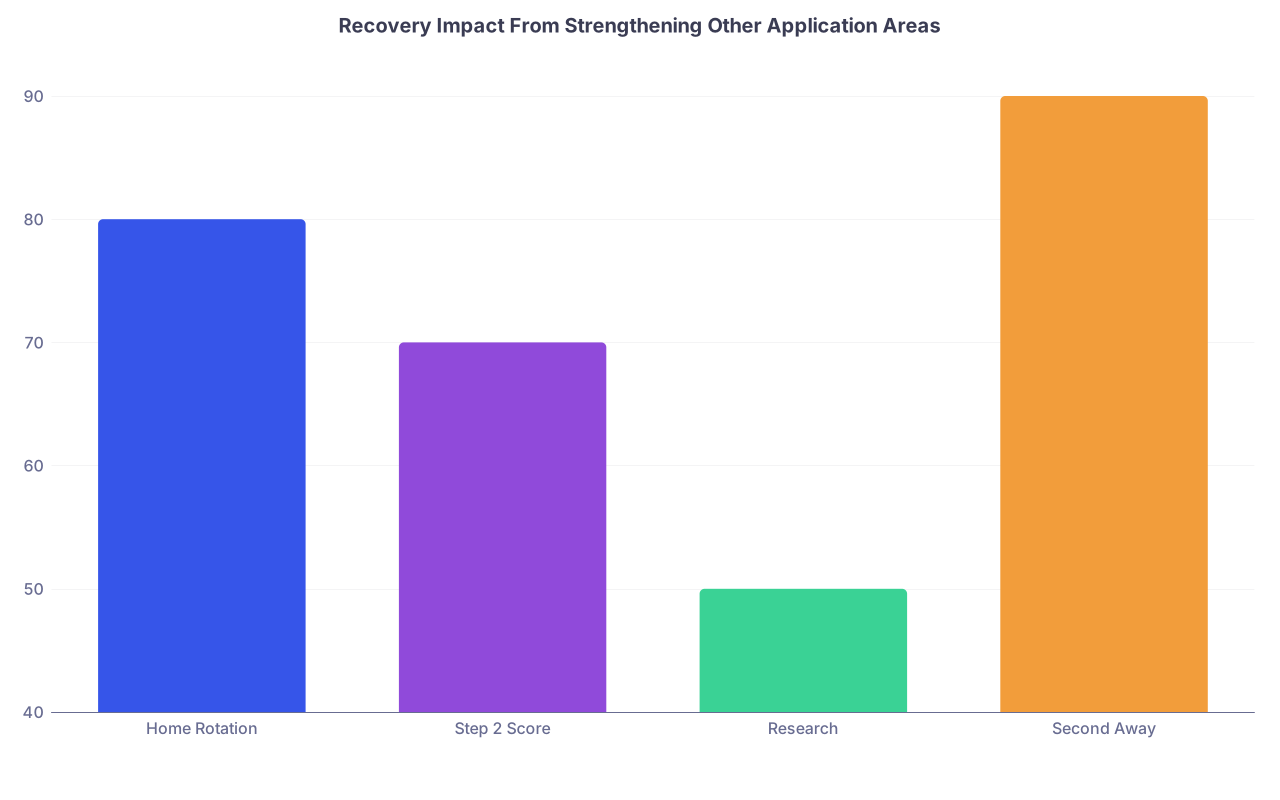
| Category | Value |
|---|---|
| Home Rotation | 80 |
| Step 2 Score | 70 |
| Research | 50 |
| Second Away | 90 |
(Values are just to make the point: other things can pull you back up.)
How To Talk About A Bad Away If It Comes Up
Sometimes it never comes up. You don’t mention it; they don’t mention it. Done.
But if it does, on an interview or in a meeting with your dean, you need a calm, non-spiraling script.
Something like:
“I did an away at [Program]. I learned a lot, but honestly, I was overwhelmed early on and didn’t advocate for myself as well as I should have. I got feedback that I needed to be more proactive and efficient, and I took that seriously. On my next rotation at home, I made specific changes—pre-rounding earlier, asking residents where I could plug in, and taking more ownership of patients. That feedback pushed me to grow, and I’m grateful for it.”
Notice what that does:
- Acknowledges it wasn’t perfect
- Shows you didn’t get defensive
- Demonstrates a concrete growth response
What you don’t do:
- Blame the program or specific residents
- Say “they didn’t like me” or “it was toxic” (even if you think it was)
- Cry on Zoom. Save that for your people, not PDs.
When You Actually Might Need a Backup Plan
I’m not going to gaslight you with “you’ll definitely be fine.” Sometimes the math doesn’t work.
You might need a backup if:
- Your board scores are on the low side for that field
- You have no strong letters in that specialty at all
- Your away was bad, your home rotation was also mediocre, and there’s no time for a second away
That doesn’t automatically mean “give up.” It means:
- Apply broadly—like truly broadly, not “I applied to 30 top‑tier EM/ortho/derm programs”
- Consider dual applying if your advisors tell you your chances are very low
- Have an honest sit-down with a specialty advisor who will actually tell you “this is risky” and not sugarcoat it
None of this means you’re a failure. It means you’re a person trying to outsmart a rigged game.
The Part Where I Admit The Truth You Don’t Want to Hear
Yes, your bad away might cost you interviews at that program.
Yes, some PDs will read a lukewarm letter and quietly move on.
Yes, you’re competing against people who had golden away months and glowing letters.
But also:
- Most applicants overestimate how catastrophic their “bad” month was
- Programs have short memories and huge applicant piles
- Your self-criticism is almost always harsher than any attending’s evaluation
And one more thing: surviving a crappy away and still showing up, still applying, still wanting this field?
Programs may not see that resilience on paper.
But you will feel it when you start intern year and realize, “I’ve already been through worse.”
FAQs
1. Should I cancel using the away letter if I think they didn’t like me?
If you have any doubt, ask someone who’s seen the actual text—your dean’s office or faculty mentor. If the letter is:
- Neutral or mildly positive → it’s fine to use, just don’t rely on it as your “anchor”
- Vague and generic, and you have better letters → skip it if possible
If your dean says, “I wouldn’t use this if you have alternatives,” listen to them. That’s code for: it’s not helping.
2. Will programs in that specialty talk about me behind my back?
In very small fields, yes, people know each other. But the reality is: they’re busy. They’re not holding conference calls to blacklist you. Truly egregious behavior spreads. Normal student awkwardness, quietness, or one off rotation? Usually forgotten by October. Most programs care more about who they do like than who mildly annoyed them one time.
3. What if that away program is my dream place?
Hard truth: if your away genuinely went poorly there, your odds at that program are lower. Not zero, but lower. So apply anyway if you love it, but don’t emotionally anchor your whole self-worth to one name. Focus on programs where your letters and fit are stronger. Plenty of people end up preferring where they matched over their “dream” place, but you only see that after the fact.
4. Should I explain the bad away in my personal statement?
Almost never. The personal statement is not a confessional booth. You don’t need to drag a mediocre month into the spotlight. The only time you even consider it is if something very specific happened (illness, family crisis) that explains a visible dip in performance, and even then, keep it brief and growth-focused. Otherwise, let that month just be one line on your CV and move on.
5. Is it better to do no away than a bad one?
If we’re talking time travel, yes—no away is usually better than a truly negative one. But you can’t undo it. From where you are now, a mediocre away is still better than nothing because you learned the culture, got some exposure, and possibly a usable letter. Your job now isn’t to rewrite history. It’s to build everything around that month so it becomes a footnote, not the headline.
Key takeaways:
- One bad or mediocre away hurts, but it doesn’t automatically end your shot at a competitive specialty.
- Be ruthless and strategic with letters, home performance, and (if possible) a second away to rebalance your application.
- Get out of your own head. Talk to real advisors, get real data, and stop letting that one month define your entire story.