
You are standing in the resident workroom. Someone just said, “Yeah, Dr. Patel wrote me a letter and called the PD himself. That probably sealed it.”
Your stomach drops.
Because you have…none of that. No famous mentor. No “my uncle’s an attending.” No home program in your dream specialty. Just a vague sense that everyone else has secret back channels you do not.
Here is the fix: a concrete, 6‑month plan to go from “I know no one” to “I have a real, functional network in medicine” – not fake LinkedIn noise, but attending-level advocates, resident allies, and peers who will actually pick up the phone or answer your email.
This is designed for:
- Medical students (US or IMG)
- Pre-meds trying to get into the system
- Residents changing specialties or aiming for fellowship
- Late-career switchers entering medicine from another field
Adjust specifics to your level, but the framework holds.
Big Picture: What You Are Actually Building
Stop thinking “networking = schmoozing.” You are building three concrete assets:
- A Reputation – Something specific people associate with you. (“She follows through.” “He is the one who handled that complex patient without drama.”)
- A Map – Knowing who is who in your field: program directors, researchers, organizers, gatekeepers.
- A Small Inner Circle – 5–15 people who would do you a real favor without hesitation.
Over 6 months, you will:
- Show up consistently (in person + virtually)
- Offer value first
- Ask for targeted help later
Let me lay out the month-by-month playbook, then break down tactics.
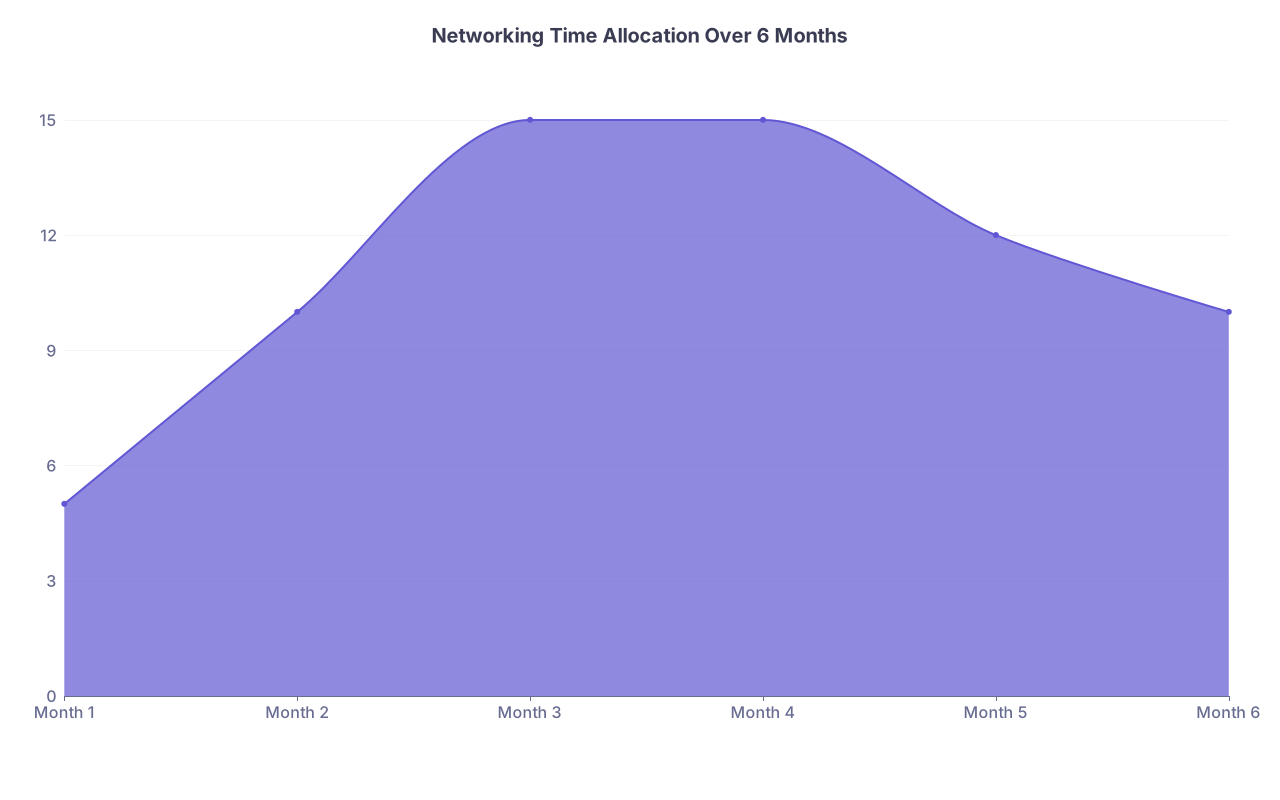
| Category | Value |
|---|---|
| Month 1 | 5 |
| Month 2 | 10 |
| Month 3 | 15 |
| Month 4 | 15 |
| Month 5 | 12 |
| Month 6 | 10 |
Month 1 – Foundation: Fix Your Presence and Build a Target List
Step 1: Clean up your professional footprint (1–2 days)
You need profiles that do not embarrass you when an attending Googles you.
Minimum setup:
LinkedIn
- Professional headshot (phone camera + good lighting is fine).
- Headline:
Medical Student | Interested in Internal Medicine & Health Equity(adapt to your goals; be specific). - About section: 3–4 sentences on who you are, focus areas, what you are seeking.
- Experience section: School, research, work, leadership.
Email
- Use a serious email:
firstname.lastname@... - Create a signature with:
- Full name
- Degree/year or role (e.g., “MS2, XYZ School of Medicine”)
- Institution
- Phone (if appropriate)
- Use a serious email:
If your Instagram/Twitter are chaos, make them private or scrub obvious disasters. People look.
Step 2: Define your networking “targets” (3–4 days)
You are not trying to meet “people in medicine.” That is meaningless. You need a list.
Create three target groups in a simple spreadsheet:
Local / Institutional
- Attendings in your interest area
- Program leadership at your hospital
- Residents and fellows in that specialty
- Research directors, clerkship directors
Regional / National
- Leaders in your specialty at nearby programs
- Society committee chairs (e.g., ACP, ACG, AANS sections)
- People publishing consistently in an area you care about
Peer / Near-peer
- Senior students 1–3 years ahead
- Junior residents at programs you want
- Alumni from your school in your target specialty
Where to find names:
- Hospital/department websites – faculty lists
- PubMed – recent papers in your niche, filter by your region
- National societies – look at leadership, early-career committees
- LinkedIn – search “Internal Medicine Resident [Your City]” etc.
You should end Month 1 with 30–60 names total, categorized and with emails or LinkedIn links where possible.
Step 3: Pick your main channel
You cannot do everything. Choose:
- If you have in-person access to a hospital/school: Prioritize live contact. Email + hallway.
- If you are remote/IMG/without easy access: Emphasize email + Zoom + conferences (virtual).
Your plan for the next 5 months will be built mostly around that primary channel, with one backup.
Month 2 – Initiation: Start Contact and Show Up
Now you start doing the part everyone avoids: reaching out.
Your goals this month:
- 8–12 one-on-one contacts (email or in-person)
- 2–3 meaningful conversations
- 1–2 small projects or tasks you can help with
Step 1: Master the cold email (or message)
Most people write dreadful, long, vague emails. Then they wonder why no one replies.
Use this structure:
Subject:MS2 interested in cardiology – quick questionPremed interested in EM – 15-minute Zoom?
Body (short, 5–7 lines max):
Dear Dr. Smith,
My name is [Name], and I am a [MS2 at X / premed at Y / IMG graduate] with a strong interest in [field or subfield]. I recently read your [paper/talk/work] on [brief specific detail], and it resonated with my interest in [short tie-in].
I am trying to learn how early trainees can get involved in [research/clinical exposure/quality improvement] in [field]. Would you be open to a brief 15–20 minute conversation over Zoom or after clinic sometime in the next few weeks?
I know you are busy, so I would be grateful for any time you can spare.
Best regards,
[Name]
[Role, Institution]
[LinkedIn link, optional]
Key points:
- Show you know something specific about them. Not generic flattery.
- Ask for something small, concrete, and time-limited.
- Make it easy to say yes.
Send 3–4 of these per week to your target list.
Step 2: Optimize in-person opportunities
If you are on rotations:
- Show up 5–10 minutes early. That is when real conversations happen.
- Ask 1 targeted question per day. Example:
“Dr. Lee, I am really interested in rheumatology. If you were me at this stage, what would you be doing differently?” - Stay 5–15 minutes late once or twice a week and say:
“Anything small I can help with before I head out? Notes, calling a family, updating a list?”
This is how you get labeled as “the student who cares.” That label is networking.

| Step | Description |
|---|---|
| Step 1 | Month 1 - Build List |
| Step 2 | Month 2 - Initial Outreach |
| Step 3 | Month 3 - Follow Up and Projects |
| Step 4 | Month 4 - Conferences and Visibility |
| Step 5 | Month 5 - Deepen Key Relationships |
| Step 6 | Month 6 - Ask for Support and Sustain |
Month 3 – Follow-Up and Small Projects
Month 3 is where most people drop the ball. They send some emails, get 1–2 replies, then disappear. You will not.
Step 1: Systematize follow-up
Use a simple spreadsheet or note with:
- Name
- Role / specialty
- Date contacted
- Status (no response / responded / met / ongoing)
- Next action + date
Protocol:
- No response after 7–10 days → send 1 brief, polite follow-up:
- “Just bumping this in case it got buried…”
- No response after second email → move on. Do not take it personally. People are busy or disorganized.
Step 2: Convert conversation into collaboration
In your calls/meetings, ask a specific closer:
“This has been really helpful. Is there any small project or task you are working on that a student/resident could help with? Even literature review, data cleaning, or a chart review?”
You are not asking for “a research position.” You are asking for “anything I can help with.” Tiny doorways are fine. They nearly always lead to bigger things if you execute.
If they say yes:
- Confirm scope and timeline in writing.
- Deliver early and clean.
- Ask for feedback once after delivering:
“Is there anything I can do to make this more useful?”
You want 1–3 active projects or meaningful tasks by end of Month 3. This is how you convert a contact into a relationship.
Step 3: Nourish peer and near-peer ties
Residents and senior students are your force multipliers. Treat them seriously.
- After working with a great resident, send a short thank-you email:
- “I appreciated how you explained X and included me in Y…”
- Ask them:
- “If you were me, who are 1–2 people you would try to meet in this department?”
- That is your built-in warm intro list.
You want 3–5 residents/senior students who actually know you by name by end of Month 3.

Month 4 – Conferences, Visibility, and Intentional Exposure
Month 4 is about scale and visibility. You have a foundation; now you put yourself where the density of useful people is high.
Step 1: Attend 1 conference or major event (virtual or live)
You do not need the biggest national meeting if money is tight. But you should hit at least one of:
- Local/regional specialty conferences
- Hospital grand rounds series (many are open)
- National meeting (virtual option if travel is impossible)
Before the conference:
- Scan the program. Identify 5–10 people whose sessions / posters interest you.
- Email 2–3 of them beforehand:
Dear Dr. X,
I saw you will be speaking on [topic] at [meeting]. I am a [role] with an interest in [field], and I will be attending as well.
I would be grateful for 5–10 minutes to introduce myself and ask 1–2 questions after your session, if your schedule allows.
Best, [Name]
At the event:
- Ask one thoughtful question at a session (if appropriate). That makes you memorable fast.
- Introduce yourself to speakers right after talks:
- “Thank you for the talk. I am [Name], [role]. I really liked your point about [specific]. If I wanted to get involved in similar work as a trainee, what would you recommend?”
After the event (within 48 hours):
- Send follow-up emails:
- Thank them.
- Mention one specific thing from your conversation.
- If they hinted at anything (“feel free to reach out”), follow up with a concrete ask.
Step 2: Micro-visibility where you already are
If you cannot afford formal conferences:
- Show up at every departmental grand rounds / case conference you can.
- Ask a question once in a while. Not every time. Aim for once every 3–4 sessions.
- Volunteer for one visible, time-limited task:
- Helping with a resident journal club
- Assisting with a QI data pull
- Organizing a student interest group event with an attending speaker
You are trying to become “that student who is always around and reliable.” That is the base of your network.
| Month | Primary Goal | Concrete Output |
|---|---|---|
| 1 | Build foundation & target list | 30–60 contacts identified |
| 2 | Initiate contact | 8–12 outreach emails, 2–3 meetings |
| 3 | Start projects | 1–3 active tasks/collabs |
| 4 | Increase visibility | 1 event, 5+ new meaningful contacts |
| 5 | Deepen relationships | 3–5 strong advocates or near-advocates |
| 6 | Ask for support & sustain | 2–4 letters/sponsorships/targeted asks |
Month 5 – Deepening: From Acquaintances to Advocates
Now you are going to turn a handful of “people who know you” into “people who will vouch for you.”
Step 1: Identify your top 5–10
From your spreadsheet, star:
- 2–3 attendings who have seen you work or talked to you multiple times
- 2–3 residents/fellows who like working with you
- 1–2 peers you trust and collaborate well with
These are your core.
Step 2: Offer value before you ask for it
Concrete ways to be useful:
- For an attending you helped with a project:
- Proactively offer: “I have time next month if you need help finishing the references / data cleanup / abstract submission.”
- For a resident who mentored you:
- “I am helping organize a student interest group session. Would you like to give a brief talk on [topic you know they care about]?”
- For peers:
- Share resources, notes, study materials, or introductions. Be the connector, not just the recipient.
If you are thinking, “I have nothing to offer,” you are wrong. You have time, attention, and willingness to do unglamorous work. That is gold in medicine.
Step 3: Explicitly signal your goals
People cannot help you get to a target they do not know about.
Tell your core group, clearly:
- “I am aiming for internal medicine, ideally in an academic program with strong cardiology.”
- “I am very interested in EM in the northeast and want to build my application in that direction.”
- “I am an IMG targeting US neurology programs and need to build US-based mentorship and research.”
This lets them:
- Invite you to the right things
- Mention your name in the right rooms
- Offer support without guessing
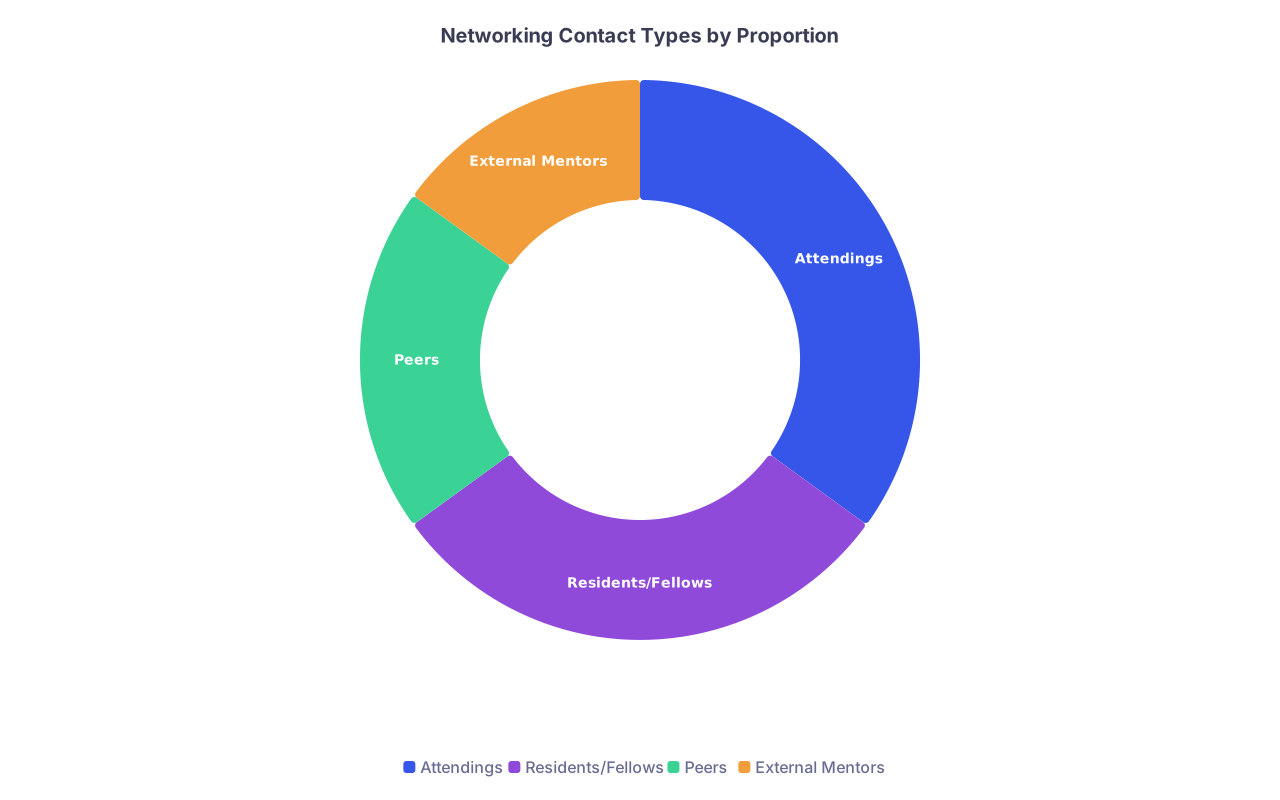
| Category | Value |
|---|---|
| Attendings | 35 |
| Residents/Fellows | 30 |
| Peers | 20 |
| External Mentors | 15 |
Month 6 – Asking for Support and Building a Sustainable System
Last month is when you convert goodwill into real, tangible support: letters, introductions, opportunities.
Step 1: Make targeted, respectful asks
For attendings who know you reasonably well (have supervised you clinically or on a project for at least a few weeks/months), you can say:
“Dr. X, I have really valued working with you on [rotation/project]. I am beginning to prepare for [residency/fellowship/application].
Would you feel comfortable writing a strong letter of recommendation for me when the time comes? If so, I can send my CV and a short summary of my work with you to make it easier.”
Key pieces:
- Ask if they can write a strong letter (this matters).
- Offer supporting documents. Make their life easier.
- Ask early, not two days before a deadline.
For intros:
“Dr. Y, I am applying to programs with strong focus on [niche]. I noticed you know Dr. Z at [Institution]. Would you be comfortable introducing me by email so I can ask 1–2 questions about their program and ongoing work?”
Some will say yes. Some will not. Move on, politely, if they hesitate.
Step 2: Create a light-touch maintenance routine
Networking dies when you ghost people for 18 months and reappear asking for a letter. Do not be that person.
Simple maintenance:
- Every 2–3 months, send brief updates to key mentors:
- “Quick update: finished X project, starting Y rotation, applying for Z.”
- When a paper, poster, or presentation comes out that they helped with:
- Send them the final product and thank them by name.
- Once a year, send a short “thank you” email:
- “I just wanted to say I really appreciate your support over the past year. Your advice on X made a real difference.”
This is 15–30 minutes a month. But it keeps doors open.
Step 3: Protect your reputation
You can build connections for 6 months and destroy them in 6 hours by doing the following dumb things:
- Ghosting on commitments
- Turning work in late with excuses
- Speaking badly about people in “private” chats that are not private
- Being visibly disinterested on rotation but asking for letters later
Basic rules:
- Say yes to fewer things than you think you can do. Then overdeliver.
- If you are going to be late or drop something, tell them early:
- “I overestimated my capacity. I can finish X by [new realistic date] or I can step back if that is better for the project.”
- Never make your mentor look bad in front of their network. That gets you quietly blacklisted.
Special Scenarios and How to Handle Them
If you are an IMG with no US connections
You are starting from behind, yes. But the playbook is the same, just more remote and more deliberate.
Specific adjustments:
- Hit virtual conferences and webinars hard. Ask good questions by name.
- Cold email faculty doing US-based research in your specialty offering help with:
- Literature reviews
- Data entry
- Background sections
- Consider a short-term observership or research fellowship if financially and logistically possible. One solid year with a good mentor can replace “no connections” with “I know a whole department.”
If you are switching specialties as a resident
You cannot be sloppy. PDs talk.
Your moves:
- Continue to do your current job competently. You need your current PD not to torpedo you.
- Quietly build ties in the new specialty:
- Introduce yourself to attendings in that department.
- Ask to moonlight, cross-cover, or help with a project.
- Once you have a few months of goodwill, have an honest conversation with one trusted faculty in the new field:
- “I am considering switching to [specialty]. I want to do this the right way. How would you advise me to proceed?”
Get your story straight, do not burn your bridges, and let your new advocates help shape the narrative.
If you are deeply introverted or socially anxious
This plan still works. You just lean into 1:1 depth, not constant group events.
Adjustments:
- Focus on emails → Zoom → small meetings.
- Prepare 2–3 questions in advance for every interaction. Write them down.
- Aim for quality over quantity: 2–3 strong mentors/residents are enough.
You do not have to be the loudest person at the mixer. You just have to show up and follow through.
Common Mistakes That Kill Networking in Medicine
Let me be blunt about what does not work. I see these constantly:
Spray-and-pray emails
- Generic, copied text. No specific mention of the person’s work.
- Often go straight to trash.
Networking as a last-minute emergency
- “Hey Dr. X, we met once 18 months ago. Could you write me a strong letter for residency?”
- Translation: “I did not maintain this relationship at all, but I need something now.”
Transactional mindset
- People can feel when you only care about what they can do for you.
- Focus on curiosity, learning, and helping. The help back comes later.
Ignoring residents and fellows
- Big mistake. They often decide who gets the good cases, research invites, and informal endorsements.
Being vague about your goals
- “I am open to anything” gives people nothing to work with.
- Pick a direction. You can change it later if needed.

Putting It All Together: A Weekly Rhythm
If you want an exact operating system, use this:
Weekly (30–60 minutes, non-negotiable):
- Send 2–3 emails or messages (new contacts or follow-ups).
- Update your networking spreadsheet.
- Do at least one small “value move”:
- Offer help on a project
- Share a useful article/paper with a mentor or peer
- Thank someone for something specific
Monthly (1–2 hours):
- Attend 1–2 conferences/lectures/rounds.
- Have 1–3 intentional conversations (Zoom, phone, or in person).
- Review your target list. Add new names, prune dead ends.
In 6 months, if you do this consistently, you will not be “someone with no connections.” You will be:
- Known by name by multiple attendings and residents.
- Actively participating in at least one project or initiative.
- Positioned to get letters, intros, and honest advice when it counts.
Not magic. Just deliberate, boring consistency.
FAQ (Exactly 2 Questions)
1. How many mentors do I actually need in medicine?
You do not need ten mentors. You need a small, functional group: usually 1–2 senior faculty who will advocate for you, 2–3 residents or fellows who give you real-time advice and opportunities, and a handful of peers you grow with. If you have one genuinely invested attending plus a couple of strong resident supporters, you are already ahead of many applicants.
2. What if I do everything and still get ignored by most people I contact?
That is normal. Response rates to cold outreach in medicine are low. If you are getting replies from 20–30% of people you contact, you are doing well. The fix is volume plus refinement: tighten your emails, target people whose work clearly aligns with yours, and ask for smaller, easier favors (a 15-minute chat, not “please make me your research fellow”). Keep sending 2–3 targeted messages weekly for 6 months. The compounded effect of a few “yes” responses will matter far more than the many silent “no’s.”
Key points to carry out of this:
- Networking in medicine is not charm; it is reliability + visibility + time.
- A simple, consistent 6‑month plan beats last-minute scrambling and vague good intentions.
- Your goal is not “know everyone.” It is to build a small circle of people who actually care if you succeed—and behave in a way that makes it easy for them to help you.