
The truth about “founder resident” status is this: it’s neither the golden ticket some programs sell you nor the death sentence some older attendings make it sound like. It’s a tradeoff. And you need to treat it like one.
You shouldn’t rank a program higher just because you’d be a founder resident. You also shouldn’t automatically tank a brand‑new program on your list. The right move is to ask: what exactly am I getting in exchange for being the guinea pig?
Let’s walk through how to answer that like an adult instead of a scared MS4.
1. What “Founder Resident” Really Means (Not the Marketing Version)
Programs love that phrase. “Founder class.” “Inaugural cohort.” It sounds cool. It looks good on their brochure. But here’s what it usually means in real life:
You’re joining a residency that is:
- New or within its first few years
- Still building systems, curriculum, and culture
- Under close scrutiny from the ACGME and hospital leadership
And you’re expected to:
- Help shape workflow, policies, and rotations
- Be flexible when schedules or sites change
- Give a ton of feedback, sometimes on things you didn’t realize were your job to fix
The key distinction:
Being a founder resident is not a credential. It’s a role. Programs that treat it like they’re doing you a favor are already thinking about this backwards.
2. How Much Should “Founder Resident” Status Matter on Your Rank List?
Here’s the blunt answer:
If a new program is strong on fundamentals (leadership, training sites, accreditation status, patient volume, board pass plan), then “founder” status should be a minor factor. A tie‑breaker at most.
If those fundamentals are shaky or unknown, then “founder” status is a giant red flag, not a perk.
I’d put it this way:
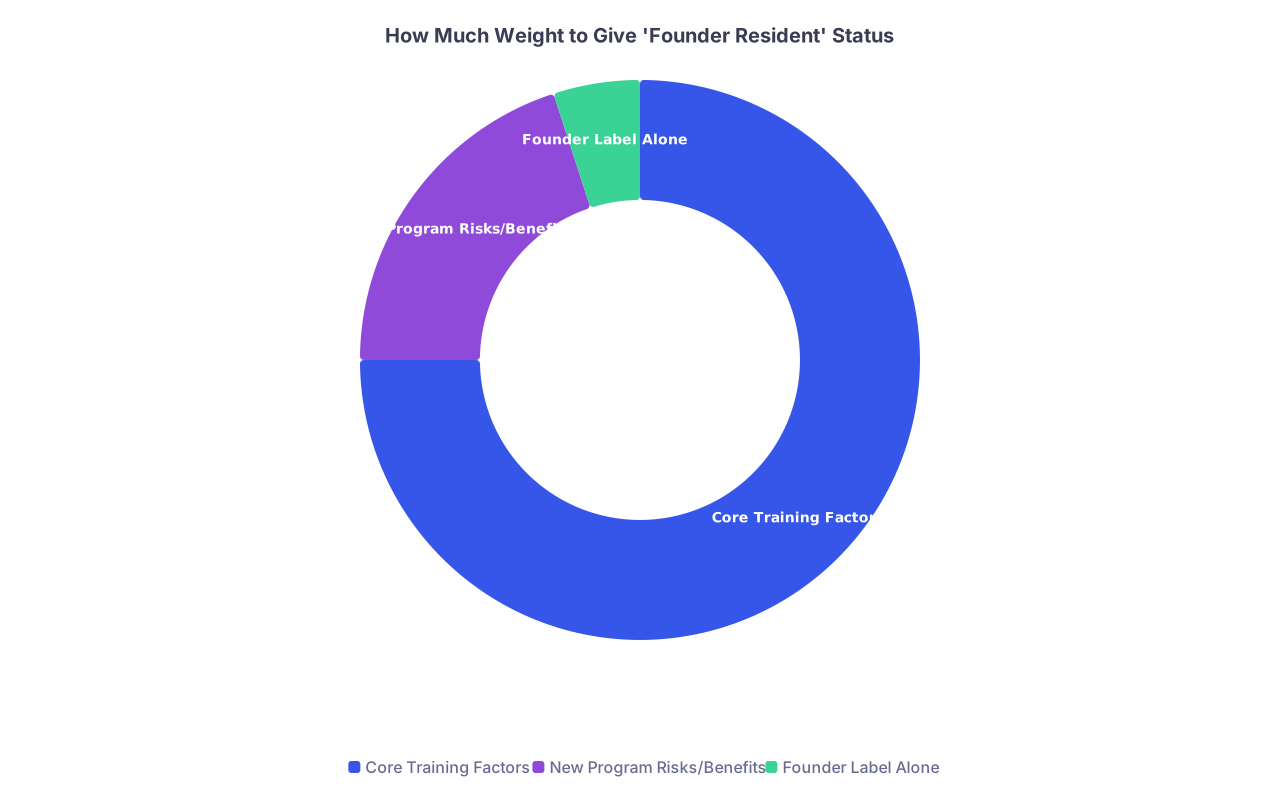
- 70–80% of your ranking decision = same core factors as any program
- 20–30% = new‑program‑specific risks and opportunities
- “Founder” label alone = maybe 5% bonus if the rest looks solid
| Category | Value |
|---|---|
| Core Training Factors | 75 |
| New Program Risks/Benefits | 20 |
| Founder Label Alone | 5 |
If you catch yourself thinking “I’m ranking this higher mainly because I’d be a founder resident,” you’re probably making a mistake.
3. The Real Pros and Cons of Being a Founder Resident
Forget the brochure language. Here’s what I’ve actually seen in early‑stage programs.
Real advantages
Access to leadership
You’re on a first‑name basis with the PD and often the DIO. Your feedback gets heard. Sometimes same‑week changes happen because of your input.Flexibility and customization
- Easier to shape elective time
- Easier to create or tweak tracks (global health, research, QI)
- More opportunities to lead (curriculum committees, recruitment, quality projects)
Leadership and CV value — if things go well
You can honestly say you helped build a program:- Wrote or revised rotations
- Developed didactic structure
- Helped design evaluation systems
That matters for fellowships and early jobs when you can show concrete outcomes, not just “I was first class.”
Less competition for opportunities early on
With no senior residents ahead of you, you may get:- More procedures
- More direct attending teaching
- Earlier chief roles or leadership positions
Real downsides
Growing pains hit you directly
Mis-scheduled rotations, missing call rooms, clunky EMR workflows, patchy didactics. The stuff that’s “being worked on” is happening while you’re trying to survive PGY‑1.Unclear reputation for fellowship and jobs
Program directors and employers know the hospital, but they don’t know the residency’s track record yet. You’ll be explaining your program more than your peers. That’s fine if the hospital is strong and your PD is well-connected. Risky if not.Unstable culture
There’s no “this is how we’ve always done it.” That can be good, but it can also mean:- Inconsistent expectations between attendings
- No clear resident‑to‑resident culture of support
- Random policy shifts mid‑year
You’re QA and marketing at the same time
You’re:- Fixing problems (or at least reporting them)
- Being used to sell the program to future applicants (“talk to our founding residents!”)
That can be exhausting when you just want to keep your head above water.
4. The Non‑Negotiable Questions for Any New Program
Being a founder resident is only as good as the program’s backbone. Before “founder” even enters the conversation, you need clarity on these.
A. Accreditation and oversight
Ask directly:
- Are you already ACGME accredited? What’s the status (initial vs continued)?
- When is your next ACGME site visit?
- Are there existing residencies here (IM, surgery, EM, etc.) that are in good standing?
If they’re still pre‑accreditation or overly vague, that’s a major problem. You don’t want your board eligibility to be a gamble.
B. Leadership track record
You want actual receipts, not just enthusiasm.
Ask:
- Has the PD been a PD or APD elsewhere? For how long and where?
- Who writes the curriculum? Any seasoned faculty from established programs?
- Who is the core faculty and where did they train / work previously?
Red flag: “Our PD is very passionate and we’re excited to grow!” with no specifics and no prior program leadership experience.
C. Clinical training environment
New program or not, this part is non‑negotiable:
- Patient volume: Are there enough admits/ED visits/procedures to hit ACGME minimums comfortably?
- Case mix: Is pathology diverse or is it all bread-and-butter low acuity?
- Service ownership: Are you actually running services, or just shadowing NPs/attendings?
If they can’t clearly describe where you’ll be, what you’ll see, and who owns which patients, you’re signing up for a mystery rotation.
5. Concrete Criteria: When to Move a New Program Up or Down
You want a decision framework, not vibes. Use something like this.
| Situation | What You Should Probably Do |
|---|---|
| Strong hospital reputation + experienced PD + clear rotation structure + early classes seem supported | It’s reasonable to rank it similarly to solid mid‑tier established programs |
| Hospital is good, PD is new but mentored, other residencies thriving | Consider mid‑list with cautious optimism |
| No existing residencies, PD is inexperienced, answers are vague | Push it down your list unless you have no other options |
| Heavy “founder” hype but weak details on training and oversight | Assume marketing > substance; rank cautiously |
| You have multiple safer options in locations you like | Founder status should not bump it above clearly stronger programs |
If you want a cheat code:
Founding a good program is great. Founding a bad program is miserable. Your job is to figure out which one you’re staring at.
6. How Fellowships and Employers Actually View “Founder Residents”
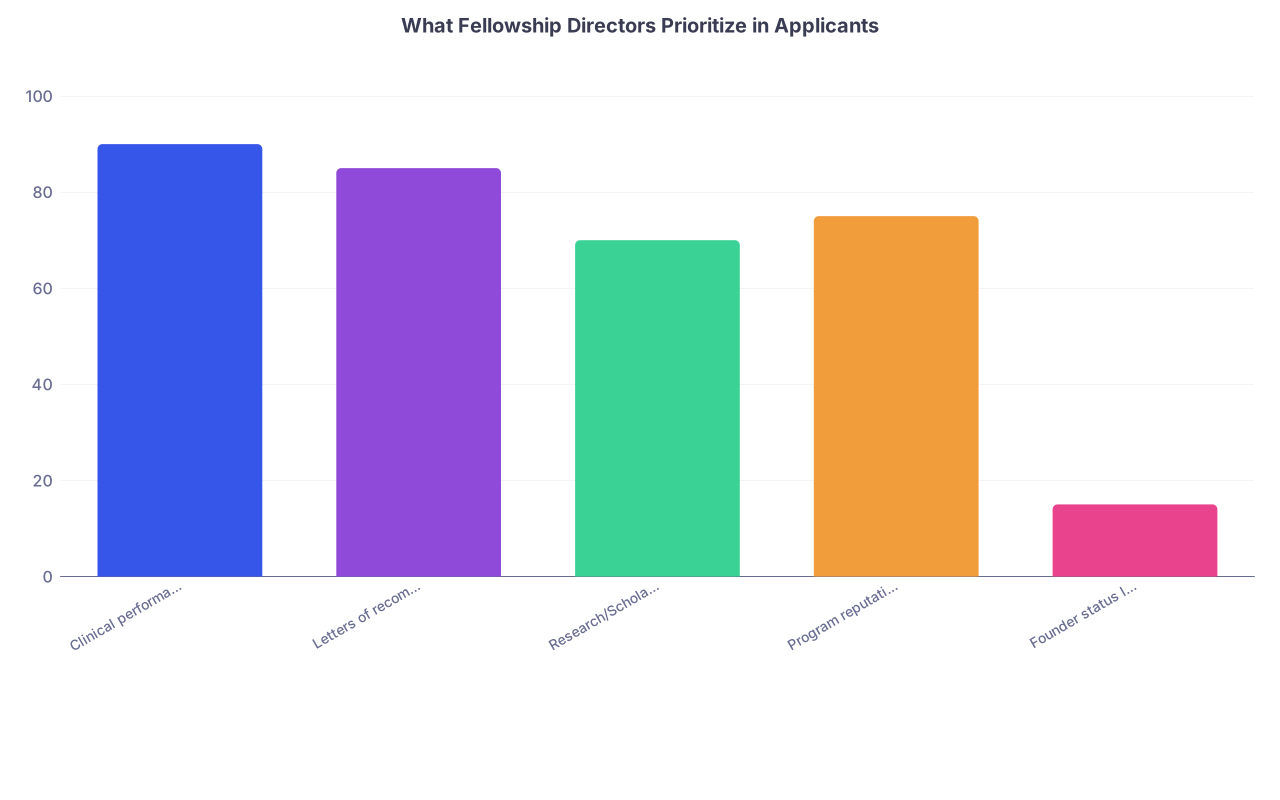
Here’s what fellowship directors and employers actually care about:
- Are you competent and safe?
- Can you handle independent practice?
- Do you have evidence you took initiative and added value?
- Does someone they trust vouch for you?
Being a founder resident can help if you can say, for example:
- “I led the development of our ultrasound curriculum, and here’s the QI data that improved our image documentation rates by 30%.”
- “I helped design our ICU rotation and co‑wrote the orientation manual now used by all incoming residents.”
| Category | Value |
|---|---|
| Clinical performance | 90 |
| Letters of recommendation | 85 |
| Research/Scholarly work | 70 |
| Program reputation | 75 |
| Founder status label alone | 15 |
Notice “founder status label alone” lives way at the bottom. No one’s ranking you higher just because you’re first class. They care what you did with that role.
On the other hand, a poorly run new program can hurt:
- Chaotic evaluations or missing procedure logs
- Spotty didactics or low board pass rates
- Weak letters because faculty don’t know how to write for residency graduates yet
That’s why the program’s fundamentals matter way more than the founder title.
7. Specific Red and Green Flags for Founder Status
When a program leans hard on the “founder” pitch, here’s how to sort the signal from noise.
Green flags
- They talk more about curriculum, supervision, and support than about “legacy”
- Early classes (if they exist) speak honestly about challenges and how leadership responded
- They show built‑out schedules, clinic structures, and call plans, not vague aspirations
- They describe real mechanisms for change: monthly resident–PD meetings, resident councils, anonymous surveys with actual follow‑through
Red flags
- They constantly say “you’ll have the chance to shape this” but can’t show you what’s already in place
- Faculty give wildly inconsistent answers about schedules and expectations
- Existing residents look tired and say “we’re still figuring a lot of things out” without any concrete wins
- No track record of sending people to fellowships or jobs (and no clear plan to support that)
8. How Much Risk You Personally Can Afford
Two people could look at the same brand‑new program and make opposite decisions – and both be right for themselves.
Founder resident status makes the most sense if:
- You’re fairly adaptable and don’t panic with ambiguity
- You like leadership and systems‑building work
- You’re at least somewhat geographically flexible for jobs/fellowships (in case local reputation matters more early on)
- You’re okay with some extra emotional labor: feedback meetings, committee work, “representing the program” to applicants
It’s a poor fit if:
- You crave structure and predictability
- You hate being the “first” to deal with a problem
- You already know you want an ultra‑competitive fellowship where program name recognition does a lot of the talking
Be honest with yourself here. There’s nothing wrong with saying, “I just want a stable, well‑oiled machine so I can focus on learning medicine.” That’s not cowardice. That’s self‑awareness.
9. Bottom Line: How to Actually Use This on Your Rank List
Here’s how I’d operationalize this:
Rank based on training quality, location, and fit first.
Among programs that are roughly tied for you, give a small bump to a new program where:
- Leadership is strong and experienced
- Hospital is busy and respected
- Early feedback from residents is honest and mostly positive
- You’re genuinely interested in helping build things
Resist the urge to:
- Elevate a new program solely because they hyped “founder” status
- Drop a new program automatically if it’s otherwise solid and supported
Your mission is not to collect titles. It’s to become an excellent, safe, confident physician. “Founder resident” is only useful if it pulls you toward that, not away from it.
FAQ: “Founder Resident” and New Programs
Is it risky to match at a brand‑new residency program?
There’s always some extra risk: untested systems, evolving culture, and no track record for boards or fellowship placement. The risk is acceptable when the hospital is strong, the PD is experienced (or well‑mentored), accreditation is secured, and there’s a clear, detailed curriculum already in place. If answers are vague or everything is “coming soon,” that’s not risk. That’s gambling.Will being a founder resident help me get a competitive fellowship?
Not by itself. What helps is what you do in that role: meaningful QI projects, curriculum development, leadership, strong letters from known faculty, and clear clinical excellence. A founder at a high‑quality new program who produces results can absolutely match well. A founder at a weak, chaotic program who barely survives will struggle.Should I ever rank a new program over a well‑established one?
Yes—if the new program offers better training, supervision, and fit for you. For example, a new IM program at a big tertiary center with a strong PD can be better than an older but mediocre community program with poor teaching. You’re not rewarding age; you’re rewarding quality. Age is just a proxy, and not always a good one.What’s the biggest mistake applicants make about founder status?
Two extremes: overvaluing the “cool factor” of being first, or panicking and refusing to consider any new program. Both are lazy shortcuts. The smart move is to dig into leadership, curriculum, call, volume, and early resident experience. Founder status is a side bonus or mild penalty depending on those answers, not the main driver.How do I tell if leadership at a new program is actually solid?
Ask specific questions: Where did the PD and APDs work before? Have they run or helped run a residency? Can they clearly describe the call system, rotation schedule, and evaluation process? Do they transparently acknowledge first‑year challenges and show you what they changed? Good leaders are concrete and specific. Weak ones are vague and inspirational.If I already matched at a new program and I’m nervous, what can I do?
Start by meeting with your PD early and asking how residents can be involved in shaping the program. Join or form a resident council, volunteer for at least one concrete project (orientation materials, a teaching series, a QI project), and build strong relationships with a few key faculty who can mentor and advocate for you. Your leverage is highest as a founder when you’re visible, constructive, and solution‑oriented.
Open your rank list right now and circle every new or early‑stage program. For each one, ask yourself: “If they removed the word ‘founder’ from the sales pitch, would this still belong roughly where I put it?” If the answer is no, adjust.