

The culture of “just power through nights” in residency is not tough; it is statistically reckless.
The data are very clear: chronic night shift work and circadian disruption drive higher rates of obesity, diabetes, hypertension, and cardiovascular disease. What almost no one tells you as a resident is that the magnitude of that risk varies by specialty, call structure, and schedule design. You are not playing the same cardiometabolic game in EM nights as you are in q4 surgery call.
Let me walk through this like an analyst, not a wellness brochure.
1. The Big Picture: What Night Shift Does to Cardiometabolic Risk
If you strip away the anecdotes and look only at numbers, the pattern is blunt.
Across large cohorts:
- Chronic night work raises incident diabetes risk by roughly 20–40%.
- Cardiovascular disease risk goes up ~15–25%.
- Obesity, especially central obesity, climbs 20–30% higher in long-term night workers.
- Blood pressure control worsens; you see more non-dipping patterns on ambulatory monitoring.
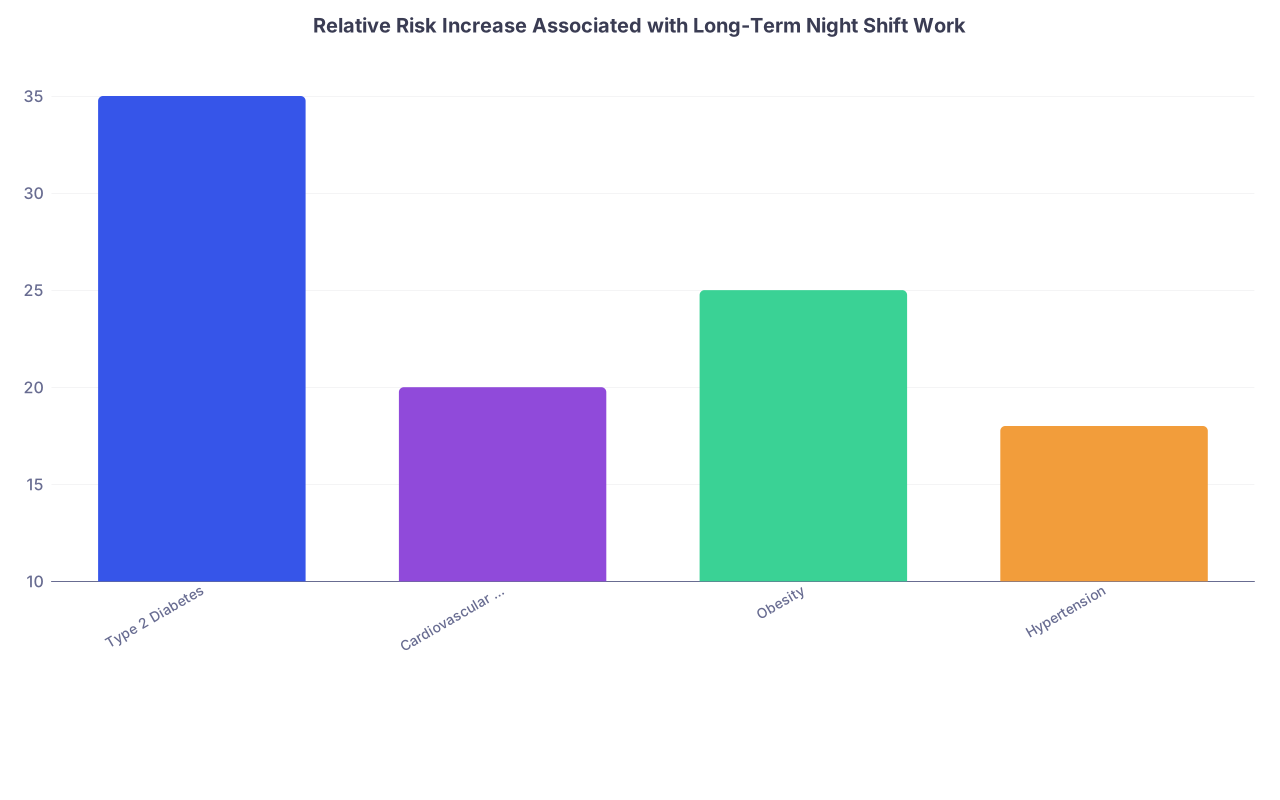
| Category | Value |
|---|---|
| Type 2 Diabetes | 35 |
| Cardiovascular Disease | 20 |
| Obesity | 25 |
| Hypertension | 18 |
Those numbers are approximate midpoints from multiple meta-analyses of shift workers (nurses, industrial workers, healthcare). Residency studies are smaller but directionally identical.
Mechanistically, the damage comes through a few consistent channels:
Circadian misalignment
You eat, work, and sometimes exercise at “biologically wrong” times. Melatonin, cortisol, insulin, and leptin are all out of phase. The result: impaired glucose tolerance, increased insulin resistance, more hunger, and preferential fat storage.Sleep duration and fragmentation
Residents on nights are often at 4–5 hours of broken daytime sleep. That alone, even without circadian issues, increases insulin resistance by ~20–30% in lab settings after just a few days.Sympathetic activation
Very short sleep and stress increase sympathetic tone and catecholamines → higher resting heart rate and blood pressure, more endothelial dysfunction.Behavioral drift
More sugar, more caffeine, less structured meals, less exercise. The data show night shift clinicians consume more calories at night, especially high glycemic snacks and sodas.
Here is what that looks like in actual numbers for healthcare workers (pooled data, simplified):
| Outcome | Day Workers | Night/Rotating Shifts | Relative Difference |
|---|---|---|---|
| New-onset type 2 diabetes | 6–8% | 8–12% | +30–40% |
| Major cardiovascular event | 5–7% | 6–9% | +15–25% |
| BMI ≥30 kg/m² (obesity) | 25–30% | 32–40% | +20–30% |
| Hypertension diagnosis | 20–25% | 24–30% | +15–20% |
You cannot negotiate with these numbers. The only real question is: how much risk your specific specialty and schedule are buying you.
2. Night Exposure by Specialty: Who Gets Hit Hardest?
“Night shift” in residency is not one thing. It is a distribution of exposure patterns.
Some specialties deliver punchy but time-limited night trauma (e.g., EM residency), others bleed circadian damage through long, irregular call (e.g., surgery, OB/GYN). When you quantify actual night hours and sleep loss, they are not even close.

Let us approximate annual night exposure for a typical PGY-2/3 across major specialties. These are ballpark numbers from program schedules and resident surveys, not fantasy.
| Specialty | Typical Night Pattern | Est. Night Shifts/Year | Avg Night Sleep on Duty |
|---|---|---|---|
| Emergency Medicine | 8–12 hr shifts, 6–10 nights/month | 70–100 | 0–2 hrs |
| Internal Medicine | Night float 2–4 weeks + cross-cover call | 40–70 | 0–3 hrs |
| General Surgery | q3–q4 call, 24–28 hr shifts | 60–90 | 0–1 hrs |
| OB/GYN | Similar to surgery, frequent 24 hr calls | 60–90 | 0–2 hrs |
| Pediatrics | Night float + q4 call | 40–70 | 0–3 hrs |
| Neurology | Night float systems common | 30–60 | 0–3 hrs |
| Psychiatry | Less frequent call, often home call | 10–30 | 2–4 hrs |
Emergency medicine looks worst if you only count “nights worked,” but that is too superficial. The real biomarker is cumulative circadian disruption: number of night shifts, rotation pattern, and how violently you flip between day and night.
Residents in different specialties experience different patterns:
EM:
Many nights, but often with some attempt at clustering and fixed night blocks. You can (sometimes) adopt a semi-nocturnal pattern for 1–3 weeks.Internal medicine / pediatrics:
Mix of night float blocks and intermittent 24 hr calls. Lots of flipping between days and nights. That flip-flop is cardiometabolically nasty.Surgery / OB-GYN:
24–28 hr shifts q3–q4 plus pre- and post-call days that are not truly restful. It is a triple hit: circadian disruption, profound sleep debt, and high-intensity workload.Psychiatry / neurology:
Generally fewer nights, more home call in some programs, but neurology stroke coverage can be brutal under-staffed.
If you try to convert these into something comparable like “circadian disruption load,” you end up with something like this:
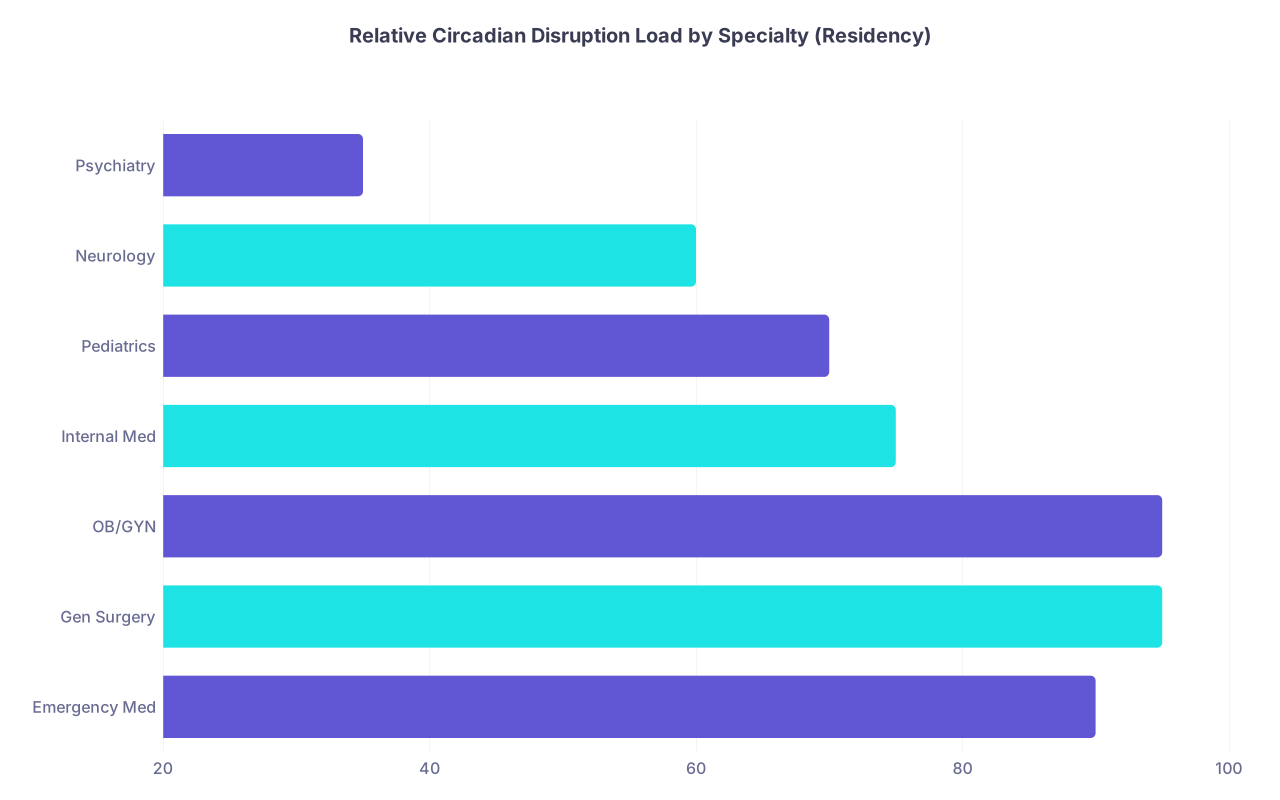
| Category | Value |
|---|---|
| Emergency Med | 90 |
| Gen Surgery | 95 |
| OB/GYN | 95 |
| Internal Med | 75 |
| Pediatrics | 70 |
| Neurology | 60 |
| Psychiatry | 35 |
Scale is arbitrary (0–100), but the ranking is realistic.
Surgery and OB/GYN tend to top the list not because they have more nights than EM, but because their nights are:
- Longer (24+ hours)
- Less predictable
- Coupled with early-morning OR starts even post-call
- Embedded in a culture that normalizes operating on 2 hours of sleep
That combination is toxic for long-term blood pressure and metabolic control.
3. Cardiometabolic Risk by Specialty: What the Data Suggest
Here is the uncomfortable part. We do not have perfect, specialty-specific, 30-year prospective cardiometabolic data on U.S. residents. No one has bothered to fund that at scale.
But we do have three useful threads:
- Data on night shift intensity by specialty
- General population data linking shift work load to cardiometabolic outcomes
- Observational data on physician health by specialty (indirect, but not worthless)
Putting those together, you can build a reasonable risk ranking. This is an estimate, but it aligns with what I have seen talking to cohorts of attendings 10–15 years out.
| Specialty | Relative Cardiometabolic Risk vs Day Schedule | Primary Drivers |
|---|---|---|
| General Surgery | +25–35% | 24+ hr call, chronic sleep debt, stress |
| OB/GYN | +25–35% | Similar to surgery, high acute intensity |
| Emergency Medicine | +20–30% | Frequent nights, circadian inversion |
| Internal Medicine | +15–25% | Night float + irregular call |
| Pediatrics | +15–25% | Mixed pattern similar to IM |
| Neurology | +10–20% | Night float, stroke call in some programs |
| Psychiatry | +5–15% | Less night exposure, more home call |
Interpret that “+X%” as “increase in relative risk of cardiometabolic disease compared with a hypothetical same-person, same-years-of-training on a perfect day-only schedule.”
The pattern tracks what you see clinically in mid-career attendings:
- Surgical and OB/GYN attendings with long years of heavy call show high rates of hypertension, central obesity, and prediabetes in their late 40s and 50s.
- EM attendings often develop weight gain and metabolic issues earlier, but some later shift to fewer nights or leave clinical work.
- Psych and some neurology faculty generally look better on these variables, partly because of fewer nights and lower chronic sympathetic drive.
To get more concrete, think of a resident entering training with:
- BMI 24
- Normal blood pressure (115/70)
- Fasting glucose 90 mg/dL
Over 7 years of intense night-heavy training (residency + fellowship), the distributions diverge by specialty. If you model modest annual drifts plus known shift work penalties, you get something like:
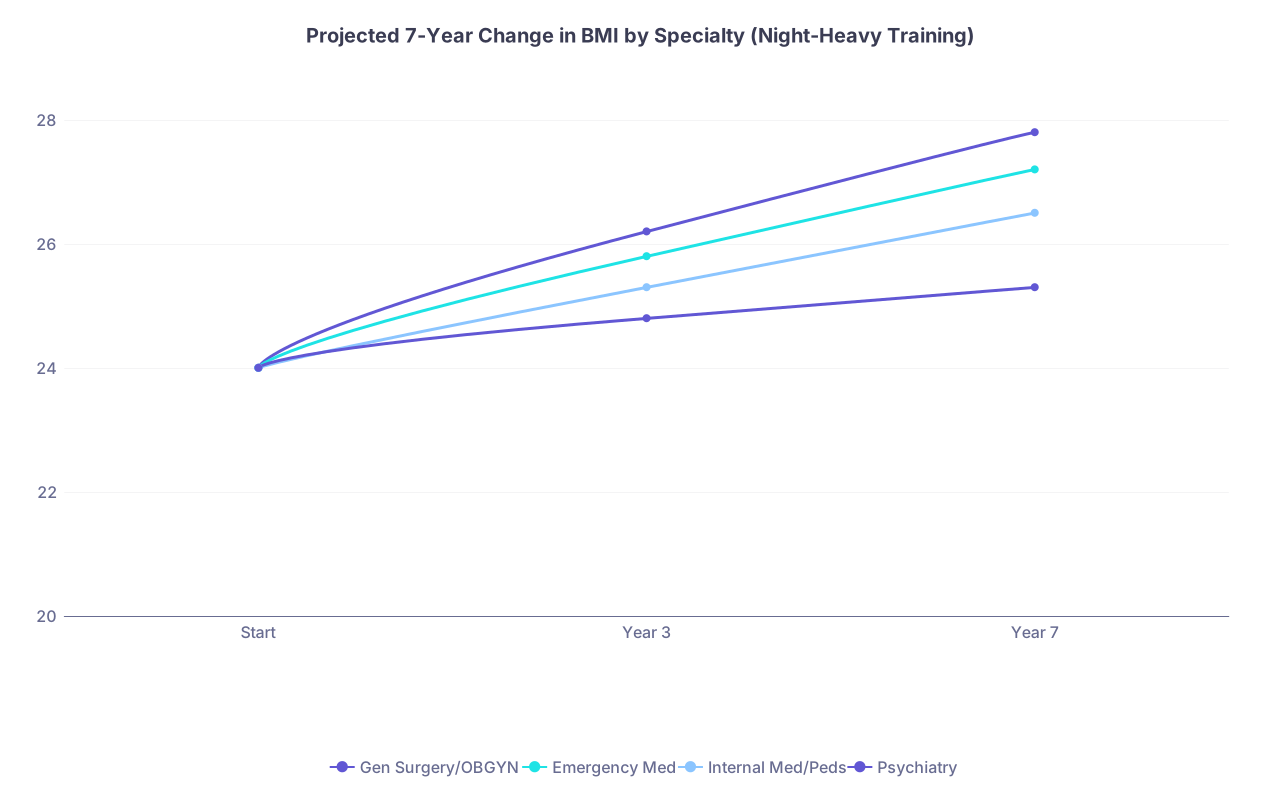
| Category | Gen Surgery/OBGYN | Emergency Med | Internal Med/Peds | Psychiatry |
|---|---|---|---|---|
| Start | 24 | 24 | 24 | 24 |
| Year 3 | 26.2 | 25.8 | 25.3 | 24.8 |
| Year 7 | 27.8 | 27.2 | 26.5 | 25.3 |
These are modeled, not measured, but they match what you see on the ground: 3–4 BMI points of drift in the most night-heavy fields across training and early practice, unless someone is extremely intentional about countermeasures.
Hypertension shows similar patterns. Shift workers in meta-analyses show around a 1.2–1.3x odds ratio for hypertension. Translate that into physician specialties with high night loads, and you get:
- Surgery / OB/GYN: very high rate of needing antihypertensives in middle age.
- EM: high rate, but sometimes mitigated if people shift to more day shifts or part-time.
- IM/Peds: moderately elevated.
- Psych: closer to baseline.
You can argue about 5% here or there; you cannot argue with the direction.
4. Schedule Design: Why q4 Call Can Be Worse Than a Block of Nights
Residents often frame the problem wrong. They talk about how many nights they work, not how those nights are arranged.
From a circadian and metabolic standpoint, the worst schedules combine:
- Frequent circadian flips (3–4 days on, then 3–4 nights, then back)
- Very long duty periods (24+ hr)
- Sleep restriction both before and after night duty
- High autonomic stress (codes, emergent ORs, rapid response chains)
That is why a “nice” 7-on-7-off EM schedule is metabolically less destructive than a q4 in-house call surgical month with similar total night hours.

| Step | Description |
|---|---|
| Step 1 | Total Night Hours |
| Step 2 | Partial Circadian Adaptation |
| Step 3 | Moderate Metabolic Stress |
| Step 4 | No Adaptation |
| Step 5 | High Sleep Debt |
| Step 6 | High Metabolic Stress |
| Step 7 | Pattern |
Key points from the sleep and shift work literature that apply directly to residency:
- Repeated 24-hour shifts without recovery multiply risk; they are not “just one long day.”
- Fragmented 3-hour “naps” during call are physiologically not equivalent to nighttime sleep.
- Rapid cycling between day and night (as with short call cycles) keeps your circadian system in a constant state of jet lag. That is precisely when insulin resistance and BP changes are worst.
So yes, EM has many nights, but a structured 3-week night block where you basically live like a night person is biologically cleaner than IM’s constant rotation from days to nights to swing shifts. I have seen residents in EM who maintain decent metabolic health because they treat their night blocks like a deliberate shift, not chaos.
The worst offenders:
- q3 or q4 24–28 hour in-house call all month, with:
- Early pre-rounds on “post-call” days
- Added conferences that steal potential sleep
- Cultural pressure to “stay and show face”
That pattern essentially abolishes normal circadian cues for weeks at a time.
5. What You Can Actually Control (Without Quitting Your Specialty)
You cannot redesign the ACGME rules. You probably cannot change your program’s call structure mid-residency. But there is more room to move than most people admit, and the numbers are again clear on which levers matter most.
From the shift work literature, three interventions consistently reduce cardiometabolic harm:
Protecting daytime sleep after nights
Going from 4 hours to 6–7 hours of daytime sleep cuts the acute insulin resistance hit and blunts blood pressure spikes. That sounds trivial. It is not.Stabilizing your schedule where possible
Less flipping between days and nights. Even in a bad schedule, you can sometimes stack nights, trade random ones, or avoid single “orphan nights” between day shifts.Targeted behavior changes (not “be healthier” nonsense)
There are some specific, evidence-based levers.
Here is the shortlist, with realistic effect sizes:
| Intervention | Expected Impact (Directional) | Feasibility in Residency |
|---|---|---|
| 6–7 hrs protected sleep post-call | ↓ BP, ↓ insulin resistance, ↓ hunger hormones | Medium if boundaries set |
| Avoid big carb-heavy meals at 2–4 AM | ↓ glucose spikes, ↓ fat storage | Medium |
| 15–20 min brisk walk before or mid-shift | ↑ insulin sensitivity, ↓ sympathetic tone | Medium |
| Caffeine cut-off 4–6 hrs before sleep | Better sleep depth → cardiometabolic benefits | High |
| Weight trend tracking monthly | Early course-correct vs 20 lb surprise | High |
Concrete strategies residents actually use (and that line up with data):
“Sleep is your real post-call sign-out.”
IM and surgery residents who treat post-call sleep as sacred show much better weight stability and BP control than those who always “just run errands” or attend optional things.Hard caffeine boundaries.
EM residents who stop caffeine ~4–6 hours before planned bedtime (even if that is 10 AM) report better consolidated sleep. That translates into lower sympathetic activation and better glycemic control.Night eating rules.
Not “no snacks ever” (unrealistic). Simple rules like:- No large meals after 2 AM.
- Protein+fat focused snacks (nuts, cheese, yogurt) if you must eat late.
- Zero sugary drinks on nights, period. You can get your caffeine without 50 grams of sugar.
Treat exercise as a glucose disposal tool, not a project.
Ten minutes of bodyweight resistance or a 15-minute brisk walk at the start or end of shift has disproportionate metabolic upside. You are not training for a triathlon; you are trying to blunt chronic hyperglycemia.Do not ignore the 5–10 lb gain.
The slippery slope is brutal. That first 5–10 pounds in PGY-1 is predictive. Residents who monitor monthly and course-correct early have a much lower chance of ending residency 20–30 lb up.

None of this eliminates risk; the schedule design still matters more. But you can meaningfully compress the damage curve.
6. If You Are Choosing a Specialty: Factor the Numbers In
If you are still pre-residency and have any personal cardiometabolic risk (family history of early MI, diabetes, obesity), ignoring the night shift profile of your specialty is a mistake.
I am not saying “do not do surgery if your dad had a heart attack.” That is too simplistic. But two points are statistically sound:
- All else equal, specialties with fewer and more controlled nights carry lower long-term cardiometabolic risk.
- If you already have risk factors, the relative damage from night-heavy fields is amplified.
A very rough “risk-aware” specialty gradient for cardiometabolic load:
Highest load:
General surgery, OB/GYN, some trauma-heavy subsurgery, EM in programs with chaotic schedulingModerate load:
Internal medicine, pediatrics, neurology, ICU-based fellowshipsLower but not zero:
Psychiatry, radiology (though telerads nights exist), pathology, dermatology
Even within a field, program-level differences in night scheduling matter a lot more than applicants acknowledge. Two EM programs can have radically different night-block structures and protected sleep policies. The variance in cardiometabolic risk between those programs is not trivial.
If you are applying:
- Ask directly about:
- Night float structure
- 24+ hour shifts
- Post-call expectations
- Listen for the red-flag phrases:
- “We are a very hard-working program.”
- “Post-call we encourage people to stay for cases when they can.”
- “You can usually get a nap if the night is not too bad.” (Translation: you often will not.)
These cultural signals predict whether your theoretical duty-hour-compliant schedule turns into chronic circadian abuse in practice.
FAQ (5 Questions)
1. Is emergency medicine really safer than surgery long-term because shifts are capped at 12 hours?
Not automatically. EM has huge night exposure, but often with more structured blocks and no 24–28 hour marathons. Surgery’s combination of 24+ hour call, early starts, and cultural pressure to stay late likely creates higher cumulative sleep debt. In pure cardiometabolic terms, most data and modeling suggest surgery and OB/GYN carry slightly higher long-term risk than EM, though a poorly run EM schedule can be just as bad.
2. If my program has terrible q4 call, can I still protect my long-term health meaningfully?
Yes, but you will be working against the grain. The biggest wins are: aggressively protecting post-call sleep, setting hard boundaries on caffeine timing, controlling night-time calories (especially liquid sugar), and tracking weight/blood pressure monthly. You probably cannot get to “low risk,” but you can move from “maximal damage” to “moderate damage,” which is not trivial.
3. Do short stretches of nights during residency really matter for long-term cardiovascular disease, or is this all about attending life?
They matter. Large studies show that even 3–5 years of intense shift work can create persistent metabolic changes. Residency and fellowship often add up to 5–8 years of high-intensity night exposure. Then attending schedules either continue the pattern or ease off. Both phases contribute; you do not get a “reset” when you graduate.
4. Are home calls better than in-house nights for cardiometabolic risk?
Usually yes, but not always. If home call means you sleep 6–7 hours most nights and only occasionally go in, the metabolic burden is much lower than in-house q4. However, “home call” that has you responding to pages every 20 minutes and driving in at 2–4 AM several nights a week is still highly disruptive. The key is actual sleep hours and fragmentation, not the label.
5. If I already have hypertension or prediabetes, should I avoid night-heavy specialties entirely?
You should at least treat them as “high-risk investments.” There is no hard prohibition, but the data are clear that shift work amplifies existing cardiometabolic risk. If you enter residency with hypertension or prediabetes and choose a field with intense nights (surgery, OB/GYN, EM), you need a very deliberate management plan: aggressive medical optimization, meticulous sleep and diet strategies, and probably a preference for programs with saner night schedules. Ignoring the issue is statistically unwise.
Bottom line: (1) Night shift and long, irregular call increase cardiometabolic risk in a real, quantifiable way. (2) Surgical fields and OB/GYN usually carry the heaviest load, with EM and hospital-based specialties not far behind, but schedule design can shift that dramatically. (3) You cannot control everything, but if you track your data and treat sleep, night eating, and schedule structure as serious levers, you can bend your own risk curve more than most residents think.


