Most residents wreck their first night shift before they ever walk into the hospital.
They blow the 48 hours before. They nap at the wrong time, eat the wrong things, and treat it like a normal day. Then they pay for it at 3 a.m. when their brain stops working during a cross-cover call.
You are not doing that.
Use this as a countdown playbook: 48, 24, and 6 hours before your first call, hour-by-hour where it matters, with concrete “at this point you should…” steps.
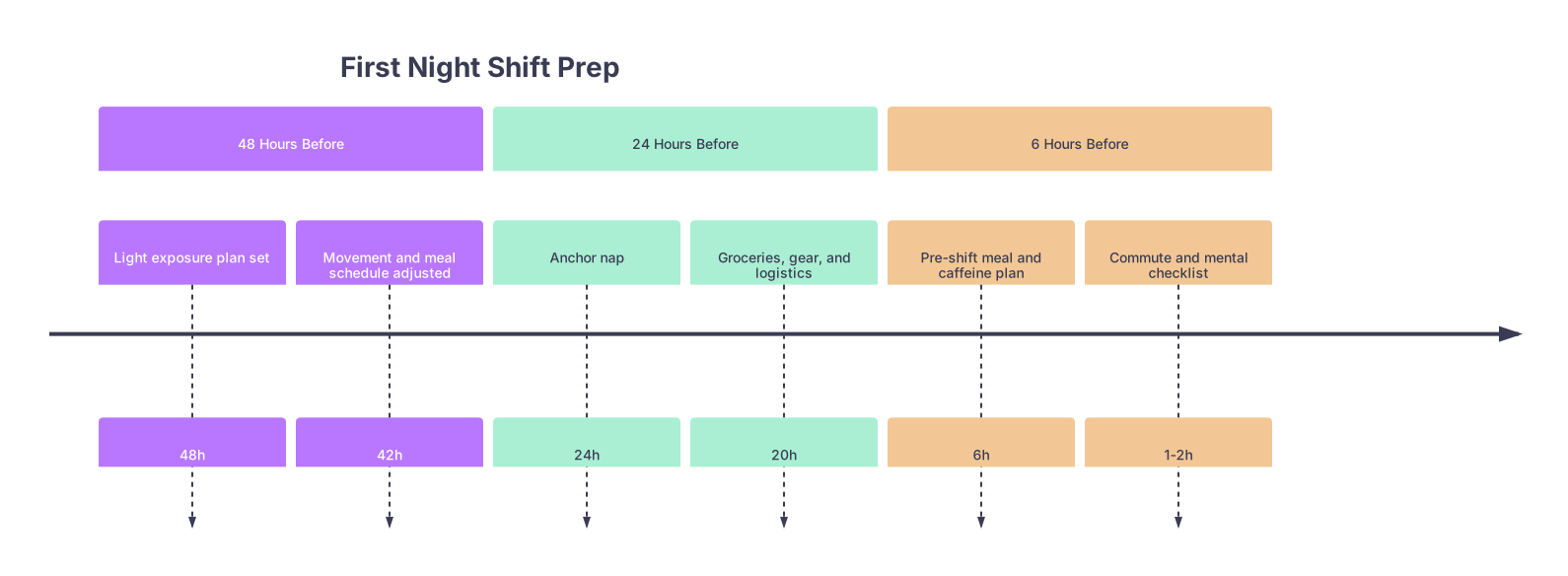
Big Picture: Your Night Shift Timeline
| Period | Event |
|---|---|
| 48 Hours Before - Light exposure plan set | 48h |
| 48 Hours Before - Movement and meal schedule adjusted | 42h |
| 24 Hours Before - Anchor nap | 24h |
| 24 Hours Before - Groceries, gear, and logistics | 20h |
| 6 Hours Before - Pre-shift meal and caffeine plan | 6h |
| 6 Hours Before - Commute and mental checklist | 1-2h |
Your goals:
- Do not show up already sleep-deprived.
- Shift your circadian rhythm just enough that 2–4 a.m. doesn’t crush you.
- Remove stupid avoidable stressors (parking, food, dead badge, etc.).
We’ll walk it chronologically. When I say “at this point you should…”, I mean it.
48 Hours Before: Lay the Foundation
At this point you should stop pretending you can “wing it.” The 48-hour mark is where you start steering your sleep and light exposure.
48–36 Hours Before First Call
Assume your first night shift starts around 7 p.m. on Day 3. We’re at 7 p.m. on Day 1 right now.
Sleep & Light
At this point you should:
- Go to bed a little later than usual tonight.
- If you normally sleep 11 p.m.–6 a.m., push to 12–12:30 a.m. and wake 7–7:30 a.m.
- In the morning, get bright light in your eyes within 30–60 minutes of waking.
- Open blinds, go outside for 10 minutes, or use a light box if you’re in a cave of an apartment.
- In the evening, start dimming screens and big overhead lights ~2 hours before bed.
Reason: You’re slowly nudging your circadian rhythm later. Not a full flip. Just a shift.
Movement
- Get a real workout in this window.
- Strength or cardio, 30–45 minutes.
- Not at 10 p.m. if it amps you up; aim late afternoon/early evening.
You want your body pleasantly tired tonight, so you sleep deeper.
Food & Caffeine
At this point you should:
- Cap caffeine 7–9 hours before your intended bed.
- If bed at midnight, last coffee no later than 3–5 p.m.
- Eat a normal dinner. Nothing heroic.
- Avoid huge greasy “cheat” meals two days before. You don’t need the GI drama.
36–24 Hours Before First Call
We’re now on Day 2 morning to Day 2 evening.
Sleep: Lock in a Regular Night
This is your last “normal” night of sleep before you flip.
At this point you should:
- Wake up at a normal time (not sleeping in until noon “because nights are coming”).
- Plan to go to bed slightly later again tonight.
- If last night was 12:30 a.m., tonight 1–1:30 a.m. is fine if your schedule allows.
Light Strategy
- Load your morning with light again.
- Evening: dim the apartment, reduce blue light intensity 2 hours pre-bed.
This starts making later bedtimes feel more comfortable, which helps with your pre-shift anchor nap.
Logistics
At this point you should make a boring-but-critical checklist. Things I’ve seen destroy people’s first nights:
- They can’t access the EMR on a workroom computer because their token expired.
- They didn’t know the resident parking deck requires a separate sticker.
- They forgot their stethoscope and looked like a lost MS3.
Make a 48-hour checklist:
- Badge works on night entrances?
- Parking/transportation sorted for after dark?
- Scrubs clean? White coat (if required) ready?
- Pager/app logins and backup battery pack ready?
- On-call room location known? (Ask seniors now, not at 3 a.m.)
You don’t want to be wandering the basement looking for the call room with a cross-cover admit pending.
24 Hours Before: The Anchor Nap and Logistics
Now we’re at Day 2, around the same clock time you’ll start your first night tomorrow. You’re ~24 hours out.
At this point you should start acting like tomorrow day is prep, not “a normal day off.”
24–18 Hours Before First Call
Plan the Anchor Nap
The anchor nap is your main weapon. Blow this and you’re crawling at 4 a.m.
For a 7 p.m. start, a good anchor nap is:
- Start: ~1–3 p.m. on the day of your shift
- Length: 90–150 minutes (1.5–2.5 hours)
That means at 24 hours out (7 p.m. the night before), you should:
- Commit to being tired enough to actually sleep during that 1–3 p.m. nap.
- Go to bed late enough that you don’t wake at 6 a.m. bright-eyed with zero sleep pressure.
So:
- Bedtime tonight: around 1–2 a.m.
- Wake time tomorrow: 8–9 a.m. (not earlier).
Food & Hydration Prep
At this point you should stockpile night-shift-compatible fuel. The cafeteria will fail you. The vending machines will betray you.
Think:
- Protein: Greek yogurt, cheese sticks, hummus, boiled eggs, nuts.
- Complex carbs: oatmeal packets, whole grain crackers, fruit, pre-made sandwiches.
- Easy “real” food: microwaveable rice and beans, frozen burrito, leftovers.
- Hydration: big refillable bottle, maybe electrolyte packets.

Also:
- Buy or set aside:
- Lip balm
- Hand lotion
- Small pack of gum or mints
- A spare phone charger and cable
- Pack snacks into a small, easily carried bag. Not a suitcase.
Caffeine Strategy (Yes, You Need One)
At 24 hours out, decide tomorrow’s caffeine plan in writing. Something like:
- No caffeine after 10 a.m. on shift day (to not ruin the daytime nap).
- Avoid “topping off” caffeine right before the nap “just this once.”
18–12 Hours Before First Call
We’re now late evening the day before your shift to early morning of shift day.
At this point you should be:
- Prioritizing one more decent night of sleep
- Double-checking logistics
- NOT over-scheduling social stuff
Night Before the Shift
- Light dinner, 3–4 hours before bed.
- Screens dimmed, ideally off 30 minutes before you want to fall asleep.
- No alcohol. Yes, that includes “just one” to calm nerves. It fragments sleep.
Aim again for 1–2 a.m. sleep, 8–9 a.m. wake.
Mental Prep
Spend 20–30 minutes:
- Reviewing common night tasks for your service:
- Cross-cover calls (pain control, hypertension, fevers, “patient looks bad”).
- Admission workflow in your EMR (admit order set, where to click for VTE prophylaxis, etc.).
- Jotting down a 1-page “night cheat sheet”:
- Key phone numbers (ICU fellow, pharmacy, RT, blood bank).
- Standard orders for common problems you know are coming (delirium, chest pain, hypoglycemia).
This should be one page you physically bring, not a 12-tab PDF you never open.
6 Hours Before: Game-Time Ramp-Up
Now we’re at the day of your first night shift.
You woke up ~8–9 a.m.
Your shift starts at 7 p.m.
We’re going to walk from ~1 p.m. onward.
10–8 Hours Before (Late Morning)
At this point you should:
- Eat a decent breakfast (or first meal) with:
- Protein (eggs, yogurt, peanut butter)
- Some carbs (toast, oatmeal, fruit)
- Have modest caffeine if you really need it, but:
- Cut off all caffeine at least 6 hours before your anchor nap (ideally by 10 a.m.).
Do something light and non-stimulating late morning:
- Short walk outside
- Light chores
- Maybe 20–30 minutes of low-stakes review (not an intense study grind)
You’re building mild sleep pressure for the upcoming nap.
8–4 Hours Before (Anchor Nap Window)
We’re in the critical 1–3 p.m. nap range.
At this point you should:
- Have your sleep environment set:
- Blackout curtains or at least a darkened room
- White noise app or fan
- Phone on Do Not Disturb, face down, across the room
- Actually get in bed. Not “lying on the couch scrolling.”
If you struggle to nap:
- Give it at least 60–90 minutes of quiet, dark rest even if you’re not fully asleep.
- Avoid doom-spiraling about “I’m not sleeping, I’m going to die on nights.” That anxiety is more damaging than missing 30 minutes of sleep.
Ideal scenario:
- Nap 1:30–3:30 p.m.
- Groggy wake-up, which is fine. That grogginess is your brain switching over. Give it time.
After Nap: Wake-Up Routine
At this point (3:30–4 p.m.) you should:
- Get light in your eyes promptly—open blinds, step outside for 5–10 minutes.
- Drink water.
- Light movement: walk, stretching, a few bodyweight squats.
- No heavy workout now; it’ll just drain you pre-shift.
4–2 Hours Before: Pre-Shift Fuel and Pack
We’re between ~3–5 p.m. before a 7 p.m. shift.
Pre-Shift Meal
At this point you should:
- Eat a solid, medium-sized meal 2–3 hours before the shift:
- Lean protein (chicken, tofu, beans, eggs)
- Complex carbs (rice, quinoa, whole grain bread)
- Some fat (avocado, olive oil, nuts)
- Avoid:
- Super greasy fast food
- Massive sugar bombs
- “Testing” that new Indian spot if you don’t know how your GI tract reacts
Think “slow and steady energy,” not “food coma” or “sugar crash.”
Caffeine
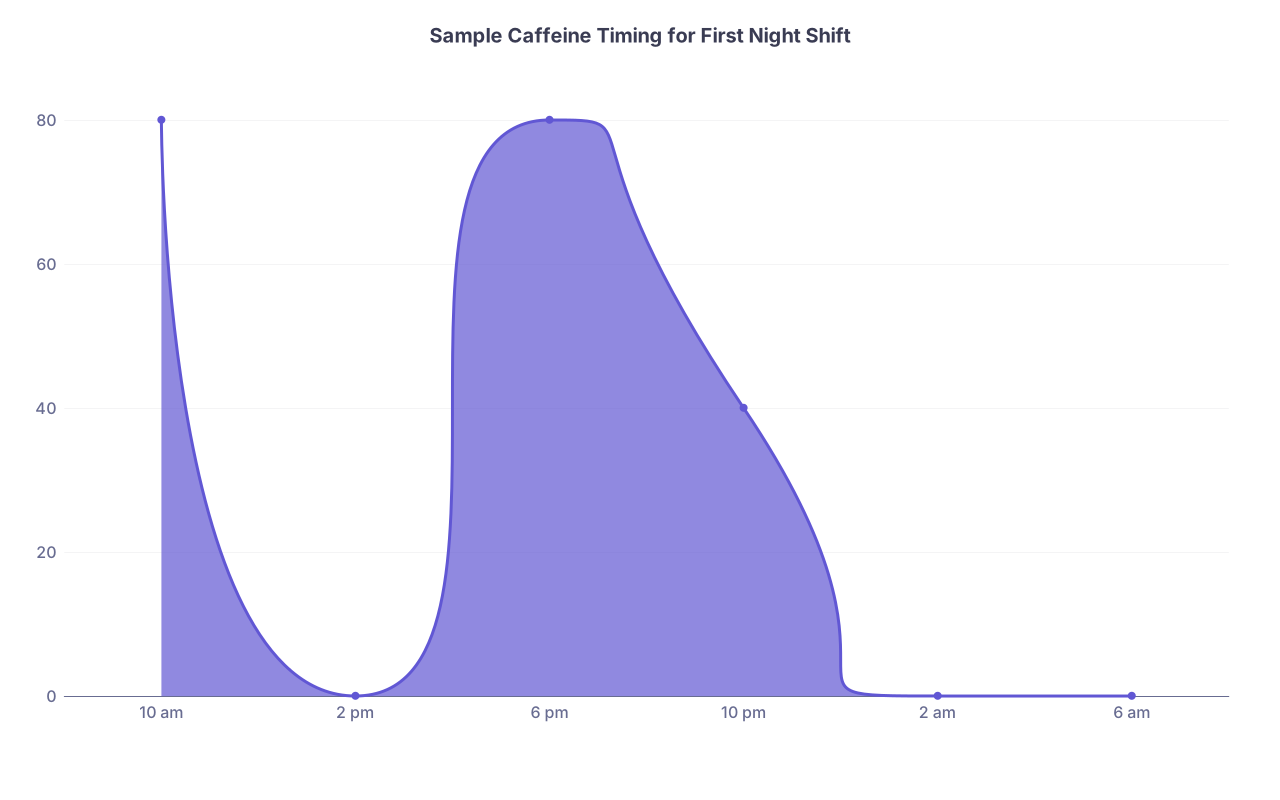
- If you want caffeine for the start of the shift, this is your moment:
- Small to moderate dose 1–2 hours before shift (e.g., 1 small coffee, not a triple espresso + energy drink stack).
- Hard rule: No giant caffeine hits after midnight. It will wreck your day sleep later.
| Category | Value |
|---|---|
| 10 am | 80 |
| 2 pm | 0 |
| 6 pm | 80 |
| 10 pm | 40 |
| 2 am | 0 |
| 6 am | 0 |
Pack Your Night Bag
At this point you should physically pack and lay out:
- ID badge, keys, parking pass
- Stethoscope, penlight, at least 2 pens that actually write
- Small notebook or folded notes page
- Charger and/or battery pack
- Snacks and a water bottle
- Light jacket or hoodie (hospitals at 3 a.m. are freezing)
Do this before you get sucked into texting or Netflix. People forget obvious things when rushing.
2–0 Hours Before: Commute and Mental Switch
Now we’re in the 5–7 p.m. window.
At this point you should:
- Leave early enough that parking or traffic doesn’t spike your cortisol before you even start.
- Aim to arrive 20–30 minutes before you’re scheduled to check out with the day team.
- Walk in with a clear mental checklist for the first hour:
- Get sign-out and clarify sick/unstable patients.
- Know where the code cart is on your floors.
- Confirm how to reach your attending and senior overnight.
- Ask explicitly: “What are you most worried about overnight?”

Bring something small for a 2–3 a.m. micro-break: a printed crossword, a book page, anything that lets your brain detach for 5 minutes without a glowing blue screen.
On-Shift Micro-Timeline: First 4 Hours and the 3 a.m. Wall
You only asked about 48, 24, and 6 hours before, but let me blunt: your prep is pointless if you handle the first half of the night like a caffeinated squirrel.
7–11 p.m.: Frontload Wisely
At this point you should:
- Knock out:
- Admissions that can safely be completed early
- Non-urgent cross-cover tasks
- Order clarification calls that consultants can actually answer while awake
- Eat a light snack around 10–11 p.m.
- Keep fluids coming, but don’t chug a liter at once unless you want 5 bathroom trips.
1–4 a.m.: The Danger Window
This is when your unprepared colleagues start saying things like “I just blanked” or “I stared at the order set for 5 minutes.”
At this point you should:
- Set a soft rule: no complex decisions alone if your brain feels slow.
- Call your senior. That’s what they’re there for.
- Keep snacks simple and small—nuts, half a sandwich, fruit.
- Take 3–5 minute movement breaks:
- Walk a lap around the unit
- Climb one or two flights of stairs
- Stretch
Quick Comparison: Good vs Bad First Night Prep
| Aspect | Good Prep | Poor Prep |
|---|---|---|
| Sleep strategy | Planned anchor nap, gradual shift | Random naps, no timing |
| Caffeine use | Scheduled, cut off before nap | All day coffee, energy drinks at 2 am |
| Food | Balanced meal pre-shift, healthy snacks | Fast food dinner, vending machine |
| Logistics | Bag packed, access checked, numbers saved | Scrambling for badge, lost in hospital |
| Mental prep | Key protocols reviewed, cheat sheet ready | “I’ll just figure it out when I’m there” |
FAQs
1. What if I can’t nap at all before my first night shift?
Then you focus on rest and light. Lie down in a dark, quiet room for at least 60–90 minutes, even if you only doze. Afterward, hit bright light, hydrate, and move a bit. On shift, be stricter about small movement breaks and call your senior early if you feel your thinking slow. Do not try to “make up” for the missed nap by chugging energy drinks all night.
2. How much can I realistically shift my sleep in 48 hours?
You’re not fully flipping to a nocturnal schedule. In 48 hours, most residents can push their sleep/wake by 2–4 hours later without feeling wrecked. That’s enough to make a 1–3 p.m. anchor nap possible and keep you functional until 3–4 a.m. The rest is handled by strategic caffeine, light, and short movement breaks.
3. Is it better to stay up the night before and sleep all day of the shift?
For your very first night, usually no. That “all day” sleep is often fragmented and leaves you feeling hungover. You’re better off with one more decent, normal night, a later wake time, and a well-timed 1–3 p.m. anchor nap. The “stay up all night before” strategy works better for people who already know how their body handles nights; it’s a risky move for your first call.
4. What if my program schedule doesn’t give me a full day off before nights?
Then you compress the same principles. After your last day shift, go to bed a bit later, sleep as long as you reasonably can the next morning, still aim for a 60–90 minute afternoon nap, and tighten your caffeine cutoff times. You won’t have a perfect flip—and that’s fine. The goal is “safe and functional,” not “perfectly nocturnal.”
Two things matter most:
- At 24 hours out, you commit to the anchor nap and adjust your caffeine around it.
- At 6 hours out, you treat food, light, and packing like part of the job, not an afterthought.
Do those, and your first night shift will be hard—but not disastrous.