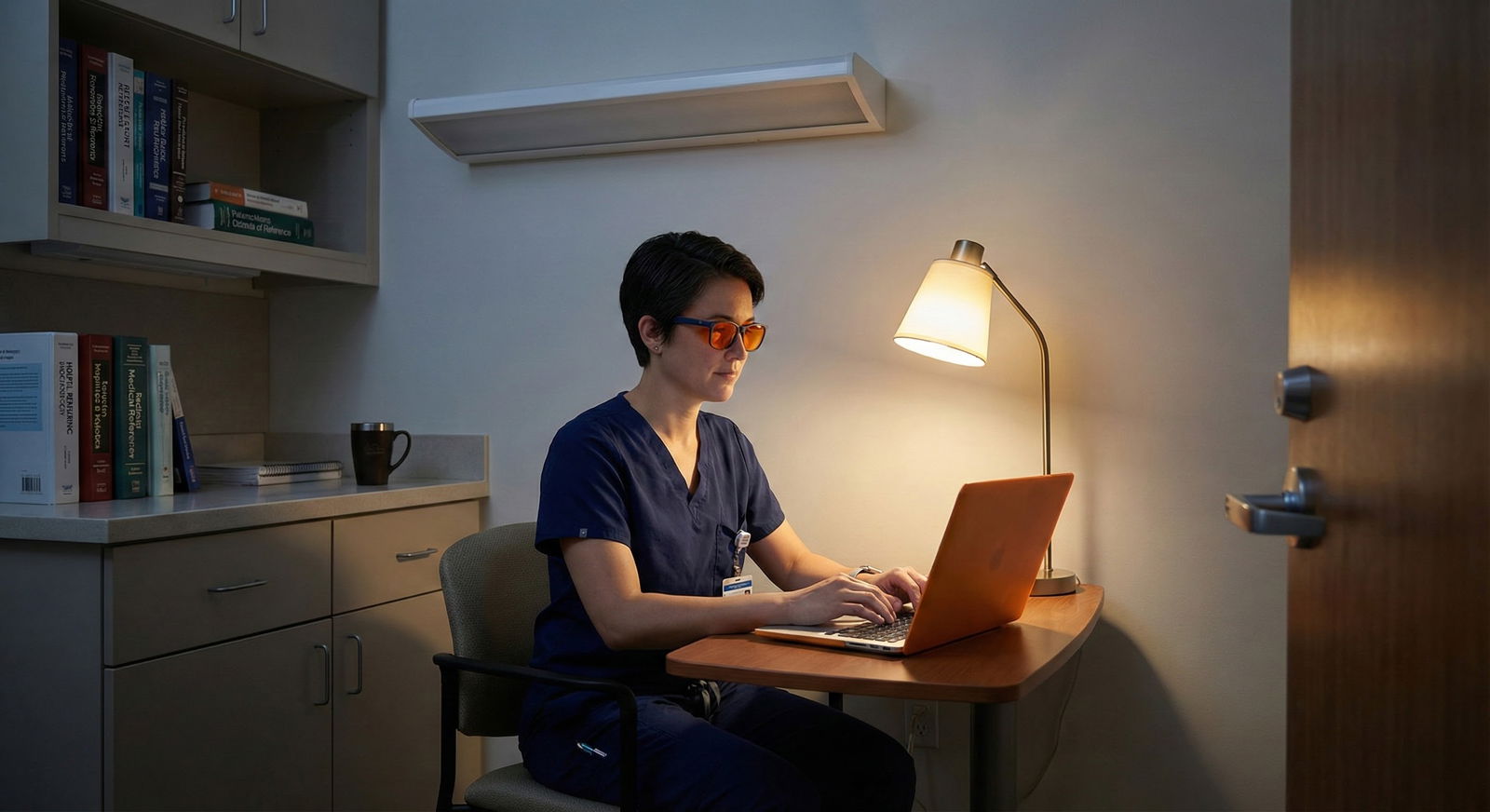
Last week at 3:17 a.m., a resident I know ducked into the med room, hands shaking so hard they could barely log into the Pyxis. Code pagers were going off somewhere else. Their senior seemed unbothered, calmly charting. They looked at me and whispered, “I’m the weak link on this team. They just haven’t said it out loud yet.”
If you’re reading this, I’m guessing part of you is terrified that’s you. On nights. Alone. Exposed.
Let’s just say it plainly: the feeling of being the “weakest” resident on nights is brutal. It’s the perfect storm—fatigue, lower staffing, fewer eyeballs on you, and just enough autonomy to be dangerous. And your brain is running this constant horror reel: I’m going to miss something. Someone’s going to crash. My senior will lose all respect for me. I’ll get reported. I’ll fail residency.
I’m not going to tell you, “Don’t worry, you’re fine.” You don’t believe that. I wouldn’t either. What I will do is give you quiet, not-flashy strategies to survive this and actually catch up—without broadcasting to the whole hospital that you feel behind.
First: Are You Really the “Weakest,” or Just the Most Honest?
Here’s the nasty trick your brain plays: it compares your inside (panic, confusion, blank moments) to everyone else’s outside (confident orders, fast notes, relaxed posture).
The resident who seems “on top of everything” might have:
- A year of prelim IM before switching specialties
- Been a night nurse for 6 years before med school
- Rotated on that exact unit as a student for months
You don’t see any of that. You just see speed and calm.
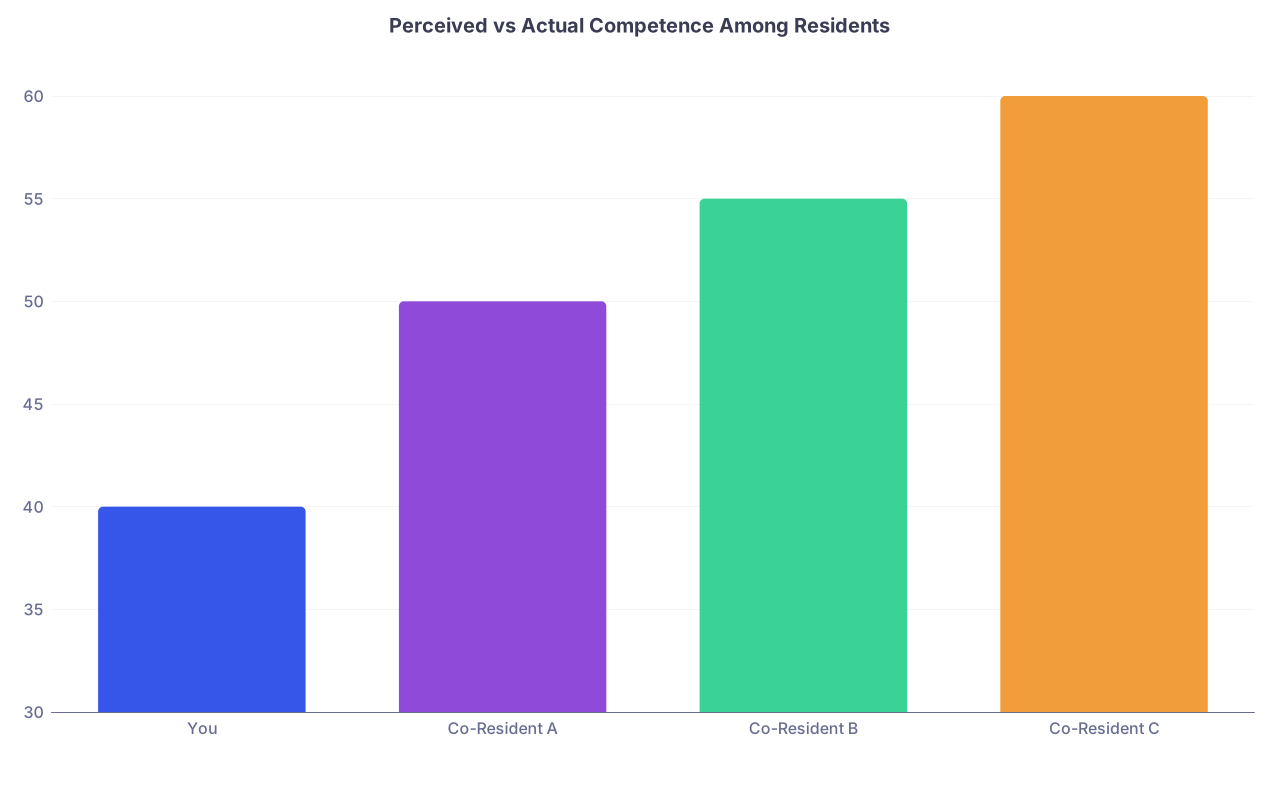
| Category | Value |
|---|---|
| You | 40 |
| Co-Resident A | 50 |
| Co-Resident B | 55 |
| Co-Resident C | 60 |
The bar in that chart labeled “You” is how you think you stack up. The reality? Competence is way closer than you think. I’ve watched the “strongest” resident get totally wrecked by one rough MICU admit, and the quiet, slow intern handle a crashing patient flawlessly because they kept a checklist in their pocket.
Still, sometimes you are less experienced or slower. Fine. Then the question becomes: how do you close that gap at night without falling apart?
Quiet Safety Nets You Can Set Up Before Night Shift Starts
If you already feel like the weakest one, you can’t just wing it. You need scaffolding. Invisible scaffolding.
Here’s what actually helps, that no one really talks about:
1. Build Your “Night Brain” Binder (or Phone Folder)
You don’t have to rely on your 3 a.m. memory. Don’t. It’s trash. Make a small, private system you can lean on.
Things to have:
Common cross-cover situations with 3–5 default steps
- Chest pain
- New hypoxia
- Fever in neutropenic patient
- Acute delirium/agitation
- Oliguria on the floor
Quick reference for:
- Basic vent settings & how to not embarrass yourself when talking to RT
- Insulin sliding scales and DKA initial orders
- Common drips on your unit and starting doses
This can be:
- A tiny notebook in your pocket
- A OneNote / Notion page on your phone
- A Word or Google Doc you print and keep folded in your coat
No one needs to know what you’re looking at when you pause and glance down. From the outside, it just looks like you’re double-checking something. Which you are.

2. Pre-Game With Your Senior… Without Announcing “I’m Weak”
You don’t need to confess all your fears to your senior. You can say:
- “Just so I’m aligned with you—if a nurse calls with X (e.g., new chest pain, sats dropping), what kind of first steps do you usually want before I call you?”
- “For sick patients, do you prefer I loop you in early, or get a quick exam and vitals first then call with more info?”
- “If things get busy, are there types of issues where you’d rather I never hesitate to call, even if it feels minor?”
That sounds like maturity, not insecurity. You’re basically getting their mental protocols in advance. Which makes your “weakest” brain less likely to freeze later.
During the Shift: How to Not Look Lost While You’re Catching Up
You know that feeling when the pager goes off and your stomach just drops? Yeah.
You can’t always stop that, but you can control what happens after.
3. Script Your First 60 Seconds of Every Call
The worst part of nights is that moment where you answer, the nurse talks fast, and you’re half-asleep and already behind.
So script it. Literally.
Your brain on autopilot should do this:
- Ask for vitals right away.
“Can you give me the most recent vitals, including O2 sat and any changes?” - Ask what’s changed from baseline.
“Is this new for them, or have they been like this earlier?” - Buy 2 minutes to think.
“Okay, I’ll be down to assess in 5. If there’s any change in vitals—especially BP, HR, O2 sat—page me again immediately.”
This gives you:
- A sense of urgency
- Time to flip through your notes while you walk
- A pattern to fall back on when your brain is sludge
It’s not glamorous. It’s not “genius-level clinical reasoning.” It’s survival. But it works.
4. Use Invisible Checklists at the Bedside
You know who uses checklists? Pilots. You know who dies when they try to “fly by feel”? Also pilots.
Make tiny mental or physical checklists for common scenarios:
- Dyspnea: airway, breathing, circulation, O2 source, recent meds, CXR? ABG?
- Hypotension: confirm cuff vs arterial line, repeat BP, heart rate, new meds, bleeding, sepsis workup, fluids?
You can glance at your phone (notes app) and no one will care. Nurses will actually respect that you’re covering your bases instead of pretending to guess.
You might feel like you’re the slow one, but here’s reality: the “fast” resident who jumps to an order without a structured assessment makes bigger mistakes. You just don’t see all of them.
Protecting Yourself From the Real Nightmares (The “What If I Miss Something and They Crash?” Fear)
This is the one that keeps you awake even when you’re off service. The fear that you’ll walk away from a patient, and 20 minutes later there’s a code.
You can’t eliminate risk. But you can quietly reduce the odds that something truly dangerous slips past you.
5. Default to “One More Data Point” When You’re Unsure
If you’re staring at a patient thinking, “They kind of look okay, I guess,” that’s your cue: get one more data point.
Examples:
- Ask the nurse, “Do they look different than earlier tonight?” (Nurses are absurdly good at spotting subtle changes.)
- Get a repeat set of vitals or a manual BP.
- Pull up their trend: What was their HR and BP three hours ago? Six hours ago?
- Ask, “What’s their baseline—do they normally sit this low in the 80s systolic?”
This doesn’t mean you over-order labs on everyone. It means you respect that your “weakest resident” brain might miss something subtle that a trend line will catch.
6. Use the “Call Early, Call Small” Rule With Your Senior
The ego-driven resident waits until everything is falling apart before they call the senior, so they can say, “We tried X, Y, Z and it’s still not working.”
You can’t afford that right now. You’re catching up.
Adopt this rule:
- If you’re debating whether to call → call
- If you can’t explain to yourself why the patient is like this → call
- If the nurse sounds worried and you’re not → go see the patient and then probably call
When you do call, keep it structured and concise. Something like:
- “Hey, I’m with Mr. Smith in 412. He’s a 67-year-old with CHF and CKD. Nurse called for increased SOB. Vitals now: 92/56, HR 112, RR 26, O2 88% on 2L, up from 94% earlier. On exam, increased work of breathing, crackles halfway up, JVD, + peripheral edema. I’m concerned he’s in decompensated HF. I’m thinking about IV diuresis and maybe increasing O2, but given his BP I wanted to loop you in now. Can you come take a look with me?”
You sound like you know what you’re doing, even if your insides are vibrating. And your senior hears: good data, early call, not reckless. That’s the opposite of “weak resident.”
Quiet Ways to Learn on Nights When Everyone Else Is Just Surviving
You might feel like nights is where people go to stagnate. Just put out fires, sign stuff, survive. But if you’re behind, you don’t really have that luxury.
7. Turn Every Admit Into a Mini Self-Teach
You don’t have time for full UpToDate deep dives at 2 a.m. I get it. But you can do 5-minute focus bursts right after admits.
Here’s a structure that doesn’t add much time:
- Admit comes in with DKA?
After orders are in and things are stable, skim: “DKA management initial treatment” for 3 minutes. Pick 1 thing you want to remember for next time (e.g., when to switch from insulin drip to SQ). - New GI bleed?
Quick check: transfusion thresholds, when GI needs to be called overnight, what meds to start now vs wait till morning.
Write down exactly one line after each case. One fact, one nuance, one “next time I won’t forget this.” That’s it.
Over a month of nights, that becomes a thick mental layer of “oh yeah, I’ve seen this before.”

8. Ask Nurses Tiny, Tactical Questions (Not Vague Ones)
Instead of “Do you think he’s sick?” (which puts them in an awkward position), ask:
- “How does he look compared to earlier?”
- “When you’ve seen patients like this go bad in the past, what changed first?”
- “If this were your family member, what would you be watching for right now?”
You’ll learn patterns insanely fast. Night nurses have basically seen the same bad scenarios repeat for years. It’s free pattern recognition training, if you’re humble enough to ask.
Handling the Social Side: The Fear Everyone Knows You’re Behind
The medical part is one thing. The social shame spiral is another: “My co-residents must be talking about me. My attendings have already decided I’m mediocre. The nurses don’t trust me.”
Here’s the truth from what I’ve seen: people notice three things more than raw knowledge.
They notice if you’re:
- Safe
- Reachable
- Not a jerk
You can absolutely control those, even if you feel clueless.
9. Be Predictably Reachable
The “strong” resident who never answers pages on time? No one likes them.
You can build trust simply by:
- Answering pages fast (even if it’s just: “I’m tied up in a room, I’ll come as soon as I’m out, if anything changes page me STAT”).
- Letting the unit clerk or charge nurse know if you’re going to be scrubbed or off the floor.
That alone gives nurses more confidence in you. Even if you’re slower clinically, your reliability reduces their anxiety. Which, in turn, makes them more likely to help you instead of judge you.
10. Be Honest… But Targeted
You don’t need to walk around telling everyone, “I’m the weakest resident here.” Please don’t.
You can quietly say to a trusted senior or chief:
- “I feel slower and more overwhelmed on nights than I think I should be. I’m safe, but I’m not where I want to be. Can we pick 2–3 things to focus on this month to get me closer?”
That sounds motivated, not weak.
Also: occasionally saying, “I’m not sure, let me look that up / run that by my senior,” does not label you as incompetent. It labels you as careful. The resident who pretends to know and orders something reckless? That’s the one people talk about in the break room.
The Long Game: Giving Yourself Time to Not Be the Weakest Anymore
Here’s the part your anxious brain hates: improvement on nights is slow and invisible. There’s no gradebook. No one hands you a gold star for “didn’t miss a GI bleed tonight.”
So you need tiny, private metrics.
| Area | Example Win |
|---|---|
| Paging | Returned all pages within 5 minutes |
| Safety | Called senior early on 2 borderline cases |
| Learning | Wrote 2 new “next time I’ll remember” notes |
| Efficiency | Finished sign-out 10 minutes faster |
| Communication | Clarified plan with nurse for sick patient |
If you track stuff like this in your notes app, you’ll start to see something your fear won’t show you: you’re actually getting better.
You might still feel like the “weakest” for a while. That’s fine. Someone is always going to be the least experienced, the slowest, the last to feel comfortable. You know what matters? That you’re:
- Safe
- Getting slightly better each week
- Willing to ask for help earlier than your pride wants
Residents I’ve seen who start off “behind” often end up better clinicians long-term because they had to build systems, not rely on raw talent. They double-check. They remember the near misses. They respect their limits.
The loud, flashy “strong” resident doesn’t always age well in this field.
What You Can Do Tonight (Literally Tonight)
Don’t just close this and go back to spiraling. Do one small thing that shifts you out of pure fear mode and into building mode.
Here’s your next step:
Open a blank note on your phone and create three headers:
- “When Nurse Pages for…”
- “Call Senior Early If…”
- “Next Time I’ll Remember…”
Under “When Nurse Pages for…”, write 3 situations you dread most (e.g., “New chest pain,” “Sats dropping,” “Acute agitation”). For each, jot down the first 2–3 steps you’ll take before you even leave the workroom or pick up a pen.
That’s it. Just that.
You’ll walk into your next night with at least one small, quiet safety net that didn’t exist before. And that’s how “weakest on nights” slowly turns into “actually, they’re pretty solid.”