
Last night, a 45‑year‑old project manager sat in her car in the driveway, engine off, lights out. Upstairs, her 78‑year‑old mother waited for help with nighttime meds. On her passenger seat: a stack of community college syllabi for orgo and physics. On her phone: a bookmarked page about “nontraditional premeds.” Her thought loop was simple and relentless: “How on earth do I take care of her and still do this?”
If that sounds like your life right now—elderly parent, stable but demanding job, and a burning late‑career pull toward medicine—this is for you. You are not dealing with “time management.” You’re trying to pull off a three‑way life merger: caregiver, breadwinner, future physician.
Let’s make this brutally practical.
Step 1: Get Real About Your Actual Load (Not the Fantasy Version)
Most nontraditional premeds with caregiving responsibilities underestimate one thing: the logistics.
You don’t just “care for your mom.” You:
- Refill and pick up meds
- Manage appointments and rides
- Monitor symptoms (“Has her gait been worse this week?”)
- Handle paperwork (insurance, Medicare, forms)
- Put out fires when something goes wrong… always during your workday or right before an exam
You can’t plan a realistic premed path until that work is on paper.
Do this first:
For two weeks, track everything you do for your parent. Literally everything.
“Ran to pharmacy at 7 pm.” “On hold with insurance for 35 minutes.” “OT visit – 1 hr + 30 min prep/cleanup.”Assign rough weekly averages in hours:
- Direct care (bathing, meals, meds)
- Coordination (calls, forms, scheduling)
- Escorting to visits
- Unplanned crises (estimate based on last 3–6 months)
Add work hours and your own health/sleep needs. Then see what’s left for school.
Here’s what I’ve seen when people actually do this: what they thought was 10 hours/week of caregiving is closer to 20–25. That’s the difference between one class with an A… and three classes with burnout and withdrawals.
You’re not lazy or disorganized. You’re overloaded.
Step 2: Choose the Right Timeline for Your Transition
You’re not 21. You don’t get to brute‑force four classes a term, MCAT, and volunteering while pulling all‑nighters and “making it work.” You can, but you’ll wreck yourself and your parent will feel it.
Pick a timeline that respects all three realities: your parent’s health trajectory, your own age, and your financial runway.
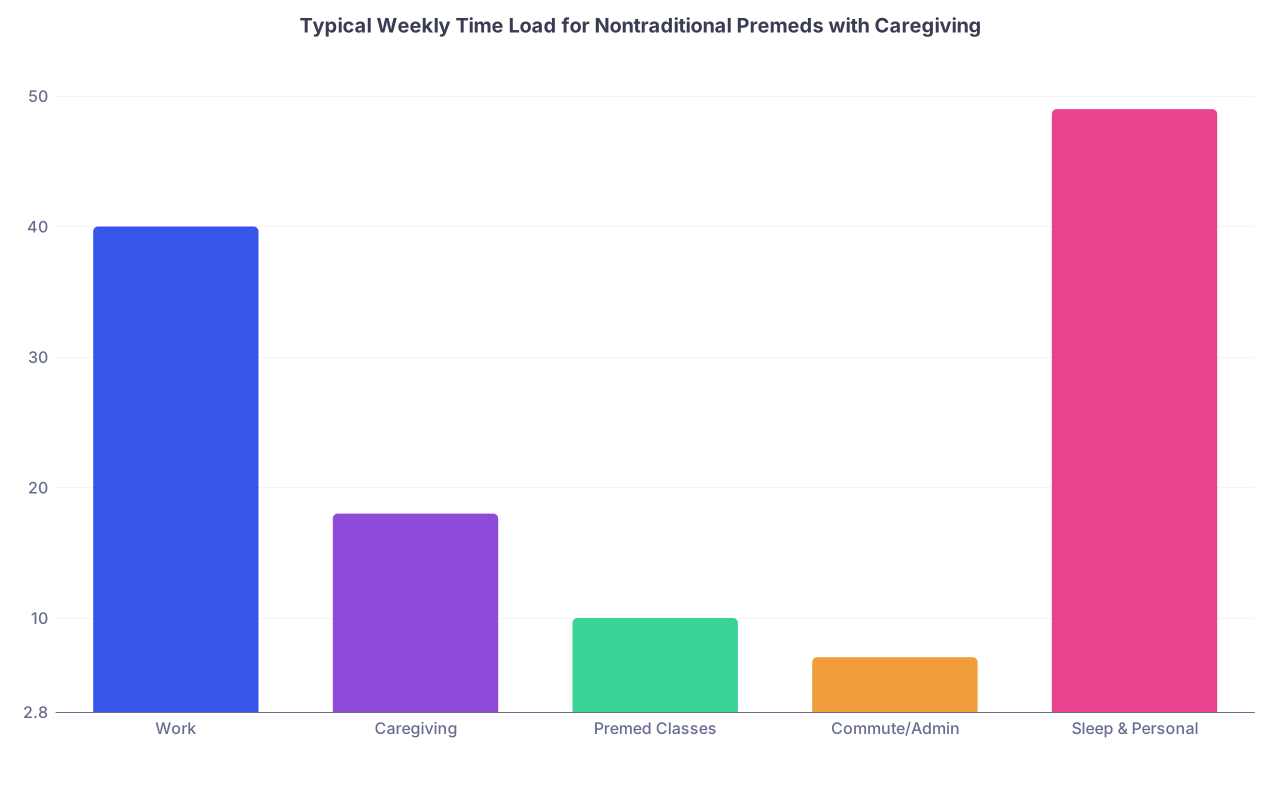
| Category | Value |
|---|---|
| Work | 40 |
| Caregiving | 18 |
| Premed Classes | 10 |
| Commute/Admin | 7 |
| Sleep & Personal | 49 |
Those numbers are not exaggerated. Many of you are already here.
Three basic pacing models
You can tweak, but these are the usual patterns I see work.
| Model | Typical Class Load | MCAT Timing | Total Prep Time | Best For |
|---|---|---|---|---|
| Slow & Steady | 1 class/term | MCAT after coursework | 3–5 years | High caregiving load |
| Moderate | 2 classes/term | Last 6–9 months of coursework | 2–3 years | Stable caregiving, some help |
| Compressed | 3+ classes/term | Parallel with last year of classes | 1.5–2 years | Robust support, flexible work |
If your parent:
- Needs help multiple times a day
- Has mobility issues or dementia
- Requires you at most appointments
You are in “Slow & Steady” by default. Trying to operate in “Compressed” is asking for failing grades and caregiver collapse.
You can still get there. You just do it deliberately instead of pretending you have 40 hours/week to be a student when you don’t.
Step 3: Build a Concrete Care Plan Before You Register for Classes
You cannot “fit in” studying around unpredictable caregiving. You need predictable blocks of protected time. That only happens if the care plan is explicit and shared.
Do a mini “family care conference”
Even if “family” is just you and one sibling across the country, call a meeting. If you’re solo, you still write this down—it forces clarity.
Agenda:
Current state:
- What your parent can and cannot do alone
- Current diagnoses, recent changes, fall history, hospitalizations
Your plan:
- “I intend to start prereqs in [month/year]. This will require [X] hours/week of class and [Y] hours of study.”
Gaps:
- Times you cannot reliably be “on call” (evenings in the lab, exam nights, MCAT prep windows)
Shared solutions:
- Who can cover what, and when
- What you’ll outsource or pay for (if possible)
If other relatives say things like, “Just call if you really need help,” that’s code for “We’re not building this into our lives.” You need scheduled, recurring commitments:
- “You call Mom every night at 8 and remind her meds.”
- “You take her to all Wednesday appointments.”
- “You handle all insurance calls.”
Loose, vague offers are useless when you’re in orgo hell and your mom falls at 11 pm.
Step 4: Leverage Formal Support Systems (Even If You Feel Guilty)
The biggest trap I see in caregivers who want to go into medicine? Martyrdom. The feeling that “I should do everything myself; she took care of me.” That story will kill this transition faster than any MCAT score.
You need to act like what you are: a dual‑role person preparing for a demanding profession, not a full‑time live‑in aide.
Here’s the short list of tools to explore, now, not “later”:
Geriatrician consult
Ask specifically for:- Assessment of safety at home
- PT/OT referrals for mobility
- Cognitive eval if needed
- Driving safety assessment
A geriatrician’s documentation is often how you unlock more formal support.
Case manager / social worker
These exist through:- Hospitals and health systems
- Senior centers
- Area Agency on Aging (or equivalent in your country)
Ask them: “I’m the primary caregiver and I’m starting a demanding educational program. What community supports can reduce my direct care hours?”
Adult day programs
Often underused and heavily subsidized in many areas. Huge benefits:- Safe environment during work or study
- Socialization for your parent
- Set hours that create predictable study windows for you
Respite care
Short‑term relief care (at home or in a facility). You may get:- Weekly blocks (e.g., 8–12 hours)
- A few days at a time when you’re in an exam crunch or MCAT sprint
Home health aides / personal care assistants
Even 4–6 hours/week can free you up:- Bathing days
- Laundry and meal prep
- Light housekeeping
This is where the guilt shows up hardest. You have to frame it honestly: you’re trading a bit of money (or effort to get benefits) for long‑term capacity to keep caring and build your career.
Step 5: Design Your Weekly Schedule Like an ICU Call Schedule
If you’re serious, you need to stop treating this like a “side project” and more like pre‑residency training. The difference is: you get to architect this schedule. Take advantage.
Use one week as a prototype and write it out hour by hour. Not vibes. Actual hours.
Fixed blocks:
- Work hours
- Standing caregiving tasks (meals, meds, bathing, PT exercises)
- Non‑negotiable appointments
Variable blocks:
- Class times
- Study blocks
- Exercise and sleep (yes, in writing)
- Buffer zones for inevitable disruptions
Then, designate:
- Green zones – parent is at program/asleep/with caregiver; highest‑value studying here
- Yellow zones – you’re “on call” but can do lower‑intensity tasks (flashcards, admin, emails)
- Red zones – you don’t schedule anything ambitious here; too fragile/unpredictable

| Step | Description |
|---|---|
| Step 1 | Map all fixed commitments |
| Step 2 | Identify caregiving tasks |
| Step 3 | Block protected study times |
| Step 4 | Label zones: Green/Yellow/Red |
| Step 5 | Test schedule for 2 weeks |
| Step 6 | Register for next term load |
| Step 7 | Reduce class load or add support |
| Step 8 | Sustainable? |
If you can’t find at least:
- 10–15 reliable hours/week to study for one science class, or
- 20–25 for two classes
then your answer is not “try harder.” It’s “reduce course load or increase supports.”
Step 6: Pick Classes and Format That Match Your Reality
You don’t need heroics. You need consistent A‑level work in a schedule that doesn’t break you during every crisis.
When you’re a caregiver, certain choices matter more:
Asynchronous vs. in‑person vs. hybrid
- Online/asynchronous can be a lifeline for lecture material
- Labs usually need in‑person
Strategy I’ve seen work: - Take lecture online, lab in person on the same day (cluster disruption)
- Avoid scattered 1‑hour on‑campus blocks across the week
Evening vs. day classes
Depends on your parent’s pattern:- If evenings are sundowning/agitation time, avoid nighttime classes
- If mornings are when aides are present or adult day programs run, stack classes then
One killer vs. two manageable classes
Example:- Don’t pair Organic Chem I + Physics I in your highest‑risk caregiving year if you can help it
- Do: Gen Bio II + Psych, or Orgo I + a lighter gen ed
I’ve watched people blow up their GPAs trying to “get it over with” by taking Orgo + Physics while dealing with a new dementia diagnosis at home. That is not grit. That’s poor strategy.
Step 7: Decide What to Disclose and Where
You don’t need to walk around campus with “I’m a caregiver” on your forehead. But some strategic disclosure gives you flexibility when, not if, something serious happens.
Where it helps to be upfront:
With your academic advisor
Tell them directly:- “I’m a nontraditional premed, working full time, and I’m the primary caregiver for my father who has [condition]. This may occasionally impact my availability. I’m proactively planning a realistic course load.”
With key professors (selectively)
Not day one. But early in the term:- “I’m fully committed to this course. I want to flag that I’m primary caregiver for my elderly parent, so rare emergencies can occur. I’ll communicate early and document everything if anything serious happens.”
Professional, concise, no drama. You’re not asking for special treatment; you’re smoothing the way for reasonable flexibility.
Note: This is different from what you put in applications. That comes later and is more curated: you’ll talk about caregiving as an experience, your insight into aging, boundaries, empathy, and how you handled competing responsibilities. Admissions does not need every gory detail; they need the narrative and the growth.
Step 8: Protect Your Mind and Body Like a Future Physician
You’re heading into a career known for burnout, depression, and unhealthy martyr habits. Your caregiving situation is a preview. If you don’t learn to set limits now, medicine will steamroll you later.
Non‑negotiables you actually schedule:
- Sleep floor – a minimum you refuse to dip below for more than a few nights: for most adults, that’s 6–7 hours. Not aspirational. Actual.
- Movement – 3 short 20‑30 minute blocks a week is more honest than “I’ll work out daily.”
- One off‑duty block per week – where:
- You’re not actively caregiving
- Not working
- Not studying
This might require paid respite, sibling coverage, or a friend stepping in. It is not a luxury. It is “how you don’t snap on your parent, your classmates, or yourself.”
You will feel selfish the first time you take a 3‑hour break while someone else watches your parent. That’s the caregiving guilt voice. Learn to ignore it when it conflicts with sustainability.
Step 9: Use the Caregiving Itself as Part of Your Preparation
You’re not just “losing time” to caregiving. You’re gaining experiences most 22‑year‑olds can’t touch.
Be deliberate:
Keep a brief journal:
- How you advocated for your parent in the hospital
- How it felt when no one explained the plan in plain language
- Where systems failed (med reconciliation, discharge teaching, etc.)
These become concrete stories for your personal statement and interviews.
Observe clinicians:
- Who treated your parent like a human being, not a bed?
- Which social worker changed everything with one simple suggestion?
- How did that one rushed doctor make you feel dismissed?
You’re building your future physician identity right now. Not in some hypothetical “later, in residency.” You bring this perspective into medicine, and good programs want that—if you can package it as evidence of resilience and insight, not unmanaged chaos.
Step 10: Know the Red Flags That Mean “Slow Down or Reassess”
You’re allowed to change pace without calling it failure. What you’re doing is inherently hard. Some seasons will not be compatible with full academic intensity. That’s reality, not weakness.
Watch for:
- Grades slipping from A/B to C despite truly disciplined effort
- You snapping at your parent regularly or feeling constant resentment
- Recurring health issues: migraines, new hypertension, insomnia
- Missing work deadlines or performance warnings
- Constant dread before every week starts
If two or more of those hit for more than a month, you need to adjust:
- Drop one class next term
- Take an academic leave for a semester to stabilize your parent’s care plan
- Delay MCAT by 6–12 months
- Double down on external supports (day programs, aides, etc.)
Medicine is a long game. Showing you can course‑correct and protect both your patient (your parent) and yourself is actually the kind of maturity adcoms like to see—if the end story is, “I made deliberate adjustments and then succeeded,” not “I torched my GPA and my health and kept pushing anyway.”
Quick Reality Check: This Is Possible
I’ve seen:
- A 48‑year‑old teacher, primary caregiver for her dad with Parkinson’s, do one science class at a time over 4 years, then MCAT over 9 months, and land at a solid MD state school.
- A 42‑year‑old nurse with her mom at home on oxygen set up adult day care three days a week, outsource bathing to a home health aide, and finish a DIY post‑bac while working nights.
- A 45‑year‑old engineer arrange for a sibling to take over full‑time care for 18 months while he did a formal post‑bac and applied. Hard conversations, but everyone knew the why.
None of them did it by pretending they could carry 120% of the load indefinitely. They made it work by treating caregiving as a real, heavy job—and building a medical path around that truth instead of fantasy.
FAQs
1. Will medical schools hold it against me if I took a very long, part‑time route because of caregiving?
No, not if the academic quality is there. Schools care about whether you can handle rigorous science and a full course load at some point before matriculation, not that you sprinted from day one. If your transcript shows strong grades, especially in upper‑level sciences, and you explain the timeline succinctly (“I was primary caregiver for my elderly parent while completing prerequisites”), this often reads as maturity and responsibility, not a weakness. What hurts you is not the length, it’s scattered withdrawals, repeated failures, and no coherent story.
2. Should I talk about my parent’s illness and caregiving in my personal statement?
Usually yes, but with discipline. Your parent’s condition is context, not the star. Focus on:
- What you learned about illness, aging, communication, and systems of care
- Specific times you advocated, adapted, or showed resilience
- How this experience deepened—not just “sparked”—your desire for medicine
Avoid turning the essay into a medical chart or a trauma dump. The reader should finish thinking, “This person understands patients and families from the inside and can still function,” not “This situation is still so raw they might crumble under stress.”
3. What if my parent’s health is clearly declining and I’m afraid they won’t live to see me become a doctor?
Then you’re dealing with grief on top of logistics. Two truths can coexist:
- You may not finish training while your parent is alive.
- It can still be deeply right to pursue this career.
Sometimes, the quiet conversation you need is with your parent: “This will take years. You may or may not see the end of it. Do you still want me to do it?” Most parents, when asked plainly, say some version of, “Yes. Go.” Let that answer inform your choices. You honor them not only by being physically present, but by building the life they wanted for you—even if the timeline hurts.
Key points to carry with you:
- Treat caregiving as a real job in your planning, not background noise you’ll magically “fit around” school.
- Build supports and a realistic schedule before you overload on classes; slow, consistent A’s beat fast, chaotic C’s.
- Use your caregiving experience as an asset—structured, reflected, and framed—rather than a quiet burden you try to hide.