
The way most MDs think about getting a late-career PhD is dangerously naive.
You are not a 24‑year‑old graduate student with time, flexibility, and no real opportunity cost. You are trading away years of peak-earning, peak-influence professional life. If you misjudge this decision, you will not get a do‑over.
Let me walk you through the mistakes I see physicians make over and over when they start fantasizing about “going back for a PhD” in their 40s or 50s. Some of these errors cost people millions of dollars. Some cost them their academic career. Some cost them their sanity.
If you want to avoid being the cautionary story told in the fellows’ lounge five years from now, keep reading.
Mistake #1: Treating “PhD” as a Generic Badge, Not a Specific Tool
The first and biggest mistake: thinking “I want a PhD” instead of “I need training in X to do Y.”
That sounds subtle. It is not.
A PhD is not:
- An honorific
- A credibility sticker
- A generic “research upgrade” to your MD
It is a highly specific apprenticeship in a narrow field, under particular mentors, using particular methods.
Here is where MDs go wrong:
Vague goals
- “I want to do more research.”
- “I want to understand statistics better.”
- “I want to be more competitive for academic promotion.”
None of these require a PhD. They require skills, collaborators, and track record. Very different things.
Wrong degree for the actual problem
Often, what physicians really need is:- A master’s in clinical investigation, biostatistics, or public health
- A serious statistics/ML certificate or online sequence (with real projects)
- A strong data scientist collaborator
- Protected research time and mentorship
But because “PhD” sounds impressive, they fixate on that.
Ignoring the “why now?” question
Late-career PhDs must be purpose-built:- “I need rigorous training in causal inference and trial methodology to lead multisite pragmatic trials for diabetology at my institution.”
Reasonable. - “I always wanted to do a PhD and now the kids are in college.”
Dangerous luxury thinking.
- “I need rigorous training in causal inference and trial methodology to lead multisite pragmatic trials for diabetology at my institution.”
If you cannot give a one‑sentence, outcome‑focused answer to:
“What, specifically, will this PhD enable me to do that I cannot realistically achieve another way?”
you are not ready to consider it.
Mistake #2: Grossly Underestimating Opportunity Cost
This is the brutal one. I have watched full professors walk away from $350–500k/year clinical incomes to become $35k–$40k/year graduate students for 4–6 years.
They say: “It is fine, I am doing it for the passion, not the money.”
Then reality hits.
Let us put real numbers to it.
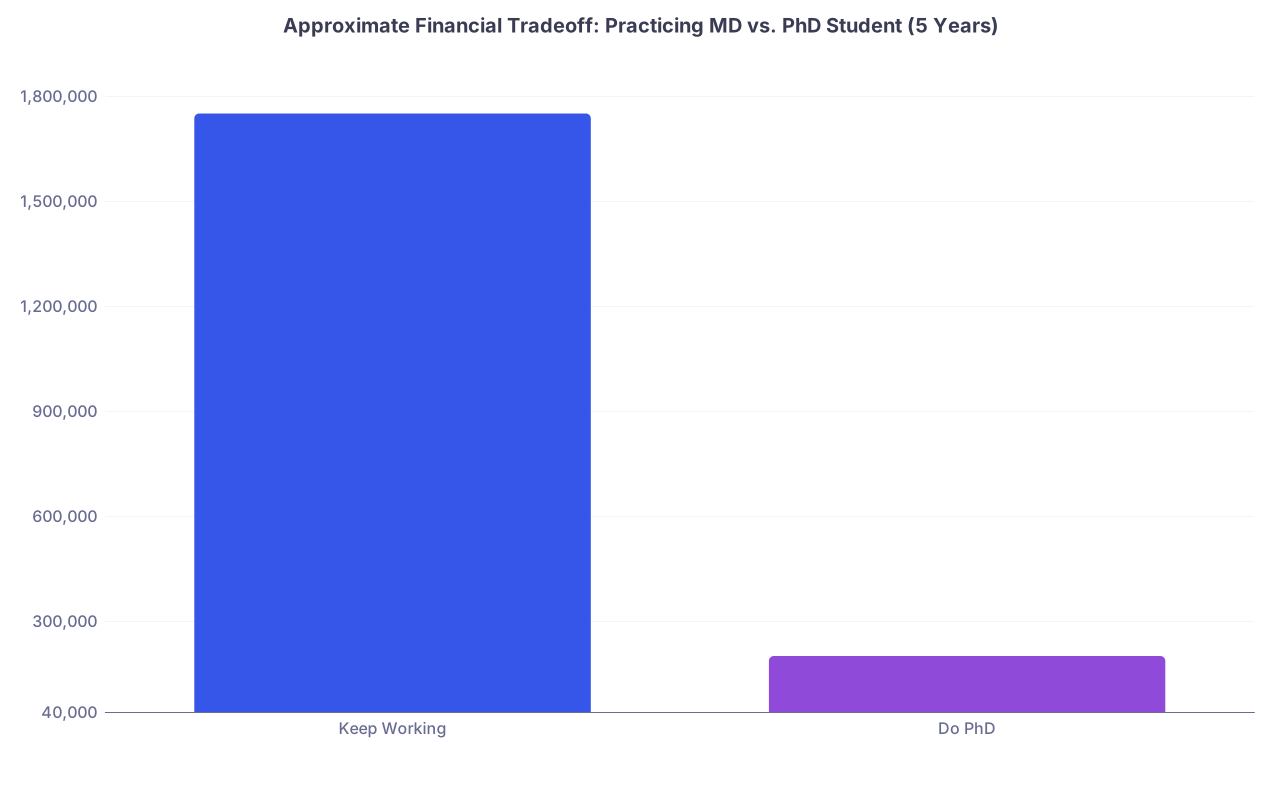
| Category | Value |
|---|---|
| Keep Working | 1750000 |
| Do PhD | 200000 |
Even with rough assumptions:
- MD in practice:
- $350k/year × 5 years = $1.75M gross income.
- PhD stipend:
- $40k/year × 5 years = $200k before tax in many cities barely livable.
That is > $1.5M in foregone income, not counting lost retirement contributions and compound growth.
But money is only half of it.
Opportunity cost also includes:
- Lost years at the peak of your clinical expertise
- Lost chance to build your division, your regional or national reputation
- Lost leadership roles that pass to someone else while you disappear into coursework and qualifying exams
- Energy cost: you will be doing this at 40–60, not 26
The typical MD misconception: “I will just go do this PhD for 3 years, then return and be even more competitive.”
Wrong on two fronts:
- Most PhDs will not be 3 years for you (we will get to that).
- Your clinical and institutional relevance will not be frozen in time while you are gone.
Before you touch any application portal, you must do a brutal, back‑of‑the‑envelope calculation:
- How much income will you give up?
- How much retirement growth will that cost over 15–20 years?
- How many years of high‑energy, high‑productivity professional life do you have left after you finish?
If you do not do that math, you are making a seven‑figure decision emotionally, not intellectually.
Mistake #3: Assuming a PhD Will Automatically Fix a Stalled Academic Career
I hear this line far too often from mid‑career attendings:
“Promotion is getting harder. The bar is more and more research‑heavy. Maybe I should get a PhD.”
No. That is like saying, “I missed the residency match in ortho, maybe I should start college over with a different major.” You are attacking the problem at the wrong layer.
Here is what usually goes wrong:
Misdiagnosing why you are stuck
Often the real reasons for academic stagnation are:- No focused niche
- Weak or inconsistent productivity
- Poor mentorship and lack of collaborative networks
- Too much clinical load, not enough protected time
None of this changes magically with three letters added to your name.
Thinking a credential replaces a track record
Promotions committees care about:- Publications in your field
- Grants (especially as PI or co‑PI)
- National recognition and invited talks
- Leadership roles in societies or programs
They do not suddenly forgive a weak CV because “now you have a PhD.”
Ignoring easier, faster fixes
For many MDs, targeted steps work far better than a late‑career PhD:- Renegotiating FTE and protected time with hard metrics
- Switching to a more research‑supportive department or institution
- Partnering with methodologists on grants
- Doing a 1–2 year research fellowship or methods‑heavy master’s
If your academic problem is “I have no track record,” the answer is not “Disappear for 5 years and start over as a student.” It is “Fix your track record now with focused projects and better support.”
Mistake #4: Underestimating Time, Structure, and Power Dynamics of a PhD
Many MDs romanticize their potential PhD experience:
“I am already trained, I will breeze through the coursework. I will probably be done in 3 years since I have clinical research experience.”
Reality check.
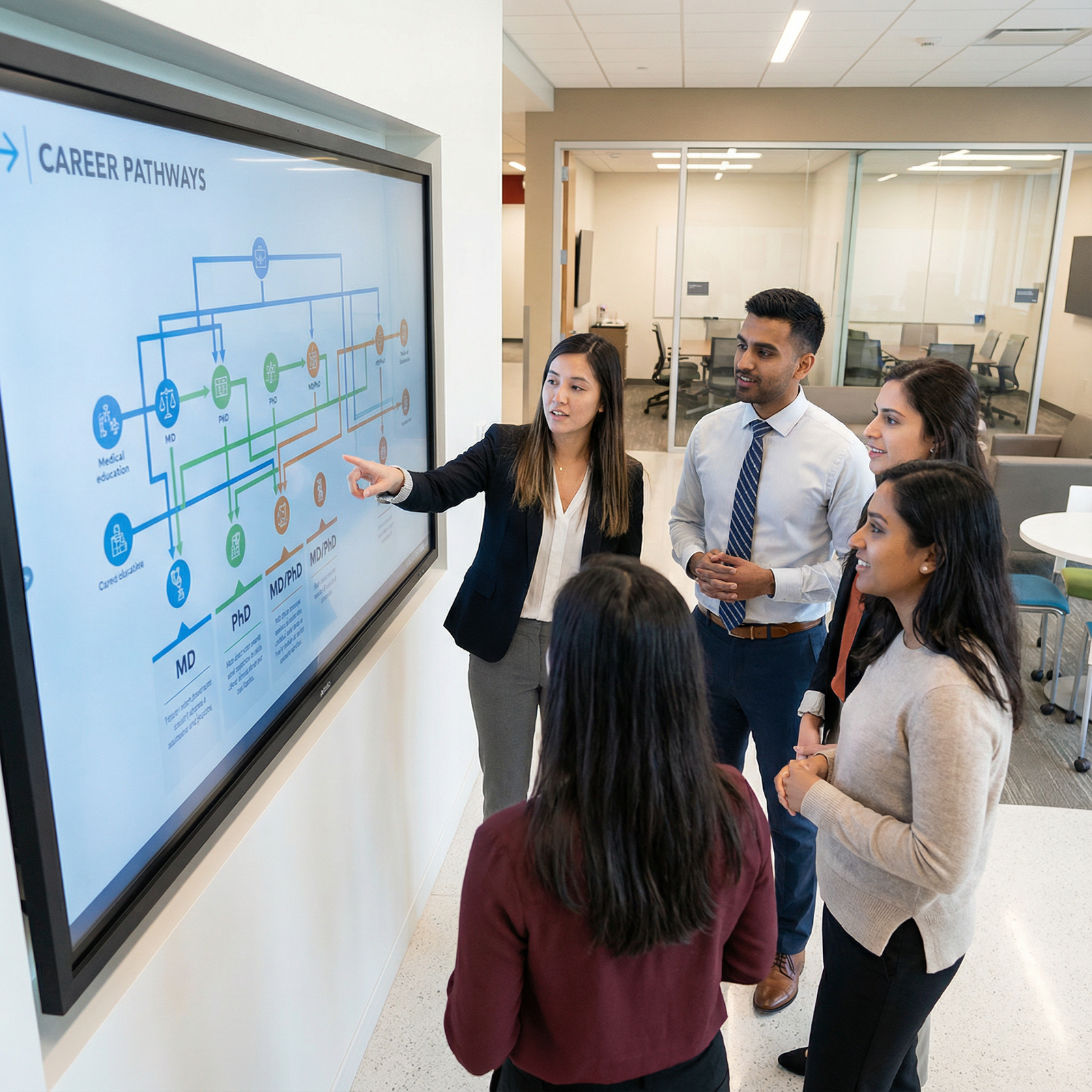
Here is what you are actually signing up for:
PhD timelines are not designed for 45‑year‑olds
In many fields (biostatistics, epidemiology, health services research, basic science):- Coursework: 1–2 years
- Qualifying exams: often year 2
- Dissertation: usually 3–4 additional years
And that is for traditional full‑time students.
You will not be magically faster because you are an MD. In fact, you may be slower.You move down the hierarchy
You are used to being the attending, the consultant, the person others defer to.In a PhD program, you are:
- A student under a PI
- Subject to committee decisions
- Often the least skilled person in the room statistically or methodologically
I have watched physicians get blindsided by this. They underestimate the psychological hit of going from “Dr. Senior Attending” to “the grad student who must redo their code and wait 6 months for the committee to approve a minor change.”
You do not control the timeline
You can plan your life around a 3‑year goal. Your dissertation committee cannot. Their priorities are:- The quality and rigor of the work
- The reputation of the program
- Their own grant timelines and lab needs
The common MD fantasy: “I will do a compact 3‑year PhD.”
The common reality: “It took 5.5 years and I was too far in to quit without losing everything.”
If you have not talked to at least three mid‑career MDs who actually finished a PhD, you are guessing how this will feel. Do not guess.
Mistake #5: Choosing the Wrong Field (or the Wrong Depth)
Another huge error: picking a PhD topic that is too narrow for your career or too misaligned with your day‑to‑day world.
Typical pattern:
- An MD in cardiology chooses a PhD in molecular biology of a channel protein.
- They spend 6 years in a wet lab.
- They graduate.
- They go back to 90% clinical work.
They now have:
- A narrow basic science PhD that they can barely maintain
- No realistic way to keep a serious lab going
- A CV that looks “impressive” but is functionally detached from their current output
The other version:
- A clinician who wants to lead quality improvement in their health system does a PhD in obscure theory‑heavy philosophy of science or something equally far from implementable methods.
- Intellectually interesting. Strategically disastrous.
You want maximum overlap between:
- Your PhD methods
- Your long‑term clinical or institutional niche
- The kind of work you can sustain with your post‑PhD job structure
| MD Role / Goal | Better PhD Focus | Risky / Misaligned PhD Focus |
|---|---|---|
| Hospitalist interested in quality | Health services / implementation | Bench immunology |
| Cardiologist leading trials | Clinical epidemiology / biostats | Philosophy of medicine |
| Surgical oncologist building outcomes db | Outcomes research / data science | Pure lab-based cancer biology |
| Primary care leader | Health policy / HSR | Ancient medical history |
If your proposed PhD topic requires a fully separate universe to maintain after graduation, you are building a trap, not a career.
Mistake #6: Ignoring Non-PhD Paths That Achieve 80–90% of Your Goal
Here is a blunt truth: for most mid‑career MDs, a PhD is overkill for what they actually need.
Common real needs:
- Ability to design and analyze clinical trials or observational studies
- Competence in modern data science / machine learning methods
- Credibility to lead a research group or be a serious co‑PI
- Strong grasp of health policy, economics, or implementation science
All of these can be addressed without locking yourself into a full PhD.
Alternatives MDs routinely underestimate:
Master’s degrees (1–2 years, often part‑time)
- MS/MPH in epidemiology, biostatistics, clinical investigation, health policy
- MPhil or MSc in translational research
You get formal training, methods, and a thesis without disappearing for 5–7 years.
Intense structured certificates and fellowships
- NIH K‑series mentored awards with dedicated coursework
- Clinical research fellowships that embed you in a productive group
- Statistics or data science certificate programs with serious, applied focus
Collaborator strategy
Become the content expert who:- Brings the clinical problem
- Partners with a career methodologist (who already has the PhD)
- Builds co‑authored work that still counts heavily for promotion and reputation
For a late‑career MD, this hybrid path is often much more powerful than starting over in a completely new degree.
Before you commit to the PhD, you must be able to answer:
“Why can I not achieve my specific career objective with a master’s, fellowship, or high‑level collaboration?”
If you do not have a clear, compelling answer, you are on track to overinvest in the wrong tool.
Mistake #7: Failing to Stress-Test Personal and Family Logistics
I have watched marriages crack under the strain of a late‑career degree. Not because the marriage was weak, but because nobody told the truth up front about what it would actually involve.
Typical hidden stressors:
You go from high earner to low earner
- Lifestyle changes that looked “manageable” on paper feel brutal in practice
- You may need to pull back on kids’ activities, vacations, or even home ownership plans
Time shifts are very real
- Nights and weekends move from “I am tired from clinic” to “I must code, write, or study for quals”
- You say no to many events because “my advisor expects this done by Monday”
Geographic disruption
- You may need to move or commute to a different city
- Spouse and kids may or may not come with you
- Dual‑career issues explode (partner’s job, children’s schools)
The dangerous MD fantasy:
“My family is supportive; they say they will be fine with this.”
Supportive now. Before they have lived through 3–5 years of you being poor, stressed, and intellectually consumed with something they barely understand.
You must make the implicit explicit:
- What exact financial sacrifices will we make?
- Who will pick up which home/childcare responsibilities while I am writing papers at midnight?
- What is our backup plan if the PhD takes 2 years longer than expected?
If you have not had an uncomfortably concrete conversation with your partner about this, you are not planning. You are hoping.
Mistake #8: Believing “MD + PhD” Guarantees a Certain Type of Job
Many physicians think the formula is simple:
MD + PhD = automatic R01 PI, major center director, or senior academic leader.
Reality: hiring and promotion committees care more about what you have done recently than about degrees you accumulated.
A late‑career MD‑PhD without:
- Recent, continuous publications
- Active grants or substantial roles on funded projects
- Clear, forward‑looking research program
is less competitive than an MD with:
- Strong track record of collaborative work
- Key roles in trials or outcomes projects
- Carefully built niche
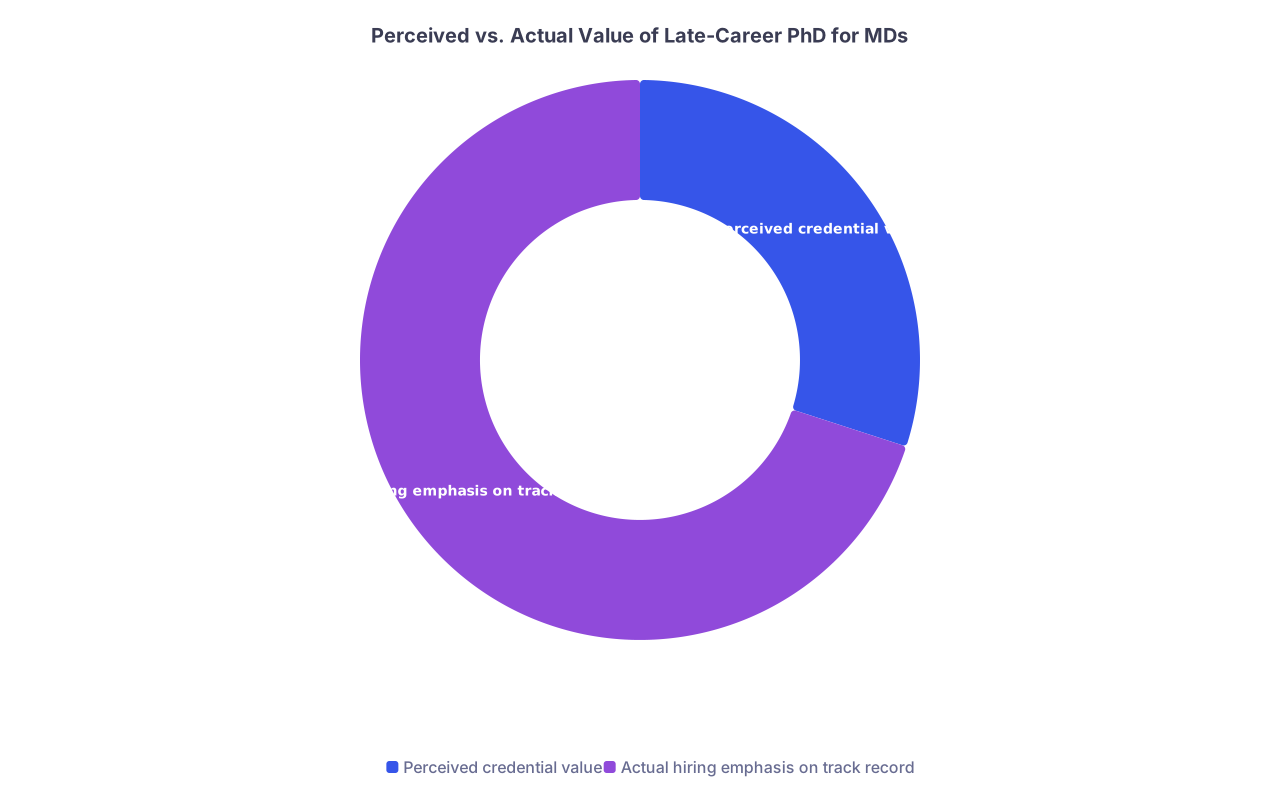
| Category | Value |
|---|---|
| Perceived credential value | 30 |
| Actual hiring emphasis on track record | 70 |
What promotion committees and chairs really ask (often silently):
- “Can this person bring in or support grants now?”
- “Do they have a sustainable research plan that fits our department’s direction?”
- “Are they a good collaborator and leader, or are they credential‑collecting?”
They do not care how heroic it was for you to go back to school at 48. They care whether you are a productive academic at 52.
A late‑career PhD that ends in:
- One or two modest papers
- No clear post‑degree research infrastructure
- No grants
will not suddenly catapult you into the roles you fantasized about when you applied.
Mistake #9: Not Pressure-Testing the Plan With Brutally Honest Mentors
MDs who are seriously contemplating a late‑career PhD often avoid the most important step: inviting smart, critical people to talk them out of it.
You need three types of feedback, minimum:
Senior clinician‑researcher without a PhD
Ask:- “If I stay on my current path, what would you recommend instead of a PhD?”
- “Where do you see me realistically in 5–10 years without another degree?”
MD who actually did a late‑career PhD
Ask:- “What do you regret?”
- “How did it affect your finances, your family, your health?”
- “What would you do differently or what would have replaced the PhD effectively?”
Methodologist / PhD scientist in the field you are considering
Ask:- “If you had an MD colleague with my background, what training would you want them to have to be a solid co‑PI?”
- “Would a master’s or structured postdoc‑style experience be enough?”

| Step | Description |
|---|---|
| Step 1 | Think about late career PhD |
| Step 2 | Clarify goal with mentors |
| Step 3 | Explore masters, fellowships, collaborations |
| Step 4 | Do hard financial and logistics review |
| Step 5 | Choose alternative training path |
| Step 6 | Apply to targeted PhD programs |
| Step 7 | Clear specific goal? |
| Step 8 | Non PhD options tested? |
| Step 9 | Financial and family stress test? |
| Step 10 | Mentors still think PhD best? |
If everyone in your orbit reflexively says, “That sounds amazing, you should absolutely do it,” you either:
- Chose the wrong people to ask
- Or they are unwilling to risk upsetting you with reality
Push them. Ask them to list reasons not to do it. If they cannot, their guidance is not strong enough to base a life decision on.
Mistake #10: Romanticizing “Being a Student Again” and Ignoring Identity Shock
I have heard this line too many times:
“I loved my student days. It will be refreshing to be a learner again.”
There is a difference between loving learning and loving being an underpaid, over‑controlled student in midlife.
Identity shocks you are likely underestimating:
- Going from “attending who signs orders” to “student who needs committee approval”
- Receiving harsh, public feedback on your writing or code from people a decade younger
- Realizing your quantitative or theoretical skills are far behind your classmates
- Having to justify your topic choices repeatedly to people outside your clinical world
Some MDs handle this well. Many do not. The ones who struggle feel:
- Resentful (“I know more medicine than any of you, why am I needing permission for everything?”)
- Isolated (“None of my friends get why I am doing this; my clinical colleagues think I have disappeared.”)
- Regretful (“I traded away status and stability for… this?”)
You cannot fully pre‑experience that. But you can be honest that it will happen and ask: Do I actually want this life phase, or am I just nostalgic for a romanticized version of grad school that never really existed?
Key Takeaways
Keep it simple:
- A late‑career PhD for an MD is not a generic upgrade. It is a high‑cost, high‑disruption tool that only makes sense when it directly serves a very specific, methodologically demanding career goal that you cannot reach another way.
- The biggest errors are emotional and unexamined: ignoring seven‑figure opportunity costs, overestimating the credential’s magic, underestimating the time, hierarchy, and family strain. Do the math, stress‑test the logistics, and let tough mentors try to talk you out of it.
- For most mid‑career MDs, focused alternatives—master’s programs, serious methods training, fellowships, and strong collaborations—get you 80–90% of the benefit with a fraction of the risk. Explore those exhaustively before you touch a PhD application.
FAQ (Exactly 4 Questions)
1. Is there any situation where a late-career PhD clearly makes sense for an MD?
Yes, but it is rarer than people think. It can make sense if:
- You already have a substantial research track record
- Your institution or field expects a PhD for the specific leadership or PI role you are targeting
- Your PhD topic is tightly coupled to your long‑term niche (for example, statistical methods for the type of trials you already run)
- You have fully accounted for the financial and personal costs and still see it as the most direct route, not a vanity project or escape hatch.
2. I feel underprepared methodologically. Should I start with a master’s and then decide about a PhD?
That is usually the smarter path. A rigorous master’s in epidemiology, biostatistics, health services research, or clinical investigation will:
- Expose you to the methods and academic culture
- Clarify whether you actually enjoy that level of technical work
- Give you marketable skills and a thesis product
If, after that, you still want deeper theoretical work, you will make a far more informed decision about whether a PhD is truly necessary.
3. Will a late-career PhD help me compete for NIH R01s or major grants as an MD?
The degree helps a little on paper, but what really matters is:
- Your prior productivity and preliminary data
- The strength of your research environment and collaborators
- The quality and feasibility of your proposals
A strong MD with excellent collaborators and a focused track record is often more competitive than a fresh MD‑PhD with minimal post‑degree output. Do not assume the letters alone change your grant odds meaningfully.
4. If I decide not to do a PhD, what concrete steps should I take instead to advance as an academic physician?
Focus on:
- Carving out a defined research niche tied to your clinical work
- Negotiating protected time with clear deliverables
- Building a small but reliable team: a methodologist, a data person, and a mentor with funding experience
- Completing one strong methods‑oriented degree or certificate (for example, an MS in clinical investigation)
Then commit to 3–5 years of consistent output. That path helps far more MDs than disappearing into a late‑career PhD they did not really need.