
The belief that stacking a PhD on top of an MD will turbo‑boost your income is fantasy. In most cases, an MD‑PhD makes less lifetime money than a straight MD clinician.
Let’s walk through what the data actually show, not what premed Reddit threads want to be true.
The core myth: “Two degrees = double the salary”
I keep hearing the same line in advising sessions: “If a doctor makes $300k and a PhD professor makes $150k, then MD+PhD should put me at $450k, right?”
No. That is not how the real world pays people.
Medicine and academia do not care how many letters you’ve stacked after your name. They care what work you do and how it generates value for the hospital or university. Your paycheck follows your role, not your alphabet soup.
Here’s the blunt reality:
- A full‑time clinician with only an MD in a competitive specialty will often out‑earn an MD‑PhD doing 60–80% research.
- The PhD does not bump RVU rates, does not increase reimbursement, and does not magically double your academic base salary.
- The PhD does add years of low or no income, usually in your 20s when compounding matters most.
You don’t need my opinion. You can just look at the numbers.
| Category | Value |
|---|---|
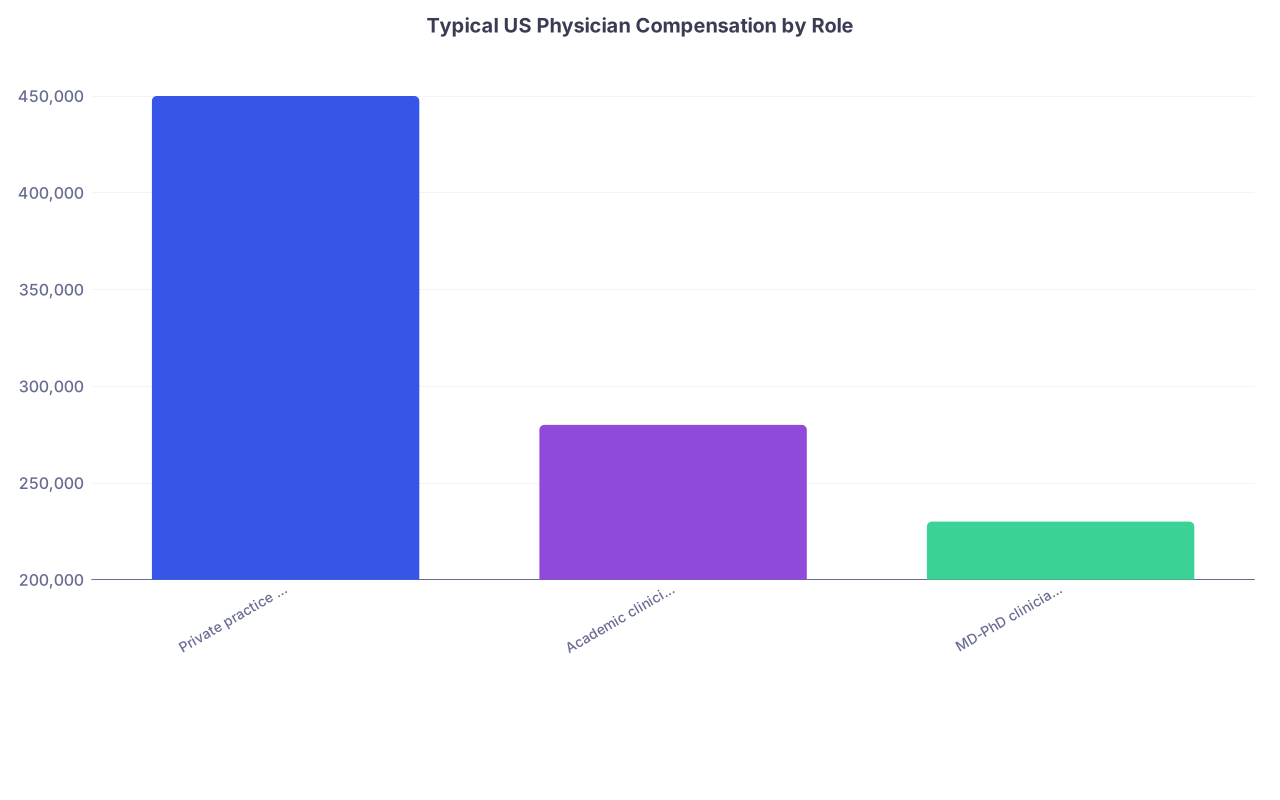
| Private practice MD | 450000 |
| Academic clinician MD | 280000 |
| MD-PhD clinician-scientist | 230000 |
These aren’t fantasy numbers. They’re right in line with MGMA/AAMC ranges: private practice clinicians at the top, academic MDs in the middle, physician‑scientists slightly below full‑time academic clinicians (because of protected research time).
So no, the MD‑PhD is not a money hack. It’s usually a trade: more research, more prestige in certain circles, more intellectual freedom… for less cash.
The training years: where the math really breaks
Here’s where people conveniently stop doing the calculation: the time cost.
Most US MD programs are 4 years. MD‑PhD programs: 7–9 years for the same starting point (before residency). That’s 3–5 extra years of you earning essentially minimum wage in grad school instead of a physician salary.
Let’s make this painfully concrete.
Assume:
- MD only: graduate at 26, finish residency at 29–32 depending on specialty.
- MD‑PhD: graduate at 30–33, finish residency at 33–37.
- Average resident salary: roughly $65–75k.
- Average early‑career attending salary (conservative across specialties): $250–300k.
Those extra 4 PhD years cost something like:
- 4 years of resident‑level pay (~$70k) you could have been earning but aren’t
- and/or 2–3 years of attending‑level pay you’re delaying
So in your early 30s, when your MD‑only classmates are stacking attending pay, you’re still grinding through experiments, revising manuscripts, and being paid grad‑student money.
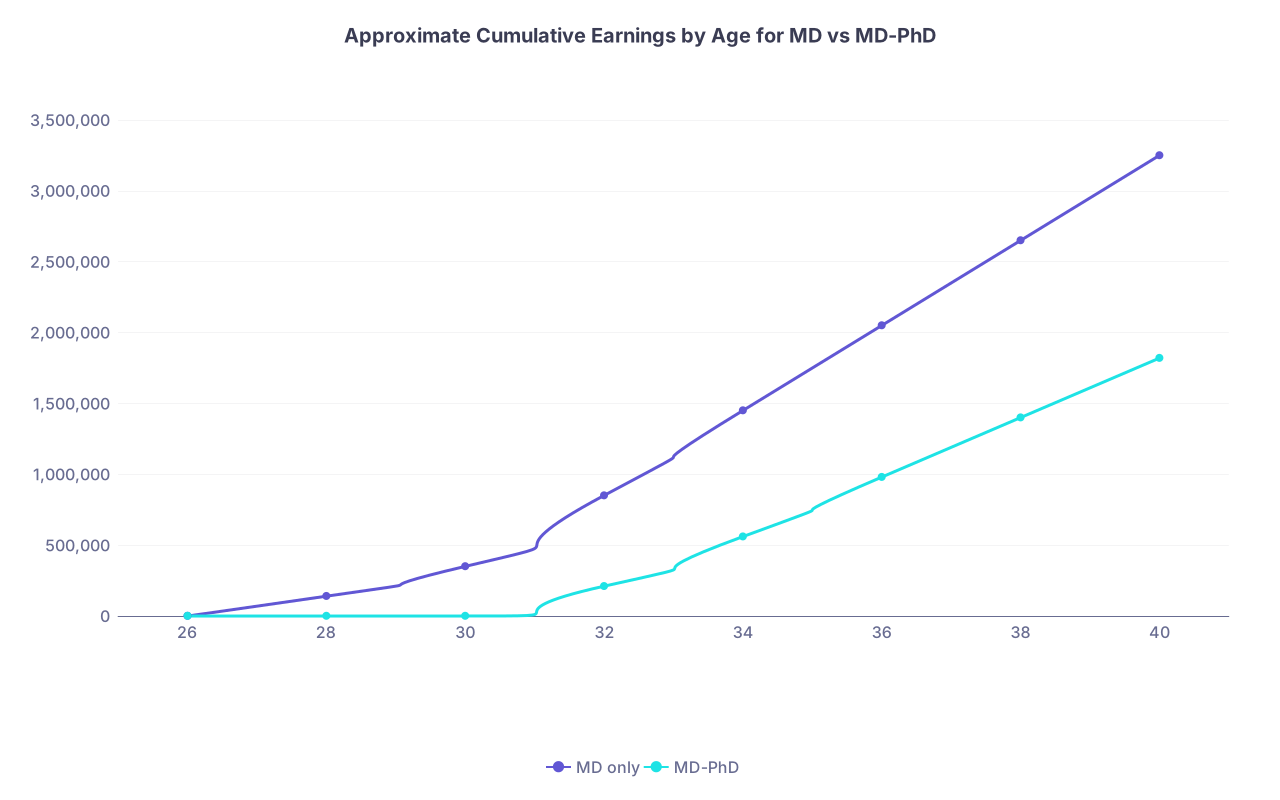
Let’s quantify the “lost” early‑career income very roughly.
| Category | MD only | MD-PhD |
|---|---|---|
| 26 | 0 | 0 |
| 28 | 140000 | 0 |
| 30 | 350000 | 0 |
| 32 | 850000 | 210000 |
| 34 | 1450000 | 560000 |
| 36 | 2050000 | 980000 |
| 38 | 2650000 | 1400000 |
| 40 | 3250000 | 1820000 |
The exact numbers will vary, but the pattern does not:
- The MD starts earning solid money years earlier.
- The MD‑PhD digs out of that initial hole slowly, if ever.
Even if by some miracle your peak salary is similar, the MD has been compounding savings and investments for an extra half‑decade. You don’t make that up by nudging your academic base by 10–20k.
Compounding is merciless. The money you don’t earn in your 20s and early 30s costs you the most over a 30‑ to 40‑year career.
Academic reality: you’re paid for RVUs, not your thesis
Another persistent misconception: “But academic centers pay more for MD‑PhDs because they can bring in grants.” That sounds vaguely plausible. It’s also mostly wrong.
Here’s how most large US academic medical centers think about your value:
- Clinical value: measured in RVUs, collections, relative to your compensation and overhead.
- Research value: measured in grants (especially indirects), publications, prestige, and maybe downstream donations.
- Teaching/admin: necessary, often under-valued, occasionally protected.
Your base salary in an academic department is often tied to a “salary tier” or “academic rank” grid. Those grids typically distinguish by:
- Rank (assistant, associate, full)
- Track (tenure, research, clinical)
- Years at rank
What they do not usually do: give you a big permanent premium just for having a PhD. A few places give a very modest stipend or starting bump. It’s not doubling anything.
| Role | Typical Base Range | Core Time Allocation |
|---|---|---|
| Academic clinician MD | $230–320k | 80–90% clinical |
| MD-PhD clinician-scientist | $190–270k | 40–70% research, 30–60% clinic |
| Research PhD (non-clinical) | $90–160k | 80–100% research |
When you push for more “protected time” for research (which is the point of the PhD), your department usually responds the same way: they lower your clinical expectations and your clinical‑derived salary. Many MD‑PhDs take a lower base in exchange for fewer clinic sessions per week.
So yes, your MD lets you bill as a physician. Your PhD lets you credibly apply for R01s and run a lab. But those things are usually in tension: more research = less clinic = lower clinical revenue.
I’ve watched plenty of MD‑PhDs beg to keep their two clinic days a week because finance demanded it. Not because their PhD suddenly made them too valuable to let go of clinical time.
The MD vs MD‑PhD vs PhD earning ladder
Let’s zoom out. You’re probably comparing three paths:
- MD only (clinical)
- MD‑PhD (physician‑scientist)
- PhD only (biomedical researcher, academic or industry)
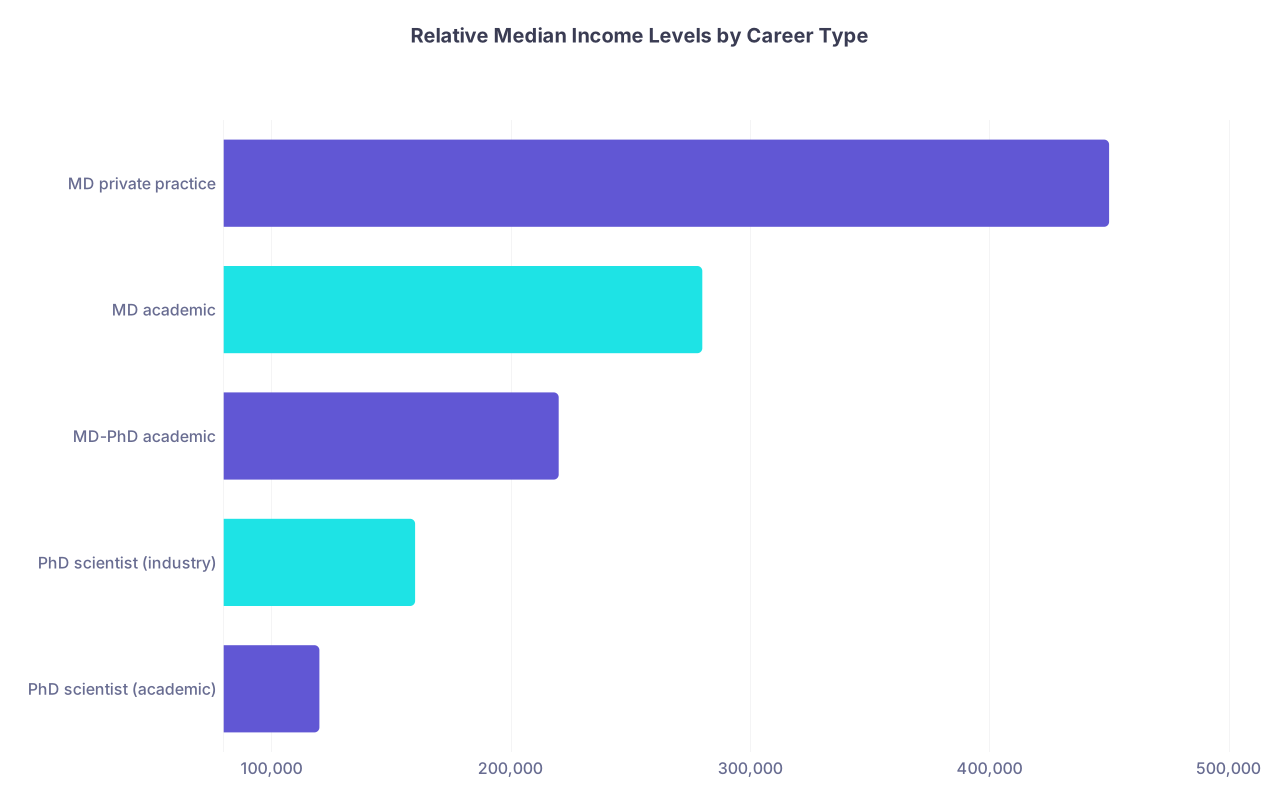
The fantasy is that MD‑PhD gives you the sum of MD + PhD earnings. In practice, it usually positions you between “pure MD clinician” and “pure PhD scientist”, both in pay and in time spent on each.
| Category | Value |
|---|---|
| PhD scientist (academic) | 120000 |
| PhD scientist (industry) | 160000 |
| MD-PhD academic | 220000 |
| MD academic | 280000 |
| MD private practice | 450000 |
General pattern in the US:
- PhD (academic): lowest earnings, longest climb to security.
- PhD (industry/biotech): better, sometimes very good with promotions, but highly variable.
- MD‑PhD academic: above most PhD roles, below what aggressive MD clinicians can make.
- MD academic: higher than MD‑PhD on average, because more clinical time.
- MD private practice / procedural subspecialties: top of the heap for strictly financial outcomes.
So if income is your main goal: the MD alone already puts you high on the ladder. The PhD moves you sideways into a different role, not up a rung.
Funding, prestige, and the “soft” currency
I can already hear the pushback: “But MD‑PhDs can get big grants. Doesn’t that translate into money?”
Grants are weird money.
- The majority of grant dollars pay your lab staff, supplies, and institutional overhead.
- Your personal take‑home from a big R01? Maybe some soft money support to bring your salary up to your negotiated base. Not a windfall.
Your chair loves your indirects. The dean loves telling donors you have three active NIH grants. You get prestige, promotion, influence in your niche. Good things.
But your W‑2 is not suddenly doubled because you landed an R01.
Meanwhile, a procedurally heavy MD in private practice can reasonably hit $600–800k+ in certain markets doing high‑RVU work. No PhD required. No grant renewals. No study section purgatory.
MD‑PhD “prestige” matters in:
- Getting certain K awards, physician‑scientist tracks, MSTP‑type roles
- Being taken seriously as a basic or translational scientist in MD‑heavy environments
- Keeping one foot in lab and one in clinic credibly
It matters far less when someone in finance is building next year’s comp model.

“But MD‑PhD is free, so I’m saving hundreds of thousands!”
Here’s another seductive but incomplete argument: “MSTP covers my tuition and pays a stipend, so I avoid med school debt. That alone is a financial win.”
Partial truth. Mostly illusion.
Yes, most NIH MSTP‑funded MD‑PhD spots cover tuition and provide a modest stipend. So on paper you avoid $200–300k of med school loans. That’s good.
But you pay in time.
Compare:
- MD with $250k debt, starts attending salary at 30
- MD‑PhD with $0 debt, starts attending salary at 34
The MD can aggressively pay down loans in their early 30s. I’ve seen hospitalists wipe 200k+ in 4–5 years with a reasonable lifestyle. Surgeons and dermatologists can do it faster if they care to.
The MD‑PhD, meanwhile, is still in training, making 50–70k and “avoiding debt” while also avoiding high income during the prime compounding window.
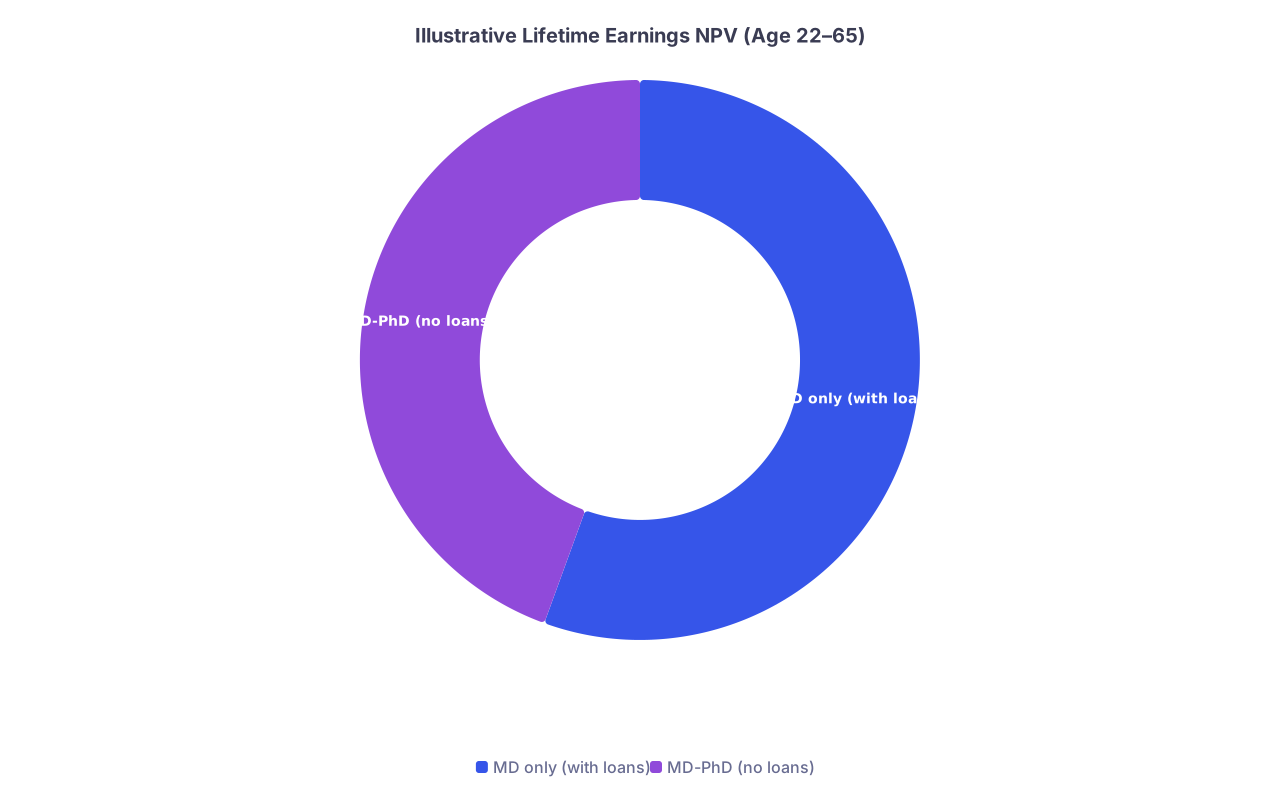
When you run an actual net present value (NPV) comparison assuming:
- Market‑rate attending salaries
- Realistic student loan interest
- Conservative investment returns
the “free MD‑PhD” usually loses to “debt‑burdened MD” on lifetime net worth. Not because the stipend is bad, but because the opportunity cost of those extra 4–5 low‑earning years is enormous.
| Category | Value |
|---|---|
| MD only (with loans) | 100 |
| MD-PhD (no loans) | 80 |
Treat that chart as directional, not exact. Point is: eliminating tuition is not the same as increasing lifetime wealth. Delaying high earnings by half a decade is expensive.
Where the MD‑PhD does make sense
Now, I’m not anti‑MD‑PhD. I’m anti‑delusion.
If you’re deeply drawn to science—like “I actually enjoy troubleshooting Western blots and rewriting grants” level—then MD‑PhD can be an excellent path. Just not a financial optimization strategy.
MD‑PhD makes sense if:
- You cannot see yourself happy without running a lab or being a serious investigator.
- You want a career where clinic and research are genuinely integrated, not “clinic with a side of QI projects.”
- You’re okay with making less than your pure‑MD peers in exchange for scientific autonomy, academic identity, and a shot at long‑term funding.
I’ve watched some MD‑PhDs build fantastic careers: section chiefs, institute directors, big‑name translational investigators. They aren’t broke. They’re just not maximizing income in the way a private practice proceduralist is.
What doesn’t make sense is doing an MD‑PhD because:
- “It’s free med school.”
- “It’ll keep options open” (no, it narrows them to research‑heavy roles).
- “It’ll give me an admissions edge” (MD‑only programs admit thousands of strong applicants every year who never set foot in a wet lab again).

The uncomfortable comparison: MD‑PhD vs just doing research as an MD
Here’s a point that gets buried on purpose: you do not need a PhD to do meaningful research as a physician.
Plenty of straight MDs:
- Get K awards and even R01s.
- Run clinical trials units.
- Lead outcome studies and health services research.
- Hold major leadership roles in academic medicine.
And they do it without sacrificing 4–5 extra grad‑school years.
Is the PhD helpful for basic/translational bench science? Yes. It gives you:
- Depth in experimental design and methods
- Credibility with basic scientists
- A few extra doors opened for certain grants and positions
But if you’re leaning toward clinical, population, or implementation research, an MD plus smart mentorship, maybe a research fellowship or a master’s, is usually enough. Economically much cleaner.

| Step | Description |
|---|---|
| Step 1 | Want research in career? |
| Step 2 | Consider MD plus research fellowship |
| Step 3 | MD-PhD is reasonable |
| Step 4 | MD with strong research exposure |
| Step 5 | Bench or translational focus |
| Step 6 | Love long-term lab work |
If that diagram points you away from MD‑PhD, that’s not me being harsh. That’s just aligning what you actually want with the training that fits, not with the prestige bumper sticker.
The punchline: stop treating MD‑PhD as a financial upgrade
Let me be direct.
If you are choosing between MD and MD‑PhD mainly on income grounds:
Pick MD. Every time.
The MD‑PhD:
- Does not double your salary.
- Usually reduces your lifetime earnings compared to a clinically focused MD.
- Locks you into a longer, more fragile path heavily dependent on grant cycles and institutional politics.
What it does give you, when used as intended, is a serious research identity and the tools to bridge lab and clinic in a way few others can. That’s valuable. Intellectually. Scientifically. Socially.
Financially? Not really.

If you remember nothing else
Three simple truths:
- Your income is driven by your role (how much and what kind of work you do), not by the count of degrees after your name.
- The extra 4–5 training years for an MD‑PhD are a massive economic hit that “free tuition” does not fully offset.
- MD‑PhD is a fantastic path for people who genuinely want to live at the research–clinic interface; it is a poor choice if your primary goal is maximizing earning power.
Choose MD‑PhD for the science. Choose MD for the money. Mixing those up is how people end up very credentialed and very bitter.