
The biggest mistake applicants make is assuming “translational” means the same thing in an MD–PhD and in a PhD in Translational Science. It does not. The word is shared. The training is not.
Let me walk you through the actual curriculum structures, the hidden expectations, and how the day‑to‑day training diverges if you choose an MD–PhD versus a PhD in Translational Science.
1. The Core Structural Difference: How Your Years Are Spent
If you do not understand the basic architecture of these two pathways, every other comparison gets muddled.
MD–PhD: Two Degrees, Two Worlds, One Very Long Timeline
Classically (and this is still the dominant model):
- Years 1–2: Pre‑clinical MD curriculum
- Years 3–5/6+: PhD research years
- Final 1.5–2 years: Core clinical clerkships + electives (back to MD curriculum)
Total training: 7–9 years before residency.
The MD–PhD is fundamentally a medical degree with integrated doctoral training. The curriculum is anchored to LCME‑accredited medical school requirements plus a full PhD in some biomedical field (immunology, neuroscience, biomedical engineering, etc.). “Translational” in an MD–PhD is usually a theme overlaid on top of standard MD and PhD structures—through special pathways, T32 programs, and electives.
PhD in Translational Science: One Degree, One Primary Environment
The PhD in Translational Science, Clinical and Translational Science (CTS), or similar name is:
- Fully graduate‑school based
- 4–6 years typical duration
- Focused on methods and science that move discoveries along the “bench‑to‑bedside‑to‑population” pipeline, without requiring MD‑level clinical training
You are not doing anatomy lab or clerkships. You are doing coursework in:
- Biostatistics and trial design
- Regulatory science and ethics
- Biomarker development
- Implementation science and health systems
Your curriculum is built around translation itself, not around clinical care plus any one basic science.
Here is the basic structural contrast:
| Feature | MD–PhD | PhD in Translational Science |
|---|---|---|
| Primary home | Med school + Grad school | Grad school / CTS program |
| Degrees | MD + PhD | PhD only |
| Length | 7–9 years | 4–6 years |
| Clinical clerkships | Required | Not required |
| Funding | Often full tuition + stipend (MSTP) | Usually tuition + stipend, variable by program |
If you are still thinking, “I want to do translational research, so either path is fine,” you are missing the key point: the MD–PhD’s core obligation is to train you as a physician, and that distorts everything else in the curriculum.
2. Pre‑Clinical and Clinical Medicine: What Only the MD–PhD Gets
This is the most obvious difference, but people often underestimate its impact on curriculum design.
Pre‑Clinical Years (MD–PhD Only)
As an MD–PhD, you will complete the full pre‑clinical curriculum:
- Systems‑based organ blocks (cardio, pulm, renal, neuro, etc.)
- Physiology, pathology, pharmacology, microbiology
- Clinical skills (history, physical exam, note writing)
- Early patient exposure in clinics or simulation
Translational emphasis, if present, is additive:
- “Physician‑scientist” seminars
- Case conferences linking basic mechanisms to clinical disease
- Special longitudinal “scholar” programs or research electives
PhD in Translational Science students do not do this. They might have clinically‑oriented content, like pathophysiology seminars or “disease mechanisms” courses, but these are:
- Conceptual, not competency‑based
- No direct responsibility for patient care
- No requirement to pass Step exams or OSCEs
You will understand disease from the viewpoint of mechanisms and data, not from managing an inpatient census.
Clinical Clerkships (MD–PhD Only)
This is the non‑negotiable pivot:
As an MD–PhD, you must complete:
- Core clerkships (internal medicine, surgery, pediatrics, OB/GYN, psychiatry, family medicine, neurology, etc.)
- Required sub‑internships or advanced electives
- Required assessments (NBME shelf exams, Step 2 CK, OSCEs, clinical competency evaluations)
This means:
- Your schedule is dictated by patient care and service needs
- You work in teams with attendings, residents, nurses, etc.
- You are socialized into clinical culture, with all its time pressures, pager chaos, and documentation burdens
PhD in Translational Science students never enter that world formally. At most they:
- Attend clinical conferences
- Shadow clinicians
- Participate in tumor boards or translational case discussions
- Work with de‑identified or consented clinical data
That difference alone shapes what kind of translational work you are likely to do later.
3. Didactic Curriculum: The Core Courses Look Very Different
This is where “translational” actually bifurcates into two different educational philosophies.
MD–PhD: Standard MD + Standard PhD, With Extras
Curriculum is essentially:
- A standard MD curriculum
- A standard PhD curriculum in a biomedical discipline
- A thin overlay of “physician‑scientist” programming
Your PhD might be in:
- Molecular and Cellular Biology
- Immunology
- Neuroscience
- Biomedical Engineering
- Cancer Biology
Major coursework looks like:
- Advanced molecular biology
- Signal transduction
- Advanced immunology
- Experimental design and statistics (limited, lab‑oriented)
If your program is forward‑thinking, they might add:
- A course in clinical trial design
- A seminar on regulatory pathways (INDs, IDEs)
- A translational research seminar series where clinicians present unmet needs
But core MD–PhD training is not primarily about:
- Pragmatic trial design
- Health economics
- Implementation science
- FDA interactions
- Real‑world evidence
Those are usually peripheral, optional, or learned post‑training.
PhD in Translational Science: Methods of Moving Interventions Forward
In a serious translational science PhD, you should expect methodological training centered on translation as a discipline.
Common core courses:
- Biostatistics (often 2–3 course sequence)
- Clinical trial design (phase I–IV, adaptive designs, Bayesian approaches)
- Epidemiology and clinical research methods
- Regulatory science and ethics (INDs, IRBs, GCP)
- Biomarker validation and companion diagnostics
- Translational omics and bioinformatics
- Implementation science and dissemination
- Health systems science and outcomes research
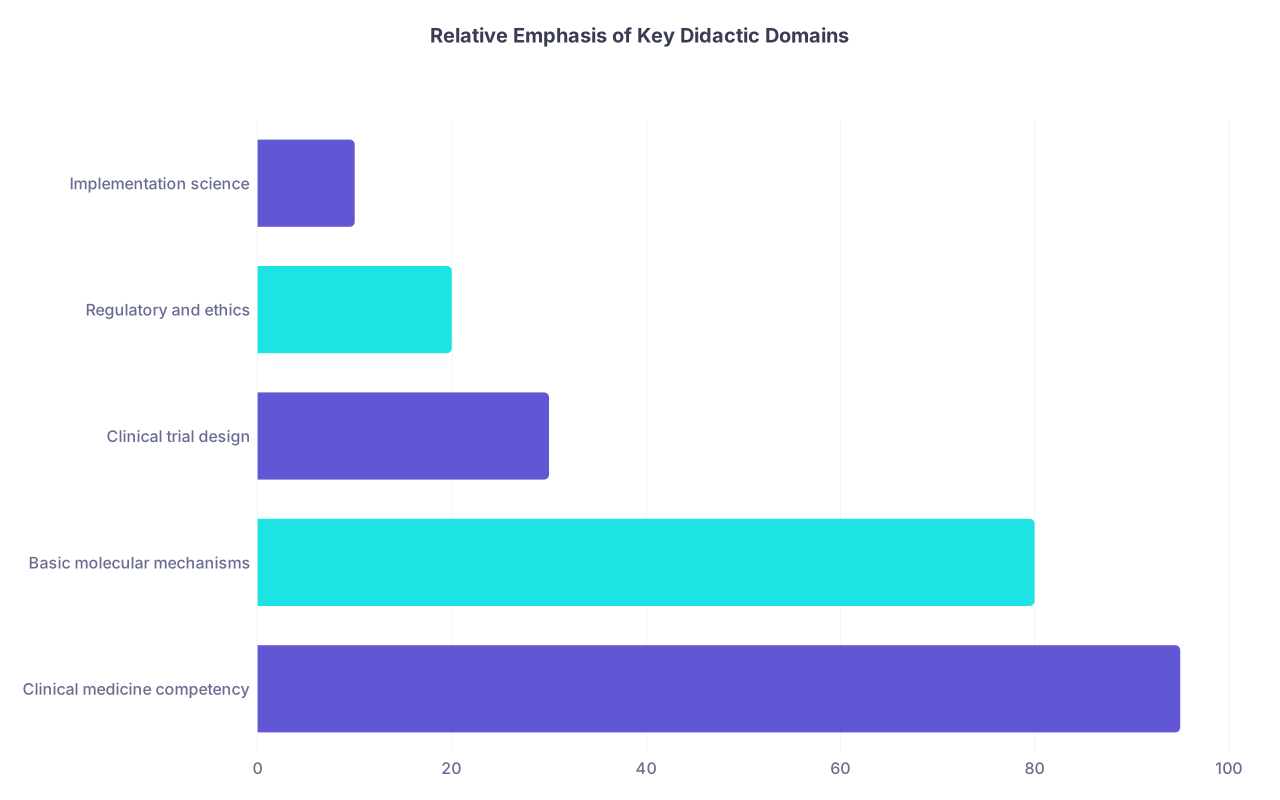
| Category | Value |
|---|---|
| Clinical medicine competency | 95 |
| Basic molecular mechanisms | 80 |
| Clinical trial design | 30 |
| Regulatory and ethics | 20 |
| Implementation science | 10 |
Interpretation (rough, but directionally honest):
- MD–PhD: high on clinical medicine and basic mechanisms, lower on trials, regulation, implementation
- PhD in Translational Science: almost inverted—those “lower” items become core
You will have far more structured exposure to how interventions are tested, approved, and implemented. You learn to think not just “Does this pathway matter?” but “How would we design, power, and run a study to prove this works in real patients, and get it reimbursed?”
4. Research Training: Bench‑Heavy vs Pipeline‑Heavy
Everyone says they want to do “bench to bedside.” Fine. Here is what the training actually looks like.
MD–PhD Research Years: Classic Lab PhD With Clinical Context
During the PhD years, most MD–PhD students:
- Join a basic or translational lab
- Do hypothesis‑driven, mechanistic work
- Use model systems (mice, organoids, cell lines, etc.)
- Possibly incorporate patient samples or limited clinical data
You might, for example:
- Identify a novel immune checkpoint in murine tumor models
- Characterize signaling pathways in patient‑derived organoids
- Develop an imaging probe tested in animal models
Some programs have strong “translational” labs that:
- Use human biospecimens
- Collaborate directly with clinicians
- Feed into early‑phase (“first in human”) studies
But the curriculum around trials and translation is often informal and dependent on your mentor. You pick it up by osmosis: sitting in lab meetings where the PI complains about IRB delays or clinical collaborators missing recruitment targets.
PhD in Translational Science: The Research Question Itself Is Translational
Your dissertation is usually anchored explicitly in a translational problem. For example:
- Designing an adaptive trial for a rare cancer
- Building and validating a risk prediction model for hospital readmissions
- Developing and testing a pragmatic intervention in primary care clinics
- Creating and evaluating a digital health tool for medication adherence
You might never touch a pipette. You might never run a western blot.
Instead, you will:
- Write protocols for clinical or quasi‑experimental studies
- Interface with IRBs, DSMBs, regulatory offices
- Analyze multi‑modal clinical datasets
- Work in multidisciplinary teams with statisticians, clinicians, informaticians, and health economists

The “bench” in “bench to bedside” might be replaced by:
- Databases
- Health systems
- Community clinics
- Implementation sites
MD–PhD training tends to make you a mechanism and disease expert who can also practice medicine.
Translational PhD training tends to make you a pipeline and methods expert who can move interventions through clinical and system‑level testing.
5. Interprofessional Exposure and Team Training
Translational work is team sport. Which team you are trained to inhabit differs.
MD–PhD: Clinician Identity First, Scientist Identity Second (Formally)
Your institutional identity in most MD–PhD programs:
- “Medical student” during MD phases
- “Graduate student” during PhD phase
- Future: “Physician‑scientist” in residency and beyond
Interprofessional training for MD students often focuses on:
- Working with nurses, pharmacists, social workers, PT/OT
- Understanding hospital systems, quality improvement, patient safety
- Communicating with patients and families
The translational overlay might include:
- Joint case‑based conferences with PhD students
- Research seminars with biostatisticians, epidemiologists
- Optional CTS certificate programs
But your clinical team training is about care delivery, not necessarily trial conduct.
Translational PhD: Research Team and System‑Level Identity
Your interprofessional reality looks different:
- Regular interaction with biostatisticians, informatics experts, regulatory specialists
- Collaboration with clinicians, but as a research partner, not as a trainee providing care
- Focus on how to design, run, and analyze studies across settings
Many CTS PhD programs build in:
- Team science coursework
- Practicum experiences in clinical research units
- Rotations in institutional review boards (IRB), clinical trial offices, or regulatory affairs
You are being trained to operate and eventually lead the infrastructure of translation, not necessarily to practice medicine inside it.
6. Assessment and Milestones
You should be honest about what you are signing up to be evaluated on.
MD–PhD: You Are Assessed as a Future Clinician and as a Scientist
Major milestones include:
- Pre‑clinical exams and OSCEs
- USMLE Step 1 (if required) and Step 2 CK
- Clerkship evaluations and shelf exams
- Qualifying / candidacy exams for the PhD
- Dissertation proposal and defense
You have to be:
- Safe and competent with patients
- Scholarly at the level of an independent investigator
The MD assessments dominate the emotional landscape. I have watched multiple MD–PhD students spend the better part of a year mentally chained to Step 1 or Step 2 prep, pushing their science to the back burner.
Translational PhD: You Are Assessed Purely as a Scientist
You do not have:
- Step exams
- Clinical clerkship ratings
- Clinical skills OSCEs
You do have:
- Core methods exams (biostats, epi, trial design)
- Candidacy/comprehensive exams
- Grant‑style proposals
- Manuscripts and dissertation defense
The pressure is real, but uniform: produce solid, methodologically rigorous translational research. No one cares if you can manage DKA or deliver a baby. The curriculum does not touch that.
7. Career Trajectory and How Curriculum Locks You In
The curriculum shapes you long after graduation.
MD–PhD Curriculum → Physician‑Scientist Tracks
The MD plus clinical clerkships virtually guarantee:
- You will do residency and probably fellowship
- You will be eligible for clinical duties, licensure, and clinical leadership roles
- You can lead early‑phase trials as a treating investigator (depending on specialty and setup)
Your training makes it possible to:
- Bridge mechanistic lab discoveries to first‑in‑human or highly specialized clinical work
- Translate directly in rare diseases, oncology, immunology, etc.
- Pursue K08‑style mentored clinician‑scientist awards
You are also stuck with:
- Long training path (residency/fellowship)
- Clinical productivity pressures later
- Split identity and time between clinic and research
PhD in Translational Science Curriculum → Methods‑Heavy, System‑Heavy Roles
Your path is different:
- Academic: faculty in departments of medicine, public health, CTS, epidemiology, informatics, or outcomes research
- Industry: clinical development, trial design, regulatory affairs, outcomes research, real‑world evidence, HEOR
- Government / non‑profit: NIH, FDA, CDC, PCORI, health systems research groups
You are the person who:
- Designs and operationalizes trials
- Builds predictive models and validates biomarkers
- Navigates regulatory pathways and post‑marketing studies
- Optimizes implementation in real healthcare settings
You will not be the one personally prescribing the drug you helped test. You will be the one who made sure the study was designed correctly, executed ethically, and analyzed rigorously so that prescribing it makes sense.
8. Side‑by‑Side: Curriculum Emphasis Snapshot
Let me condense the key curriculum differences without sugar‑coating them.
| Domain | MD–PhD | PhD in Translational Science |
|---|---|---|
| Anatomy, physiology, pathology | Extensive | Minimal / conceptual |
| Direct patient care training | Core requirement | None |
| Basic lab methods | Strong to very strong | Variable, often limited |
| Biostatistics depth | Moderate, lab‑oriented | High, multi‑course sequence |
| Clinical trial design | Variable, often elective | Core requirement |
| Regulatory science / FDA | Limited exposure | Structured coursework |
| Implementation science | Rare / elective | Common core or track |
| Interprofessional clinical training | Strong | Limited, mostly research‑oriented |
| Time in lab vs. in clinic | Split across years | Almost entirely research/methods |
And a blunt version:
- If you want to practice medicine and lead mechanistic or early‑phase translational research, the MD–PhD curriculum is built for you.
- If you want to be the architect of trials, data, and implementation without seeing patients as a clinician, the Translational Science PhD curriculum is the right tool.
9. How to Decide: A Curriculum‑Based Litmus Test
I will give you a practical framework, not another vague “follow your passion” speech.
Ask yourself three questions:
- Do you want to be directly responsible for diagnosing and treating patients, including nights, weekends, and life‑and‑death decisions?
- If yes, that requires an MD. Period. Then you are comparing MD vs MD–PhD, not MD–PhD vs Translational PhD.
- When you picture “doing translational science,” what are you doing minute to minute?
- Designing experiments in a lab and then seeing patients with that disease?
- Or designing trials, writing protocols, analyzing data, and optimizing care pathways across systems?
- Which curriculum are you more willing to grind through?
- Memorizing hundreds of drug mechanisms, physical exam findings, and clinical guidelines, plus long rotations?
- Or multi‑semester statistics, methods, regulatory content, and deep dives into trial design and implementation?
Look at how curricula allocate time.
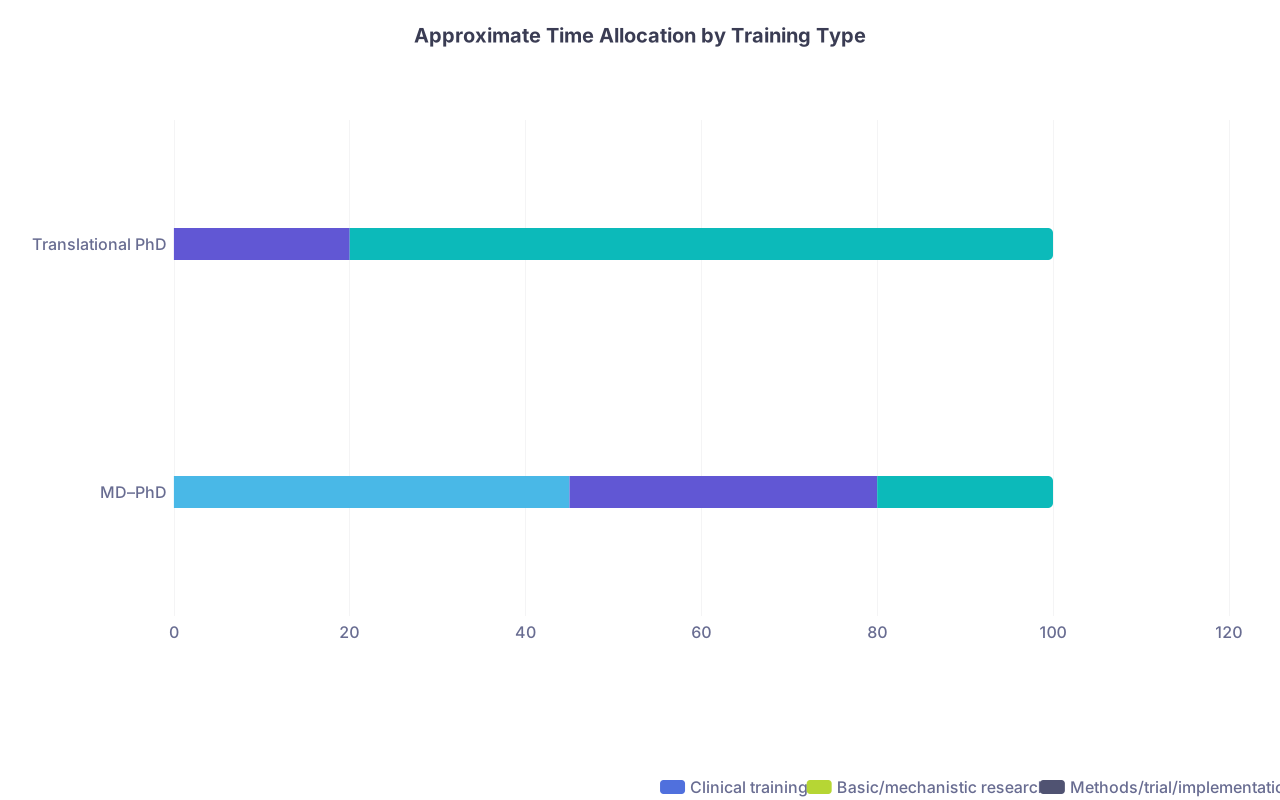
| Category | Clinical training | Basic/mechanistic research | Methods/trial/implementation |
|---|---|---|---|
| MD–PhD | 45 | 35 | 20 |
| Translational PhD | 0 | 20 | 80 |
These numbers are illustrative, not exact, but they expose the reality: Translational PhD curricula are dominated by methods and applied translational science. MD–PhD curricula are split between clinical training and mechanistic science, with relatively thinner formal training in the translational “middle.”
If you choose based on the title (“MD–PhD” sounds prestigious, “Translational Science PhD” sounds narrower) instead of the actual curriculum, you will regret it midway through Step 2 prep or your third semester of advanced biostats.
FAQ (Exactly 4 Questions)
1. Can a PhD in Translational Science lead clinical trials without an MD?
Yes, but with nuance. Non‑physician PhDs frequently serve as principal investigators on many types of clinical research, especially observational studies, behavioral interventions, implementation projects, and sometimes even interventional trials, depending on institutional and regulatory rules. However, for drug/device trials that involve medical decision‑making and prescribing, a physician is usually required as a co‑investigator or lead clinician. The translational PhD curriculum prepares you to design and run the trials; the MD counterpart often handles direct clinical management.
2. Does an MD–PhD program actually teach clinical trial design in depth?
Often not in a structured, comprehensive way during initial training. Some programs have electives or CTS certificates, but the core MD–PhD curriculum is still anchored in standard medical education plus a discipline‑specific PhD. Deep training in clinical trial design typically happens later: during fellowship, K‑award mentored phases, or through formal CTS master’s/PhD programs layered on top. If you want rigorous, systematic training in trial design right away, the Translational Science PhD is usually more direct.
3. Is it realistic to do a Translational Science PhD first and then apply to MD later?
Yes, people do it, but it is not an efficient path if your end goal is practicing physician‑scientist. You will have front‑loaded methods, trial design, and implementation training without the medical context, then restart a long MD journey focused on clinical care. If you are unsure about medicine but love the idea of “applied, patient‑oriented research,” starting with a Translational PhD makes sense. If you already know you want to treat patients, going straight into MD or MD–PhD is usually better aligned with the curricula.
4. For pure research careers, is the MD–PhD curriculum overkill compared to a Translational PhD?
In many cases, yes. If you have no desire to practice medicine and do not need the MD credential to achieve your goals, the clinical half of the MD–PhD curriculum is a massive time cost with limited direct relevance to your day‑to‑day future work. A Translational Science PhD curriculum is leaner, more methodologically focused, and designed precisely for research and development roles. The MD–PhD makes sense when clinical practice, clinical leadership, or very disease‑proximal mechanistic work is central to your long‑term identity.
With this curricular map in your hands, you are past the marketing brochures and buzzwords. The next step is to dissect specific programs—course lists, rotations, qualifying exams, and mentor networks—and match them, ruthlessly, to the kind of translational work you want to be doing ten years from now. The decision about which path to follow comes after that.