

The worst time to learn physician contracts is the week you receive your first offer.
You are not “just a resident” anymore. From the moment you match into residency, you are on a ticking clock toward the first real contract that will define your money, your time, your non-compete, and your freedom for years. Waiting until PGY-3 spring to understand this stuff is how people get trapped in brutal call schedules and suffocating non-competes they “didn’t realize” they signed.
Let’s walk it, chronologically, from Match Day through your first attending job. At each point: what you should do, what you can ignore, and what will hurt you if you delay.
Big Picture Timeline: When Contract Learning Really Starts
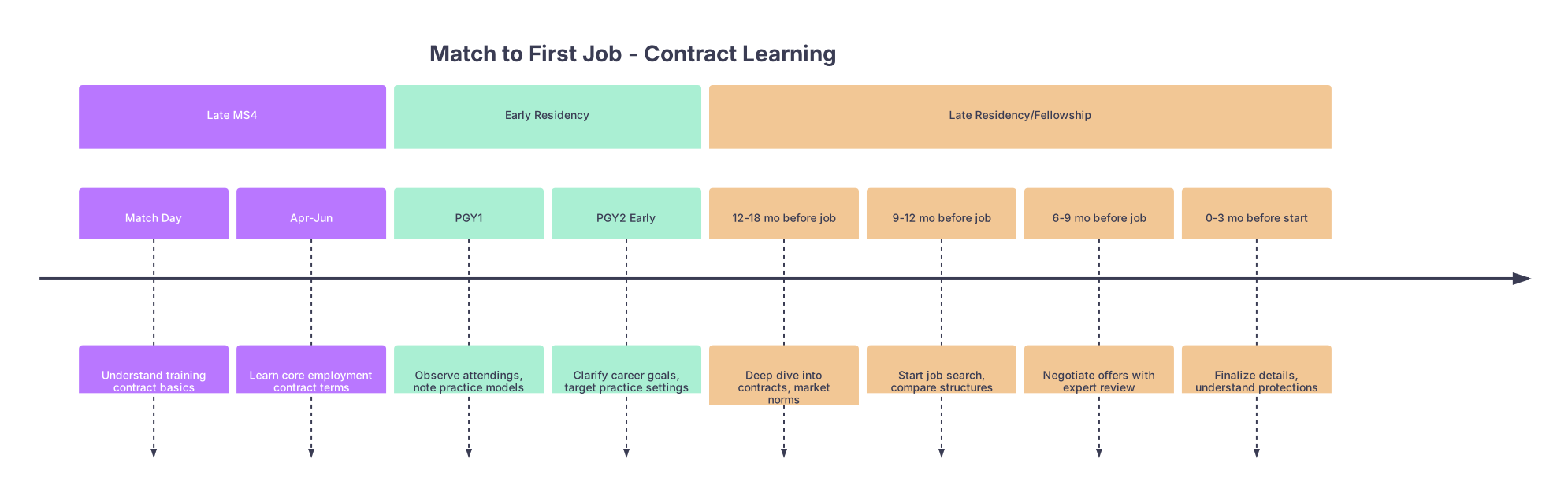
| Period | Event |
|---|---|
| Late MS4 - Match Day | Understand training contract basics |
| Late MS4 - Apr-Jun | Learn core employment contract terms |
| Early Residency - PGY1 | Observe attendings, note practice models |
| Early Residency - PGY2 Early | Clarify career goals, target practice settings |
| Late Residency/Fellowship - 12-18 mo before job | Deep dive into contracts, market norms |
| Late Residency/Fellowship - 9-12 mo before job | Start job search, compare structures |
| Late Residency/Fellowship - 6-9 mo before job | Negotiate offers with expert review |
| Late Residency/Fellowship - 0-3 mo before start | Finalize details, understand protections |
Timeline in plain language:
| Stage | Contract Focus |
|---|---|
| Match–PGY1 | Learn vocabulary and basic structures |
| PGY2 early | Align contracts with career goals and lifestyle |
| PGY2 late / Early fellowship | Study specific clauses, pitfalls, and compensation models |
| Final 12 months before first job | Active negotiation, attorney review, multiple offers |
| First year as attending | Audit contract performance vs reality; prep for renewal/exit |
Now, let’s go phase by phase.
Phase 1: Match Day Through PGY1 – Building Contract Literacy, Not Panic
At this point you should stop thinking “I’ll deal with contracts later.” Later comes faster than you think.
Match Day to July 1 (End of MS4)
You will not be signing attending contracts yet. Good. This is classroom phase.
Between Match and residency start (roughly March–June), you should:
Understand the contract you already have: your residency agreement.
- Read:
- Duty hour language
- Moonlighting policy
- Termination clauses
- Professional liability coverage (occurrence vs claims-made; tail responsibility)
- Why? The same concepts show up in your future attending contract, just with bigger numbers and higher stakes.
- Read:
Learn the basic vocabulary of physician employment contracts.
Spend 2–3 evenings on this. Not months. Get to the point where these words are not foreign:- RVU vs collections vs salary
- Partnership track vs employee
- Non-compete / restrictive covenant
- Non-solicitation
- Tail coverage
- Signing bonus vs retention bonus vs relocation
- Term and termination (without cause, for cause)
- Productivity bonus and quality incentives
Start a tiny “career file.” One folder in your cloud drive. Put:
- Your CV
- A running log of cases, procedures, and unique skills
- Notes from residents and attendings about jobs they love or hate
This is not overkill. This is the minimum if you want choices later.
PGY1: Orientation to Real-World Employment
Your job in PGY1 is survival and learning medicine. Contract work runs in the background. Quietly.
During PGY1 (July–June), you should:
Watch how attendings are structured. Ask direct questions.
- At least once a month, ask an attending you trust:
- “Are you hospital-employed or private group?”
- “Do you like your contract?”
- “If you could redo it, what would you change?”
- Pay attention when people say things like:
- “I’m stuck because of my non-compete.”
- “Our wRVU target is impossible.”
- “They didn’t tell me call would be this bad.”
- At least once a month, ask an attending you trust:
Note practice models in your specialty.
Create a one-page quick reference:- Academic vs hospital-employed vs private vs hybrid
- Typical schedule and call in each
- Pay range ballpark (you do not need precision yet)
Spend one weekend on a structured intro to contracts. You are not negotiating yet, so you do not need an attorney. You need conceptual understanding:
- Read a reputable physician contract book or course
- Or review materials from a major specialty society (e.g., ACEP, ACOG, AAFP often have job/contract resources)
At this point you should know the language well enough that a recruiter cannot confuse you with jargon.
Phase 2: Early PGY2 – Aligning Contracts With the Life You Actually Want
This is when it stops being abstract. You know a little medicine. You know what a miserable call month feels like. Now you connect that to contracts.
Months 13–18 of Training (Early PGY2 or Early Fellowship)
At this point you should clarify your target practice type so your contract learning is not random.
Over a 3–4 month window, do this:
Define your top 2–3 job “archetypes.” Example for internal medicine:
- Hospital-employed hospitalist, 7-on/7-off, medium-sized city
- Academic hospital, mix of teaching and clinical
- Large private group in suburbs, partnership potential
For each, write:
- Typical pros
- Typical cons
- What matters most to you (schedule, location, pay, procedures, autonomy)
Deepen your understanding of compensation structures.
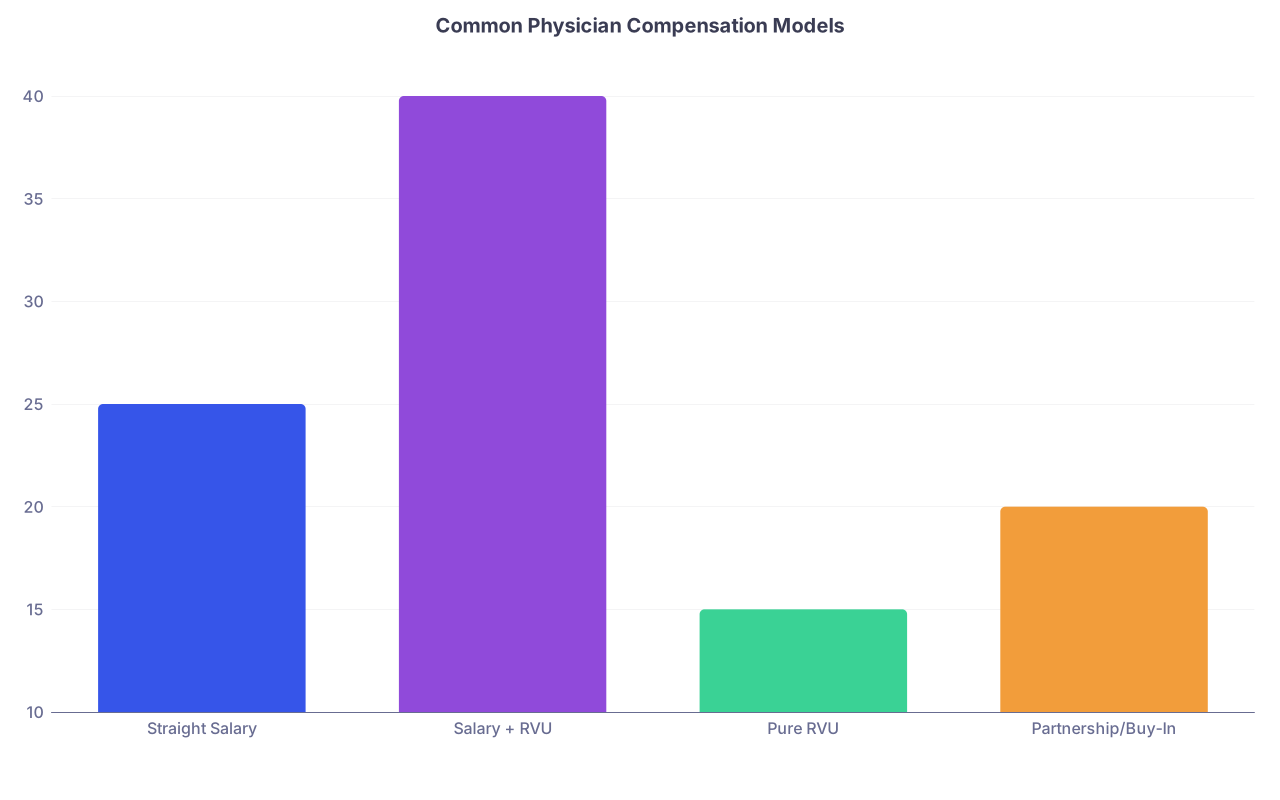
| Category | Value |
|---|---|
| Straight Salary | 25 |
| Salary + RVU | 40 |
| Pure RVU | 15 |
| Partnership/Buy-In | 20 |
Use PGY2 to understand:
- How wRVUs translate to dollars in your specialty
- What “base + productivity” actually looks like on a pay stub
- Rough national benchmarks from MGMA or specialty societies (you do not need exact tables; you need awareness)
- Start a “deal-breakers and must-haves” list.
- Deal-breakers examples:
- Non-compete longer than 1–2 years or >20–30 miles in many regions
- Mandatory call every 2–3 nights
- Unreasonable RVU targets with low base pay
- Must-haves examples:
- Claims-made coverage with employer-paid tail
- Clear partnership track spelled out in writing
- Protected OR block time, academic time, or clinic support
- Deal-breakers examples:
By the end of early PGY2, you should be able to say, in one sentence:
“If I could design my first job, it would be X type of practice in Y setting with Z schedule.”
Phase 3: Late PGY2 / Start of Final Training Year – Deep Contract Work
This is when learning contracts stops being theoretical and becomes urgent.
18–24 Months Before Your First Attending Job
If you are doing a 3-year residency and no fellowship, this is PGY2 winter–spring.
If you are doing fellowship, shift everything 1–2 years forward, but the relative timing is the same.
At this point you should seriously study actual physician contracts and start preparing to negotiate.
Over a 4–6 month period:
Review 2–3 real contracts (de-identified).
- Ask senior residents or attendings if they will share anonymized versions.
- Focus on:
- Term and termination
- Compensation formulas
- Non-compete and non-solicitation
- Call expectations
- Tail coverage
- Productivity/quality bonus metrics
- Take notes: What is standard? What looks terrible?
Learn the major red flags and negotiation levers.
Red flags that often require a hard stop or heavy revision:
- Vague compensation language (“as determined by employer”)
- No clear termination without cause clause for you
- Huge non-compete radius that covers the entire metro area
- You pay for tail coverage after termination
- Guaranteed salary only for a short period (6–12 months) with unrealistic ramp expectations
Reasonable negotiation levers:
- Sign-on bonus amount and repayment terms
- Non-compete distance or duration
- Call schedule details
- Start date
- CME allowance and time
- Relocation support
Identify 1–2 physician contract attorneys you would actually use.
- Ask attendings: “Who reviewed your contract? Would you use them again?”
- Check that they:
- Specialize in physician contracts
- Understand your specialty and region
- Offer flat-fee review with specific deliverables (written memo + call)
At this stage, you are not hiring anyone yet. You are creating your playbook and your bench.
Phase 4: 12–18 Months Before Your First Job – Active Market Positioning
This is the quiet phase before offers start, where smart residents pull ahead.
One and a Half Years Before Your Intended Start Date
At this point you should position yourself in the job market and align your expectations with reality.
Over these 6 months:
Research your geographic and specialty market.
- Use:
- Specialty society job boards
- Major physician job sites
- Word of mouth from mentors
- Track:
- Where jobs are (urban vs rural)
- Who is hiring (hospital vs group)
- Typical advertised pay ranges and call
- Use:
Clarify your “walk away” points. This is critical before emotions get involved.
- What is the minimum acceptable base salary for you?
- What is the maximum call frequency you will accept?
- How far are you willing to commute, and how far is your non-compete radius limit?
Practice contract conversations with low stakes.
- Talk to recruiters on the phone. Not to commit—just to hear:
- “Our compensation model is…”
- “Our call schedule is…”
- Ask:
- “How are RVUs calculated for this role?”
- “Who pays for malpractice and tail?”
- “What is the non-compete language like?”
- Do not agree to anything. Do collect patterns.
- Talk to recruiters on the phone. Not to commit—just to hear:
This is rehearsal. When the real offers come, you will not sound like a naïve first-timer.
Phase 5: 9–12 Months Before Start – The Real Contract Work Begins
This is the critical window. This is when residents should absolutely be fluent in contract basics, because actual offers and actual deadlines appear.
Job Search and First Offers
At this point you should be dangerous enough to negotiate, but humble enough to bring an expert in.
Month-by-month, once you are 9–12 months out:
Month 1–2: Initial Applications and Screening
- Apply broadly to your target practice types and locations.
- Keep a comparison sheet for each opportunity:
- Base salary
- Bonus structure
- Call
- Location
- Practice model
- Rough non-compete (if mentioned)
- Do not say “yes” or “no” to anything permanent yet. Collect data.
Month 2–4: Site Visits and Verbal Offers
- After interviews, you will start hearing:
- “We’d love to have you. We are thinking about offering X.”
- At this stage:
- Be clear but non-committal:
- “That sounds reasonable; I will need to review the full contract in detail.”
- Keep your options open until you see it in writing.
- Be clear but non-committal:
Month 3–6: Written Offers and Contract Review
This is the non-negotiable attorney phase. By the time you receive your first written contract, you should:
Already know your baseline:
- What standard non-competes look like in your region
- Typical salary ranges for your specialty
- That tail coverage is a big deal, not a footnote
Immediately schedule a review with your chosen physician contract attorney.
- Do not “skim and sign.”
- Do not let a short deadline force you; ask for reasonable time:
- “I will need 1–2 weeks to review this with my attorney.”
Walk through each clause with three questions:
- What does it actually mean in plain English?
- How could this hurt me if things go badly?
- Is this standard, or is it excessive?

Phase 6: 6–9 Months Before Start – Negotiation and Decision
If you wait until here to start learning contracts, you will feel rushed and cornered. If you have followed the earlier timeline, this phase is controlled and strategic.
At this point you should consolidate offers, negotiate, and commit—with eyes open.
Step-by-step over 3–4 months:
- Compare offers side by side on fundamentals.
| Factor | Offer A | Offer B | Offer C |
|---|---|---|---|
| Base Salary | |||
| Bonus Structure | |||
| Call Schedule | |||
| Non-Compete (miles/years) | |||
| Tail Coverage | |||
| PTO + CME |
Pick 3–5 negotiation priorities. Not 20. Examples:
- Reduce non-compete radius or duration
- Increase base salary or guarantee period
- Improve call schedule or add post-call relief
- Clarify and soften repayment terms for signing bonus/relocation
Use your attorney to script specific asks.
- “Given current market data for [specialty] in this region, I would be more comfortable with a base of…”
- “Non-competes of 5 years are not standard; I would propose 1 year and X miles.”
- “I need employer-paid tail coverage if the contract is terminated without cause.”
Expect some resistance. Know when to walk.
- If a group will not budge on major red flags (non-compete, tail, abusive call), believe what they are telling you: they do not value physician bargaining power.
- Better to walk away 6–9 months before start than breach a miserable contract later.
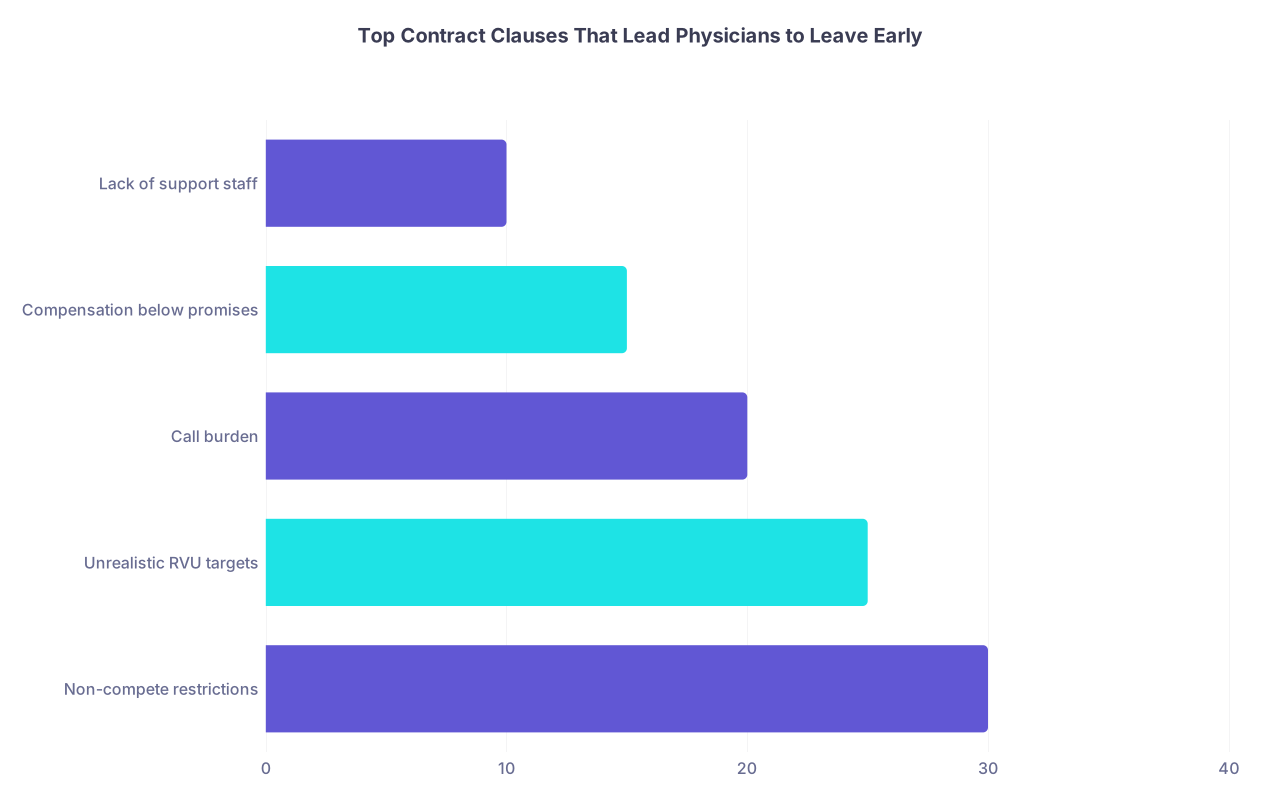
| Category | Value |
|---|---|
| Non-compete restrictions | 30 |
| Unrealistic RVU targets | 25 |
| Call burden | 20 |
| Compensation below promises | 15 |
| Lack of support staff | 10 |
Phase 7: 0–3 Months Before Start – Final Checks and Ground Rules
The contract is signed. But the work is not entirely over.
At this point you should ensure that what you signed turns into how you practice.
In the last few months before you start:
Get everything operational in writing.
- Written schedule template
- Call rotation pattern
- Who supervises you and how performance is evaluated
- How RVUs/bonuses are reported and paid
Set up a system to monitor contract promises.
- Save your contract in a secure folder.
- Calendar key dates:
- End of guarantee period
- Partnership eligibility date
- Any renewal/termination notice windows
- Track:
- Monthly RVUs or collections
- Call frequency vs what was promised
- PTO/CME usage
Clarify how to bring up contract concerns internally.
- Who do you talk to if:
- Your schedule does not match the contract
- Your bonus calculations look wrong
- You want to renegotiate after 1–2 years
- Who do you talk to if:
Phase 8: First 12–24 Months as an Attending – Learning for Contract #2
Your first job is rarely your last. But it absolutely sets up what options you have for the second. Contracts matter here too.
At this point you should treat your first contract as both a job and a case study.
Over your first one to two years:
Quarterly, ask: Is reality matching the contract?
- Volume
- Call
- Pay
- Support staff
- Admin time, academic promises, procedural volume
Document discrepancies early.
- Email summary to yourself after significant conversations.
- Keep a simple log:
- “Contract says 1:4 call, reality is 1:3 for last 6 months.”
- “Guaranteed OR block frequently taken away without notice.”
Start planning your next move 18–24 months into job.
- If it is good: plan for renewal or partnership from a position of strength.
- If it is bad: review non-compete and tail obligations with an attorney before you start interviewing elsewhere.

So When Should Residents Start Learning Contracts?
Blunt answer:
- Match–PGY1: Learn the vocabulary and structures. Observe. Ask questions.
- Early PGY2: Align contract concepts with your actual career goals. Start a must-have / deal-breaker list.
- Late PGY2 / 18–24 months before job: Study real contracts, major red flags, and region-specific norms. Line up an attorney.
- 12–18 months before job: Position yourself in the job market; set walk-away points.
- 9–12 months before job: Apply, interview, and start real contract review and negotiation with expert help.
- 6–9 months before job: Negotiate hard, compare offers, and commit.
- 0–24 months in job: Monitor whether the contract is honored and start planning your next negotiation.
If you wait until “when I get an offer,” you are late. Not doomed. But late. You will accept things you should have rejected.
Today’s action step is simple:
Open a blank document and write three headings—“Must-Haves,” “Deal-Breakers,” and “Questions to Ask About Any Contract.” Add just one bullet under each based on what you have read here. That tiny list is the start of you never signing a bad deal in the dark.


