

The fantasy RVU targets in most physician contracts are mathematically impossible.
Not “hard.” Not “stretch.” Impossible. I have reviewed contracts where the RVU quota would put a general internist in the 99.5th percentile of national productivity just to hit their base salary. That is not a negotiation. That is a trap.
Let’s walk through this like grown-ups with calculators, not like starry-eyed new attendings being sold “unlimited earning potential.”
1. RVU Basics: The Only Three Numbers That Actually Matter
You do not need to become a coding expert. You do need to understand three numbers in every RVU-based physician contract:
- RVU target (usually annual)
- Dollar per wRVU rate
- Conversion from RVUs to your real-world schedule
Everything else is wallpaper.
At the end of the year, your math looks like this:
Total RVU pay = (wRVUs generated) × ($ per wRVU)
If there is a base plus bonus, the structure is usually:
- Guaranteed base salary for year 1 (sometimes 2)
- Then:
- A new, often lower “draw” or base, plus
- Productivity bonus above some threshold of wRVUs
The question you should be asking: Are these RVU targets within the 25th–75th percentile of national benchmarks for my specialty, or are they quietly set at “unicorn” level?
Let us put some data behind that.
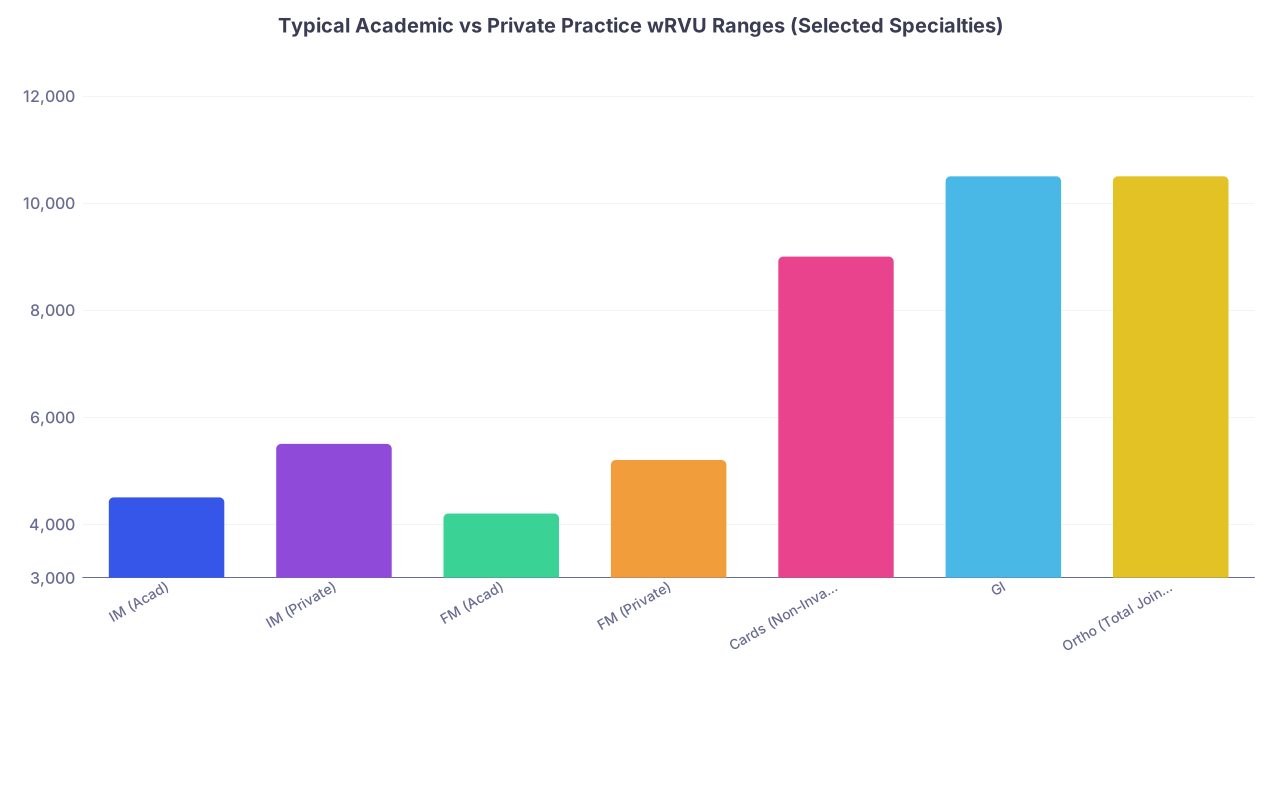
| Category | Value |
|---|---|
| IM (Acad) | 4500 |
| IM (Private) | 5500 |
| FM (Acad) | 4200 |
| FM (Private) | 5200 |
| Cards (Non-Invasive) | 9000 |
| GI | 10500 |
| Ortho (Total Joints) | 10500 |
Numbers above are realistic ballparks for full-time work, not maximums. I have seen contracts asking 7,500 wRVUs from an academic internist with a 60/40 clinic/teaching split. That is fantasy land.
2. Real RVU Production by Specialty: Benchmarks You Can Actually Use
Let us anchor this in actual benchmark-style data. These ranges synthesize MGMA/AAMC-like national data and what I see repeatedly in contract reviews.
Think of these as typical full-time annual wRVU ranges, not the top 5% grinders.
| Specialty | Conservative Range | Common Target Band |
|---|---|---|
| Internal Medicine (Outpt) | 4,000–5,000 | 4,800–5,500 |
| Family Medicine (Outpt) | 4,000–5,000 | 4,600–5,400 |
| Hospitalist (7-on/7-off) | 4,200–5,200 | 4,800–5,800 |
| Non-Inv Cardiology | 7,500–9,500 | 8,500–10,000 |
| GI (mostly procedural) | 8,500–11,000 | 9,500–11,500 |
| General Surgery | 7,000–9,000 | 8,000–10,000 |
Now compare that to what you are being offered. If your internal medicine outpatient job is “target 7,000 wRVUs with bonus starting at 6,500,” that is equivalent to saying: “We will start paying you bonus once you clear roughly 90th–95th percentile productivity.” That is a bad joke, not an incentive.
Here is the key test most new attendings skip:
- Is my target in the middle 50% of national productivity for my specialty and setting?
- If yes → it might be realistic.
- If near 75th percentile → you better be getting top-tier pay and support.
- If above that → assume you will never see significant bonus.
3. Convert RVUs Into Actual Clinic Days, Not Wishful Thinking
Hospitals and groups love talking about “just 25 patients a day” with a smile. Translate that to wRVUs and you get a different picture.
Let us take bread-and-butter outpatient internal medicine as an example. Rough-and-ready wRVU values:
- New patient: 99204 or similar → ~2.4–3.0 wRVUs
- Established level 3: ~1.3–1.5 wRVUs
- Established level 4: ~1.9–2.1 wRVUs
- Annual wellness visits often ~1.9–2.4 wRVUs (plus add-ons if done right)
In most general medicine clinics, a realistic average is around 1.5–1.8 wRVUs per patient across a full panel when you factor in no-shows, quick visits, and non-billable time.
Now, run the math.
Say they want 6,000 wRVUs/year.
Scenario A: 4 clinic days per week, 46 weeks per year (accounting for vacation/CME/holidays)
- 4 days/week × 46 weeks = 184 clinic days
- 6,000 wRVUs / 184 = 32.6 wRVUs per day
With 1.7 wRVUs per patient on average:
- 32.6 / 1.7 ≈ 19–20 patients per day
That is aggressively busy but not impossible if everything else is well-supported (good staff, minimal inbox, few meetings).
Now change one variable.
Scenario B: 3.5 clinic days per week (0.9 FTE is common in some contracts)
- 3.5 days/week × 46 weeks = 161 clinic days
- 6,000 / 161 = 37.3 wRVUs/day
- 37.3 / 1.7 ≈ 22 patients per day on a 3.5 day schedule
For a new grad? Absurd. I have watched first-year attendings drown with much less.
The pattern is the same across specialties: take the annual wRVU target, divide by realistic work days, then by realistic wRVUs/encounter or procedure. If the resulting patient or case volume looks ridiculous, your target is not “ambitious.” It is structurally impossible.
4. Dollars per wRVU: Where Contracts Quietly Rip You Off
The data show there are two main ways contracts become predatory:
- Setting wRVU targets way above normal productivity
- Underpaying each wRVU compared with market norms
A not-uncommon combo in primary care:
- $42 per wRVU, with bonus only above 6,000 wRVUs
- Actual realistic production in that setting: ~4,800–5,200
You never see the bonus. You just grind.
Here is a rough market snapshot for $ per wRVU, by specialty category:
| Category | Reasonable Range ($/wRVU) |
|---|---|
| Primary Care (IM/FM) | $45–$65 |
| Hospitalist | $50–$70 |
| Non-Invasive Cardiology | $55–$80 |
| Procedural IM (GI, Pulm, etc) | $55–$80 |
| General Surgery | $55–$80 |
| Ortho/Neurosurg | $60–$90+ |
If your rate is:
- 20–25% below these ballparks
and - Targets are at or above typical wRVU norms
…then the math is simple: they capture the upside, you keep the burnout.
Let us run a quick comparison for an outpatient internist.
Offer A:
- Target: 5,000 wRVUs
- $55 per wRVU, bonus after 4,500
Offer B:
- Target: 6,000 wRVUs
- $45 per wRVU, bonus after 6,000
Assume you end up producing 5,200 wRVUs (which is solid for full-time outpatient).
- Offer A pay:
- Base covers first 4,500 wRVUs implicitly
- Bonus: (5,200 – 4,500) × $55 = 700 × 55 = $38,500 bonus
- Offer B pay:
- You did not even hit the 6,000 threshold → $0 bonus
Same doctor. Same work. $38k difference, solely from contract structure.
5. Detecting “Fake” RVU Targets: A Quick Triage Framework
I use a simple mental filter when reviewing RVU-based contracts. You can do the same.
Step 1: Benchmark ratio
Compare the target wRVUs to your specialty’s typical range.
- Target / midpoint of national typical range = Target ratio
For example, GI:
- Say national typical full-time band: 9,500–11,500 → midpoint ~10,500
- Contract target: 13,000
- Target ratio = 13,000 / 10,500 ≈ 1.24 (24% above typical)
If that ratio is >1.15, I start assuming the bonus thresholds are intentionally unreachable unless the comp per wRVU is excellent and the practice is an absolute volume machine.
Step 2: Workday math
Take FTE seriously. A 1.0 FTE with:
- 4.5 clinic days/week
- 48 work weeks
is very different from a “1.0 FTE” with:
- 3.5 clinical + 1 admin day that is not billable
- 46 work weeks
Run the math on daily wRVUs and see if it even fits in a 9–10 hour day when you include documentation, inbox, care coordination.
Step 3: Risk flags
Here are typical red flags I see by specialty:
Primary care (IM/FM):
- wRVU targets > 6,000 with:
- 4 or fewer clinic days per week, or
- Significant non-clinical duties (teaching, admin) not protected separately
- Bonus threshold at or near the target (no “first dollar” productivity pay)
Hospitalist:
- 7-on/7-off, 15–18 patients/day, and wRVU targets above ~5,500
- No adjustment for nights, admits-heavy blocks, or open ICU
Procedural specialties:
- Targets clearly > 75th percentile with no added resources (block time, ASC access, APPs)
- “Blended” rate that is actually low once you factor in high procedural RVUs
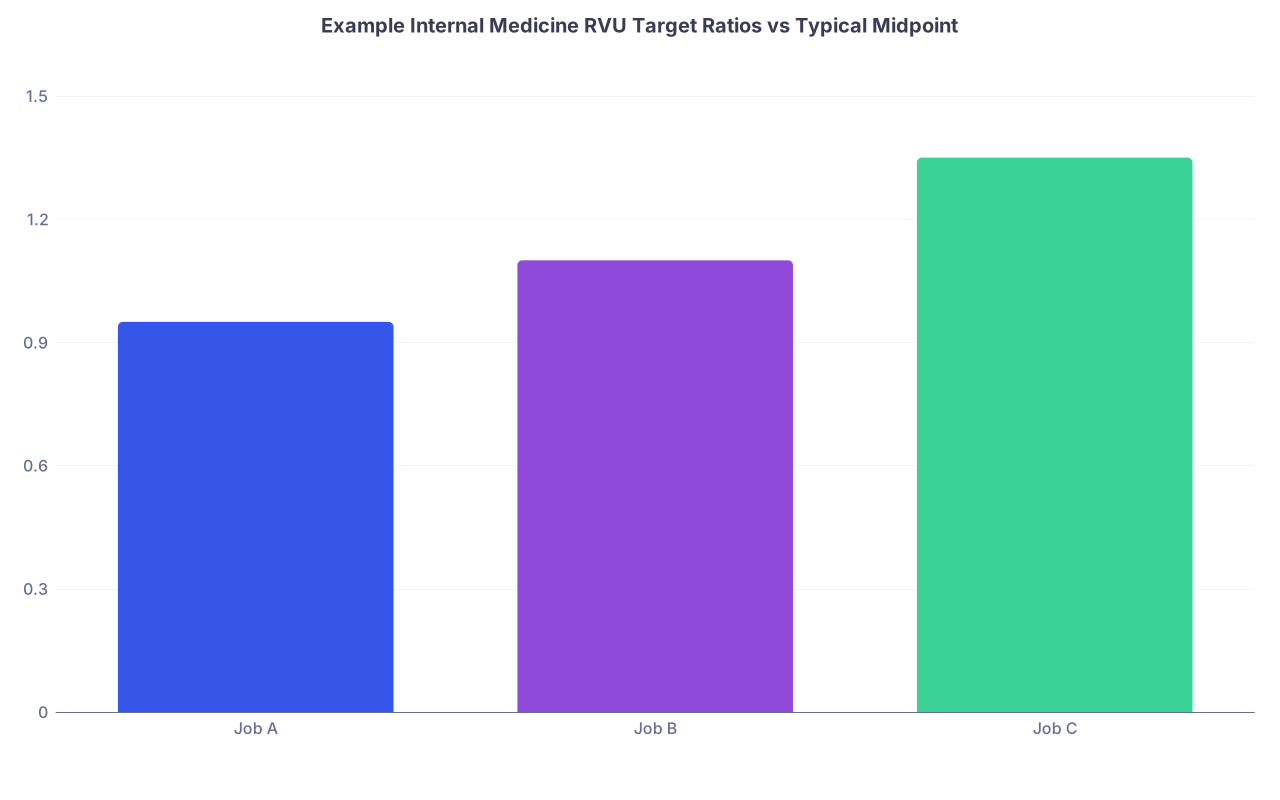
| Category | Value |
|---|---|
| Job A | 0.95 |
| Job B | 1.1 |
| Job C | 1.35 |
In that example:
- Job A: ~5% below midpoint → likely fine
- Job B: 10% above → needs support but plausible
- Job C: 35% above → assume fantasy until proven otherwise with hard data
6. Academic vs Private: Stop Mixing the Benchmarks
One of the dirtier tricks: using academic-like salary with private-practice-level RVU targets. Or vice versa with benchmarks that are not matched to your reality.
Core differences the data show:
Academic physicians:
- Lower clinical RVU expectations for the same FTE
- Pay is usually not pure RVU-based. There is mission-driven money for teaching/research.
- When they do use wRVUs, targets are often 20–40% lower than private practice for the same specialty
Private practice / hospital-employed community jobs:
- Higher clinical RVU expectations
- Cleaner link between wRVUs and pay
- Fewer non-billable obligations (at least on paper)
If you are 50% clinical, 50% teaching, and they want 5,000+ outpatient IM wRVUs from you in an academic job, they are either:
- Lying about the 50/50 split, or
- Expecting you to do 1.3–1.5 FTE worth of total work in a 1.0 FTE job
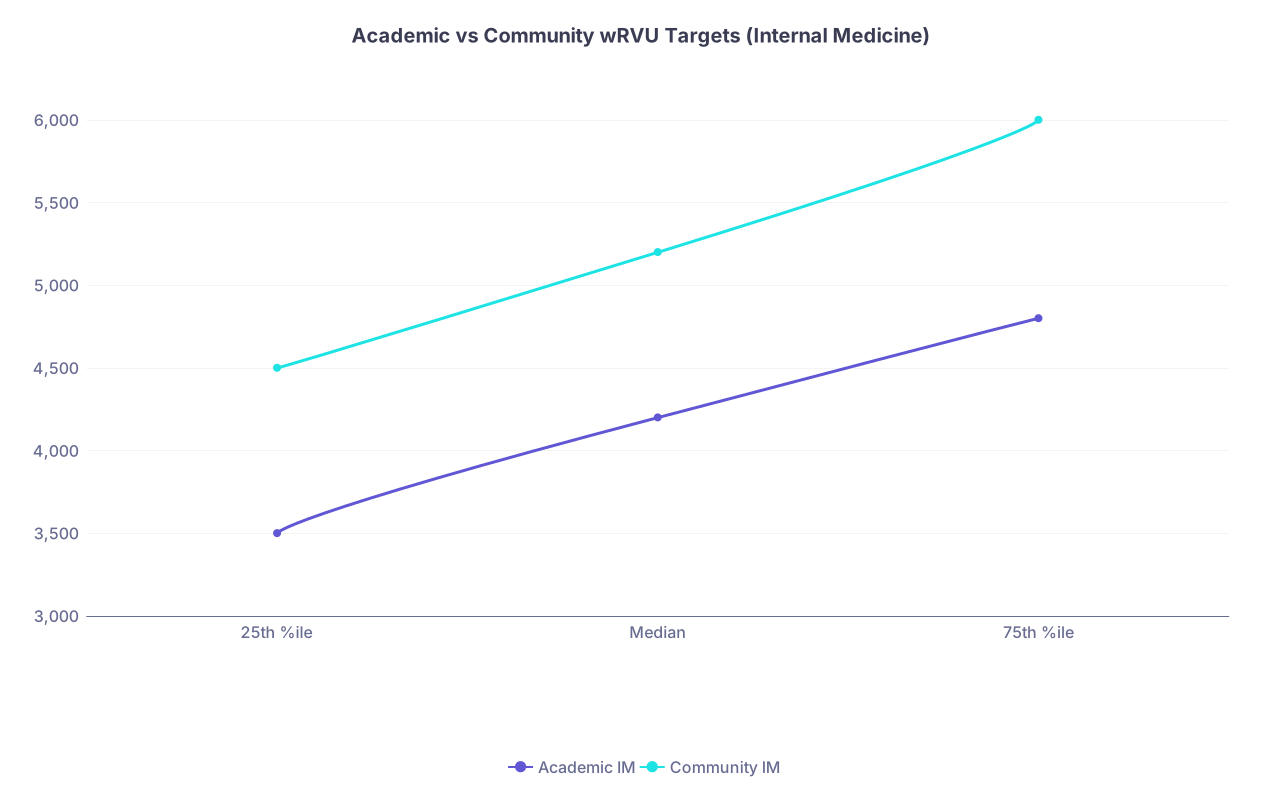
| Category | Academic IM | Community IM |
|---|---|---|
| 25th %ile | 3500 | 4500 |
| Median | 4200 | 5200 |
| 75th %ile | 4800 | 6000 |
If your “teaching” job’s targets line up with the community line, the teaching is effectively volunteer work.
7. Putting It Together: Is Your Contract Realistic?
Let us build a quick checklist using everything above. Use your actual numbers.
Step 1: Benchmark your target
- Identify your specialty and setting (academic vs community).
- Look up or approximate a typical wRVU range (use the tables above as guardrails).
- Compute: Target ratio = Contract target / Typical midpoint.
Rules of thumb:
- ≤1.05 → probably realistic
- 1.05–1.15 → needs good support and decent pay
1.15 → high risk of unreachable targets
- ≥1.25 → assume designed underpayment unless proven otherwise
Step 2: Translate to your daily workload
Take your contract:
- FTE: 1.0? 0.8? 0.6?
- Clinical days per week
- Weeks per year after vacation, CME, holidays
Then:
- Annual workdays = clinical days/week × weeks/year
- Daily RVU requirement = target wRVUs / annual workdays
- If you know your likely wRVUs per encounter or procedure, translate to visits or cases per day.
Gut check: Could you sustain that for 3–5 years without burning out? If not, the contract is not realistic, no matter what the recruiter says.
Step 3: Evaluate the $ per wRVU
Compare your rate to rough market:
- If your $/wRVU is more than 15–20% below typical for your specialty, your only path to “fair” income is extreme overproduction.
Also, check:
- Does bonus pay from the first wRVU (true productivity model)?
or - Only after a high threshold (hybrid or trap model)?
Hybrid models are not evil. But they are often engineered so that the bonus is theoretical.
8. How to Push Back Using Data, Not Feelings
You gain leverage when you talk like this:
“Based on MGMA-style benchmarks and typical wRVU production for outpatient internal medicine, a 5,000–5,500 target is common for 1.0 FTE with 4–4.5 clinic days per week. At 6,500 with my 4-day clinic schedule, the daily RVU requirement would put me above the 90th percentile. I want a sustainable practice, so we need to adjust either the target or the FTE.”
Very different from: “That sounds like a lot.”
Tactics that work:
- Ask for written historical productivity data for the position:
- “What did the last person in this role produce annually in wRVUs for the past 3 years?”
- Ask for support details in numbers:
- MA/NP ratios
- Average no-show rate
- Average daily schedule templates (new vs established, procedure slots)
- Anchor to external benchmarks:
- “Most community GI groups target 9,500–11,000 wRVUs for full-time. Your 13,000 target would require >20% above that. Can we bring the threshold closer to 10,500–11,000, or increase the $ per RVU accordingly?”
If they cannot or will not give data, that tells you everything.
9. A Concrete Example: Two Hospitalist Offers
Let me spell this out with hospitalist numbers, because this is where I see some of the worst math games.
Offer X:
- 7-on/7-off, 182 shifts/year
- $70/wRVU
- Target: 4,800 wRVUs with bonus above 4,500
- Average census: 15–16 patients/shift, closed ICU, no procedures
Offer Y:
- Same schedule
- $55/wRVU
- Target: 6,000 wRVUs with bonus only above 6,000
- Average census: “around 18–20,” open ICU, codes and procedures expected
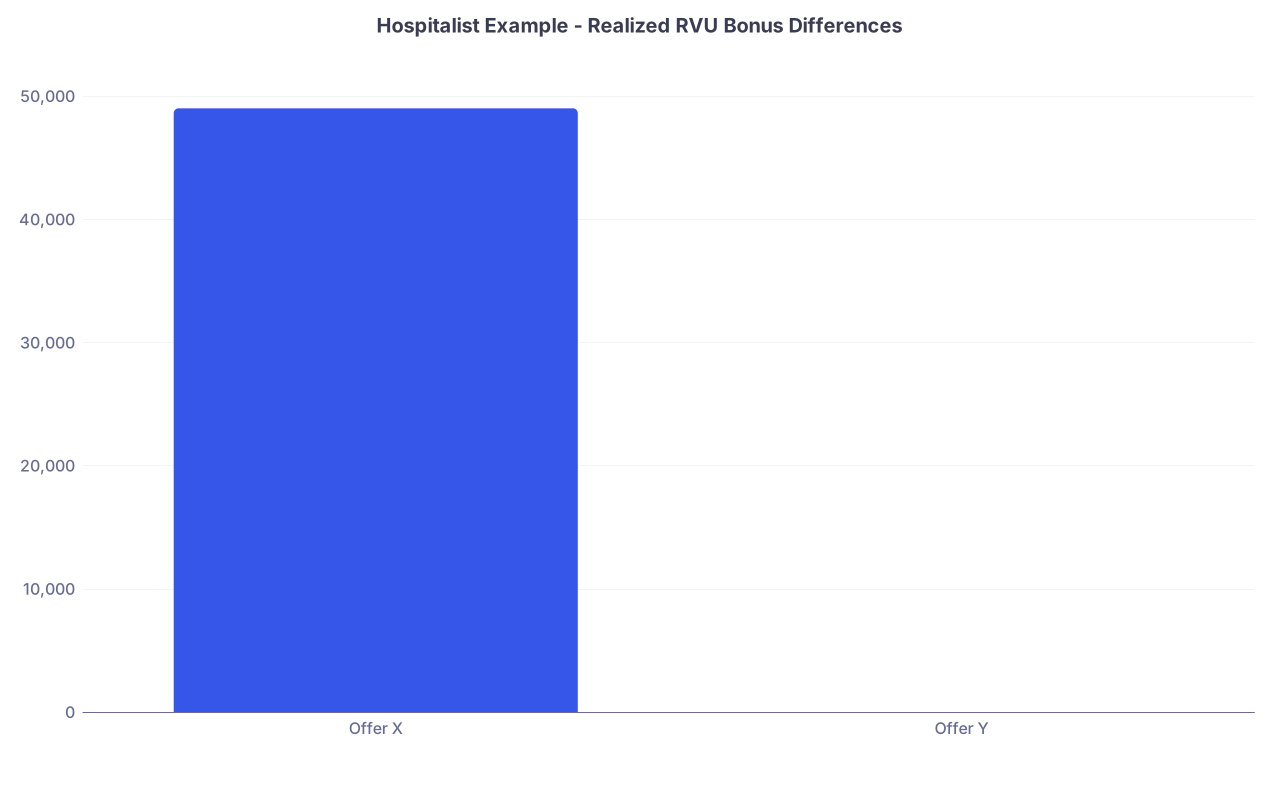
Assume actual realized productivity: 5,200 wRVUs/year in either job.
Offer X:
- Bonus = (5,200 – 4,500) × $70 = 700 × 70 = $49,000
Offer Y:
- Bonus = 0 (never hit 6,000)
Even if base salaries look similar, the structure buries you in Offer Y.
| Category | Value |
|---|---|
| Offer X | 49000 |
| Offer Y | 0 |
Same doctor. Same energy. Fifty grand evaporates because of two lines in a contract.
10. The Bottom Line: Your Numbers Need To Live in the Real World
RVU-based contracts are not inherently bad. They can be fair, even generous, if:
- The wRVU targets are anchored to realistic national benchmarks
- The $ per wRVU is within a sane range for your specialty
- The structure starts sharing upside before you hit unicorn levels of productivity
- The FTE, days, and non-clinical expectations match the targets
What you cannot do is treat all RVU numbers as equally plausible just because they are typed in a PDF.
The data show that many new attendings, especially straight out of residency or fellowship, sign contracts where:
- Their target is effectively ≥75th percentile productivity
- Their pay per wRVU is ≤50th percentile
- Their non-clinical load is higher than advertised
That combination is not bad luck. It is design.
Your job is to make that design visible with actual math:
- Benchmark ratio
- Daily RVU requirement
- True $ per RVU relative to peers
Once you see those numbers clearly, the negotiation becomes a lot simpler: you either fix the math, or you walk.
Because when a group insists that their fantasy RVU targets are “totally doable,” but refuses to show historical production data or bend on thresholds, they are not talking about your career. They are talking about their margin.
You have one post-training decade where your energy, learning curve, and earning potential all peak together. You cannot afford to burn half of it chasing bonuses that were never meant to be paid.
Do the math now. Save yourself years later.
With those calculations under your belt, you are ready for the next step: not just judging offers, but pitting multiple data-backed offers against each other to force the numbers in your favor. That is where real leverage starts—but that is a discussion for another day.


