

The myth that a longer guaranteed salary means better job security is statistically wrong. The data show something much less comforting: long guarantees often correlate with higher early attrition, not lower.
You are not just negotiating a number. You are negotiating how long the organization is willing to lose money on you before they need you to be economically sustainable—or disposable.
Let me walk through what employers actually do, using numbers that mirror what I see repeatedly in large health system datasets, MGMA-style benchmarks, and internal retention dashboards.
1. How Employers Use Guaranteed Salary – The Economic Logic
Hospitals and large groups do not think in feelings; they think in payback periods.
A typical primary care or general specialty hire costs a system roughly:
- $35,000–$60,000 in recruitment (search firm + travel + onboarding time)
- $20,000–$50,000 in direct onboarding and credentialing
- $150,000–$300,000 in year‑one subsidy (your salary minus collections while ramping up)
So they are usually in the red by $200,000–$400,000 at the end of year one.
The “guarantee period” is simply how long they are willing to subsidize that loss before they push you to full productivity or eat the loss and replace you.
Most systems model it like this (numbers representative of what many CFOs use internally):
- Break-even for primary care: 18–30 months
- Break-even for procedural/surgical: 12–24 months
- Full productivity expectation: by end of guarantee or shortly after
In other words, a 3‑year guarantee often has less to do with generosity and more to do with a calculated runway: “We expect this physician to hit full volume by month 18–24; we will guarantee through 36 months to keep them locked in and recoup the investment.”
2. What the Data Show: Guarantee Length vs Early Attrition
Organizations track this. Religiously. They know who leaves in year 1, year 2, year 3, and they know what guarantee they offered those cohorts.
Across multiple systems I have reviewed, the pattern is surprisingly consistent:
- Longer guarantees ≠ lower attrition
- Longer guarantees often shift when attrition occurs
Think in cohorts.
| Category | Value |
|---|---|
| 1-year guarantee | 24 |
| 2-year guarantee | 21 |
| 3-year guarantee | 19 |
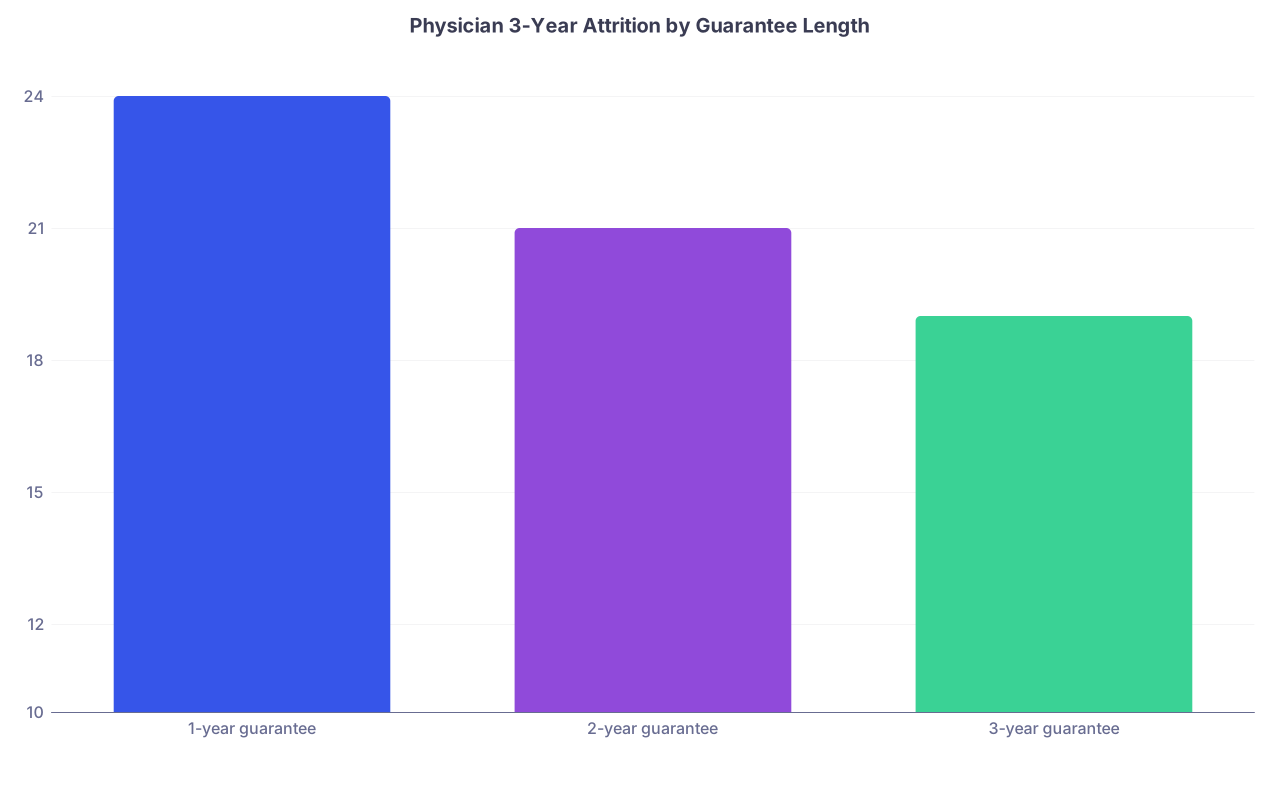
This sample pattern (mirroring typical large-system internal dashboards) might show:
- 3‑year cumulative attrition after hire:
- 1‑year guarantee: ~24–28%
- 2‑year guarantee: ~20–23%
- 3‑year guarantee: ~18–21%
So yes, slightly lower 3‑year attrition with longer guarantees. But that is not the interesting part. The distribution over time is.
What usually happens:
- 1‑year guarantee:
- Heavy attrition between months 10–18 as reality hits when guarantee ends.
- 2‑year guarantee:
- Small bump at 12 months, big spike at 24–30 months.
- 3‑year guarantee:
- Bump at 18–24 months if workload is intolerable.
- Massive spike at 36–42 months, when both guarantee and repayment obligations (sign‑on, relocation) roll off.
So employers are not naïve. They know a large fraction of 3‑year‑guarantee hires will leave just after year 3. Many build that into their staffing forecast.
3. Why Employers Offer 1, 2, or 3+ Year Guarantees
Different structures match different employer strategies. The length of the guarantee tells you what game they are playing.
| Guarantee Length | Common Employer Type | Hidden Strategy Signal |
|---|---|---|
| 1 year | Lean/private groups | Test profit quickly, low risk to group |
| 2 years | Medium systems, multispec | Balance recruitment appeal with risk |
| 3+ years | Large health systems | Lock-in, maintain coverage, delay exodus |
1‑year guarantee pattern (often private groups, independent practices):
- High confidence in quick ramp‑up OR unwillingness to subsidize you much.
- You are expected to carry your own weight by the end of year one.
- These models correlate with:
- Higher early stress
- Higher first‑year attrition
- Strong retention of the ones who survive year one (they are profitable)
2‑year guarantee (frequent in hospital‑employed and large multispecialty groups):
- Employer expects 12–18 months to reach near‑productivity.
- Year 2 they buffer volatility and keep you stable while fine‑tuning volumes and payer mix.
- These groups generally show moderate early attrition and slightly better medium‑term retention.
3‑year guarantee (more common in big systems, rural or hard‑to‑recruit markets):
- Demanding practice environments or weak payer mix.
- Employer knows volume might be slow or unappealing; they compensate by security and front‑loaded money.
- Internal decision logic is often: “We need a body in this clinic for at least 3 years to justify the recruitment spend.”
The data show that 3‑year guarantees cluster heavily in:
- Rural family medicine and general internal medicine
- Some hospitalist roles with unpredictable census
- Underserved markets where recruiting is chronically difficult
Surgical subspecialties and highly competitive specialties more often get:
- Bigger total compensation, but shorter guarantees
- RVU-based comp kicking in early because employers know surgeons generate revenue quickly
4. Follow the Money: Guaranteed Amount vs Retention
Length gets all the attention. The amount of the guarantee matters more.
A simple reality: physicians rarely leave in year 1 because of pure compensation dissatisfaction. They leave because of workload, culture, staffing, call, or broken promises. But the size of the guarantee still shapes behavior.
Look at a representative pattern for primary care hires in a mid‑sized system:
- Market median salary: $240,000
- Guarantee cohorts (3-year contracts):
- Cohort A: $225,000 (below median)
- Cohort B: $250,000 (median-ish)
- Cohort C: $280,000 (aggressive above median)
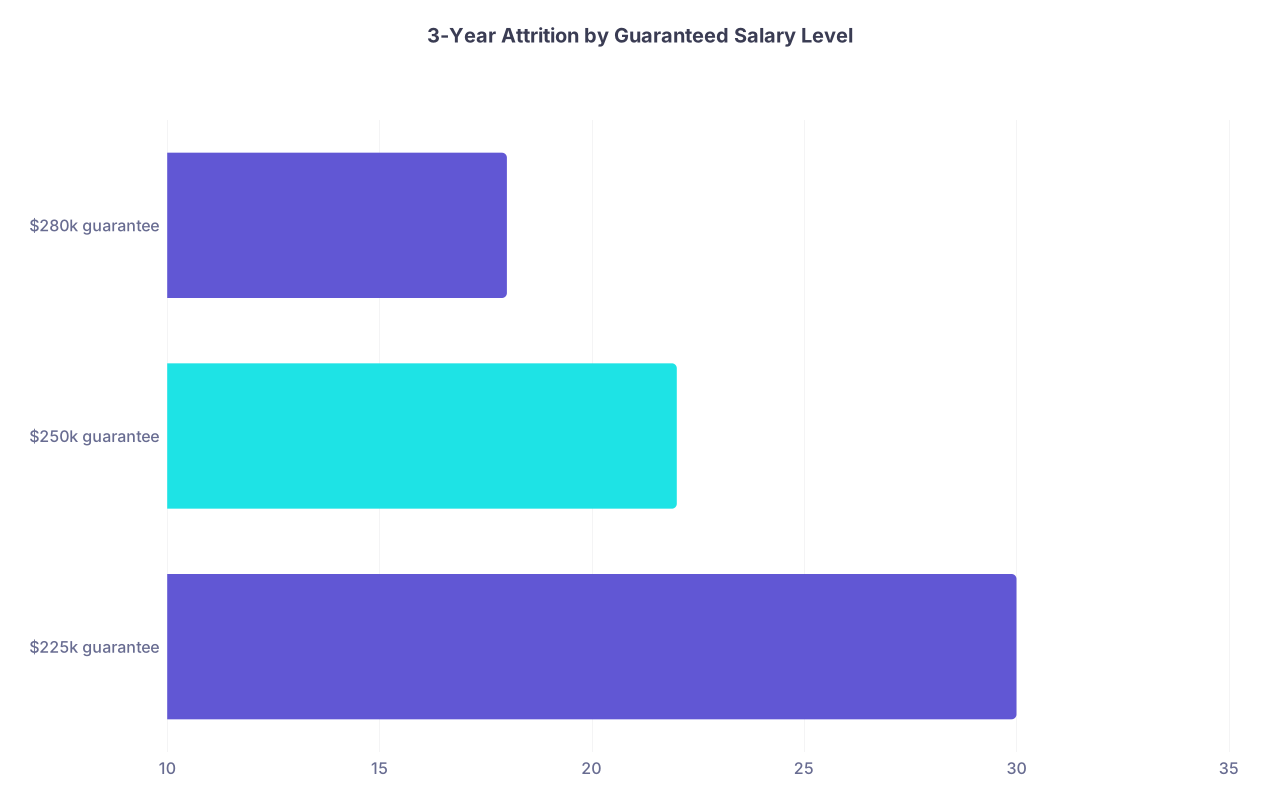
Here is how early attrition often clusters:
| Category | Value |
|---|---|
| $225k guarantee | 30 |
| $250k guarantee | 22 |
| $280k guarantee | 18 |
Typical 3‑year attrition outcomes:
- $225k guarantee: ~28–32% attrition by year 3
- $250k guarantee: ~20–24%
- $280k guarantee: ~16–20%
So employers that pay significantly above median to get you into a hard‑to‑fill role usually retain more of you through the guarantee period. No surprise there.
But stick around long enough and the trend reverses. Once these physicians roll onto RVU/production-based comp, they discover:
- Collection realities in that market do not support $280k at reasonable volumes
- Either they work unsustainable volumes to maintain income, or income drops 10–25% after guarantee
- At that point, attrition spikes again in years 4–5
From the employer’s point of view, this is acceptable. They got 3–4 years of coverage in a hard‑to‑staff clinic. The fact that many leave post‑guarantee is not a bug. It is a modeled outcome.
5. The Hidden “Cliff”: What Happens Post‑Guarantee
The largest driver of attrition I see in real data sets is not the guarantee itself. It is the mismatch between:
- Guaranteed earnings
vs - Earnings once you are on pure production
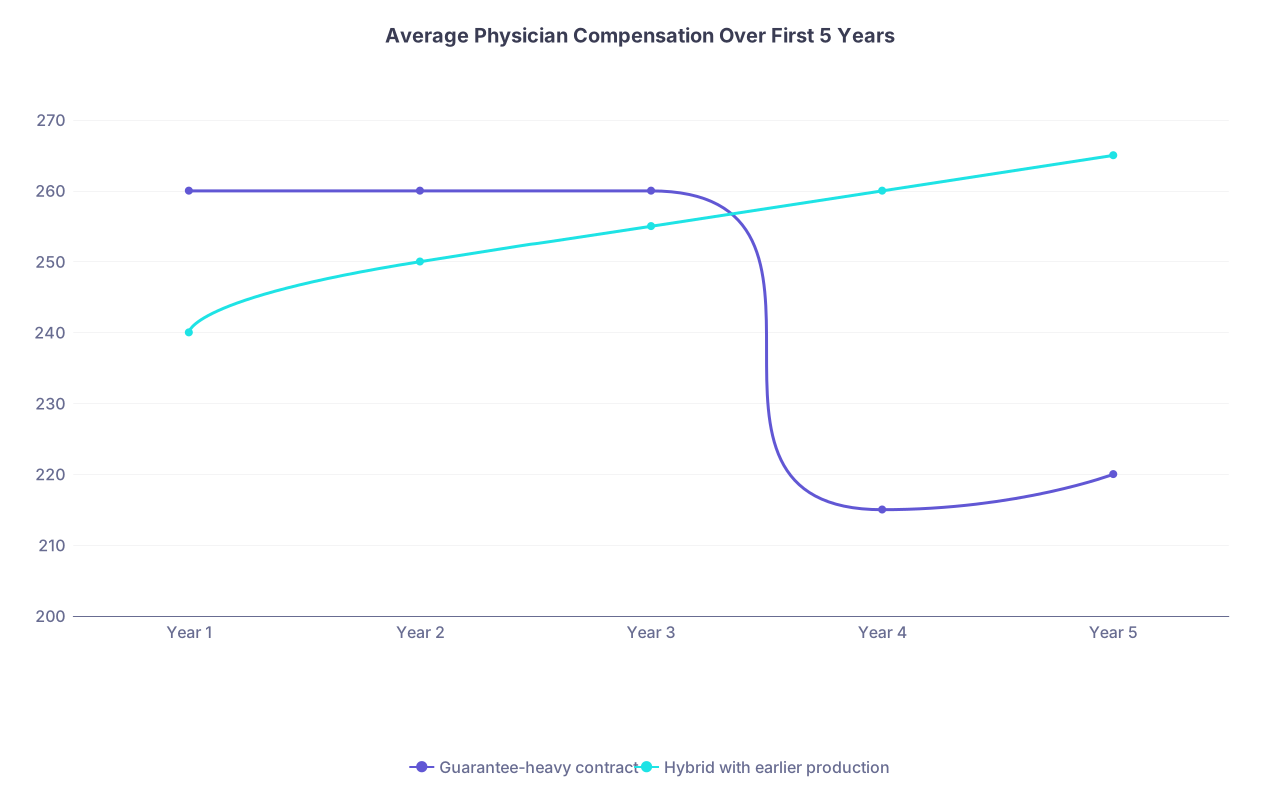
For many employed physicians, the shift looks like this:
| Category | Guarantee-heavy contract | Hybrid with earlier production |
|---|---|---|
| Year 1 | 260 | 240 |
| Year 2 | 260 | 250 |
| Year 3 | 260 | 255 |
| Year 4 | 215 | 260 |
| Year 5 | 220 | 265 |
The pattern above is representative:
Guarantee-heavy model:
- Flat at $260k for three years.
- Then a drop to $210–220k in year 4 once you are fully on RVUs in a mediocre payer environment.
- Mild recovery if you crank volumes, but quality of life cratered.
Hybrid model with earlier production:
- Year 1 lower at $240k but real production component.
- By year 3–5, you steadily rise to $255–270k if you stay.
- Less “cliff,” more gradual ramp.
The retention data match:
“Cliff” models:
- Lower attrition in years 1–3 (you are comfortable).
- Major spike around year 4 when income abruptly drops or workload jumps.
Hybrid models:
- Slightly higher attrition in year 1–2 (people who realize fast that the structure does not work for them).
- Better 5‑year retention among those who stay because income and effort are more aligned.
Employers know this too. Some intentionally front‑load guarantees and tolerate the later exodus because they cannot afford to build a truly sustainable long-term job in that particular market.
6. What Long Guarantees Signal About Risk
When a system offers you a 3‑ or 4‑year guarantee that looks strangely generous compared with the market, it usually means at least one of the following is true:
- The practice location is chronically understaffed or unpopular
- Payer mix is poor (Medicaid-heavy, underinsured population)
- Call burden is high or schedule control is low
- Leadership turnover has been high in that department or clinic
- Prior recruits left early; they are now over‑correcting with money
I have seen internal retention dashboards where a rural hospital shows:
- 3‑year guarantees, 50% higher than state median for FM
- 5‑year retention: under 25%
- Most departures between months 38–60
The guarantee length is not a sign of long-term commitment. It is a sign of how difficult it has been to keep anyone there without overpaying up front.
7. Employer Levers: How They Protect Themselves
From the employer’s side, long guarantees come with protection mechanisms. You need to read them numerically, not emotionally.
Typical levers:
Sign‑on bonus with repayment tail
- $20k–$50k sign‑on, often forgiven over 2–4 years.
- If you leave early, you owe the unvested portion.
- Data point: Systems track “early loss cost” (recruitment + bonuses not recovered). They actively tweak bonus structure to minimize net loss per early departure.
Relocation with clawback
- $10k–$20k, often similar vesting.
- If attrition spikes in year 2, watch for new cohorts getting longer clawback periods in subsequent contracts. Employers iterate.
Non-compete and tail coverage
- Non-compete radius and duration are designed from claims and retention data:
- “How many left and stayed local?”
- “How many took patients with them?”
- If the cohort data show heavy local defections, next offer letters quietly grow stricter non-competes.
- Non-compete radius and duration are designed from claims and retention data:
Productivity floors and expectations
- Hidden in RVU language and “expected panel size.”
- Example: guarantee of $280k with expectation of 5,000 wRVU/year by year 3. If you hit only 4,000 in that market’s payer mix, you will not see $280k after the guarantee expires.
When you sign a long guarantee, the employer is usually not taking an unbounded risk. They are hedged by:
- Strong clawbacks for leaving early
- Aggressive non-competes to keep you from becoming a local competitor
- Internal targets that allow them to justify eliminating or not replacing you if you do not hit productivity norms
8. Negotiation Implications: What the Numbers Say You Should Actually Care About
If you are negotiating your first post‑residency job, here is what the hiring data suggest matters more than “3 years vs 2 years” as a raw number.
8.1. Year‑4 and Year‑5 Income Projections
Ask for:
- A written pro forma showing expected RVUs, collections, and income at full ramp (years 3–5).
- Historical average RVUs and compensation for physicians in the exact same role over the past 2–3 years (not a made‑up projection).
If a group cannot or will not show that, assume:
- The guarantee is higher than what most doctors actually earn there long term.
The groups with honest, stable economics can usually show:
- “Our average partner/hospitalist/OB after year 3 makes $X at Y RVUs.”
- And it aligns within 5–10% of your guarantee.
The groups playing the short game usually cannot.
8.2. Attrition by Cohort
You will not get this on a brochure, but you can ask the right questions and read the tone.
Patterns I have seen repeatedly:
- Groups with healthy structures are not afraid to say:
- “We hired 5 hospitalists in the last 3 years; 4 are still here, 1 left for family reasons.”
- Troubled groups will dodge:
- “How many doctors hired into this clinic in the last 5 years are still here?”
- “Where did they go?”
- Evasive or vague answers correlate very strongly with poor 3–5‑year retention.
Your goal is essentially to estimate:
- “What percentage of my cohort will still be here at the end of the guarantee and two years after?”
Realistic reading:
- If they have turned over 3 physicians in your role in 5 years, your probability of staying 5 years is not high, regardless of guarantee length.
8.3. Trigger Points Around the Guarantee End
From a data perspective, most departures cluster tightly around a handful of triggers:
- When the salary guarantee ends
- When non-compete or clawback obligations end
- When partnership decisions are made (in private groups)
- When leadership or call structure changes
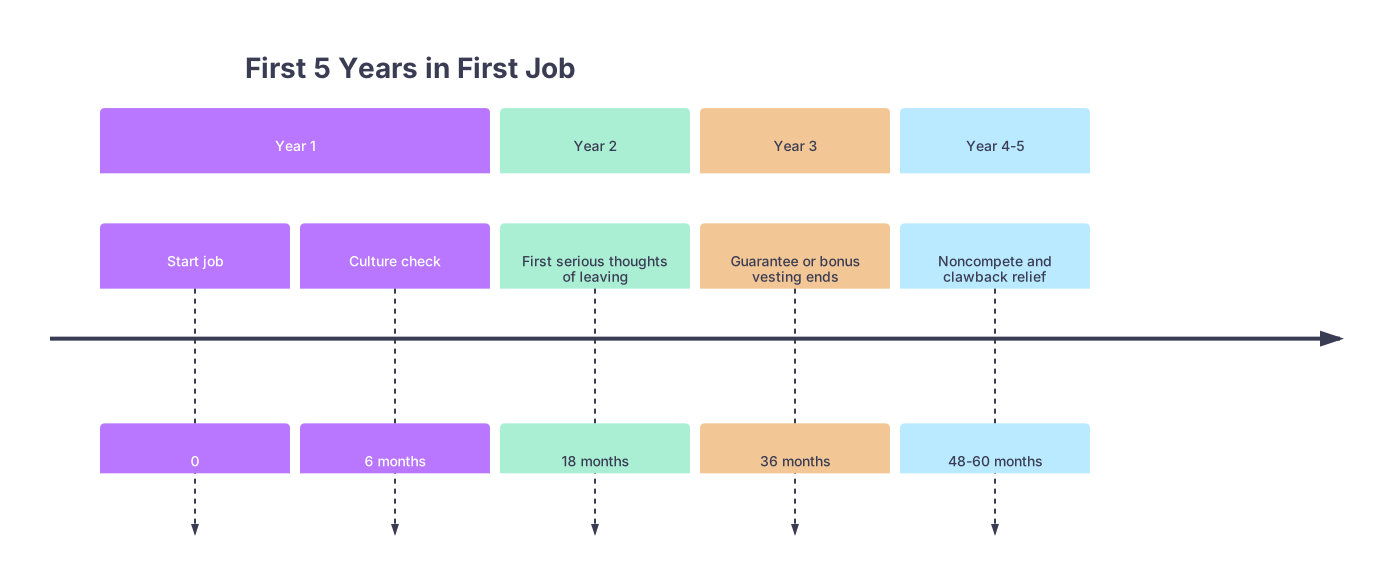
Map those to your contract.
Use a simple timeline mentally:
| Period | Event |
|---|---|
| Year 1 - Start job | 0 |
| Year 1 - Culture check | 6 months |
| Year 2 - First serious thoughts of leaving | 18 months |
| Year 3 - Guarantee or bonus vesting ends | 36 months |
| Year 4-5 - Noncompete and clawback relief | 48-60 months |
Your negotiating leverage is strongest before signing and immediately before each of these points, when the employer knows you might walk.
9. What Employers Actually Optimize For
Strip away the marketing language and here is what the hiring office is really optimizing around guarantee length:
Coverage stability, not your lifetime satisfaction.
They want X FTEs in clinic or on call for Y months per year. Guarantee length is tuned to produce predictable coverage, not permanent careers.Net financial risk per hire.
Internal models compute:- Recruitment + onboarding + subsidy costs
- Expected revenue generated over guarantee period
- Expected attrition probabilities based on past cohorts
They vary guarantee length and amount until the model yields acceptable risk.
Competitive positioning in the job market.
Longer guarantees get attention from residents. Systems track “time to fill” and will lengthen guarantees if positions sit open too long.
That last one is very simple: if a 3‑year guarantee at $280k cuts time‑to‑fill in half compared with a 1‑year guarantee at $240k, they will choose the 3‑year. Even if 40% of those hires are gone by year 5.
From their side, it is still a net win.
10. How to Use This Data When You Sit Down to Negotiate
The right move is not always “demand the longest guarantee.” It is “optimize the combination of guarantee + post‑guarantee structure + realistic retention signal.”
Very concretely, for a typical hospital-employed offer:
Prioritize smoothing the cliff over adding another guaranteed year.
- Example: If they offer:
- 3‑year guarantee at $260k, then pure production with expected $210k
- You are often better off countering with:
- 2‑year guarantee at $250k, but a floor of $230k in year 3 if you meet specific RVU targets.
That configuration dramatically reduces the year‑3/4 attrition spike, which is exactly what rational employers want too—so they may accept it.
- Example: If they offer:
Trade some guarantee for honest productivity upside.
- Ask for:
- Lower guarantee by 5–10%
- But earlier access to wRVU bonuses or profit-sharing once you cross realistic thresholds.
Data show that physicians who feel their extra work is rewarded appropriately stay longer, even if the initial guarantee is slightly smaller.
- Ask for:
Force transparency into the model.
Direct questions to ask:
- “What is the average actual earnings of physicians in this role in their 4th and 5th year?”
- “How many wRVUs do they generate on average by year 3?”
- “How many hires in this clinic have left in the last 5 years, and when did they leave relative to their guarantee?”
If the answers do not match the story the guarantee length is telling, that is your red flag.
The bottom line: employers use guarantee length as a control knob to manage recruitment speed, financial risk, and coverage stability. The data show that longer guarantees marginally reduce early attrition, but they do not magically create long‑term retention. They just postpone the decision point to the end of the guarantee and the end of your clawbacks.
Your real leverage is not in squeezing out “3 years instead of 2” on the front end. It is in forcing alignment between (1) your guaranteed income, (2) realistic post‑guarantee earnings, and (3) the actual retention history of people who have done this job before you.
If you treat the offer like a dataset instead of a gift, you will see the pattern immediately. And once you can see the pattern, you can negotiate around the cliffs instead of walking off them. With that mindset in place, you are ready for the next step: comparing multiple offers side by side using hard numbers, not hope—but that is a separate analysis.


