

The biggest mistake new attendings make in a new city is negotiating like they’re only moving a job, when they’re actually moving a life.
You are not just trading RVUs for dollars. You’re trading your social network, your support system, your familiarity with where the grocery store is. If you negotiate only the salary and sign-on bonus, you’re leaving a ton of real, day-to-day support on the table.
This is especially true if you’re starting in a new city completely alone. No family nearby. No partner moving with you. No built-in friend group. Just you, a contract, and a lease you’ll hope you don’t regret.
Here’s how you handle that.
Step 1: Admit What You’re Really Up Against
Forget the glossy recruitment brochure. Here’s what you’re actually walking into:
- New hospital system
- New EMR
- New city logistics (DMV, utilities, apartments, traffic patterns, grocery stores, gyms)
- No immediate personal support system
- Higher risk of burnout, isolation, and “what have I done?” at month 3–6
Hospitals will say things like, “We have a great culture,” and “You’ll love the community,” but those are not support structures. Those are vibes. Vibes do not help you when you’re crying in your car after a 14-hour day, or when your sink explodes and you have no one local to call.
If you do not intentionally negotiate for support beyond salary, you will default into whatever scraps of onboarding and “collegiality” exist. Sometimes that’s decent. Often it’s garbage.
So you’re going to treat this like what it is: a relocation of one heavily overworked, socially stripped-down human who still has to function at a high clinical level. And you’re going to get help in writing.
Step 2: Understand What’s Actually Negotiable (Beyond Money)
You’d be surprised how much is negotiable when you’re clear, specific, and early.
Here’s the short list of “soft” items that are actually very real and very negotiable:

| Category | Examples |
|---|---|
| Relocation & Housing | Temporary housing, house-hunting trips, rental stipends |
| Schedule & Call | Gradual ramp-up, front-loaded admin time, reduced call |
| Onboarding & Mentorship | Formal mentor, protected time, EMR training |
| Professional Development | CME funds, leadership courses, coaching |
| Personal Support | EAP access, counseling, community integration |
If this feels “extra” or “too much to ask,” remember: replacing a physician can easily cost a system $250k–$500k in recruitment, onboarding, and lost revenue. Asking for $10–20k of structured support and some smart schedule adjustments is not outrageous. It’s just good business.
Step 3: Name Your Reality Up Front
You have to state that you’re moving alone and that support structures matter to you. Not in a whiny way. In a professional, clear way that frames it as risk management for both sides.
Use language like:
“I’m relocating to [City] without any local family or existing support network. To make this a sustainable long-term fit, I want to be intentional about support during my first year. I’d like us to talk about how that can be structured in the contract and onboarding.”
You say this early—during serious interest, before they send the “final” contract. That way, when you come back with specific asks, it doesn’t sound random. It fits the narrative you already set.
Do not assume they “get” what moving alone means. They don’t. Half of them were hired there 15 years ago when houses cost $180k and their spouse didn’t work. Spell it out.
Step 4: Build a Support Package, Not Just a Paycheck
Think in terms of a support package that sits alongside your compensation. Something like this:
1. Temporary Housing and Logistics Help
If you’re arriving solo, day 1 should not involve you sleeping on an air mattress surrounded by cardboard.
Ask for:
- 1–3 months of hospital-paid temporary housing (corporate apartment or extended-stay hotel)
- One or two house-hunting trips with travel and lodging covered
- A relocation concierge or relocation service (some systems already have this; if they do, insist you get full access)
Script:
“Given that I’m moving without any local support, I’d like three months of temporary housing covered while I get established and find a permanent place. I’d also like one house-hunting trip prior to start with travel included.”
If they push back, you can trade: slightly smaller sign-on bonus, but more structured housing help. For someone moving alone, predictable housing beats a big lump sum that disappears into chaos.
2. Structured Onboarding and Reduced Clinical Load
The “here’s your login, now here’s a full clinic” model is how people wash out or start hating their job by week 2.
For a solo mover, the first 3–6 months should be intentionally lighter and more supported.
Ask for:
- A ramp-up schedule: for example, 50–60% clinical volume in month 1–2, 70–80% in months 3–4, then full panel
- Protected admin time every week for the first 3–6 months
- Delayed or reduced call responsibilities initially (no solo night call in month 1 if you can avoid it)
Concrete example:
“For the first three months, I’d like a reduced clinic schedule at 70% of standard template, with one half-day per week blocked for onboarding tasks, charting catch-up, and meetings. I’d also like to avoid independent call for the first 8 weeks while I learn local protocols and EMR.”
You’re not being soft. You’re protecting your ability to function clinically while your entire personal life is on hard reset.
3. Real Mentorship (Not Just a Name on Paper)
Everyone says, “We’re very collegial” and “We’ll connect you with a mentor.” Then you show up and your “mentor” doesn’t know you exist.
When you’re moving alone, mentorship is not a luxury. It’s part of your survival plan.
Convert it into specific terms:
- A named clinical mentor in your specialty
- A meeting schedule: e.g., twice monthly for the first 6 months, then monthly
- Clear recognition from leadership that this is protected time
Script:
“I’d like a formally assigned mentor in my specialty and scheduled meetings—ideally twice a month at first. Could we include language that mentorship and onboarding meetings are considered work time, not just ‘if you can squeeze it in’?”
When this is in writing, you’re not begging for someone’s time. You’re using a structured support you already negotiated.
4. Help With Call, Weekends, and “Life Setup” Time
You are going to spend a ridiculous amount of time in your first 8–12 weeks dealing with life admin: licensing, DMV, furniture, utilities, finding a PCP, gym, etc. That time is coming from somewhere. If you don’t plan for it, it comes from your sleep.
This is where schedule structure matters more than another $10k.
Reasonable asks:
- No full call weekends for the first month or two
- A few pre-scheduled days off within the first 6–8 weeks specifically for “personal and relocation affairs”
- No expectation to pick up extra shifts in the first 6 months
You can literally say:
“Because I’ll be setting up my entire life from scratch in [City], I’d like two dedicated personal days in the first eight weeks, explicitly not counted as vacation, to manage relocation and life logistics. I’d also like to avoid picking up any voluntary extra shifts in the first six months.”
It sounds bold until you remember: they want you to stay. Burning you out in month 2 is stupid.
5. Community and Institutional Support: Beyond “We’re Friendly”
You cannot contract for friends. But you can contract for access, structure, and introductions that make building a life less brutal.
Things you can reasonably request or push for:
- Automatic enrollment in physician wellness or peer support programs
- A structured “welcome plan”: introduction emails, meet-and-greet lunches, cross-department introductions
- Coverage of membership dues for a young professionals or medical society group in town
Many systems already have pieces of this but never actively offer them. Ask:
“What existing structures do you have to help new physicians integrate—clinically and socially? I’d like to make sure I’m plugged into those during my first 3–6 months.”
If they stumble on this question, that tells you a lot.
Step 5: Trade Intelligently – What You Give to Get Support
Sometimes they will say, “We can’t increase that,” about salary or sign-on. Weirdly, that’s your opening.
You can respond with:
“If the salary and sign-on are fixed, let’s focus on support structures to make this successful. Here are the things that would matter most to me…”
Then list:
- Temporary housing
- Gradual ramp-up schedule
- Protected onboarding/mentorship time
- Adjusted call for the first few months
- Dedicated personal/relocation days
This is you converting rigid dollars into flexible support. For someone moving with a spouse, maybe they’ll just want cash. For you, alone in a new city, support and structure are worth more than another $5–10k before tax.
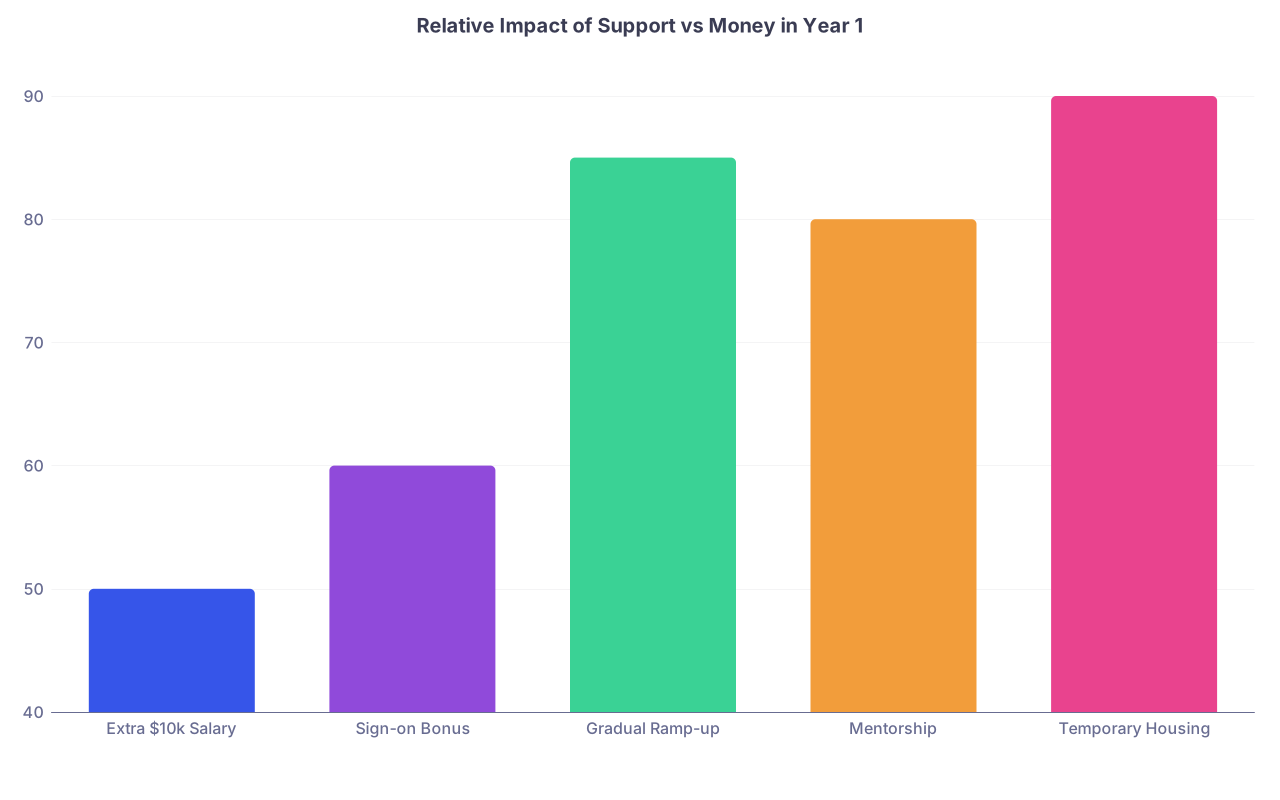
| Category | Value |
|---|---|
| Extra $10k Salary | 50 |
| Sign-on Bonus | 60 |
| Gradual Ramp-up | 85 |
| Mentorship | 80 |
| Temporary Housing | 90 |
(Think of the values above as “impact on your actual quality of life and retention in year one,” not literal scores.)
Step 6: Put It In Writing (Or It Does Not Exist)
Verbal promises are stories. Contract clauses are leverage.
You’re going to translate vague comments like “We can definitely keep your first month lighter” into something that belongs in the offer letter or contract addendum:
Bad:
“We’ll help you with onboarding and keep things manageable.”
Good:
“Physician will have a reduced clinic schedule during the first three months, at 75% of standard patient volume, with one half-day per week blocked for administrative and onboarding activities. Physician will not be scheduled for independent night call in the first eight weeks.”
Bad:
“We usually put people in a temporary apartment.”
Good:
“Employer will provide up to 90 days of temporary housing in a furnished apartment or extended-stay arrangement, including utilities, beginning on or before start date.”
If they resist putting it in writing, say:
“Given that I’m moving alone and this support is central to my decision, I’d be more comfortable if we could summarize these points in the offer letter or an addendum. It helps protect both of us and formalizes expectations.”
If they still resist? Big red flag about how they’ll treat you once you’re locked in.
Step 7: Design Your First 90 Days Like a Project, Not a Vibe
Once the contract is signed, your leverage drops. So you want a clear 90-day structure baked in or at least agreed upon before you sign.
Outline something like this:

| Step | Description |
|---|---|
| Step 1 | Contract Signed |
| Step 2 | Relocation Logistics |
| Step 3 | Temporary Housing Starts |
| Step 4 | First Day Orientation |
| Step 5 | EMR and System Training |
| Step 6 | Reduced Clinic Weeks 1-4 |
| Step 7 | Regular Mentor Meetings |
| Step 8 | Gradual Volume Increase Weeks 5-12 |
| Step 9 | Review and Adjust Plan |
Then say to the recruiter or department chair:
“Here’s how I’m picturing the first 90 days. Can we map this out together and make sure the schedule and resources align?”
You’re signaling two things:
- You’re serious about making this work long-term.
- You’re not going to casually accept chaos as the default.
They will treat you differently after that conversation. In a good way.
Step 8: Red Flags You Should Not Ignore
Some programs will not like you asking for this level of support. Good. Better to find out now.
Watch for:
- “Everyone figures it out once they get here.”
- “We can’t really individualize schedules.”
- “We don’t usually put that kind of thing in writing.”
- “Our other hires didn’t need that.”
Translation: you are about to become cheap labor, not a valued colleague.
If you keep hearing versions of “we’ll see” and “we’ll try” and nothing lands on paper, adjust your risk meter. Either push harder, or seriously consider walking.
You moving alone into a brittle system with no built-in support is a classic burnout setup. I’ve seen people leave after 8–12 months because of exactly this.
Step 9: Use What You Negotiate (Don’t Sabotage Yourself)
One last problem: doctors are terrible at accepting help they fought to get.
You’ll negotiate reduced volume, then feel guilty and start double-booking. You’ll have a mentor and then keep canceling meetings “because clinic ran late.” You’ll have protected admin time and then fill it with add-on patients.
Do not do this.
If you insisted on getting these supports because you’re moving alone and this change is huge, then actually use them. That’s not weakness. That’s using your contract the way it was designed.
Guard your onboarding time. Go to the mentor meetings. Use the temp housing fully instead of rushing into a 12-month lease you hate. Take the personal/relocation days and actually set up your life.
That’s how you survive year one and still like medicine at the end of it.
FAQ (Exactly 5 Questions)
1. Won’t asking for all this support make me look high-maintenance?
Not if you frame it correctly. You’re not saying, “I can’t handle a normal job.” You’re saying, “I’m uprooting my life to move here alone. Let’s structure my first year so I can be productive and stay long-term.” Reasonable administrators understand this. If they label that “high-maintenance,” that’s a culture you probably do not want.
2. How much support can I realistically get without losing salary?
Often, quite a lot. Schedule structure, mentorship, ramp-up plans, and onboarding time are relatively “cheap” for the system. Temporary housing and relocation support have real costs, but even those are usually less than a small bump in salary over the life of the contract. Start with structural support (schedule, call, mentorship), then layer on housing/logistics depending on their flexibility.
3. What if they say their schedule template is fixed and can’t be changed?
Push on timing and assignments instead of template. Maybe you can’t change the 20-minute slots, but you can block fewer of them at first. Or you can have more blocked admin time. Or delay certain procedures or clinics until month 3. If absolutely nothing about your schedule can be individualized, that’s a serious warning sign about rigidity and burnout risk.
4. I already signed the contract. Is it too late to ask for support?
Harder, but not impossible. You lost most of your formal leverage, but you can still have a clear conversation before your start date: “Given that I’m moving alone, I’d like to be proactive about my first 3–6 months. Can we plan for reduced volume initially, a mentor, and certain dedicated onboarding days?” You probably will not get major financial things added now, but you can still shape how your first months feel.
5. I’m worried asking for support will hurt my reputation before I even start. Should I just suck it up?
No. “Sucking it up” is how people end up on SSRIs, urgent-care shifts, and job boards 9 months later. You’re not asking for perks. You’re designing a sustainable transition in a high-stress profession while moving alone to a new city. There’s nothing unprofessional about that. The programs that respect your foresight are the ones you want to work for.
Open your draft contract or offer letter right now and make a list of three concrete support items beyond salary that you want in writing—then email the recruiter today and ask to discuss them before you sign.


