

It’s March. You just signed a contract with a private practice group after years on a university salary. HR at the hospital said “your W‑2 will end in June.” The practice sent you an offer with base comp, RVU bonuses, maybe a K‑1, and a vague reference to “quarterly estimates.”
You’re realizing: this is not just a new job. This is a different tax world.
If you’re moving from academic medicine to private practice, you are walking from a clean, mostly W‑2, employer-handled situation into something with more zeros, more opportunity—and more ways to screw yourself on taxes if you don’t prepare.
Let’s go line by line through what changes and what you actually need to do.
1. Your Income Type Is Changing (And Why That Matters)
In academics, this was simple: you got a W‑2. Maybe you had a tiny side 1099 for a talk or locums. Payroll withholding handled your federal, state, Social Security, Medicare. You barely thought about it.
Private practice? You might still be W‑2. Or not. Three common setups:
| Structure | Main Tax Form | Key Tax Issue |
|---|---|---|
| Employee | W-2 | Withholding handled, limited deductions |
| Partner (equity) | K-1 (1065 or 1120-S) | Estimated taxes, SE or payroll tax |
| IC / Locums-style | 1099-NEC | Full self-employment tax, need LLC/S-corp planning |
If your offer letter doesn’t explicitly say “employee” and mention benefits like health insurance and 401(k) match, assume you need to ask. Do not guess. The tax consequences are big.
Here’s the rough difference:
- W‑2: Taxes withheld; you can’t deduct work expenses easily; life is simple.
- 1099 / K‑1 self-employed: No withholding by default; you owe both halves of Social Security/Medicare (self‑employment tax); you can deduct business expenses; you probably must pay quarterly estimates.
If the practice is talking about you “buying in,” “joining as partner after 1–2 years,” or issuing a K‑1, your tax picture is going to change twice: once now (maybe hybrid comp), and again at partnership.
Ask these exact questions:
- Will I be a W‑2 employee, a partner, or an independent contractor year 1?
- If a partner, is the entity a partnership (1065) or S‑corp (1120‑S)?
- Will tax be withheld from any of my pay? Or do I handle all taxes myself?
If they can’t answer clearly, that’s your first problem.
2. Social Security & Medicare: The Self-Employment Surprise
This one blindsides a lot of people.
In academics, your check already had FICA taken out:
- 6.2% Social Security (up to the wage base)
- 1.45% Medicare
- Plus you probably noticed an extra 0.9% Medicare surtax on high income
Your employer paid the other half behind the scenes.
In a self‑employed or partner model, you effectively pay both halves—through self-employment (SE) tax.
On approximately the first $168,600 of net earnings in 2024 (wage base changes yearly), you’re looking at:
- 12.4% Social Security
- 2.9% Medicare
- 0.9% extra Medicare surtax above certain income levels
That’s 15.3% on a big chunk of your earnings before you even start regular federal income tax.
In a W‑2 employee private practice job, this part doesn’t change much from academics. But if you’re a partner or 1099, you need to mentally add roughly 15% on a big slice of your income for SE tax when you’re modeling your take-home.
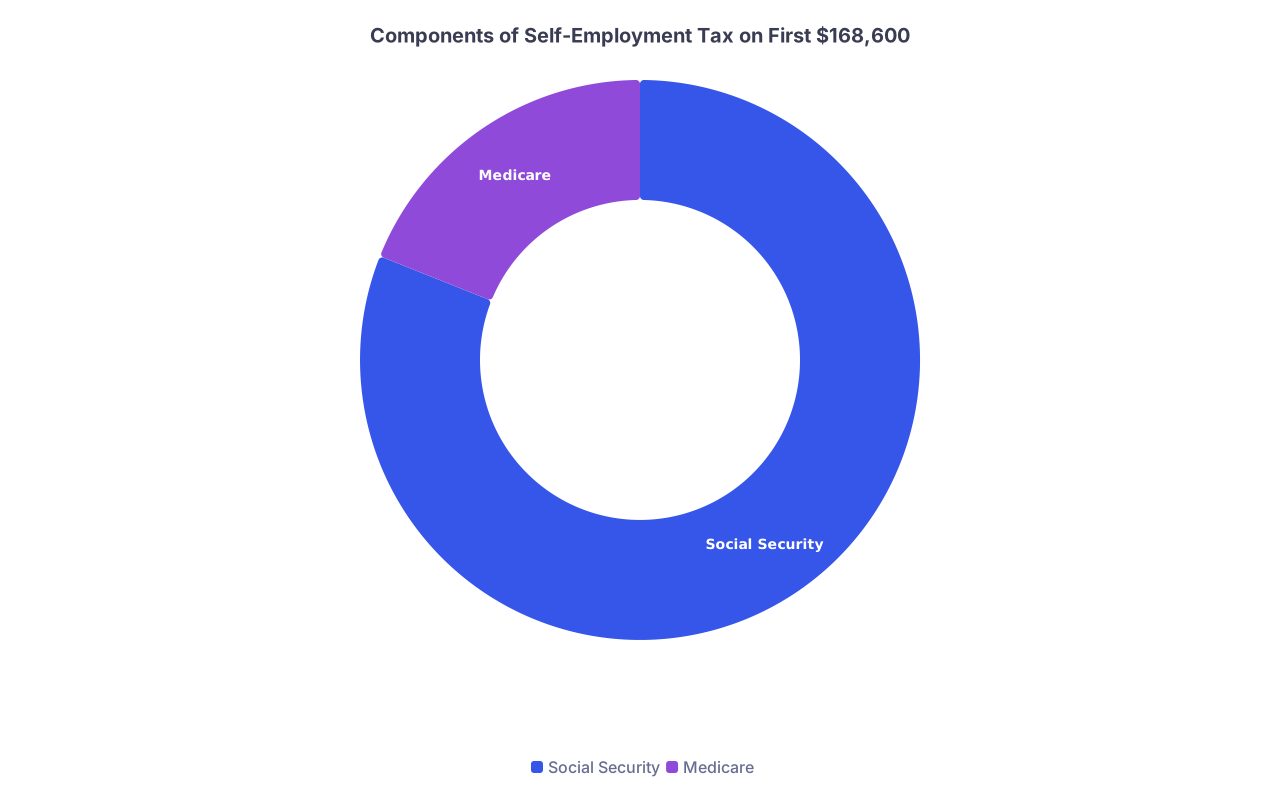
| Category | Value |
|---|---|
| Social Security | 12.4 |
| Medicare | 2.9 |
Two key moves:
- Don’t spend your “extra” income your first year. A chunk of it really belongs to the IRS.
- Make sure your CPA is optimizing your structure (S‑corp vs partnership) to reduce unnecessary SE/payroll tax when possible and appropriate.
3. Quarterly Estimated Taxes: No One Is Withholding For You Now
In academics, payroll withholds, you file in April, maybe small refund / small bill. Very low drama.
In private practice as a partner or independent contractor, nobody is withholding by default. The IRS expects you to:
- Make quarterly estimated tax payments (federal and usually state),
- Or increase W‑2 withholding somewhere else enough to cover it (rare in this switch).
If you ignore this? You’ll end your first year with:
- A large tax bill due in April,
- Plus underpayment penalties because you didn’t pay as you went.
Basic rule of thumb: if you expect to owe $1,000+ at tax time, you’re in estimated tax territory.
The usual quarterly due dates (for calendar-year taxpayers):
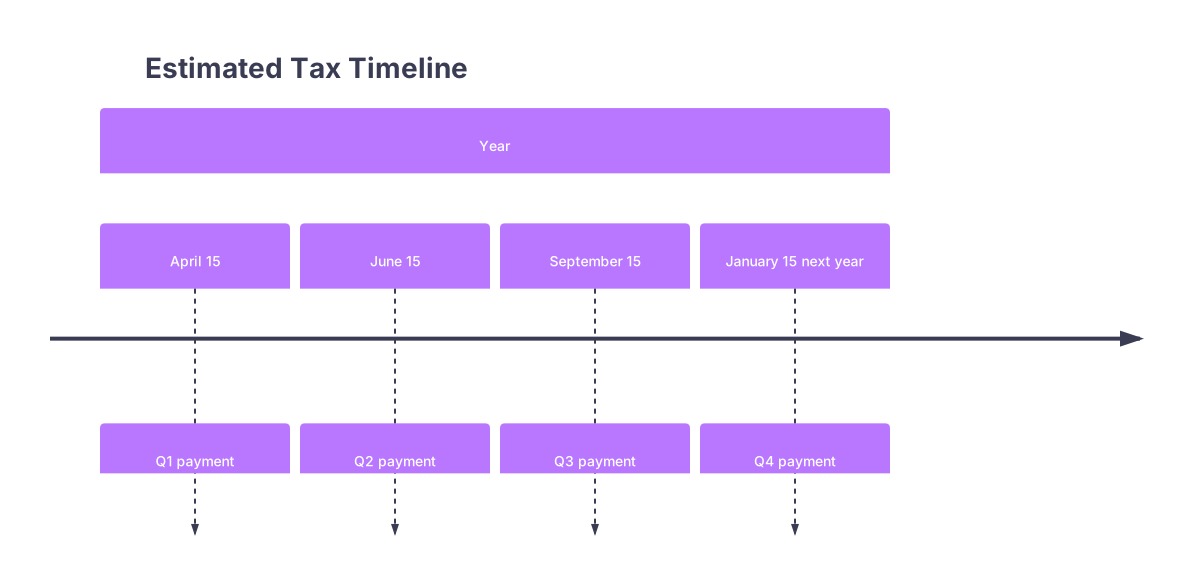
| Period | Event |
|---|---|
| Year - April 15 | Q1 payment |
| Year - June 15 | Q2 payment |
| Year - September 15 | Q3 payment |
| Year - January 15 next year | Q4 payment |
What you should do your first private practice year:
- As soon as comp is realistic (first 1–2 months of full production), sit down with a CPA who works with physicians.
- Have them build a simple projection: expected income, SE tax, federal, state.
- Set up a separate “tax holding” savings account. Every time you get paid, move a fixed percentage (often 30–40% of net for federal + state + SE) into that account.
- Pay your quarterly estimates from that account only. Never from your main checking.
If you’re still W‑2 but your income jumped, you may need to adjust your W‑4 so you don’t get hammered in April.
4. Deductions: You Finally Have Real Business Expenses (And Real Rules)
As an academic W‑2, unreimbursed work expenses were basically dead after the 2017 tax law changes. That $2,000 in textbooks and conferences? Tough luck.
In private practice—if you’re 1099 or a partner—this changes. You can deduct “ordinary and necessary” business expenses against that income.
Common legit physician expenses:
- CME, medical conferences, board review courses
- Licensing, DEA, professional dues
- Work-related phone, internet (portion), software, EHR add-ons
- Mileage or travel for work that’s not already reimbursed
- Professional services: CPA, attorney, financial advisor (when clearly business-related)
- Office supplies, small equipment
If you’re a pure W‑2 employee at a private group and they don’t reimburse CME/licensing, that’s just bad. You still generally can’t deduct those personally under current rules. That’s a contract problem, not a tax strategy.
For partners/ICs:
- Start using basic bookkeeping from day 1. QuickBooks, an Excel sheet, or a simple app—just something.
- Pay business expenses from one dedicated credit card or bank account. Stop mixing with personal.
- Save receipts electronically; the IRS doesn’t care if it’s a PDF as long as it’s readable.
Do not get cute with:
- Questionable “home office” deductions if your practice has a full brick-and-mortar clinic.
- Large personal vehicle deductions when you commute to the same office every day.
Yes, there are legitimate ways to deduct part of a home office or vehicle, but they’re often oversold. Get a CPA to sanity-check this.
5. Retirement Accounts: More Options, More Complexity
In academics, you probably had:
- 403(b), maybe 457(b)
- Sometimes a pension or cash balance plan
- Employer match, automatic contributions, etc.
In private practice, this can explode into several possibilities:
- 401(k) or 403(b) as an employee
- Profit-sharing or cash balance defined benefit plans if you’re a partner
- Solo 401(k) or SEP-IRA if you have independent contractor income on top

Key tax issues:
- Employee 401(k)/403(b) deferrals across all jobs share the same IRS annual limit.
- Employer contributions, profit-sharing, and cash balance plan contributions are on top of that limit in most cases.
- If you move mid-year from academic to private and both have retirement plans, you can’t just max both employee deferrals. The combined employee portion is capped.
Also: if you start getting K‑1 income as partner, the practice might create a bigger shelter (cash balance plan) that allows six-figure pre-tax contributions. Amazing for taxes, but you’re locking money away.
Your move:
- Pull your academic paystubs and see what you already deferred this calendar year.
- Get the new plan documents from the practice and send everything to your CPA/financial planner.
- Coordinate contributions so you maximize tax benefit without violating limits.
6. Health Insurance, HSAs, and Fringe Benefits
In academics, benefits were usually generous and subsidized. In private practice, benefits range from “better than hospital” to “you’re on your own.”
Three tax-related pieces to watch:
Health insurance
- If you’re an employee, premiums usually come out pre-tax. Similar to academics.
- If you’re a partner or 1099, you may be buying your own plan. The self-employed health insurance deduction can save you a lot, but only if done right on the return.
Health Savings Account (HSA)
- If the new group offers a high-deductible health plan (HDHP), you might be able to contribute to an HSA.
- HSAs are triple-tax advantaged: pre-tax in, tax-free growth, tax-free out for medical. It’s one of the few things I’ll call a no-brainer if available and affordable.
Other pre-tax benefits you might lose or gain
- Dependent care FSAs
- Commuter benefits
- Group disability and life insurance (understand the after-tax vs pre-tax premium issue for disability benefits)
Don’t just look at salary when comparing offers. Sometimes the lower-salary job with richer pre-tax benefits actually leaves you better off after taxes.
7. The Big One: Pass-Through Income, K‑1s, and the QBI Deduction
Once you’re a partner in a private practice, you’ll likely receive a Schedule K‑1 from a pass-through entity (partnership or S‑corp). This is where real tax planning begins.
You’ll hear about:
- “Guaranteed payments”
- “Distributive share”
- “Owners draws”
- The 199A Qualified Business Income (QBI) deduction
The short version:
Some of your income may qualify for up to a 20% deduction (QBI) if your taxable income is below certain thresholds. But because you’re a “specified service trade or business” (physician), the QBI benefit phases out as your income climbs.
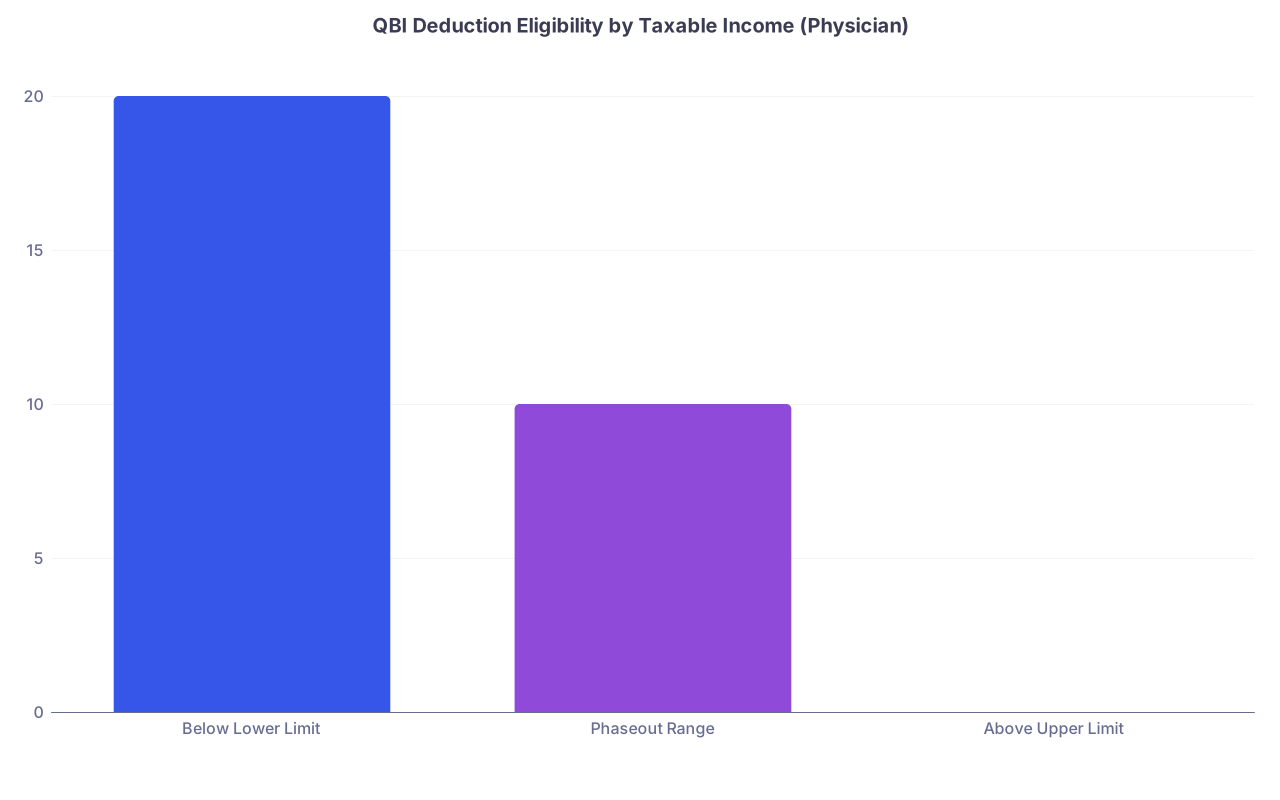
| Category | Value |
|---|---|
| Below Lower Limit | 20 |
| Phaseout Range | 10 |
| Above Upper Limit | 0 |
Those numbers aren’t exact percentages; they’re just illustrating:
- Full deduction when you’re below the lower threshold
- Partial deduction in the phaseout zone
- Zero once you’re above the upper threshold
Why you care:
- Entity structure and compensation design (how much is W‑2 vs K‑1, etc.) can change your QBI outcome.
- Big pre-tax retirement contributions may lower your taxable income just enough to keep some or all QBI, increasing your net tax savings.
- Filing jointly vs separately, and your spouse’s income, matter here.
You are not going to DIY-optimize this your first year while taking call and figuring out EPIC replacement. Get a CPA who lives and breathes physician pass-through issues.
8. Multi-State Mess: Live One Place, Work Another
Academics are often simpler: you live and work in the same state, W‑2, done.
Private practice sometimes means:
- You live near a border and practice in another state.
- Your group has clinics in multiple states and allocates income across them.
- You still do locums moonlighting in yet another state.
This triggers:
- Part-year resident returns if you move states mid-year.
- Nonresident returns where you earn income.
- Credits for taxes paid to other states.

If you’re going from, say, a no-income-tax state (Texas) to a high-tax state (California), your after-tax raise is often smaller than you think. Taxes follow.
Action steps:
- Tell your CPA exactly where you physically live and where each income stream is sourced.
- Before you sign, model your net-of-tax pay in your new state vs your old job.
- Don’t just look at state income tax. Look at property tax, sales tax, local city tax, and cost of living.
9. Entity Choice: LLC, S‑Corp, or Just Be a Person?
If the group hires you as a pure W‑2 employee, this section is quick: you don’t choose an entity. They did. You’re just an employee.
If they’re paying you on 1099, or you’re joining as a partner with some structural flexibility, then entity choice matters. Common setups:
- Single-member LLC taxed as sole proprietorship
- LLC electing S‑corp status
- Partnership ownership via your own entity
There’s a lot of noise online about “You must be an S‑corp to save taxes.” That’s lazy advice. Sometimes it helps; sometimes it doesn’t; sometimes it complicates retirement and QBI.
Real talk:
- If your net 1099 income is modest (e.g., true 1‑day‑a-week side gig), an LLC taxed as sole prop with good bookkeeping is usually enough at first.
- At higher incomes, S‑corp strategies can reduce SE tax but must be coordinated with practice structure, retirement plan eligibility, and QBI rules.
- You do not need ten entities to look “sophisticated.” You need one setup that’s clean and defendable.
Before you form anything:
- Ask the practice’s CFO or admin: “How do most of your physicians structure themselves? Do you work with particular CPAs?”
- Sit down with a physician-focused CPA and map out the entity structure before your first 1099 arrives.
10. Cash Flow and Lifestyle: The Behavioral Side of Taxes
Here’s what I’ve watched happen more times than I like:
- Academic doc moves to private.
- Income jumps by $100–300k on paper.
- Lifestyle inflates instantly—house, car, private school.
- First April in private practice: $150k+ bill between federal, state, and SE tax. No cash. Panic. Payment plan. Misery.
Your first 12–24 months in private practice are transition years. Your tax situation catches up slower than your emotions do.
Practical guardrails:
- For every dollar of increase in pay over your academic salary, pretend 40–50 cents belongs to the IRS until your CPA tells you otherwise.
- Don’t buy the “new attending” house again. You already did that once.
- Automate savings: percent of each paycheck to tax account, retirement, and a generic “big tax bill / practice buy-in” fund.
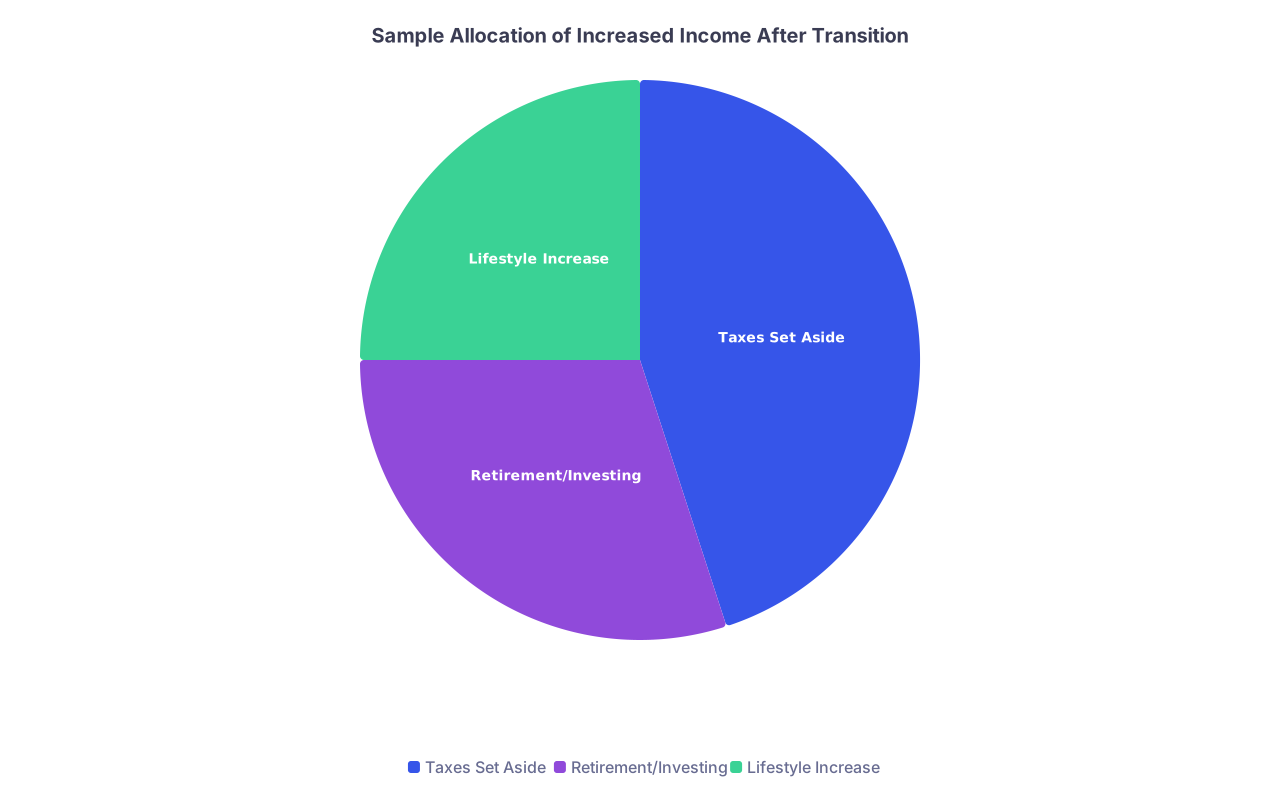
| Category | Value |
|---|---|
| Taxes Set Aside | 45 |
| Retirement/Investing | 30 |
| Lifestyle Increase | 25 |
You can always loosen the reins after you’ve seen one full tax year in the new setup and have data. It’s a lot harder to unwind bad commitments.
11. The Minimum Setup You Should Have Before Your First Private Practice Tax Year Ends
If you’re already feeling overwhelmed, here’s the punch list. You’re moving from academic to private practice; do this:
Confirm your status: W‑2, K‑1, 1099, or mix.
Hire a CPA who actually has physician clients in private practice (ask them directly).
Set up:
- One checking account for income.
- One savings account labeled “TAXES – DO NOT TOUCH.”
- One credit card used only for business expenses (if you’re 1099/partner).
Have the CPA:
- Project your taxes for the first year.
- Calculate quarterly estimates.
- Review your retirement options and limits for this year (including any academic contributions).
- Talk through QBI, SE tax, and entity structure if applicable.
Make a personal rule: you don’t spend from the tax savings account. Ever. It’s there for the April punch you know is coming.

FAQ (Exactly 3 Questions)
1. I’m still W‑2 in private practice—do I really need to worry about all this?
Less, but not zero. If you’re a straight W‑2 employee, you avoid self-employment tax complexity, entity choices, and most business deductions. However, you still need to check:
- Whether your higher income pushes you into underwithholding (adjust your W‑4).
- How new retirement plans interact with contributions you already made at your academic job.
- State tax changes if you moved or crossed state lines.
You also want to understand your path to partnership and when the K‑1 stuff will begin. Year 3 might be the real tax earthquake.
2. I’m moving mid-year—will I get killed on taxes because of overlapping jobs?
You won’t get killed simply for overlapping. But the combination of:
- Academic W‑2
- Partial-year private income (W‑2 and/or 1099/K‑1) can spike your taxable income and push you into higher brackets, lose certain credits/deductions, and partially or fully phase out QBI. It also means:
- You’ll likely file part-year resident returns if you moved states.
- Your Social Security withholding might be messy (e.g., two employers both withhold up to the wage base—excess can be refundable, but you don’t see it until filing).
This is exactly when a mid-year projection with a CPA earns back their fee.
3. Do I need an LLC or S‑corp before I start, or can I wait?
You can usually wait a bit, and that’s often smarter. For many new private practice docs:
- Start by collecting your documents (offer letter, projected income) and talk with a CPA.
- If your year-one independent income is modest or you’re just testing the waters, a simple sole proprietorship (your own name, good records) is fine.
- Once you see how stable the arrangement is and how much you’re actually earning, you can decide whether an LLC, S‑corp election, or other structure makes sense for year two and beyond.
The worst pattern is someone forming an S‑corp in a rush because “some guy on YouTube said it saves taxes” and then spending more on compliance than they ever saved.
Key Takeaways
- Your move from academics to private practice is a tax structure change, not just a raise—W‑2 vs 1099 vs K‑1 determines almost everything.
- Plan for self-employment tax, quarterly estimates, and new deduction/retirement options before your first private practice tax year ends; do not wait for April.
- Get a physician-focused CPA in your corner early, park 30–50% of your increased income aside for taxes, and let your lifestyle lag one full tax year behind your new pay.


