

The pressure to quit medicine after not matching usually says more about your family’s fear than your actual future.
Let me say that again because your brain probably didn’t believe it the first time:
Your family’s panic ≠ proof that your career is over.
You’re in that awful in‑between place: didn’t match, everyone’s watching, and the people you thought would be your safety net are suddenly… not safe. They’re talking about “backup plans,” “sunk costs,” maybe even “it’s time to move on.” And you’re stuck thinking:
- What if they’re right?
- What if I waste another year and still don’t match?
- What if I disappoint them and myself?
- What if I never recover from this?
Let’s walk straight into those fears instead of pretending they’re not there.
First: Not Matching Is Brutal, But It’s Not a Verdict
You know this logically. But emotionally it feels like a verdict. Like the universe stamped your file: “Not good enough.”
You see other people posting their “I matched!!!” pictures with balloons and smiling attendings and now your mom is forwarding job listings for “clinical research assistant” or “maybe you can do an MBA now.”
Here’s the part nobody tells you clearly enough:
Not matching usually means:
- Wrong strategy
- Wrong specialty fit (for your stats or profile)
- Wrong application balance
- Or bad luck in a ridiculously competitive system
It does not automatically mean:
- You’re incapable of being a good doctor
- You’ll never match
- You’ve “failed at life” and should bail out completely
I’ve seen people match on their second or third try with:
- Lower Step scores than you
- More red flags than you
- More complicated personal situations than you
But almost every one of them went through a phase where someone in their family said some version of:
“Maybe it’s time to move on.”
They didn’t quit. They changed strategy.
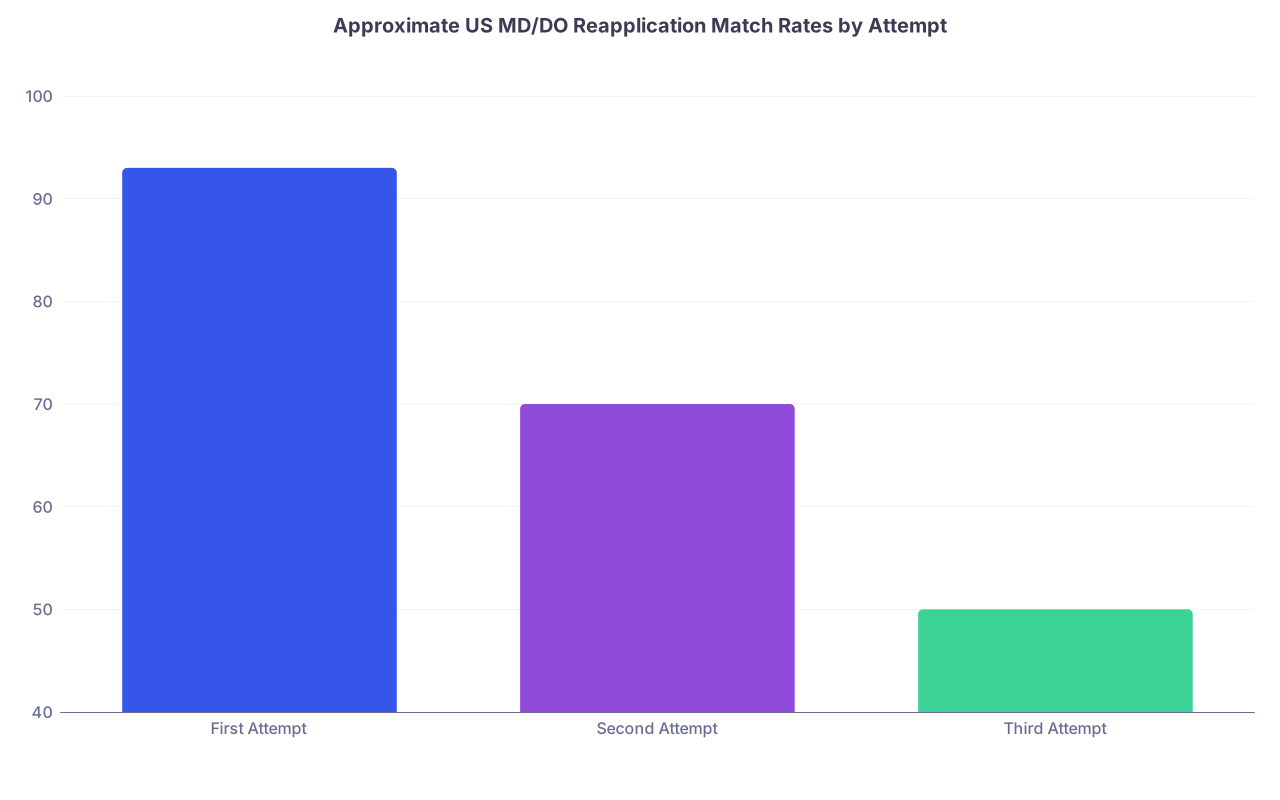
| Category | Value |
|---|---|
| First Attempt | 93 |
| Second Attempt | 70 |
| Third Attempt | 50 |
These aren’t exact for your situation, but the big picture is clear:
Reapplicants do match. A lot of them. It’s not fantasy.
Why Your Family Is Pushing You To Quit (And Why It Hurts So Much)
Let’s call it what it is: it feels like betrayal. You busted yourself for years, sacrificed everything, and instead of unconditional “we believe in you,” you’re getting “maybe this isn’t for you.”
Here’s what’s probably behind it:
They’re scared of watching you suffer again.
They saw you through MCAT, Steps, rotations, 3 a.m. breakdowns. They’re terrified you’ll put yourself through more pain and end up in the same place next year.They’re scared of money.
Loans, cost of applications, travel, lost income. They might be quietly panicking about debt they don’t fully understand but can definitely feel.They don’t understand the Match. At all.
To non-medical people, “you didn’t get a job in your field after all this” sounds like, “You must not be good at this.”
They don’t see how arbitrary, numbers-driven, and specialty-specific it really is.They might be protecting their own ego.
Some parents attach their identity to “my kid the doctor.” Not matching injures their image. Pushing you toward a quick “backup” can be their way of avoiding sitting with that shame.
The messed up part?
Their fear lands on you as pressure. As proof that maybe they’re right. As yet another voice saying, “You’re failing.”
But there’s a really important line here:
Your family can feel however they want.
They don’t get to decide whether you leave medicine.
Worst-Case Scenarios Your Brain Is Screaming About
Let’s drag them out into the light. These are the ones I hear over and over:
“What if I try again and still don’t match?”
This is the big one, right? You do the SOAP, maybe get nothing. You reapply. Same nightmare next year. Then what?
Real talk:
Yes, this can happen. It does happen to some people. But here’s the part your anxiety skips:
If you reapply with the same application, same specialty, same weak points — yeah, you might get the same result.
If you reapply and:
- Change to a realistically attainable specialty
- Strengthen your CV (research, prelim/TY, MPH, extra clinical work)
- Fix obvious weaknesses (personal statement, letters, interview skills, red flags explained)
Your odds change. Substantially.
| Situation | High-Risk Plan | Smarter Adjusted Plan |
|---|---|---|
| IMG with 220s board scores, applied Ortho | Reapply Ortho broad | Switch to IM/FM, add US clinical + research |
| US DO, Step 1 pass, Step 2 225, applied Derm | Reapply Derm | Pivot to IM + strong scholarly work |
| Red flag (failed Step 1 once) | Ignore it in PS | Address it head-on + strong Step 2, solid LORs |
The question isn’t “what if I never match?”.
The question is “am I willing to do what it realistically takes to give myself a real shot, not a fantasy shot?”
“What if my family never respects me again if I keep trying?”
Honestly? Some might not.
Some will hold onto their version of what “success” should look like long after you’ve figured out yours.
But I’ve seen more of this:
Families freak out early. Say hurtful things. Over time, as they see you:
- Get a structured plan
- Take a concrete job (research, prelim, teaching, whatever)
- Start moving toward a clearer path
They calm down. They often even rewrite history: “We always knew you’d find your way.”
Is it fair that you have to outlast their panic? No.
Is that often what happens? Yes.
“What if I quit and regret it forever?”
That’s the one they’re not thinking about, but you are.
If you step away from medicine, here are the questions you’ll wrestle with 5–10 years from now:
- Did I leave because I wanted to, or because I was pressured?
- Did I actually explore my options (different specialty, research year, prelim spot), or did I panic?
- Did I get proper advising from someone who understands the Match, or did I listen only to people outside the system?
Quitting medicine isn’t automatically wrong.
Quitting medicine because your family got anxious and you wanted the anxiety to stop — that’s a recipe for long-term resentment.
How To Talk To Your Family Without Exploding (Or Collapsing)
You can’t control their first reaction. You can control the structure of the conversation.
Step 1: Buy Yourself Time
You do not owe anyone instant decisions the week after Match Day.
You can literally say:
“I’m not ready to make big decisions about my career this week. Right now I need to process and gather real information. I’ll talk to advisors and then we can revisit plans in a few weeks.”
You’re not asking permission. You’re informing.
Step 2: Separate Emotion from Plan
Right now, everything is jumbled: shame, fear, grief, anger, pressure. That’s not decision-making brain. That’s meltdown brain.
You need two tracks:
Emotional track
Who can you vent to that isn’t going to jump straight to, “So what’s your plan?”
Therapist, trusted friend, classmate who also didn’t match, resident who’s been there.Strategic track
People who understand the system and can give you actual options:- Your med school dean / advisor
- Specialty advisors in fields you might pivot to
- Program directors you built rapport with
- Current residents who were reapplicants
Don’t merge those two conversations with your family yet. They’re not in a good headspace for either.
Step 3: Name the Fear Out Loud
When you finally sit with them, you can say something like:
“I know you’re scared I’ll put in another year and end up in the same position. I’m scared of that too. That’s why I’m not just redoing the same thing. I’m going to get specific advice on my chances in different specialties and what I’d need to change.”
You’re telling them:
- I hear you
- I’m not in denial
- I’m approaching this like an adult, not a stubborn child
That lowers the panic volume.

Concrete Options You Actually Have (Not the Fantasy Version)
Let’s get super practical. “Don’t quit” is useless if there’s no path that doesn’t feel like endless purgatory.
Here are real, tangible paths I’ve seen people take after not matching:
1. Apply in SOAP (If You Haven’t or It Didn’t Work)
Even if SOAP failed this year, the data you got from it is valuable:
- Did you get any interviews?
- In which specialties?
- What feedback did you get?
Sometimes SOAP shows you where your realistic opportunities are that you didn’t want to look at before.
2. Pivot to a More Attainable Specialty
This is where the ego fight happens. You wanted Derm, Ortho, ENT, Plastics. Your brain screams that switching to IM, FM, Psych, Path means you “failed.”
No.
It means you prefer actually being a physician in a field you can match into over fantasizing about a field that consistently rejects your application profile.
This isn’t settling. It’s choosing reality over fantasy.
3. Take a Structured Gap Year in Something Strategic
You’re not just “taking time off.” You’re filling specific holes in your application:
- Research year with strong mentorship and potential publications
- Full-time clinical job with direct supervision, especially in your target specialty
- Teaching or MPH with clear links back to your future residency application
The litmus test:
If a PD looks at your gap year and says, “I can see exactly how this makes you a better candidate,” that’s a good plan.
If they’d say, “So you just… waited tables and thought about life?” that’s not helping your cause.
4. Consider Preliminary or Transitional Year Spots
A prelim IM or surgery year can:
- Prove you can function as a resident
- Get you letters from US attendings
- Buy you time and improve your CV
But it only helps if:
- You’re realistic about your ultimate target specialty
- You use that year strategically, not just survive it
5. Explore Non-Residency Paths Without Burning Bridges
Yes, there are non-residency options:
- Medical writing
- Industry (pharma, MedTech)
- Consulting
- Education
- Public health
But if you’re even 20% unsure about quitting medicine entirely, structure it as:
“I’m exploring this while still planning to reapply, and I’m making sure I maintain clinical ties, contacts, and a plausible narrative back into residency.”
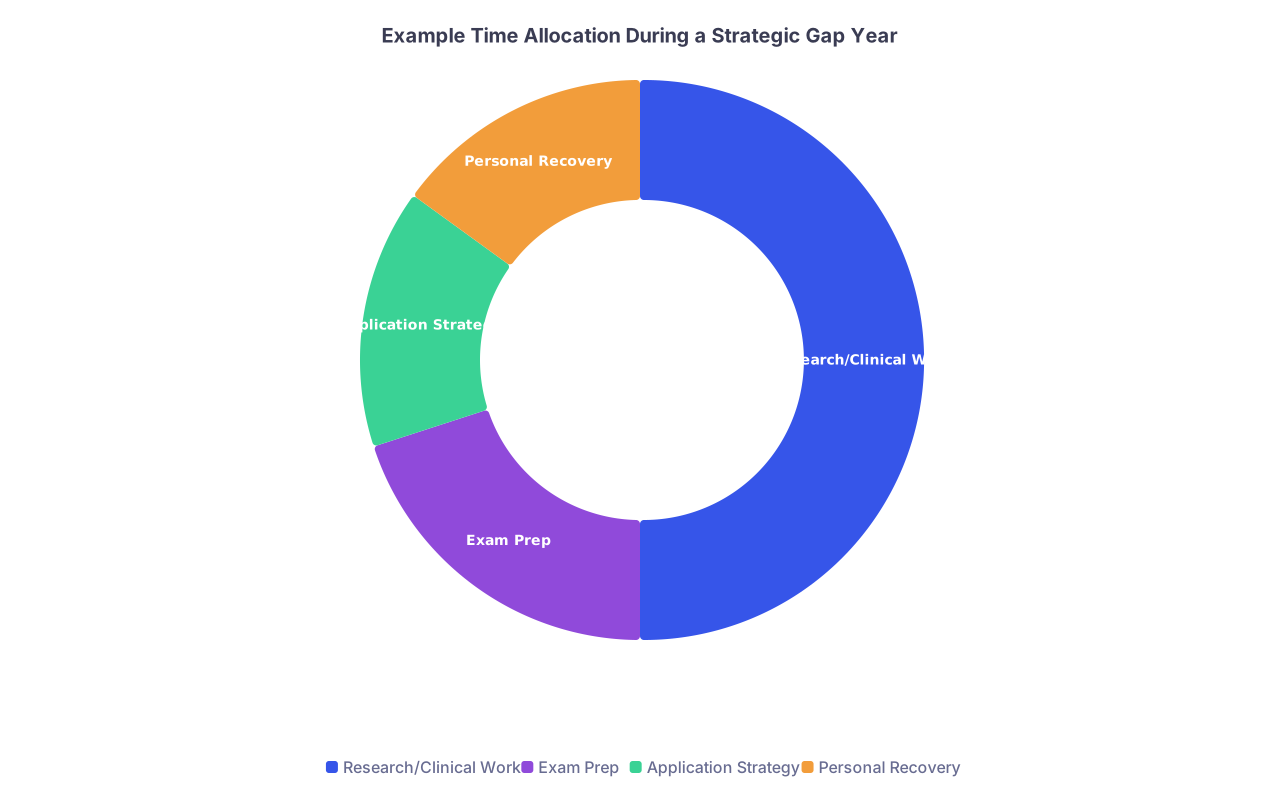
| Category | Value |
|---|---|
| Research/Clinical Work | 50 |
| Exam Prep | 20 |
| Application Strategy | 15 |
| Personal Recovery | 15 |
Your family will calm down faster when they see you’re not just “trying again” blindly. You’re executing a plan with moving parts and clear intention.
What If They Still Push You To Quit?
Then you hit the hard boundary.
Some versions of this:
“I hear that you think quitting is the better option. I’m not making that decision right now. I’m committed to medicine enough to put in at least one more strategic cycle. I’d love your emotional support, but I’ll move forward either way.”
Or:
“I’m not asking you to agree with me. I’m asking you not to undermine me while I’m doing the work to fix this.”
Or, if it’s really toxic:
“I’m going to stop discussing my career details with you for now, because the pressure is making it harder for me to function. I’ll let you know when I have big updates.”
You’re allowed to limit conversation topics with your own family. That’s not disloyal. It’s survival.

| Step | Description |
|---|---|
| Step 1 | Did not match |
| Step 2 | Seek honest advising |
| Step 3 | Explore both med and non med paths |
| Step 4 | Plan exit from medicine |
| Step 5 | Strategic gap year or SOAP |
| Step 6 | Change specialty |
| Step 7 | Reapply with stronger app |
| Step 8 | Do I still want medicine? |
| Step 9 | Realistic specialty? |
Your family doesn’t get to be the decision node in that flowchart. You do.
One More Ugly Truth: You’re Allowed To Change Your Mind
Let’s say you plan a reapplication year. You get into research. You see residents up close. You meet people in industry.
And slowly — honestly — you realize: “I actually don’t want this enough to keep fighting for it.”
That’s allowed.
But that decision hits different when:
- You made it from a place of clarity, not panic
- You had enough distance from Match trauma to think
- You consulted actual experts, not just scared relatives
Walking away then is not failure. It’s informed choice.
FAQ (The Panic Edition)
1. If I don’t match once, am I basically “tainted” forever?
No. Programs don’t like chaos, but they understand reapplicants. A single unmatched cycle is not a permanent scar if you show growth, a clear plan, and stronger credentials the next time. Where it becomes a serious issue is when you have multiple cycles with no obvious change in your application or when there’s a major red flag you never address. One no-match year is a problem; it’s not a death sentence.
2. Should I listen to my family if they all agree I should quit?
You should listen to their concerns, not automatically their conclusion. Extract the useful parts: money worries, emotional burnout, fear of repeated failure. Then check those against reality with advisors who understand the Match. If both your family and a brutally honest PD-level mentor say, “Your chances are extremely low,” then it’s time to think hard. But don’t let a unanimous non-medical vote outweigh real expert guidance.
3. What if I can’t afford another application cycle or a gap year?
That’s real, not imagined. You might need to:
- Work a paid clinical or research job
- Limit the number of programs and be extremely targeted
- Consider more attainable specialties or locations (community programs, less popular regions)
- Ask about fee assistance or institutional support
It may stretch your timeline, but lots of people work while rebuilding their application. “I can’t afford it” might slow you down — it doesn’t automatically mean “I must quit.”
4. Will a gap year make programs think I’m less committed?
It depends what you do. A gap year full of nothing relevant? Yes, that looks bad. A gap year packed with research, clinical exposure, improved scores, or formal training? Programs often like that. It shows maturity, persistence, and that you didn’t crumble at the first big obstacle. You just have to be able to explain the year clearly: “Here’s what happened. Here’s what I did. Here’s why I’m stronger now.”
5. How do I know if I’m staying in medicine for me, or just to prove everyone wrong?
Ask yourself these questions and answer brutally honestly, alone, on paper:
- If everyone in my life fully supported me either way, what would I choose?
- When I imagine being a resident, exhausted, at 3 a.m. — does any part of me still want that life?
- If I were guaranteed to match in a realistic specialty in 2 years, would I be willing to do the work?
If your honest answers lean toward “I’d still do it,” that’s your answer. If all your motivation is anger and “I’ll show them,” that burns out fast.
Open a blank page or notebook today and write down three columns:
- What I want.
- What my family wants.
- What advisors who understand the Match recommend.
If column 1 is still pointing toward medicine, that’s your north star. Everything else is background noise you’ll manage, not orders you have to obey.


