
Program directors judge prelims and categoricals differently. They will deny it publicly. But they do.
Let me walk you through what actually happens behind the closed doors of residency leadership meetings, pre-rounds huddles, and those “informal” hallway conversations that decide whether you get a strong letter… or your name gets forgotten.
Most prelims have no idea they’re being graded on a slightly different rubric. Most categoricals don’t realize they’re getting the benefit of the doubt that prelims will never see. And almost none of you understand how much of this is decided on rounds.
You’re about to.
First: How Attendings See You The Moment They Hear “Prelim” vs “Categorical”
The instant your attending or PD hears your status, a frame locks into place. You can fight it, but you cannot ignore it.
Here’s the unfiltered version of the default assumptions at many internal medicine and surgery programs:
| Role | PD/Attending Default Assumption | Risk They Worry About |
|---|---|---|
| Categorical | Long-term investment, future fellow | Burnout, slow development |
| Prelim | Short-term worker, transient learner | Checked-out, less invested |
| TY | Least tethered to field, variable goals | Minimal buy-in, bare-min |
Nobody says this out loud on day one. But I’ve sat in enough selection meetings to know: when someone introduces you as “our prelim,” people’s expectations shift.
They expect:
- Less loyalty to the department
- Less interest in nuanced longitudinal care
- More focus on “just getting through the year”
And when you’re categorical?
They assume:
- You care how your patients look 3 months from now
- You’re a candidate for chief, QI lead, or research projects
- They might be stuck working with you for 3 years, so it’s worth investing
Now here’s the twist. Those expectations change how your performance on rounds is interpreted even when you do the exact same thing.
Same action. Different story.
The Hidden Rounds Rubric: What Faculty Are Actually Scoring
On paper, both prelim and categorical interns are “evaluated the same way.” Milestones. ACGME competencies. Professionalism, systems-based practice, all the buzzwords.
On rounds, that’s not how it works.
Let’s break down what attendings really look at on rounds, and how the label “prelim” vs “categorical” colors their judgment.
1. Ownership vs “Good Help”
Categoricals are judged on ownership. Prelims are often judged on usefulness.
If you’re categorical and you:
- Anticipate test results
- Call the family before rounds
- Update your attending on overnight changes without prompting
You’re seen as “owning the patient.” That’s the gold standard.
If you’re prelim and you do the exact same things, I’ve heard people say in debrief:
“He’s a really solid worker. Super helpful. Too bad he’s only here one year.”
The bar for “impressive” shifts. For categoricals, they’re looking for someone they can mold into a senior resident. For prelims, they’re often looking for someone who keeps the machine running.
So what does this mean for you on rounds?
If you want to be ranked highly in the mind of a PD or letter writer, you cannot be satisfied with being described as “hard-working.” You need to force them to see you as someone who thinks like a future PGY-3, even if you’re a one-year rental.
On rounds that looks like:
- Speaking up about long-term risk factors and follow-up, not just daily labs
- Bringing up goals-of-care and social barriers, not only vent settings and drip rates
- Saying things like, “If this were my continuity patient…” even if you don’t have one
You make them forget you’re “just a prelim.”
2. How Much Slack You Get For Mistakes
Here’s a dirty little truth: categoricals get more second chances.
Attending sees this:
- Categorical intern misses a critical lab trend. Attending thinks: “We need to work on their illness scripts.”
- Prelim intern misses the same thing. Attending thinks: “This is why prelims scare me. They’re not fully invested.”
Is that fair? No. But I’ve watched this framing happen in real time.
PDs worry about trajectory for categoricals. They worry about liability and day-to-day reliability for prelims.
So when mistakes happen on rounds:
- A categorical with strong prior performance is seen as “having an off day.”
- A prelim with strong prior performance is often seen as “good for a prelim,” and one bad day can confirm a subconscious bias.
If you’re a prelim, that means you have less room for a sloppy presentation, a lazy plan, or a “I didn’t check that” moment. Your margin is thinner.
So on rounds, you do not say “I don’t know” in isolation. You say:
“I’m not certain about that yet. I checked X and Y; my next step is to look up Z after rounds. For now, my working plan is…”
You show process. Not just your gap.
Where Rounds Really Enter the PD’s Head: The Backchannel Comments
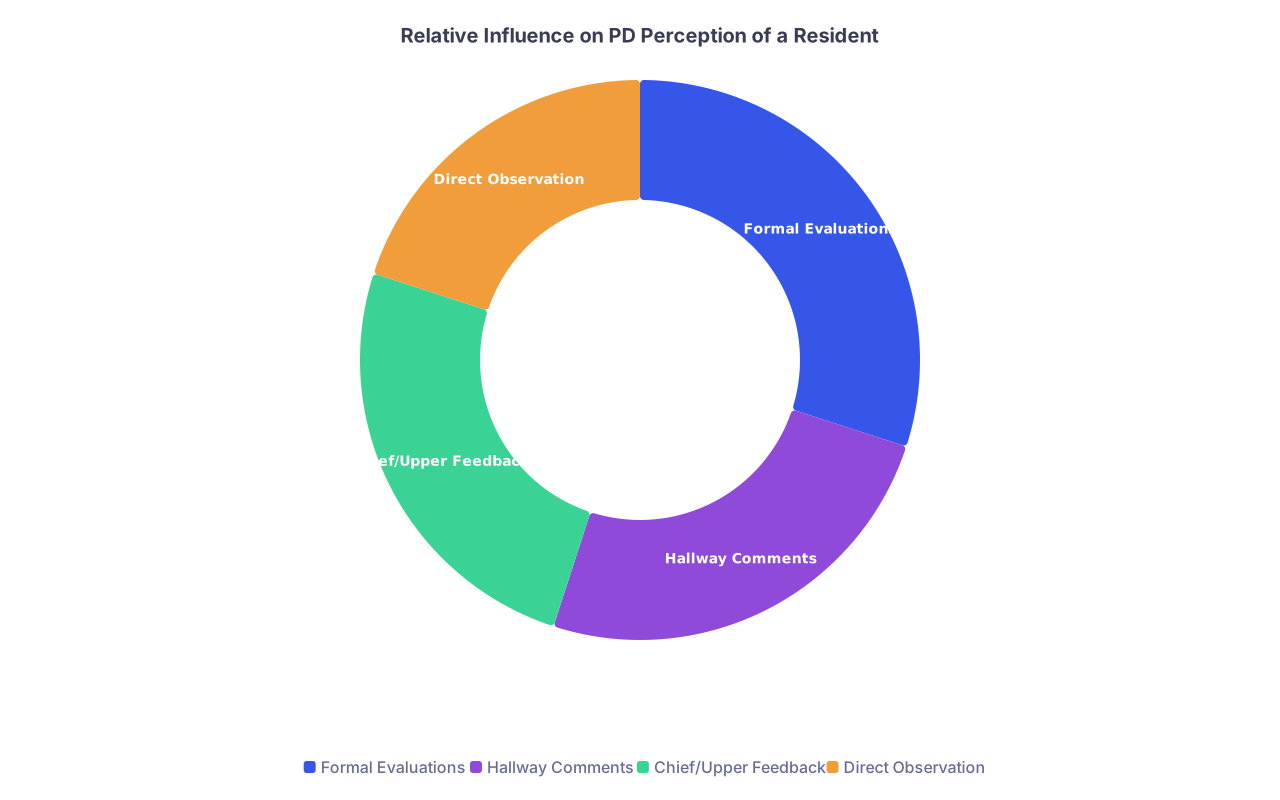
You think PD impressions come from formal evaluations. That’s only half the story.
The more powerful channel is: anonymous, casual, and fast.
| Category | Value |
|---|---|
| Formal Evaluations | 30 |
| Hallway Comments | 25 |
| Chief/Upper Feedback | 25 |
| Direct Observation | 20 |
Those “hallway comments” and quick texts between attendings and PDs often start on rounds.
Here’s how it plays out:
An attending leaves a tough ICU rounding day and bumps into the PD.
PD: “How’s the new class?”
Attending: “Categoricals look strong. That prelim on Blue team, though — honestly working at a PGY-2 level.”
Or:
“Prelims are fine. Good help. But if you’re asking me who I’d recruit as a fellow? All three are categoricals.”
You don’t hear these conversations. But they accumulate.
Rounds is the main thing most attendings actually witness. Night float reports are foggy. EMR notes are skimmed. But how you present and think on rounds? That’s sticky.
Prelims rarely realize PDs are explicitly asking:
- “Any prelim we should support strongly for their specialty match?”
- “Any prelim you’d take in our program if a categorical spot opened?”
- “Who do I not want leading a code someday?”
Rounds performance is the evidence behind those answers.
How “Prelim Energy” Shows Up on Rounds (And Gets You Quietly Down-Ranked)
There are certain behaviors that instantly trigger the mental tag: “classic prelim.” And that’s not a compliment.
I’ve seen this pattern in medicine prelims gunning for derm, rads, anesthesia; I’ve seen it in surgery prelims trying to survive. Different worlds, same tells.
The Medicine Prelim Version
Picture a mid-tier academic IM program. Team on rounds:
- Senior categorical IM resident
- 2 interns: 1 categorical, 1 prelim going into radiology
The case: 64-year-old with decompensated cirrhosis.
Categorical intern presents: full story, med rec, social history, anticipates disposition barriers.
Prelim presents: technically good, but all about labs and imaging. Plan is solid… but narrow.
Attending hears this from the prelim, repeatedly:
- “We could get a CT to be safe.”
- “Maybe an MRI down the line if this doesn’t improve.”
- Very comfortable with diagnostics; quiet on social work, family dynamics, end-of-life nuances.
In the workroom later, I’ve heard attendings say:
“Smart guy. But very radiology-minded. Not someone I picture managing a complex clinic panel.”
Translation: good prelim, low internal-medicine potential. That absolutely shapes how “high” they mentally rank you when someone asks whose letter they’d back for IM vs rads vs nothing.
The Surgery Prelim Pattern
Now surgery.
Rounding at 6:30 AM with a PGY-4 and an attending.
Categorical intern: knows OR schedule cold, tracks drain outputs, already spoke with nursing about overnight events. Talks confidently to the patient about the plan.
Prelim intern: knows the vitals and labs, but constantly checking their watch because they’re post-call and annihilated. They can’t stay for the long case because “I need to sign out and sleep,” which is completely reasonable from a human standpoint.
But what gets remembered?
“She’s fine. Reliable enough. But she feels temporary.”
When a PD is later deciding who gets the last nice LOR or who to advocate for a future PGY-2 spot, that “temporary” vibe kills you.
Where Prelims Actually Have an Edge (And Most Waste It)
Here’s the part no one tells you: many attendings are relieved when a prelim outperforms their low expectations.
If a prelim looks, sounds, and behaves like a strong categorical, people overcorrect. They start saying:
“Honestly, if I didn’t know he was prelim, I’d assume he was categorical.”
That is the best sentence you can put into your attending’s head.
Because then you move into a different bucket:
- Not “good for a prelim”
- Simply “good”
If you’re smart, you exploit that.
You make it absurdly easy for them to go to the PD and say:
“Look, I know they’re prelim, but they functioned like one of our top categoricals. Please help them with their [derm/anesthesia/rads/IM] application.”
The mistake prelims make is thinking, “I’m just here one year; they don’t really care about me.” That is how you guarantee they don’t.
Your best move is acting like a long-term stakeholder even when you are not.
On rounds, that translates to:
- Using “we” language: “We’re following up on…” “We need to think about discharge planning for…”
- Caring about 2-week or 2-month outcomes, even if you won’t be there
- Asking: “How do we usually manage this here?” like you might be doing it again next year
You’re selling them a story: “If you invested in me, I’d be one of your people.”
And yes, PDs fall for that story. A lot.
How Chief Residents Quietly Sort You During Rounds
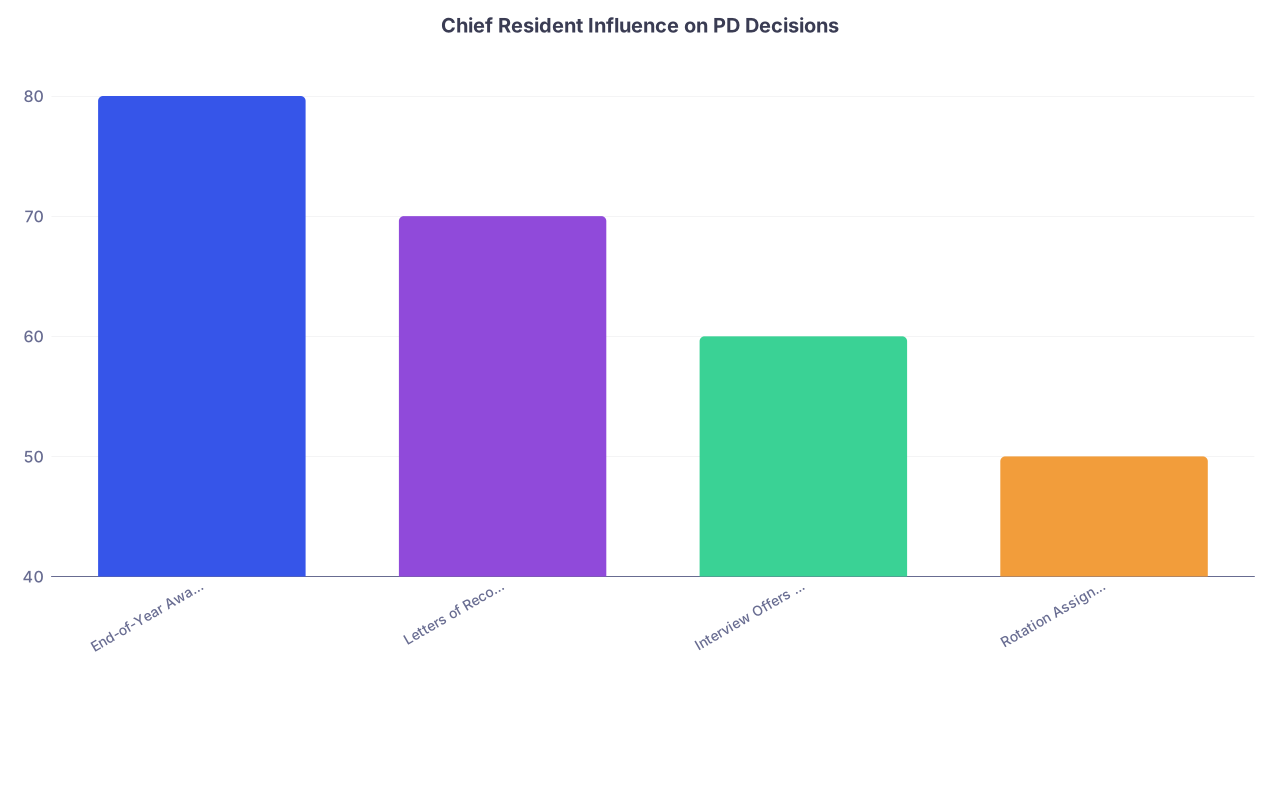
You’re so focused on attendings and PDs that you underestimate another gatekeeper: chiefs and strong seniors.
Their informal ranking system of prelim vs categorical interns is brutal and fast. And it heavily depends on rounds.
| Category | Value |
|---|---|
| End-of-Year Awards | 80 |
| Letters of Recommendation | 70 |
| Interview Offers for Internal Spots | 60 |
| Rotation Assignments | 50 |
I’ve watched chiefs use versions of the same mental categories:
- Workhorse
- Future chief potential
- Needs handholding
- Black cloud but solid attitude
- Ghost (invisible, doing the bare minimum)
Categoricals can survive as “steady but unremarkable” and still be fine long-term. Prelims with the same profile? They disappear as soon as the year ends.
On rounds, chiefs watch for:
- Who jumps in when the conversation stalls
- Who volunteers to follow up on loose ends
- Who anticipates: calling consults, checking with nursing, updating families
- Who looks like they’re mentally somewhere else
And they absolutely distinguish internally:
- “Our prelims this year are great; we should help them.”
versus - “Prelims are fine but no stand-outs.”
If you’re a prelim and you’re not making yourself somebody’s clear “stand-out,” you’re losing.
The Specific Behaviors That Get You Quietly Up-Ranked
Let me give you concrete things I’ve seen change how prelims and categoricals are perceived on rounds.

| Step | Description |
|---|---|
| Step 1 | Rounds Behavior |
| Step 2 | Low Expectations |
| Step 3 | Moderate Expectations |
| Step 4 | Exceeds Expectations |
| Step 5 | Meets Expectations |
| Step 6 | Exceeds Expectations |
| Step 7 | Meets Expectations |
| Step 8 | Strong Advocacy |
| Step 9 | Neutral Impression |
| Step 10 | Type of Resident |
The “Prelim Who Got Every Letter They Wanted”
Medicine prelim, headed for anesthesia. Not top-10 med school, no crazy Step score. But faculty would fight to write her letters.
What she did, specifically, on rounds:
She always knew “the thing others didn’t.”
Not in an annoying one-up way. In a “quiet anchor of the team” way.
- She knew the social worker’s plan.
- She had already spoken with the nurse before rounds — every day.
- She often started with: “Overnight, nothing acute. I touched base with his daughter this morning; she’s worried about…” and then integrated that into the plan.
She acted like the default communicator. That’s senior resident energy, not prelim energy.
People forgot she was leaving after a year. And more importantly, when anesthesia faculty asked medicine, “Anyone we should look at seriously from your prelims?” her name came up first, every time.
The “Categorical Who Got Quietly Down-Ranked”
On the flip side, a categorical IM intern who was… fine. Efficient. On time. Presentations were clean. Plans were usually acceptable.
But on rounds?
- Always slightly behind emotionally.
- Never the one to step into uncomfortable family conversations.
- Never volunteered extra tasks without being asked.
Comments about him behind closed doors:
“He’s okay. Reliable. But I don’t see leader energy there.”
Notice the contrast. The prelim above, who was just with the program for a year, got more long-term advocacy from that same group than their own categorical.
Rounds made that difference.
PD Mind Games: How They Use Rounds to Decide Where You Belong
Here’s something you probably do not know: PDs and APDs sometimes explicitly sort residents by “future pathway” based almost entirely on how they behave during rounds and on-call.
I’ve literally been in meetings where they say things like:
“She looks like cardiology.”
“He screams hospitalist.”
“That prelim would be a phenomenal ICU fellow someday if someone claims him.”
This happens shockingly early. Often by November of intern year.
What drives those labels? Not your CV. Not your Step scores. Your behavior pattern on the wards and in the ICU.
They watch for:
- Do you light up over complex physiology vs psychosocial chaos?
- Do you ask teaching questions that go 2 steps deeper, or are you just gathering enough to survive?
- Are you the one people naturally turn to when they’re overwhelmed on rounds?
Prelims are at a disadvantage because PDs subconsciously say: “But they’re not ours long-term.”
You neutralize that by visibly caring about the same things a future fellow or senior would:
- Refining assessment/plan language
- Understanding local protocols
- Suggesting QI ideas on rounds (“We keep missing X, is there a way we can standardize Y?”)
Suddenly you’re in their “future colleague” bucket, not “temporary help.”
The Subtle Differences in Evaluation Comments (And How They Hurt or Help You)
Let me translate some common phrases from written evaluations that come straight out of how you behaved on rounds.
| Comment Phrase | What Faculty Really Mean |
|---|---|
| "Hard-working" | Reliable but not remarkable |
| "Great team player" | Likeable, not necessarily a leader |
| "Functions at level of PGY-2" | Strong — this gets the PD’s attention |
| "Solid prelim, would work with again" | Good help, unlikely to be heavily pushed |
| "I would be happy to have them in our program" | Strong endorsement, major boost |
Those comments are largely written with your rounds performance echoing in the evaluator’s mind.
Pay attention to the subtle difference here:
- “Great team player, hard worker”
versus - “Functions at level of PGY-2, would be delighted to have them as a categorical in our program.”
The second kind of line gets quoted aloud in PD meetings. It nudges you up mentally in that invisible ranking of interns — prelim and categorical.
And yes, you absolutely can push attendings subconsciously toward that language by how you act on rounds:
- Taking initiative
- Thinking beyond today’s to-do list
- Demonstrating pattern-recognition and prioritization like a higher-level trainee
Tactical Moves for Prelims and Categoricals on Rounds
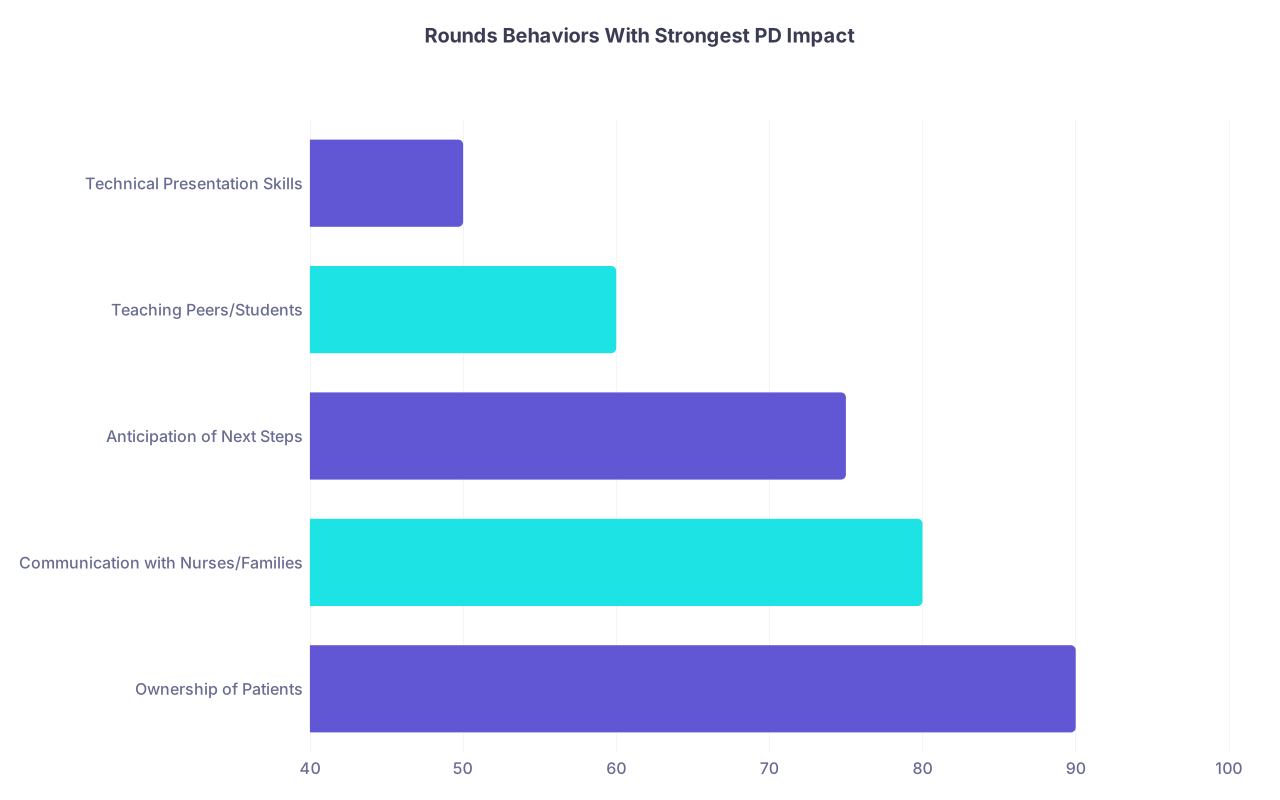
Let’s be practical. You’re not going to change human nature or institutional bias. But you can absolutely rig the game in your favor.
| Category | Value |
|---|---|
| Ownership of Patients | 90 |
| Communication with Nurses/Families | 80 |
| Anticipation of Next Steps | 75 |
| Teaching Peers/Students | 60 |
| Technical Presentation Skills | 50 |
If You’re a Prelim
Your job is to make “prelim” feel irrelevant every time you open your mouth on rounds.
You do that by:
- Talking and acting like a future senior in that specialty, even if your home specialty is different.
- Owning soft stuff: family updates, social work coordination, post-discharge follow-up details.
- Making your attending’s life easier consistently: pre-round syntheses, clear one-liners, tight plans.
And you avoid the classic prelim traps:
- Constantly mentioning your future specialty (“In rads we’ll just…”)
- Broadcasting disinterest in the bread-and-butter of the current service
- Comparing your prelim year unfavorably to your “real” training
The goal is that, when your name comes up, nobody leads with “prelim.” They lead with, “Oh, she was excellent.”
If You’re Categorical
Do not coast on the assumption that “I’m one of ours, so I’m safe.”
I’ve seen categoricals quietly downgraded because their prelim counterparts outshined them on rounds.
You focus on:
- Owning continuity: “We admitted her last month for the same thing — pattern here is…”
- Showing visible growth: “Earlier in the year I would have… now I realize we should…”
- Mentoring prelims and students in front of the attending. That’s cheap but very effective.
You want PDs to think: “This is our future senior. Our future fellow.” Not “solid but forgettable.”
The Bottom Line: How You’re Quietly Ranked
No one hands you a score sheet, but make no mistake: everyone is ranking you.
Not always formally. But mentally. And rounds is where that ledger gets updated every day.
For prelims, the deck is slightly stacked against you. Lower expectations. Less slack for mistakes. More likely to be seen as temporary labor.
For categoricals, you have the benefit of presumed long-term value, but that also raises the standard. People are asking themselves, “Do I want this person leading codes and running teams in two years?”
Remember these three truths and you’ll be ahead of 90% of your class:
- “Prelim” and “categorical” are lenses, not destinies. The label changes the story people tell about your performance, but if you act like a future senior, many attendings forget the label.
- Rounds is your main stage. PD impressions are built less from what you log in the EMR and more from how you think, communicate, and take ownership in that hallway and at the bedside.
- Your goal is to be described without qualifiers. Not “good prelim” or “solid categorical,” but simply: “One of our strongest interns — I’d work with them any day.”
If you can engineer that kind of sentence in the mouths of a handful of attendings and chiefs, your quiet ranking — prelim or categorical — will be exactly where you need it to be.