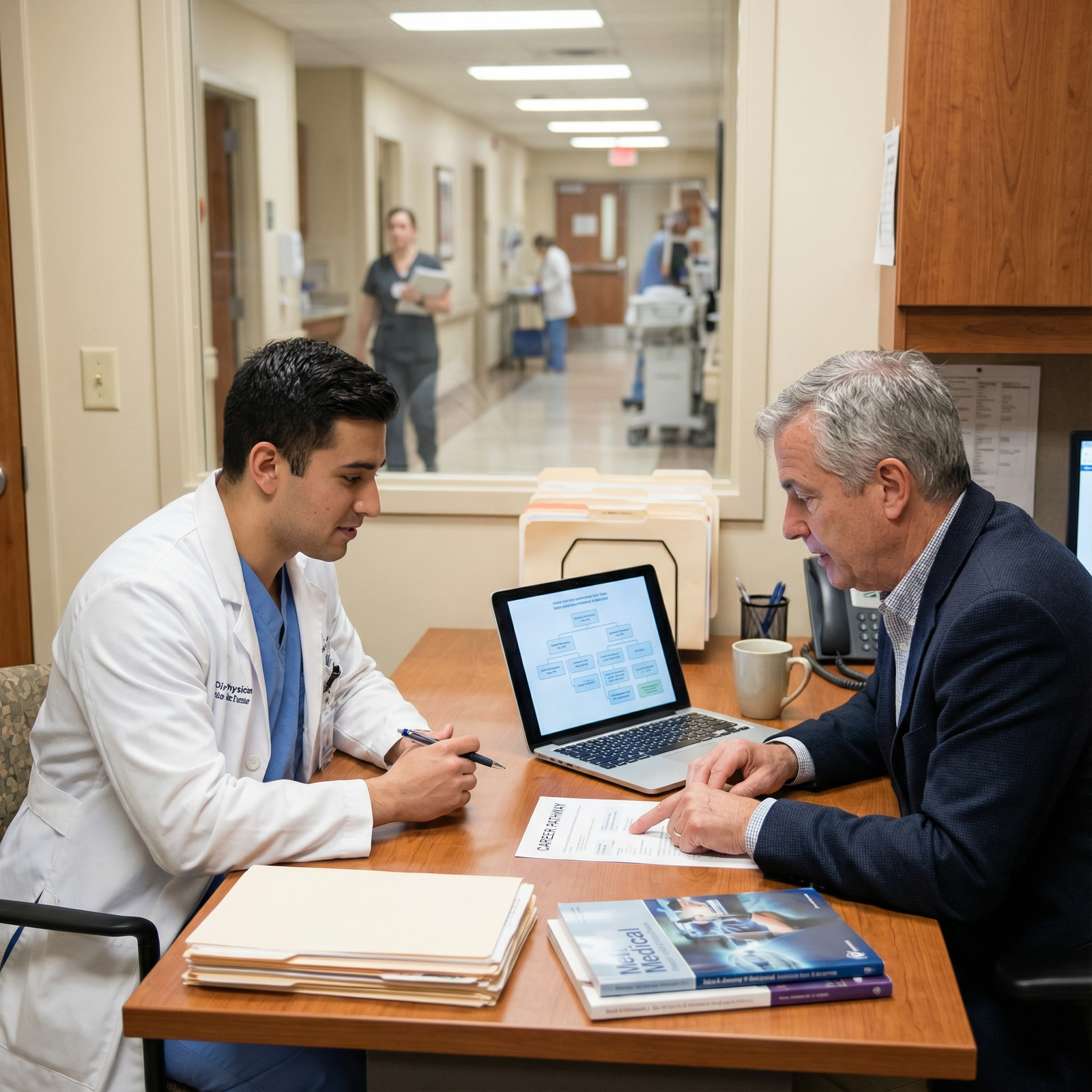
What are your real odds that a preliminary year magically “turns into” a categorical spot at the same program?
Let me ruin the comforting story you keep hearing: “Just match a prelim medicine year, work hard, and they’ll almost always take you as categorical.”
No. They will not “almost always” do anything.
Let’s dissect what actually happens, based on data, program structure, and what residents quietly say after sign‑out when the doors close.
The Core Myth: “If I Match a Prelim, I’ll Probably Convert”
You hear it from upperclassmen, random Reddit threads, and sometimes even from desperate interns:
“Worst case, I’ll just match a prelim spot and then convert to categorical.”
This is the medical education equivalent of, “I’ll marry my situationship once they’re ready.”
You are betting your career on vibes, not structure.
Here’s the reality:
Most preliminary positions are structurally not designed to convert. They exist to:
- Staff the hospital (cheap, flexible labor).
- Provide the required intern year for advanced specialties (neuro, rads, anesthesia, derm, rad onc, etc.).
- Fill gaps in coverage without a long‑term training commitment.
Yes, conversions happen. I’ve seen them. You’ve heard about them. But they are the exception, not the default pathway.
What the Data and Patterns Actually Show
There is no centralized NRMP spreadsheet that says, “X% of prelims convert to categorical.” Programs don’t love exposing how often they plug holes midstream. But there are consistent patterns you can rely on.
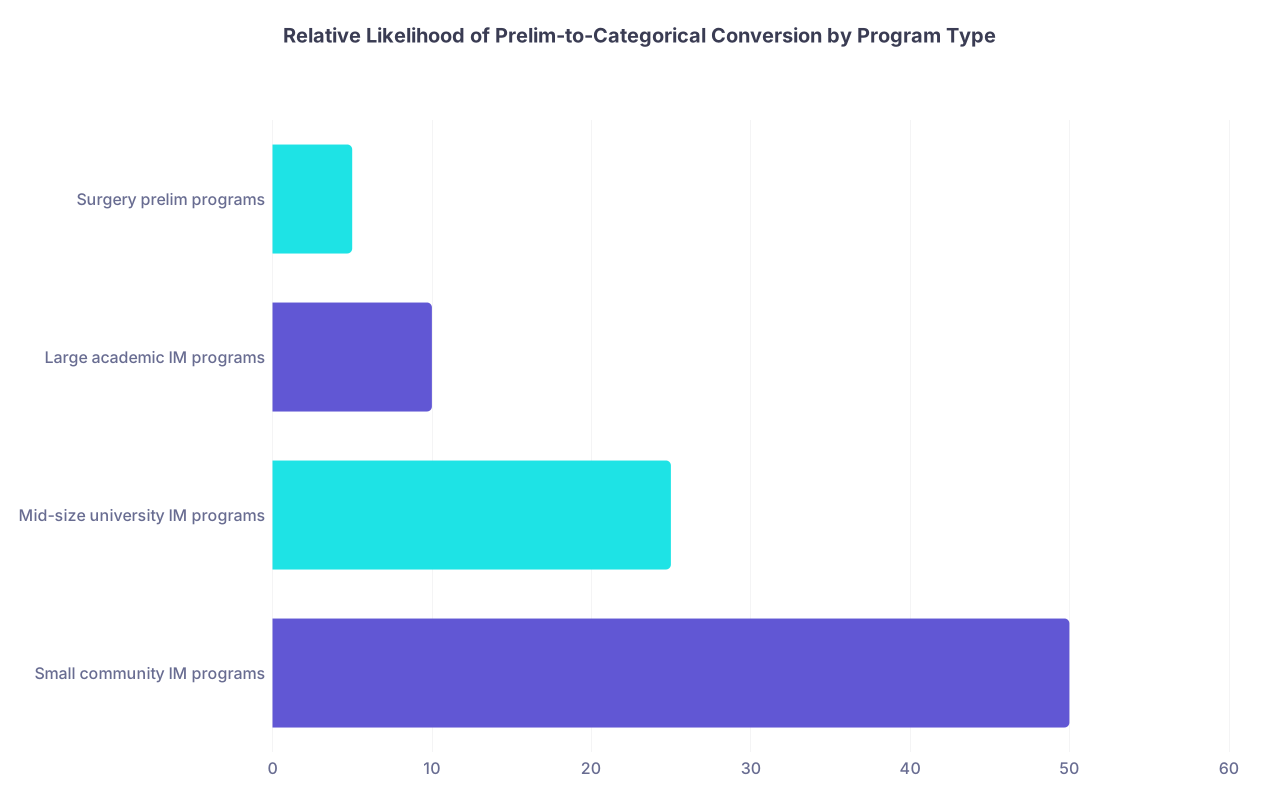
| Category | Value |
|---|---|
| Small community IM programs | 50 |
| Mid-size university IM programs | 25 |
| Large academic IM programs | 10 |
| Surgery prelim programs | 5 |
Those numbers are not official NRMP stats; they’re a realistic ballpark based on:
- How many categorical residents programs are authorized and funded to train.
- How frequently categorical residents leave (performance issues, switching specialties, life events).
- Whether the program actually uses prelims as a “farm team” or just service coverage.
Let’s break it down by type.
Internal Medicine Prelim vs Categorical: Two Different Currencies
Prelim internal medicine is where most people daydream about “conversion.” The fantasy goes like this:
“I’ll match a prelim IM year, prove myself, then they’ll upgrade me to categorical when someone drops out.”
Sometimes that happens. More often this happens instead:
You’re a workhorse for 12 months. You get decent evals. July 1 comes. You are gone.
Why? Because:
Positions are ACGME‑capped.
Programs are approved for a fixed number of categorical slots per PGY level. They cannot simply decide, “We like you, we’re adding a PGY‑2 position.” That requires a formal request and justification and usually is not done just to rescue a prelim.The funding follows the position, not your personality.
Medicare and institutional GME dollars are budgeted per slot. Extra people cost real money the hospital hasn’t allocated.Categorical attrition is lower than rumors suggest.
People do leave. But not in droves. A few PGY‑1s might wash out or switch to psych or rads each year in a big program. That does not translate to “multiple open PGY‑2s every year.”
So when do conversions actually happen in IM?
- A categorical intern resigns/gets terminated.
- A PGY‑2 transfers out early.
- The program loses an upper‑level to fellowship fast‑tracking or a personal crisis.
Then, and only then, program leadership sometimes looks around and says, “Which prelim is decent, will not create drama, and can step in?”
And the phrasing really is like that behind closed doors. Not who’s “the best clinically,” but “who will not burn us.”
Surgery Prelim: Hope Less, Plan More
Surgery prelim to categorical is even harder than IM.
Surgical programs notoriously over‑recruit prelims to cover call and floor work, fully intending that most of them will not become categorical anywhere, let alone there.
If you’re matching a surgery prelim thinking you’re 70% likely to end up categorical in that same program, you’re delusional or being misled. A realistic mental model:
- There might be 0 categorical conversions in a given year.
- In some places, there’s “the one prelim who makes it” every few years — not every year.
- You’re competing for any potential slot not just with your co‑prelims, but additional transfer applicants from other hospitals.
Is it impossible? No. People do it. They’re usually:
- Top half (or top few) of the prelim class.
- Socially easy to work with.
- Aggressively, but tactfully, clear about wanting categorical surgery early in the year.
But the baseline expectation should be: “I am here for a 1‑year contract. Anything beyond that is a bonus, not a plan.”
Why Programs Rarely Promise Conversion (And When That’s a Red Flag)
Occasionally, you’ll hear something like:
“If you come here prelim, there’s a good chance we’ll have a categorical spot for you.”
Translated:
“We need service coverage, and we’d like to keep your hopes up so you don’t rank us last.”
Strong programs are careful here. They’ll say:
- “We occasionally convert prelim to categorical if there is attrition, but we cannot promise or predict that.”
- “Historically we’ve converted 0–2 prelims in the last 5 years.”
Weak or desperate programs might be much more vague and optimistic.
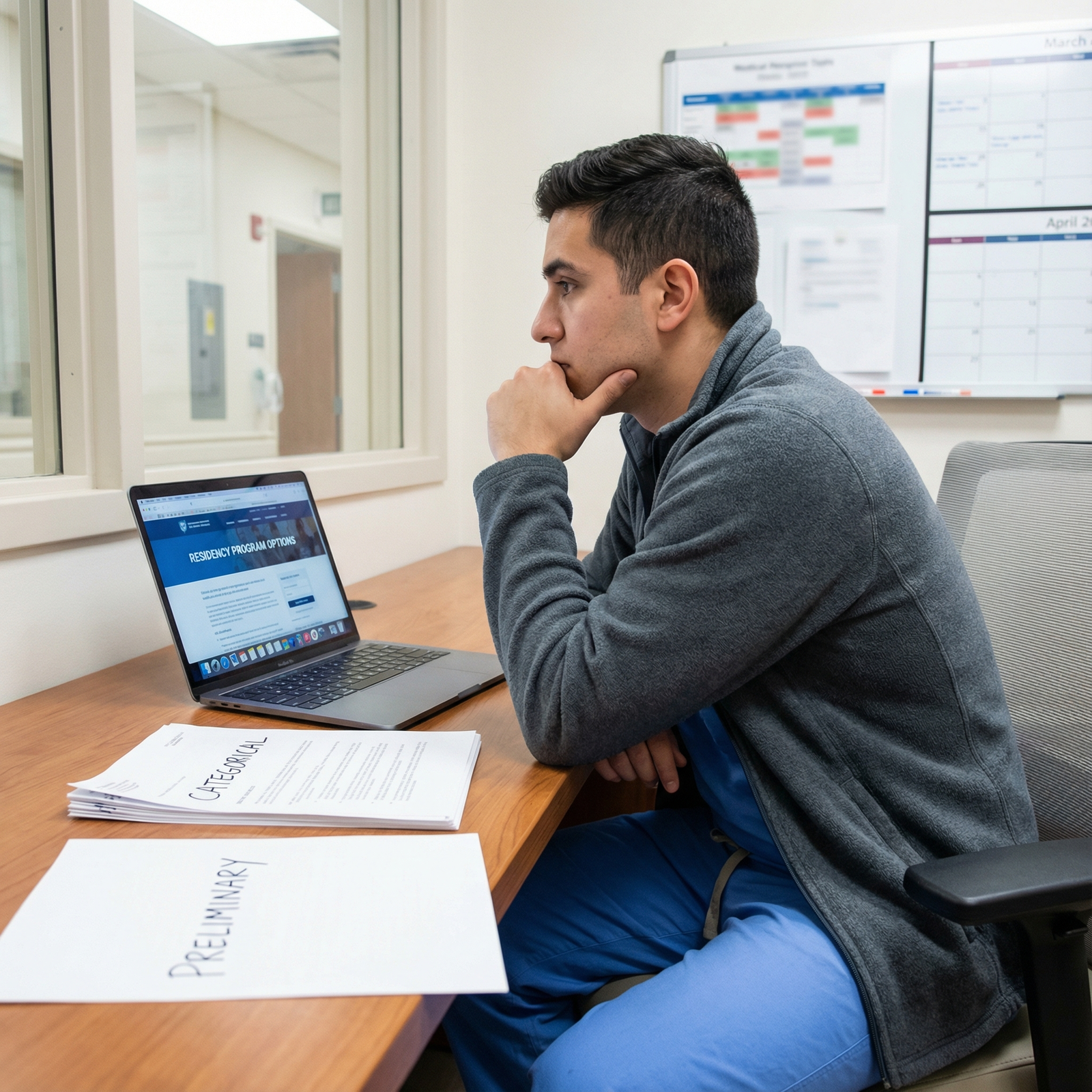
The moment someone starts using language like “likely” or “pretty good chance” but can’t tell you:
- How many prelims they have each year
- How many categorical conversions they’ve made in the past 3–5 years
- Whether there are planned PGY‑2/3 vacancies
…they’re selling, not informing.
Reading Between the Lines: What To Ask on Interview Day
If you’re considering ranking a prelim spot with conversion in mind, stop being passive. Ask pointed questions. You’re a physician; act like one.
Questions that actually reveal something:
- “In the last 5 years, how many prelims here have become categorical in IM/surgery at this program?”
- “Are there known categorical openings for the PGY‑2 class next year?”
- “Do you ever expand categorical numbers, or is conversion only due to attrition?”
- “If a categorical spot opens, do you primarily look at your own prelims, or do you also recruit transfers from outside?”
Then pay close attention to body language and specificity.
Program directors who genuinely use prelims as a pipeline will say concrete things like:
- “We’ve converted 1–2 prelims in three of the last five years.”
- “When we lose someone, we always look at our prelims first, and we’ve historically filled from them.”
Programs that basically never convert will say things like:
- “Anything’s possible!”
- “We love our prelims, they get great training, and we support them to go anywhere.”
- “We don’t have exact numbers, but people do well.”
You’re not asking whether they “love” their prelims. You’re asking, “Do they stay here as categoricals, or not?”
The Match Reality: How Programs Actually Use Prelim Spots
Look at it from the program’s perspective for a minute.
They have:
- Fixed categorical slots, tightly matched to budget and service needs.
- Variable and sometimes heavy workload (nights, ED admits, floor calls, cross‑cover).
Prelims are an elegant solution:
One‑year doctors who can carry almost as much workload as categoricals, without the 3‑year training commitment.
| Program Type | Prelim Class Size | Categorical Class Size | Prelim Used For |
|---|---|---|---|
| Large Academic IM | 6–15 | 20–40 | Advanced specialties, coverage |
| Mid-size Univ/Community IM | 3–8 | 12–24 | Mix of pipeline + coverage |
| University Surgery | 6–20 | 4–8 | Service coverage primarily |
| Community Surgery | 2–6 | 2–4 | Mix, but still mainly coverage |
In academic IM, some programs genuinely treat a subset of prelims as a potential pipeline. Especially smaller or mid‑sized medicine programs. In big brand‑name centers, prelims are often exactly what the contract says: one year and done.
In surgery, the brutal truth:
In many places, prelims are almost purely workforce. If someone leaves categorical, they may fill that spot from a stellar prelim. But “convert the prelims” is not a core design feature; it’s an emergency patch.
What Actually Increases Your Odds of Conversion
Assuming a program does sometimes convert, your odds are not random. They’re influenced by some very predictable factors.
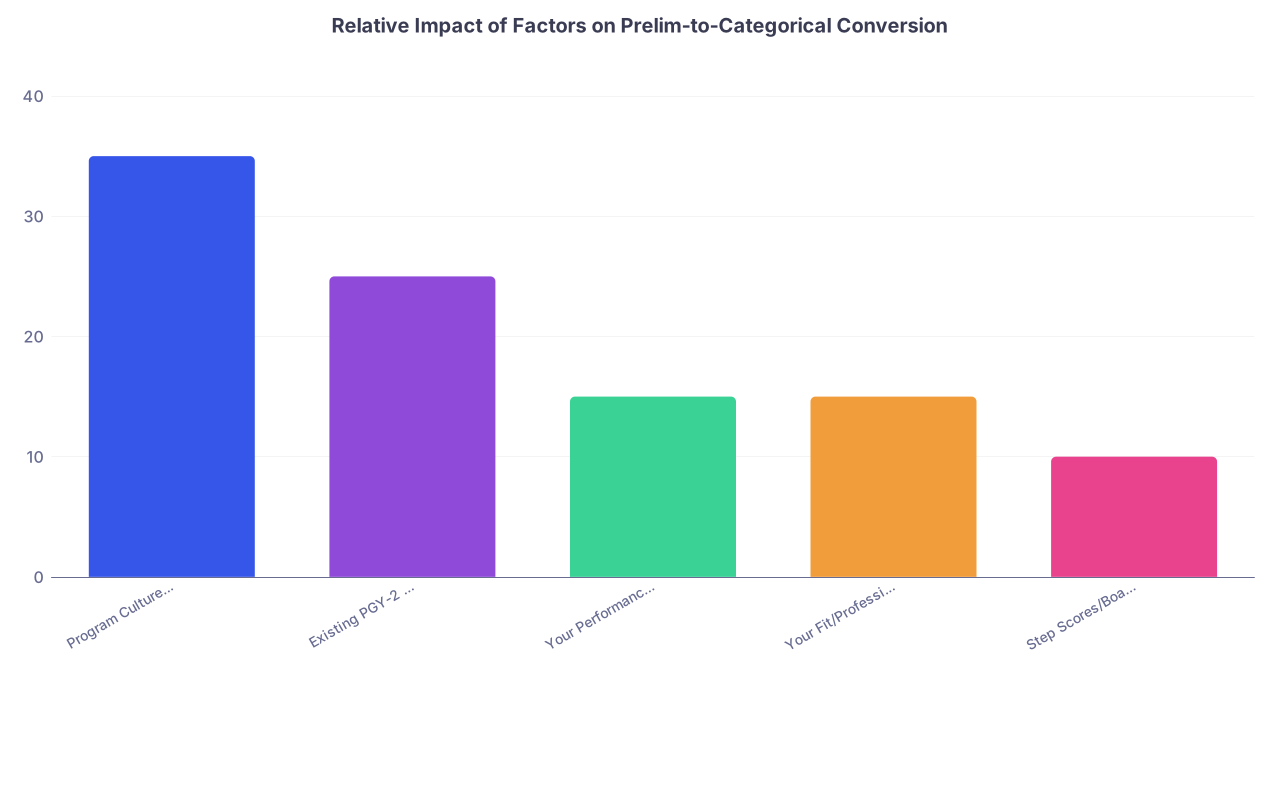
| Category | Value |
|---|---|
| Program Culture & History | 35 |
| Existing PGY-2 Vacancy | 25 |
| Your Performance/Evals | 15 |
| Your Fit/Professionalism | 15 |
| Step Scores/Board Performance | 10 |
The two heavy hitters you do not control fully:
Program culture & history.
If they’ve converted prelims multiple times in recent years, your baseline odds are much higher. If they almost never have, you’re trying to win the lottery.Actual vacancies.
No open categorical spot = no conversion, no matter how beloved you are.
What you can influence:
- Being relentlessly reliable. Show up, don’t meltdown, don’t create interpersonal drama.
- Making your interest absolutely explicit by fall of your prelim year. Not in March.
- Securing strong advocates among faculty who actually sit on the Clinical Competency Committee or program leadership, not the random nephrology attending who likes your notes.
And no, simply “working hard” is not enough. Half the people on your team will work hard. Hard work is the floor, not the differentiator.
If You’re Considering a Prelim With Hopes of Conversion
Here’s the part nobody tells you bluntly:
If you must be categorical in that specialty to be happy, and your entire plan is “do a prelim and convert,” you’re walking on thin ice.
Safer mental framing:
- Treat a prelim year as a bridge, not a guarantee.
- Use it to:
- Gain U.S. clinical experience (IMGs).
- Rebuild your application (poor Step, weak MS3 evals, late specialty decision).
- Reapply to the Match with real letters and fresh performance data.

| Step | Description |
|---|---|
| Step 1 | Match Prelim |
| Step 2 | Convert to Categorical There |
| Step 3 | Reapply to Match |
| Step 4 | Use Strong Prelim Letters |
| Step 5 | Leverage Intern Year Experience |
| Step 6 | Categorical Spot Opens at Same Program |
| Step 7 | Reapply to Same Specialty |
| Step 8 | Switch Specialty |
People who do best after prelim years:
- Go in assuming they’ll need to reapply.
- Do not emotionally anchor on conversion at that single program.
- Are willing to move, pivot specialties, or change geographic preferences.
Common Myths vs Reality Snapshot

| Myth | Reality |
|---|---|
| Most prelims convert if they work hard | Most prelims do not convert; conversion depends on vacancies |
| Programs can always add a categorical spot they want | Positions are capped and funded; adding spots is difficult |
| Surgery prelims are a backdoor to categorical | In most programs, surgery prelims are pure service coverage |
| A strong letter guarantees a categorical position | No vacancy = no spot, no matter how glowing the letters |
Conversion stories circulate because they’re unusual and dramatic. Failed conversions are quiet. The resident just vanishes from the schedule next July and pops up somewhere else on Doximity.
Do not let survivorship bias run your career.
Key Takeaways
- Prelim positions are designed as 1‑year roles, not stealth categorical positions. Conversions happen, but they are the exception, not the plan.
- Your odds depend far more on program culture and actual vacancies than on how many notes you write or how many extra admissions you pick up.
- Treat a prelim year as a bridge to reapply, not a guaranteed backdoor. If conversion happens, great. But plan your life as if it will not.
FAQ (Exactly 4 Questions)
1. What’s a realistic percentage of prelims that convert to categorical at the same program?
It varies wildly. In many surgery programs, it’s 0–5% in a given year. In large academic IM programs, often under 10–15%. A few smaller or mid‑size medicine programs might be closer to 20–40% if they explicitly use prelims as a pipeline. If a program can’t quote rough historical numbers, assume the rate is low.
2. Does being an IMG make conversion harder?
Often yes. Some programs will preferentially convert U.S. grads if there’s only one opening, even if multiple prelims are strong. Others do not care. What matters most is whether the program leadership truly sees you as part of their long‑term resident cohort. As an IMG, you should be even more aggressive about clarifying historical conversion rates and using the year to build a strong application to reapply elsewhere.
3. If I know I’ll need a PGY‑2 spot, should I email programs midyear about openings?
Yes. Many PGY‑2 or PGY‑3 spots are filled off‑cycle through direct contact, not only through the main Match. Around December–March, programs start to know about attrition. Have an updated CV, strong letters from your prelim year, and be ready to send targeted emails to PDs in your specialty of interest. Just do not bank on this as your only path.
4. Is a prelim year ever a bad idea?
It’s a bad idea if you are using it as a denial mechanism. If you cannot emotionally tolerate ending that year without a categorical spot in that same specialty and same institution, you’re setting yourself up for a rough landing. It can be a very smart move if you treat it as a strategic, time‑limited way to improve your application, broaden options, and re‑enter the Match with more leverage and a clearer view of reality.