
Most applicants choose their prelim year wrong for ortho, radiology, and anesthesia. Not because they are lazy, but because they do not understand what actually matters.
Let me fix that.
You are aiming for an advanced specialty (orthopedics, diagnostic radiology, interventional radiology, anesthesiology). That means you need two things:
- A PGY‑1 that satisfies the specialty’s formal requirements.
- A PGY‑1 that does not make your life miserable and sabotage your performance or boards.
Those are not always the same thing.
I am going to break down exactly how to think about prelim medicine, prelim surgery, and transitional year if your end goal is ortho, rads, or anesthesia—what actually helps, what is overrated, and what gets applicants burned.
What a “Preliminary Year” Actually Is
Forget the glossy program descriptions. Functionally, a prelim year is:
- A one‑year internship (PGY‑1) that
- Can be medicine, surgery, or a “mixed” transitional year
- That does not automatically continue into PGY‑2 in your advanced specialty
Your advanced residency (ortho, DR/IR, anesthesia) usually starts at PGY‑2. Some programs are “categorical” (they give you PGY‑1 through completion). Others are “advanced” only (you bring your own PGY‑1). You can match:
- Categorical advanced specialty (no separate prelim needed), or
- Advanced position + separate prelim year, often at a completely different institution and city
For ortho/rads/anesthesia, you must understand:
- What your board requires for PGY‑1
- What your future program directors actually prefer
- How different structures (medicine prelim, surgery prelim, transitional) will affect your life, your boards, and your PGY‑2 performance
Core Requirements by Specialty
Let me start with the non‑negotiables. This is the part that gets people in trouble when they “just want an easy year.”
| Specialty | Acceptable PGY-1 Types | Key Requirement Focus |
|---|---|---|
| Orthopedics | TY, Prelim Medicine, Prelim Surg | Must be ACGME-accredited |
| Diagnostic Rads | TY, Prelim Medicine, Prelim Surg | Strong medicine exposure favored |
| IR (integrated) | TY, Prelim Medicine, Prelim Surg | Same as DR, check program prefs |
| Anesthesiology | TY, Prelim Medicine, Prelim Surg | Need solid inpatient exposure |
The ABOS (orthopedics), ABR (radiology), and ABA (anesthesiology) all accept any ACGME‑accredited clinical prelim year that includes enough direct patient care. But programs have preferences. Strong ones. They just often do not put them clearly on the website.
Here is the short version:
- Ortho: Very flexible. TY, prelim medicine, prelim surgery all fine. Categorical surgical internship is common when bundled with ortho, but for separated prelims, many ortho residents prefer a good transitional year or lighter prelim medicine.
- Radiology / IR: Formally flexible, but most PDs quietly like prelim medicine or strong transitional year. Surgical prelim is rarely preferred unless well designed and not malignant.
- Anesthesia: Also flexible, but many chairs and PDs strongly favor medicine‑heavy PGY‑1 (prelim medicine or a TY with substantial inpatient medicine), mainly to prevent PGY‑2s who crumble on SICU/MICU.
So you technically have options. The question is: which structure actually makes sense for you.
The Three Prelim Structures: What They Are Really Like
Let me be blunt. Almost everyone gets misled by the labels.
1. Transitional Year (TY)
Transitional years exist on a spectrum from “secret golden year” to “fake‑easy but actually chaotic.” The core design:
- A mix of:
- Inpatient medicine
- Some surgery or subspecialty inpatient
- ICU (usually 1–2 months)
- A lot of electives (in the best programs)
- Often lighter call and better schedule balance
- Often shared with radiology, anesthesia, derm, ophthalmology interns
A strong TY for ortho/rads/anesthesia usually looks like:
- 4–6 months inpatient (medicine + ICU + maybe some nights)
- 4–6 months electives (including time in your eventual field)
- Reasonable call (q4–q7), real days off, predictable golden weekends
The biggest mistake: assuming every TY is cushy. Wrong. Some TYs are malignant or disorganized, overloaded with random floor months, night float, and minimal elective time. You must look at the actual block schedule, not the branding.
2. Preliminary Medicine
Classic structure:
- 6–8 months inpatient medicine (wards, nights, MICU/CCU)
- A few electives (cards, ID, nephrology, maybe radiology/anesthesia electives)
- Sometimes a continuity clinic (depends on program and whether you are prelim vs categorical)
- Call usually traditional or night float, significant cross‑coverage
This year builds serious inpatient chops. You get:
- High patient volume
- Lots of cross‑cover at night
- Real responsibility for hemodynamics, codes, cross‑specialty communication
For future anesthesiologists and radiologists, prelim medicine can be an excellent foundation. For ortho, it can be helpful but is less directly aligned with your day‑to‑day future work. Still, your comfort with acutely ill patients and perioperative medicine improves.
The cost: fatigue. Many intern‑year burnouts come out of heavy IM prelims. If the program is malignant or understaffed, your boards and wellness can suffer.
3. Preliminary Surgery
This is where many advanced‑track applicants get hurt.
Prelim surgery years often function as:
- Service heavy labor for the categorical general surgery program
- Disproportionate call and floor work
- Minimal autonomy or OR experience compared with categoricals
- High burnout, high non‑renewal risk
A typical prelim surgery year:
- 8–10 months on surgical services: general, trauma, vascular, maybe ortho/uro/ENT
- 1–2 months ICU
- Possibly 1 elective month, if you are lucky
- Aggressive call (q3–q4), frequent weekends, early mornings, late nights
For orthopedics, this can look like a good idea (“it is closer to my field”). Often it is not. You get exhausted, have limited OR experience, and sometimes end up feeling like disposable labor.
For radiology and anesthesia, there is almost never a good reason to choose a surgery prelim over a strong TY or prelim medicine. The surgical exposure is not that useful for your future work compared with a solid background in inpatient medicine and hemodynamics.
What Each Specialty Actually Needs from Your PGY‑1
Let me go specialty by specialty and be specific.
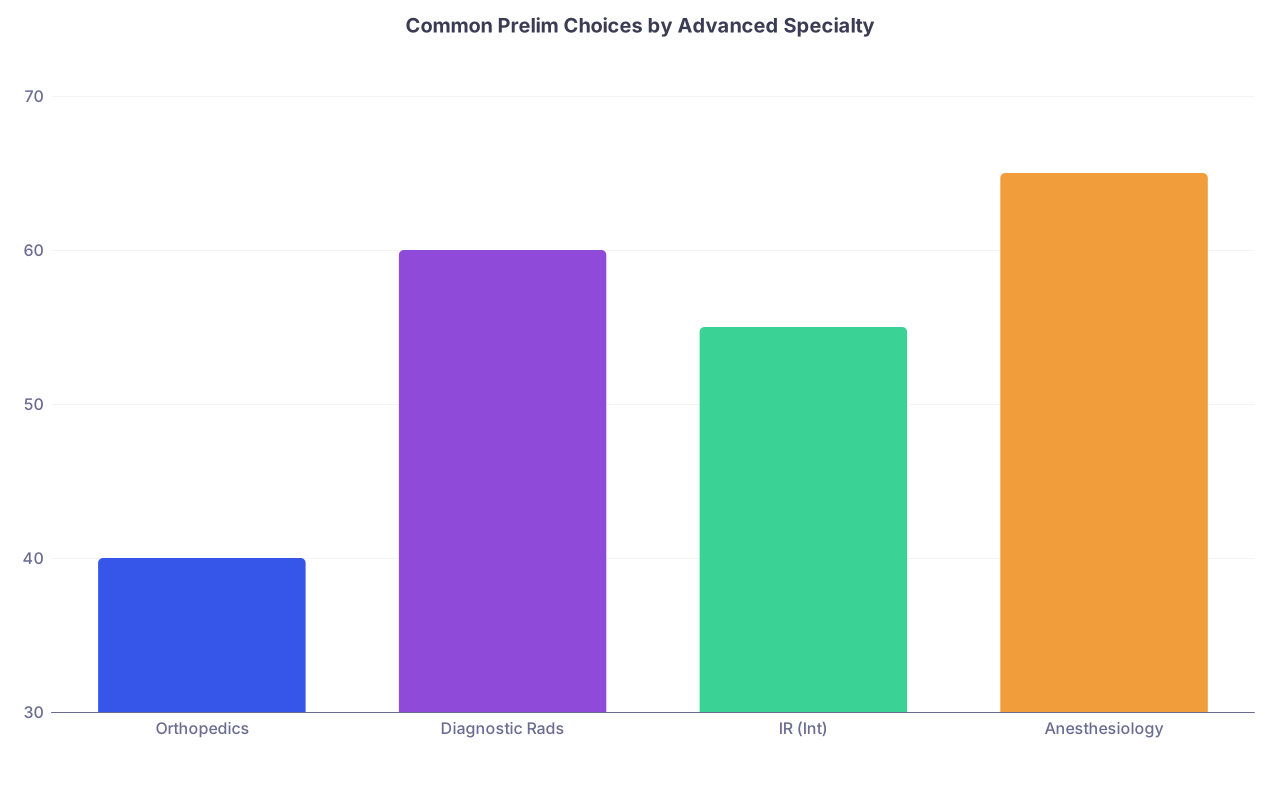
| Category | Value |
|---|---|
| Orthopedics | 40 |
| Diagnostic Rads | 60 |
| IR (Int) | 55 |
| Anesthesiology | 65 |
(NOTE: Think of these as approximate percentages of residents I have seen ending up with medicine-heavy or TY years vs surgical prelims; the point is trend, not exact numerics.)
Orthopedic Surgery
Board requirement: Any accredited clinical PGY‑1—TY, prelim medicine, or prelim surgery can all satisfy ABOS and program expectations, as long as they are standard.
Reality on the ground:
Many ortho residents at big programs (Mayo, HSS, Rush, etc.) either:
- Do an integrated (categorical) PGY‑1 with structured ortho time, or
- Do a well‑designed TY that mixes some surgery, some medicine, and a lot of electives / ortho time
Ortho PDs care more about:
- Your performance as an intern (professionalism, reliability, no disasters)
- Your Step 2 / boards and letters
- Whether you show up day 1 of PGY‑2 with basic competence in managing post‑op patients, pain, DVT prophylaxis, etc.
A solid structure for a non‑categorical ortho match:
- Best:
- Transitional year with:
- 2–3 months general medicine
- 1–2 months ICU
- 2–3 months surgery or trauma
- 2–3 months ortho electives + some lighter rotations
- Transitional year with:
- Acceptable:
- Prelim medicine with some ortho elective time and trauma exposure
- Risky:
- Prelim surgery that is malignant, with almost no ortho exposure and heavy floor burden
The unseen problem: a brutal surgery prelim year can trash your Step 3 studying, delay research, and leave you starting ortho already exhausted. You do not get bonus points in most ortho programs for “suffering more.”
Diagnostic Radiology / Interventional Radiology (Integrated)
Board requirement: ABR accepts TY, prelim medicine, or prelim surgery. Many DR/IR sites explicitly state they prefer medicine‑focused PGY‑1.
What PDs really want from incoming PGY‑2 rads residents:
- Ability to write a basic note, manage common inpatient conditions, and communicate with primary teams
- Understanding of ICU basics: ventilators, lines/tubes, shock, sepsis, post‑op complications
- Emotional maturity, not being terrified of sick patients
Look at big‑name programs. Many will say something like “preference for preliminary year in internal medicine or a transitional year with substantial medicine experience.”
For diagnostic rads:
- Ideal:
- Transitional year with:
- 3–4 months inpatient medicine
- 1 month ICU
- Radiology electives
- Decent elective time for research, reading, or life
- Transitional year with:
- Very good:
- Prelim medicine at a well‑run program with protected didactics, but not soul‑crushing call
- Usually unnecessary:
- Prelim surgery. You do not need 8 months of drains, ostomies, and daily progress notes on 30 post‑ops. That does not materially improve your radiology skills later.
For integrated IR, you do want:
- ICU time
- Adequate procedural exposure
- Comfort with lines, drains, peri‑procedural medicine
But you still do not need a malignant surgery prelim to get that. A strong medicine prelim or ICU‑rich TY will do the job.
Anesthesiology
Anesthesia is where a medicine‑heavy PGY‑1 pays dividends.
ABA and most anesthesia PDs want:
- Solid grounding in:
- Cardio‑pulmonary pathophysiology
- Fluid status, shock, sepsis, respiratory failure
- Ventilator basics (which you often learn on ICU)
- Comfort with handoffs, floor management, and acute changes overnight
Patterns I see in strong anesthesia programs:
- Many residents did:
- Medicine prelim (especially at academic centers)
- Transitional year with substantial inpatient medicine and ICU
- Fewer chose prelim surgery, except where the anesthesia program specifically integrates a “surgical internship” design.
For anesthesia, I would rank structures this way (assuming similar culture/workload):
- Transitional year with robust medicine + ICU + some anesthesia electives
- Prelim medicine with good ICU experience
- Prelim surgery (only if very well balanced and specifically recommended by your future anesthesia program)
You will feel the benefit of a medicine‑heavy year during:
- Early CA‑1 months on SICU/MICU rotations
- When managing hypotension, hypoxia, sepsis intraoperatively
- Pre‑op clinic and complex perioperative evaluation
How to Compare Specific Programs (Not Just Labels)
You cannot choose based on “TY vs prelim medicine vs prelim surgery” alone. That is lazy. You have to dissect the actual structure of each program.
Here is the checklist I use when advising applicants.
| Factor | Strong Program Sign | Red Flag Sign |
|---|---|---|
| Elective Months | ≥ 3–4 | 0–1 |
| ICU Exposure | 1–2 months | None or 4+ months |
| Night Float/Call | Predictable, humane | q3 nonstop, vague |
| Culture | Known as supportive | High attrition, complaints |
| Specialty Electives | Time in your field | None allowed |
1. Block Schedule
Ask for a sample block schedule for prelim residents, not categoricals. Then answer:
- How many months inpatient?
- How many ICU months?
- How many electives?
- Any guaranteed time in your future specialty (ortho, rads, anesthesia)?
A great TY for rads/anesthesia might be:
- 3 months wards
- 1 month MICU/SICU
- 1–2 months ER
- 1–2 months radiology/anesthesia electives
- 3–4 months “easier” electives (consults, outpatient, elective ICU, or research)
A tolerable prelim medicine:
- 6 months wards / night float / cross‑cover
- 1–2 months ICU
- 2–3 months electives, including at least one in your future specialty
2. Culture and Treatment of Prelims
This matters more than applicants realize. Questions to ask current residents (off the record, if possible):
- Are prelims treated like second‑class citizens compared with categoricals?
- Do prelims get preference or equal say in elective choices?
- Any history of prelims being non‑renewed or having contracts not extended for vague reasons?
Red flags I have heard from interns:
- “The categoricals get clinics and continuity; prelims are just floor scut.”
- “We found out our schedule month‑to‑month. No predictability.”
- “Prelims are last in line for vacations and elective choices.”
That is how you end up miserable.
3. Geographic and Lifestyle Considerations
You will be there only one year, but that year can set the tone for your entire residency.
Reasonable to prioritize:
- Same city or region as your advanced program (easier move, shared social network)
- Affordable cost of living (you will not be paid much)
- Commute under 30–40 minutes
- Stable support system (partner job, family, childcare etc.)
What is not reasonable: Sacrificing culture and structure just to be in a “cool” big city with a malignant prelim year. You will not enjoy the nightlife if you are on q3 trauma call indefinitely.
Matching Strategy: How Many Prelim Programs and What Mix?
You are not just choosing structure. You are strategizing your match list.
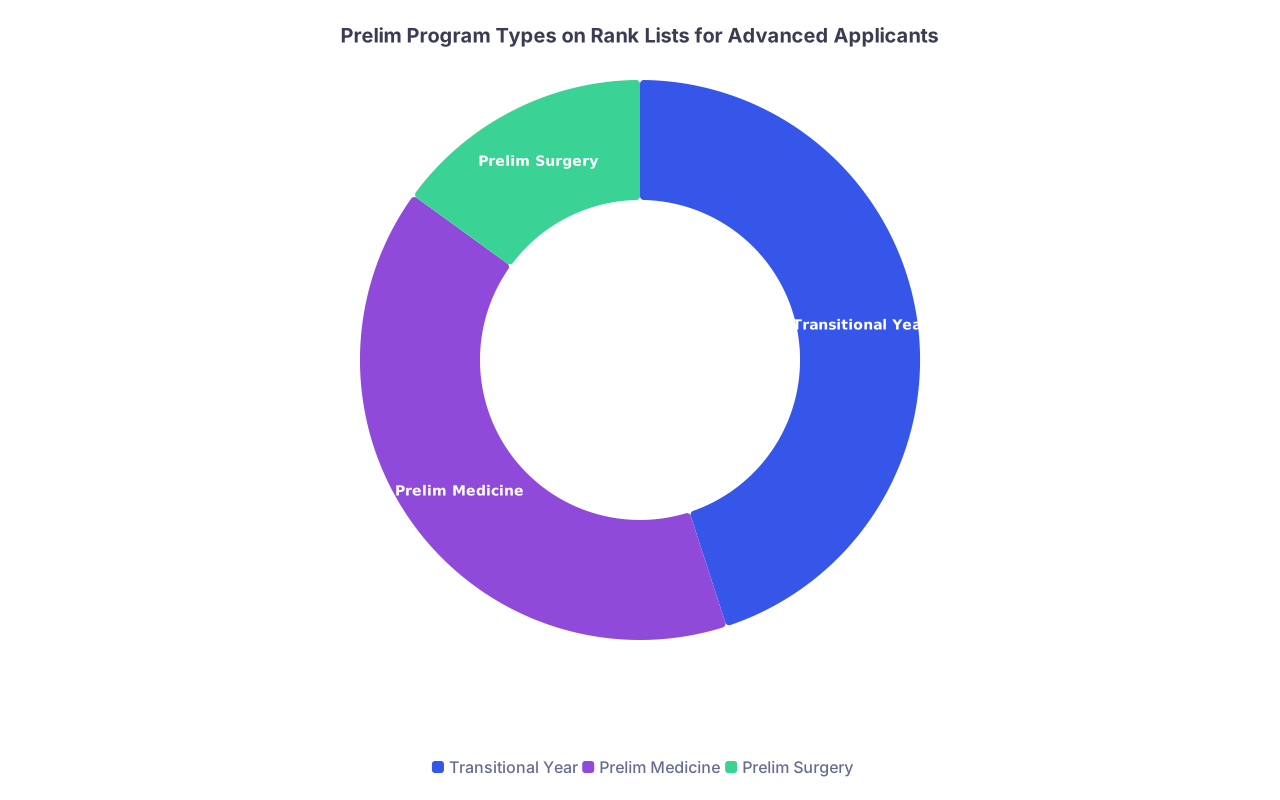
For ortho, radiology, and anesthesia, most applicants do:
- 12–20 advanced programs in the specialty
- 8–15 prelim/TY programs, a mix of:
- TY
- Prelim medicine
- A few prelim surgery (for ortho) if they are known to be decent
| Category | Value |
|---|---|
| Transitional Year | 45 |
| Prelim Medicine | 40 |
| Prelim Surgery | 15 |
Some rules of thumb:
- Do not rely on only TY applications. They are very competitive because every derm, rads, ophtho, and anesthesia applicant wants them.
- Include a solid base of prelim medicine programs—especially in regions where you want to be long term.
- Limit prelim surgery applications unless:
- You are ortho
- The prelim surgery programs are known to be humane and structured
- Or your advanced program has recommended affiliated surgery internships
You should absolutely ask your future (or target) programs questions like:
- “Do you have preferred prelim sites?”
- “Do your current residents feel more prepared coming from TY vs prelim medicine?”
- “Any prelim programs you advise against or tend not to accept from?”
Programs will occasionally give you surprisingly honest answers.
How the Prelim Year Affects Your PGY‑2 Transition
Applicants underestimate the lag effect of a bad prelim year.
I have seen:
- Radiology PGY‑2s who are so burned out from malignant prelim surgery that they cannot focus for basic physics lectures, fall asleep in conference, and struggle with early call
- Orthopedic PGY‑2s starting already bitter, with zero OR stamina because they spent a year managing surgical floors at 100% capacity and never actually developed OR flow
- Anesthesia CA‑1s who are technically fine but shaky on basic hemodynamics because their “light TY” had almost no actual medicine or ICU
You want PGY‑2 to feel like an exciting jump, not like climbing out of a hole.
A well‑structured TY or prelim medicine year gives you:
- Enough patient volume to grow clinically
- Enough ICU and acute care to harden you a bit
- Enough rest and electives to:
- Pass Step 3
- Maybe publish something or finish a small project
- Refill your tank before a demanding multi‑year specialty
Concrete Scenarios: What I Would Recommend
Let me be very direct with some examples. Assume reasonable competitiveness (mid‑range Step 2, decent letters, some research).
Scenario 1: MS4 Matching into Advanced Radiology in the Midwest
You have:
- DR advanced spot at a solid Midwest academic center
- Step 2 = 244, good clinical evals, no red flags
- No strong preference for medicine vs surgery
I would advise:
- Rank list heavy with:
- 4–6 good transitional years (esp. geographically close, with known rads presence)
- 4–6 solid prelim medicine programs, including the same institution as your DR program if offered
- Only 1–2 prelim surgery options if they are specifically encouraged by the DR program and known to be reasonable
If you match TY with 4 months medicine, 1 ICU, 1 ER, 2 rads electives, 3 electives: excellent. You will start DR with enough medicine but not fried.
Scenario 2: MS4 Matching into Orthopedics, Advanced Position on the East Coast
You have:
- Ortho advanced match at a strong program
- Program says: “Any ACGME prelim is fine. Many of our residents have done TY or prelim medicine.”
I would advise:
- Priority on:
- Transitional years with ortho elective time and some trauma exposure
- Prelim medicine at hospitals with a strong ortho service (you can still network and scrub occasionally)
- Only choose prelim surgery if:
- It is affiliated with your ortho program and they explicitly recommend it as well structured
- Or it has OR time protected for prelims, not just service work
Your main goals: learn postoperative management, understand DVT prophylaxis, pain control, wound care, and not enter PGY‑2 already broken.
Scenario 3: MS4 Matching into Categorical Anesthesia vs Advanced Anesthesia
If you have a categorical anesthesia spot, this is simpler: they own your PGY‑1. They will design it with their needs in mind—often a mix of medicine, ICU, and maybe some surgery.
If you have an advanced only anesthesia spot:
- Aim for:
- Prelim medicine with ICU and cardiology exposure
- Or TY with 3–4 months medicine + ICU and an anesthesia elective
I get suspicious when an anesthesia‑bound student wants prelim surgery without a compelling reason. It usually reflects misunderstanding of what anesthesia values.
Decision Algorithm: Simple, Brutally Honest Version
Let me give you a minimalistic decision flow.

| Step | Description |
|---|---|
| Step 1 | Advanced Match Ortho/Rads/Anes |
| Step 2 | Rank TY High |
| Step 3 | Evaluate Prelim Medicine |
| Step 4 | Rank Prelim Med Next |
| Step 5 | Select Best of TY or Med |
| Step 6 | Consider 1-2 Good Prelim Surg |
| Step 7 | Avoid Prelim Surg if Possible |
| Step 8 | Strong TY Available? |
| Step 9 | TY Has >=3 Electives and ICU? |
| Step 10 | Prelim Med With Reasonable Workload? |
| Step 11 | Ortho Applicant? |
That is really it. Choose:
- Best TY you can get
- If TY is weak or unavailable, strong prelim medicine
- For ortho only, sprinkle in a couple of known‑good prelim surgery programs if recommended
FAQ (Exactly 5 Questions)
1. Will a prelim surgery year make me a better orthopedic surgeon than a TY or prelim medicine?
Usually no. What makes you a better orthopedic surgeon is the 5 years of ortho training, not your PGY‑1 label. A surgery prelim can help with general OR familiarity and surgical culture, but if it is mostly floor scut with minimal OR, the net gain is small. A well‑structured TY with ortho and trauma electives often does more for your operative mindset than a malignant surgery prelim where you never scrub meaningful cases.
2. Do radiology and anesthesia programs look down on transitional years as “too easy”?
Not if the TY is credible. TYs at major academic centers or strong community hospitals with clear inpatient and ICU exposure are respected. Where programs start raising eyebrows is the “fake” TY with almost no real inpatient responsibility. If you can explain that your TY included months of wards, ICU, and call, no one will think you chose the “lazy path.” They will think you chose intelligently.
3. How important is ICU time in my prelim year for these specialties?
Very important for anesthesia and IR, moderately important for diagnostic radiology, and useful but not critical for ortho. One to two months of ICU (MICU or SICU) is ideal. You want enough ICU time to be comfortable with pressors, vents, central lines, and rapidly decompensating patients. More than 3–4 ICU months in a single year is usually overkill and often a recipe for burnout.
4. Should I try to do Step 3 during my prelim year, and does the structure affect that decision?
For ortho, rads, and anesthesia, taking Step 3 by the end of PGY‑1 is smart if your schedule allows it. TYs and lighter prelim medicine programs lend themselves better to Step 3 studying. Heavy surgery prelims and malignant medicine prelims make Step 3 much harder to prep for. If you know you are going into a brutally busy prelim, consider taking Step 3 early in the year with a short but focused study block.
5. Is it safer to match a categorical program in my specialty instead of dealing with prelim chaos?
If you have the option of a strong categorical spot in ortho, rads, or anesthesia, that is almost always the cleanest path. One institution, one contract, one move. You avoid the prelim scramble and the risk of mismatched locations. The only time a separate prelim route can compete is if the advanced program is significantly stronger or a better fit than any categorical option you have. Even then, you must weigh the cost of a potentially suboptimal prelim year.
Key takeaways:
- Choose structure, not labels: a well‑designed TY or prelim medicine is usually better than a random surgery prelim for ortho, rads, and anesthesia.
- Protect your future self: your PGY‑1 should build real clinical skills without destroying your energy, boards, or enthusiasm.