
It is late February of your third year. You just came out of a long call on surgery, you are pretty sure you want anesthesiology (or radiology, or derm, or PM&R), and a resident just said the sentence that ruins everyone’s day the first time they hear it:
“You know you’ll probably need a separate prelim year, right?”
You go home, pull up ERAS and program websites, and suddenly see it everywhere:
“Categorical positions” vs “Advanced positions” vs “Preliminary positions.” Immunology you can handle. This alphabet soup of positions? Less so.
Here is the good news. You can absolutely time your away rotations smartly if you expect to need a preliminary year. But you need to start thinking in calendar blocks, not vibes. Month by month. Block by block. Because if you get the aways wrong, you can sabotage both your advanced specialty and your prelim options in one shot.
Let’s walk this from early third year through Match week.
Big Picture: What a Preliminary Year Actually Is (and Why It Screws With Your Timeline)
You are here: Understanding the pieces before you schedule anything.
A preliminary year is a one‑year internship (usually in Internal Medicine, General Surgery, or Transitional Year) that you complete before starting an advanced residency:
Advanced specialties (common examples):
- Anesthesiology
- Neurology (in many places)
- Diagnostic Radiology / IR
- Radiation Oncology
- Dermatology
- PM&R
- Ophthalmology (separate match but same idea)
Categorical:
- Program includes the intern year and all subsequent years (e.g., Categorical IM, Categorical Anesthesia).
Preliminary / Transitional:
- One year only. You match separately into this plus the advanced spot. Sometimes at the same institution. Often not.
So if you are pursuing an advanced specialty and expect you will not reliably match into a categorical position (or your specialty rarely offers them), you have two different but tightly linked problems:
- Match into your specialty (advanced position).
- Match into a prelim year that:
- Starts the right year.
- Is compatible with your advanced program requirements.
- Does not make your life miserable.
Your away rotation timing has to support both.
M3: Late Winter – Early Spring
“At this point you should be deciding if a prelim year is likely.”
From roughly January–April of third year, your job is to do three things:
Clarify whether your target specialty is mostly advanced.
Quickly, no drama:Common Advanced vs Categorical Specialties Specialty Mostly Advanced? Often Categorical Options? Anesthesiology Mixed Yes Diagnostic Radiology Mostly Advanced Few Dermatology Advanced (via prelim/ TY) No Neurology Mixed Yes PM&R Advanced Rare Ophthalmology Advanced Rare Look at program lists (FREIDA, program websites). If >60–70% of your target programs are advanced only, you should plan as if you will need a separate prelim year.
Talk to your specialty advisor now.
Concrete questions to ask:- “For this specialty from our school, how often do people match into categorical versus advanced spots?”
- “Where have recent grads done their prelim years?”
- “Do our home prelim services like to take our own students for away rotations?”
Learn what kind of prelim year your specialty expects.
Example:- Derm or Radiology: Most will accept Medicine or Transitional Year; surgery prelim is rarely necessary.
- Anesthesia: Many accept IM, TY, or Surgery prelim; some prefer a strong IM background.
- PM&R: Often prefer prelim Medicine or Transitional.
At this point: you are not scheduling yet. You are choosing the lane (IM vs TY vs Surgery prelim) you will primarily target.
Late M3 (April–June): Building the Skeleton of Your M4 Schedule
You are now 3–4 months from ERAS opening. This is where people ruin their timeline by stacking aways badly.
Your fourth year has several non‑negotiables:
- One or two away rotations in your advanced specialty (for letters and auditioning).
- A home rotation in your advanced specialty (if available).
- Time to take Step 2 CK.
- Possibly: An away or home rotation that showcases you to a prelim program.
At this point you should draft a block‑by‑block plan
Assume a July–June academic year with 4‑week blocks. Adjust for your school’s system.
Your main rules:
- June–August before ERAS = core audition and letter time for your advanced specialty.
- Do not use pre‑ERAS months primarily on a prelim service.
Programs in your actual specialty care much more about a stellar anesthesia/derm/rads rotation than a solid generic IM month in June.
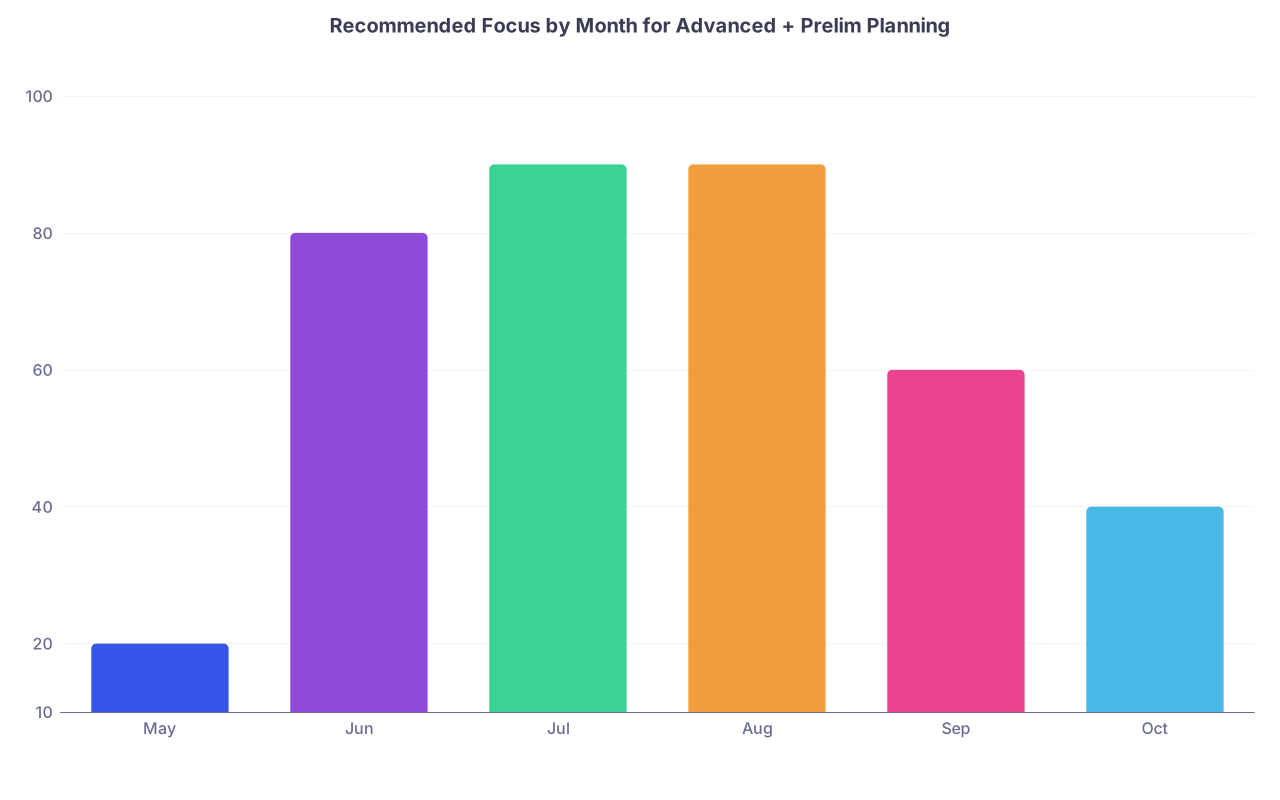
Let me make this visual.
| Category | Value |
|---|---|
| May | 20 |
| Jun | 80 |
| Jul | 90 |
| Aug | 90 |
| Sep | 60 |
| Oct | 40 |
Think of the percentage of your energy that should go to advanced‑specialty visibility (letters, aways). It peaks June–August. Prelim strategy layers on top, not instead.
Sample M4 Timeline If You Need a Prelim Year
Let us walk through an actual, workable structure. Assume:
- You are applying to Diagnostic Radiology (advanced).
- You plan for a prelim Medicine or Transitional Year.
- ERAS opens in June, submissions in September.
May–June (End of M3 / Start of M4)
At this point you should:
- Schedule home advanced specialty rotation (e.g., Diagnostic Radiology) in May or June.
- Line up one away rotation in your advanced specialty for July or August.
- Reserve a 4‑week block around late June–July or July–August for Step 2 CK prep + exam if you have not taken it.
What you do not do:
Fill May–June with generic IM or Surgery prelim aways. Those can wait.
July–August
These two months are prime.
- One month: Away rotation in your advanced specialty at a realistic program (not just a fantasy name brand).
- One month: Either
- Another advanced‑specialty away, or
- Step 2 CK + an easier elective.
Goal by late August:
- 2–3 strong letters in your advanced specialty.
- One letter from a home or away rotation where they know you well.
- Boards handled or concretely scheduled.
You still have not done a dedicated prelim‑year away. That is fine.
September–October: When a Prelim‑Focused Month Actually Helps
Now ERAS is open. You are polishing your personal statement and finalizing your program list.
At this point you should be:
- Finalizing and submitting ERAS in early September.
- On a rotation that does not kill your ability to answer email and schedule interviews.
This is also your best window to:
- Rotate on a home prelim‑type service (Medicine wards, ICU, or a cushier TY‑type elective), or
- Do one away rotation at a prelim program you are genuinely targeting.
How to choose which prelim program gets an away
You do not need five prelim aways. One, at most two, is fine.
You pick:
A Transitional Year or IM prelim with:
- Reasonable reputation for not being malignant.
- History of taking advanced residents in your field.
- Geographic link to your advanced‑specialty target area.
Or a prelim program that is paired with many advanced spots in your field.
Example: A big academic center that has Radiology + a TY or IM prelim track and often pairs them.
You are not auditioning for “generic intern.” You are auditioning for “intern who makes sense for our advanced colleagues too.”
November–January: Interview Season Juggling Act
By now:
- ERAS is in.
- You are getting a mix of advanced‑specialty invites and prelim/TY invites.
- Your schedule can destroy you if you are on the wrong service.
At this point you should:
- Arrange lighter electives in November, December, and at least half of January.
- Avoid:
- ICU
- Night float
- Heavy surgery services
right in the peak interview window.
For prelim‑year specifically:
- You do not need a prelim away this late. Faculty barely remember you by rank time if you rotate in January.
- You can add a 2‑week inpatient block at your home hospital just to shore up your clinical stories for prelim interviews (“Tell me about a challenging patient.”).
The real work here is rank list strategy, not rotation choice.
How to Balance Letters: Advanced vs Prelim
You only get so many letters. Do not waste them.
Advanced specialty letters (priority #1)
For your advanced program, by ERAS submission you should have:
- 2–3 letters from attendings in that specialty.
- 1 possible “character” or “medicine‑style” letter if your field likes it (e.g., Anesthesia programs often like at least one strong clinical letter from IM or Surgery).
Prelim letters (secondary)
For prelim programs, they care about:
- Your ability to manage floor patients.
- Your work ethic, reliability, ability to not crumble on call.
You rarely need unique, prelim‑only letters. Common approach:
- Use 1–2 of your advanced letters for both applications.
- Add 1 strong Medicine or Surgery ward letter that speaks to inpatient work.
Do not burn an away rotation on a prelim site just to generate a unique prelim letter unless:
- You are specifically targeting that prelim program as your #1 choice, and
- They have a track record of ranking rotators highly.
Strategic Scenarios: What You Should Do, Month by Month
Let me spell out a few common paths. You will probably see yourself in one of these.
Scenario 1: Strong Candidate, Advanced Radiology, Wants Chill TY
You have:
- Above‑average board scores.
- Solid home Radiology department.
Plan:
- May–June: Home Radiology + Step 2 CK.
- July: Radiology away at a top‑25 program you actually have a shot at.
- August: Second Radiology elective at your home institution to deepen relationships.
- September: Medicine wards at home for prelim‑style letter. Submit ERAS.
- October: Light elective (outpatient clinic, radiology reading room).
- November–January: Mix of elective + time held for interviews.
You do not bother with a prelim‑specific away. You apply broadly to friendly TY programs and IM prelims. Your Medicine letter plus solid apps will carry you.
Scenario 2: Mid‑range Candidate, Anesthesia, Needs a Safe Prelim Option
You are:
- Solid but not stellar on paper.
- No home Anesthesia program or a weak one.
Plan:
- May: IM wards at home (get a strong, early IM letter).
- June: Home Anesthesia (if available) or critical care with anesthesiologists involved.
- July: Anesthesia away at a realistic academic program with both advanced Anesthesia and IM prelim/TY tracks.
- August: Second Anesthesia away or home elective.
- September: Transitional Year or IM prelim away at a friendly community program near your preferred region. Submit ERAS.
- October: Outpatient elective, build breathing room.
Here the September prelim away is strategically timed: your application is in, they see you both on paper and in person, and they often interview and rank rotators highly.
When a Surgery Prelim Away Actually Makes Sense (And When It Is a Trap)
I have watched too many students pick up a brutal surgery prelim away “because prelim.” Most of them regretted it.
A Surgery prelim year is:
- Very demanding.
- Often used as cheap labor.
- Less aligned with fields like Derm, Radiology, or Neurology.
Do a Surgery prelim away only if:
- Your advanced field is surgical (Ortho, ENT, Urology, etc.) and you anticipate needing a surgery prelim.
- Or your advisor explicitly tells you a specific prelim surgery program is a known gateway to your advanced field at that institution.
Otherwise, for most advanced non‑surgical specialties, focus on:
- IM prelim
- Transitional Year
Rotations on Medicine wards, ICU, and general inpatient will be far more relevant and less likely to derail your interview season.
Risk Management: What If You Do Not Match Prelim?
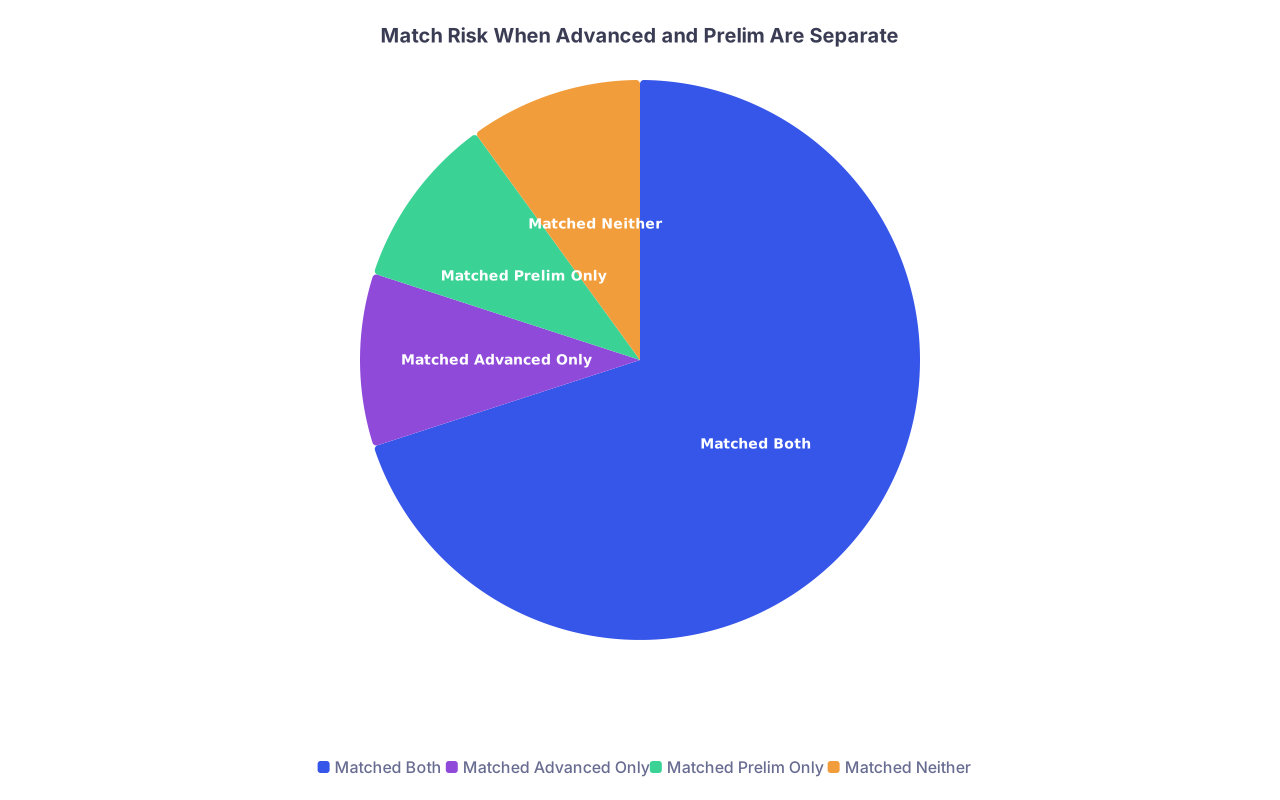
You need to understand the coupling between advanced and prelim positions.
| Category | Value |
|---|---|
| Matched Both | 70 |
| Matched Advanced Only | 10 |
| Matched Prelim Only | 10 |
| Matched Neither | 10 |
Those numbers are illustrative, not exact, but the point stands: some applicants match one side and not the other.
Your away‑rotation timing will not fix bad rank strategy, but it can:
- Make you more visible to at least one safe prelim program.
- Generate a strong inpatient letter to make prelim PDs comfortable with you.
- Keep your interview season from collapsing under service obligations.
At this point (rank list time, February) you should:
- Rank your advanced programs in true preference order.
- Build a deep prelim list, including:
- Your home institution’s prelim/TY if available.
- Any prelim site where you rotated and did well.
- Several community IM prelims that reliably fill (i.e., they are not catastrophically malignant).
Do not overestimate how special you are to a prelim program you never rotated at. They have a hundred applications that look like yours.
Quick Checklist by Time Point
End of M3 (Feb–Apr)
- Confirm your specialty is mostly advanced.
- Choose your prelim lane (IM vs TY vs Surgery).
- Meet with specialty advisor and prelim‑year mentor.
Early M4 Scheduling (Apr–Jun)
- Lock in home advanced‑specialty rotation May–June.
- Lock in 1–2 advanced‑specialty away rotations June–August.
- Block time for Step 2 CK.
- Reserve a Sept or Oct spot for a medicine‑type rotation for your prelim letter or prelim away.
Pre‑ERAS (Jul–Aug)
- Crush your advanced‑specialty aways.
- Get letters requested early.
- Keep prelim thinking in the background; do not obsess.
ERAS & Early Interview Season (Sep–Dec)
- Submit ERAS early September.
- Consider a single prelim‑focused away (IM/TY) in September if you are particularly worried about prelim options.
- Avoid heavy inpatient blocks during peak interview months.
Rank List Time (Jan–Feb)
- Build separate, thoughtful rank lists for advanced and prelim.
- Ensure at least a few prelim programs know you:
- Home program rotation
- Or 1 away
- Or a shared institution with your advanced field
Final Takeaways
- Your early fourth‑year months belong to your advanced specialty, not your prelim year. Prelim strategy layers on after ERAS opens.
- One well‑timed prelim‑relevant month (home or away) plus a strong inpatient letter is enough. Do not waste half your year auditioning for generic intern spots.
- Protect your interview season with lighter rotations and rank a deep, realistic prelim list. Timing your aways well gives you options; your rank list secures your safety net.