
The way most new interns start their preliminary year is backwards. They focus on reading more medicine. What they actually need is a ruthless, week‑by‑week systems checklist.
You are not preparing for an exam anymore. You are preparing for a year that can burn you out, tank your confidence, and quietly sabotage your future specialty if you are not deliberate from day one.
This guide is your timeline. Follow it week by week. At each point, you will know exactly what to set up, what to say, and what to ignore.
4–2 Weeks Before Day 1: Lay the Foundation
At this point you should stop pretending “I’ll figure it out when I get there.” You will be too tired to think clearly within a week of starting. The time to build scaffolding is now.
Week –4: Big‑Picture Logistics and Expectations
Focus: Reduce avoidable chaos.
Clarify what kind of prelim you matched into
- Medicine‑heavy, surgery, transitional? The culture and workload differ dramatically.
- Pull your NRMP results email and the program’s original description. Read what rotations you are guaranteed: ICU, ED, nights, electives.
Confirm key program details
- Start date and time (not just “July 1” but “intern orientation 7:00 a.m. in X room”).
- Contract, benefits, and moonlighting policy (even if you think you will never moonlight).
- Vacation policy and how vacation is requested.
Set up your life around a brutal schedule
- Housing close to the hospital. Long commute + 80‑hour weeks = misery.
- Reliable transportation at 4–5 a.m. in all weather.
- Back‑up childcare, pet care, or family support if applicable.
Prep basic finances
- Estimate moving and licensing costs.
- Make sure you know when your first paycheck hits.
- Set up autopay for student loans, rent, and credit cards. You will forget later.
| Item | Why It Matters |
|---|---|
| Photo ID + Passport | HR, credentialing, I-9 |
| Vaccination records | Employee health clearance |
| Social security card | Payroll setup |
| Check or bank info | Direct deposit |
| Step score reports | Occasional hospital privileging |
Week –3: Tools, Tech, and Templates
Focus: Build the systems you will lean on when your brain is fried.
Decide your “task management” system
- Pocket notebook, index cards, or a notes app that syncs.
- One place where you track:
- To‑do items per patient.
- Call‑backs.
- Discharges and follow‑ups.
Create templates before you ever see a patient
- H&P skeleton for your prelim specialty (medicine, surgery, etc.).
- Progress note templates (SOAP or whatever your hospital uses).
- Sign‑out template with:
- One‑liner.
- Active issues.
- Pending labs/imaging.
- If‑then overnight instructions.
Review common orders and order sets
- Basic admit orders (IVF, labs, diet, DVT prophylaxis).
- Pain, nausea, constipation, and sleep meds that are standard in your program.
- ICU or step‑down orders if your prelim year is heavy acute care.
Light clinical review (only what helps day one)
- How to write and interpret:
- Admission orders.
- Discharge summaries.
- Insulin regimens.
- Emergency responses:
- Chest pain.
- Sepsis.
- Hypotension.
- Acute mental status change.
- How to write and interpret:
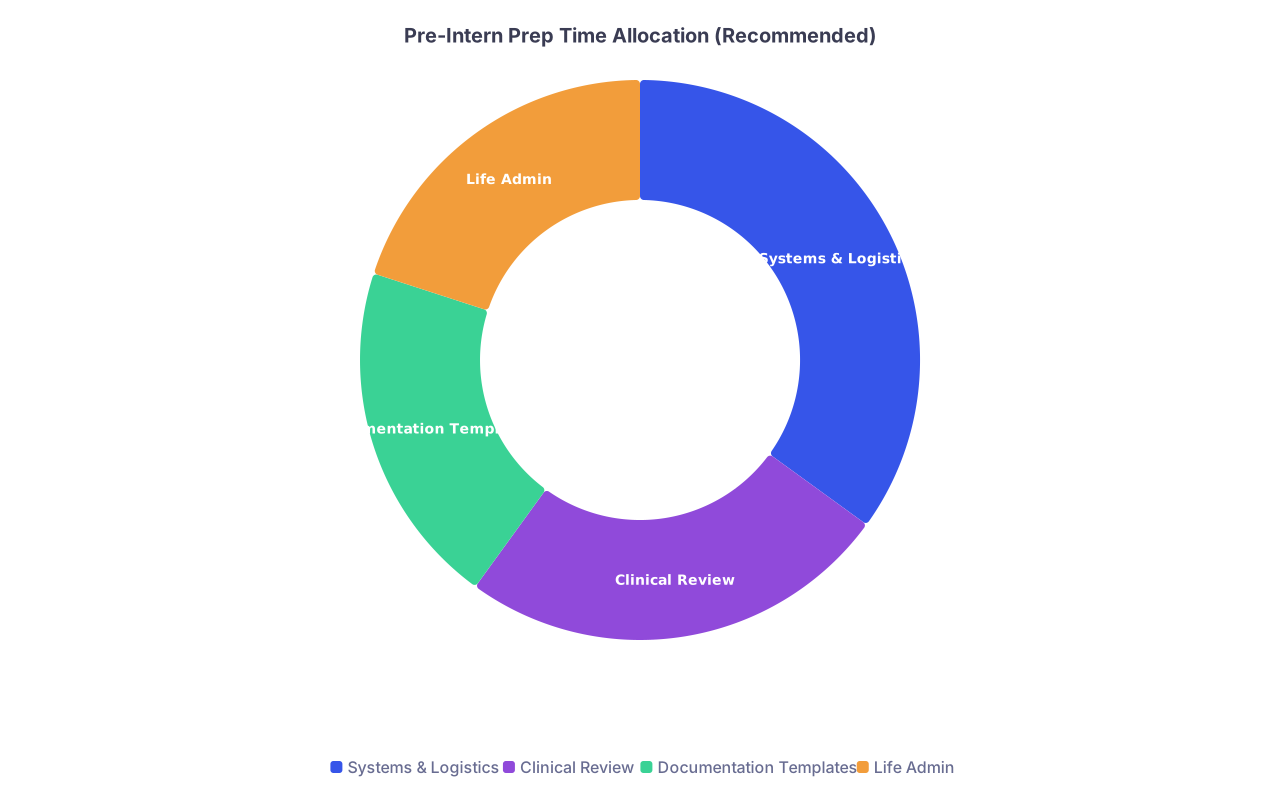
| Category | Value |
|---|---|
| Systems & Logistics | 35 |
| Clinical Review | 25 |
| Documentation Templates | 20 |
| Life Admin | 20 |
Week –2: Communication and Expectations
Focus: Align with your future chiefs and co‑interns.
Introduce yourself to leadership
- Short, direct email to chief residents:
- Confirm start date.
- Ask if there is a pre‑intern reading packet or policy handbook.
- Ask about the first block schedule if not already shared.
- Short, direct email to chief residents:
Connect with co‑interns
- Group chats form quickly. Join them.
- Ask about:
- Parking.
- Scrub access.
- How often interns stay past their shift.
Clarify evaluation mechanics
- Who evaluates you on each rotation (attendings only, seniors, both)?
- How often feedback is given formally.
- Whether your categorical program (for your future specialty) will see these evaluations later.
Set specialty‑specific goals for your prelim year
- Radiology, anesthesia, derm, ophtho? You are here to:
- Survive.
- Build reputation for reliability.
- Protect time for boards or PGY‑2 prep.
- Write 3 concrete goals. Example:
- “No late notes by end of month 2.”
- “Personal system for cross‑cover by end of my first night block.”
- “One strong letter from a senior or PD by February.”
- Radiology, anesthesia, derm, ophtho? You are here to:
Week –1: Physical and Mental Tuning
Focus: Shift to a “workable” sleep cycle and build resilience.
Reset your schedule
- Wake up at your future pre‑rounding time for at least 4–5 days.
- Practice getting fully ready and out the door as if you were heading to work.
Plan your “baseline” nutrition and exercise
- Identify 2–3 fast, portable meals you actually like and can stash in a locker.
- Set a bare‑minimum exercise plan:
- 15–20 minutes, 3 times per week. Nothing heroic. Just non‑zero.
Decide your non‑negotiables
- One weekly call with family.
- One evening per week strictly protected (unless you are on nights or ICU).
- Write these down. Or you will let them evaporate.
Do a mental dress rehearsal
- Walk yourself through:
- First day on wards.
- Your first overnight admitting call.
- A code blue where you are the intern drawing labs and pushing meds.
- Visualizing the chaos makes it less paralyzing when it happens.
- Walk yourself through:
Week 1: Orientation and Survival Mode
At this point you should not care about impressing anyone. Your only jobs: learn the system, avoid dangerous mistakes, and leave each day with one more piece of the puzzle.
Day‑by‑Day: Orientation Week
Day 1–2: HR, Badges, and Systems
Checklist:
- Get:
- ID badge.
- Scrub access.
- EMR login and two‑factor set up.
- Pager or paging app configured and tested.
- Find:
- Call rooms.
- Resident lounges.
- Where to eat on nights and weekends.
- Where codes supplies are kept on the floors you will cover.
Day 3–4: EMR and Workflow Walkthrough
You should:
- Practice:
- Writing a mock note using your templates inside the real EMR.
- Placing common orders:
- CBC, BMP, troponins, blood cultures.
- Diet changes.
- DVT prophylaxis orders.
- Ask seniors:
- “What are 3 common ways new interns screw up orders here?”
- “What are the unwritten rules about paging attendings overnight?”
Day 5: Meet Your First Team
Before the first real clinical day:
- Learn:
- Your senior resident’s expectations:
- Rounding time.
- Target sign‑out time.
- How they like cross‑cover handled.
- How many patients you will carry.
- Your senior resident’s expectations:
- Agree on:
- Format and timing of your sign‑out.
- When to wake them up for issues overnight (if on nights).
Weeks 2–3: Building Daily Routines
By this point you should be functional but inefficient. That is normal. The only failure is not iterating.
Week 2: Standardize Your Day
Break the day into blocks and build checklists.
Morning Pre‑Rounds (e.g., 5–7 a.m.)
- Open EMR, run through:
- Overnight vitals trends.
- New labs, imaging.
- I/Os and any nursing concerns.
- On each patient:
- 3–4 targeted questions.
- Focused exam.
- Immediately capture:
- 1‑sentence overnight summary.
- Priority issues for rounds.
Formal Rounds
- Your job:
- Concise presentations (practice beforehand).
- Write down all attending plans clearly, in one place.
- After rounds:
- Convert plan into:
- Orders.
- Pages/consults.
- Notes.
- Convert plan into:
Afternoon Work Block
- Work from a written task list.
- Batch:
- Discharges.
- Family updates.
- Calls to consultants.
Pre‑Sign‑Out
- At least 30–45 minutes before sign‑out:
- Check new labs.
- Anticipate overnight issues.
- Update problem lists.
Week 3: Improve Note‑Writing and Efficiency
At this point you should be shaving minutes off repetitive tasks.
Refine your templates
- Remove fluff.
- Keep:
- Clear assessment and plan by system.
- One‑liner problem statement at top.
Time‑box tasks
- Aim for:
- Progress note: 5–7 minutes.
- Discharge summary: 15–20 minutes if straightforward.
- If you are spending 40+ minutes on a single note by week 3, ask a senior to watch you do one and critique.
- Aim for:
Learn the “fast paths” in the EMR
- Favorite:
- Common orders.
- Common meds with correct doses.
- Use dotphrases and smartphrases, but avoid blindly copying old notes.
- Favorite:
Weekly self‑audit
- One evening, review:
- 2–3 of your own notes.
- Ihre pending tasks from previous days.
- Ask:
- Did any tasks slip?
- Did any patient get delayed discharge because of you?
- Adjust your system accordingly.
- One evening, review:
Weeks 4–6: Nights, Cross‑Cover, and Confidence
By this point you should not feel completely lost. You will still miss things, but your pattern recognition is growing.
Week 4: First Night Float or Call Block
Nights are where prelim interns either crumble or level up.
Before your first night:
- Make a “night cross‑cover sheet”:
- Room, name, age, major problems.
- Code status.
- Anticipated issues (“labile BP,” “pulling at lines,” “new GI bleed”).
- Ask the outgoing day intern for:
- Clear “if‑then” instructions.
- The 2–3 patients they are most worried about.
During the shift:
- Prioritize pages:
- ABCs and altered mental status first.
- Alarms and routine Tylenol last.
- Use a deliberate approach for every page:
- Quickly clarify the problem with the nurse.
- Look at trend data in EMR (vitals, labs, meds).
- See the patient at bedside if there is any doubt.
- Call your senior early if:
- Hypotension.
- New O2 requirement.
- Concern for sepsis, PE, stroke, MI.
After the block:
- Write down:
- 3 “near misses” or scary pages.
- What you wish you had known earlier.
- Turn each into:
- A mini‑protocol or checklist to use next time.

Week 5: Start Tracking Your Reputation
By now, attendings and seniors have an impression of you. You should shape it deliberately.
Ask explicitly for feedback
- Halfway through a rotation:
- “I want to make sure I am improving. What is one thing I should stop doing, and one thing I should continue?”
- Do not wait until the last day.
- Halfway through a rotation:
Identify your “edge”
- Are you:
- Fast and organized?
- Calm under pressure?
- Great with families?
- Lean into that. Programs remember interns who have a clear strength.
- Are you:
Fix one weakness at a time
- Common weak spots in prelim interns:
- Disorganized sign‑out.
- Late notes.
- Avoiding difficult calls to consultants.
- Pick one and attack it for two weeks straight.
- Common weak spots in prelim interns:
Week 6: Plan for Evaluations and Letters
At this point you should already be thinking about your PGY‑2 specialty.
Identify potential letter writers
- Program director.
- One or two respected attendings in heavy rotations (ICU, wards).
- A senior resident who can advocate informally.
Clarify “what matters” to them
- Ask residents:
- Which attendings write strong, detailed letters?
- Which rotations are most watched by leadership?
- Ask residents:
Document your wins
- Keep a private file with:
- Difficult cases you helped manage.
- Compliments from staff or attendings (yes, save the emails).
- Teaching you have done for students.
- Keep a private file with:
Months 3–6: Mid‑Year Course Correction
The initial shock has worn off. This is when bad habits either calcify or get fixed.
Month 3: Systems Check and Burnout Prevention
At this point you should have enough experience to know your main pain points.
- Audit your time
- For 3–4 days, track:
- When you arrive.
- How long pre‑rounds take.
- When you finish notes.
- When you actually leave.
- For 3–4 days, track:
- Identify:
- Repeated bottlenecks (waiting on labs, delays with consultants).
- Tasks that could be shifted earlier in the day.
- Burnout red flags
- Dreading every shift, not just a bad rotation.
- Snapping at nurses or co‑interns.
- Charting from bed until midnight regularly.
- If you are seeing these:
- Talk to a chief or trusted senior.
- Adjust:
- How many tasks you personally own.
- How you use medical students.
- Your off‑day recovery (no, doom‑scrolling all day is not recovery).
Months 4–5: Optimize for Your Specialty
You did not choose a demanding preliminary year to just “get through it.” It should serve your future.
Specific moves:
Future anesthesiology or ICU:
- Ask to be involved in every airway, central line, and arterial line.
- Keep a procedure log. Numbers matter.
Future radiology:
- Develop ruthless H&P and note efficiency.
- Spend time understanding why imaging was ordered and what changed because of it.
Future ophthalmology, derm, or other procedural fields:
- Build a reputation for being steady‑handed, detail‑oriented, and reliable in procedures.
- Volunteer for biopsies, bedside procedures, laceration repairs.
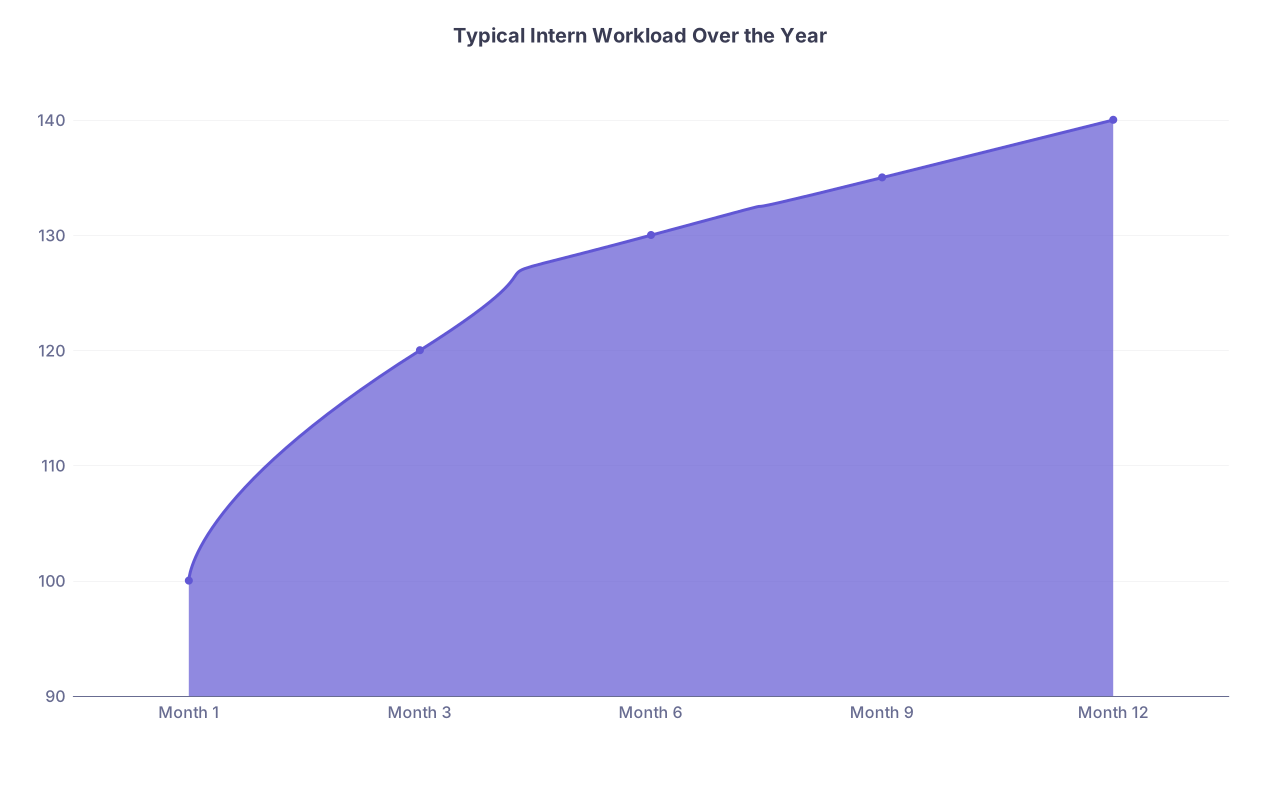
| Category | Value |
|---|---|
| Month 1 | 100 |
| Month 3 | 120 |
| Month 6 | 130 |
| Month 9 | 135 |
| Month 12 | 140 |
(Those “workload units” are subjective. The point is simple: the objective hours may not change much, but your efficiency and emotional load will.)
Month 6: Mid‑Year Feedback and Adjustments
At this point you should be proactive, not reactive.
Schedule a brief meeting with your program director or APD
- Ask:
- “How am I doing relative to expectations?”
- “What should I focus on in the next 6 months to be ready for PGY‑2?”
- Take notes. Follow up.
- Ask:
Lock in at least one strong letter
- If an attending knows you well and you just finished a rotation with them:
- Ask for a letter while details are fresh.
- Provide:
- Updated CV.
- A short summary of your goals and future specialty.
- If an attending knows you well and you just finished a rotation with them:
Adjust the second half of your schedule if possible
- Trade rotations to:
- Avoid stacking ICU + nights + wards back‑to‑back.
- Ensure you have at least one slightly lighter block before boards or PGY‑2 start.
- Trade rotations to:
Months 7–12: Finishing Strong and Protecting Your Future
You are no longer the clueless intern. You are someone others will model next year. Act accordingly.
Months 7–9: Become the Intern Others Depend On
At this point you should be able to run your list without constant hand‑holding.
Own the list
- Anticipate:
- Discharge possibilities days ahead.
- Family meetings that need scheduling.
- Rehab vs SNF needs early.
- Preempt issues so attendings are agreeing with your plan, not creating it from scratch.
- Anticipate:
Teach deliberately
- For medical students and new interns who rotate with you:
- A 5‑minute chalk talk on hyponatremia.
- Walking them through a note at the EMR.
- Your ability to teach is often what attendings comment on in final evaluations.
- For medical students and new interns who rotate with you:
Guard against complacency
- It is exactly when you feel comfortable that you miss subtle but important changes.
- Force yourself to:
- Recheck vitals personally in worrisome patients.
- Re‑review imaging and notes when “something just feels off.”
Months 10–11: Hand‑Off to Your Future
Near the end, you should align your prelim experience with PGY‑2 expectations.
Skill inventory
- Make three lists:
- Things you do well automatically now.
- Things you are okay at but slow.
- Things that still intimidate you (codes, end‑of‑life discussions, procedures).
- Target the last list aggressively while you still have supervision and slack.
- Make three lists:
Transition planning
- Communicate with your categorical/future program:
- Confirm your start date and orientation.
- Ask if there are recommended skills or reading they expect from incoming PGY‑2s.
- Close the loop on:
- Credentialing transfers.
- Licensing changes if moving states.
- Communicate with your categorical/future program:
Protect your last vacation strategically
- Take it:
- Just before PGY‑2 if you are switching institutions.
- After a demanding block if you need to decompress to avoid starting PGY‑2 already burned out.
- Take it:
Month 12: Exit With Intention
You survived. Now you consolidate what this year gave you.
Finish with clean hand‑offs
- Do not mentally check out in the last month.
- Leave:
- Clear documentation.
- Organized lists.
- No “mystery problems” punted to the next intern.
Collect and organize your documentation
- Procedure logs.
- Final evaluations.
- Letters of recommendation confirmation.
- Any teaching or quality improvement projects you participated in.
Debrief yourself
- Write down:
- What worked in your systems (notes, sign‑out, cross‑cover).
- What you will not repeat in PGY‑2.
- This is the real product of your prelim year: a tested way of working that you can carry forward.
- Write down:

Quick Week‑by‑Week Snapshot: The First 8 Weeks
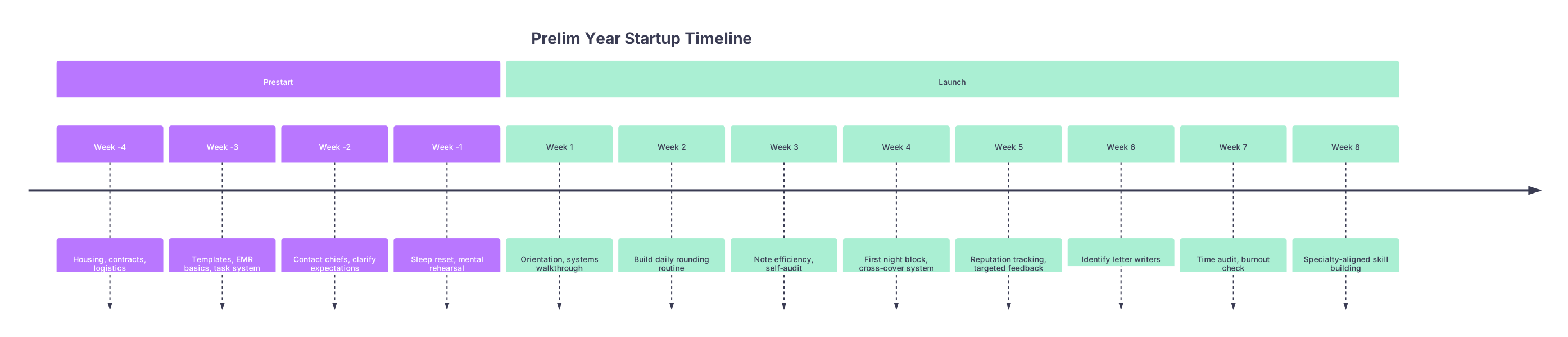
| Period | Event |
|---|---|
| Prestart - Week -4 | Housing, contracts, logistics |
| Prestart - Week -3 | Templates, EMR basics, task system |
| Prestart - Week -2 | Contact chiefs, clarify expectations |
| Prestart - Week -1 | Sleep reset, mental rehearsal |
| Launch - Week 1 | Orientation, systems walkthrough |
| Launch - Week 2 | Build daily rounding routine |
| Launch - Week 3 | Note efficiency, self-audit |
| Launch - Week 4 | First night block, cross-cover system |
| Launch - Week 5 | Reputation tracking, targeted feedback |
| Launch - Week 6 | Identify letter writers |
| Launch - Week 7 | Time audit, burnout check |
| Launch - Week 8 | Specialty-aligned skill building |
Open your calendar right now and block 30 minutes this week labeled “Prelim Systems Setup.” During that block, build your first note template and your sign‑out checklist—because once day 1 hits, you will not have that uninterrupted half hour again for a long time.