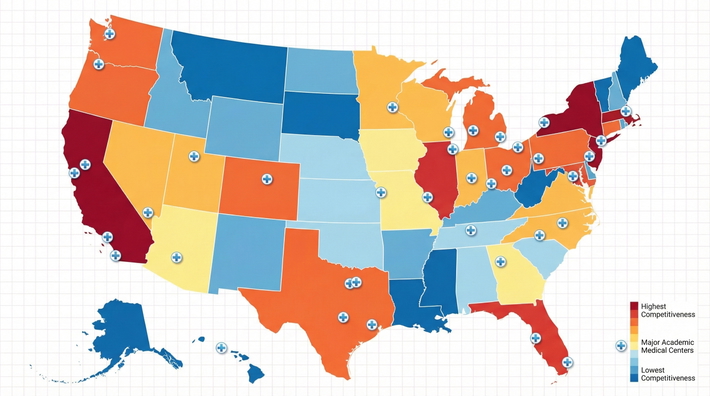
Urban vs rural is not a personality test. It is a systems decision that will shape your skills, your burnout risk, your lifestyle, and your job options for a decade.
Most people pick based on vibes: “I like big cities” or “I’m a small-town person.” That is how you end up miserable on night float in a town of 7,000 with nothing open after 8 p.m., or burned out in a mega-academic center where you are pager triage for a 10-hospital system and never see daylight.
You need a framework. Not a preference quiz. A structured way to decide.
Below is exactly that: a practical, stepwise framework to choose between urban and rural residency locations, with real trade-offs, numbers, and questions you can actually ask programs.
Step 1: Stop Thinking “Urban vs Rural” and Start Thinking “Training Environment”
Urban vs rural is lazy shorthand. What you really care about are these variables:
- Case volume and acuity
- Breadth vs depth of training
- Support vs autonomy
- Lifestyle and cost of living
- Career positioning (fellowship vs generalist practice)
- Community fit and support system
Yes, geography influences all of that. But the labels “urban,” “suburban,” and “rural” hide massive variation.
Here is the more honest comparison:
| Factor | Typical Urban Academic Center | Typical Rural / Community Program |
|---|---|---|
| Patient volume | Very high | Moderate to high |
| Case complexity | Tertiary/quaternary referrals | Breadth of common + occasional high-risk |
| Supervision | Heavy attending & fellow presence | Fewer layers, more direct responsibility |
| Autonomy | Slower early, higher later | Earlier, more rapid |
| Fellowship visibility | Strong, on-site | Requires networking, away rotations |
| Cost of living | Usually higher | Usually lower |
If you are deciding “city vs country” without mapping it to these training realities, you are making a superficial decision about a non-superficial phase of your life.
So your first job is to translate “urban vs rural” into:
- What kind of physician do I want to be?
- What kind of workload and support can I actually tolerate?
- How much structure and prestige do I need vs how much autonomy?
Write those down. Literally. Because we will stress-test them.
Step 2: Clarify Your Post-Residency Target
Your endgame drives your best environment. The wrong pairing here is how people get boxed out of fellowships or end up undertrained for the jobs they actually take.
A. If you are fellowship focused
You are aiming for:
- Heme/Onc, GI, Cards, Pulm/CC, MFM, Ortho subspecialties, Derm, etc.
Urban academic programs generally give you:
- Built-in exposure to subspecialties
- On-site research mentors
- Name recognition that lazy fellowship committees like
- Regular conferences, grand rounds, and visiting professors
- Co-residents also applying to the same fellowships (peer path)
Rural/community programs can still place people into competitive fellowships, but it requires intentional work.
You absolutely can match from a strong community or rural program. But you cannot “coast” on the institution’s reputation. You will need:
- Early talk with program leadership about fellowship support
- Protected time (or at least tolerance) for research/QI
- Clear examples of prior graduates who matched where you want to go
B. If you are planning generalist practice
Family medicine, general internal medicine, hospitalist, general surgery in a community setting, EM in non-academic hospitals.
In that case, a rural or community-heavy program is often an asset, not a drawback:
- You see “everything” instead of ultra-narrow subspecialty slices.
- You run codes, do procedures, and manage bread-and-butter cases independently.
- You learn to function without 12 consult services bailing you out.
Urban programs can still be great, but if you are shielded by multiple layers of trainees and consultations, you can graduate feeling theoretically smart and practically undercooked.
Blunt version:
- Fellowship-track, research-driven? Default to urban academic unless a rural program shows you a clear, proven track record.
- Generalist, want autonomy and broad skills? A strong rural or community-oriented program can be superior training.
Step 3: Map Out the Real Trade-offs with Data, Not Vibes
You are not choosing Hogwarts house. You are choosing a workflow.
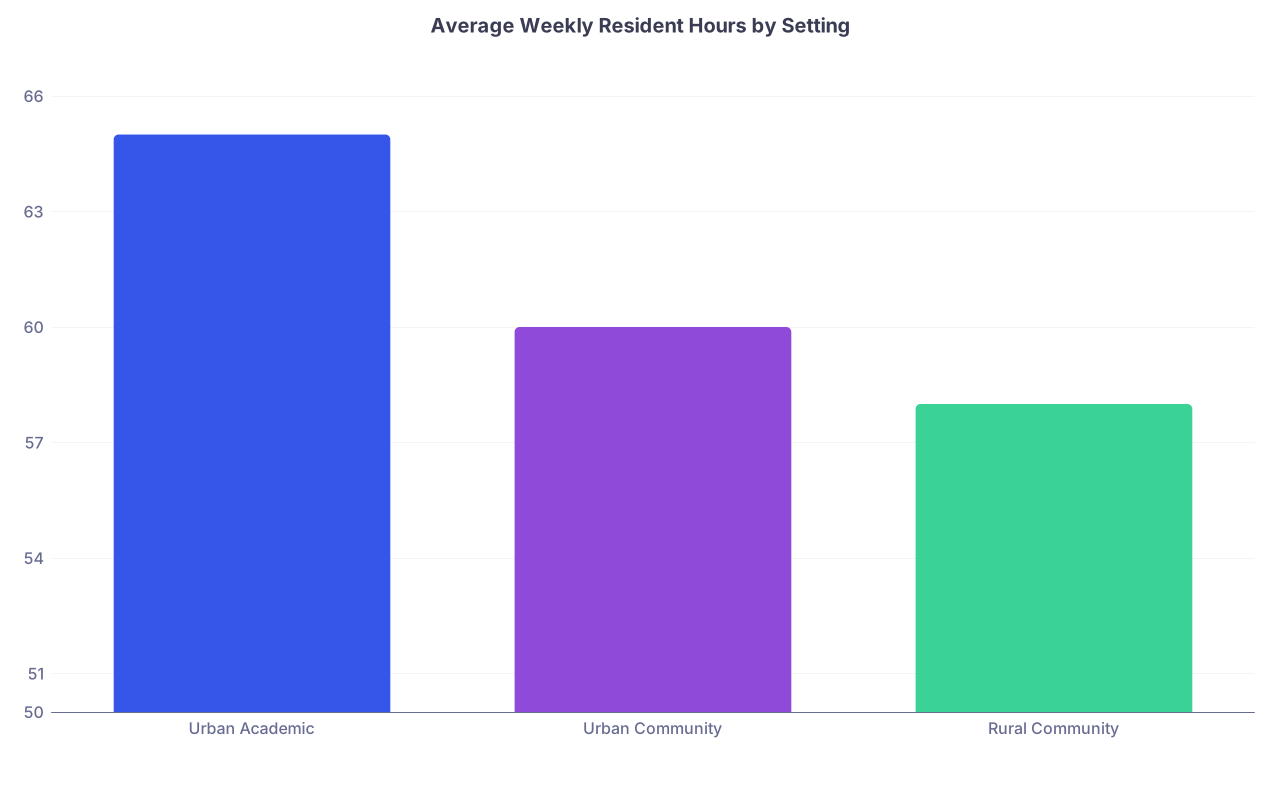
Here is how the urban vs rural workload often actually looks across a typical week:
| Category | Value |
|---|---|
| Urban Academic | 65 |
| Urban Community | 60 |
| Rural Community | 58 |
Those are ballpark numbers I have repeatedly seen in schedule templates. The real difference is not the total hours. It is:
- Density of work per hour
- Type of scut
- Level of supervision vs autonomy
- Hidden “extra” expectations (research, teaching, committees)
Urban programs: what you are really signing up for
Common realities I have seen and heard repeatedly:
- High service load: Especially in “safety-net” hospitals. You are admitting nonstop.
- Multiple trainee layers: Med students, interns, juniors, seniors, fellows, attendings. Great teaching, but lots of coordination.
- Constant paging: Consultants, nursing, ED “curbside but actually full consult.”
- Extra obligations: Research, QI projects, presentations, journal clubs, evals.
Upside:
- You learn to handle extremely complex patients.
- You see pathology you will never see again in your life.
- You are surrounded by specialists you can learn from daily.
Downside:
- You are sometimes a glorified order-entry machine, not a decision-maker.
- Your schedule can obliterate any outside life if the city is expensive and your commute is long.
Rural/community programs: what that actually looks like
Again, real scenarios, not brochure talk:
- Earlier responsibility: You are the one the ED calls overnight. Fewer layers.
- Procedural opportunities: Fewer fellows means residents place more lines, intubate, do more scopes (in some fields), etc.
- Breadth over rarity: Less zebra pathology, more “this is what you will see the rest of your life.”
Potential downsides:
- Less subspecialty backup: Tougher cases can feel isolating at 3 a.m.
- Limited research infrastructure: You must be self-directed to build scholarly work.
- Perceived prestige issues: Some big-name fellowships may look twice before interviewing you; you will need stronger individual achievement to stand out.
Step 4: Use a Structured Decision Matrix (Not Your Gut Alone)
You need a scoring system, not a vibe check. Here is a simple one I use with residents:
List your top 6–8 priorities. Example:
- Fellowship chances in X
- Early autonomy
- Cost of living
- Proximity to family/partner
- Research support
- Lifestyle (commute, amenities, safety)
For each program on your list, score each priority from 1–5 (1 = terrible, 5 = excellent).
Then weight each priority from 1–3 based on importance to you.
Multiply and sum for each program.
Yes, this is basic. That is the point. It forces you to confront reality instead of romanticizing.
Here is a tiny example of how this might shake out:
| Priority | Weight | Urban Academic | Rural Community |
|---|---|---|---|
| Fellowship in Cards | 3 | 5 | 3 |
| Autonomy early | 2 | 2 | 5 |
| Cost of living | 2 | 1 | 4 |
| Close to family | 3 | 2 | 4 |
You can already see how one program might be objectively stronger for training but functionally worse for your actual life and end goals.
Step 5: Evaluate Real-World Lifestyle, Not Just the Hospital
People underestimate this and pay for it later.
A. Cost of living vs salary
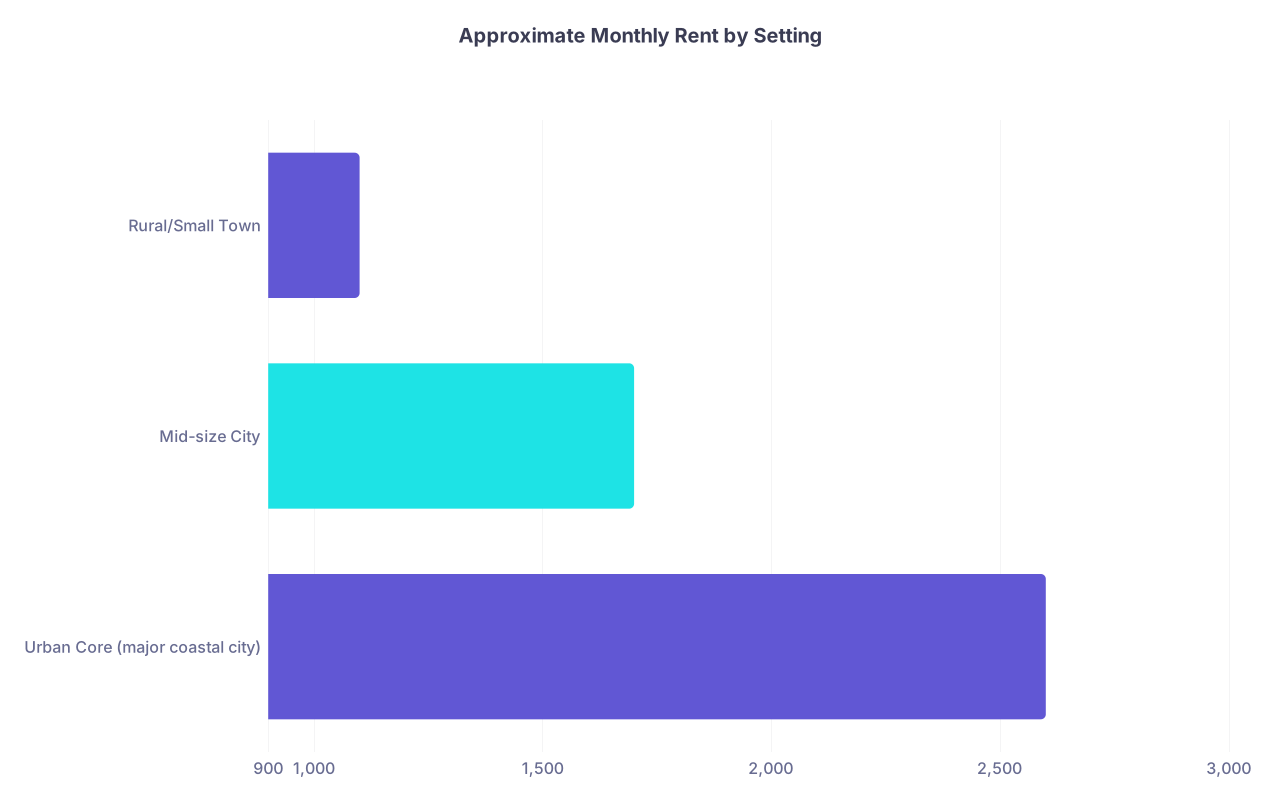
Residency salaries are brutally similar across the country. Cost of living is not.
| Category | Value |
|---|---|
| Urban Core (major coastal city) | 2600 |
| Mid-size City | 1700 |
| Rural/Small Town | 1100 |
If your PGY-1 salary is $65,000:
- In a high-cost urban area with $2,600 rent, you are choosing roommates, long commutes, or constant financial stress.
- In a rural town with $1,100 rent, you might afford a 1–2 bedroom close to the hospital, maybe even a yard.
Ask these questions on interview day or second-look:
- “What percentage of residents have roommates?”
- “Typical commute time door-to-door?”
- “Any neighborhoods most residents live in?”
- “Parking: realistic or a daily battle?”
B. Social life and support
Urban programs:
- Pros: more restaurants, nightlife, gyms, cultural events, dating pool.
- Cons: your co-residents are scattered across the city; coordination is hard with long commutes and crazy call schedules.
Rural programs:
- Pros: residents often live near each other, tighter-knit group, easier to grab dinner or hang out post-call.
- Cons: limited entertainment options, dating can be brutal if you are single and not into apps or tiny pools.
Here is where you need brutal self-awareness:
- Are you energized by anonymity or do you do better in small communities?
- Do you need quick access to family/friends or can you tolerate distance for 3–5 years?
- If you are in a couple, have you actually mapped job options for your partner? Or are you assuming it will “work out”?
Step 6: Understand How Autonomy and Supervision Will Shape You
People say they want “autonomy” until they are the only one in-house at 2 a.m. with a crashing patient and no fellow in the building.
You want graded, supported autonomy. And that will usually look different in urban vs rural programs.
Urban academic pattern (typical):
- Intern year: Tight supervision, lots of check-ins, strict escalation pathways.
- PGY-2+: More chiefing of teams, but still heavy involvement of fellows, attendings nearby.
- Consult services: You are rarely the sole decision-maker.
Rural/community pattern (typical):
- Intern year: Still supervised, but coverage is leaner. You will be making real-time decisions sooner.
- PGY-2+: You may be the only in-house resident at night on certain services. Attendings are at home, available by phone, sometimes by telehealth.
Both can be excellent—if aligned with your personality and goals.
Ask programs:
- “On nights, who is physically in-house?”
- “Who runs codes?”
- “Can you walk me through a typical night shift on medicine or surgery?”
- “What decisions does a PGY-1 make independently vs with required sign-off?”
You are listening for balance: early responsibility with real backup.
Step 7: Look at Outcomes, Not Marketing
Residency websites will all say the same things:
- “Strong clinical training”
- “Diverse patient population”
- “Dedicated to resident wellness”
Ignore the adjectives. Look for hard outcomes.

What you ask for
Recent graduate career paths (last 3–5 years):
- Where did they go for fellowships? Names and specialties.
- Who went straight into practice? Where?
Board pass rates (first-time):
- You want consistently high pass rates, not “most pass eventually.”
Procedure logs (for procedure-heavy fields):
- Average numbers of key procedures per resident upon graduation.
- How that compares to ACGME minimums.
Retention in community:
- In rural programs: What percentage of grads stay in rural or underserved practice? Strong indicator the training actually prepares you for that world.
If a rural program has consistent fellowship matches and strong board pass rates, that is a green flag. If an urban academic center has prestige but multiple recent board failures and dissatisfied grads, that prestige is expensive.
Step 8: Do a Reality Check on Safety and Burnout Risk
You live in this environment, not just train in it.
Urban considerations
- Neighborhood around hospital may be unsafe at night. Walk from parking lot is not hypothetical; it is your nightly reality post-call.
- High-volume ED means constant trauma, social complexity, moral distress. That wears people down.
Rural considerations
- Isolation can be heavy. Limited mental health resources. Fewer anonymous ways to get support.
- Everyone knows everyone. If you burn out, you may feel more visible and exposed.
Burnout is not “weakness.” It is an occupational hazard. You need to know how your chosen environment handles it.
Ask:
- “What concrete changes have you made in the last 2 years based on resident feedback?”
- “What are actual schedule protections for mental health appointments or therapy?”
- “Is moonlighting allowed? If so, how is it monitored to avoid overwork?”
Look for real answers: schedule changes, cap adjustments, added ancillary support. Not “we care a lot.”
Step 9: Use Visits and Interviews Strategically
Most applicants float through interview day collecting vibes and free lunch. Waste of opportunity.
You should walk in with an actual checklist derived from everything above.
People to corner (politely)
- Current interns (fresh view on reality)
- PGY-3+ (see long-term trajectory and burnout signs)
- Recent graduates if present
- Program coordinator (knows housing, logistics, real resident issues)
Questions that cut through fluff
- “What is something you would change about this program if you could?”
- “Who struggles here and why?”
- “Where do residents actually live, and what is your commute?”
- “Any regrets about choosing urban vs rural for residency?”
Pay attention to facial expressions and how quickly they answer. Hesitation speaks.
Step 10: Make a Decision You Can Defend to Your Future Self
Here is the bottom line:
You can train well in both urban and rural settings. I have seen excellent, confident clinicians from both. I have also seen people completely misaligned with their environment and spend 3–7 years unhappy.
So your job is not to guess where you will be “happiest.” It is to:
- Define the clinician you want to be after training.
- Define the kind of life you are actually willing to live for those years.
- Choose the environment that best matches that combination, even if it offends your original fantasy.
Urban-minded students sometimes realize they actually want early responsibility, tight community, and reasonable rent. Rural-leaning students sometimes realize they need dense pathology, academic prestige, and built-in research.
Change your mind if the data point that way. That is not weakness. That is good strategy.
A Simple, Concrete Framework You Can Use Today
Let me give you a 30-minute exercise that will make your decision dramatically clearer.
Open a blank page and create three columns:
- Column 1: “Absolutely non-negotiable” (max 3 items)
- Column 2: “Strong preferences” (5–7 items)
- Column 3: “Nice to have” (as many as you want)
Fill them in. Examples:
- Non-negotiable:
- Within 3 hours of partner/family
- Real track record for GI fellowship
- Cost of living where I am not constantly broke
- Strong preferences:
- Earlier autonomy
- Mid-size city or larger
- On-site childcare
- Diverse patient population
- Nice to have:
- Pro sports teams
- Mountains nearby
- Non-negotiable:
Now, take your current list of programs (or hypothetical ones) and quickly mark each item as:
- Green = clearly met
- Yellow = borderline/unknown
- Red = not met
Any program with red in your non-negotiable column moves down your rank list. No exceptions. That is the whole point of “non-negotiable.”
Your Next Step Today
Take 20 minutes right now and build that three-column list for yourself. Then pick two example programs—one clearly urban, one clearly rural—and run them through your list honestly.
Do not wait until rank list week when you are exhausted and emotional. Do it now, while you can still be strategic.