
What actually happens to your residency chances if you spend 40 hours writing a case report instead of doing one more month of solid clinical work or a proper research project?
Let me be blunt: case reports are the most overhyped, misunderstood, and strategically misused “research” line on residency applications. But no, they’re not automatically a waste of time. They’re just often used very badly.
Let’s sort out the myths from the data and the actual behavior of program directors—not the folklore passed around in group chats.
What the Data Actually Says About Publications
Before we talk specifically about case reports, we need to anchor this in reality: what do programs care about when they say they value “research”?
The NRMP Program Director Survey is the boring but important backbone here. Every few years, program directors are asked which factors matter and how much. They don’t always tell the full truth in how they behave, but it’s a start.
Across specialties, “demonstrated scholarly activity” or “research experiences” are consistently listed as helpful, especially in more competitive fields:
- Dermatology
- Radiation oncology
- Neurosurgery
- Plastics
- Ortho
- Rad onc
- Some academic internal medicine and EM programs
Here’s the uncomfortable truth: most PDs do not sit down and carefully evaluate the scientific merit of your work. They look at signals.
Number of items. Types of items. Where they were published. Whether your role looks meaningful or obviously fluff.
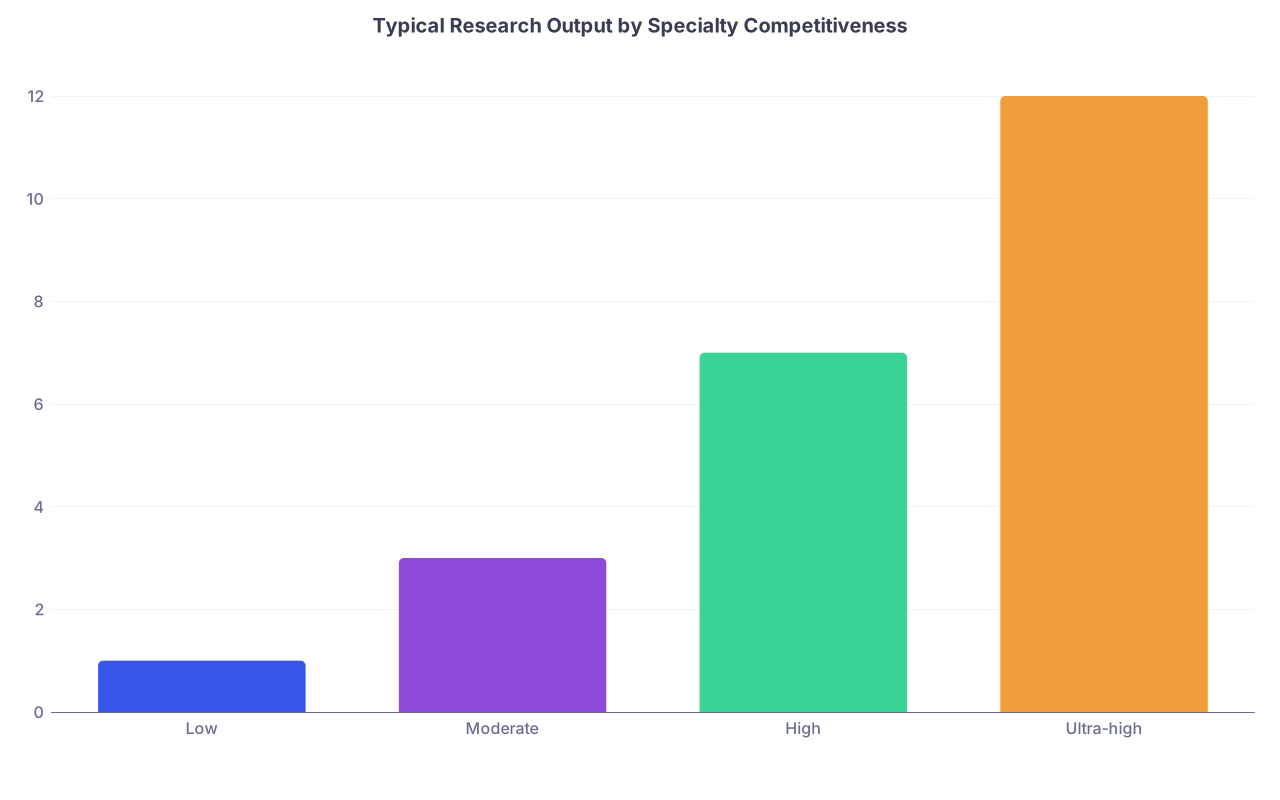
| Category | Value |
|---|---|
| Low | 1 |
| Moderate | 3 |
| High | 7 |
| Ultra-high | 12 |
What actually moves the needle:
- Total number of scholarly products (pubs, abstracts, posters, presentations).
- Whether you have anything at all for less competitive specialties.
- Whether you have a lot for hyper-competitive ones.
- Whether there’s a coherent story: topic area, consistency with your specialty, evidence of actual work.
Where do case reports fit in? They’re the lowest rung on the “published work” ladder. But that doesn’t make them useless.
What Case Reports Actually Signal to Programs
Think like a program director on a busy afternoon. You’re skimming ERAS. Applicant A has:
- 1 case report (PubMed indexed), 1 poster presentation
- Solid clerkship grades
- Decent letters
Applicant B has:
- 0 research of any kind
- Same grades and letters
You’re choosing between two otherwise comparable applicants. Applicant A did something extra. Applicant B did nothing.
Do not overcomplicate what most PDs do in that moment.
They think: “This person at least finished a project and got it published. They can probably see something through.” That’s it. They’re not writing an editorial about the scientific value of single-patient anecdotes.
The signal from a case report, when used properly, is:
- You can join a project and complete it.
- You understand basic structure of medical writing.
- You’ve engaged with the literature enough to write a discussion.
- You’re at least mildly academically inclined.
The signal from ten near-identical low-quality case reports is different:
- You might be gaming the system.
- You might not understand what “research” actually means.
- Your mentor might be running a case-report mill.
And that second signal can definitely hurt you, especially in academic or research-heavy programs.
Myth #1: “Case Reports Are Equivalent to Real Research”
They’re not. And program directors know that.
Case reports sit at the bottom of the evidence pyramid. One patient. No hypothesis testing. No control group. High risk of bias and overinterpretation. They exist to:
- Highlight rare conditions
- Show unusual presentations
- Describe novel treatments or complications
- Generate hypotheses for real studies
They are not:
- Proof you understand research design
- Proof you can do statistics
- Proof you can manage or analyze a dataset
- Evidence of sustained scholarly commitment
I’ve watched students try to sell a single case report like it’s a landmark trial. It lands poorly. Faculty see right through that.
So yes, you can absolutely list case reports under “Publications.” They count. They’re fine. But don’t inflate what they are. Calling a case report “clinical research” in an interview with a research-heavy PD is a quick way to expose that you don’t know the difference.
Myth #2: “Case Reports Are Completely Useless for the Match”
This is usually shouted by two groups:
- People who’ve done heavy research and want to feel superior.
- People who wasted time on bad case reports and are now bitter about it.
The reality is more boring and more useful:
Case reports are mildly helpful in context.
They help when:
- You have zero other scholarly work and need something to show.
- You’re at a community med school with limited research infrastructure.
- You’re applying to moderately competitive specialties where a little research is better than none.
- You use them as a first step, not the final destination.
They don’t move the needle much when:
- You’re applying to hyper-competitive specialties where everyone has multiple first-author original articles.
- You’re stacking lots of very low-quality case reports instead of one or two decent projects.
- You wrote a case report in a field totally unrelated to your specialty with zero narrative connection.
- You clearly weren’t meaningfully involved (you can’t explain the case or literature in an interview).
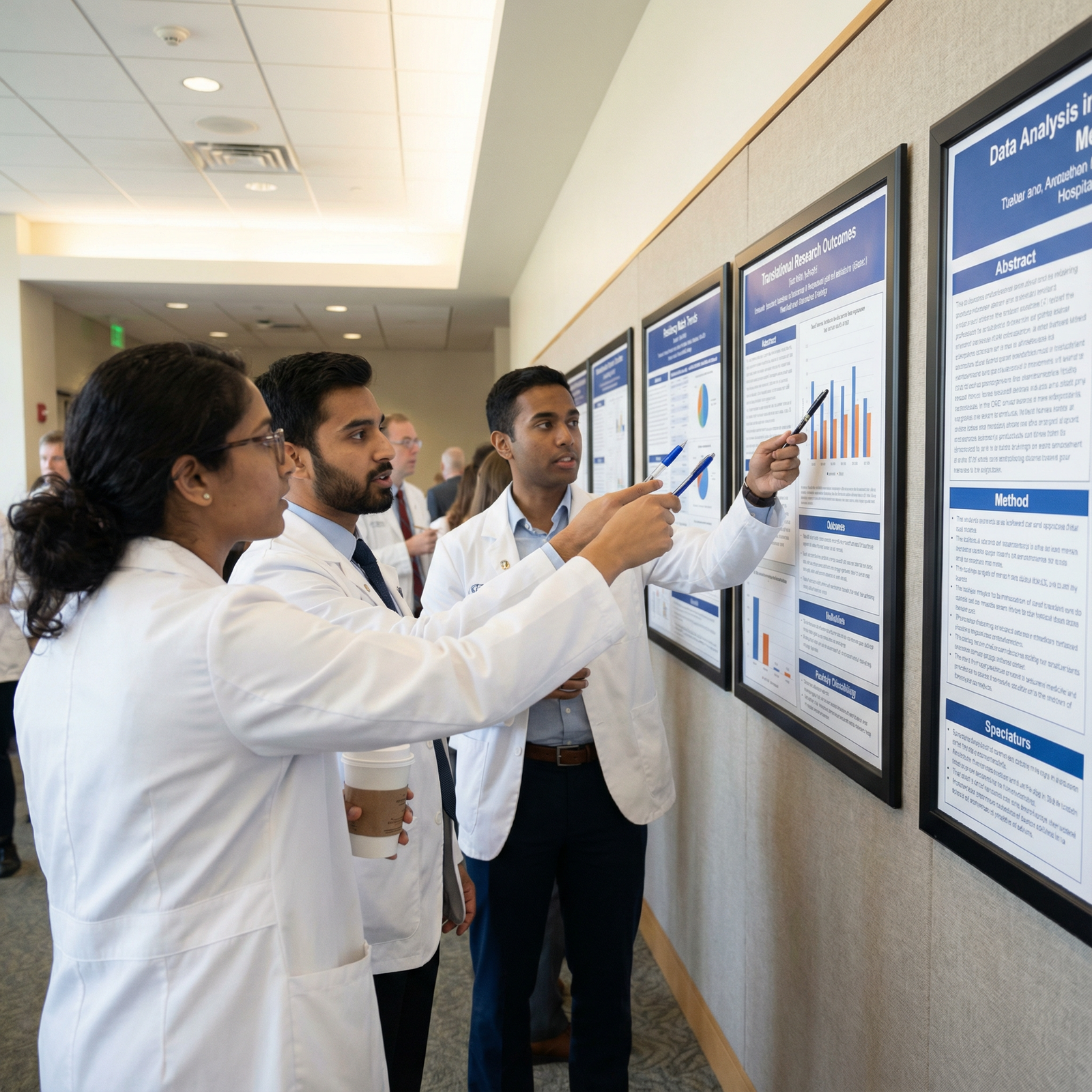
If you’re applying to family medicine, psych, peds, or community internal medicine, one or two solid case reports can absolutely be enough to check the “research experience” box.
If you’re applying to derm, rad onc, ENT, plastics, neurosurgery? Case reports are garnish. Not the meal.
The Opportunity Cost Problem: Where Case Reports Are a Bad Idea
The biggest danger with case reports isn’t that they “don’t count.” It’s that they can soak up time you should have invested elsewhere.
Here’s what actually tends to happen:
- Student hears: “You need publications for residency.”
- The path of least resistance appears: case report.
- They chase weak cases, spend months on back-and-forth emails, and end up with:
- One case report in a random pay-to-publish predatory journal,
- Or nothing published at all.
Meanwhile, they could have:
- Joined a prospective or retrospective clinical project
- Helped with data collection and cleaning
- Learned basic statistics or R/SPSS
- Become 3rd or 4th author on a more meaningful paper
- Or simply crushed their clerkships and Step 2, which matter more.
You have limited bandwidth. If you’re at a place with access to real projects and real mentors, sinking dozens of hours into chasing marginal case reports is usually a strategic mistake.
On the other hand, if your school has almost no research, but you have a great mentor who’s motivated and pushing reasonable case reports in your target specialty? Different story. Then it’s often the right move.
Quality vs Quantity: How Many Case Reports Is “Enough”?
Let’s be very practical.
If your question is, “Should I do zero vs one?” and the opportunity cost is low? Do one. That’s a net win almost every time.
If your question is, “Should I do one vs five?” now we’re getting into diminishing returns territory.
| Specialty Type | Reasonable Goal |
|---|---|
| Low–moderate competitiveness | 1–2 decent case reports |
| Academic IM/EM | 1–2 case reports + 1 other |
| High competitiveness | 1–3 max, plus real projects |
| Research-heavy careers | Case reports are side projects |
Past a point, more case reports don’t say “productive.” They say “stuck at the lowest academic level.”
You want your application to look like a trajectory:
- First: case reports, posters, small stuff
- Then: involvement in bigger, hypothesis-driven work
- Maybe: presentations at regional or national meetings
When it’s all case reports, no progression, especially for someone claiming to want an academic career, the story falls apart.
When Case Reports Are Strategically Smart
Case reports shine in certain very specific scenarios. If you’re in one of these, they’re absolutely not a waste.
You’re starting from zero and late in the game.
You’re a rising MS4, realize you have no research, and your school isn’t exactly Harvard. Getting a case report accepted in a reasonable journal before ERAS opens is vastly more realistic than joining a brand-new original project and finishing it in time.You want to show early interest in a specialty.
A neurology case report for a neuro applicant. A GI case for IM with an interest in hepatology. This can tie nicely into your personal statement and interviews: “I became fascinated with X when we saw a patient with Y, which led to our case report…”You’re at a low-resource institution.
No NIH grants, no strong research infrastructure, limited databases. Case reports might be your only viable way to generate scholarly work. Program directors know not all schools are equal; they’ll calibrate expectations.You have a truly rare, interesting, or visually striking case.
Satisfying imaging. Pathognomonic physical exam findings. A new adverse effect. These make for good teaching tools and can be easy acceptance material for decent journals.
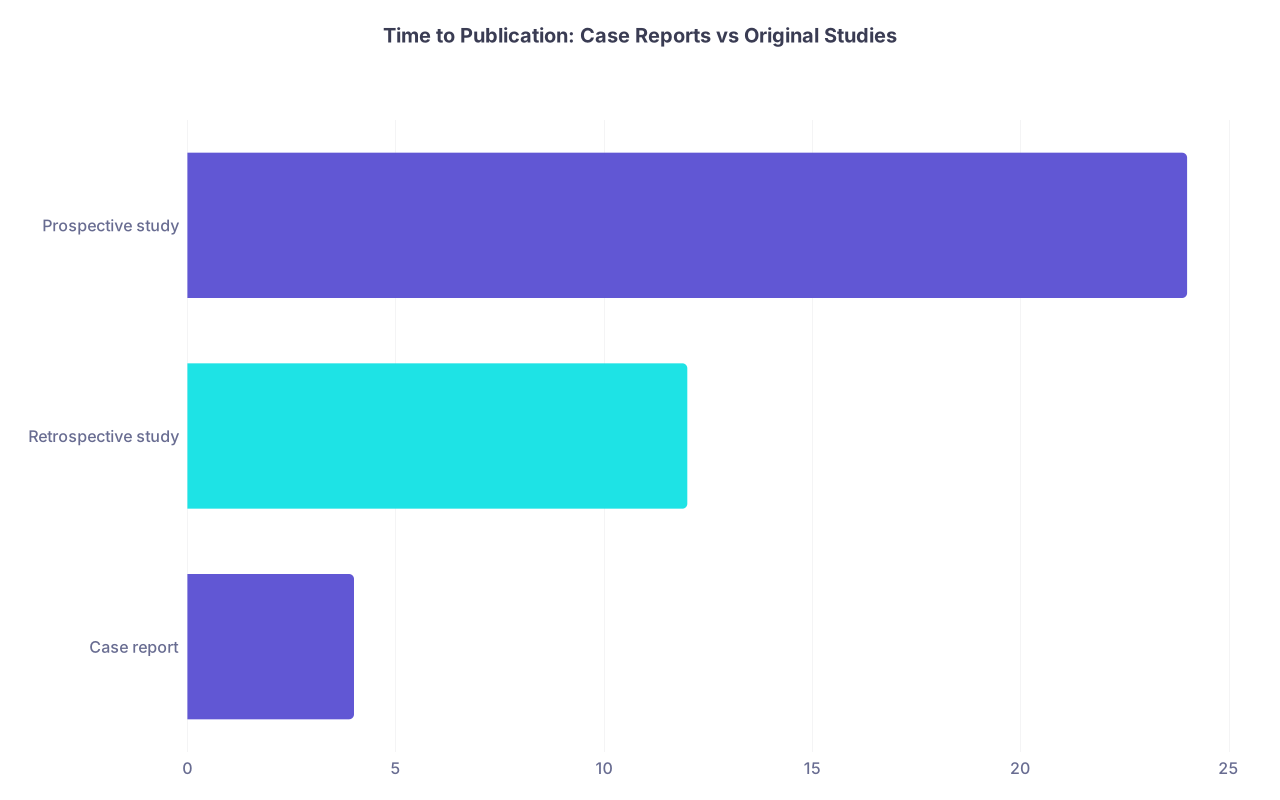
| Category | Value |
|---|---|
| Case report | 4 |
| Retrospective study | 12 |
| Prospective study | 24 |
Time to publication matters because residency applications have deadlines. Case reports sometimes win purely on speed.
How to Do Case Reports Without Embarrassing Yourself
If you’re going to do them, do them like you respect your own time.
Choose your mentor more carefully than your case.
A motivated attending who’s published before is worth more than the “perfect” rare case with an attending who never opens email. Ask bluntly:- “Have you published case reports before?”
- “What journals do you usually target?”
- “What timeline do you think is realistic?”
Aim for legitimate journals.
Avoid the “submit today, accept tomorrow, $900 fee” crowd. PubMed indexing is helpful but not mandatory; what matters more is avoiding obvious predatory trash. If you’re not sure, ask someone who actually publishes regularly.Write it tightly and cleanly.
No bloated 3000-word monstrosities repeating UpToDate. Short, focused, structured. Good figures if imaging or pathology is involved. Sensible, not grandiose, conclusions.Know the case cold.
If it’s in your ERAS, be ready to discuss in detail at interviews: differential, management decisions, outcome, key teaching points, what you learned. If you can’t do that, you’ve exposed yourself as a passenger.Use it to leverage something bigger.
That same attending may say yes when you later ask: “Are there any retrospective projects or database analyses I could help with?” Case reports can be the intro, not the endpoint.

What About Case Series and Brief Reports?
These live in the same general neighborhood but carry slightly more weight.
A well-done case series (say 10–20 patients) can show:
- Some basic data handling
- Primitive but real analysis
- Patterns rather than lone anecdotes
Short “brief reports” or “research letters” are often more respected than conventional case reports because they’re more analytic and less story-like.
If you have the choice between:
- Being first author on a single-patient case report
- Being 2nd/3rd author on a case series with actual data
Pick the case series. Every time.
The Hard Truth for Hyper-Competitive Specialties
If you’re going after derm, ortho, neurosurgery, ENT, plastics, rad onc, or similarly brutal fields, I’ll say it straight:
Case reports are not going to bail you out if you lack:
- Strong board scores (or strong clinical evaluations post-pass/fail Step 1)
- Honors in key clerkships
- Good letters from within the specialty
- Some form of real research (retrospective, basic science, outcomes, etc.)
They’re an accessory. Not a foundation.
I’ve seen students in neurosurgery applications with 25+ “publications” and then you read them: 20 are case reports in obscure journals, 5 are weak letters, nothing with real methods. It doesn’t impress the big academic programs as much as they think it will.
For those fields, case reports are fine as:
- Your first exposure to writing
- A way to meet and work with faculty
- A minor line item
If you’re banking on them as your main academic contribution, you’re misreading the game.
So… Are Case Reports a Waste of Time?
Sometimes yes. Sometimes very much no. The difference is context and strategy.
They’re a waste if:
- You have access to better projects and choose case reports out of laziness or fear.
- You crank out a dozen low-quality pieces in junk journals to pad a CV.
- You think they put you on par with someone doing serious clinical or basic science research.
- You invest months with a disengaged mentor and end up with nothing before ERAS.
They’re not a waste if:
- You’re starting from nothing and need a quick, realistic scholarly win.
- You’re at a low-research school and case reports are the main path available.
- You use them as a stepping stone to more substantial projects.
- You pick cases aligned with your specialty and can talk intelligently about them.

FAQs
1. If I only have time for one scholarly project before ERAS, should it be a case report?
If your school has existing ongoing projects you can plug into quickly (retrospective chart reviews, QI projects with publishable potential), that’s usually a better use of time. But if you’re late in the game, have a motivated mentor, and a case that can realistically be written and submitted within a couple months, a single good case report is far better than “I was planning to do research but it didn’t work out.”
2. Do program directors look down on case reports listed as “Publications”?
Not automatically. One or two case reports are perfectly respectable, especially in context: your school, your specialty, your other experiences. They start to look cheap when you clearly have a pile of very low-quality or predatory-journal case reports and nothing else to show for years of “interest in research.” Quality and trajectory matter more than raw count.
3. Should I list unpublished or submitted case reports on ERAS?
Yes, but labeled accurately. Use “in preparation,” “submitted,” or “provisionally accepted” with the correct status. Don’t inflate. And be ready to talk about the project as if it never gets published, because many “submitted” case reports die quietly in peer-review. The experience and story still count; the fake prestige does not.
Key points: Case reports are the lowest-level academic currency, but they’re still currency. One or two well-chosen, well-written case reports can help, especially from a low-resource environment or as a first step. Ten bad ones in predatory journals just announce that you do not understand what meaningful research looks like—and that’s the real problem.