
The idea that “too much” research scares off community or non‑academic residency programs is mostly nonsense. What actually scares them off is the wrong attitude, not the length of your PubMed list.
You’ve probably heard this in a hallway whisper or from a well‑meaning upperclassman:
“Careful, if you stack too much research, community programs will think you’re using them as a backup.”
Or: “Private programs don’t like research‑heavy applicants; it makes you look too academic.”
I’ve sat in on ranking meetings where this myth gets repeated. And then quietly disproven by what people actually do when they vote.
Let’s walk through what the data show, what program directors actually say, and how your research really plays at non‑academic programs.
What Programs Actually Value: Not What Reddit Says
Start with the only real broad dataset we have: the NRMP Program Director Survey.
In the 2024 survey (and prior years), research productivity isn’t the top line item—but it isn’t some red flag either. It’s one of many positive signals that programs weight differently depending on specialty and setting.
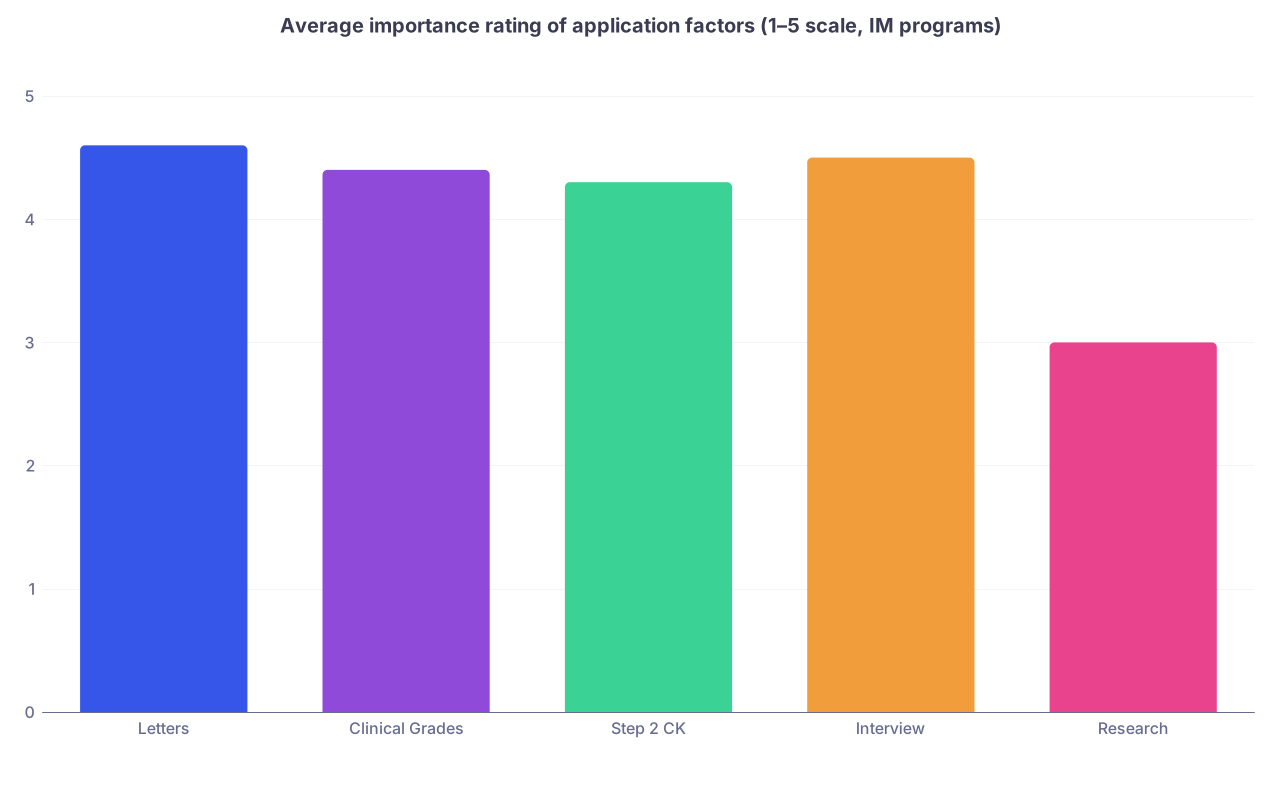
| Category | Value |
|---|---|
| Letters | 4.6 |
| Clinical Grades | 4.4 |
| Step 2 CK | 4.3 |
| Interview | 4.5 |
| Research | 3 |
Do community‑leaning programs care less about research than big‑name academic centers? Often yes.
Does that mean they’re afraid of applicants with lots of research? No.
Here’s the nuance:
- Academic programs see substantial research as a core asset, sometimes a semi‑requirement.
- Community programs see it as:
- Nice to have, if you still look like you’ll show up, work hard, and not bail.
- Irrelevant, if everything else is mediocre or your story makes no sense.
The pattern I’ve seen behind closed doors is simple: nobody at a community program is saying, “This applicant has 15 pubs, we better not rank them.” What they say is, “Do you think they’ll actually be happy here, or are they just gunning for a fellowship at Big Name U?”
Those are not the same concern.
The “Too Much Research” Myth: Where It Really Comes From
This myth isn’t based on strong data. It’s based on:
- A few poorly handled interviews where research‑heavy applicants made it obvious they didn’t value community training.
- Mismatched expectations—programs want worker‑bees; applicant presents as a pure bench scientist.
- Survivorship bias—people with weak clinical metrics who lean heavily on research and don’t match, then blame the research itself.
The logic goes like this: “I had 20 abstracts and still didn’t get many community interviews. So they must not like research.”
More likely: your Step 2 CK was average, your letters were generic, and your personal statement screamed “I only care about R01‑level projects.” Programs responded to the story, not the publication count.
The red flag is not volume of research. It’s misalignment between your stated goals and the program’s reality.
When a program director at a community hospital looks at a CV with:
- 3+ first‑author papers
- Multiple years of lab work
- A PhD or MPH
- A personal statement about “leading a lab” and “transforming healthcare via big data”
They don’t think, “Too much research, scary.”
They think, “Why us? Are we just the safety net if their dream academic program passes?”
If you don’t answer that question preemptively, yes, some will rank you lower. But that’s about fit, not “too much research.”
What the Numbers and Match Outcomes Actually Suggest
Let’s be blunt: high research productivity correlates with stronger applications overall—higher scores, better letters, more selective med schools. That already muddies any simplistic cause‑and‑effect story.
Research does three things across program types:
- It rarely hurts you on paper.
- It often helps if tied to your specialty, especially for competitive fields.
- It can create a “flight risk” perception if you talk like an NIH lifer but apply to a program that barely has a journal club.
Look at competitive specialties: derm, plastics, ENT, rad onc. High research counts are the norm. Yet plenty of people with 15+ pubs match at hybrid or community‑academic settings. The world doesn’t divide cleanly into “ivory tower” vs “pure community.” Many medium‑sized programs do solid clinical training, some QI, a little research, and send people to strong fellowships.
| Program Type | View of Significant Research |
|---|---|
| Flagship academic | Strong positive, often semi‑expected |
| Hybrid community‑academic | Positive if you show realistic, balanced goals |
| Pure community (no fellows) | Mild positive or neutral, depends on your attitude |
| Malignant anywhere | Irrelevant—they just want bodies to run the list |
Note the missing category: “Programs that penalize you just for having too much research.” That’s not a pattern you see in any real data or broad survey.
What you’ll find instead: a decent proportion of community PDs say they “prefer” applicants who seem committed to community practice, underserved populations, or hands‑on clinical work. That’s different from punishing people who did research.
What Actually Raises Red Flags at Non‑Academic Programs
Let’s dissect what does get discussed as a negative in non‑academic and community programs when they look at a research‑heavy CV. These are all fixable.
1. A story that doesn’t add up
If your entire application screams “10‑year physician‑scientist pipeline” and then you tell a community IM program “I just want to do primary care,” they won’t buy it.
I’ve heard this exchange:
- Applicant: “I see myself doing full‑time private practice, maybe hospitalist.”
- Interviewer: “You spent 4 years in a lab and have an RCT under your belt?”
- Applicant: “Yeah, I’m kind of done with research.”
- Debrief later: “They’ll leave the first second a research track spot opens.”
Translation: they didn’t mind your research. They didn’t believe your career pivot.
2. Arrogance or condescension toward community practice
This kills you faster than any publication count.
If you say things like:
- “I’m worried about being under‑challenged in a community setting.”
- “I still want access to top‑tier labs/cores while I’m here.”
- “Do your attendings publish in high‑impact journals often?”
You’ve basically told them you won’t value what they actually offer: volume, autonomy, bread‑and‑butter medicine, procedures, real‑world patient care. They don’t care that you’ve published in JAMA. They care that you don’t think their work is beneath you.
3. No evidence you can hack a high‑volume clinical environment
Some community programs are absolute workhorses. Their insecurity isn’t “too academic.” It’s “will this person crumble when they’re carrying 18 ward patients and the ED is paging every 10 minutes?”
If your application is 80% lab, zero substantive clinical experiences, thin on sub‑I comments… they may reasonably worry you’re too sheltered. Again, not the quantity of research, but the missing proof of clinical grit.
How to Present Heavy Research to Non‑Academic Programs (Without Scaring Them)
You don’t need to hide your publications. You need to translate them.
1. Reframe research as evidence of discipline, not identity
Instead of “I am a researcher,” try “Research has trained how I think and approach problems, but my primary identity is as a clinician.”
In your personal statement or interviews to community‑leaning programs, emphasize:
- What research taught you about working in teams, handling failure, and dealing with messy real‑world data.
- How those skills translate into being a better intern: systematic, skeptical, efficient, resilient.
I’ve watched PDs nod when an applicant says something like:
“Honestly, my years in the lab weren’t about loving pipettes—they taught me how to be rigorous and not hand‑wave uncertainty. That’s exactly how I want to approach complex patients on the wards.”
That lands. Especially in places where you’ll see a lot of uncontrolled multi‑morbid trainwrecks.
2. Be explicit about why you chose them, not just why they should choose you
Community programs are allergic to being Plan C.
You defuse this by being incredibly specific:
- “You’re one of the few programs where residents consistently describe real autonomy with attending backup, not micromanagement.”
- “Your ICU exposure is heavier than many academic centers, and I want that intensity to prepare for critical care fellowship.”
- “I’m drawn to your patient population—high pathology, underserved, lots of Spanish‑speaking patients.”
None of that contradicts having a strong research background. It just shows you understand the value of what they do.
3. If your long‑term goal is academic, say it without making them feel used
You can absolutely say to a community‑oriented program:
“I do see myself in an academic or hybrid role long term, probably with some involvement in QI or outcomes research, but in residency my top priorities are: strong clinical training, exposure to high‑acuity patients, and learning to be efficient and independent.”
That’s honest. And it sounds like someone who won’t sit on the sidelines complaining that there aren’t enough NIH grants in town.
The One Time “Too Much Research” Really Might Be a Problem
There is a narrow case where your research volume becomes indirectly harmful: when it obviously consumed so much time that your clinical performance suffered or you look like a ghost in every non‑research section of the CV.
If you have:
- Marginal or barely passing clinical clerkship comments
- Weak or vague letters from clinicians
- Unremarkable Step 2 CK
- And then 25 publications, heavy lab years, maybe a gap year or two of research only
Some PDs (academic and community) will read that as: “This person optimized the wrong thing. They’re impressive on paper but may not be strong on the floor.”
That’s not “too much research is scary.” It’s “your priorities and strengths don’t align with what residency demands.”
Residency is not an R01. It’s a service job plus education, under pressure, at scale. If your file screams “I’d rather be at my bench than at the bedside,” they’ll move on. And they should.
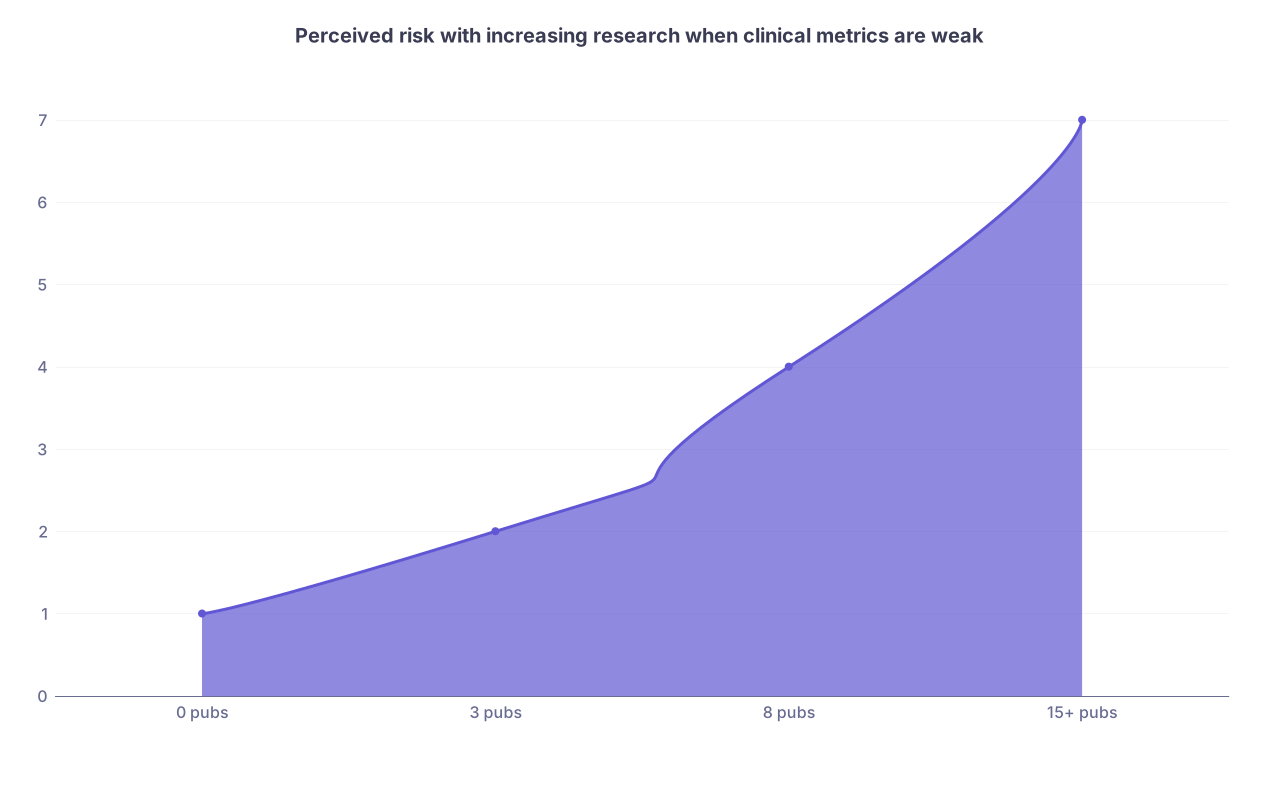
| Category | Value |
|---|---|
| 0 pubs | 1 |
| 3 pubs | 2 |
| 8 pubs | 4 |
| 15+ pubs | 7 |
That chart is conceptual, but you get the point: when research grows while everything else stagnates, the interpretation becomes negative.
How to Strategically Apply if You’re Research‑Heavy
If you’ve already done a ton of research, the question isn’t “Will it hurt me?” It’s: “Where will it be valued and how do I reassure programs where it might cause insecurity?”
Here’s how I’d think about it if I were advising you one‑on‑one.
Step 1: Sort programs by how much they care about research
You don’t need insider spreadsheets. Just use:
- Presence of research tracks, scholarly concentration tracks, or explicit protected time
- Number of fellows and subspecialty programs
- How they describe themselves on their website: words like “community‑based,” “clinically focused,” vs “research‑oriented,” “academic mission”

| Step | Description |
|---|---|
| Step 1 | Research-heavy applicant |
| Step 2 | Prioritize academic & hybrid programs |
| Step 3 | Mix of community & hybrid programs |
| Step 4 | Lean into research story |
| Step 5 | Lead with clinical goals, keep research as asset |
| Step 6 | Want academic career? |
You don’t need to avoid pure community programs. Just make sure you understand what they emphasize so you do not walk in pitching the wrong thing.
Step 2: Tailor your narrative, not your CV
Do not remove publications from your CV. That’s ridiculous. What you change:
- Which projects you highlight in your personal statement or ERAS experiences.
- How you talk about them in interviews for different program types.
Academic interview? Talk about methods, grants, long‑term academic projects.
Community interview? Emphasize QI, outcomes, implementation science, or anything that touched real patients, workflows, or systems.
Step 3: Use your research to prove you can finish what you start
Programs love finishers. If you:
- Took a messy dataset and turned it into a poster, then a paper
- Inherited a half‑dead project and got it over the line
- Coordinated across departments, IRB, statisticians, and co‑authors
Say that. Because that sounds a lot like what residency is: inheriting chaos, creating order, and delivering something safe and coherent for the patient.
The Quiet Reality: Programs Like Options Too
Here’s a final uncomfortable truth: a lot of community and hybrid programs like having a minority of research‑savvy residents. It keeps their own doors open.
- They need people who can help with QI metrics, M&M audits, and “academic credit” projects.
- They send graduates to fellowships. Having a few CV‑heavy grads helps sell their program to future applicants.
- They sometimes want to grow academically—start a fellowship, link with a university, build a research office.
You, with your stack of posters and your R skills, are not a liability there. You’re leverage. As long as you also pull your weight clinically.
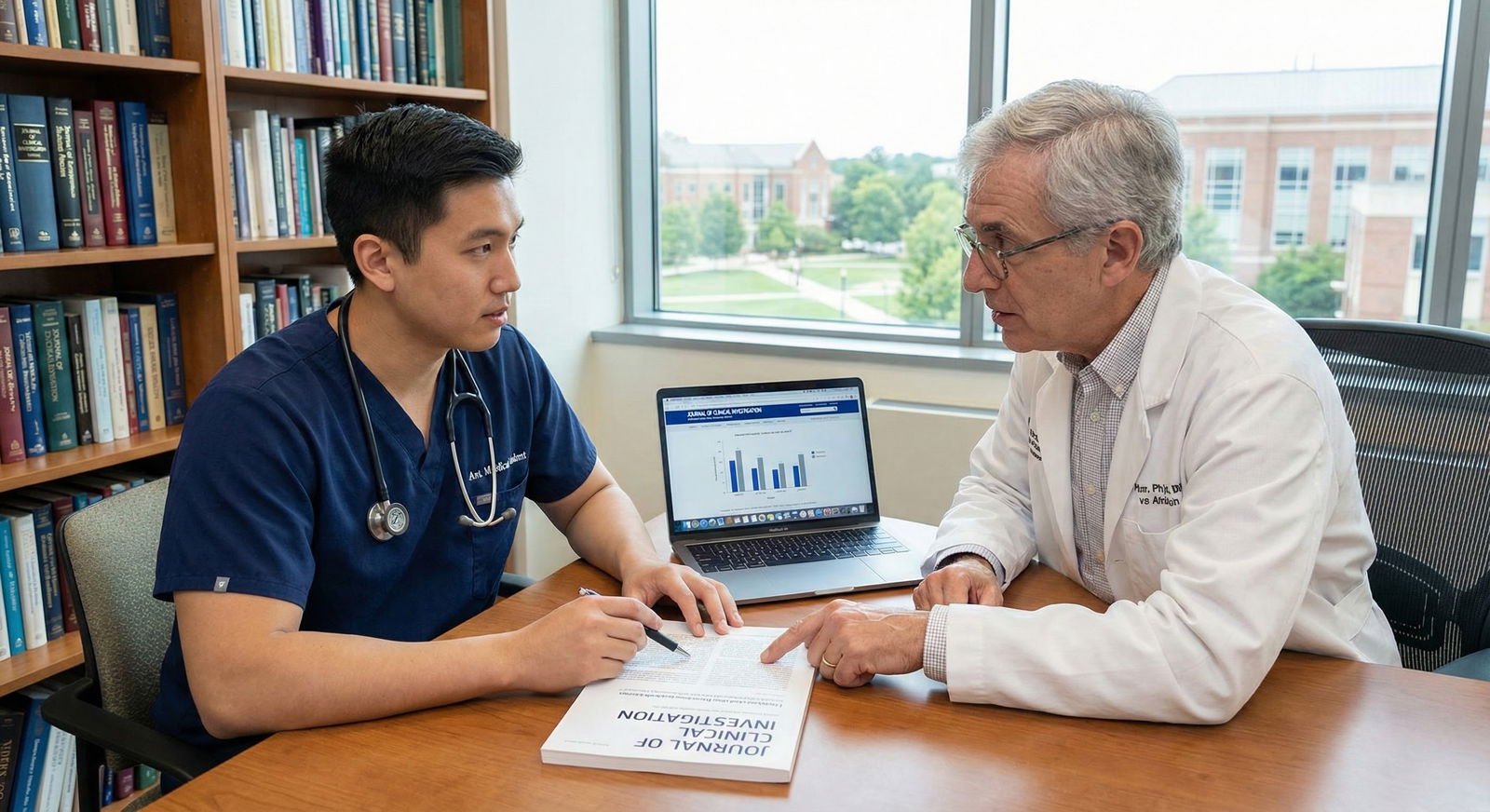
I’ve seen PDs explicitly say in ranking meetings: “This one has serious research chops, could help us publish some of the QI work we’re already doing.” That’s not fear. That’s opportunism—in a good way.
Bottom Line: Fact vs Fiction
Strip away the folklore and here’s what survives:
- There is no broad evidence that community or non‑academic programs systematically penalize applicants for “too much” research. The myth is fiction.
- What is real: programs get suspicious when your research story and your stated goals don’t match what they offer. They worry you’ll be unhappy or leave. Fix the narrative, not the CV.
- Heavy research helps you if it’s paired with solid clinical metrics and a convincing explanation of why you want that program’s kind of training. It hurts only when it highlights that you prioritized publications over becoming a competent clinician.
You don’t need less research.
You need a sharper, more honest story about why all that work makes you a better resident anywhere—not just in a lab down the street from a fancy name.