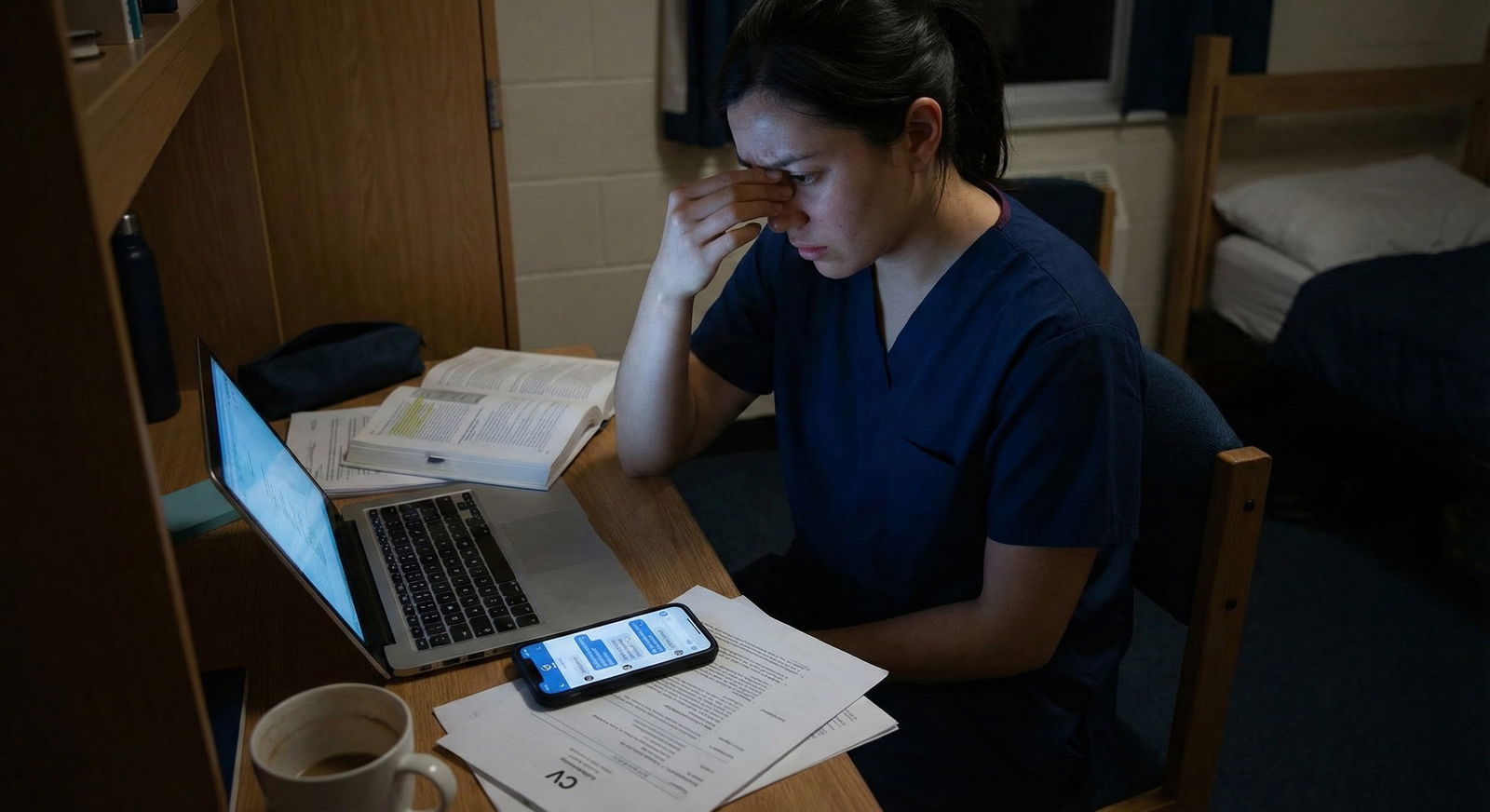
The obsession with research in residency applications is completely out of control.
You feel it every time someone in your class casually drops “my third first-author paper” into conversation. Or you scroll through a group chat and see people posting PubMed links like they’re selfies. And you sit there thinking: I have…nothing. Or almost nothing. And Match is coming.
Let me say this directly so it’s not buried in the middle: you are almost definitely not as behind as you think you are—but you can absolutely hurt yourself if you panic and react the wrong way.
Let’s pick this apart like you’re sitting in my call room spiraling at 1 a.m., because I know exactly how this brain spiral goes.
The Numbers You’re Terrified Of (And What They Actually Mean)
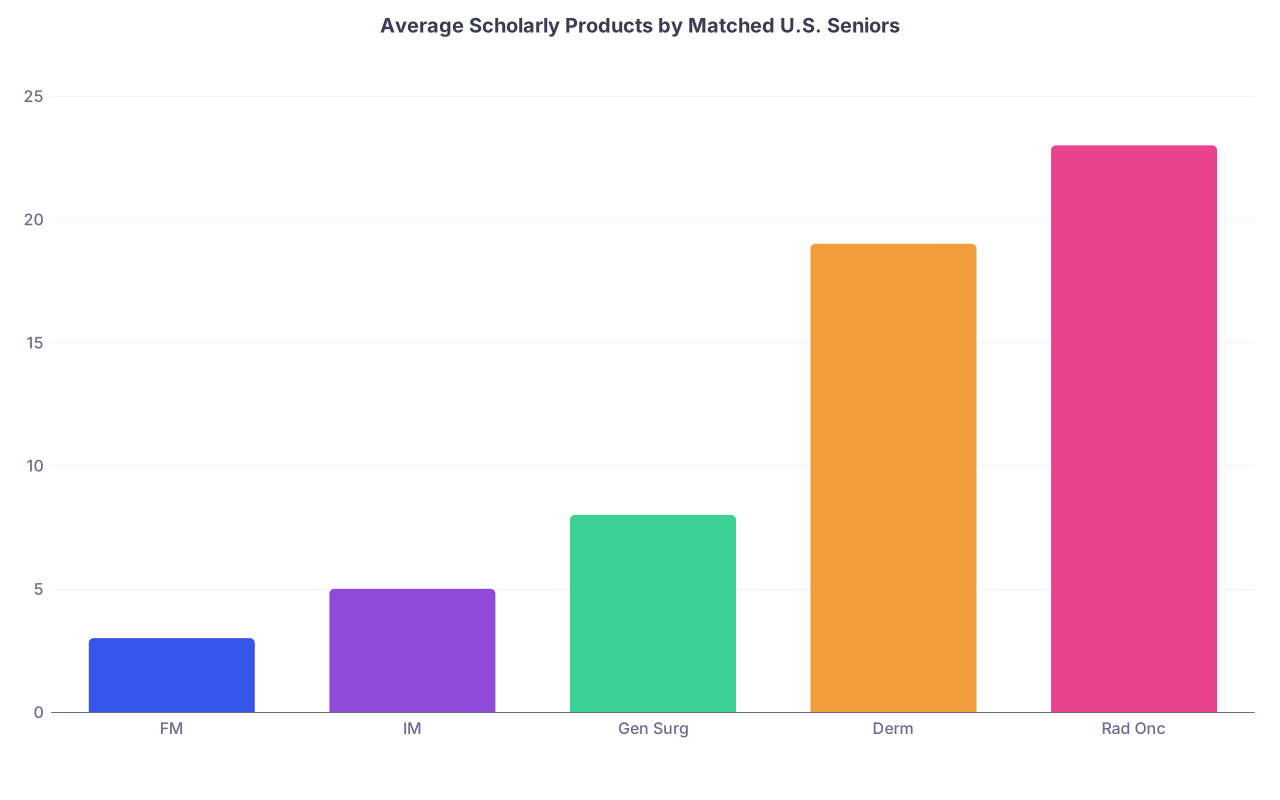
You’ve probably seen those NRMP “average number of publications” tables floating around. People screenshot them and throw them in GroupMe like weapons.
| Category | Value |
|---|---|
| FM | 3 |
| IM | 5 |
| Gen Surg | 8 |
| Derm | 19 |
| Rad Onc | 23 |
You see numbers like 8, 10, 20 “research experiences” or “abstracts/pubs/presentations” and your stomach just drops.
Here’s the part no one explains clearly:
Those numbers are inflated.
One project can generate:- 1 abstract
- 1 poster
- 1 oral presentation
- 1 publication
That’s 4 “items” from one project. So when someone says they have “15,” it might be like…3–4 real projects.
People count everything.
Case reports, quality improvement, a random poster from a summer program, a middle-author thing where they barely did anything. It all goes on ERAS. It all bloats the stats.Averages include gunners and MD/PhDs.
The people with 40 items drag the average way up. Quiet normal applicants with 2–3 real things get drowned in the numbers.
So when you see “Derm 19” or “Rad Onc 23,” your brain says: “I have 0. I’m dead.”
Reality: Some of those people have that. Most don’t.
And more importantly: most PDs know these numbers are messy.
How Much Research Do I Actually Need For Different Specialties?
Let’s be honest. Some fields care more. You already know that. But “everyone has a million pubs” is just not true.
| Specialty Tier | Example Fields | Research Expectation (Realistic) |
|---|---|---|
| Low emphasis | FM, Psych, Peds, IM (community) | Nice to have 0–2 items |
| Moderate | IM (academic), EM, Anesthesia, OB | 1–3 solid items helpful |
| High | Gen Surg, Neuro, Ortho | 3–6+ items or clear involvement |
| Ultra-high | Derm, Plastics, Rad Onc, ENT | Multiple items, often 1+ strong first-author |
If you’re applying:
Family Med / Psych / Peds / community IM:
Having no research doesn’t automatically kill you. Seriously. Programs like teaching, solid clinical performance, and people who don’t scare them. Research is a bonus.Academic IM, EM, Anesthesia, OB:
They like to see you’ve at least dipped a toe in that pool. A poster. A QI project. A case report. Something that says: “I can participate in academic work if needed.”Surgery, Neuro, Ortho:
They care more. But even there, not everyone is first author on RCTs. What they want to see is:- You sought out research.
- You followed through.
- You stuck with something long enough to produce something.
Derm, plastics, ENT, rad onc, etc.:
Yeah. This is where it gets brutal. Multiple items is practically standard at the top programs. BUT even here, there are matched people with way fewer pubs who had other spikes (Step scores, insane letters, home program advocacy, unique niche).
So “how far behind” are you? It depends where you’re aiming.
If you’re applying psych with zero research: you’re fine.
If you’re applying derm with zero research: that’s a problem, but still not always an automatic death sentence if other things are shockingly strong.
The Silent Truth: Programs Care More About This Than Your Pub Count
Here’s what I’ve heard over and over from residents and attendings on actual selection committees:
When they’re scanning ERAS, they care way more about:
- Board scores / pass vs fail drama
- Clerkship performance (especially in that specialty)
- Letters of recommendation (and how specific they are)
- How you did on away rotations / sub-Is
- Red flags (fails, professionalism issues, weird gaps)
Research is often a tie-breaker. A nudge. Not the whole story.
I watched one program director literally skim past the “publications” section and go straight to:
- Step scores
- Medicine clerkship comments
- Sub-I comments
- Personal statement (for major weirdness only)
They only went back to research when choosing between two similar candidates.
So if your brain is doing the “I have fewer pubs, so I’m toast” thing, step back:
- If your clinical grades, letters, and Step 2 are strong, a weak research section is not fatal.
- If those other things are shaky and you have no research, then yeah, it stacks.
But nobody is matching you only because you have 9 publications. And nobody is rejecting you only because you have 1 instead of 5. It’s the full picture that matters, even if that sounds annoyingly holistic.
What If I Have Zero Research? Like…Literally Zero.
This is the nightmare scenario your brain keeps replaying, right?
Let’s walk through it without the catastrophizing (okay, with minimal catastrophizing).
If you’re M3 or early M4
You’re not doomed. You still have time to do something real that you can put on your app and talk about.
Your moves:
Grab a small, finishable project
Don’t chase big sexy RCTs. You don’t have that kind of time. Aim for:- Case reports / series
- Retrospective chart reviews
- A QI project with your clerkship director
These can become posters/abstracts before application season if you’re aggressive about timelines.
Tell mentors you’re on a clock
You need something you can list and maybe present. That means short, defined projects.Write fast, accept imperfection
It doesn’t have to be NEJM. A poster at a regional meeting still counts as output.
If you start now, you can realistically get:
- 1–2 posters
- 1 “submitted” paper or abstract
- 1 ongoing project to talk about
Is that as flashy as 10 pubs? No. Is it enough to show initiative? Yes.
If you’re late M4 / already in application season
Brutally honest? There’s not much you can add quickly that will meaningfully change this cycle.
But you can still:
- Make sure ANYTHING you’ve ever done that counts as scholarly activity is listed
- Ask mentors if it’s appropriate to list work as “in progress” or “submitted” if that’s actually true
- Focus on crushing interviews and letting programs see you as a person, not a PDF with a low research count
And if you’re going for a super competitive specialty with zero research and also weaker boards/grades…then yes, you might need to think about:
- Reapplying after a research year
- Pivoting to a less research-heavy field
That’s not failure. That’s triage.
The “Everyone Around Me Has Publications” Illusion
You’re comparing your insides to everyone else’s highlight reel.
In every class I’ve seen:
- There’s that one MD/PhD who has 25+ pubs by M4. People talk about them like a mythological creature.
- A small cluster of hardcore gunners chase every project and end up with a long list on ERAS.
- A big middle group has 2–6 scattered things: a poster here, a random abstract, a middle-author paper they barely remember.
- A quiet chunk of people have 0–1 and feel like they’re the only ones.
Guess who talks about their research the most? The gunners and the MD/PhD crowd. So the WhatsApp and Discord and hallway noise is massively biased.
You never see:
- The person crying in their car because their “almost done” project never got written up.
- The person who did 2 years of “research” that turned into zero publications and one bitter line on a CV.
- The people who had nothing, matched fine into psych, FM, peds, or community IM, and just…moved on with their lives.
Your brain is good at deleting those people from the data set.
How To Talk About Weak Research Without Sounding Like A Train Wreck
Here’s another thing no one walks you through: how this plays out in interviews.
You’re terrified they’re going to look at your CV and say, “So…why don’t you have more publications?” while staring into your soul.
What they’re often actually asking is:
- Are you lazy?
- Are you disorganized?
- Did you try and bail halfway?
- Are you someone who can finish what you start?
You need a story that sounds like: “I’m someone who will follow through, and here’s evidence, even if my pub list is short.”
Ways to frame it:
If you started late:
“I realized later in med school that I was interested in [specialty], so I got involved in research in M3. I focused on a couple of smaller projects I could actually see through, which led to [poster/abstract/project X]. I’m continuing to work with that group, and we’re [submitting/collecting follow-up data].”If projects fell apart:
“I was involved in a couple of projects that ultimately didn’t make it to publication because of [data limitations/mentor moved institutions/etc.], but I did get experience with [chart review, data analysis, writing drafts]. I’d like to build on that with more structured mentorship in residency.”If you genuinely prioritized other things:
“I decided to focus my time on [free clinic work, leadership, teaching] because that’s where I felt I could have the most impact during med school. I’m looking forward to doing more structured research in residency, especially in [sub-interest area].”
You’re not confessing a crime. You’re explaining priorities and context.
When You Actually Should Worry (Yeah, Sometimes You Should)
I’m not going to sugarcoat it: sometimes the anxiety is pointing at something real.
You should start worrying and planning if:
- You’re aiming for a top-tier academic program in a research-heavy field
and - You have literally zero research or even scholarly activity
and - You’re already late in M4 or past
In that combo, research becomes one of several weaknesses, not just a minor gap.
Options then:
- Consider a research year if your heart is set on that one competitive field/program type.
- Apply more broadly and include places less obsessed with research.
- Consider whether a different but related specialty would make you happier and realistically matchable.
That’s not “giving up.” That’s playing the long game of your actual career instead of chasing prestige trauma.
What You Can Do This Week To Stop Feeling So Helpless
The worst part of all this is the feeling of being stuck. Like the train has left and you’re standing on the platform looking at your empty PubMed page.
Here’s how you claw some control back now:
Get real specialty-specific data
Don’t rely on vibes and Reddit horror stories.- Ask a resident in your target field: “What did you actually have research-wise when you applied?”
- Ask a faculty advisor: “For [specialty] at [type of programs you want], how important is research really?”
Inventory everything you’ve already done
Open a doc and list:- Any poster, abstract, case report, QI project, capstone, thesis, or presentation
- Any “almost done” project that could be finished with a push
You probably have more than your anxiety is letting you remember.
Identify one concrete, finishable project
Not ten. One.
Email a mentor and say:
“I’d like to complete a small, manageable project before ERAS that I can realistically present or submit. Do you have anything with data already collected or near completion where I could help write or finalize?”Decide if your goal specialty and your current CV actually match
This is the painful part. Sometimes the problem isn’t that you’re behind. It’s that you’re chasing a specialty that wants a totally different application profile than the one you have.
You’re Behind Compared To Some People. Not As Many As You Think.
Yes, there are people with insane research portfolios.
Yes, programs notice.
No, that doesn’t mean you’re automatically doomed.
You’re “behind” if:
- You’re targeting a highly academic, super competitive specialty
- You have almost no research AND weaker boards/grades
- You’re not doing anything to address it or adjust strategy
You’re not truly behind if:
- You’re applying to less research-obsessed fields
- You have 1–3 decent scholarly items, even if they’re not superstar pubs
- You’re actively working on something now and can speak about it intelligently
The worst move is letting your fear paralyze you into doing nothing and then using that as proof that you were never good enough.
So here’s what I want you to actually do today, not “someday”:
Open your CV right now, scroll to the “Publications/Research” section, and do one of two things:
- If it’s basically empty: email one faculty member in your desired specialty asking for a small, finite project you can realistically finish.
- If it has a few things: highlight each item and ask yourself, “Could I clearly explain what I did here in an interview?” Then write 3 bullet points for each as talking notes.
One tiny action. That’s it.
Do that, and you’re already less behind than you were this morning.