

Residency PGY‑1: When to Start New Research If You Want a Competitive Fellowship
It’s July 10th. You’ve survived orientation, you sort of know how to admit a patient, and your pager has not stopped vibrating since 5:45 a.m. You get a rare quiet minute and someone asks you the question that’s been floating in the back of your mind:
“So… have you met with any research mentors yet?”
You stare at them. You’re just trying not to miss potassium repletions, and people are already talking about research and fellowship.
Here’s the truth: if you want a competitive fellowship (cards, GI, heme/onc, ortho subspecialty, derm fellowship, etc.), you cannot “figure out research later.” There’s an actual clock here. Miss it, and you’re applying with half‑baked projects and “manuscript in progress” all over your CV.
I’ll walk you through, chronologically, when to start new research in PGY‑1 and what should be happening each month so that, by the time you apply for fellowship, you have real, citable products—not just intentions.
Big Picture Timeline: From PGY‑1 Start to Fellowship Apps
First, anchor the whole arc. You’re PGY‑1 now. For most internal medicine subspecialties:
- You apply for fellowship early in PGY‑3.
- Your ERAS application is essentially “frozen” by late summer of your PGY‑2 to PGY‑3 transition.
- That means most of your meaningful research needs to be started by mid‑PGY‑1 and producing something (submitted/accepted/published) by mid‑PGY‑2.
Here’s the rough output expectation if you’re aiming for a truly competitive fellowship:
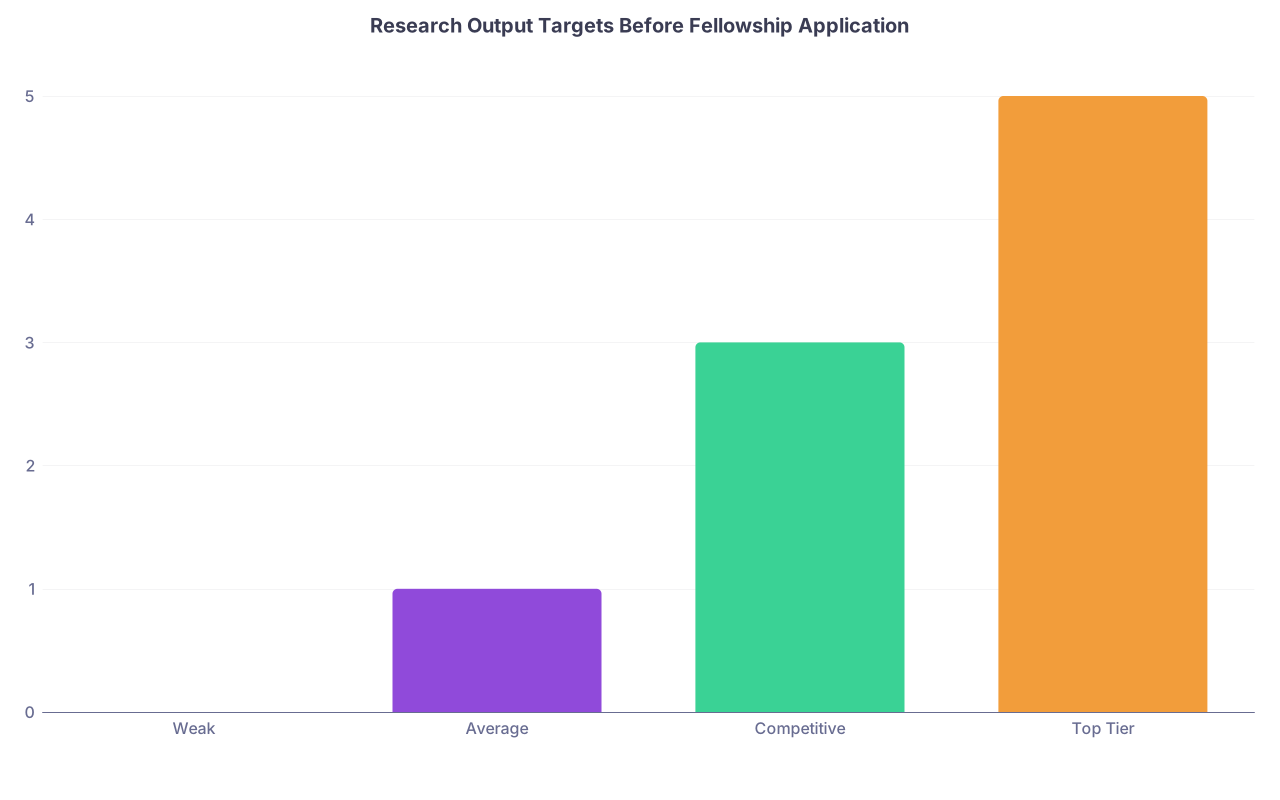
| Category | Value |
|---|---|
| Weak | 0 |
| Average | 1 |
| Competitive | 3 |
| Top Tier | 5 |
- 0 = Weak: You did nothing or have a poster from med school.
- 1 = Average: Maybe a case report or poster.
- 3 = Competitive: A mix of abstracts, posters, and at least one manuscript (submitted or published).
- 5 = Top Tier: Multiple abstracts, several posters, and 2+ manuscripts with at least one as first/second author.
Now, let’s break this down into what you should do, and when.
PGY‑1: Month‑by‑Month – When to Actually Start New Research
July–August (PGY‑1 Months 1–2): Survival and Scouting
At this point you should not be starting a brand‑new project from scratch. You don’t even know where the fax machine is.
Your priorities for these first 2 months:
- Survive clinically and learn your job.
- Quietly collect intel on research culture and people.
Concrete steps:
- Notice which attendings:
- Talk about “my lab,” “our registry,” or “our research group.”
- Bring up recent papers on rounds that they or their mentees authored.
- Have fellows with obviously stacked CVs.
- Ask seniors specific questions:
- “Who are the 2–3 people in cards/GI/onc/pulm who actually get residents on papers?”
- “Who should I avoid because projects never finish?”
Make one low‑stakes move in August:
- Send one email:
“I’m a new PGY‑1 interested in [X fellowship]. I’d love to talk briefly this fall about how residents work with you on research.”
That’s it. No project yet. Just putting yourself on a radar.
September–October (PGY‑1 Months 3–4): Mentor Meetings & Joining Existing Projects
Now you’re slightly less terrified of cross‑cover. You can think again. At this point you should be meeting mentors and plugging into existing work, not inventing your own dataset.
Target: 2–4 mentor conversations by the end of October.
In each meeting, you want to clarify:
- What kinds of projects they have (clinical database, QI, case series, RCTs).
- How residents normally plug in.
- Typical time from start → abstract → manuscript.
Then, by late October, commit to one small, fast‑cycle project with a clear endpoint. Examples that work well:
- A retrospective chart review using an existing dataset.
- A case report/short case series with a clear story.
- Helping finish analysis + manuscript for a nearly complete project.
Bad ideas in PGY‑1 fall:
- Designing a huge prospective registry that requires new IRB, new data system, and multi‑site agreements. You’ll still be “scheduling meetings” when it’s time to submit fellowship ERAS.
- Volunteering for “whatever you need.” That’s how you become the human data entry black hole.
Make sure any project you say yes to has:
- Existing data or a clear plan to get data within 1–2 months.
- A defined role for you (not “we’ll figure it out”).
- A realistic endpoint within 6–9 months.
November–December (PGY‑1 Months 5–6): IRB, Data, and Your First Abstract Plan
By now, at this point you should have:
- 1 active project with you clearly on the author list.
- Ideally, at least one additional small thing in the pipeline (e.g., a case report).
Your work now splits into two streams:
Administrative / Setup
- If IRB is needed, your name should be on it and it should be submitted by end of December.
- If data exists, you should have:
- Access to the database.
- A first pass at a data dictionary.
- A written analysis plan (even if simple).
Abstract Targeting
- Identify one concrete meeting 6–12 months away where you can submit an abstract.
| Field | Meeting (Example) | Abstracts Due (Typical) |
|---|---|---|
| Cardiology | ACC, AHA | Aug–Oct |
| GI | ACG, DDW | Nov–Feb |
| Heme/Onc | ASH, ASCO | Feb–Apr |
| Pulm/CCM | ATS | Nov–Dec |
| Nephrology | ASN | Mar–May |
You want your first project timed so that data collection is basically done 1–2 months before the abstract deadline. Otherwise, you’ll be rushing and submitting garbage or missing the window.
January–March (PGY‑1 Months 7–9): Data Collection & First Abstract Submission Window
This is the grind period. At this point you should spend your “research energy” on actually pushing one project over the finish line for an abstract.
Your weekly rhythm (realistic for a PGY‑1):
- 1–2 short research sessions per week (30–90 minutes each).
- Protected time if you have it on electives; if not, early mornings or post‑call afternoons.
Concrete milestones:
- January: Data dictionary finalized, data pulls set up, or case report drafted.
- February: Majority of data abstracted OR main figures/tables sketched out.
- March: Rough abstract draft completed and in your mentor’s inbox before the meeting’s deadline crush.
You should also start thinking about your second project by March:
- Either:
- A related “spin‑off” analysis from the same dataset.
- A small QI project that you can convert into a paper.
- Another retrospective project with a different mentor (if bandwidth allows).
This is where PGY‑1s who match strong fellowships separate themselves: they stack work. Not 10 projects. Two well‑chosen ones with realistic timelines.
April–June (PGY‑1 Months 10–12): Manuscript Drafting & Lining Up PGY‑2 Output
By the end of PGY‑1, at this point you should have:
- 1 abstract submitted or in final draft to submit.
- 1–2 small other items in motion (case report, poster, second project).
Now the focus shifts: abstracts are fine, but fellowship programs care a lot about manuscripts. Even “submitted” counts.
From April onward:
Turn your most mature project into a paper:
- Draft Introduction and Methods based on your IRB and abstract.
- Plug in Results from your analysis.
- Discuss with your mentor which journal tier you’re aiming for.
Nail down your PGY‑2 research structure:
- Clarify with your PD or chief which rotations in PGY‑2 are research‑friendly.
- Block those early if possible (outpatient blocks, electives, “research month” if your program has one).
By June, your research plan for PGY‑2 should be written down:
- Ongoing project(s): goals = submit manuscript during early PGY‑2.
- New project(s): goals = data collected and abstracted by PGY‑2 spring.
Why “Start in PGY‑1” Actually Means “Decide by Month 4”
Let’s step back and do the math from the time you click “submit” on fellowship ERAS.
Typical Internal Medicine Subspecialty Timeline
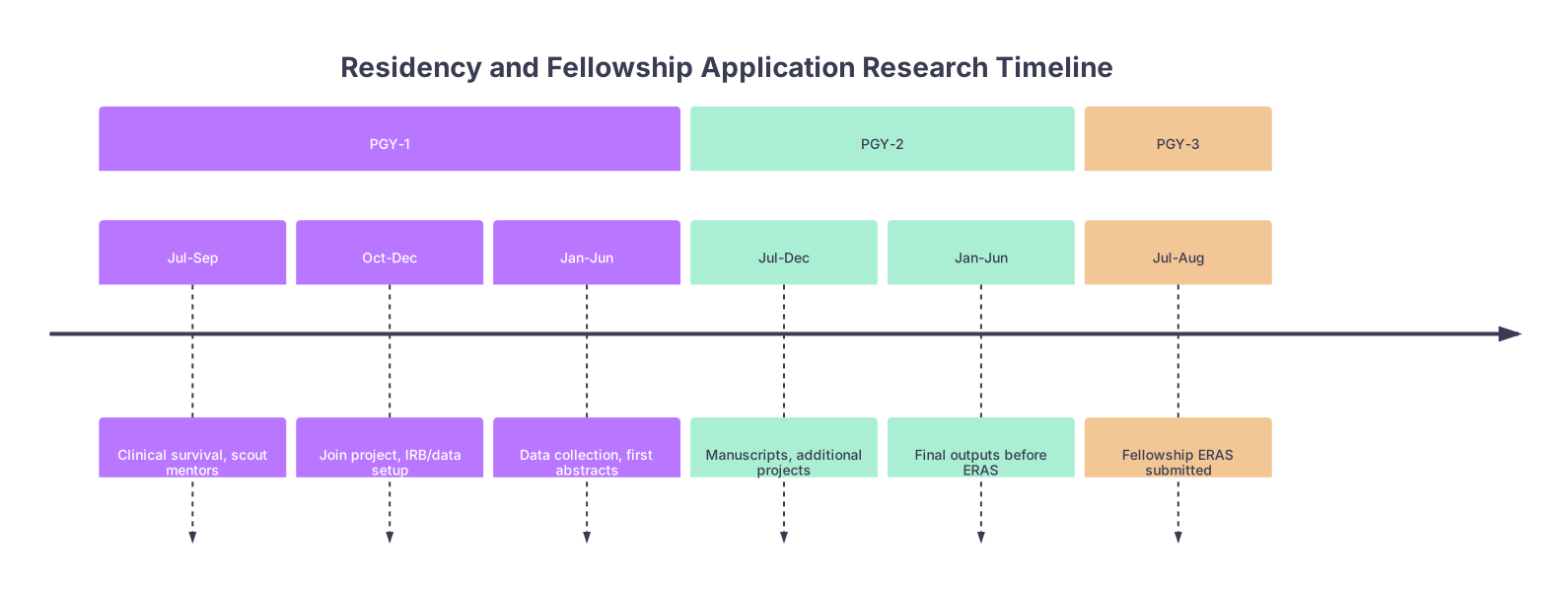
| Period | Event |
|---|---|
| PGY-1 - Jul-Sep | Clinical survival, scout mentors |
| PGY-1 - Oct-Dec | Join project, IRB/data setup |
| PGY-1 - Jan-Jun | Data collection, first abstracts |
| PGY-2 - Jul-Dec | Manuscripts, additional projects |
| PGY-2 - Jan-Jun | Final outputs before ERAS |
| PGY-3 - Jul-Aug | Fellowship ERAS submitted |
Work backward:
- Fellowship ERAS: Submitted July–August of PGY‑3.
- Last realistic window to have a new paper accepted before that: early PGY‑3.
- Which usually means:
- Manuscript submitted late PGY‑2.
- Data collected and analysis completed by mid‑PGY‑2.
- Project started by mid‑PGY‑1 or very early PGY‑2 at the latest.
That’s why “I’ll just start research sometime in PGY‑2” is fantasy if you’re aiming at top cards/GI/onc programs. You’ll run out of runway.
PGY‑2 Overview: Where Your PGY‑1 Research Should Be by Then
You asked about PGY‑1, but you can’t plan PGY‑1 without seeing where it feeds PGY‑2.
By the start of PGY‑2, a strong fellowship‑bound resident typically has:
- 1–2 abstracts accepted or under review for a regional/national meeting.
- At least 1 manuscript in draft, ideally close to submission.
- Clear mentorship in the specialty they want.
PGY‑2 is where volume and polish happen:
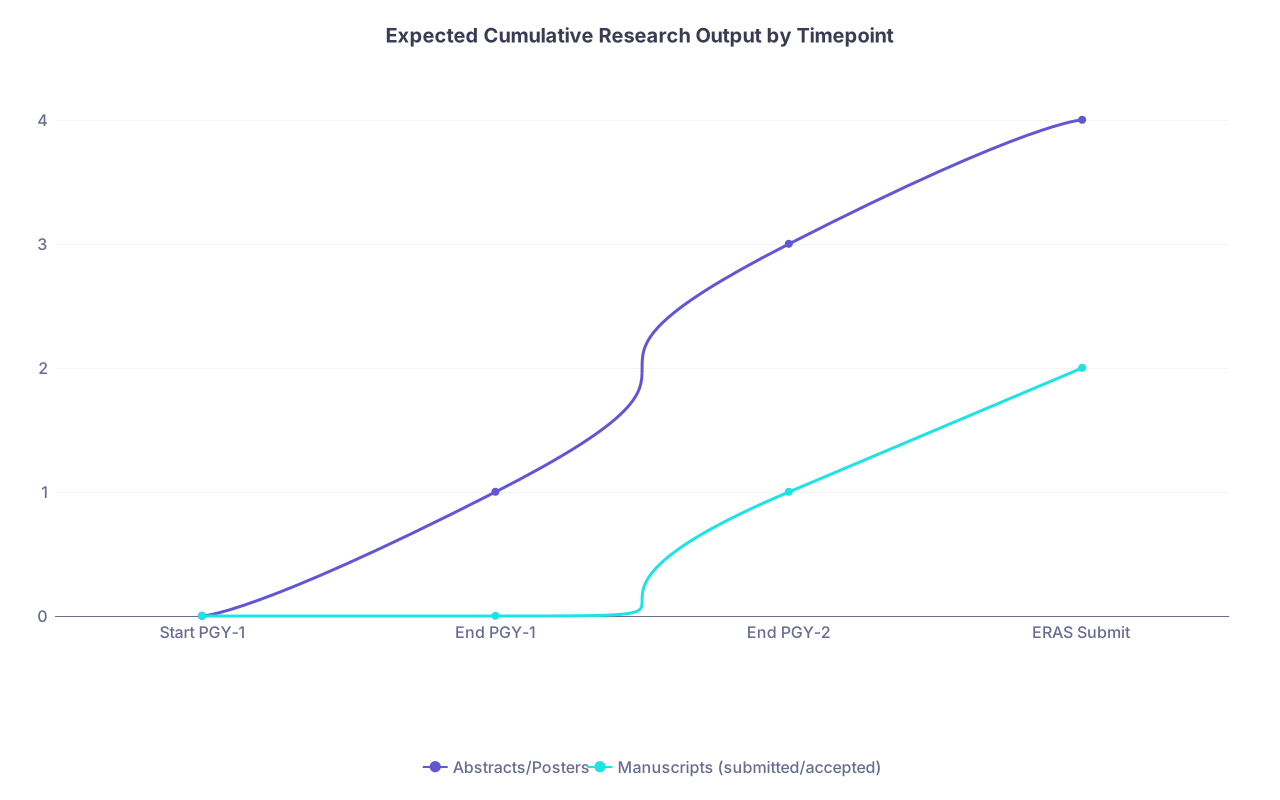
| Category | Abstracts/Posters | Manuscripts (submitted/accepted) |
|---|---|---|
| Start PGY-1 | 0 | 0 |
| End PGY-1 | 1 | 0 |
| End PGY-2 | 3 | 1 |
| ERAS Submit | 4 | 2 |
If you don’t front‑load the mentor and project selection in PGY‑1, you’ll be trying to compress all of this into one insane PGY‑2 year. It rarely works.
How Many Projects Should You Start in PGY‑1?
At this point you might be thinking, “Should I sign up for five projects so at least one finishes?”
No. That’s how you burn out and end up half‑doing everything.
Realistic numbers:
- By December of PGY‑1:
- 1 active project, 1 in planning or extremely small (case report).
- By June of PGY‑1:
- 2–3 total projects you’re attached to, with at least one near an abstract or manuscript.
Think of it like a portfolio:
- Project 1: Your “anchor” – most likely to become a paper before ERAS.
- Project 2: Smaller, quicker thing (case report, QI write‑up).
- Project 3 (optional): Stretch project with big upside but longer timeline, if you have a very organized mentor.
Choosing the Right Kind of Research in PGY‑1
You don’t need a randomized controlled trial to impress a fellowship program. You need completed things.
Best PGY‑1 research formats:
- Retrospective cohort or case‑control using existing data.
- Single‑center registry analysis where data is already being collected.
- Case reports that are actually interesting (not “another stable non‑STEMI”).
- QI projects with clear outcomes that can be written up.
Low‑yield PGY‑1 rabbit holes:
- Basic science unless you were already in that lab before residency and can maintain output.
- Huge multi‑institution collaborations where decisions crawl.
- Anything where your mentor uses phrases like “we’ll figure the data source out later.”
If your goal is a competitive fellowship, prioritize speed + completion over theoretical impact.
Week‑by‑Week Reality Check: What PGY‑1 Research Work Actually Looks Like
Let me be concrete: no one is giving you a weekly half‑day protected in most programs. You’ll squeeze this in.
During a typical ward month in PGY‑1:
- 1 early morning per week:
- 30–45 minutes: Clean data, update a table, or write 1–2 paragraphs of a manuscript.
- 1 post‑call afternoon:
- 45–60 minutes: Quick Zoom with mentor, work on abstract, revise draft.
On an elective month:
- 2–3 half‑days total:
- Deep work: data analysis, major draft sections, finalizing IRB.
The point: starting research in PGY‑1 isn’t about blocking entire days. It’s about committing small, regular windows starting around month 3–4 and not letting them drift.
Common PGY‑1 Mistakes That Destroy Future Fellowship Apps
You want opinions; here are mine.
Waiting for the “perfect” project
- You lose 6–9 months hunting, and then settle for something rushed.
- Fix: Take a “good enough” project with a closer endpoint and add a fancier one later.
Saying yes to everything three different attendings offer
- You end up with six IRBs, zero completed manuscripts.
- Fix: One main project, one smaller side project. That’s it for PGY‑1.
Not clarifying authorship early
- You do 80% of the grunt work, then get buried in the middle.
- Fix: Ask bluntly, “If I do X, Y, Z, would I be first or second author?”
Assuming med school research is enough
- Med school neurosurg bench work doesn’t automatically sell you as a future cardiologist.
- Fix: You need at least one thing tied to the specialty you’re applying into.
Ignoring timelines for meetings and journals
- Submitting an abstract in your PGY‑2 spring for a meeting that happens after ERAS = lower value.
- Fix: Prioritize outputs that will exist on paper before ERAS submission.
Quick Visual: PGY‑1 Research Priority Curve
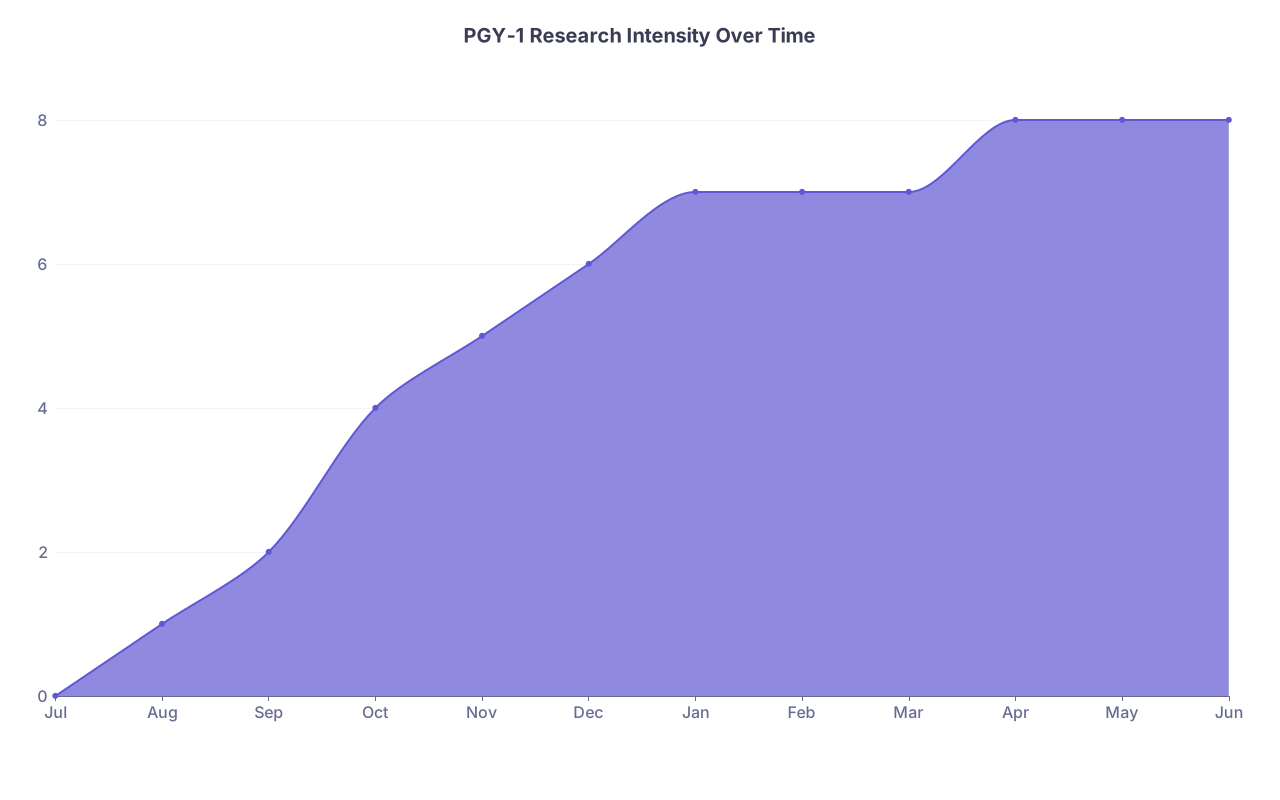
| Category | Value |
|---|---|
| Jul | 0 |
| Aug | 1 |
| Sep | 2 |
| Oct | 4 |
| Nov | 5 |
| Dec | 6 |
| Jan | 7 |
| Feb | 7 |
| Mar | 7 |
| Apr | 8 |
| May | 8 |
| Jun | 8 |
- Jul–Aug: Minimal. Just scouting.
- Sep–Dec: Ramp up—mentors, IRB, project commitments.
- Jan–Jun: Steady work—data, abstracts, manuscripts.
If your curve is flat at 0 until January, you’re behind, but not dead. If it’s flat until July of PGY‑2, you’re in trouble for the most competitive fellowships.
What You Should Do Today
You’re PGY‑1, somewhere in the chaos. Here’s the next move, not a 20‑point plan.
Today, do this:
- Open your email and draft one message to a potential mentor in the fellowship you care about.
Subject line: “PGY‑1 resident interested in [X] fellowship and research.”
Keep it short:
- Who you are.
- What you’re interested in.
- Ask for a 20‑minute meeting in the next 4–6 weeks to hear how residents work with them.
Send that email.
That’s the first concrete step that starts your PGY‑1 research clock. Everything else—projects, abstracts, manuscripts, fellowship interviews—flows from that moment.


