
What if your obsession with one big-name journal quietly kills your entire research output before ERAS even opens?
Let me be blunt: the cult of “prestige journals or nothing” has quietly wrecked more residency applications than a low Step score.
Not because prestige is bad. But because the way many med students and early residents chase it is dumb, inefficient, and completely misaligned with how program directors actually read your ERAS.
I’ve watched people spend 18 months polishing one Nature-adjacent manuscript that never gets accepted… while their classmates pump out 4–6 solid, mid-tier papers, a couple of posters, and walk into interviews with confident stories and a fat “Publications” section.
Guess which profile plays better in real life?
Not the fantasy one you see on Twitter. The boring, productive one.
Let’s go through the mistakes people make when they worship prestige journals—and how to avoid letting that tank your residency application.
The Core Problem: You’re Optimizing for the Wrong Audience
Program directors aren’t tenure-track basic-science faculty.
Most are:
- Busy clinicians
- Skimming ERAS in 30–90 seconds per applicant
- Looking for evidence you can:
- Start and finish things
- Work in teams
- Handle deadlines
- Contribute academically to their department
They are not sitting there cross-checking each journal’s impact factor.
If they notice prestige, it’s a bonus. A nice flex. Not the foundation.
The mistake is simple but deadly:
Treating your residency application like a junior faculty CV instead of a “can this person be a reliable resident and contributor?” snapshot.
So when you:
- Refuse to submit to normal journals because “my mentor thinks this is JAMA-caliber”
- Sit on completed data for a year waiting on a miracle acceptance
- Pass on smaller, doable projects because “I only want something that can go to NEJM”
…you signal the opposite of what PDs want: inflexibility, poor judgment, low throughput, and no proof you can bring projects across the finish line.
I’ve literally heard PDs say during file review:
“He’s got one ‘submitted to a high-impact journal’ and nothing else. I’d rather see three actual publications than one moonshot that might never land.”
They’re not impressed by your “submitted to Lancet.” They’re irritated you have nothing concrete.
How Prestige Chasing Quietly Destroys Your Productivity
Let’s spell out how this plays out in real time, because it’s usually death by a thousand tiny, “reasonable” decisions.
1. Eternally “Almost Ready for Submission”
The perfectionism trap. You (or worse, your PI) keep saying:
- “Let’s wait for one more analysis.”
- “We need to tighten the Discussion before sending to a top-tier journal.”
- “The figures need to be NEJM level if we’re aiming that high.”
Three months pass. Then six. Then a year.
By the time you finally submit, your data is no longer hot, your timeline is shot, and you’ve burned an entire research block for exactly zero tangible output on ERAS.
2. The Cascade of Rejections
Top-tier journals reject most submissions quickly, often without review.
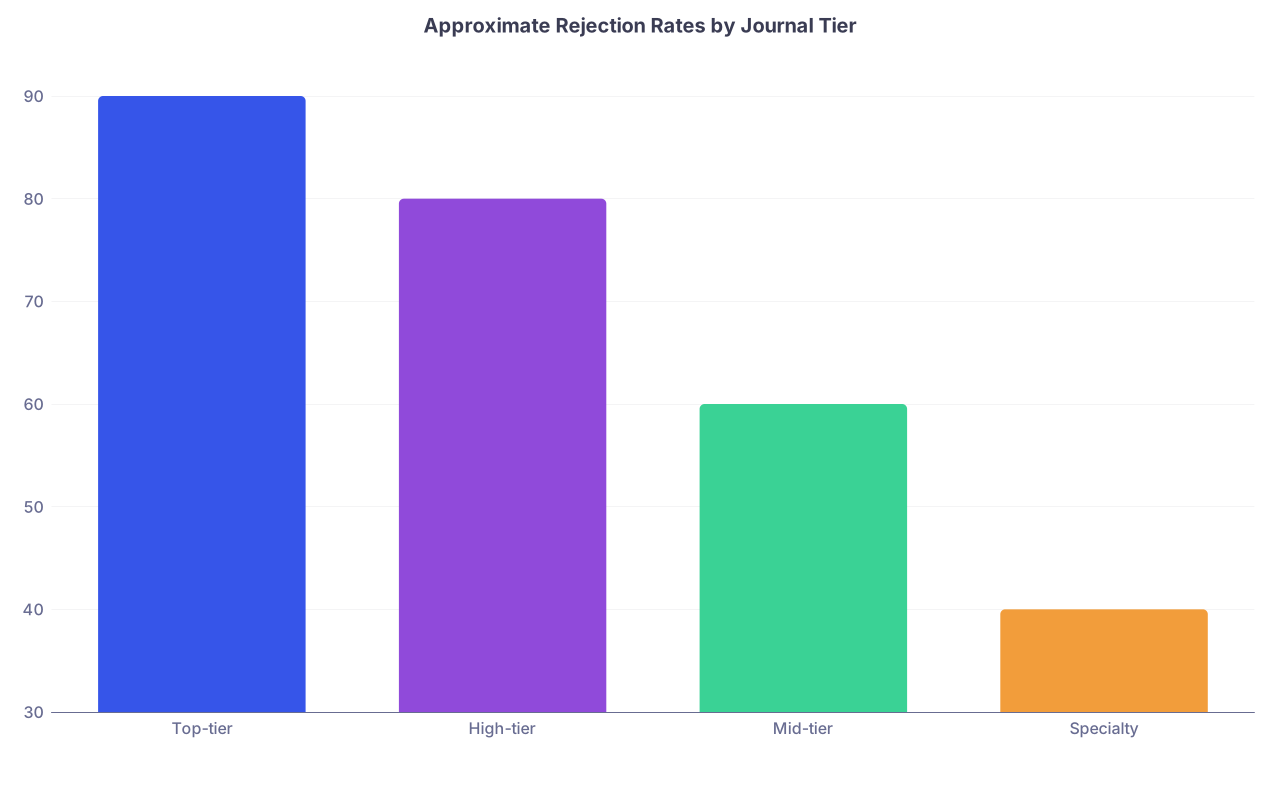
| Category | Value |
|---|---|
| Top-tier | 90 |
| High-tier | 80 |
| Mid-tier | 60 |
| Specialty | 40 |
Now stack that with human nature:
- Submit to top-tier → desk reject in 2–4 weeks
- Lick your wounds, “revise” a little, lose momentum → 4–6 more weeks
- Submit to high-tier → another quick reject
- Repeat ×3–4 journals
Suddenly 8–12 months are gone. Not because the science is bad. Because the target was wrong.
You could have been accepted at a reasonable specialty journal six months ago.
Instead, you’re writing “Manuscript in preparation” on ERAS. That line impresses no one.
3. Stalled Pipeline, Empty ERAS
Productive applicants don’t just get lucky. They build a pipeline:
- 1–2 projects in data collection
- 1–2 in analysis
- 2–3 in manuscript writing/submission
- A couple already accepted/published
Prestige chasers? They tend to have:
- One monster “flagship” project they nurse endlessly
- No bandwidth for quick-win projects (case reports, small series, QI) because “those don’t go to high-impact journals”
- A sad, thin “Scholarly Activity” section that doesn’t match how much time they say they spent on research
If you’re PGY-1 in med school research tracks or an MPH year and your ERAS has one accepted paper and a bunch of “submitted to [big-name journal]” lines, that’s a red flag.
Program directors can smell the story: over-ambitious targeting, underwhelming execution.
What Program Directors Actually Care About in Your Research
Here’s the part prestige chasers consistently misunderstand.
PDs are not asking:
- “Is this journal’s impact factor > 20?”
They’re asking:
- “Does this person finish what they start?”
- “Can they think clearly about data?”
- “Do they understand research enough to contribute to our departmental output?”
- “Is there a trajectory of growth?”

What they actually scan for
Rough hierarchy of what matters:
- Completed, peer-reviewed work
- Original research (clinical or basic science)
- Systematic reviews/meta-analyses
- Solid QI projects with real outcomes
- Evidence of continued engagement
- Multiple projects over time
- Presentations, posters, abstracts
- Coherence with your specialty story
- Radiology apps with imaging research
- IM apps with outcomes/epi work
- Your role
- First author vs middle author
- Can you explain your actual contribution?
Prestige journal name? It’s farther down the list than you think.
Think of it as:
| Factor | Relative Importance |
|---|---|
| Completed publications | Very High |
| First-author work | High |
| Specialty-relevant topics | High |
| Clear trajectory/productivity | High |
| Journal prestige | Moderate |
Chasing a single “wow” journal while neglecting volume, relevance, and completion shows poor prioritization.
Specific Mistakes That Tank Applications
Let’s get concrete. These are patterns I’ve seen repeatedly destroy otherwise strong candidates.
Mistake #1: One Mega-Project, Nothing Else
Scenario:
- You join a big multi-center RCT in MS2
- You spend 1.5 years helping with data, meetings, and drafts
- The PI insists on targeting NEJM
- By ERAS time, your status line is:
- “Co-author, manuscript submitted to high-impact general medicine journal”
On paper? You look like someone who spent massive time for zero guaranteed payoff.
Better alternative:
Take a smaller piece (sub-analysis, secondary outcome, methods paper) and publish that in a normal journal while the main RCT chases the moon. That way you get:
- 1–2 first- or second-author pubs in a reasonable journal
- Plus your name on the giant trial whenever it eventually lands
Productivity + prestige. Not either/or.
Mistake #2: Refusing “Low Impact” Opportunities
I’ve heard versions of this from students:
- “Case reports are useless.”
- “QI doesn’t count.”
- “I don’t want to waste time on stuff that won’t get into a top journal.”
That’s naïve.
A strong portfolio often looks like:
- 1–2 solid original studies
- 2–4 smaller items: case reports, QI papers, descriptive studies, clinic reviews
- Multiple posters/abstracts
Those “small” pieces:
- Show consistency
- Teach you the mechanics of IRB, data, submission, revision
- Give you concrete talking points on interviews
- Are far more likely to get accepted before ERAS opens
The mistake isn’t dreaming big. It’s refusing all the stepping stones because they don’t feel glamorous enough for your ego.
Mistake #3: Over-valuing Impact Factor, Under-valuing Fit
Targeting journals should be a strategy question, not a status question.
Bad approach:
- “Highest impact that will maybe accept it”
Smarter approach:
- “Where does this topic belong and where will it realistically get accepted within 1–2 cycles?”
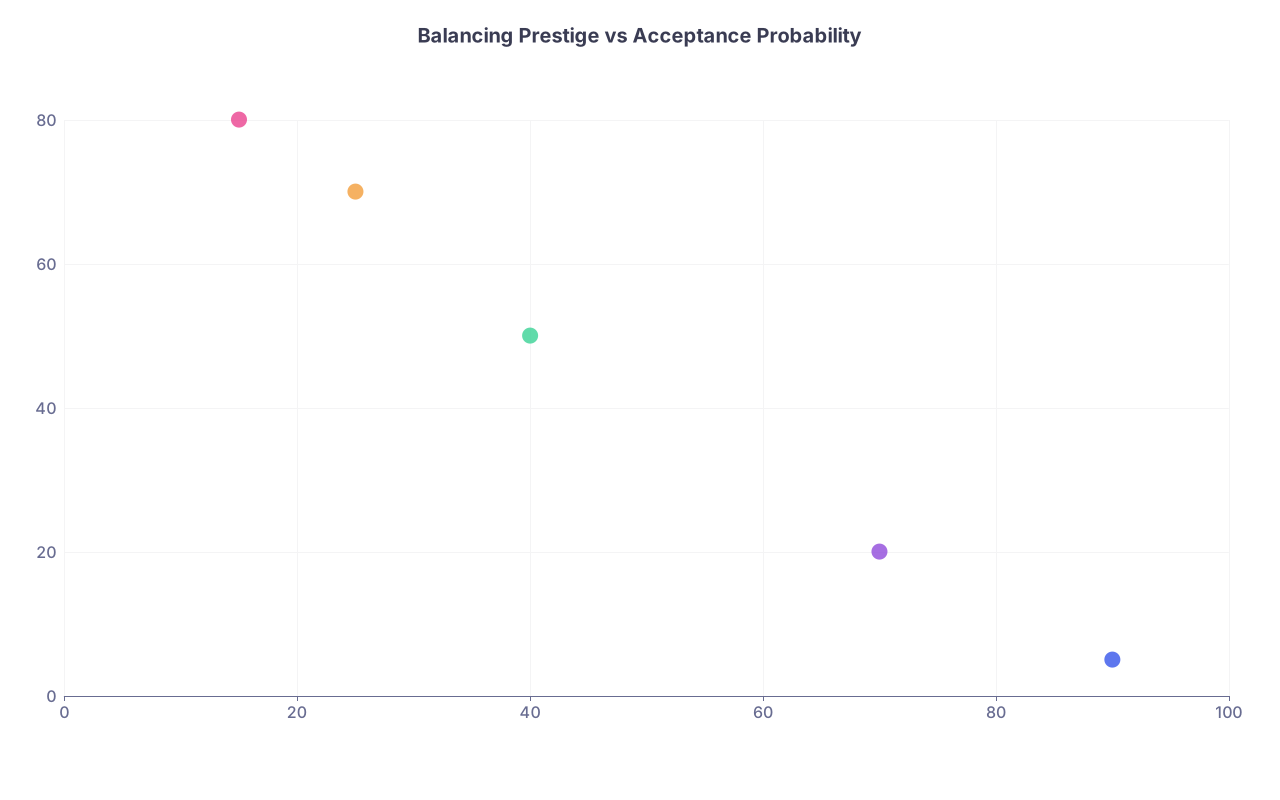
| Category | Value |
|---|---|
| Top-tier | 90,5 |
| High-tier | 70,20 |
| Mid-tier | 40,50 |
| Specialty | 25,70 |
| Niche | 15,80 |
(Think of x = rejection rate, y = speed/likelihood of acceptance.)
You don’t need to submit every paper to the highest possible tier. You need to be published where people in your field will actually read it—and where it gets accepted before it’s useless for your application.
How to Balance Ambition and Productivity (Without Selling Out)
I’m not telling you to never aim high. I’m telling you to stop being delusional about odds and timelines.
Here’s the framework that works.
1. Define Your Application Timeline First
Everything starts here. You back-plan your research to ERAS, not the other way around.
Key dates:
- ERAS opens for applicants: mid-late June
- Programs can start reviewing: early fall
- Realistic submission-to-acceptance + online publication: often 4–9 months (sometimes longer)
So if you’re:
- M3 starting a new project in January, hoping it’ll be “accepted and in press” by that same September? Very unlikely if you’re aiming for JAMA.
Your project plan has to align with reality. Prestige journals usually lengthen timelines.
2. Use a Tiered Submission Strategy
When you have a strong paper and want to try prestige without killing your timeline:
- Pick one truly aspirational journal
- If rejected, drop 1–2 tiers immediately, not one centimeter at a time
- Set hard deadlines:
- “If we don’t hear by X date, we submit to Journal B within 1 week.”
Do not spend a year stair-stepping from:
- NEJM → JAMA → Annals → BMJ → mid-tier general → specialty → subspecialty
You go:
- Big shot (maybe) → realistic primary home
3. Build a Mixed Portfolio Intentionally
Think in portfolios, not single trophies.
For a residency-focused applicant, an ideal mix by ERAS might be:
- 1 “stretch” project (maybe ongoing, maybe in review at a strong journal)
- 2–3 solid, first-author or major-contributor publications in reasonable journals
- 2–4 smaller or collaborative pieces (case reports, QI, brief comms)
- Posters/abstracts from most of the above
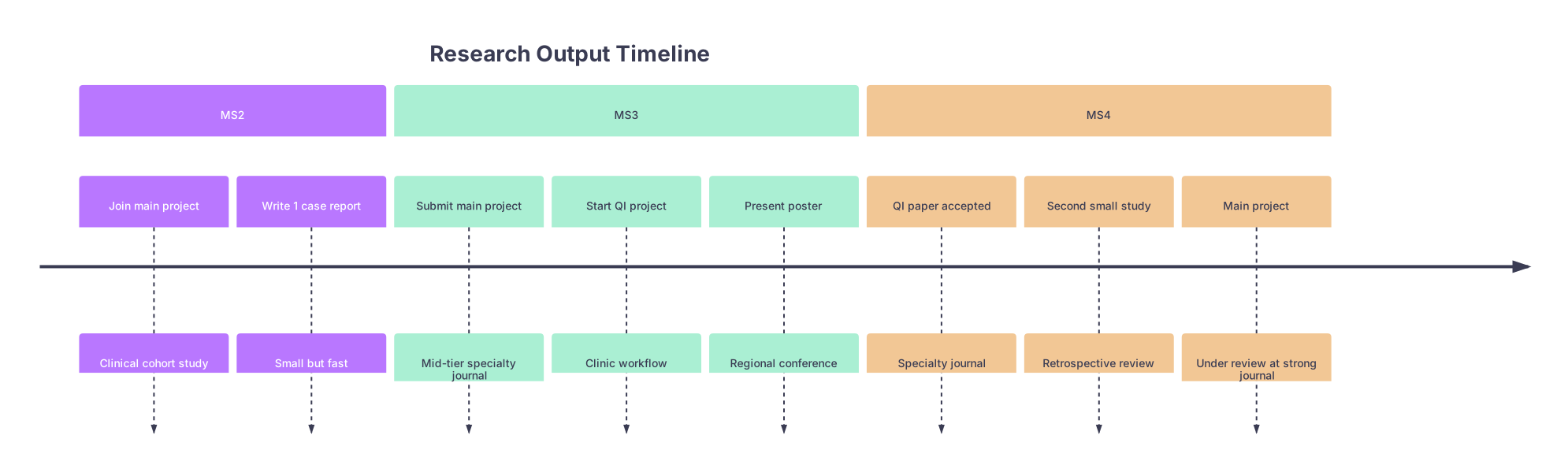
| Period | Event |
|---|---|
| MS2 - Join main project | Clinical cohort study |
| MS2 - Write 1 case report | Small but fast |
| MS3 - Submit main project | Mid-tier specialty journal |
| MS3 - Start QI project | Clinic workflow |
| MS3 - Present poster | Regional conference |
| MS4 - QI paper accepted | Specialty journal |
| MS4 - Second small study | Retrospective review |
| MS4 - Main project | Under review at strong journal |
Notice: there’s room for ambition. But productivity and completion drive the structure.
Red Flags in Your Current Approach (You Should Fix Now)
Run a quick audit on yourself. If any of these feel uncomfortably accurate, that’s your warning sign.
- You have 0 accepted pubs but 2+ “submitted to [famous journal]” on your CV
- You’ve been “working on the same manuscript” for > 12 months with no real submission
- You’ve said no to case reports or QI because they “don’t help”
- You can’t clearly say when your current projects will be ready for a realistic submission
- Your mentor keeps saying, “This is definitely high-impact,” but has no concrete timeline for submission and resubmission plans
If you see yourself in this list, you’re not doomed. But you do need to pivot. Now, not six months before ERAS.
How to Talk About Non-Prestige Work So It Still Lands Well
Another thing prestige chasers get wrong: they assume mid-tier journals = unimpressive.
Wrong. How you frame your work matters more than the journal title in most interviews.
Stronger approach on interviews:
- “I wanted to contribute to practical improvements in X, so we designed a QI project in our clinic that reduced Y by 30%. We submitted to [specialty journal] because that’s where people who actually run these clinics read.”
Or:
- “Our dataset was single-center and retrospective, so we targeted a solid specialty journal that publishes similar work. That way it reached the right audience instead of dying in the rejection cycle at general medicine journals.”
That sounds like:
- Good judgment
- Self-awareness
- Understanding of the literature ecosystem
Which is exactly what faculty want in a resident who’ll eventually mentor students in their program.
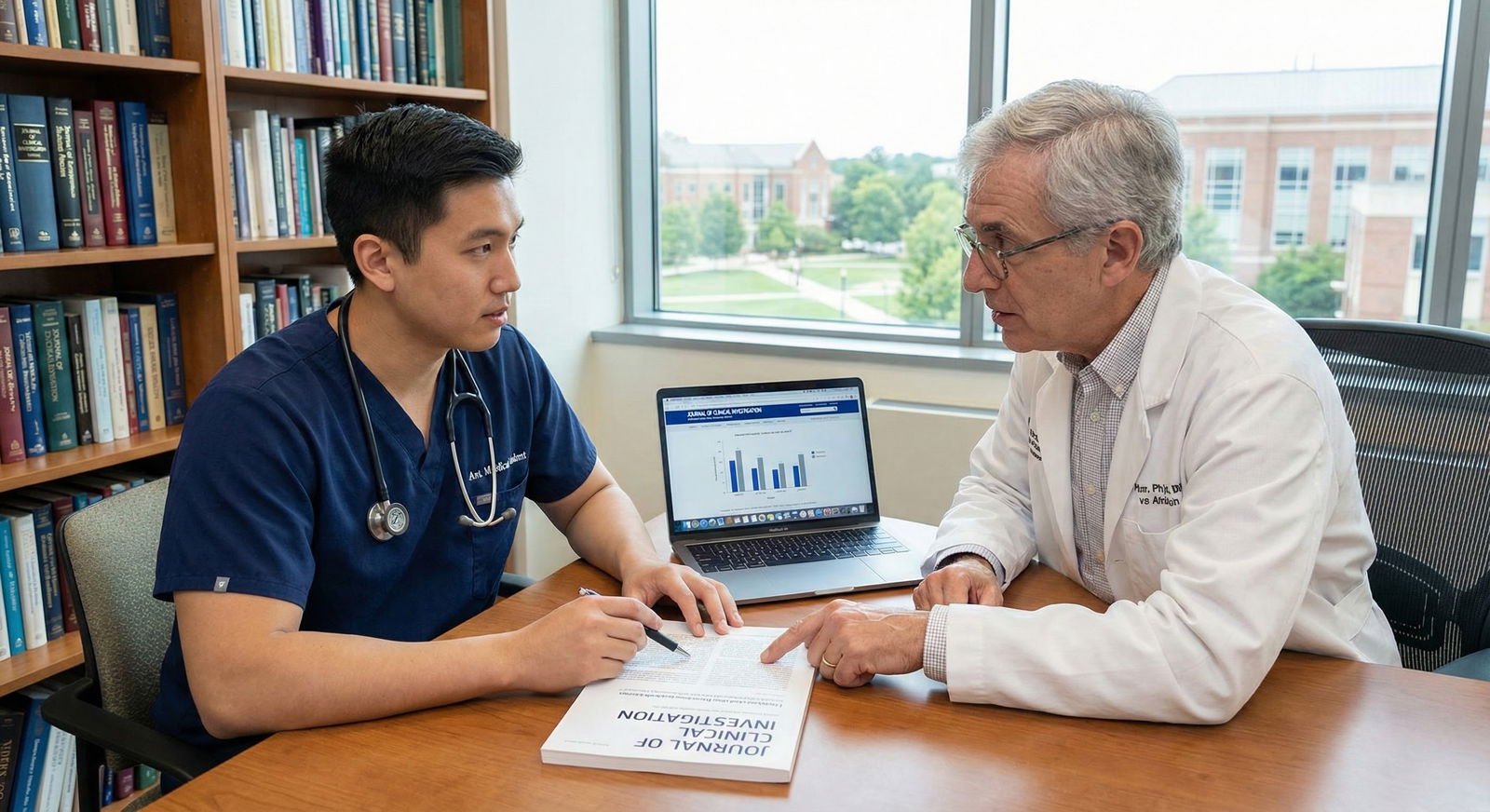
Choosing Mentors Who Won’t Trap You in Prestige Delusions
Sometimes this mistake isn’t entirely yours. It’s your PI.
Signs you’re with a prestige-obsessed mentor who might sabotage your timeline:
- Brags constantly about impact factors, rarely about trainees’ success
- Dismisses specialty journals as “not worth it”
- Has a history of med students with lots of “submitted” lines but few accepted publications before graduation
- Refuses to discuss backup plans (“We’re shooting for NEJM, period.”)
If you’re stuck with someone like this, protect yourself:
- Ask early: “What’s our realistic submission timeline? If we get rejected, what’s our backup journal and timing?”
- Push for spinoff projects you can own and steer to more realistic outlets
- Work with more than one mentor so one person’s prestige fixation doesn’t capsize your whole record
You’re not being disloyal. You’re managing risk.
When Is It Actually Smart to Aim Very High?
There are times when chasing a top-tier journal is rational:
- You have a truly novel finding with clear clinical practice impact
- Multi-center, large sample, rigorous methods
- Your mentor has actual experience publishing in those journals
- You’re not depending on this one paper to make your ERAS look alive
- You’ve already banked some publications in more accessible journals
In other words: prestige becomes a bonus on top of a solid base, not the only pillar holding your application up.
If your entire strategy is “I’ll get into derm because I’ll get my project into JAMA Derm,” you’re playing lottery with your career.
Two Things Almost No One Tells You
ERAS doesn’t differentiate “impact factor 25” vs “impact factor 3” like you think.
Many PDs honestly don’t care beyond “Is this a real, peer-reviewed journal in a real field?”First-author in a mid-tier specialty journal often carries more weight than middle-author in a prestige journal.
Because it shows ownership, initiative, and the ability to run a project.
Keep that in your head every time you’re tempted to say, “Let’s just hold off—this might be NEJM material.”
Final Takeaways
- Prestige journals are fine goals, but if you chase them at the expense of finished, published work, you cripple your residency application.
- Program directors care far more about completion, consistency, and relevance than the logo on the PDF.
- The safest path: build a mixed portfolio—some ambitious projects, plenty of realistic ones—and always align your journal targets with your ERAS timeline, not your ego.