

The myth that “real” residents just power through burnout and crush boards anyway is garbage.
If you’re here, you’re probably secretly wondering: “What if I actually can’t? What if I just… stop studying? Like my brain refuses. Then I fail. Then my career is over. Then what?”
Let’s walk straight into that nightmare scenario instead of tiptoeing around it. Because the fear of shutting down is sometimes worse than the actual risk.
The Ugly Thought: “What If I Just Can’t Study Anymore?”
You know that moment where Anki, UWorld, or TrueLearn is open in front of you, but you’re just… staring? You scroll your phone, reread the same question stem four times, and nothing goes in. Then you think:
“I’m wasting time. I’m going to fail. Everyone else is studying. Why can’t I just try harder?”
Here’s the part nobody tells you during orientation: there’s a difference between “I don’t feel like studying” and “my nervous system has slammed the brakes.”
Burnout shutdown feels like:
- You open your laptop and instantly feel nauseated or panicky
- You keep telling yourself “I’ll start after this one thing” and never start
- You can’t retain anything, no matter how long you stare at the page
- The idea of one more practice exam makes your chest tight
That’s not laziness. That’s your brain throwing the circuit breaker.
And yeah, that can collide with board exams. I’ve watched it happen to interns prepping for Step 3, to IM residents panicking before ABIM, to pediatrics residents freezing before their in‑training exam.
The terrifying question: what if that shutdown doesn’t turn off in time?
Worst-Case First: What Actually Happens If You Stop Studying?
Let’s yank the band‑aid off. What if you really did just… stop studying for a while?
I don’t mean “I cut back from 4 hours a day to 1.” I mean: you go through a week (or more) where essentially nothing happens.
Here’s what does not automatically happen:
- You don’t instantly get fired.
- You’re not automatically kicked out of residency.
- You’re not banned from ever passing boards.
Programs care about actual test outcomes and persistent patterns, not the fact that in February of PGY2 you had a meltdown and took six days to breathe.
Now, consequences can show up, depending on timing and severity:
| Scenario | Likely Consequence |
|---|---|
| Shutdown months before exam | Recoverable with plan |
| Shutdown 2–3 weeks before exam | Might need reschedule |
| Fail in‑training exam | Closer monitoring, study plan |
| Fail board exam | Retake, program involvement |
| Repeated fails / concerns | Possible remediation or extension |
None of these equal “life ruined, career over.” Painful? Yes. Embarrassing? Often. Unfixable? No.
The bigger problem isn’t a week of shutdown. It’s the silence around it. People don’t tell their PD. They don’t tell co‑residents. They pretend they’re grinding while secretly spiraling. That’s how a temporary shutdown turns into a real disaster.
The Physics of Burnout: Why Your Brain Just Stops
You’re not imagining it: there’s a point where “try harder” stops working.
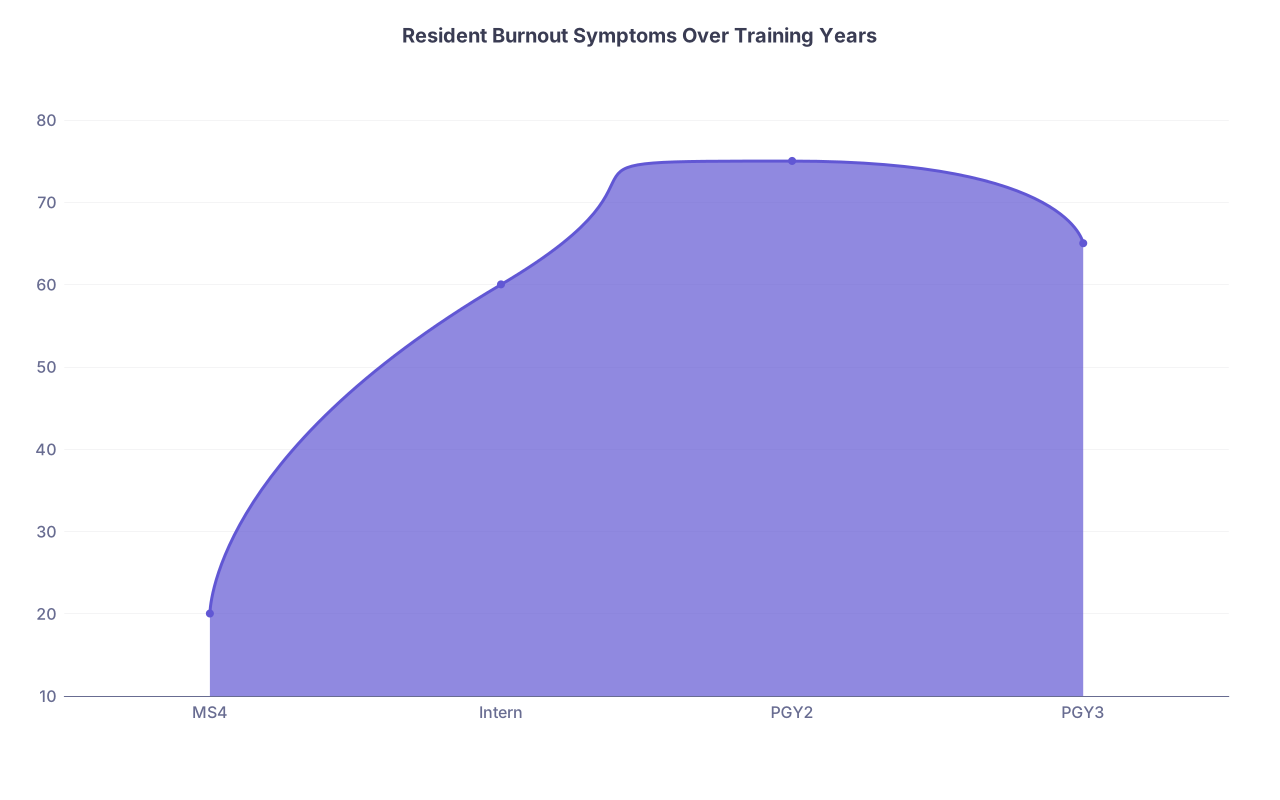
| Category | Value |
|---|---|
| MS4 | 20 |
| Intern | 60 |
| PGY2 | 75 |
| PGY3 | 65 |
By mid‑PGY2, a lot of residents I’ve talked to hit a wall. Chronic sleep debt. EHR fatigue. Constant pager anxiety. Family guilt. And then someone casually adds: “Oh by the way, your entire future depends on this high‑stakes exam. Just squeeze in a few hours of studying per day.”
Your brain does the math and basically says: absolutely not.
Signs you’re not being dramatic, you’re actually cooked:
- You’re crying in the call room over a UWorld block that you would’ve crushed as an MS2
- You feel numb with patients and panicked with practice questions – completely backwards
- Days off don’t feel restorative; you’re just trying to “catch up” on life and failing
- The thought “If I fail, at least I’ll get a break” has crossed your mind and scared you
That last one? I’ve heard it more than once from residents who looked completely “high‑functioning” from the outside.
Shutdown is not a character flaw. It’s physiology. Your brain can’t run on fear and caffeine forever.
How Much “Shut Down” Is Too Much Before Boards?
Let’s be concrete, because the vagueness is what fuels 3 a.m. panic.
You might be thinking: “If I lose a week, I’m toast.” I don’t agree.
Here’s a rough, reality-based look at what I’ve seen residents survive:
| When You Shut Down | Reality Check |
|---|---|
| 3–4 months out | Very recoverable, with a reset |
| 6–8 weeks out | Still workable, might need adjustments |
| 2–3 weeks out | Might need to reschedule or radically simplify |
| Final week | Focus shifts from “gain” to “preserve function” |
Even 2–3 weeks of poor studying isn’t automatically catastrophic, especially if:
- You’ve been learning on the job (real clinical work counts)
- You’ve done at least some questions before the crash
- Your baseline test performance was reasonable
What matters most is what you do after you notice you’ve shut down. Not how “perfect” you were before it happened.
The Silent Terror: “If I Tell Someone, They’ll Think I’m Incompetent”
This is usually the real reason people don’t ask for help.
You imagine walking into your PD’s office and saying: “So… my brain has stopped letting me study and I’m scared I’m going to fail.” And then you imagine:
- Dismissal: “Everyone’s tired, just push through.”
- Judgment: “Maybe you’re not cut out for this specialty.”
- Punishment: “We’re going to put you on some kind of watch list.”
I’ve seen some tone-deaf responses, sure. I’ve also seen PDs quietly reschedule exams, help residents get time off, set up tutoring, or even get them into therapy without blasting it to the whole department.
You don’t open with “I’m broken.” You open with something like:
- “I’m concerned about my board prep and how burned out I’m feeling. I’m not making progress despite trying. I need help coming up with a plan before this turns into a bigger problem.”
That’s not weakness. That’s insight and risk management.
If waiting until you’re failing practice tests and not sleeping is “responsible,” I don’t know what we’re doing.
Okay But What If the Worst Actually Happens and I Fail?
Let’s go right there, because your brain already has.
You shut down. You do a half‑baked prep. You sit for the exam anyway because you’re terrified of “falling behind.” You fail.
Now what actually happens?
Typical chain:
- You get the score report. Most people find out alone, on their phone, in the bathroom or their car. It sucks.
- You tell your PD or chief. They’re often less shocked than you are, because they’ve seen smart people fail before.
- The program works with you on a remediation plan: dedicated study time, maybe a leave, structured resources, maybe a review course.
- You retake the exam. Most people pass the second time once the burnout is treated like a clinical problem, not a moral failing.
What doesn’t happen (in almost every normal program):
- You’re thrown out on the street the next day
- Your co-residents are told you’re “a failure”
- No fellowship will ever look at you again
Is it harder? Yes. More hoops? Definitely. Emotionally brutal? For many, absolutely.
But I’ve watched:
- A PGY3 who failed their specialty boards the first time still match into a solid fellowship on the second attempt
- People who needed an extra year in residency because of exam issues still end up as attendings that juniors respect and go to for help
- Residents swear “my life is over” and then two years later casually mention their attending job and barely talk about the exam anymore
You’re writing the story in your head like this is the final chapter. It really, really isn’t.
How To Pull Out of a Shutdown Spiral (Without Magical Thinking)
If you’re reading this with a pit in your stomach thinking “this is literally me,” here’s what pulling out can actually look like. Not idealized. Realistically messy.
First, you stop lying to yourself about “I’ll do 6 hours tomorrow to make up for today.” That fantasy is how you end up doing zero.
You drop the bar to something your burned‑out brain might actually accept:
- 20–40 questions. Timed or tutor, doesn’t matter. Just contact with material.
- 10–15 minutes of review of a weak topic, not a full chapter.
- One tightly protected hour, not a heroic 4-hour block that never happens.
You explicitly trade perfection for consistency. On purpose.
Then you stop pretending life and residency don’t count as “studying.” They do. Every patient is pattern recognition, pathophys, management. It’s not nothing. It’s actually what many board questions are built on.
You also figure out what’s actually frying your circuits:
- Is it fear of failure to the point you’re paralyzed?
- Sleep deprivation to the point your memory is trashed?
- Constant schedule chaos so you never get into a rhythm?
- Depression or anxiety that’s more than “I’m tired”?
Different problem, different fix. Medication, therapy, schedule changes, formal accommodations – all of these are real tools residents use, quietly, more often than anyone admits.
If you’re utterly shut down, I’d rather see:
- 1–2 weeks of honest reset + gradual reentry
…than… - 6 weeks of miserable, ineffective “studying” where you just grind your self-esteem into powder.
One is recoverable. The other just deepens the hole.
Talking About It Without Triggering Alarm Bells
Here’s the mental script I wish more residents had.
With a PD or APD:
- “I’m worried my burnout is interfering with board prep. I’m doing [X], but it’s not sticking. I don’t want this to become a bigger issue. Can we talk about options – whether that’s study time, resources, or adjusting my test date?”
With a trusted attending:
- “You’ve seen people go through boards and burnout. Can I get your honest take on how bad it is if I need to slow down or adjust my exam plan?”
With co-residents (the safe ones, not the competitive ones):
- “My brain’s been really shutting down with studying. What actually helped you when you hit that wall?”
You don’t have to unpack your entire soul in one meeting. You’re opening the door a crack so you’re not alone in the worst-case scenario.
And if you get a dismissive response from one person, that doesn’t mean everyone will respond like that. Try someone else. Different programs, different humans.
If You’re Reading This at 2 a.m. in Full Panic Mode
Let’s zoom in to today. Right now. Because your brain is probably time‑traveling to ten horrible futures at once.
Today is not your whole exam. Today is just one tile in the mosaic.
What you can actually do today:
- Pick one: 20 questions OR 15 minutes of reviewing missed questions. Not both.
- Eat one real meal, not just coffee and something from the vending machine.
- Decide how many hours of sleep you’re giving yourself tonight and protect it like it’s part of your study plan. Because it is.
- Text one person: co-resident, partner, friend. Something as small as “Boards are getting to me” is enough.
Then tomorrow, you repeat something similarly small. And you keep stacking tiny, completely unimpressive days that, weirdly, end up mattering way more than the mythical “perfect study day” you never actually pull off.
Here’s a rough version of what those days can add up to over a month:
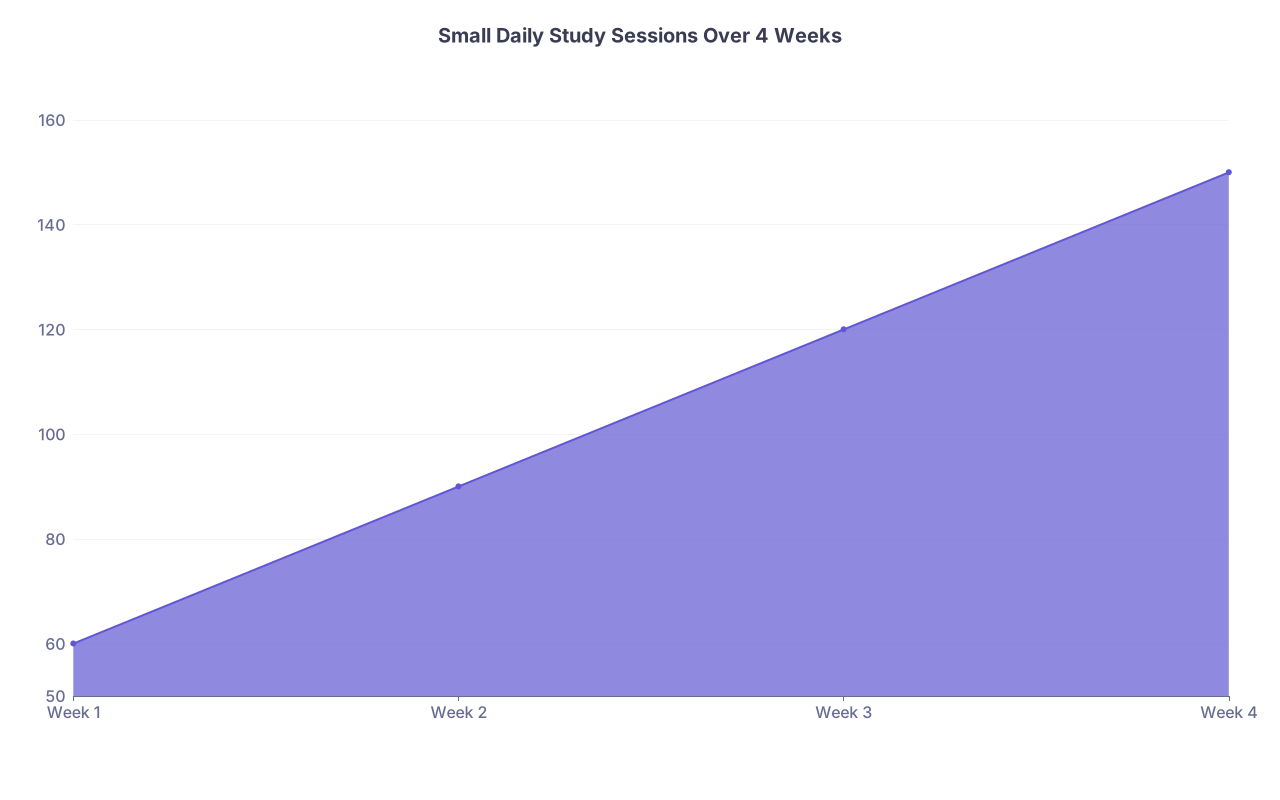
| Category | Value |
|---|---|
| Week 1 | 60 |
| Week 2 | 90 |
| Week 3 | 120 |
| Week 4 | 150 |
Not ridiculous. Not residency‑breaking. But real.
And if, even with that, you still feel nothing goes in? That’s your sign this is beyond just “bad habits.” That’s when you pull in help, like you would for a patient whose symptoms aren’t responding to basic treatment.
FAQ: The Questions That Keep You Up at Night
1. “If I take a break from studying for 1–2 weeks, am I definitely going to fail?”
No. A short, intentional break is not automatic failure. Especially if:
- You’ve already been exposed to the material before
- You’re learning clinically on the job
- You come back with a simplified, realistic plan
What kills people more often than a short break is denial and ineffective “studying” where you’re just staring at questions and hating yourself. A clean break plus a restart is often better than dragging yourself through fake productivity for weeks.
2. “Will my program think I’m weak if I say I’m burned out and scared about boards?”
Some might handle it poorly. Many won’t. I’ve seen PDs quietly:
- Move exam dates
- Create lighter rotations before the test
- Set up paid review courses or tutoring
- Advocate for leave when needed
You’re not walking in saying “I can’t do my job.” You’re saying, “I want to protect my ability to do my job long‑term, and I need help making sure boards don’t break me.” That sounds a lot more like responsibility than weakness.
3. “If I fail, will I ever match into fellowship or get a good attending job?”
Is it harder with a fail on your record? Yes. Does it shut every door? Absolutely not. People with failed Step 1, failed specialty boards, or repeated attempts still get fellowships and attending jobs. They usually just need:
- A clear “this is what went wrong, this is what changed” story
- Strong clinical evaluations and letters
- A later record of passing and performing well
Programs and employers care a lot about who you are now, not just the worst test moment you ever had.
4. “How do I know if I need to reschedule my exam versus just push through?”
Red flags that rescheduling should be on the table:
- You’re having panic attacks or near‑panic trying to study
- You can’t complete even small blocks of questions
- Your practice scores are nowhere near the passing zone and not moving
- You’re dealing with major life events (bereavement, serious illness, severe depression) on top of residency
If it feels like you’re choosing between your sanity and the exam date, that’s not a brave grind. That’s a setup. Talk to someone in your program before you’re three days out and paralyzed.
5. “What if I just never feel ready? How do I not shut down in the final stretch?”
Most residents never feel “ready.” That’s normal. What you can do is:
- Define “good enough” based on practice scores and trends, not feelings
- Cap your daily prep so you’re not burning out right at the end
- Protect sleep in the final 5–7 days more fiercely than question volume
- Shift the last few days to light review and confidence‑building topics
Your job in the final stretch isn’t to learn everything. It’s to show up with enough brain function to use what you already know. Sometimes, the most “productive” thing you can do the week before your exam is stop trying to fix everything and let your nervous system calm down.
Two main truths to walk away with:
- Shutting down on studying is not proof you’re weak or doomed; it’s a sign your system is overloaded and needs an actual plan, not more self‑loathing.
- Even in the worst‑case scenario – pausing your prep, rescheduling, or failing – there are real, boring, concrete paths forward that residents take all the time and still end up as attendings.
You’re allowed to be scared. Just don’t let that fear convince you that once you hit shutdown, the story’s already over. It really, really isn’t.


