

Burnout does not mean you chose the wrong specialty. It usually means the system is burning you out exactly as designed.
Let me be blunt: “Maybe you picked the wrong field” is one of the laziest, most blame-shifting explanations for resident burnout. Attendings say it, co-residents repeat it, and some of you start to believe it. The data says otherwise.
The Myth: Burnout = Bad Fit
You know the script.
You’re a PGY-2 in internal medicine, you’re dreading sign-out, you flinch when your pager goes off, and you’re googling “career change from residency.” Someone—often meaning well—says: “Maybe IM just isn’t your passion. Maybe you’re more of a lifestyle specialty person.”
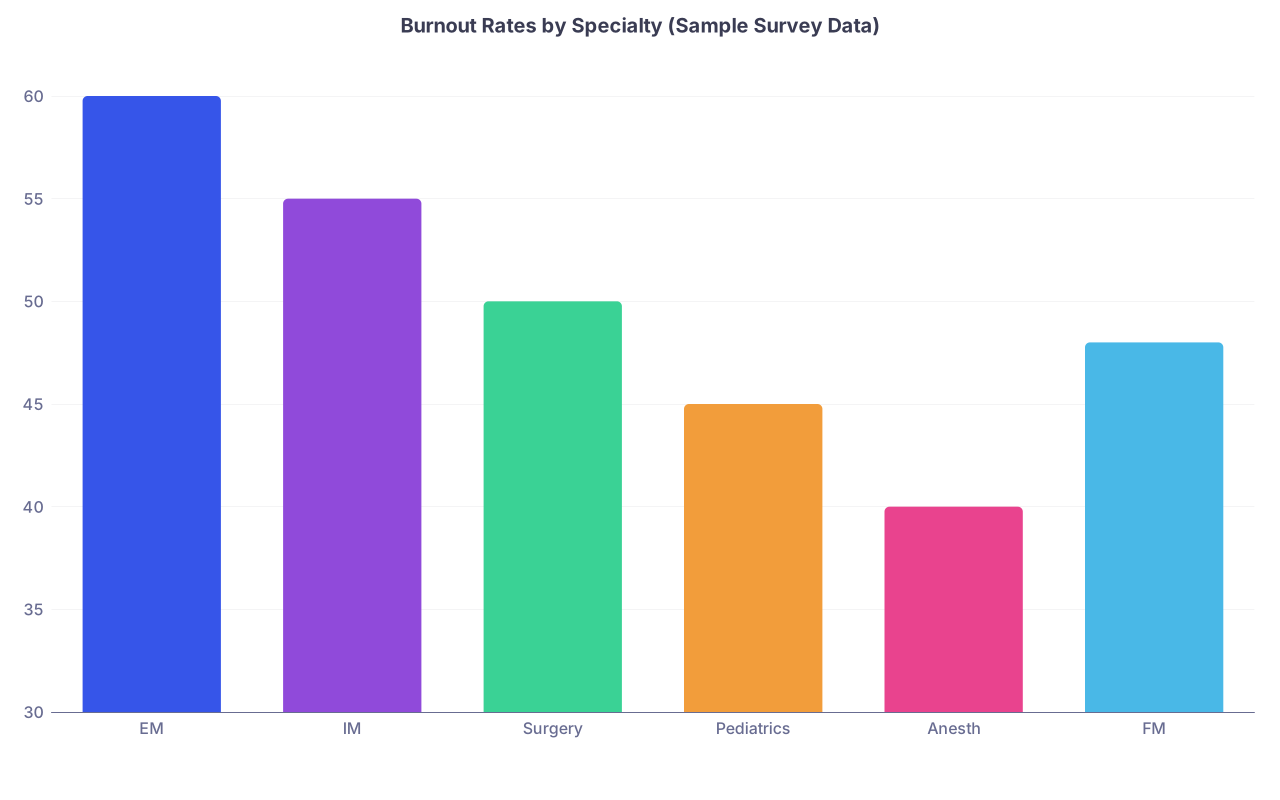
Here’s the problem. Burnout is rampant across specialties, including the so-called “lifestyle” ones. If burnout simply meant “wrong fit,” the numbers would not look like this.
| Category | Value |
|---|---|
| EM | 60 |
| IM | 55 |
| Surgery | 50 |
| Pediatrics | 45 |
| Anesth | 40 |
| FM | 48 |
Different surveys report slightly different percentages, but consistently:
- Emergency medicine, internal medicine, family medicine, OB/GYN, and surgery are usually near the top.
- Anesthesia, radiology, pathology—often framed as “better lifestyle”—are not burnout-free. Just somewhat lower on average.
- Residents in the same specialty can range from thriving to barely functional in the same program.
If this were purely a “specialty fit” issue, we’d expect clear winners and losers. That’s not what the evidence shows. What we see is that structure and environment drive most of the variance, not some internal calling meter.
What Burnout Actually Is (And Is Not)
Burnout is not “I don’t like my job today.” It’s not “I’m tired on nights.” It’s a specific, well-studied syndrome.
Core dimensions (Maslach Burnout Inventory and similar tools):
- Emotional exhaustion
- Depersonalization (cynicism, detachment, seeing patients as tasks)
- Reduced sense of personal accomplishment
You can love cardiology and still feel nothing but dread when your pager goes off because you’ve been on 28 of the last 32 days. You can be genuinely called to pediatrics and still feel detached from families after chronic understaffing and constant moral distress.
The fact you’re burnt out says more about:
- Your workload
- How much control you have
- Whether your efforts feel meaningful or pointless
- How much institutional support you get
- How much chronic sleep deprivation you endure
than it does about whether you were “meant” for IM vs radiology.
If burnout were simply “wrong specialty,” reducing hours, improving staffing, and increasing autonomy wouldn’t show consistent improvements. But they do. Over and over again.
What the Data Actually Points To
Let’s separate three things people always conflate:
- Wrong specialty
- Bad program or toxic environment
- Systemic design that makes burnout probable regardless of specialty
1. The “Wrong Specialty” Claim Is Far Weaker Than People Think
People who loudly insist “specialty fit” is everything usually rely on anecdotes (“My friend switched from surgery to anesthesia and is so much happier!”), not data.
That surgery-to-anesthesia story? I’ve seen the other side too: people who switched fields and discovered they were just as burnt out—because the underlying problems followed them:
- Poor sleep
- No control over schedule
- Constant documentation burden
- Toxic attending culture
When researchers actually look at predictors of burnout, “specialty” shows up. But it’s not remotely the strongest predictor.
Common stronger predictors:
- Work hours
- Perceived control over schedule
- Level of support from colleagues/leadership
- Efficiency of the work environment (documentation, EMR chaos, staffing)
- Mistreatment, harassment, discrimination
Specialty is basically a proxy for these conditions. EM tends to be intense, high-acuity, chaotic, often understaffed. IM wards at some programs are just slow-motion EM with more notes. Radiology and derm are buffered from some of this. But that’s not “fit”; that’s exposure.
2. Program and Environment Matter More Than Title on Your Badge
Here’s where people really fool themselves. They think “I hate residency in this IM program, so I chose the wrong specialty.” Sometimes you just chose the wrong program.
Look at what changes burnout rates within the same specialty:
- One IM program with 70+ hour weeks, poor staffing, constant cross-cover, no jeopardy system.
- Another IM program with aggressive work-hour enforcement, protected education, responsive leadership, and adequate ancillary staff.
Same specialty. Totally different lived reality.
| Factor | Program A (High Burnout) | Program B (Lower Burnout) |
|---|---|---|
| Avg Weekly Hours | 75+ | 55-60 |
| Weekend Frequency | 3 of 4 | 2 of 4 |
| Ancillary Support | Limited | Strong |
| Response to Concerns | Dismissive | Structured + transparent |
| Education Protection | Frequently interrupted | Strictly protected |
If burnout were about some innate mismatch between your soul and internal medicine, these environmental changes would not matter this much. But they do. Residents move to more supportive programs and report massive improvements—in the same field.
Program culture changes everything:
- Are attendings willing to help when you’re drowning, or do they say “this is what I went through”?
- Is there psychological safety to admit you’re overwhelmed?
- Are you punished or supported when life hits hard (illness, family crisis)?
There is no “right specialty” robust enough to make a toxic environment feel healthy.
3. The System Is Engineered for Burnout, Not Meaning
A quick reality check. Residency was literally built on exploitation and sleep deprivation. The modern tweaks (80-hour limit, duty hour rules) are a bandage on a system whose core design principle is “cheap labor, all hours.”
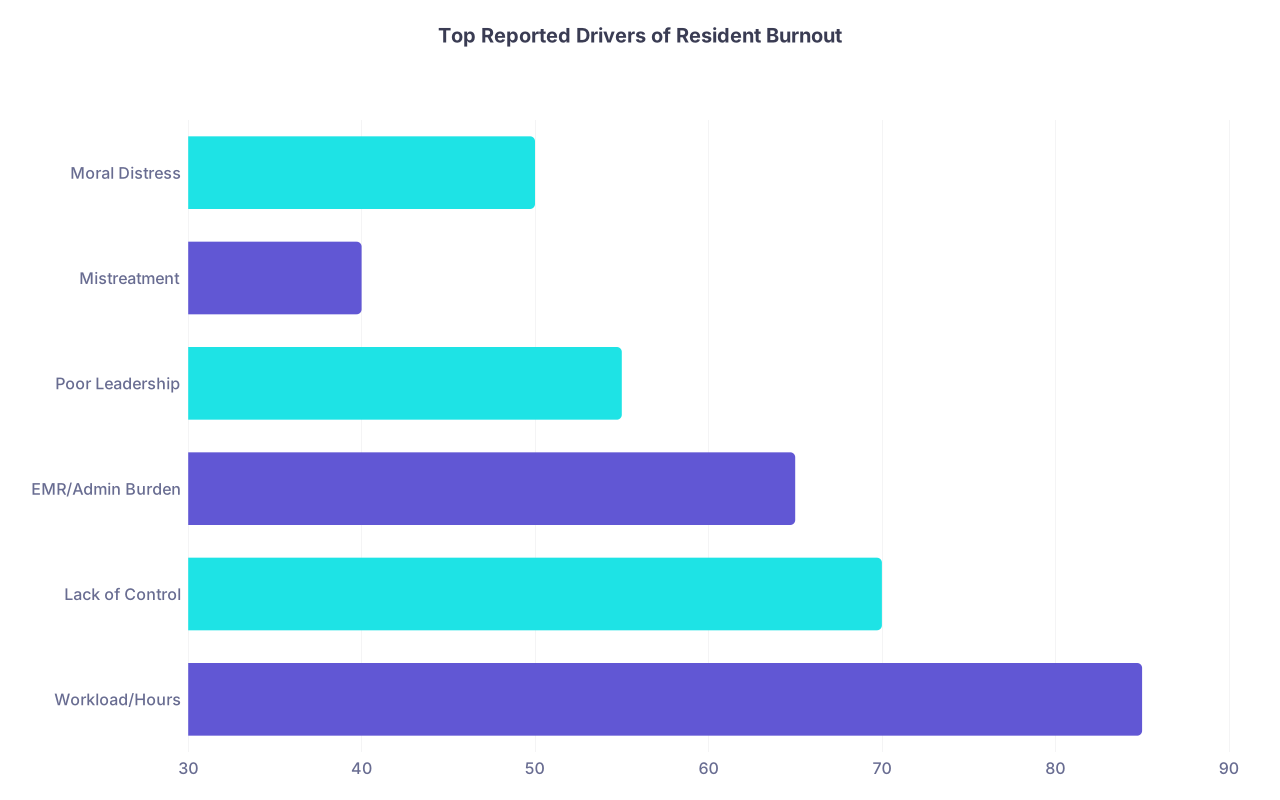
Look at what residents actually report as burnout drivers:
| Category | Value |
|---|---|
| Workload/Hours | 85 |
| Lack of Control | 70 |
| EMR/Admin Burden | 65 |
| Poor Leadership | 55 |
| Mistreatment | 40 |
| Moral Distress | 50 |
These are structural:
- Too many patients, not enough time
- Inflexible schedules, punishing call structures
- EMRs that turn every simple task into a multi-click nightmare
- Leadership more focused on optics than resident well-being
- Being forced to discharge unsafe patients or deny needed care
You don’t “specialty fit” your way out of those.
When “Wrong Specialty” Is Actually Part of the Story
Now here’s where I’ll be fair: sometimes specialty really is wrong.
Not because you’re burnt out. But because core features of the field clash with who you are.
Patterns I’ve seen that really were specialty mismatch:
- A highly introverted person who gets deeply drained by constant rapid-fire social interaction trying to make it through EM or outpatient-heavy specialties.
- Someone who truly hates procedures fighting their way through surgical training.
- A person who needs predictable routines and long-term relationships in a field like trauma surgery or EM where it’s constant churn and chaos.
The key distinction:
When it’s a true mismatch, even under decent working conditions, the core work feels wrong. You can be rested, fairly treated, reasonably supported… and still think “I hate this type of medicine.”
That’s very different from:
- “I loved this rotation as a student, but now residency has crushed me.”
- “When I get one normal day with enough staff, I actually enjoy the clinical work again.”
- “On lighter rotations or consult months, I remember why I picked this field.”
Those patterns scream system problem, not “you idiot, you picked the wrong specialty.”

| Step | Description |
|---|---|
| Step 1 | Feeling burnt out |
| Step 2 | Likely system and workload issue |
| Step 3 | Program or environment problem |
| Step 4 | Possible true specialty mismatch |
| Step 5 | Enjoy work on lighter days? |
| Step 6 | Ever enjoyed this specialty? |
The Real Damage of the “Wrong Specialty” Myth
This myth isn’t just inaccurate. It’s harmful.
Here’s how:
It personalizes a structural failure.
Instead of asking, “Why does this ICU month violate basic human limits?” you spiral into “Why can’t I handle this like everyone else?”It keeps institutions off the hook.
If the problem is you picked the wrong thing, programs don’t need to fix anything. No staffing changes. No schedule reform. No leadership accountability.It delays the right kind of changes.
Residents waste years thinking they need to blow up their entire career, when what they really need is:- A different program
- A different practice setting
- Or actual structural support within their current field
It intensifies shame.
You start to think: “If I really loved this specialty enough, I’d be fine.” That’s magical thinking. Love for your field does not erase sleep debt or moral injury.
I’ve watched residents in brutal programs switch from IM to anesthesia and stay miserable because nothing about their environment changed. I’ve also watched others stay in IM but move to a more humane program and go from suicidal ideation to genuinely enjoying their work.
The variable that changed wasn’t their “calling.” It was everything around it.
So What Should You Actually Do If You’re Burnt Out?
No platitudes. Here’s a more evidence-aligned way to think about it.
1. Separate three questions
Ask yourself, very specifically:
- Do I hate medicine in general right now, or residency in particular?
- Do I hate the type of clinical work (pace, procedures, acuity, patient population)?
- Do I hate the conditions under which I’m doing this work (hours, culture, support, staffing)?
Write this out after a shift when your brain isn’t completely fried. Patterns matter.
2. Look for “glimmers” on good days
This is not toxic positivity. It’s diagnostic.
Notice what happens when:
- You’re on a lighter rotation
- You have decent staffing
- The attending is supportive
- You’ve slept more than 5 hours
If under those conditions you think, “Oh right, this is actually interesting,” your issue is almost certainly not “wrong specialty.”
If you still feel dread and disinterest even on your best days—that’s when I start to believe mismatch is on the table.
3. Talk to people who made both kinds of changes
Not just the “I switched from surgery to derm and life is amazing” stories that everyone loves to repeat at lunch.
Find:
- Someone who switched programs in the same specialty
- Someone who stayed in the specialty but changed practice setting after residency (academic → community, inpatient → outpatient, etc.)
- Someone who actually changed specialties
Patterns you’ll notice:
- Many will say: “The field was not the problem. The way I was being asked to work was.”
- Some will say: “I could handle it, but I was never going to like being in the OR / the ED / clinic all day.”
That’s the nuance you need before detonating your career path.
4. Consider the post-residency reality
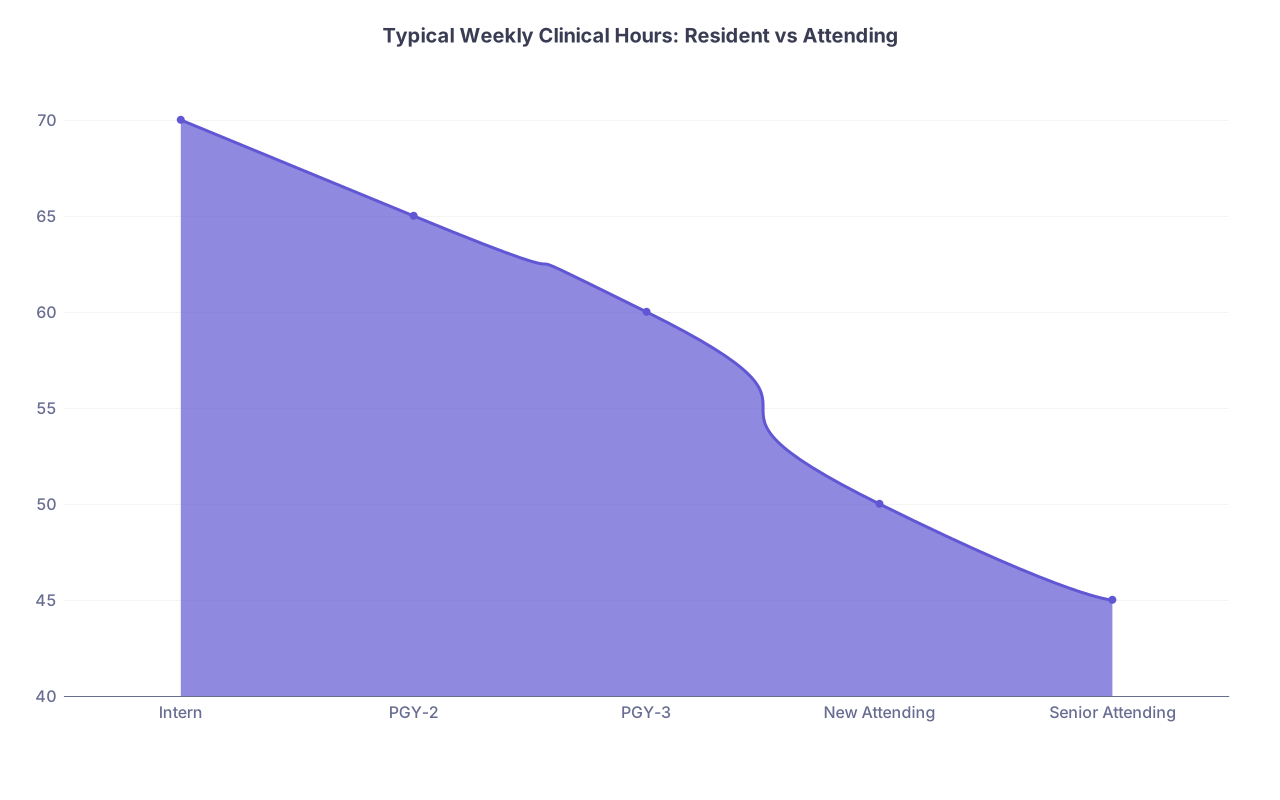
Residency is not how most attendings practice. That’s not wishful thinking; that’s just math.
| Category | Value |
|---|---|
| Intern | 70 |
| PGY-2 | 65 |
| PGY-3 | 60 |
| New Attending | 50 |
| Senior Attending | 45 |
In many fields, post-training life includes:
- More control over schedule
- Ability to shape your niche (hospitalist vs clinic vs subspecialty, etc.)
- Financial stability that allows saying “no” to toxic environments
If you’re burnt out as a PGY-2 on service-heavy rotations, that doesn’t automatically predict how you’ll feel as a 45-hour/week attending in a practice you chose.
That said, some specialties are structurally more intense even as an attending (EM, trauma surgery, some OB settings). You need honest attendings, not the “grind glorifiers,” to tell you what it’s really like.

When Changing Specialty Makes Sense
Let me be clear: switching specialties is sometimes absolutely the right move. But it should be for the right reasons, not because someone lazily mapped your burnout to “bad fit.”
Signals that a switch might truly be appropriate:
- You’ve had sustained exposure to other fields (electives, prior rotations) where you consistently felt more engaged—even when tired.
- The parts of your current specialty people love are the exact parts you dread.
- Under reasonable conditions, with decent sleep and support, you still find the core work misaligned with what you value or enjoy.
Even then, the practical sequence shouldn’t be “burnt out → must switch NOW.” It should be:
- Stabilize your mental health and sleep as much as possible
- Clarify whether it’s really specialty vs program vs life crisis
- Get data from residents and attendings in the target specialty
- Only then make a deliberate, non-panicked decision
And yes, sometimes you’ll still decide, eyes open, to jump. That’s fine. Just don’t let burnout—produced by a broken system—be misdiagnosed as your personal failure to pick correctly at age 24.

The Bottom Line
Burnout does not automatically mean you chose the wrong specialty. Most of the time it means:
- Your workload is unsustainable
- Your environment is dysfunctional
- Your system is indifferent to human limits
If you remember nothing else:
- Burnout is primarily a systems problem, not a passion problem. Specialty “fit” explains far less variance than workload, culture, and control.
- Massive differences in burnout exist within the same specialty depending on program, leadership, and working conditions—clear proof that “wrong field” is not the main driver.
- Changing specialty can be right, but it should be a last step after you’ve separated true mismatch from the predictable misery of a broken training system.
You are not broken because residency is burning you out. The system is doing exactly what it was built to do. Your job is not to internalize that as personal failure. Your job is to get clear on what’s you, what’s the program, and what’s the system—and make decisions from there, not from shame.


