

You are post-call on a Thursday, scrolling through your schedule. You see it: a seven‑day block of “VACATION” in three weeks. Instead of feeling excited, you feel… tired. Part of you wants to just sleep for seven days. Another part thinks you should “use the time productively” — research, board study, maybe moonlighting if your program allows it.
And under all of that? You are fried. Emotionally flat in clinic, snappy on rounds, dreading your next run of nights. Classic residency burnout creeping in.
You do not need another vague lecture on “self-care.” You need a tactical plan for using the time you actually have — your vacations — to pull yourself back from the brink and make residency survivable.
That is what this is. A playbook.
1. Understand What Vacation Can — and Cannot — Fix
Before planning anything, get clear on the mission. Vacations are tools. Not magic.
What vacations can do for burnout
They can:
- Lower acute stress levels so you stop feeling like your brain is on fire.
- Let your nervous system reset (sleep, daylight, no pages).
- Give you perspective: “Oh, right, there is a world outside this hospital.”
- Create space to make decisions: stay the course, adjust, or plan exit strategies.
- Reconnect you with people and activities that remind you who you are beyond “the resident.”
What they cannot do
They cannot:
- Fix a toxic program culture.
- Compensate for chronic sleep deprivation if you return to the same chaos with no other changes.
- Turn residency into something it is not (this is hard work, period).
- Replace ongoing mental health care if you are dealing with depression, PTSD, or serious anxiety.
You are not trying to “solve burnout with one trip.” You are trying to:
- Stop the immediate bleeding.
- Build routines and decisions that make the next 6–12 months more sustainable.
That requires planning before, during, and after vacation. Not just “I’ll rest and see how I feel.”
2. Diagnose Your Burnout Type Before You Plan
Different burnout patterns need different vacation strategies. If you do not know what is actually failing, you will design the wrong break.
Run this quick self‑assessment. Be brutally honest.
| Pattern | Main Symptom | Primary Need on Vacation |
|---|---|---|
| Exhaustion-dominant | Bone-deep fatigue, brain fog | Sleep, physical rest, low stimulation |
| Cynicism/detachment | “I do not care anymore” | Meaning, connection, reflection |
| Inefficacy | Feeling incompetent, behind | Small wins, realistic planning, skill shoring |
| Overload + chaos | Constant rushing, hypervigilance | Simplicity, boundaries, mental decluttering |
You may have all four, but usually one is loudest.
If you are exhaustion‑dominant
You:
- Fall asleep standing up in the elevator.
- Need coffee to function at all.
- Make dumb mistakes you never used to make.
Your vacation must prioritize:
- Sleep.
- Physical recovery.
- Minimal stimulation.
This is not the week to backpack across Europe.
If cynicism is your main problem
You:
- Roll your eyes at everything.
- Assume the worst about patients, attendings, admin.
- Feel emotionally numb or irritated all the time.
Your vacation needs:
- Actual enjoyment.
- People you like and trust.
- Things that remind you why you ever liked medicine or life.
If you feel chronically “not good enough”
You:
- Feel behind on notes, behind on knowledge, behind on research.
- Ruminate about mistakes from three months ago.
- Avoid opening your email.
Your vacation must include:
- A small, controlled dose of structured review or admin clean‑up.
- Wins you can see: inbox at zero, one project moved forward.
- Time that is explicitly not about work so you remember you are more than your performance.
If your life feels like absolute chaos
You:
- Lose your keys weekly.
- Have 15 unread text messages from family and friends.
- Feel like you are always reacting, never in control.
Your vacation needs:
- System-building: calendars, routines, meal strategies.
- Decluttering — physical and mental.
- Clarity about what the next 3–6 months should look like.
Write down your top 2 burnout patterns. That will drive your vacation design.
3. Design Your Vacation Like a Treatment Plan
Treat this like managing DKA. You do not just “give some fluids and see.” You have phases, goals, and monitoring.
Think in three phases:
- Decompression (first 24–72 hours)
- Rest + repair (middle bulk)
- Re-entry prep (last 24–48 hours)
The mix depends on your burnout type and vacation length.
Step 1: Set 1–3 explicit goals for the week
Examples:
- “I want to feel physically rested enough that I am no longer nodding off in conference.”
- “I want to decide if I am staying in this program for PGY-3.”
- “I want my life admin back under control: email, bills, schedule.”
If your list is longer than three, you are trying to cram productivity into what should be recovery. Cut it down.
Step 2: Block the non-negotiables first
Non‑negotiables for almost every burned‑out resident:
- 8–9 hours of sleep opportunity per night.
- 60–90 min of outside time daily (walks, park, balcony, whatever).
- Phone off or on “Do Not Disturb” for chunks of 2–4 hours every day.
- One block of time for true connection (family/friend/partner) without scrolling.
Put those in a calendar like they are ORs or clinics. You protect them the same way.
4. The First 72 Hours: Structured Decompression
This is where most residents screw it up. They slam into vacation at 10/10 stress, then either:
- Sleep 16 hours, wake up groggy and disoriented, or
- Immediately say yes to travel, family, errands, social events.
You need an actual decompression protocol.
24–72 Hour Decompression Protocol
1. Sleep like it is your job.
Aim:
- Night 1: Go to bed as early as your body allows. 9–10 hours in bed.
- Naps: Cap at 45–60 minutes, no later than 3 PM, or you will wreck your nights.
2. Cut stimulation by at least 50%.
- No EMR.
- No reading about your specialty.
- No residency group chat drama.
- Social media: Use an app timer (15–30 minutes / day max).
3. Let your body discharge stress.
Very light movement:
- 20–30 minute walks outside, twice a day.
- Gentle stretching, yoga, or just lying on the floor for 10 minutes.
You are trying to tell your nervous system: “The fire is out. You can stand down.”
4. Do “low-effort joy” activities.
Stuff that takes almost no energy but feels good:
- Watch a show you genuinely enjoy (not just whatever is on).
- Sit in a café and people-watch.
- Cook something simple you like.
- Play with a pet, if you have one.
You will feel guilty at first. Like you “should be doing more.” Ignore that voice. It is the same voice that got you burned out.
5. Choosing the Right Kind of Vacation (And Avoiding the Wrong One)
Not all vacations are created equal. Some are secretly more draining than working a light clinic week.
High-risk bad choices for burned-out residents
These are the most common mistakes I see:
Over-scheduled travel
3 cities in 7 days, early flights, constant logistics. You come back more tired.Family obligation trips
Going “home” where you are emotionally responsible for five other people’s needs and expectations. Sometimes this is nourishing. Often it is not.“Catch-up” vacations
Telling yourself you will “catch up on research, reading, board prep, and all my admin” in one week. Translation: You never actually rest.Moonlighting marathons
I know the financial pressures are real. But stacking 60–80 hours of moonlighting into your “vacation” when you are already burned out is setting yourself up for a crash.
If you absolutely must do one of these (money, family), you need guardrails. We will get to that.
Better options depending on your burnout pattern
Use this as a menu, not a script.
| Burnout Pattern | Better Vacation Type | Avoid This |
|---|---|---|
| Exhaustion | Staycation with strict rest rules | Long-haul, multi-city trips |
| Cynicism | Short trip with 1–2 close friends | Big group trips with drama |
| Inefficacy | Mixed rest + 1–2 focused work blocks | Full workweek “offsite” productivity camp |
| Chaos | Simple, local trip or home reset week | Overlapping obligations (family + projects + travel) |
Exhausted? Prioritize low‑effort, local, quiet
Example plan:
- Stay at home or a cheap local Airbnb.
- No alarms for three days.
- Walks, simple meals, maybe a massage if you can afford it.
- Phone in airplane mode for half the day.
Cynical and detached? You need good people and real fun
Example plan:
- 3–4 days somewhere within driving distance.
- One or two people you trust, who do not just want to talk about medicine.
- One “bucket list” activity: hike, concert, art museum, whatever reminds you that life is not all charting and admissions.
Feeling behind and incompetent? Mix rest with small wins
Example plan:
- Mornings: 2 hours max of focused work — board review, project, or inbox.
- Afternoons/evenings: zero work. Walks, time with partner, hobbies.
- End of vacation: clear, written plan for how you will continue manageable progress without destroying yourself.
Life feels like chaos? Use your vacation to rebuild structure
Example plan:
- One full day for life admin: finances, email, calendars.
- One full day for environment: clean, declutter, organize.
- One half-day to plan the next 3 months (we will outline how).
- Rest and fun layered around those blocks.
6. The Middle of Vacation: Rest, Repair, and Real Life
Once you are through decompression, you decide what to put in the “meat” of your vacation. This is where strategy matters most.
A simple day template that works for most residents
Adapt as needed, but this structure prevents two extremes: total sloth that leaves you disoriented, and over-scheduling that feels like work.
Sample structure:
Morning (8–11 AM):
- Slow wake-up, no alarm.
- Breakfast without screens.
- Optional: 60–90 min of either light activity (walk, gym) or focused project time (not both).
Midday (11–4 PM):
- Primary “doing” time: outing, time with friends/family, errands, or creative work.
- Phone mostly away unless needed for logistics.
Late afternoon (4–7 PM):
- Downshift: reading, quiet hobbies, light TV.
- Short walk if you have been sitting all day.
Evening (7–11 PM):
- Social time or solo relaxation.
- Screens off an hour before you want to sleep, if possible.
The goal: enough structure that you do not feel lost, with tons of slack so your nervous system can stay out of fight‑or‑flight mode.
How much “work” is allowed on vacation?
Here is my hard line: If you are burned out, your default should be no residency work at all.
If that spikes your anxiety (it does for many), there is a compromise.
Use this rule:
- Max 2 hours / day of any work-related task.
- Max 3 days total during a 7‑day vacation.
- No work blocks in the first 48 hours.
Within that limited space, pick one priority:
- Clean your inbox and task list, or
- Move one research project forward, or
- Do a focused board review session.
Not all three. One.
Put the time block in your calendar. Start on time. End on time. When the timer goes off, you close the laptop, even if you are “almost done.”
This does two things:
- It gives your brain enough sense of control that you stop ruminating at night.
- It prevents work from metastasizing and swallowing the entire week.
7. Using Vacation to Fix System Problems, Not Just Your Mood
If you feel burned out because you are constantly behind, and your life systems are a mess, vacation is prime time to fix that.
Think of this as your “life QI project.”
Core systems to address during vacation
Pick one or two of these. Not all.
Schedule / calendar system
- Put all call, clinic, required conferences into a single digital calendar.
- Add recurring blocks: grocery, laundry, bill‑paying, workouts, date night.
- Share with partner/family if they are constantly confused about your life.
Task capture + weekly review
- Choose one place where all tasks live (app or notebook).
- During vacation, do an “inbox sweep”: write down every floating task from your brain, email, paper piles.
- Create a 30–45 minute weekly review habit (choose a day/time) and calendar it.
Meal and sleep routines
- Plan 3–5 go‑to meals you can actually make on call weeks (frozen or prepped is fine).
- Set a target bedtime and wake time for non‑call days.
- Identify your personal minimum sleep that keeps you functional (7? 7.5?) and protect it like you protect rounds.
Financial stress
- Spend one block looking at your numbers: loans, income, spending.
- Build a basic budget that reduces money anxiety (even small clarity helps).
- If moonlighting is necessary, cap it and schedule real no‑work weekends.
Use vacation not just to “feel better” but to reduce the daily friction that helps create burnout.
8. The Last 24–48 Hours: Re-Entry Protocol
This part is critical. If you ignore it, you will be back at your pre‑vacation baseline in a week.
You need a structured re‑entry plan.
Re-Entry Checklist (Last 1–2 Days)
1. Reset your sleep schedule
If you shifted your sleep later, start nudging it back:
- Move bedtime / wake time 30–60 minutes earlier.
- Avoid big naps in the last 24 hours.
2. Do a 60–90 minute “work preview” session
You are not “working.” You are reducing uncertainty.
- Log into email and EMR once.
- Clear obvious junk.
- Make a short list:
- First 3 tasks you will do on your first day back.
- Any labs/imaging you need to remember to follow up.
- Conferences / meetings in the first week back.
Then log out. Do not act on everything; just create a map.
3. Pack and prepare like you are doing yourself a favor
- Lay out clothes for the first 2–3 days back.
- Pack your bag: badge, pens, chargers, snacks.
- Stock easy food at home: breakfast you can make in 3 minutes, high‑protein grab‑and‑go.
4. Decide your “minimum viable week”
Ask: If this first week back is brutal, what are the minimum self‑care actions I will still do?
For example:
- 10‑minute walk daily.
- No scrolling in bed.
- One check‑in call with a friend or partner midweek.
Write those down. Put them as reminders in your phone.
This is your relapse prevention.
9. Stringing Vacations Together as an Anti-Burnout System
One vacation will not save you. But multiple, used strategically, can keep you from tipping into full collapse.
Think of each vacation as:
- A checkpoint.
- A reset button.
- A chance to make one structural upgrade to your life.
Annual strategic plan for vacations during residency
You usually get 3–4 weeks per year. Do not burn them all in one chunk unless you have a very specific reason.
Here is a simple pattern that works for many:
Early year (PGY-1/PGY-2):
- Week 1: After your first brutal rotation block. Goal: physical recovery + basic system setup.
Mid year:
- Week 2: Around the time you usually feel the wall (often winter). Goal: reconnect with people, remind yourself life exists.
Late year:
- Week 3: Before boards, fellowship applications, or a big career decision. Goal: think clearly, study lightly, plan deliberately.
Optional short breaks / long weekends:
- Scatter these ahead of known awful rotations (ICU, nights).
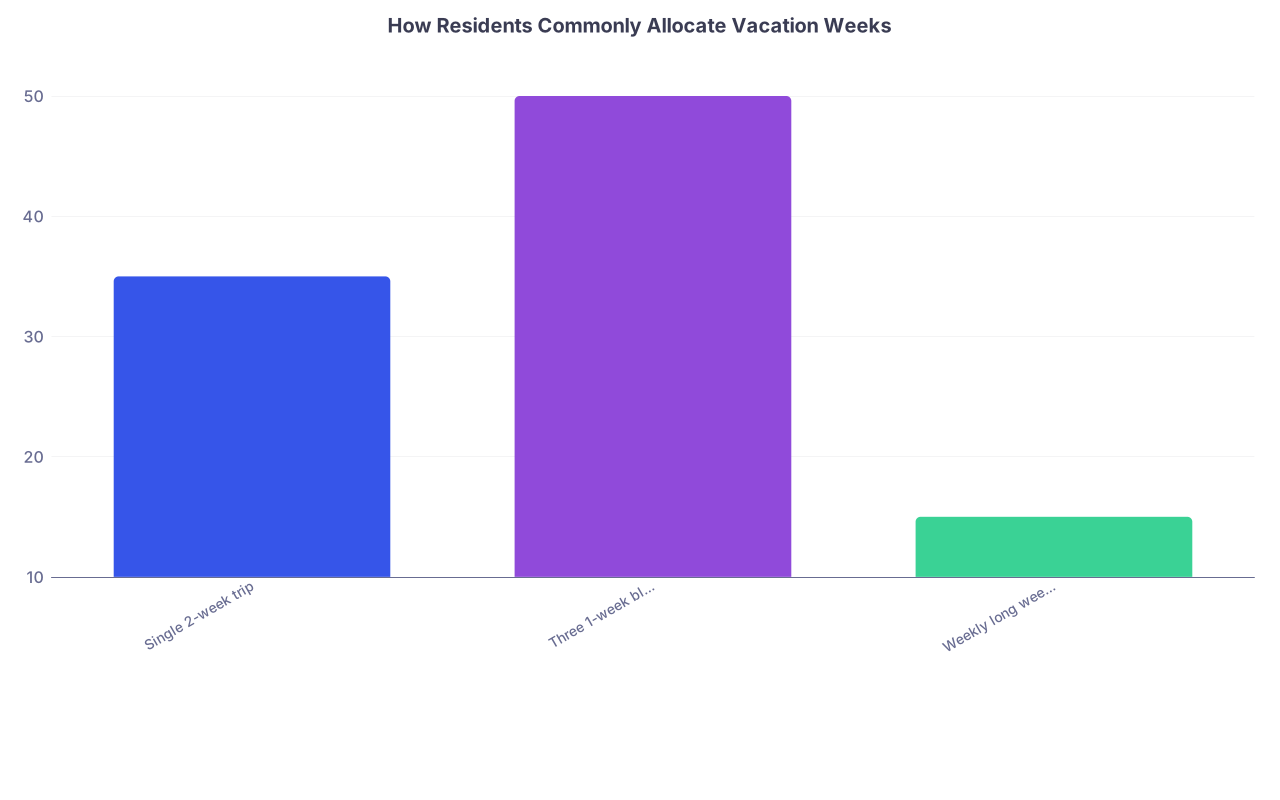
| Category | Value |
|---|---|
| Single 2-week trip | 35 |
| Three 1-week blocks | 50 |
| Weekly long weekends | 15 |
Notice: Residents who spread their time out usually manage burnout better than those who blow it all on a single two‑week trip, then white‑knuckle through 10 straight months.
10. When Vacation Is Not Enough: The Red Flag List
Some situations are not fixable with any vacation plan. You do not push through these with better sleep and a beach trip.
If you recognize yourself in these, you need more than strategic vacations:
- You dread going to work every single day, including “easy” rotations.
- You cry multiple times per week about work.
- You have persistent thoughts that people would be better off if you disappeared.
- You are using alcohol, benzos, or other substances regularly to numb out or sleep.
- You have serious functional decline: missing shifts, repeatedly late, major errors.
This is where you:
- Talk to a mental health professional, not just a co‑resident.
- Consider FMLA, schedule adjustments, or LOA if needed.
- Loop in someone with power and trust (PD, APD, chief) if your job itself has to change.
I have seen residents drag themselves through another year thinking “I just need a good vacation.” They did not need a vacation. They needed formal support and actual structural changes.
Use your vacation to get that help if you are in this zone.

| Step | Description |
|---|---|
| Step 1 | Notice burnout signs |
| Step 2 | Identify main burnout pattern |
| Step 3 | Plan decompression first 72 hours |
| Step 4 | Choose vacation type and goals |
| Step 5 | Middle phase - rest and repair |
| Step 6 | Re-entry prep last 48 hours |
| Step 7 | Adjust systems for next 3 months |
| Step 8 | Seek professional help and structural change |
| Step 9 | Schedule next strategic vacation checkpoint |
| Step 10 | Still severely impaired? |


