

The way most senior residents “plan” for burnout is delusional. They assume it will magically improve as an attending. It will not—unless you start engineering your life in PGY‑3 and beyond with the same discipline you use for codes and consults.
This is a long game. And there is a timeline to doing it right.
Below is your chronological roadmap: what to build now as a senior, what to lock in before graduation, and what to do month‑by‑month in your first attending years so you do not become that bitter, checked‑out physician everyone quietly avoids.
Big Picture Timeline: From Late PGY-3 Through Early Attending
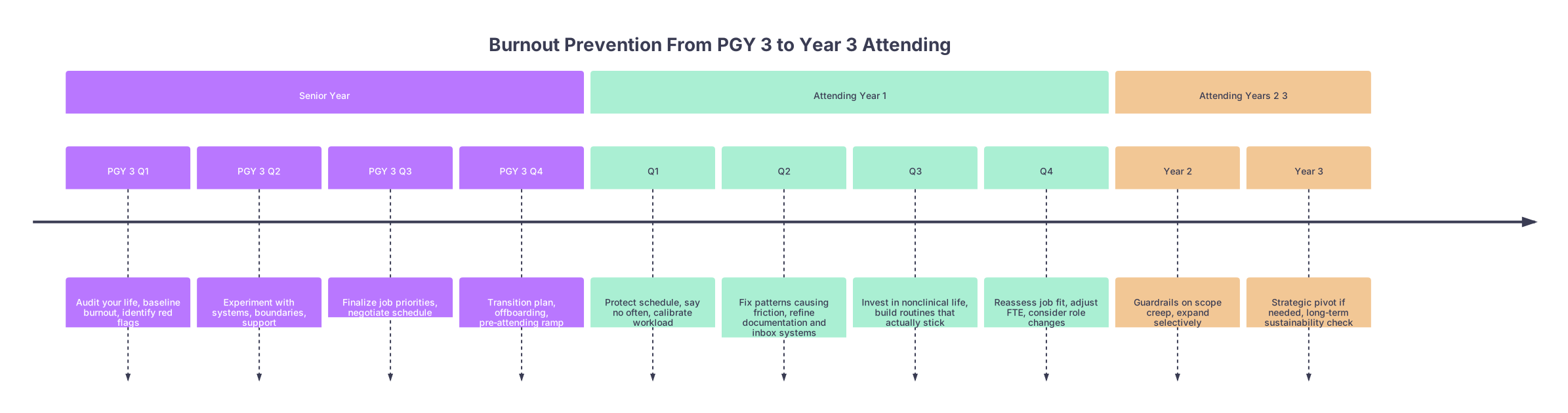
| Period | Event |
|---|---|
| Senior Year - PGY 3 Q1 | Audit your life, baseline burnout, identify red flags |
| Senior Year - PGY 3 Q2 | Experiment with systems, boundaries, support |
| Senior Year - PGY 3 Q3 | Finalize job priorities, negotiate schedule |
| Senior Year - PGY 3 Q4 | Transition plan, offboarding, pre‑attending ramp |
| Attending Year 1 - Q1 | Protect schedule, say no often, calibrate workload |
| Attending Year 1 - Q2 | Fix patterns causing friction, refine documentation and inbox systems |
| Attending Year 1 - Q3 | Invest in nonclinical life, build routines that actually stick |
| Attending Year 1 - Q4 | Reassess job fit, adjust FTE, consider role changes |
| Attending Years 2 3 - Year 2 | Guardrails on scope creep, expand selectively |
| Attending Years 2 3 - Year 3 | Strategic pivot if needed, long‑term sustainability check |
At each point, there’s something specific you should be doing. Let’s walk it chronologically.
PGY-3, Quarter 1: Stop Running on Autopilot
Timeframe: Early PGY‑3 / first 3 months of senior year
Goal: Get brutally honest about where you are on the burnout spectrum and what’s driving it.
At this point you should:
Get a baseline on your burnout status.
Do it like real data, not vibes.- Fill out a quick validated tool (e.g., Maslach Burnout Inventory, even just the emotional exhaustion subset).
- Track 2 weeks of:
- Hours worked
- Sleep amounts
- Times you eat an actual meal
- Times you feel “I don’t care what happens to this patient” or “I don’t care if I get fired.”
If those last two are frequent, that’s not “just residency.” That’s a system failure.
Identify your personal burnout triggers.
This is individual. Common patterns I see:- Endless inbox/EMR tasks that never feel “done.”
- High acuity with zero control over schedule.
- Toxic attendings or gaslighting consultants.
- Night float with poor recovery days.
- Chronic guilt (feeling responsible for everything, all the time).
Write down 3–5 of your biggest drivers. Put them somewhere you’ll see weekly. Those are what you build your long‑term plan around.
Map your energy, not your hours.
Not all shifts drain you equally. I’ve watched residents thrive on 60 hours of high‑acuity ED work and crumble on 45 hours of low‑autonomy ward grind.For 3–4 weeks, after each shift rate:
- Energy before shift (1–10)
- Energy after shift (1–10)
- Overall stress (1–10)
- Control/autonomy (1–10)
You’re building your personal “good shift / bad shift” profile. That data informs your job search and schedule negotiations later.
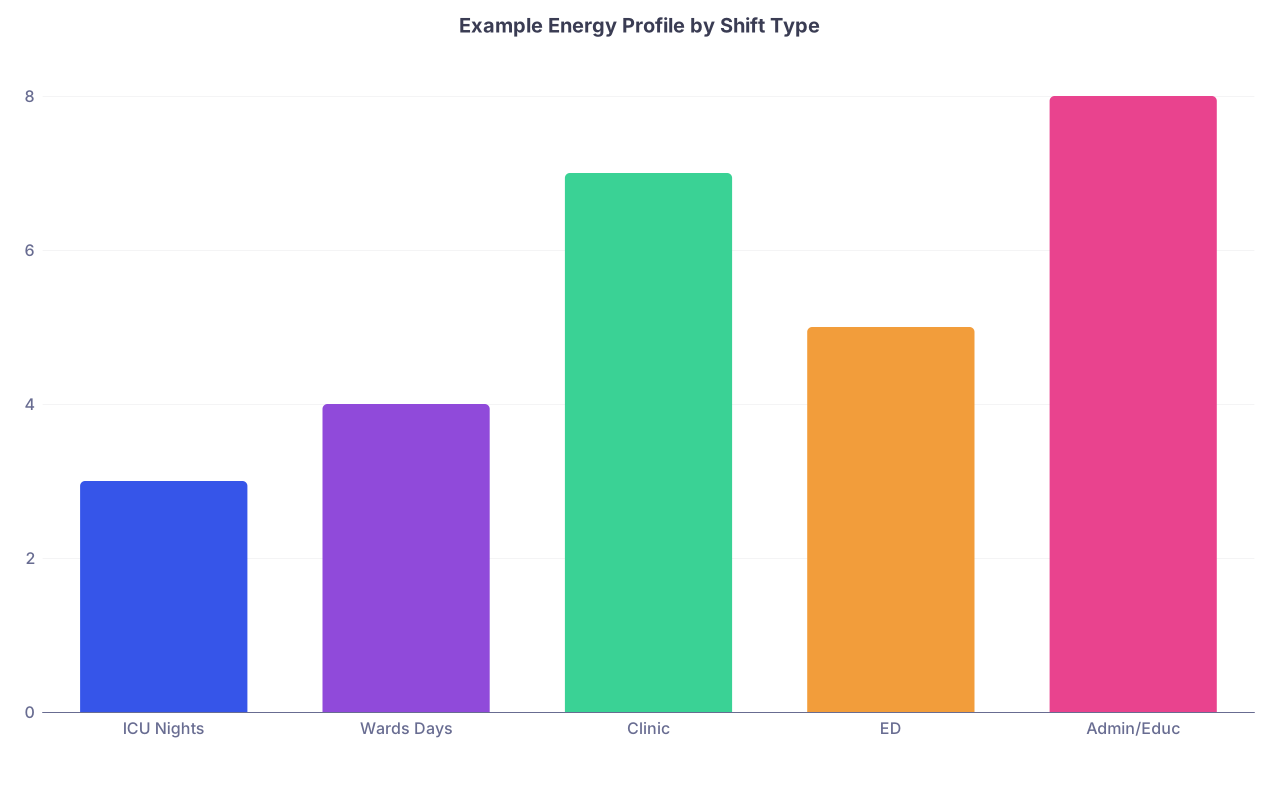
| Category | Value |
|---|---|
| ICU Nights | 3 |
| Wards Days | 4 |
| Clinic | 7 |
| ED | 5 |
| Admin/Educ | 8 |
Set non-negotiables for your future life.
Right now, list what must be true for you not to burn out long term. Examples I’ve seen from sane attendings:- At least one full, protected weekend off every month.
- No more than X nights per month.
- Commute under 30 minutes.
- At least two evenings a week fully off with family/partner.
These become your guardrails. You don’t break them casually for “opportunities.”
PGY-3, Quarter 2: Build Systems While You Still Have Support
Timeframe: Months 3–6 of PGY‑3
Goal: Experiment with processes and boundaries while the stakes are lower.
At this point you should start running life like a stress test for being an attending.
Test-run your boundaries.
Practice phrases now so they’re not clumsy when real money and politics are on the line.Examples to use as a senior:
- “I’m at capacity for additional committees this year.”
- “I can take that patient, but we need to redistribute X and Y.”
- “I can’t stay late for every sign-out; I need to leave by 6 most days.”
Watch what happens. You’ll learn two things:
- Who respects your limits.
- Where your own guilt and people‑pleasing sabotage you.
Prototype documentation and inbox workflows.
The EMR does not magically get better after residency. If it’s killing you now, it will suffocate you later.Spend 4–6 weeks aggressively optimizing:
- Smart phrases and templates you’ll carry into your attending job.
- A habit of finishing notes during the day, not at 11 p.m.
- A rule for inbox: e.g., batch 2–3 times per day instead of constantly checking.
Experiment with recovery routines between shifts.
Not spa-day nonsense. I mean real, repeatable habits that shorten your “hangover” from bad call.Try for 4 weeks:
- Fixed bedtime/wake time on non-call days.
- One non-medical block (2–3 hours) twice a week that you treat like a patient appointment.
- A 10–15 minute shutdown routine post-shift (quick snack, shower, 5 minutes of quiet, then phone).
Track which changes actually improve how you feel on day 2–3 of a string.
PGY-3, Quarter 3: Design Your First Attending Job to Prevent Burnout
Timeframe: Months 6–9 of PGY‑3
Goal: Use what you’ve learned about yourself to choose and shape your attending role, not just chase prestige or salary.
At this point you should be ruthless about job fit, not job flex.
- Translate your data into job criteria.
Take your energy profile + non‑negotiables + triggers and turn them into a concrete checklist.
| Category | Preference |
|---|---|
| Nights | ≤ 4 per month |
| Commute | ≤ 25 minutes one way |
| FTE | 0.8–0.9 preferred |
| Clinic vs Inpt | Max 2 long clinic days per week |
| Teaching | Regular resident interaction required |
| Toxicity risk | No history of high turnover or lawsuits |
If a job misses 3–4 of your main criteria, that’s not “a little compromise.” That’s you lighting your future self on fire.
Avoid the classic PGY‑3 traps.
I’ve seen these ruin people:- “I’ll just grind full-time nights for a year to pay loans, then cut back.”
They rarely cut back. They’re too exhausted to job search intelligently. - “This group said I can always switch to 0.8 FTE later.”
If it’s not in writing, it does not exist. - “I’ll be the fixer; they said they need someone strong to help turn things around.”
Translation: long‑standing dysfunction, leadership that won’t change, you as emotional shock absorber.
- “I’ll just grind full-time nights for a year to pay loans, then cut back.”
Negotiate schedule and scope explicitly.
During contract talks, at this point you should be asking:- “What’s the actual average weekly hours including non-RVU tasks?”
- “Show me next month’s schedule for the group.”
- “How are weekend and holiday shifts distributed?”
- “Who does the inbox? How is time for it protected?”
- “When was the last time someone reduced FTE? How did that go?”
If they dodge these, that’s a red flag. Burnout prevention is primarily about structural reality, not your personal resilience.
PGY-3, Quarter 4: Plan Your Transition Like a High-Risk Handover
Timeframe: Final 3–4 months of PGY‑3
Goal: Arrive at your attending job with realistic expectations and pre‑built guardrails.
At this point you should:
Build a “first 90 days” attending plan.
Treat it like a pre-op checklist.Include:
- Default rule for extra shifts: for the first 6 months, you say no to everything optional.
- Clear work hours you commit to—not just on paper, but to yourself and your spouse/partner/family.
- A weekly review session (20–30 minutes) to adjust what’s not working.
Clarify exit strategies with yourself.
Not in a dramatic way—more like risk management.- Decide: Under what conditions will you start looking for another job? (e.g., consistently >60 hr weeks, repeated safety concerns, harassment, leadership gaslighting.)
- Decide: How long will you give a bad situation before you act? (Hint: not “forever because I feel guilty.”)
You are not failing your patients by refusing to sacrifice your health to a broken system. A burnt‑out physician is not safe care.
Set expectations with the people around you.
Talk to your partner, close friends, or family.- Explain your first-year plan.
- Name what you’re worried about: “If I start saying yes to extra call every week, I need you to call me out.”
- Agree on concrete signals that you’re sliding—like cancelling social plans constantly, snapping at small things, or losing interest in everything outside work.
Attending Year 1, Quarter 1: Don’t Be the Hero
Timeframe: First 3 months in practice
Goal: Establish realistic boundaries before everyone gets used to you being “the machine.”
At this point you should:
Start conservative with commitments.
Your default answer to:- Extra shifts
- Committee roles
- “Can you just take over this project?”
…should be:
“I’m still getting my bearings in my first year. I’m not taking on anything extra until I understand my baseline workload.”Protect at least one true off day per week.
A day with:- No charting
- No inbox
- No “catching up” calls
If your job structurally prevents one full down day most weeks, you’re in an environment that will chew you up.
Run a weekly post-mortem.
Same 20–30 minutes, same day each week.Quickly review:
- What drained me the most this week?
- What felt sustainable or even energizing?
- Where did I break my own boundaries, and why?
Then make 1–2 small adjustments for the coming week. Don’t try to optimize everything at once.
Attending Year 1, Quarter 2: Fix the Friction Points
Timeframe: Months 4–6 as attending
Goal: Identify the few things that create 80% of your stress and systematically improve them.
At this point you should be seeing patterns. Common friction points:
- Chronic charting at home.
- Inbox creep into every evening.
- Walking in every day already behind.
Target 2–3 areas and aggressively refine systems:
Documentation:
- Lock in your core templates.
- Set a “notes done by X pm” daily target and treat it as seriously as a procedure.
- Consider a scribe or additional support if available—this can be burnout-prevention, not a luxury.
Inbox/communication:
- Hard‑schedule inbox blocks into your calendar.
- Build quick replies for the repetitive messages.
- Push back if you’re doing work that should be covered by admin staff or other roles.
Start saying “no” without the long apology email.
You do not need a 4‑paragraph explanation. One line is enough:
“Given my current clinical load, I can’t take that on this year.”
Attending Year 1, Quarter 3: Build a Life That Competes With Work
Timeframe: Months 7–9 as attending
Goal: Strengthen the non‑medical parts of your life so work doesn’t swallow everything by default.
Here’s the ugly truth: the system will always expand to fill your available time. You need competing priorities.
At this point you should:
Lock in 2–3 recurring non‑work anchors.
Examples:- Weekly dinner with friends or partner, no phones.
- A standing workout or hobby time.
- A recurring club, class, or volunteer gig absolutely unrelated to medicine.
These aren’t “nice extras.” They’re structural counterweight to burnout.
Re-evaluate your FTE and nights/weekends.
After ~9 months you know the reality.Ask:
- How many hours am I actually working per week (all tasks counted)?
- How many of those are at home?
- What’s my average emotional state on Sunday night?
If you’re constantly at a 6–7/10 burnout feeling, it’s not “new attending adjustment” anymore. It’s your job as currently designed.
Start building peer support intentionally.
Do not wait for your hospital to create some fake wellness thing.- Identify 2–3 colleagues you actually respect.
- Set a monthly coffee or lunch where venting is allowed and problem‑solving is encouraged.
- Talk explicitly about schedule tricks, negotiation stories, and exit options.
Attending Year 1, Quarter 4: Adjust Course Before You Calcify
Timeframe: Months 10–12 as attending
Goal: Make structural changes now, before dysfunctional patterns become “normal.”
At this point you should:
Perform a one‑year “burnout audit.”
Re‑do the same measures from PGY‑3 Q1:- Burnout inventory.
- 2‑week log of hours, sleep, energy, and key emotions.
Compare honestly with residency. If you feel worse now than as a senior, something is deeply off.
Decide on at least one concrete change for Year 2.
Examples:- Drop 0.1–0.2 FTE.
- Switch from certain shifts (e.g., nights) to others.
- Offload a committee or administrative task that’s pure misery.
If needed, start a quiet job search.
There is no prize for suffering longer at a bad place. The “I can’t leave, my patients need me” line is how institutions keep burned-out doctors from walking.Make a simple rule:
- If job satisfaction <5/10 and burnout symptoms high for >6 months despite adjustments → you actively explore other options.
Attending Years 2–3: Guardrails and Strategic Pivots
By now you’re not “new” anymore. The danger shifts from acute overwhelm to slow, creeping cynicism.
At this point you should:
Limit scope creep.
Every extra committee, leadership role, or side project should pass a test:- Does this align with my values or long‑term goals?
- Can I drop something else to make room?
- Is there clear support (time, pay, staff) or is this being stapled onto my already full plate?
If the answer to any is no, you probably shouldn’t do it.
Reassess your work mix every 6–12 months.
Some specialties lend themselves to mixing clinical, teaching, research, admin. Used well, variation protects you from burnout.But:
- Too much fragmentation = constant context switching = exhaustion.
- Too much of one stressful domain (e.g., high‑acuity nights only) = emotional numbness.
Adjust proportion, not just total hours.
Plan intentional pivots, not panic escapes.
If you’re hitting endurance limits:- Start exploring roles with fewer nights, more outpatient, or partial remote work (telemedicine, review roles, etc.).
- Look at teaching-focused or hybrid academic/community posts.
- Consider reducing FTE if you have the financial margin; 0.7–0.8 FTE is often the difference between “I can do this for 20 years” and “I’m counting days to retirement at 38.”
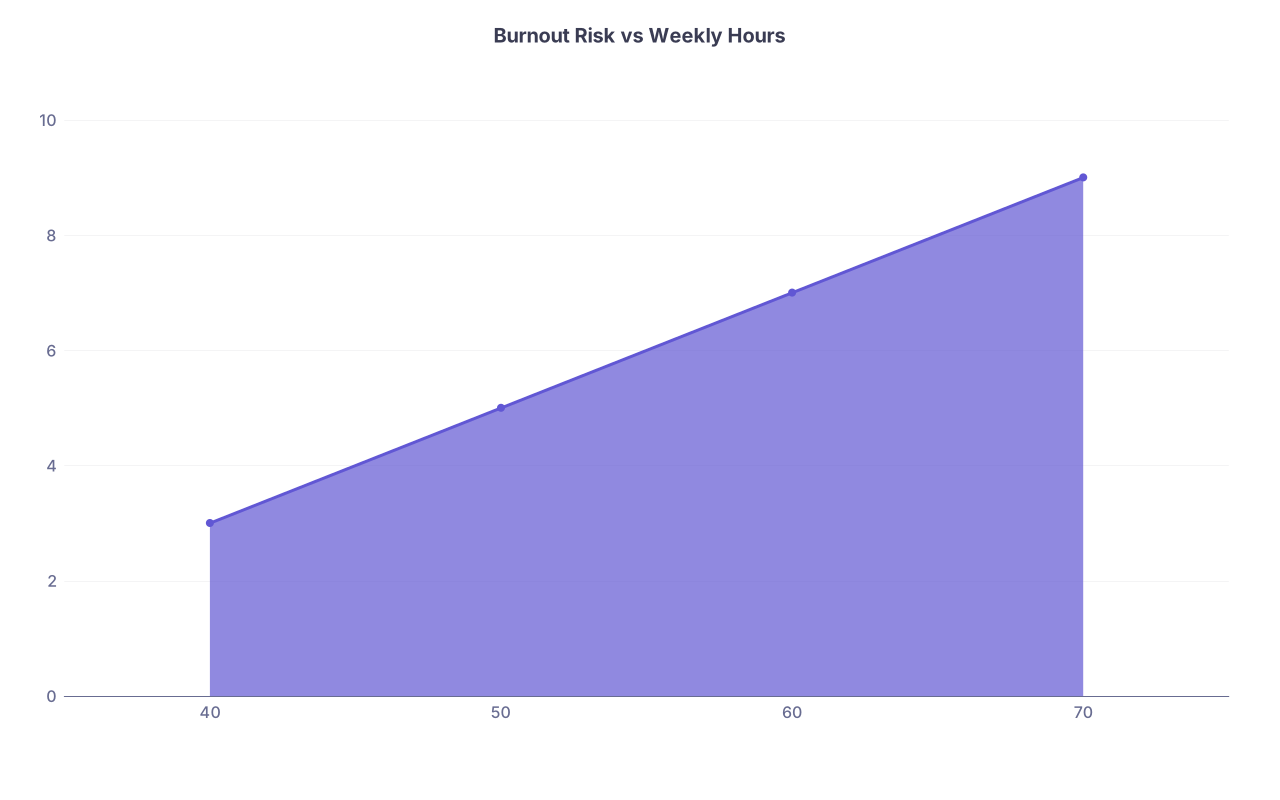
| Category | Value |
|---|---|
| 40 | 3 |
| 50 | 5 |
| 60 | 7 |
| 70 | 9 |
Burnout risk isn’t linear. Past a certain point it spikes. Most people find their personal inflection point in years 2–3.
Daily and Weekly Micro-Timeline: What You Do Right Now
All this long‑range planning only works if your day‑to‑day doesn’t crush you. Here’s the shorter timeline overlay that applies from late PGY‑3 onward.
Daily (on most clinical days)
At this point each day you should aim to:
Start with a 30–60 second review of your limits for the day.
“I am leaving by 6. I am not skipping lunch. I will ask for help if X happens.”
Sounds cheesy. It works.Protect one real break.
10–15 minutes where you sit, eat, and are not charting. If that’s impossible every single day, you have a structural problem to address with leadership.Finish as much documentation as possible before leaving.
Your home should not be your second call room.
Weekly
Pick one fixed time per week (15–30 minutes). At that point you should:
- Quickly rate your week: 1–10 for:
- Workload sustainability
- Emotional exhaustion
- Sense of meaning/purpose
- Note your biggest energy drain and one thing that helped.
- Choose one micro-change for the coming week (e.g., “Finish notes by 5,” “Batch inbox twice,” “Protect Thursday night for X”).

Final Thoughts: What Actually Matters
If you remember nothing else:
- Burnout prevention starts in PGY‑3 with ruthless self‑assessment and honesty about your triggers.
- Your first attending job must be designed—not hoped—into something sustainable, with firm guardrails on hours, nights, and scope.
- Quarter by quarter, you adjust: small weekly tweaks, yearly audits, and the courage to pivot if the system you’re in refuses to be humane.
Everything else is noise.


