

The way most residents study for boards practically guarantees burnout.
Twelve-hour shifts, then four more hours of “just one more block.” Weekends that turn into simulated exams and guilt. By week three, your brain is mush and your question bank is mocking you.
You need a calendar that respects two things:
- You’re a resident, not a full‑time student.
- Burnout is a real risk, not a vague wellness word.
Here’s a concrete, time‑stamped study season calendar built to get you ready and keep you functional.
Big Picture: Your 8–10 Week Pre-Board Season
At this point, you should zoom out and decide: how many weeks do you actually have?
Most residents have somewhere between 6–12 weeks of “pre-board mode.” I’m going to build around 8 weeks, and show where to stretch or compress.
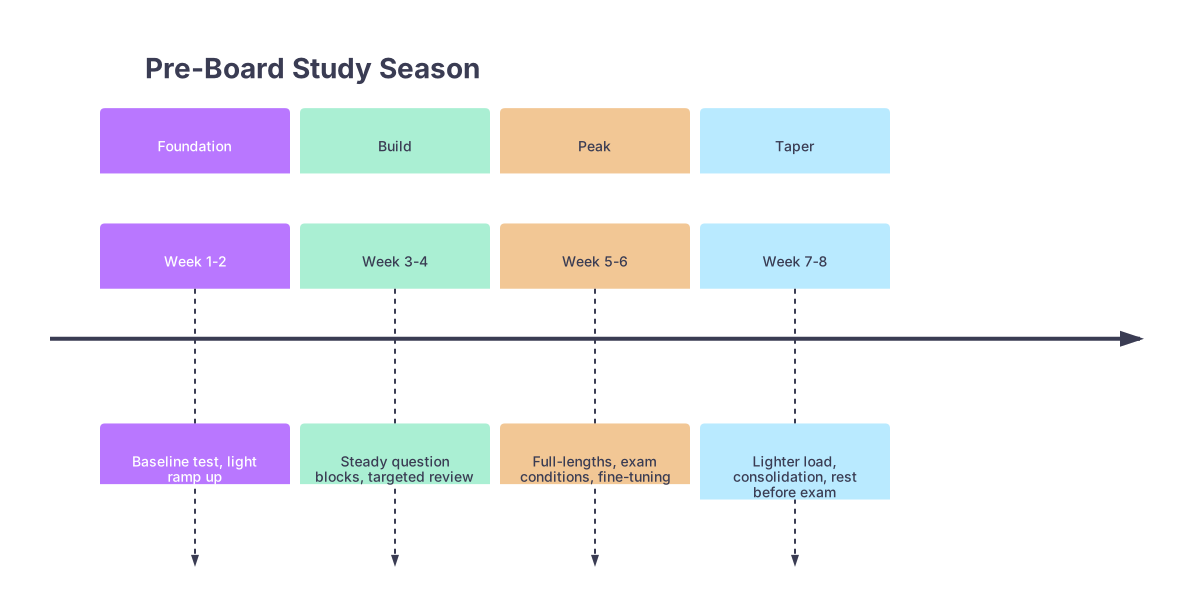
Think of it in four phases:
| Period | Event |
|---|---|
| Foundation - Week 1-2 | Baseline test, light ramp up |
| Build - Week 3-4 | Steady question blocks, targeted review |
| Peak - Week 5-6 | Full-lengths, exam conditions, fine-tuning |
| Taper - Week 7-8 | Lighter load, consolidation, rest before exam |
The non-negotiables:
- At least 1 true rest day per week.
- Protected sleep windows.
- Scheduled, limited panic time (I’m not joking—you’re going to panic; we’ll contain it).
Week 1–2: Build the Foundation Without Exploding
At this point, you should stop pretending you’ll “start hard next week” and just get a realistic baseline.
Week 1: Baseline + Framework
Goals:
- Know where you stand.
- Design a schedule that fits your rotation.
- Start studying at a level you can sustain after a 10–12 hour shift.
Day 1–2 (whichever is your first lighter day):
- Take a baseline practice exam (NBME, in‑training, or Qbank self‑assessment).
- Do it in exam‑like conditions:
- Phone in another room.
- Timed blocks.
- Short breaks only.
That night, you should not review every question. Just:
- Write down:
- Score
- Weakest 3–4 domains (e.g., pulmonary, ID, OB, neuro)
- Circle your exam date on a physical or digital calendar.
Day 3: Build your template week
Look at your schedule for the next 8 weeks:
- Label each day:
- Heavy (>10 hr work)
- Moderate (8–10 hr)
- Light (post‑call, weekend, clinic half‑day)
Then create a “default” daily plan:
| Workday Type | Questions | Review Time | Extras |
|---|---|---|---|
| Heavy | 10–15 | 45–60 min | None |
| Moderate | 20–30 | 60–90 min | 10–15 min Anki |
| Light | 40–50 | 2–3 hrs | 20–30 min video/reading |
| Full Off | 60–80 | 3–4 hrs | 30–45 min targeted content |
This is your ceiling, not your minimum.
If you’re on nights:
- Put all serious studying 2–4 hours before your shift, not after.
- Cap it at 20–30 questions on workdays. Your circadian rhythm is already on fire.
Rest plan for Week 1:
- 1 totally off day: zero questions, zero guilt.
- The night after your baseline exam = light only (flashcards max 20 min).
Week 2: Gentle Ramp Up
Now you should start consistent, not heroic studying.
Weekly goals:
- Total questions: 150–200.
- Focus: building routine, not fixing every weakness.
Structure:
- 4–5 study days
- 1 light “maintenance” day (10–15 questions + brief review)
- 1 full off day
Typical Week 2 layout:
- Mon (heavy workday): 10–15 mixed questions, 45 min review.
- Tue (moderate): 20–25 questions, 60–90 min review.
- Wed (heavy): 10–15 questions, quick review only.
- Thu (moderate): 20–25 questions, plus 10–15 min Anki.
- Fri (light/mod): 30–40 questions, 2 hr review.
- Sat: 40 questions focused on 1–2 weak areas.
- Sun: Completely off.
Signs you’re overdoing it this early:
- You’re staying up past midnight to “finish a block.”
- You’re skipping meals regularly.
- You’re resentful of your study time by Day 4.
Back it down. In Week 2, your only real job is building the habit.
Week 3–4: The Productive Grind (Without Meltdown)
At this point, you should have a rhythm. Now you tighten it—but you still respect recovery.
Week 3: Structure + Targeting
Weekly goals:
- Total questions: 220–280.
- One mini‑assessment block (40 questions timed) at the end of the week.
Shift from “random mixed” to:
- 60–70% mixed blocks
- 30–40% targeted (top 3 weak systems from Week 1 baseline + current misses)
Sample Week 3 calendar:
- Mon (heavy):
- Before work: 10–12 questions.
- After work: 30 min reviewing only truly educational misses.
- Tue (moderate):
- 20–25 mixed questions.
- 10–15 targeted in one weak system.
- Wed (heavy):
- 10–15 questions max, no extras.
- Thu (moderate/light):
- 30–40 mixed questions, 2 hrs review spread in 2 sessions.
- Fri (moderate):
- 20–25 targeted in weak system.
- Sat (light/off):
- Morning: 40‑question timed block.
- Afternoon: 1.5–2 hrs review; stop by 5 pm.
- Sun:
- Off or flashcards only, 20–30 min.
Week 4: First Real Checkpoint
At this point, you should measure again.
Early Week 4:
- Take a self‑assessment:
- Best on a lighter day (post‑call recovery or weekend morning).
- Timed, exam‑like conditions.
Compare to Week 1:
- Global score change.
- Weak areas: did your bottom 3 systems change?
Then modify the next 2–3 weeks based on data:
- If your score improved decently (e.g., +5–10 points on many board scales):
- Stay the course. No need to double your workload.
- If you’re flat or down:
- Do not start doing 100 questions a day.
- Instead, change how you review: focus on patterns, not facts.
Week 4 target structure:
- 250–300 questions total.
- 2 days with 40‑question timed blocks.
- Still 1 full off day.
And now, we start protecting your energy a bit more aggressively.
Built-In Burnout Shields: Weekly Check & Hard Limits
At this point, you should formalize your anti-burnout rules. Residents don’t burn out because they’re lazy. They burn out because they never installed brakes.
Weekly Burnout Check (10 minutes, same day each week)
Ask yourself:
- Sleep: How many nights with <6 hours sleep?
- Mood: How often did “I hate everything” cross your mind this week?
- Errors: Did you notice more dumb mistakes at work?
- Resentment: Are you angry every time you open your Qbank?
If 2+ are trending bad for 2 weeks in a row, you dial back volume, not motivation.
Non‑Negotiable Limits
Hard caps you don’t cross:
- Max 4 real study days in a row. Day 5 must be light or off.
- Max 80 questions on any day, even on off days.
- Max 2 full‑length practice tests per week (most should do 1).
- No studying past midnight, ever.
| Category | Value |
|---|---|
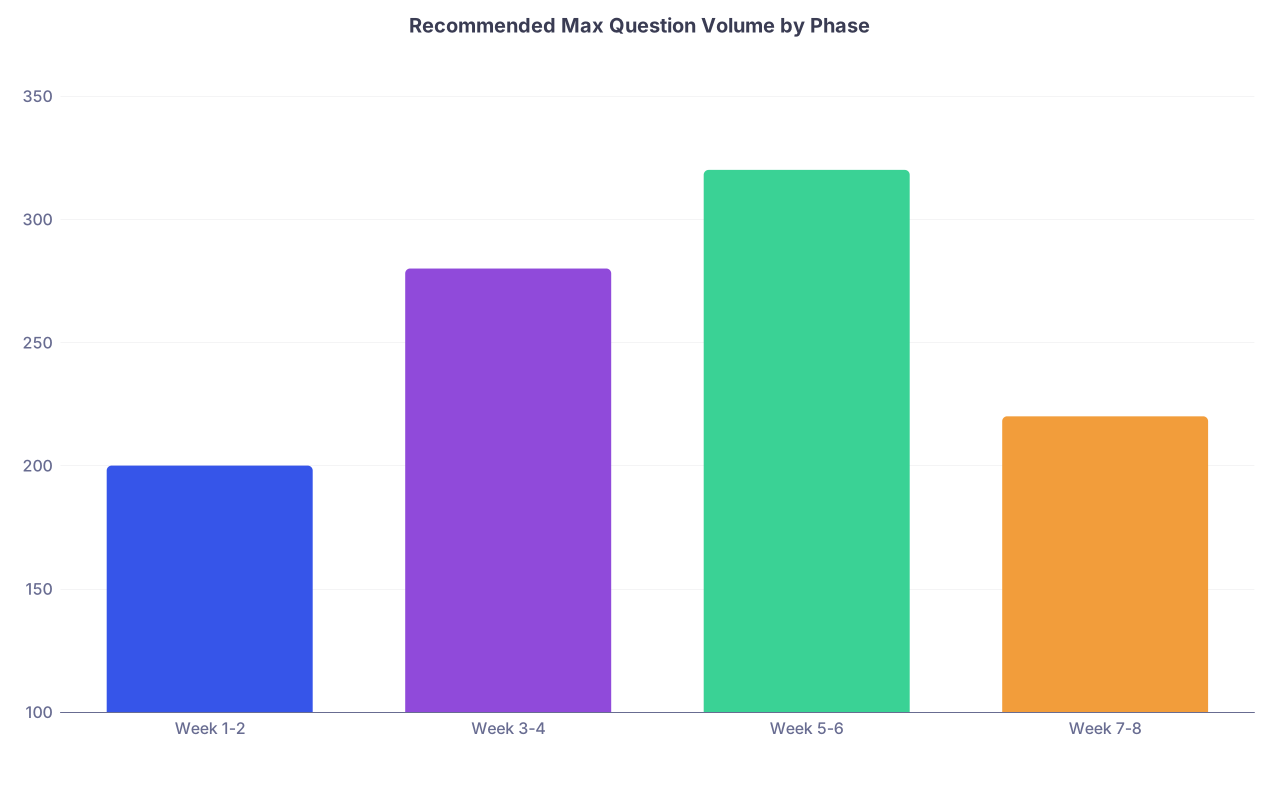
| Week 1-2 | 200 |
| Week 3-4 | 280 |
| Week 5-6 | 320 |
| Week 7-8 | 220 |
If you’re consistently hitting all the caps, you’re probably overdoing it.
Week 5–6: Peak Performance, Not Peak Misery
This is where many residents completely lose the plot and start cramming like they’re 19 again. You’re not. You have a job, real patients, and way less dopamine.
At this point, you should simulate the exam, then trim the fat.
Week 5: First Full-Length Push
Goals:
- Practice sitting and focusing for exam‑length periods.
- Stress‑test your stamina.
- Identify final content gaps.
One full‑length exam this week:
- Board‑style self‑assessment or long NBME sequence.
- Do it on:
- A day off, or
- Post‑call only if you actually slept decently before.
Day of full‑length:
- Treat like the real thing:
- Wake at planned exam time.
- Same breakfast you’ll eat on real day.
- Same breaks (length and frequency).
- That evening: light walk, stretch, food, no heavy review.
The next day:
- 2–3 hours of focused review:
- Tag questions as:
- Conceptual gap (need content)
- Sloppy mistake (fatigue/attention)
- Misread question (speed/pressure)
- Tag questions as:
Then:
- Build a short “Final 3‑week Hit List” of:
- 10–15 high‑yield topics you keep missing.
- 3–4 recurrent traps (e.g., overcalling sepsis, missing reversible causes, mix‑ups in OB emergencies).
Weekly structure for Week 5:
- 1 full‑length exam day.
- 1 heavy review day (no new questions or up to 20 only).
- 3 moderate Qbank days (30–40 questions).
- 1 light day (10–20 questions, flashcards).
- 1 full rest day.
Week 6: Sharpen, Don’t Expand
You’re not learning the entire field now. You’re polishing.
At this point, you should be:
- Doing question blocks that look like exam blocks.
- Cleaning up careless patterns.
Question style now:
- Almost entirely mixed, random blocks.
- Occasional targeted sessions for your bottom 2 areas.
Week 6 structure:
- Total questions: 280–320.
- Two 40‑question timed blocks + review each week.
- One “speed discipline” day:
- Focused on finishing each block with 5–10 minutes to spare.
- Practice moving on from stuck questions.
Signs you’re heading toward burnout:
- You’re re‑reading explanations 3 times and absorbing nothing.
- You’re barely speaking to people outside work.
- You dread both work and studying.
If that’s you, your brain needs oxygen. Cut volume by 20–30% for 3–4 days. Sleep 1 extra hour. It will not tank your score; it will probably save it.
Week 7–8: Taper and Protect the Score You Already Earned
Cramming until the night before is amateur hour. The last 10–14 days should feel lighter, not heavier.
At this point, you should start acting like someone who’s ready.
Week 7: Controlled Taper
Goals:
- Maintain familiarity and rhythm.
- Prevent panic spiking into insomnia.
Weekly plan:
- Total questions: 200–240.
- One last self‑assessment early in the week if you must (7–10 days before exam).
- If scores are stable:
- Stop obsessing about the number.
- If scores are lower:
- Work on process, not huge new content pushes.
Day‑by‑day example:
- Mon: 30–40 mixed questions, 90 min review.
- Tue: 20–25 questions, focus on high‑yield core (sepsis, chest pain, shock, etc.).
- Wed: 40‑question timed block, review.
- Thu: 20–30 questions, then close laptop by 9–10 pm.
- Fri: Light: 15–20 questions, quick flashcards only.
- Sat: 30 questions max, or brief review of your Hit List.
- Sun: Off.
Week 8: Final Week + Exam Day
At this point, you should be in “maintenance mode,” not “desperation mode.”
7 days before:
- No more full‑length exams.
- No more new resources.
- Just:
- 20–30 questions per day on workdays.
- 30–40 questions per day on off days.
- Review your personal Hit List topics.
3–4 days before:
- Cut to:
- 10–20 questions/day.
- Or even just reviewing old marked questions and flashcards.
- Short, focused revisits:
- Your chronic weak spot (e.g., renal, OB, stats).
- Emergency algorithms you keep mixing up.
2 days before:
- Max 10–15 questions.
- Brief look at:
- Test‑day logistics (route, parking, ID, snacks).
- Timing strategy per block (how many minutes per 10 questions, when to guess and move).
The day before the exam:
- No “real” studying.
- If you absolutely must:
- 30–45 minutes of light flashcard review in the morning only.
- Then:
- Normal meals.
- Pack:
- ID
- Exam confirmation
- Snacks and water
- Layers (testing centers are chaos with temperature)
- Plan your wake time and commute.
Night before:
- No question review.
- Aim for 7–8 hours sleep.
- If your brain is racing:
- Write down the intrusive worries and “things I’ll do if I fail” on paper, close the notebook, and tell yourself: “Not tonight.”
Exam day:
- Eat what you’ve practiced.
- No last‑minute Qbank, no scrolling through social media study flexes.
- Trust the weeks you put in.
How to Adjust for Different Timelines
Not everyone has 8 weeks. Some of you will have 6. Some will have 10–12. Here’s the lean version:
| Timeline | Key Adjustments | Risk to Watch |
|---|---|---|
| 6 weeks | Shorten early ramp, 1 baseline + 1 full-length only | Over-cramming Weeks 3-4 |
| 8 weeks | Use full plan above | Mid-season fatigue |
| 10–12 weeks | Extend light ramp, add rest weeks, more spaced assessments | Losing urgency, dragging burnout out |
If only 6 weeks:
- Week 1: Baseline + immediate 150–200 questions.
- Week 2–3: 250–300 questions/week, earlier full‑length.
- Week 4–5: Mixed blocks heavy, 1–2 assessments.
- Week 6: Taper quickly, last 4–5 days lighter.
If 10–12 weeks:
- Add an extra “lighter” week every 3–4 weeks where question volume drops by 30%.
- That’s your burnout prevention valve.
Daily Micro‑Habits That Quietly Save You
A lot of “wellness” advice is fluff. Here’s what actually helps not to crack during pre‑board season:
- 5‑minute debrief after each block:
- 2–3 patterns you noticed.
- 1 thing you’ll do differently next time.
- Start review by looking at corrects you weren’t sure about, not just fails.
- 10 deep breaths between work and studying, every day. Reset signal.
- 1 short social contact daily (text, family call, co‑resident walk to the parking lot) that’s not about studying or patients.
Nothing fancy. Just friction against the slide into isolation and exhaustion.
Final Bottom Line
You’re not trying to “win” pre‑board season. You’re trying to pass strongly without torching yourself.
Remember these 3 anchors:
- Routine beats heroics. 40 steady days of sane effort will always beat 10 days of panicked marathons.
- Built‑in brakes prevent burnout. Hard limits on question volume, late‑night studying, and weeks without rest are non‑negotiable if you want to still function as a resident.
- Taper like a professional. The last 7–10 days are for consolidating and protecting sleep, not squeezing in one more resource.
Follow the calendar, protect your brain, and let the work you’ve already done show up on test day.


