

The end of the academic year does not “calm down.” That is a lie residents tell each other in February. The end of the year is a mash‑up of overdue notes, duty hour audits, and vacation brinkmanship. If you do not plan it, it will run you over.
Here is how to handle it, step by step, from 3 months out to the final week.
3 Months Before Year‑End (April-ish): Set Up Your Systems
At this point you should stop hoping things will “sort themselves out” and assume they will not.
Week 1–2: Get Clear on Requirements
You cannot manage what you do not understand.
By mid‑April:
- Pull your:
- Current duty hour reports
- Note completion dashboards (EPIC, Cerner, etc.)
- Vacation/leave balance from GME or HR portal
- Review your program’s:
- Minimum vacation requirement (often 3–4 weeks per year)
- Maximum carryover (sometimes zero)
- Note timeliness policy (24 hr? 48 hr? For discharges?)
- ACGME duty hour rules (you should know these cold)
| Item | Typical Rule (check yours) |
|---|---|
| Weekly duty hours | ≤ 80 hrs averaged over 4 weeks |
| Days off | 1 day off in 7 (4-week rolling) |
| Max continuous duty | 24 + 4 hours transition |
| Vacation requirement | 3–4 weeks / academic year |
| Note completion window | 24–72 hrs depending on note |
If you do not know these for your program, you are already behind.
Week 2–4: Build the Tracking Framework
You need two things: a note pipeline and a duty hour reality check.
1. Note pipeline
At this point you should:
- Create a running “note debt” tracker:
- Simple spreadsheet or note:
- Columns: Date of service, Patient name/MRN, Note type, Status
- Or use EHR “Incomplete notes” work queue filtered to your patients only.
- Simple spreadsheet or note:
- Set a personal hard rule:
- No more than X unfinished notes at any time.
- For most residents, X = 5–7 is realistic. More than that and people start drowning.
- No more than X unfinished notes at any time.
2. Duty hour reality check
Open your last 4–8 weeks of duty hours and ask:
- Have you had:
- Any weeks > 80 hours?
- More than 6 consecutive days worked multiple times?
- Any > 28 hours in-house?
If yes, you need to start playing offense with scheduling before the year closes, or you risk a pattern that will show up in ACGME surveys and on your program director’s radar.
2 Months Before Year‑End (May): Clean Up and Lock In Vacations
May is when smart residents quietly lock things down. Everyone else keeps “meaning to.”
Early May: Lock Your Vacation Strategy
At this point you should:
- Look at the remaining schedule blocks (June–early July)
- Map:
- High‑intensity rotations (ICU, nights, ED, wards)
- Lower‑intensity or elective blocks
- Check remaining vacation days:
- If you have >1 week left and no time scheduled:
- Email chief residents this week.
- Offer specific, reasonable dates and clear coverage options if needed.
- If you have >1 week left and no time scheduled:
Most programs do not want residents carrying unused vacation into the last 2 weeks. It becomes a nightmare for coverage and for GME compliance.
Do not send “Can I take some days in June?” emails. Send:
“I have 7 vacation days remaining. I am on clinic + elective from June 3–30. Could I take June 10–14 and June 27–28 off? There is no required continuity clinic those days, and I have spoken with Dr. X who is fine covering my template.”
This is how you get a yes.
Mid May: Build Your Year‑End Note Plan
You need numbers, not vibes.
By mid‑May, pull:
- Your average:
- Progress notes per day on wards/ICU
- Discharge summaries per week
- Your current:
- Number of incomplete notes
- Average days-to-completion
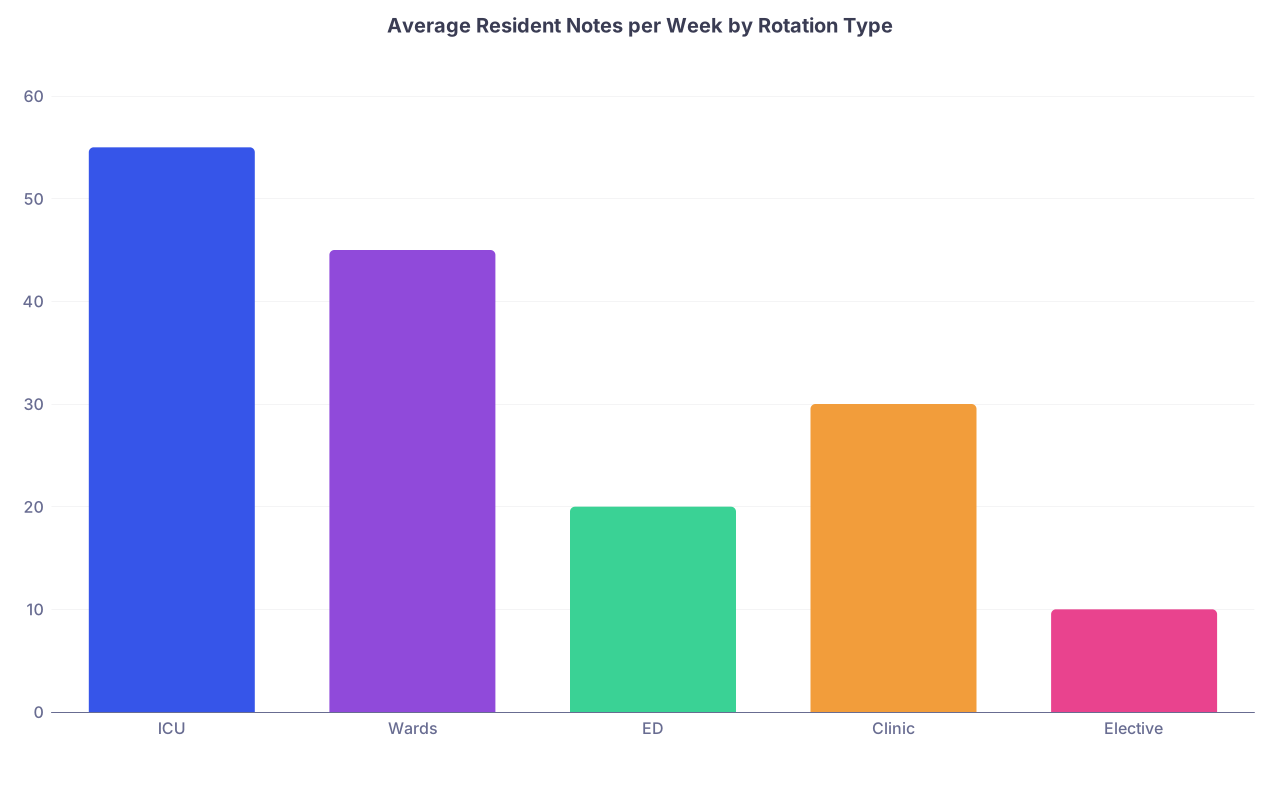
| Category | Value |
|---|---|
| ICU | 55 |
| Wards | 45 |
| ED | 20 |
| Clinic | 30 |
| Elective | 10 |
Now decide:
- ICU / heavy wards months (June on cards ICU, for example):
- Daily note completion standard = 100% of progress notes, >80% of discharge summaries same day.
- Clinic / elective months:
- Use the lighter workload to drain your “note debt” to zero.
Set a concrete weekly target like:
- “By May 31: no more than 3 incomplete notes at any time.”
- “By June 30: zero overdue notes, zero unsigned notes older than 72 hours.”
Write that somewhere you cannot ignore. On a sticky note on your workstation is fine.
6 Weeks Before Year‑End: Tighten Duty Hours and Build Routines
By this point, trust me, some co-residents will already be under quiet review for duty hour issues. You do not want to be one of them.
Week 1–2 of This Window: Duty Hour Micro‑Planning
At this point you should look at each upcoming weekly schedule between now and year‑end:
- For call-heavy weeks:
- Plan:
- Exact post‑call exit times (set an alarm if you have to)
- When you will enter hours into the system (same day, not 3 weeks later)
- Plan:
- For weeks with:
- Golden weekends or random weekdays off:
- Protect them. Aggressively.
- No “I’ll just swing by to finish a note.” That is how people drift into unlogged duty hours.
- Golden weekends or random weekdays off:
Make a simple commitment:
- Duty hours logged twice per week, same days each week (e.g., Wednesday and Sunday nights).
- If your system allows mobile entry, use it. People who “catch up later” always underreport or forget patterns that matter.
Week 3–4 of This Window: Lock in Daily Note Habits
At this point your goal is to stop the bleeding. No new backlogs.
Here is the daily structure that works on almost every inpatient rotation:
- Pre‑rounding (5–7 a.m.)
- Only data checking and to‑do list building. No notes yet.
- Post‑rounds block (usually 10 a.m.–noon)
- Finish progress notes on stable follow‑ups first.
These are fast, and clearing them lowers mental load.
- Finish progress notes on stable follow‑ups first.
- Afternoon block (usually 2–4 p.m.)
- Knock out:
- Discharge summaries for patients definitely leaving today
- Admission H&Ps from the morning
- Knock out:
Non‑negotiable rule:
Leave the hospital with only truly late admissions notes pending, and even those should be done by the following morning.
If your team culture is “notes at home after 9 p.m.,” someone needs to say it: that is bad medicine and bad training. Push for protected in‑house note time during lulls. Most attendings will back you if you frame it around patient safety and accurate documentation.
1 Month Before Year‑End (June): The Real Crunch Starts
Now every small problem is suddenly urgent: signed evaluations, procedure logs, duty hour summaries, and your vacation balance. This is where people panic. You will not.
Week 1: Full Systems Check
At this point you should do a 30–60 minute admin sprint on a lighter day or post‑call:
- Notes:
- Clear every incomplete note older than 72 hours.
- Make a list of any “problem notes” (complicated discharges, prolonged stays).
- Duty hours:
- Ensure last 8 weeks are fully entered and submitted.
- Flag any pattern that might worry your PD (weeks consistently at 79–80 hours, for example).
- Vacations:
- Confirm:
- All approved vacations are in the schedule.
- Any remaining days are either:
- Already requested, or
- Unavoidably lost (rare, but happens in rigid programs).
- Confirm:
If you still have an entire week of vacation unbooked in early June, you need to act that same week. Chefs choice: you can negotiate now or argue with GME later. Negotiating now is easier.
Week 2–3: Weekly Micro‑Plan
Now you start thinking one week at a time, very deliberately.
On Sunday night (or pre‑call if that is more realistic), plan:
- Which days will be heavy for:
- Admissions
- Discharges
- Clinics
- When you will do:
- Notes (2 specific blocks per day)
- Duty hour logging (twice per week)
- Vacation/email admin (once per week, 20 minutes)
This is also when you decide what you will say no to:
- Extra shifts
- “Can you just stay and help with…”
- Optional teaching sessions during your only free hour when your notes are behind
End of the year is not the time to impress everyone by being endlessly available. It is the time to finish strong and clean.
3 Weeks Before Year‑End: Zero Out the Note Debt
This is the critical window. At this point you should be aiming for zero backlog before the final 7–10 days.
Step 1: Triage Your Existing Notes
Run your incomplete note list and categorize:
- Green (quick wins, 5 minutes each):
- Straightforward follow‑up progress notes
- Simple discharge updates
- Yellow (10–15 minutes):
- Multi‑problem patients with long problem lists
- Admissions with limited collateral data
- Red (20+ minutes):
- Complex discharges with long hospitalizations
- Notes that require reviewing old records, outside imaging, etc.
Plan 2–3 dedicated blocks over the next week where you:
- Do all the greens first for momentum.
- Then 1–2 yellow or red notes per block.
If you are more than 20 notes behind and your schedule is brutal (e.g., consecutive ICU weeks), talk to your chief. Now, not later. Programs would rather give you 1 focused half‑day to catch up than deal with compliance issues or unsafe documentation.
Step 2: Stop New Backlog from Forming
This is where residents usually fail. They work one heroic weekend to “catch up,” then 5 days later they are behind again.
Your rule for the next 3 weeks:
- Same‑day sign‑off on:
- All progress notes
- All new admission H&Ps
- Within 24 hours for:
- Discharge summaries (unless discharge is after 8 p.m.)
If you cannot hit this standard, your census is either unreasonable (needs escalation) or you are multitasking yourself into oblivion (fixable).
2 Weeks Before Year‑End: Duty Hour and Vacation Tightening
Now the margin for error is tiny.
Duty Hours: No “Surprises” in the Last 14 Days
At this point you should:
- Confirm:
- Every week for the past 3 months is entered and submitted.
- No “phantom weeks” with missing data. Those look worse than an honest 82‑hour week.
- For the final 2 weeks:
- Avoid stacking swaps, moonlighting, and extra clinics that push you close to limits.
- If you must cover for someone, document coverage clearly and ensure hours are recorded accurately.
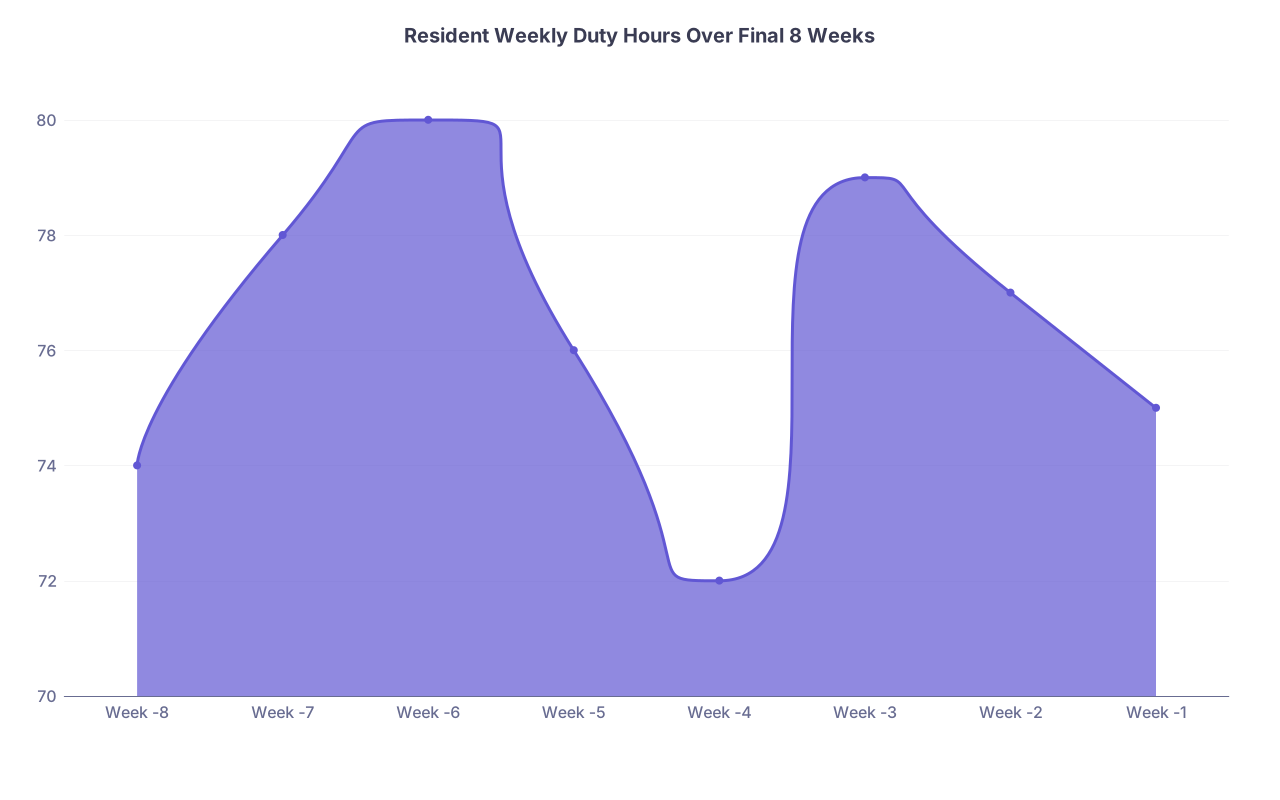
| Category | Value |
|---|---|
| Week -8 | 74 |
| Week -7 | 78 |
| Week -6 | 80 |
| Week -5 | 76 |
| Week -4 | 72 |
| Week -3 | 79 |
| Week -2 | 77 |
| Week -1 | 75 |
Pattern like this is fine. Missing entries or obviously fabricated 40‑hour weeks on ICU are not.
Vacations: Final Adjustments
If you have 1–3 days left:
- Slot them:
- After call stretches
- Between heavy blocks and night float
- Before the transition to next PGY level, if your program allows
Do not:
- Stack all days in the final week if it guts the team.
- Assume “they will just pay it out.” Many programs do not.
Final Week: The Closeout
This is where people either walk out clean, or get emails from program coordinators all summer.
At this point you should already be:
- At or near zero note backlog
- Fully current on duty hours
- Vacation days either used or scheduled
Now you focus on daily execution.
Daily Checklist (Last 7–10 Days)
Every day before you leave:
Notes
- All progress notes signed.
- All discharges from that day summarized or at least drafted.
- No pending notes older than 24–48 hours.
Duty hours
- Log the day before you leave work OR first thing post‑call.
- Double‑check off‑days and post‑call days are correctly marked.
Admin
- Scan for:
- Any unsigned evals you owe
- Any required end‑of‑year attestations
- Knock them out immediately. They take 2–3 minutes each; the psychological weight is disproportionate.
- Scan for:
Mid‑Week: One Final Systems Sweep
Pick one lower‑intensity day this week and do a 20–30 minute full sweep:
EHR:
- Incomplete notes folders: zero
- Unsigned orders: zero
- Draft notes: either signed or deleted
GME / Program portals:
- Duty hours: 100% complete for entire academic year
- Vacation records: match your actual used days
- Any required procedure or case logs: up to date
If you are transitioning levels (PGY‑1→2, etc.), this is also the moment to:
- Screenshot or export final duty hour and note stats if you want a record.
- Note any recurring patterns that made life harder:
- Certain services with constant note backlog
- Rotations where duty hours were always near the limit
They will come back when you are the senior or chief trying to fix them.
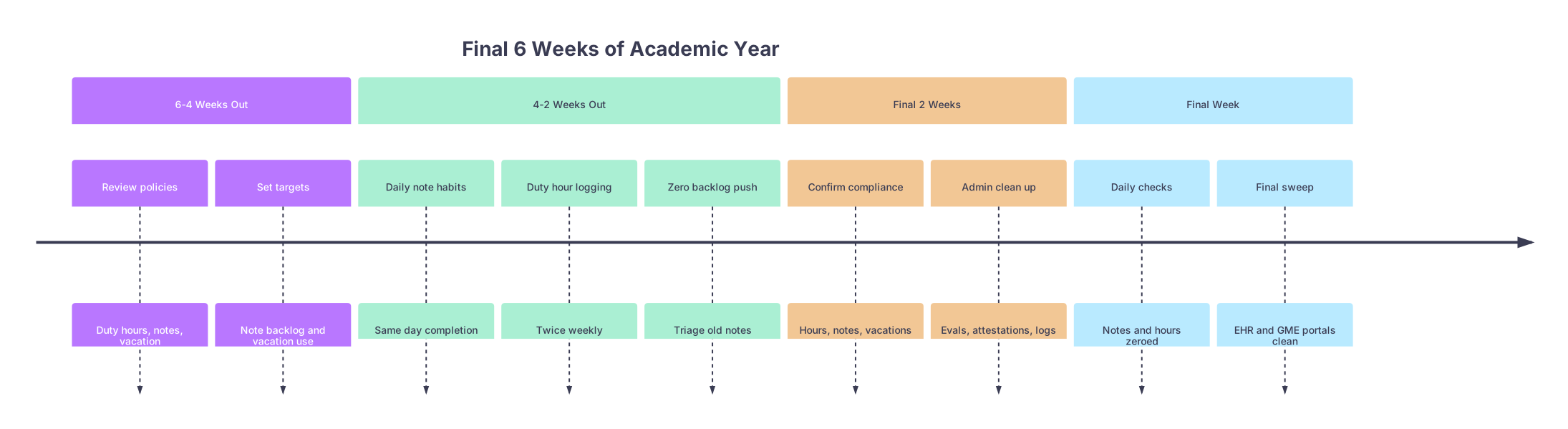
Visualizing the End-of-Year Push
Here is what a sane last 6 weeks looks like when someone actually plans it:
| Period | Event |
|---|---|
| 6-4 Weeks Out - Review policies | Duty hours, notes, vacation |
| 6-4 Weeks Out - Set targets | Note backlog and vacation use |
| 4-2 Weeks Out - Daily note habits | Same day completion |
| 4-2 Weeks Out - Duty hour logging | Twice weekly |
| 4-2 Weeks Out - Zero backlog push | Triage old notes |
| Final 2 Weeks - Confirm compliance | Hours, notes, vacations |
| Final 2 Weeks - Admin clean up | Evals, attestations, logs |
| Final Week - Daily checks | Notes and hours zeroed |
| Final Week - Final sweep | EHR and GME portals clean |
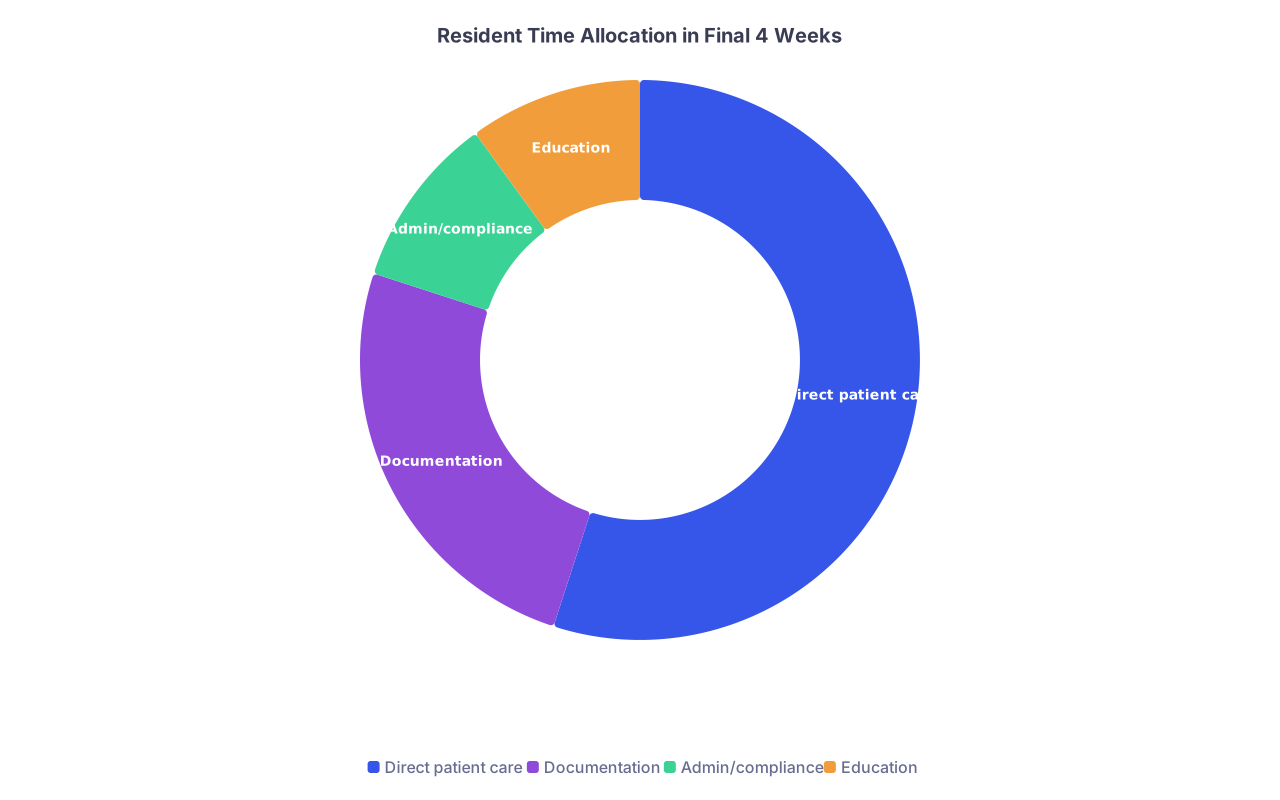
And what your capacity distribution should roughly look like in those last 4 weeks:
| Category | Value |
|---|---|
| Direct patient care | 55 |
| Documentation | 25 |
| Admin/compliance | 10 |
| Education | 10 |
If your documentation slice is creeping toward 40–50% routinely, you either have a systems problem on your service or a workflow problem you need to tackle head-on.
Final 24–48 Hours: Exit Clean
Last shift of the year. At this point you should already be functionally done, not starting a documentation marathon.
Your end‑of‑year exit checklist:
- Notes:
- All your patients’ notes are signed.
- Any long‑stay or complex discharges have complete, legible summaries.
- Duty hours:
- Final week entered and submitted.
- Any known deviations documented honestly.
- Vacation:
- No unexplained leftover days.
- Future schedule reflects your actual time off taken.
Then you walk out. No open charts. No mystery emails.
Key Takeaways
- The end of the year is not when you catch up; it is when you finish the plan you started 2–3 months earlier. If you are starting the plan in mid‑June, you are already playing from behind.
- Treat notes, duty hours, and vacations as parallel systems, not separate crises. Track them together, review them weekly, and clear them before the final 7–10 days.
- Residents who exit the year clean do not work harder in the last week. They work more deliberately in the last 8–12 weeks. Plan like that, and the “end‑of‑year crunch” becomes just another week.


