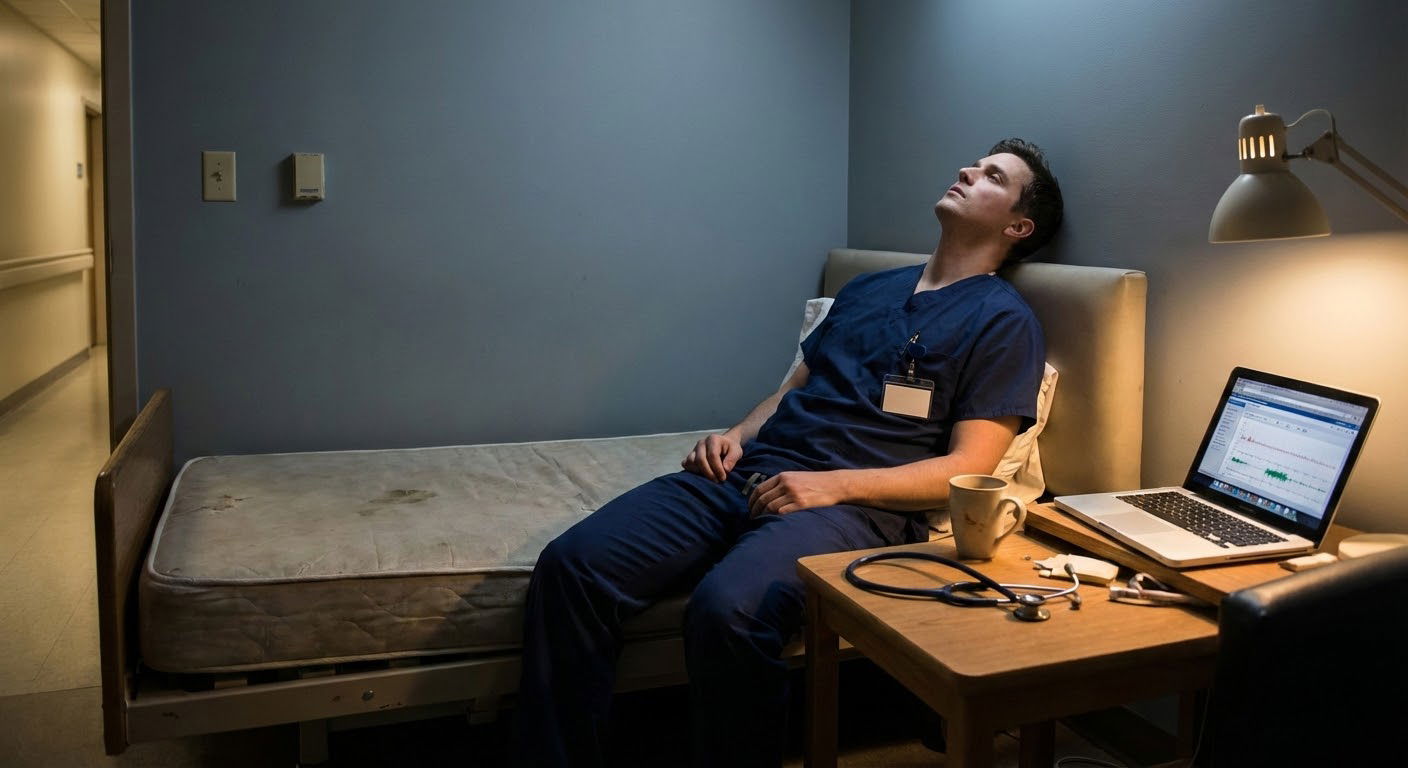
The 80-hour rule did not make residency “easy.” Feeling exhausted at 60–70 hours a week is completely normal—and frankly, expected.
If you’re wondering whether you’re weak, lazy, or “not cut out” for residency because you’re wiped out even when you’re technically under 80 hours, you’re asking the wrong question. The problem isn’t you. It’s the job.
Let’s walk through what’s normal, what’s concerning, and what’s actually expected of you when it comes to fatigue and residency work hours.
What “Under 80 Hours” Really Means (And Why It Still Feels Brutal)
The ACGME 80-hour work rule is misunderstood. Many residents picture 80 hours as some sort of “maximum safe” zone. It’s not. It’s a legal and accreditation ceiling to prevent the absolutely worst abuses. It’s not a wellness guideline.
Here’s what “under 80 hours” often looks like in real life:
- 11–13 hour days, 6 days a week
- One “day off” that’s really just 24 hours not physically in the hospital (but you’re charting, answering messages, reading)
- Pre-rounding at 5–6 a.m., home at 6–8 p.m., repeat
- At least some nights, weekends, or 24-hour calls mixed in
Do the math. A 12-hour day, 6 days a week is already 72 hours. Throw in a bad call or a late OR day and you’re right at the limit. And that’s just counting logged hours. Not the time you spend at home finishing notes, studying for boards, or doing mandatory modules.
So yes—if you feel exhausted at 60–75 hours, that is absolutely normal. That’s still more than one and a half full-time jobs, in a high-stakes, high-cortisol environment.
Here’s the key point:
Your level of exhaustion is not a moral failure. It’s a physiological response to chronic workload, sleep disruption, and stress.
Why You’re So Tired Even When You Slept “Enough” Days Ago
Residents try to hack this by saying, “But I slept 8 hours Saturday, why am I still wrecked by Wednesday?” Because residency fatigue is cumulative.
There are a few things working against you:
Chronic sleep restriction
You’re rarely sleeping 7–9 hours consistently. More like 5–6 some nights, 3–4 on call, then “catch-up” sleep that never really restores you. Your brain and body don’t reset after one good night. Sleep debt adds up over days and weeks.Circadian chaos
Switching between days and nights, early pre-rounds, late sign-out, 24-hour calls. Your body doesn’t know when it’s supposed to be awake, so you’re never fully rested in either direction.Cognitive load all day, every day
You’re not stacking boxes in a warehouse. You’re:- Holding multiple patient plans in your head
- Tracking labs, vitals, and pages
- Presenting to attendings who may grill you
- Documenting everything with legal precision
That kind of constant attention and decision-making is exhausting even at 40 hours a week.
Emotional fatigue
Bad outcomes, family conversations, suffering patients, rude consultants, sometimes hostile seniors. You carry that stuff home. It sits in the back of your mind even on your “off” day.No true off-switch
Nights off are often: catch up on laundry, call family, do meal prep, finish charts, study for an in-service, maybe try to see your partner or kids. Your time outside the hospital often doesn’t feel like true recovery.
So yes, you can be technically “well within duty hours” and still feel like you’re dragging yourself through wet cement by Thursday. That’s not abnormal. That’s residency.
What Level of Exhaustion Is Considered “Normal” in Residency?
Let me be blunt: baseline tired is normal. Soul-crushing, nonfunctional, unsafe tired is not.
Here’s a rough, practical framework you can use.
Expected (Annoying but Normal) Fatigue
This is what most residents feel at least some of the time:
- You wake up tired most days, but coffee and a shower get you going
- You can focus and make decisions, but you feel slower by the afternoon
- By the end of a long stretch, you’re irritable, more emotional, or quiet
- On a post-call day, you can function but you’re running on fumes
- On your day off, you sleep in, move slowly, and need downtime—but you can still do groceries, basic chores, maybe a low-effort social activity
You may think, “I’m tired all the time,” but you’re still:
- Safe at work
- Able to think through patient care
- Able to get out of bed without a massive internal battle daily
That’s miserable, but it’s within the band of what residency usually looks like.
Concerning Fatigue (Time to Address It)
This is where your exhaustion is more than “this rotation is rough”:
- You’re zoning out during sign-out or orders and realize you missed something significant
- You’re having trouble tracking basic tasks, forgetting to place key orders, or mis-entering meds
- You’re nodding off while standing, walking, or writing notes
- You feel emotionally blunted or on the verge of tears most of the time
- You need multiple alarms and someone to physically wake you to avoid being late
- On days off, you’re sleeping 14+ hours and still feeling destroyed
- You start dreading going to work in a paralyzing way, not just “ugh, another day”
When fatigue starts crossing into safety territory—for you or your patients—that’s not “just residency.” That’s a problem worth speaking up about.
Red-Flag Fatigue (Get Help Immediately)
This is beyond normal residency exhaustion. You should get real help, fast, if you notice:
- You’re driving home and realize you do not remember parts of the drive
- You fall asleep at the wheel or nearly crash
- You’re mixing up patients or almost causing a serious error because your brain is offline
- You’re having thoughts like “If I got into a minor car accident and had to be admitted, at least I wouldn’t have to go to work”
- You’re thinking about self-harm, feeling hopeless, or fantasizing about just not waking up
This is not part of what’s “expected.” This is burnout, depression, or dangerous sleep deprivation. And yes, even high-performing residents hit this wall. You’re not special for “toughing it out.” You’re just putting yourself at risk.
What Programs Actually Expect From You Around Work Hours
Here’s what’s realistically expected in most residencies:
You’ll be tired. A lot.
Programs know this. It’s baked into the system. Nobody expects you to be fresh and cheerful every day at 4:30 a.m. They do expect you to still show up, be professional, and care for patients.You’ll still function clinically.
Even when wiped, you’re expected to:- Know your patients
- Think through a plan
- Communicate clearly
- Ask for help when stuck
“I’m tired” is real, but it’s not a shield for being sloppy or unsafe.
You’ll stay within ACGME rules.
Programs are required to:- Keep you under 80 hours averaged over 4 weeks
- Give at least 1 in 7 days off (24 consecutive hours)
- Keep most shift lengths within standards (e.g., 24+4 for in-house call in many specialties)
Are there places that still push boundaries? Of course. But officially, they’re not supposed to.
You’ll be honest about your hours.
This is where residents get trapped. You’re “expected” to log your hours truthfully. But the culture sometimes says: don’t rock the boat, don’t make the program look bad. Many residents underreport. That’s how bad systems stay in place.
Here’s my stance: routinely logging fake hours to protect the program is a bad idea. If your rotation requires you to consistently go beyond duty hour rules just to be safe and complete your work, that’s a structural issue.
When Your Exhaustion Is a System Problem, Not a You Problem
Let’s be clear: not all misery is “just the grind.” Sometimes the setup is wrong.
Classic bad setups:
- One resident covering far too many patients at night
- No protected time for notes or discharges, leading to chronic 2–3 hour stay-late culture
- A service where sign-out times exist only on paper
- Toxic seniors or attendings who equate suffering with strength
- Chronic understaffing, unfilled positions, or constant cross-covering
If you notice:
- Everyone on a rotation is drowning, not just you
- Seniors routinely say things like “Yeah, we all logged 70 but actually worked 95”
- Nurses or other staff comment: “You all look like zombies this month”
That’s a signal the workload, not your resilience, is the main problem.
This is where you:
- Talk to a trusted chief or faculty mentor
- Use program evaluations honestly
- Bring it up at residency meetings or with your program director, ideally with concrete examples instead of just “it’s terrible”
Will every program respond perfectly? No. Some will get defensive. But silence guarantees nothing changes.
Practical Ways to Survive Real-World Exhaustion
I’m not going to lie and promise that “better self-care” fixes 80-hour weeks. It doesn’t. But there are ways to keep yourself just above water more consistently.
Think of it like damage control, not a cure.
Protect sleep like it’s a procedure.
- Blackout curtains, white noise, phone across the room
- Ear plugs or eye mask post-call
- 20–30 minute naps when safe and possible—before night shifts, not just “whenever”
Simplify your off-days ruthlessly.
One day off is not the day for a perfect life. Pick 1–2 priorities:- Rest (non-negotiable)
- One chore that makes your week easier (meal prep, laundry)
- One connection (partner, friend, family)
Everything else is optional. If people are offended you’re not super available during residency, that’s their misunderstanding, not your failure.
Stop perfectionism on notes and studying.
- Smart, focused studying beats heroic 3-hour late-night marathons after 14-hour shifts
- Aim for “clear, accurate, and done” notes, not literature reviews every day
Learn micro-recovery during the day.
- Sit when you can (the residents who stand for everything “to look busy” tire out faster)
- Eat something real before 3 p.m., even if it’s a fast sandwich in the hallway
- Bathroom breaks are not optional; you’re not a robot
Use your team.
- Ask co-residents to swap quick tasks when you’re at the edge of your capacity
- Hand off appropriately at sign-out; don’t martyr yourself staying late for hours unnecessarily
- Tell your senior if you’re fading to the point of unsafe—better to redistribute than to make a serious error at 3 a.m.
How To Know When It’s Time To Escalate
The hardest move for residents: deciding when you’re just tired vs when you actually need to escalate.
Escalate to a chief resident, attending, or PD when:
- You’re regularly unsafe to drive home after call
- Tasks are routinely too many for you to complete even when working flat-out
- You’re creeping into red-flag mental health territory (hopelessness, thoughts of self-harm, constant dread)
- You’re being openly pressured to falsify duty hours
Escalate to mental health support (and yes, while still in training) when:
- Sleep doesn’t fix your emotional exhaustion at all
- You lose interest in everything outside work
- You’re thinking about quitting medicine or disappearing, not just “this rotation sucks”
- Anxiety or panic start showing up at the thought of going in
Plenty of residents quietly see therapists, start antidepressants, or get real help during training. It does not mean you’re not cut out for medicine. It means you’re human in an inhuman system.
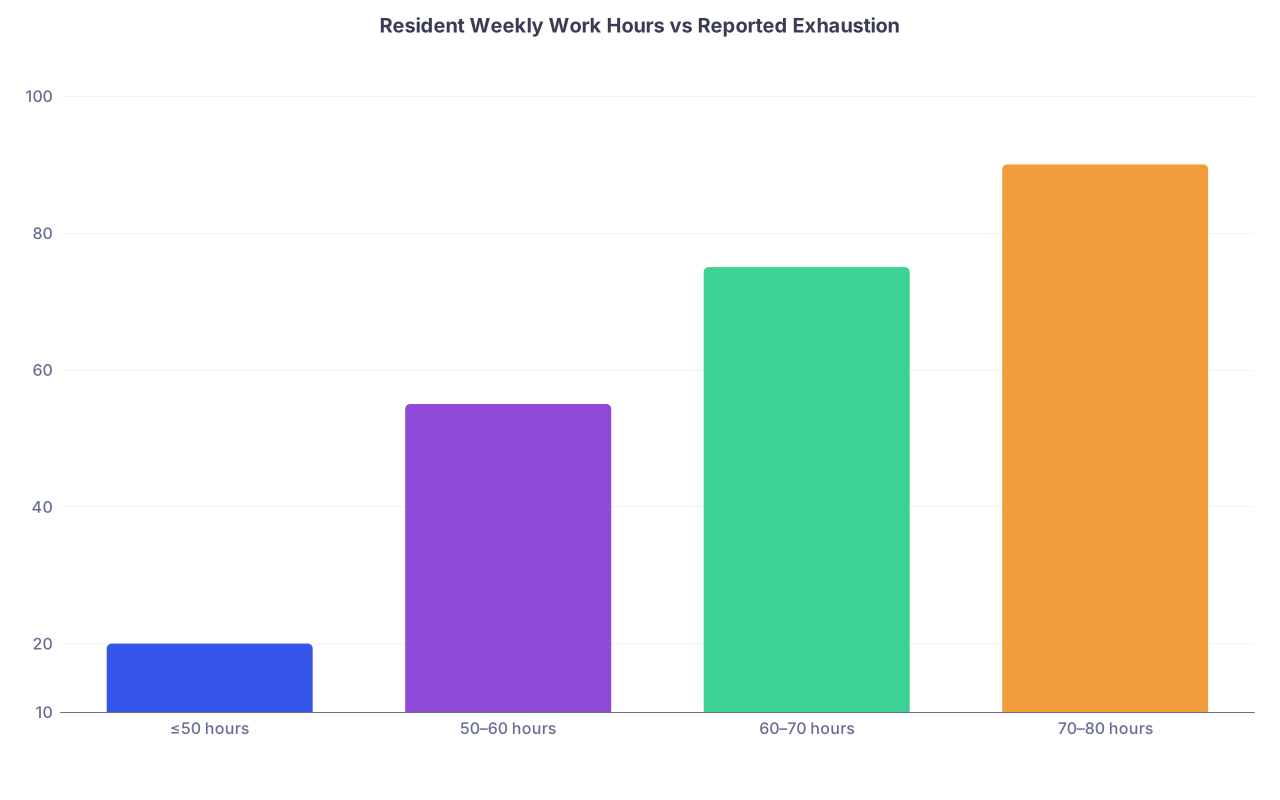
| Category | Value |
|---|---|
| ≤50 hours | 20 |
| 50–60 hours | 55 |
| 60–70 hours | 75 |
| 70–80 hours | 90 |


| Step | Description |
|---|---|
| Step 1 | Feeling exhausted |
| Step 2 | Normalize fatigue and use survival strategies |
| Step 3 | Talk to senior or chief resident |
| Step 4 | Seek professional help |
| Step 5 | Adjust sleep and workload if possible |
| Step 6 | Still safe at work |
| Step 7 | Near misses or risky errors |
| Step 8 | Mental health red flags |
The Bottom Line: What’s Normal and What’s Not
Let me answer your core question directly.
Is it normal to feel exhausted even when you’re under 80 hours?
Yes. Completely. Most residents do. Many feel significantly drained even around 55–60 hours because of the intensity, sleep disruption, and emotional weight of the job.
What’s expected?
Programs expect you to be tired but still safe, professional, and engaged in patient care. They do not (officially) expect you to work beyond ACGME rules, lie about your hours, or quietly tolerate dangerous levels of sleep deprivation.
Where you draw the line:
- Baseline tired and needing your day off to recover = normal for residency.
- Making mistakes, zoning out, or feeling mentally unstable from fatigue = not something to “tough out.”
- Thinking you’re weak for struggling at 60–70 hours = wrong conclusion. The job is hard. You’re allowed to feel it.
You’re not failing because you’re exhausted under 80 hours. You’re a resident in a system that runs you close to your limits. Your job is not to pretend you’re fine. Your job is to stay safe, ask for help when you’re not, and survive this phase with your brain and integrity intact.