

You’re sitting at the team room computer. It’s early December, your chief just emailed: “Please submit your rotation requests for next academic year by Friday.”
Your brain is mush from nights. You’ve got Step 3 to schedule, a wedding to attend in June, a vague hope of doing research, and maybe—just maybe—a vacation where no one pages you. And now you’re supposed to decide when to ask for lighter rotations without looking weak or clueless.
Here’s the truth: residents who treat the annual schedule like a strategic game end up less burned out and less miserable. Residents who just click random boxes on the request form? They suffer.
I’m going to walk you through this chronologically—what to think about 6 months before the new academic year, then month-by-month, then down to specific weeks and days when you should absolutely be on something lighter.
6–8 Months Before July 1: Big Rocks First
At this point you should not be obsessing over which clinic you’ll have on Tuesdays. You should be locking down your “big rocks” for the year:
- Exams
- Major life events
- Application cycles (fellowship, jobs)
- Known tough rotations in your program
Step 1: Map Your Non-Negotiables
Open a blank calendar (Google Cal, Notion, paper, whatever) for July 1–June 30.
Block out:
- Board exams (Step 3, in-training, specialty boards)
- Fellowship application season (usually:
- ERAS opens: July
- Applications due: July/August
- Interviews: roughly Aug–Nov)
- Any known:
- Weddings where you’re in the bridal party
- Partner’s due date if expecting a child
- Religious holidays that really matter to you
- Standing family events you will attend (big anniversaries, graduations)
Now label each of these blocks “needs lighter rotation” or “must have off/low-call.”
If you’re smart, you also ask a PGY-2 or PGY-3:
“Which months are historically awful here?”
You’ll hear things like “ICU in winter is brutal” or “Surgery nights in July are a bloodbath.”
Write those down.
4–6 Months Before July 1: Know Your Heavy vs Light Rotations
At this point you should understand which rotations to avoid during high-demand weeks in your life.
Here’s a simple breakdown. Every program has its own quirks, but this pattern is pretty universal.
| Rotation Type | Typical Intensity | Schedule Pattern |
|---|---|---|
| MICU/SICU | Very Heavy | Long days, q2–4 call |
| Inpatient Wards (Gen Med) | Heavy | 6–7 day weeks, call |
| Night Float | Heavy but Predict | Nights only, no clinics |
| ED (varies by program) | Moderate–Heavy | Shifts, weekends |
| Outpatient Clinics/Amb Care | Light–Moderate | Mostly weekdays |
| Elective/Research | Light | Few/no nights, rare call |
Rotations that usually qualify as “lighter” and are good to request strategically:
- Ambulatory clinic blocks
- Electives (especially specialty consults with good hours)
- Research blocks
- Quality improvement admin electives
- Certain procedural electives with predictable hours
Rotations that are terrible times to have life chaos:
- ICU of any flavor
- Night float blocks on high-volume services
- Inpatient wards during viral seasons (winter, flu/RSV)
- Trauma or busy ED months
Your job right now: categorize every required rotation in your program as Heavy / Moderate / Light. If the schedule template isn’t clear, ask seniors directly, not chiefs. Seniors will actually tell you, “Endocrine elective? Glorious. Go there when you’re dying.”
3–4 Months Before July 1: Timing Lighter Rotations by Phase of Residency
Now we align your “lighter time” with your actual career/life needs.
PGY-1: Survival and Step 3
If you’re an intern, at this point you should:
- Avoid light rotations in July–August unless your program forces it. Intern year early is for learning; you actually want some volume.
- Protect:
- One lighter month around when you plan to take Step 3
- One lighter month in late spring when you will be fried and questioning your life
Reasonable Step 3 windows:
- Internal medicine: between Jan–May, on an elective or ambulatory month
- Surgery: as close to an easier month as humanly possible, maybe during a research or SICU-adjacent light month
PGY-2: Peak Grind, Peak Strategy
PGY-2 is usually your heaviest year in most programs. At this point you should:
Protect fellowship application season if you’re applying:
- July–September: prefer lighter or controllable rotations
- Avoid ICU or nights during August if possible (that’s when most people are doing letters + personal statements + ERAS)
Save lighter blocks for:
- Weeks when you’ll be flying for fellowship interviews
- The month you’ll do serious research writing or abstract submissions
PGY-3+: Transition and Job Hunt
Senior years you’re juggling:
- Leadership responsibilities
- Fellowship or job interviews
- Board prep
Plan:
- Ask for lighter rotations during:
- Prime interview months
- Final 3–4 months before fellowship/board exams if you have control
- Avoid:
- Back-to-back heavy services in your last 6 months (you won’t remember anything; just resentment)
When in the Calendar Year to Request Lighter Rotations
Most programs build the schedule once a year, late winter or early spring. Some tweak mid-year. You need to time your ask before chiefs start locking things.
Typical Timeline
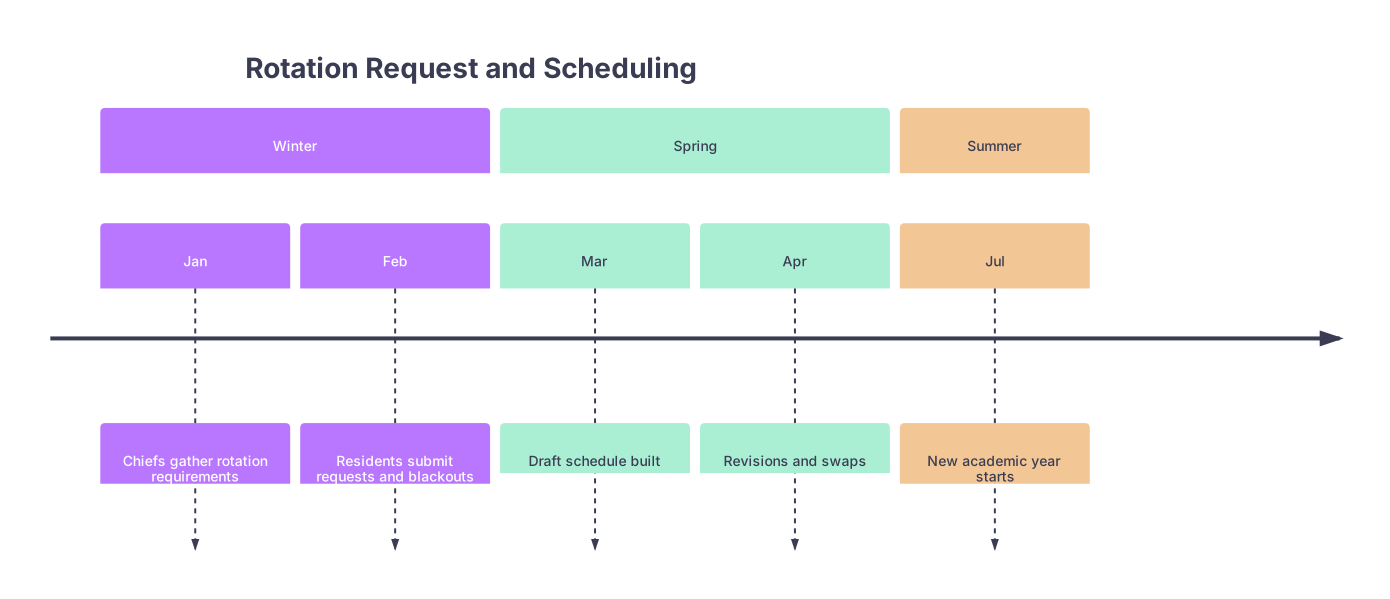
| Period | Event |
|---|---|
| Winter - Jan | Chiefs gather rotation requirements |
| Winter - Feb | Residents submit requests and blackouts |
| Spring - Mar | Draft schedule built |
| Spring - Apr | Revisions and swaps |
| Summer - Jul | New academic year starts |
At this point (when the email goes out) you should:
- Immediately skim the rotation list for the year.
- Identify:
- 2–3 rotations you really want light (exam prep, interviews, major life event)
- 2–3 rotations you’re willing to eat as heavy
You cannot make everything light. If you try, chiefs ignore you. You pick your battles.
Strategic Windows: When You Should Request Lighter Rotations
Let’s go quarter by quarter through the academic year and call out where a lighter rotation is usually golden.
July–September (Q1): Adjusting, Learning, or Applying
At this point you should:
- As a new PGY-1:
- Not demand light July unless you have a serious reason.
- Ask for:
- One light rotation in August or September if you know you struggle with transitions or are moving from out of state.
- As a fellow applicant:
- Keep July/August as light-to-moderate if possible.
- Avoid ICU during:
- Finalizing ERAS
- Writing personal statement
- Coordinating letters
Good rotations to request as “lighter” in Q1:
- Outpatient clinics
- Research
- Electives without call
October–December (Q2): Fatigue and Holidays
By October, the novelty is gone. Everyone’s tired.
Times that justify lighter rotations:
- First 1–2 weeks of December:
- If you observe major religious holidays
- If you’re traveling for family events
- Around in-training exams:
- Try to be on a more predictable service when those exams hit
Bad idea:
- ICU or night float November–December if you also care deeply about being home for holidays. You’ll just resent the entire system.
January–March (Q3): Exam Season and Deep Burnout
This is where I see people crash.
At this point you should:
- PGY-1:
- Block a lighter month for Step 3:
- Example: Ambulatory block in February, test late February or early March
- Block a lighter month for Step 3:
- PGY-2/3:
- Put research, QI, or elective blocks here if you’ve got manuscripts to finish or presentations to prep
This is peak burnout season. If you can get even one “lighter” month in Jan–Mar, you’ll feel the difference.
April–June (Q4): Transition and Clean-Up
By April, you’re:
- Trying to finish research
- Closing charts and QI projects
- Prepping for next level (intern → senior, senior → fellow/attending)
Good times for lighter rotations:
- The month before you become a new role (e.g., early May before you start as a brand new senior in July). Use that bandwidth to read, prep, and get your life in order.
- The month you know you’ll move apartments or cities for the next stage.
Avoid:
- Ending the year with ICU if you have major exam or move right after graduation. You’ll walk into your new role exhausted and underprepared.
Week-by-Week: Specific Situations When You Want a Lighter Rotation
Drill down a bit more. These are the classic “I wish I’d asked for elective that week” situations.
1–2 Weeks Before a Major Exam (Step 3, Boards)
You want:
- Clinic/elective with:
- No 28-hour call
- Predictable end times
- Some weekends off
Do not plan to study on:
- ICU nights
- Busy ED nights
- Inpatient wards with q4 call
I’ve watched interns try to “power through” Step 3 during ICU. They either postpone the test or go in half-prepared and miserable. Both are avoidable.
Weeks With Multiple Important Personal Events
Examples:
- You’re in two weddings on consecutive weekends
- You have a sick parent and know you’ll be traveling a lot
- Your partner has a major surgery scheduled
Those weeks, you want:
- Lighter rotations that tolerate single-day absences better:
- Research
- Admin/QI courses
- Outpatient
- Not:
- ICU (one call miss crushes your co-residents)
- Night float (hard to cross-cover or swap days)
Interview Weeks (Fellowship or Job)
Peak interview volume varies by specialty, but when it hits, you’ll be flying constantly.
Ideal setup:
- Block of 4 weeks on:
- Research
- Elective with flexible days
- Clinic where co-residents can absorb a day or two with notice
Worst setup:
- Night float
- ICU
- Wards on skeleton crews
I’ve seen people interviewing for cardiology fellowship while on MICU. Every flight day turned into a guilt-soaked negotiation with co-residents. Don’t be that person if you can avoid it.
Day-by-Day: Micro-Timing Inside a “Lighter” Block
Even on lighter rotations, you can still get crushed if you ignore the day-to-day structure.
At this point (during the block itself) you should:
- Front-load:
- Study days
- Project work
- Admin tasks
Because:
- The first half of a block is always more predictable. By week 3, random disasters pop up—clinic overflows, unexpected coverage needs, family crises.
Use this pattern:
- Week 1–2 of a light month
- Day 1: orient, learn workflow
- Days 2–5: carve out 1–2 hours/day for exam prep or writing
- Weekend 1: longer study blocks; protect at least one full day off
- Week 3–4
- Expect:
- Coverage requests
- Life chaos
- Maintain minimum 30–60 minutes study if prepping for an exam
- Expect:
Do not assume “I’ll make it up later in the month.” You won’t.
How to Actually Communicate Light Rotation Requests Without Looking Useless
This is where people screw it up. It’s not just when you ask—how you ask matters.
At this point (when you reply to the chiefs’ email) you should:
- Be specific, not vague.
Bad:
“I’d like lighter rotations scattered through the year because I’m worried about burnout.”
Better:
“If possible, I’d like an elective or ambulatory month in February or March to prepare for Step 3, and another lighter month between August–October as I’ll be interviewing for fellowship.”
- Offer trade-offs.
Tell them where you’re willing to work hard.
Example:
“I’m happy to take a heavier ICU or night block in early fall or winter if I can have an ambulatory or elective month in February for Step 3.”
Chiefs appreciate clear give-and-take. That’s how adults negotiate.
- Don’t hide the real reason.
Reasonable:
- Major exam
- Fellowship interviews
- Pregnancy/childbirth
- Serious family event or chronic illness
- Moving across the country next summer
Vague whining, on the other hand, gets ignored.
Quick Visual: When Residents Usually Regret Not Having a Light Rotation
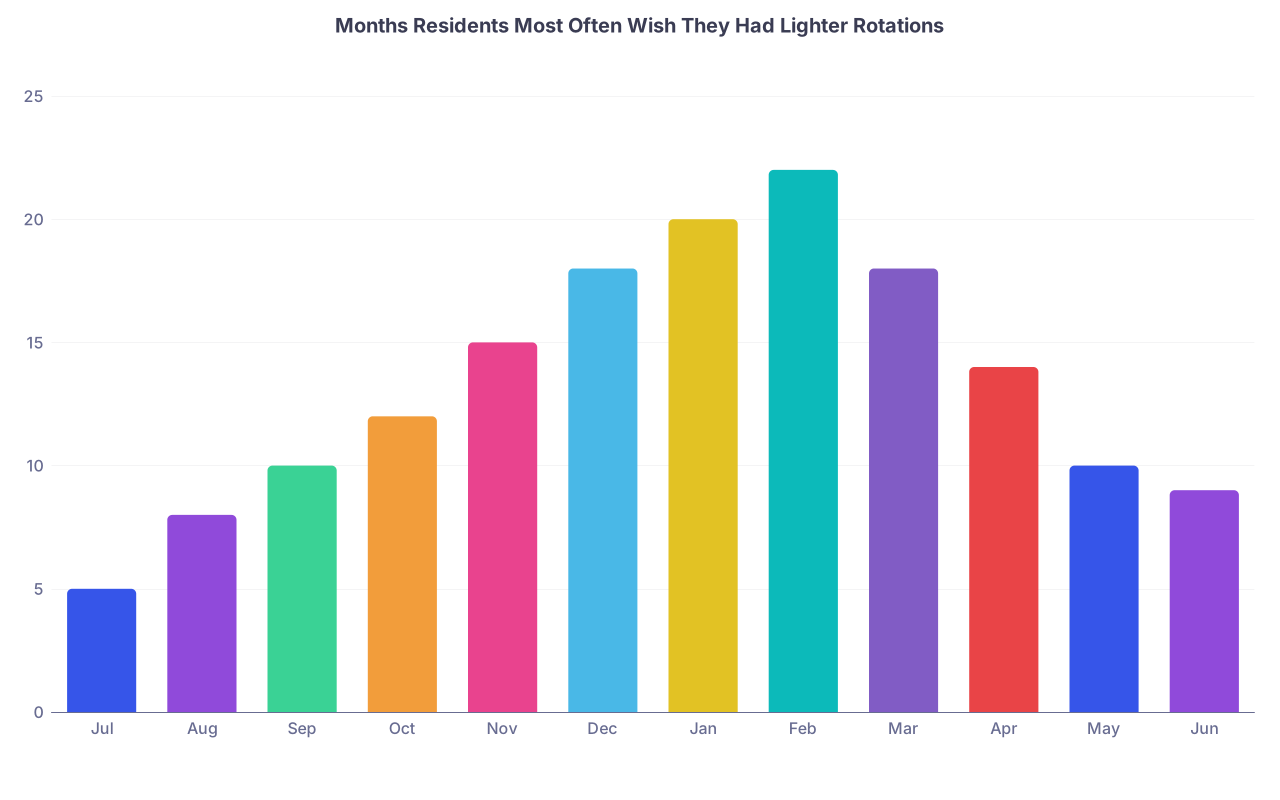
| Category | Value |
|---|---|
| Jul | 5 |
| Aug | 8 |
| Sep | 10 |
| Oct | 12 |
| Nov | 15 |
| Dec | 18 |
| Jan | 20 |
| Feb | 22 |
| Mar | 18 |
| Apr | 14 |
| May | 10 |
| Jun | 9 |
Translation: the later winter months (Jan–Mar) are when people crack and say, “I should not have signed up for MICU right now.”
Sample Year Strategy: Internal Medicine PGY-2
Let’s make this concrete.
Assume you must do:
- 4 months wards
- 2 months ICU
- 1 month night float
- 3 months ambulatory
- 2 months electives
You’re applying for cardiology fellowship.
A sane plan:
- July: Wards (get your feet under you as a PGY-2)
- Aug: Ambulatory (ERAS work, letters)
- Sep: Elective (interviews start)
- Oct: Wards
- Nov: ICU
- Dec: Wards (accept holidays will be rough)
- Jan: Ambulatory (reset, maybe some interview spillover)
- Feb: Elective (research/writing push)
- Mar: Nights (weather better, you’re more seasoned)
- Apr: Wards
- May: ICU
- Jun: Ambulatory (prep for next year, finish projects)
Where did you request lighter rotations?
- August (applications)
- September (interviews)
- January/February (burnout + projects)
You volunteered for:
- ICU in colder months, but not in peak application season
- Nights in March when life is slightly more stable
That’s how you play the game.
Tools and Visual Planning Aids
If you’re a visual planner, build a fast Gantt-like picture of your year.
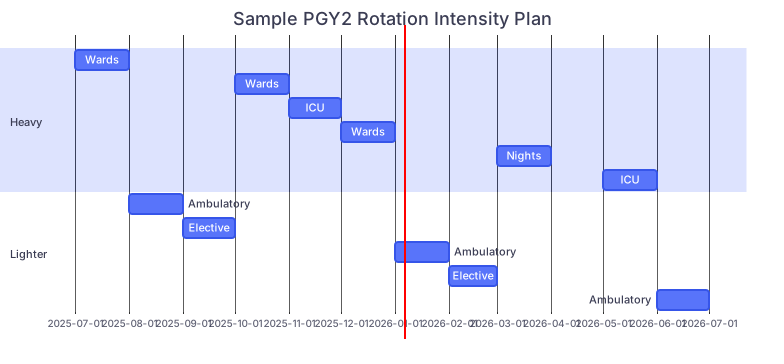
| Task | Details |
|---|---|
| Heavy: Wards | a1, 2025-07, 1M |
| Heavy: Wards | a2, 2025-10, 1M |
| Heavy: ICU | a3, 2025-11, 1M |
| Heavy: Wards | a4, 2025-12, 1M |
| Heavy: Nights | a5, 2026-03, 1M |
| Heavy: ICU | a6, 2026-05, 1M |
| Lighter: Ambulatory | b1, 2025-08, 1M |
| Lighter: Elective | b2, 2025-09, 1M |
| Lighter: Ambulatory | b3, 2026-01, 1M |
| Lighter: Elective | b4, 2026-02, 1M |
| Lighter: Ambulatory | b5, 2026-06, 1M |
You want your heaviest blocks not stacked around:
- Exam months
- Prime interview months
- Major personal stressors
Red Flags: Times You Think You Don’t Need a Light Rotation (But You Do)
A few patterns I’ve seen over and over:
“I’ll just squeeze Step 3 studying into my ICU month. I studied during undergrad while working.”
Residency ICU is not undergrad. You will not.“I don’t need lighter time for interviews; they’re mostly virtual now.”
You’ll still be exhausted, scrambling between calls, and trying to look alive on Zoom in a call room.“I want to show I’m tough, so I’ll take back-to-back ICU and nights.”
This doesn’t make you look tough. It makes you look like a poor planner when you’re dysfunctional by week 6.
Quick Reality Check: What Percentage Should Be Light?
You cannot make half the year light. But you also shouldn’t martyr yourself with 10 straight heavy months.
Here’s a reasonable distribution for a typical resident year:
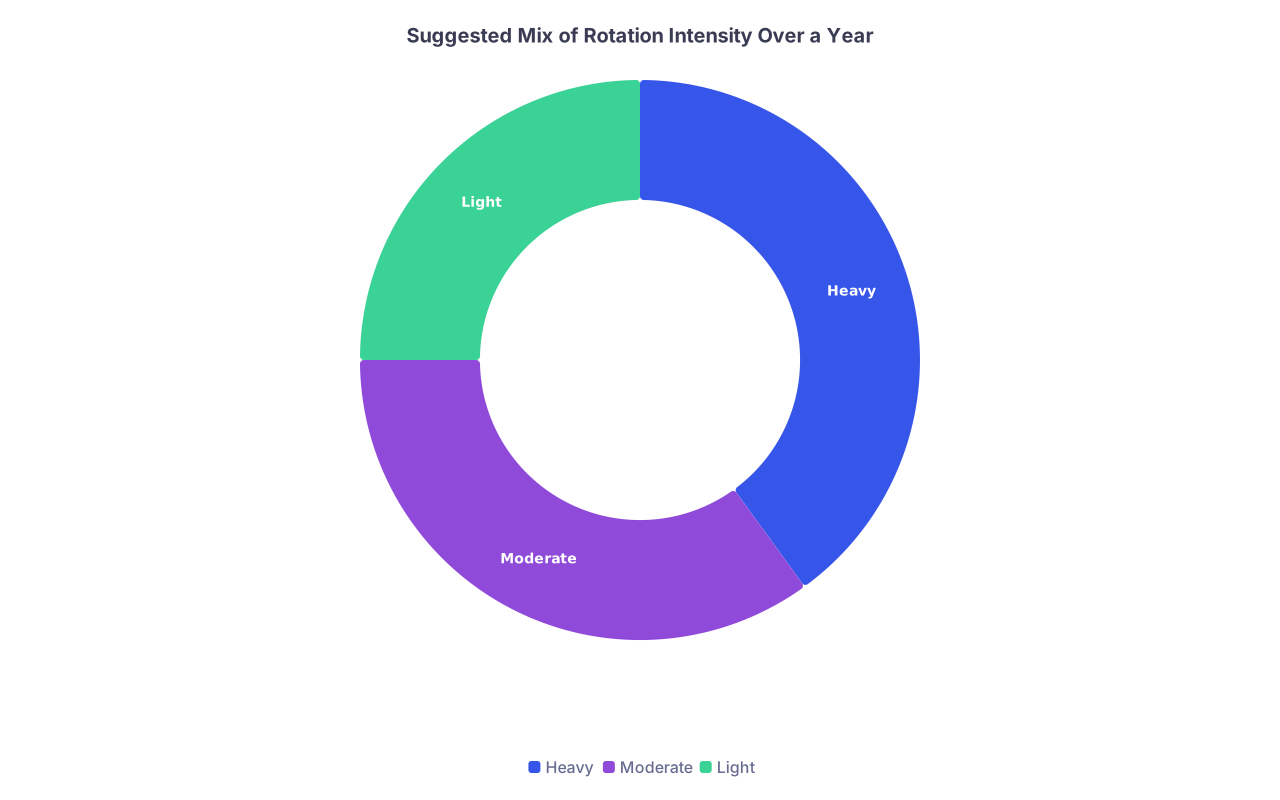
| Category | Value |
|---|---|
| Heavy | 40 |
| Moderate | 35 |
| Light | 25 |
Aim for:
- ~25% of your year in genuinely lighter blocks
- Those concentrated around:
- Exams
- Interviews
- Known high-stress life windows
- Deep winter burnout months
Final Check Before You Hit “Submit” on Your Requests
At this point you should:
- Look at your draft year and ask:
- Where are my heaviest two consecutive months? Can I survive that window?
- Do I have at least two strategically placed lighter blocks around:
- Exams
- Applications/interviews
- Is late winter (Jan–Mar) completely brutal, or did I give myself one oxygen mask month?
If the answer to all three is reasonable, send the request.
If not, move something now. Not in six months when you’re drowning.
Key Takeaways
- Plan lighter rotations around specific high-demand weeks: exams, interviews, major life events, and deep winter fatigue. Not randomly.
- Be explicit and strategic when you ask: name 2–3 months you truly need lighter and offer to take heavier rotations elsewhere.
- Protect at least ~25% of your year as lighter blocks, with one in Jan–Mar—because that’s when even the strongest residents crack.


