
The current wave of resident wellness programs is long on branding and short on measurable results.
Hospitals love to advertise “resilience workshops,” free yoga, and wellness weeks. Residents, meanwhile, keep reporting 60–80 hour weeks, chronic sleep debt, and burnout rates hovering around 40–60%. Both of those things cannot be true and effective at the same time.
Let me walk through what the data actually show. Where wellness programs move the needle. Where they do almost nothing. And which gaps are so large you could drive a night-float cross-cover list straight through them.
What the Data Say About Resident Distress
Start with the baseline. If you do not understand the magnitude of the problem, any wellness “solution” sounds reasonable.
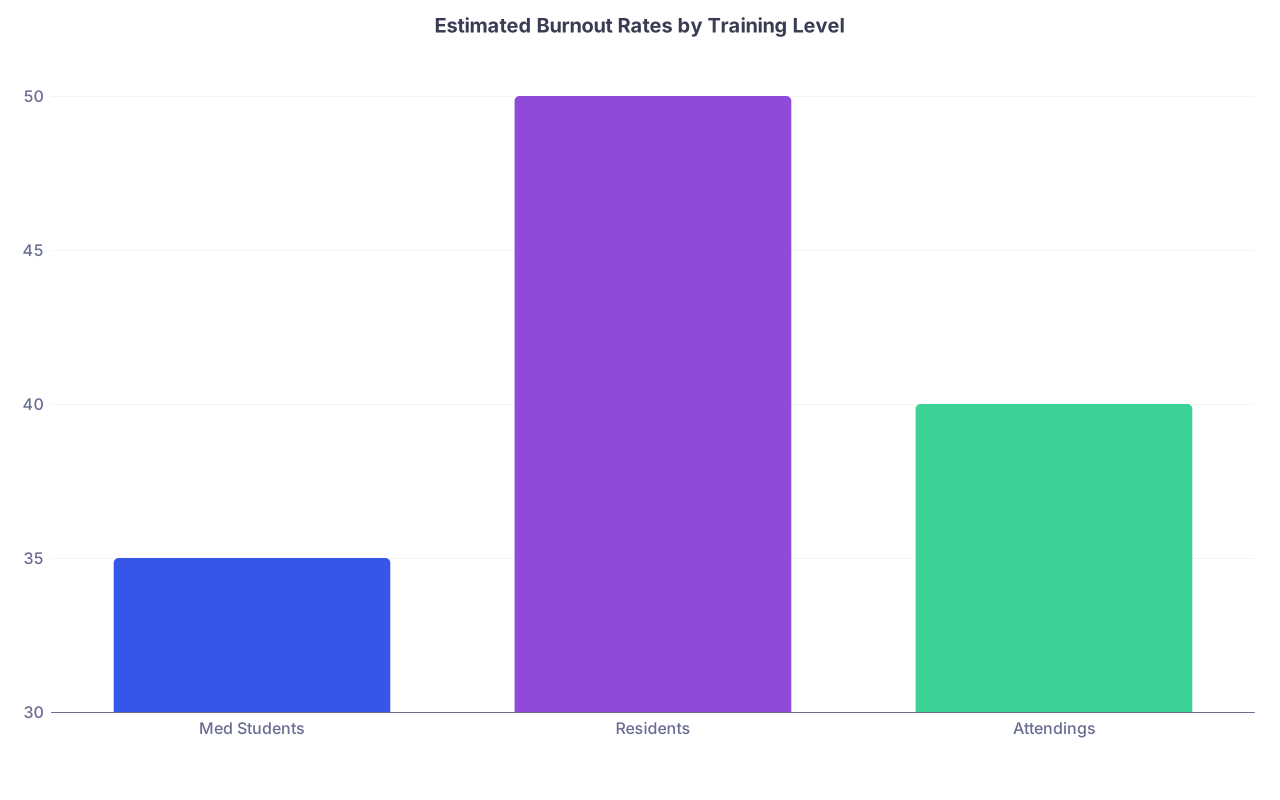
Multiple multi-center and national studies converge on roughly the same range:
- Burnout in residents: commonly 40–60%, higher in some surgical and front-line specialties.
- Depression or depressive symptoms: 20–30%+.
- Serious thoughts of suicide in the previous year: 6–10% in several cohorts.
- Sleep: median 5–6 hours on workdays for many inpatient rotations.
| Category | Value |
|---|---|
| Med Students | 35 |
| Residents | 50 |
| Attendings | 40 |
Those are not fringe numbers. That is half your residency class.
ACGME duty-hour reforms in 2003 and 2011 were supposed to be the big structural fix. Multiple large observational studies and meta-analyses later, the picture is mixed:
- Patient outcomes: negligible change overall.
- Resident sleep: modestly better in some designs.
- Burnout and depression: not consistently improved.
Translation: shaving a few hours off the top of duty hours did not address the core experience of workload, emotional stress, or learning climate. So programs layered “wellness initiatives” on top.
Now the question: are those actually effective?
Types of Resident Wellness Programs: What’s Actually Being Done
Most residency wellness offerings fall into a predictable set of buckets:
Individual-focused interventions
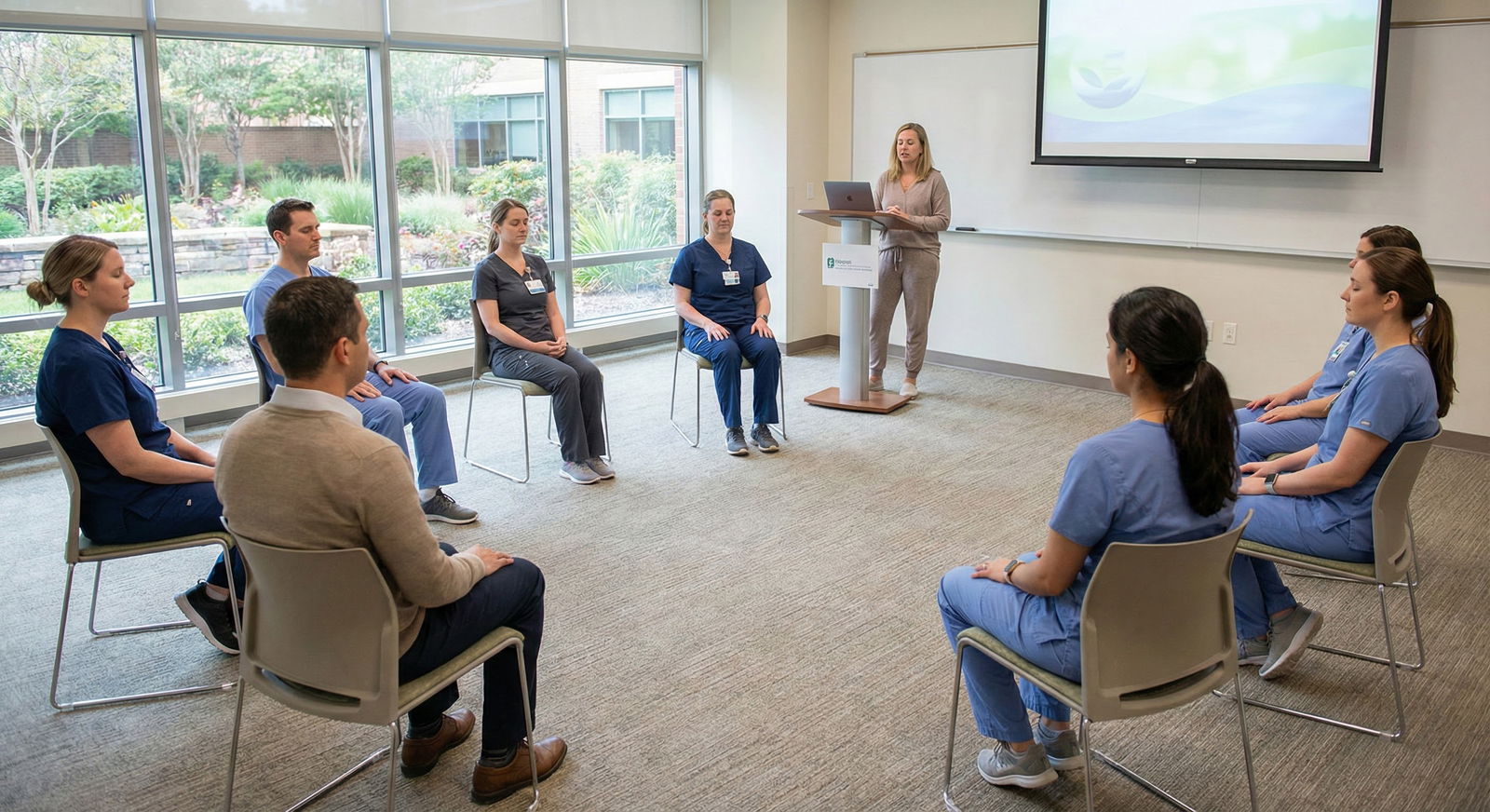
Mindfulness, meditation apps, yoga classes, resilience training, stress-management seminars, CBT-style workshops.Peer and social support
Resident support groups, Balint groups, peer mentorship, wellness retreats, social events (bowling night, pizza evenings, etc.).Mental health access
Confidential counseling, embedded psychologists, 24/7 hotlines, reduced or no-cost therapy, protected time for appointments.Schedule and workload tweaks
Night-float systems, protected didactics, cap on admissions, slightly lighter clinic templates, occasional “wellness days.”Institutional culture initiatives
Leadership rounds, “thank you” campaigns, recognition programs, anti-harassment policies, professionalism training.
Programs usually bundle several of these and label the package “resident wellness.”
So you get emails saying: “We care about your well-being. Here’s a mindfulness session Thursday at 6:30 pm after your 11-hour day.”
This matters because the type of intervention predicts how much impact you can actually expect. The data are not kind to purely cosmetic efforts.
What the Evidence Shows: Effect Sizes, Not Feel-Good Stories
Researchers have actually measured wellness interventions in residents and early physicians using validated scales: Maslach Burnout Inventory (MBI), PHQ-9, GAD-7, etc. When you aggregate results, some clear patterns emerge.
Individual-focused interventions: Small, real, but fragile gains
Mindfulness, CBT-based workshops, and similar tools do have measurable effects.
Meta-analyses in physicians and trainees typically show:
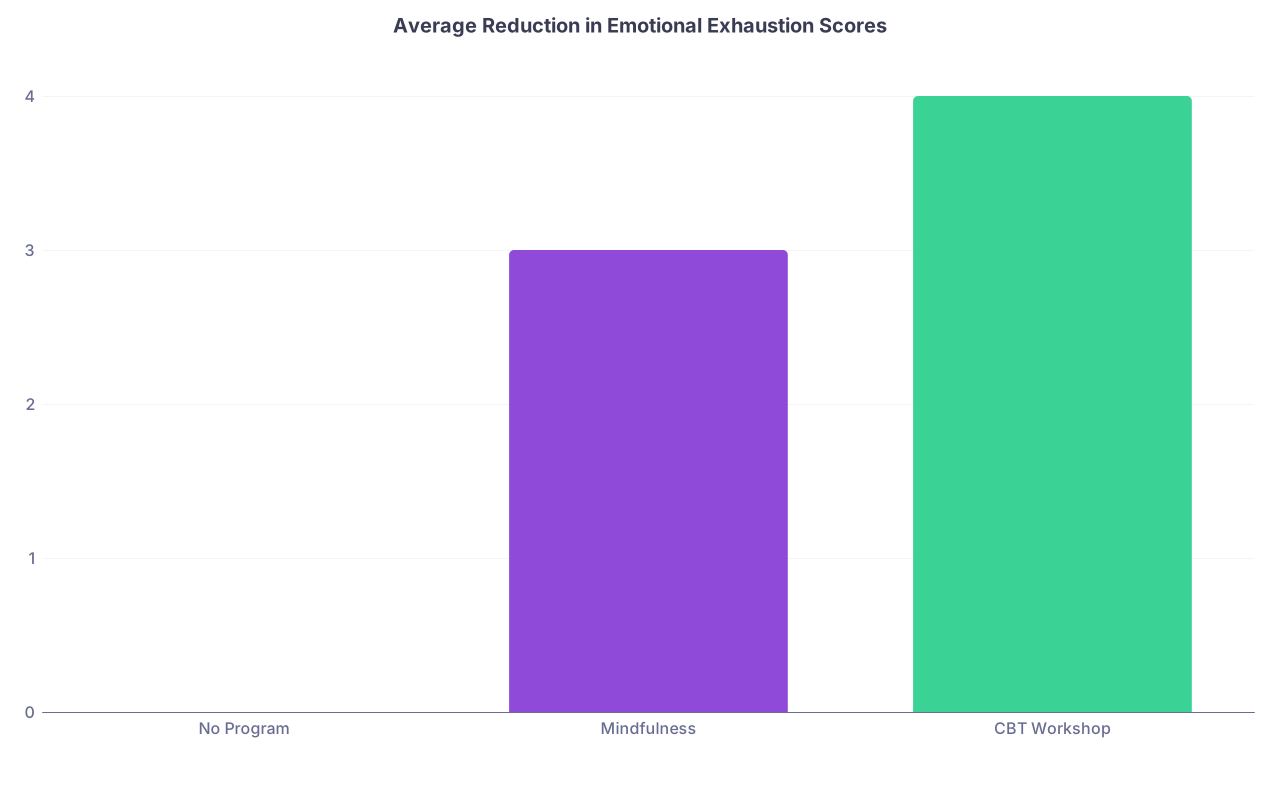
- Small-to-moderate reductions in emotional exhaustion scores (often standardized mean differences around 0.2–0.4).
- Short-term improvements in perceived stress and sometimes in depressive symptoms.
In practical terms:
- A resident with high burnout might move into the “moderate” range.
- Average MBI emotional exhaustion scores may decrease by 2–5 points in some studies.
These are not miracles, but they are not zero.
| Category | Value |
|---|---|
| No Program | 0 |
| Mindfulness | 3 |
| CBT Workshop | 4 |
The catch:
- Effects are usually short-lived (measured at 4–12 weeks, often gone by 6–12 months).
- Participation is often self-selected. The residents who attend are more motivated or already open to mental health work.
- Outcomes are typically self-reported, not objective (no change in hours slept, no change in workload).
So yes, mindfulness courses can help. But they work like ibuprofen for a stress fracture. Symptomatic relief, not cure.
Peer support and group-based programs: Moderate impact when they are real, not performative
When peer-support setups are more than occasional pizza socials, the data look a bit better.
Examples that show impact:
- Regular, facilitated Balint-style groups where residents discuss challenging cases, emotions, and ethical conflicts.
- Structured peer support after adverse events (“second victim” programs).
- Longitudinal small-group reflection embedded in curriculum with protected time.
Studies have reported:
- Moderate reductions in burnout and improvements in sense of meaning.
- Higher perceived social support.
- Lower odds of serious thoughts of self-harm in some cohorts with strong support systems.
Not every program is rigorous, but the directional signal is consistent: reducing isolation and normalizing emotional processing helps. A lot of residents tell me the only thing that keeps them from falling apart on tough rotations is “my co-interns and chief who actually listen.”
The limitation: these still live on top of the underlying workload. Good for coping, not for load reduction.
Structural vs Individual Interventions: The Numbers Are Lopsided
Here is where the evidence gets blunt. When studies split interventions into:
- Individual-level (mindfulness, workshops, coaching, etc.)
- Organizational/structural (changing schedules, workload, workflows, staffing, culture)
The structural interventions often have equal or greater impact on burnout. And they scale better.
Examples of structural changes with documented effects:
-
- Moving from 24–30 hour calls to night float: modest improvements in sleep duration and sometimes burnout, especially in early PGY years.
- Caps on patient census and admission limits: associated with better work-life balance scores and less emotional exhaustion.
Workflow and staffing
- Adding scribes or coordinators, better EMR templates, or dedicated discharge planners: decreased time on documentation and non-educational tasks.
- These changes often show residents reclaiming 0.5–1.5 hours per shift for education or rest.
Culture and leadership
Programs with leadership visibly prioritizing education and well-being (and backing it with real policy changes) tend to show lower burnout rates in cross-sectional comparisons.
The big picture: small wellness add-ons give you 2–5 point swings on burnout scales. Workload and environment changes can give you similar or larger gains and are less dependent on “resilience.”
But they cost more money and require system-level disruption. So they are less popular than lunchtime yoga.
A Hard Look at Outcomes: What Actually Moves
You care less about MBI subscores and more about: “Do residents actually feel and function better?” and “Does anything change for patients?”
Let’s sort the outcomes into buckets.
Resident mental health and burnout
Evidence-supported improvements:
- Decreased emotional exhaustion (small to moderate effect sizes) with:
- Mindfulness/CBT-based programs
- Peer support groups
- Some schedule/structure modifications
- Improved sense of meaning, engagement, or satisfaction in programs with:
- Strong mentoring and support culture
- Combination of individual and structural strategies
Less consistent or weak improvements:
- Depressive symptoms: sometimes improved, but effects are smaller and less consistent than burnout.
- Suicidal ideation: too infrequent for most single-site studies to detect changes; no clear strong signal from current wellness efforts.
The brutal truth: wellness programs rarely show clear, large drops in serious mental health outcomes at the cohort level. They may make day-to-day functioning more tolerable. They do not erase the underlying prevalence.
Objective metrics: sleep, hours, performance
On hard outcomes, the picture is far thinner.
- Sleep duration: improves when schedules change, not when you just add mindfulness.
- Duty hours: almost never reduced by “wellness” add-ons; the label often has nothing to do with actual hours.
- Exam performance and clinical error rates: very little robust data tying wellness programs directly to improved patient outcomes or board scores. Any effect is likely indirect and diluted.
Most evaluations rely on self-report: “I feel more supported,” “I am less exhausted,” “I would recommend this program.” Those are important. They are not the whole story.
Common Gaps: Where Wellness Programs Fail Residents
Now for the part residents quietly complain about in workrooms at 2 a.m. The mismatch between what is offered and what is actually needed.
Gap 1: Cosmetic wellness vs real workload
The worst pattern is superficial programs that leave core conditions untouched.
- Work hours remain 60–80/week.
- Cross-cover lists are huge.
- Documentation burden is absurd.
- Staffing is thin.
On top of this, programs tack:
- “Gratitude boards”
- Mandatory wellness lectures
- Optional yoga sessions at impossible times
You get the message: “We are not going to reduce the load. But we will teach you how to breathe through it.”
Residents are not fooled. You cannot mindfulness your way out of 6 months of 28-hour calls with chronic under-staffing.
Gap 2: Access to real mental health care
Many institutions claim to provide “confidential counseling.” In practice, residents report:
- Difficulty getting appointments that fit rotation schedules.
- Concerns about true confidentiality and career impact.
- Minimal accommodations even when they disclose significant mental health struggles.
The data back this up: even in cohorts with elevated depression and suicidality, actual utilization of formal mental health services stays low. Often in the single-digit percentages.
You do not fix that with posters and an annual talk about “wellness resources.”
Gap 3: One-off interventions, no continuity
Programs love pilot projects. A 4-week workshop here. A “wellness half-day” there. Then nothing.
The evidence is clear: almost all benefits from individual-based interventions decay over time. A single 4-session mindfulness course is not going to carry you through an entire 3–7 year training pathway.
What is missing:
- Longitudinal, integrated wellness strategies that follow residents across years.
- Regular measurement and feedback loops (actual data, not vibes).
- Iterative redesign when an intervention fails to move metrics.
Right now, most programs are one-and-done. Then they call it “implemented.”
Gap 4: Ignoring differential impact and vulnerable groups
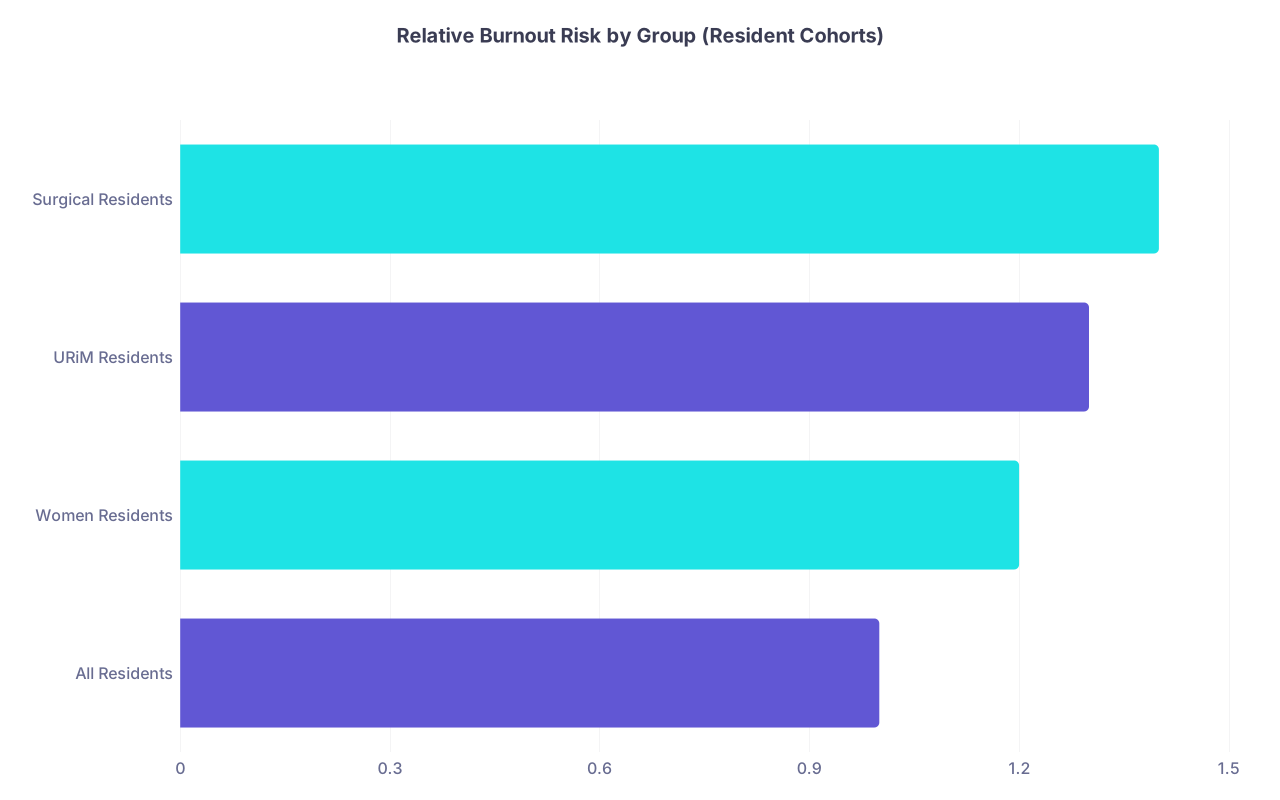
Burnout and distress are not evenly distributed.
Gender, race, specialty, immigration status, and LGBTQ+ identity all correlate with different stressors and, often, higher risk of mistreatment or isolation.
| Category | Value |
|---|---|
| All Residents | 1 |
| Women Residents | 1.2 |
| URiM Residents | 1.3 |
| Surgical Residents | 1.4 |
URiM (underrepresented in medicine) residents and women residents often report:
- Higher rates of discrimination or microaggressions.
- Lower perceived support from leadership.
- Greater pressure to represent their group.
Generic wellness offerings rarely address this. A mindfulness session does not fix a structurally biased culture or persistent microaggressions from attendings and patients.
Programs that do better typically:
- Track wellness and mistreatment data by subgroup.
- Have targeted DEI efforts with teeth, not just slogans.
- Hold faculty accountable for toxic behavior.
Those are still the minority.
What an Evidence-Based “Effective” Wellness Strategy Would Look Like
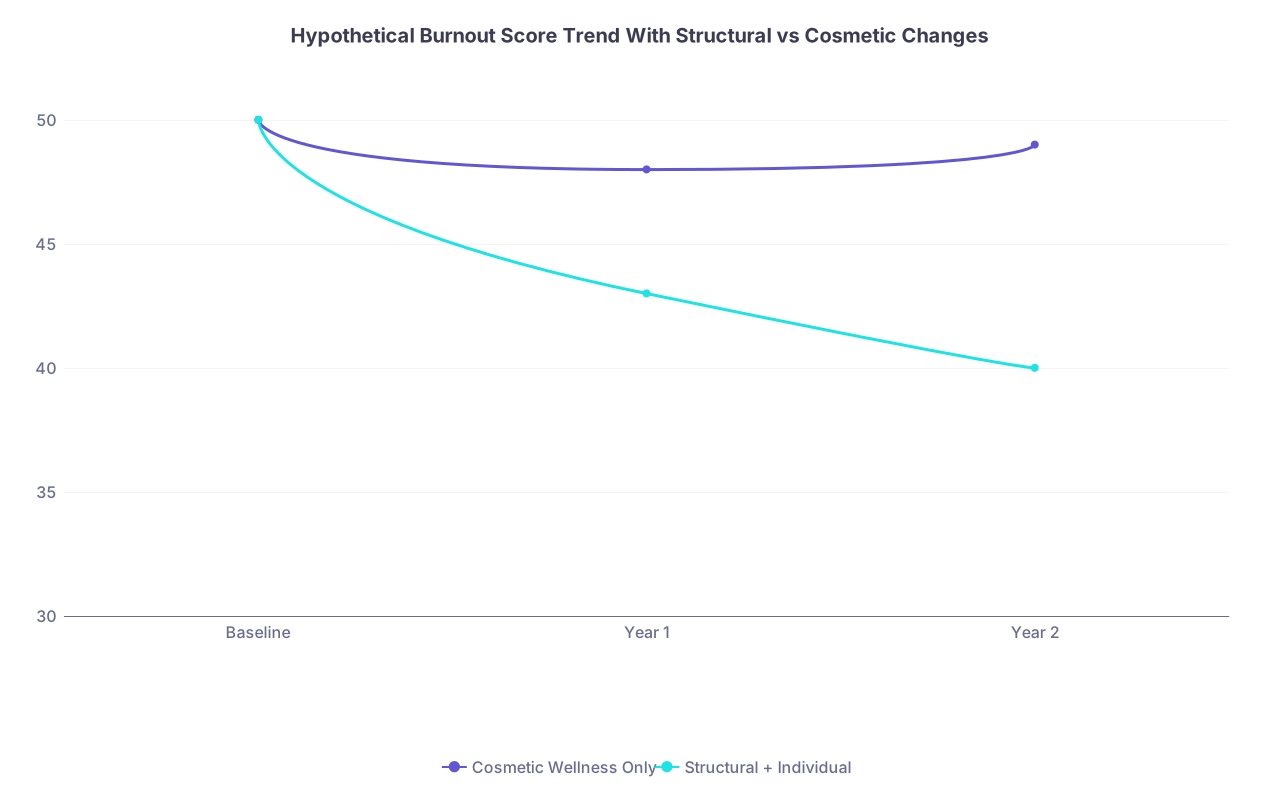
If you start from data, not marketing, a competent wellness strategy would have a different shape. It would combine structural and individual components and would be evaluated like any other quality improvement initiative.
| Component Type | Example Intervention | Expected Impact Level |
|---|---|---|
| Structural | Cap admissions / patient census | Moderate–High |
| Structural | Better EMR/workflow support | Moderate |
| Structural | Protected time for appointments | Moderate |
| Individual | Mindfulness/CBT courses | Small–Moderate |
| Social/Relational | Longitudinal peer support groups | Moderate |
| Culture/Leadership | Anti-mistreatment enforcement | Moderate–High |
An actually serious program would do the following.
Measure precisely and repeatedly
- Use validated tools (MBI, PHQ-9, etc.) at least annually, preferably twice a year.
- Track by PGY, specialty, gender, URiM status, etc.
- Include objective metrics: duty hours, sleep (even self-reported), sick days, attrition.
Start with structural load
- Analyze census, cross-cover load, note burden, and call schedules.
- Reduce unnecessary tasks, automate where possible, add non-physician support.
- Tighten caps and ensure enforcement, not just paper policies.
Embed longitudinal supports
- Standing, protected-time small groups or Balint groups.
- Longitudinal faculty mentors with actual training in supporting distressed residents.
- Real mental health access with protected time and no career penalty.
Layer evidence-based individual interventions
- Mindfulness or CBT-based programs offered in work hours, not as unpaid overtime.
- Optional, not performative-mandatory.
- Repeated or booster sessions over years.
Close the loop
- Compare baseline vs post-intervention metrics.
- If burnout rates stay flat, stop calling it a success.
- Adjust interventions or escalate structural changes.
| Category | Cosmetic Wellness Only | Structural + Individual |
|---|---|---|
| Baseline | 50 | 50 |
| Year 1 | 48 | 43 |
| Year 2 | 49 | 40 |
No one would accept a new sepsis protocol that “might” help and is never measured. Yet many institutions still run wellness that way.
What This Means For You As a Resident
You do not control institutional design, but you can read the signals and protect yourself where possible.
Here is the blunt way I evaluate a program’s wellness seriousness when residents talk to me:
- Is wellness mostly emails, snacks, and the occasional lecture? Expect minimal effect.
- Are there real limits on patient load, enforcement of duty hours, and some flexibility for life events? That is worth something.
- Can residents actually access therapy or counseling during business hours without retaliation or stigma? That is rare and valuable.
- Does leadership adjust based on surveys, or do they just present the numbers and move on? That tells you whether your distress is data or noise to them.
If you are stuck in a program that is heavy on optics and light on substance, the data suggest:
- Use what actually helps you (peer support, therapy, strategic use of leave when possible).
- Do not internalize the message that lack of resilience is the problem when the numbers show half your cohort is struggling.
- Document and escalate serious issues (harassment, unsafe workloads) with allies—chiefs, program directors, GME, or external resources—because these are not “wellness” issues; they are compliance and safety problems.
And if you are in leadership or will be: stop guessing. Treat resident mental health like any other complex, high-impact outcome. Measure, intervene, re-measure, iterate.



Bottom Line: Are Wellness Programs Effective?
Stripping away the branding, three conclusions stand out.
Current wellness programs produce small to moderate improvements in burnout and perceived well-being, mainly when they include real peer support and evidence-based individual interventions. They do not, by themselves, fix resident mental health.
Structural changes—workload, schedules, staffing, culture, and enforcement of basic protections—have at least as much, and often more, impact on resident well-being. Without these, wellness remains cosmetic.
The biggest gaps are in implementation and accountability. Few programs are rigorously measured, stratified by risk groups, and iterated like serious quality initiatives. Until that changes, residents will keep hearing about wellness while the data keep showing persistent distress.