
How Often Should Residents Schedule Therapy or Coaching Sessions?
How often can you realistically see a therapist or coach when you’re working 60–80 hours a week and barely have time to eat, let alone “process your feelings”?
Let me answer it straight: most residents do best with therapy or coaching every 2 weeks, with short stretches of weekly sessions during crises or transitions. Monthly can work for maintenance. Anything less frequent than monthly usually turns into “starting over every time” and does not help much.
Now let’s break that into something you can actually use.
The Short Answer by Situation
Here’s the quick practical breakdown people usually need:
| Situation / Goal | Recommended Frequency |
|---|---|
| Acute distress / burnout spike | Weekly |
| New therapy / new to coaching | Weekly or every 2 weeks |
| Ongoing stress, want support | Every 2 weeks |
| Stable, doing okay, maintenance | Every 3–4 weeks |
| Major transition (new rotation, fellowship apps, exams) | Weekly or every 2 weeks |
If you want a rule you can remember:
Start weekly if you are struggling.
Shift to every 2 weeks once you are more stable.
Stretch to monthly only when things are clearly better.
That’s the backbone. The rest is tailoring.
Step 1: Figure Out What You Actually Need
Before you obsess over frequency, you need to answer a simpler question:
“Am I looking for treatment, performance support, or basic sanity checks?”
Therapy is usually for:
- Persistent low mood, anxiety, panic, irritability
- Trouble sleeping that is not just from call
- Feeling detached, numb, or hopeless
- Thoughts like “If I got hit by a bus, that would be fine”
- Old stuff (family, trauma, perfectionism) clearly flaring with residency
Coaching is usually for:
- Time management, boundaries, productivity
- Imposter syndrome, confidence, feedback issues
- Career decisions, fellowship vs generalist
- Communication with attendings, co-residents, nurses
- “I’m not broken, but my life is chaos and I want it to work better”
You can need both. Many residents do:
- Therapy weekly or biweekly for 3–6 months during a bad stretch
- Coaching every 2–4 weeks for performance and career work
If you’re not sure which camp you’re in, that alone is a reason to schedule something. A good therapist or coach can help you sort it out in the first 1–2 sessions.
Step 2: Match Frequency to Your Current Season
Residency has seasons. The right frequency in an easy elective is different from your first month of ICU nights.
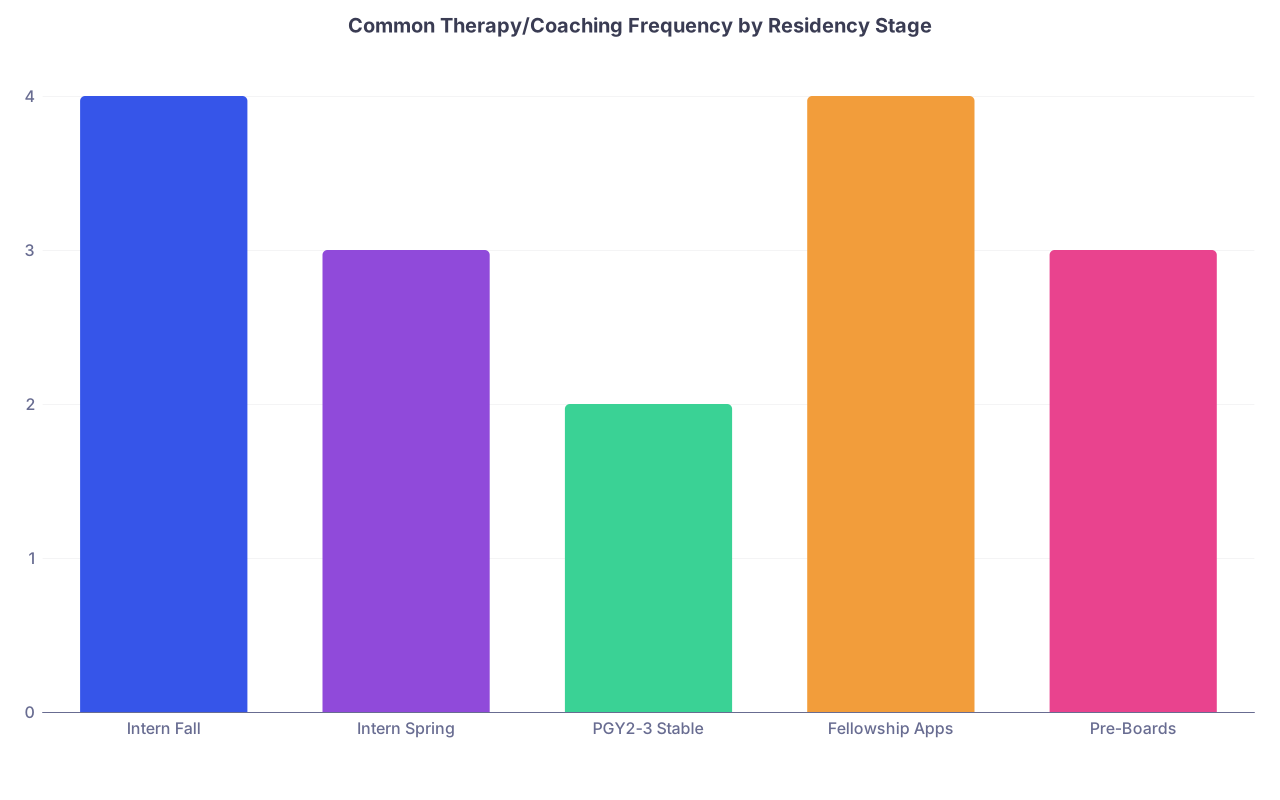
| Category | Value |
|---|---|
| Intern Fall | 4 |
| Intern Spring | 3 |
| PGY2-3 Stable | 2 |
| Fellowship Apps | 4 |
| Pre-Boards | 3 |
(Here "4" roughly represents weekly, "3" every 2 weeks, "2" monthly.)
When Weekly Makes Sense
You should strongly consider weekly if:
- You cry before or after most shifts
- You are snapping at patients, nurses, or loved ones regularly
- You are thinking “What’s the point?” multiple times a week
- You are using alcohol, weed, or other substances to get through most days
- You have had any thoughts of self-harm (even if you “would never do it”)
Why weekly? Because:
- You do not spend the whole session “catching up”
- Skills (CBT tools, communication strategies, etc.) get practiced faster
- You build momentum instead of treading water
This is especially true:
- First 3–4 months of intern year
- First month in the ICU, ED, or trauma service
- Right after a major event (bad outcome, patient death that rocked you, complaint, board failure, breakup)
I’ve seen residents go from “barely holding it together” to functional over 6–8 weekly sessions. Stretching that to every 3–4 weeks turns a 2‑month recovery into 6 months of misery.
When Every 2 Weeks Is the Sweet Spot
For many reasonably functional but stressed‑out residents, every 2 weeks is the realistic, sustainable answer.
It works very well if:
- You’re not in acute crisis, but you’re tired, cynical, or running on fumes
- You want to work on patterns: people‑pleasing, perfectionism, avoidance, overwork
- You’re doing okay clinically but mentally worn down
- You want ongoing accountability for changes (sleep, saying no, job search, studying)
Every 2 weeks gives you:
- Enough time between sessions to try strategies in real life
- Close enough spacing that you don’t lose the thread of the work
- A fighting chance of keeping the slot even on heavy rotations
This is also a solid default for coaching:
- Time management on wards? Biweekly.
- Navigating conflict with your PD? Biweekly.
- Fellowship planning and personal statement work? Biweekly.
When Monthly Is Enough — And When It Is Not
Monthly sessions can make sense if:
- You’ve already done a period of weekly or biweekly work
- Symptoms are mild and stable
- You’re mostly doing check‑ins and maintenance
- Your schedule is awful and monthly is the only sustainable option — but you actually show up consistently
Monthly is not great if:
- You’re still in significant distress
- You keep “waiting until the next session” to talk about crises
- Every session feels like starting over
- You are using it as a compromise to avoid admitting you need more help
If you’re at “I’m not drowning but I need a rope,” every 2 weeks is usually better than monthly.
Step 3: Reality Check — Your Schedule and Bandwidth
Let’s be realistic. You’re not designing a wellness retreat; you’re surviving residency.
Here’s how to make therapy or coaching actually fit.
Start With a Hard Look at Your Rotations
Certain months make weekly impossible; others make it trivial.
You want to plan in blocks, not fantasy‑land.
Practical pattern that works for many residents:
- ICU / heavy wards: Every 2 weeks
- Clinic months / electives: Weekly or every 2 weeks
- Vacation month: Weekly if you’re trying to reset or do deeper work
Use the “Pain vs Time” Rule
Ask yourself:
- How much is this stress costing me in sleep, errors, relationships, and sanity?
- Is one 50‑minute session every 1–2 weeks really the thing I cannot fit in?
If you have time to doom‑scroll or complain to co‑residents for 30 minutes after call, you have time for this. The question is priority, not minutes.
Step 4: Decide Between Therapy, Coaching, or Both
You do not need to marry one model forever. You’re allowed to mix.
Here’s a simple way to think about it:
| Feature | Therapy | Coaching |
|---|---|---|
| Main focus | Symptoms, patterns, past, distress | Performance, goals, future |
| Good for | Anxiety, depression, trauma, burnout | Time management, careers, leadership |
| Frequency at start | Often weekly | Weekly or every 2 weeks |
| Insurance | Usually covered | Usually not covered |
| Format | Often local/state-limited | Often virtual, flexible |
If:
- You’re having significant anxiety, depression, PTSD symptoms, or self‑harm thoughts → prioritize therapy.
- You’re mostly stuck on performance, boundaries, or career choices → coaching may be enough, often every 2 weeks.
A very practical combo I’ve seen:
- Therapy weekly for 2–3 months during a hard year
- Then taper therapy to monthly
- Layer in coaching every 2–3 weeks to work on studying, interview skills, or job search
Step 5: How to Tell If Your Frequency Is Working
Evaluate it like you’d evaluate a treatment plan.
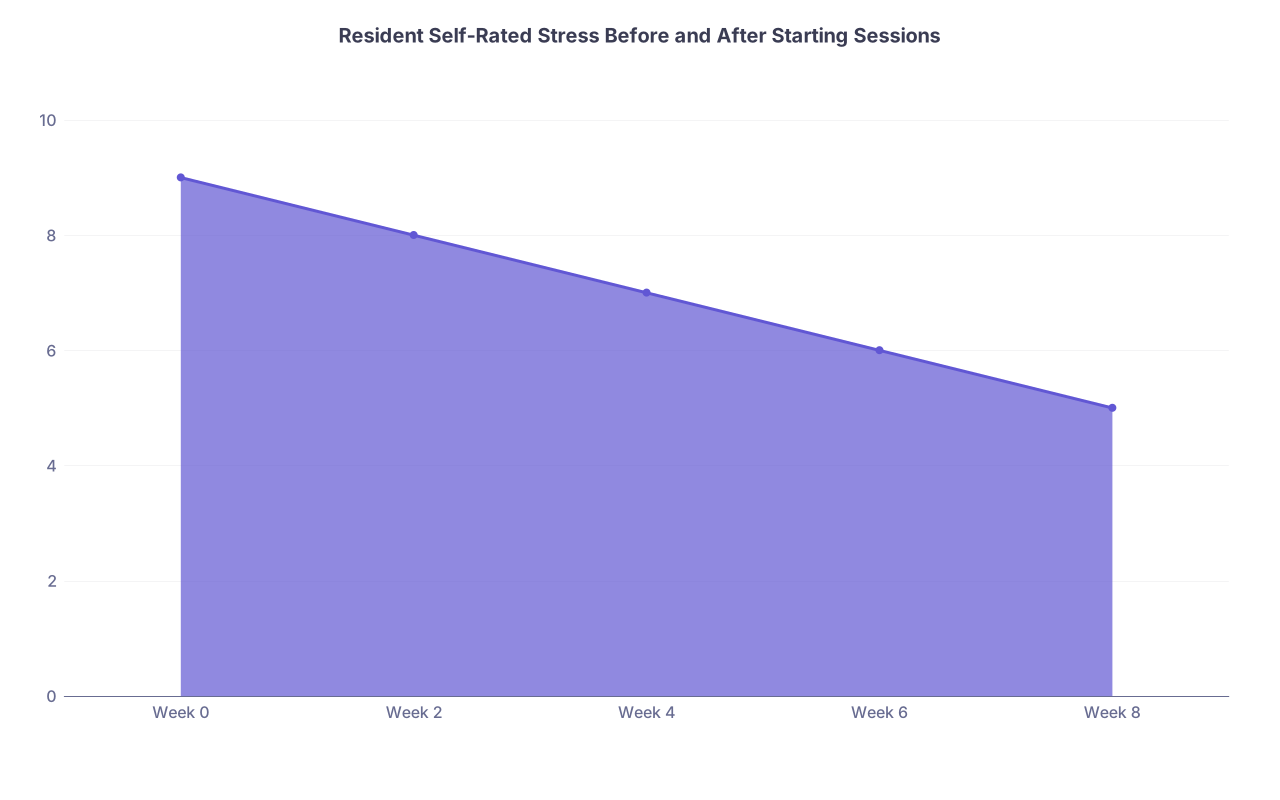
| Category | Value |
|---|---|
| Week 0 | 9 |
| Week 2 | 8 |
| Week 4 | 7 |
| Week 6 | 6 |
| Week 8 | 5 |
Ask yourself after 4–6 sessions at a given frequency:
- Has anything actually changed in my day‑to‑day life?
- Am I using tools from sessions on shift or at home?
- Do I feel slightly less alone in this mess?
- Is my sleep, mood, or irritability even modestly better?
If the answer is “no” across the board:
- Increase frequency (monthly → every 2 weeks; every 2 weeks → weekly)
- Or talk bluntly with your therapist/coach about goals and approach
- Or change providers if the fit is clearly wrong
If you notice:
- You’re canceling more than attending
- You dread sessions or feel stuck
- You no longer have much to talk about
Then it might be time to taper down:
- Weekly → every 2 weeks for 1–2 months
- Every 2 weeks → monthly for 2–3 months
- Then check if you’re ready to pause
Practical Scheduling Tips That Actually Work
Three things I’ve seen make or break consistency:
Same Day, Same Time
Protect one recurring slot. Example: “Every other Thursday at 7 pm, video visit.”
Your brain treats it like a standing meeting, not an optional extra.Choose Video Whenever Possible
Skip the commute. Take it from your call room, car (parked), or couch. Programs that insist on in‑person therapy for residents are behind the times.Plan Around Call, Not In Spite of It
Bad idea: Wednesday at 7 pm when your golden weekend and jeopardy shifts keep changing.
Better: Always post‑call afternoon, or a guaranteed clinic block, or a weekend morning you usually have off.
One more thing. Do not wait until you are completely falling apart. People schedule oil changes before the engine seizes. Your brain deserves the same.
FAQs
1. Is every 2 weeks really enough during residency?
For many residents, yes. Every 2 weeks hits a sweet spot: frequent enough to stay connected and build momentum, spaced enough to be realistic with call and rotations. If you’re in severe distress or starting deep trauma work, start weekly. Once you’re more stable, every 2 weeks is often sustainable long‑term.
2. Should I do therapy and coaching at the same time?
If you can afford it, doing both can be powerful. A common pattern: therapy for emotional health and burnout recovery; coaching for career planning, time management, and boundaries. If you’re severely struggling (can’t sleep, can’t stop crying, dark thoughts), prioritize therapy first, then layer in coaching once you’re more stable.
3. What if my schedule is so chaotic I cannot commit to a fixed time?
Then you need a provider who does evenings, early mornings, or flexible telehealth. Many therapists and coaches working with residents expect variable schedules. Worst case, you book week‑to‑week instead of a recurring slot. Not ideal, but better than nothing. If your schedule truly does not allow any consistent 50‑minute block every 2–4 weeks, that is a systems problem worth raising with your program.
4. Is monthly therapy just a waste of time?
Not automatically. Monthly can be very useful as a “maintenance plan” after a more intensive phase (weekly or biweekly) once you’re feeling mostly stable. As a starting point during active crisis, though, monthly is usually too thin. You end up rehashing rather than progressing. If you’re still miserable, push for at least every 2 weeks.
5. How long should I stay at weekly before tapering down?
Rough guide: stay weekly for 6–12 sessions while your symptoms are high or you’re going through a major stressor (intern year start, breakup, bad outcome, board failure). Once your day‑to‑day functioning improves and sessions shift from “crisis triage” to “fine‑tuning,” you can discuss moving to every 2 weeks. From there, taper to monthly when you’ve had a few solid months of relative stability.
6. What if I feel guilty taking time away from patient care for this?
Every resident feels this. Here’s the blunt truth: burned‑out, sleep‑deprived, emotionally wrecked doctors make more mistakes, communicate worse, and leave medicine earlier. One 50‑minute session every 1–2 weeks is not indulgent—it is risk management. You are not “stealing” time from patients; you are reducing the odds that your own untreated distress harms one.
Key points to remember:
Most residents do best with every 2 weeks, using weekly during hard seasons and monthly as maintenance once things improve. Match frequency to your distress level and rotation load, and be honest with yourself: if nothing is changing, either increase frequency, change the work you’re doing, or find someone who fits you better.