
You’re in a cramped workroom on a busy medicine service. It’s 10:59 AM Eastern on Match Day Monday. Your co-resident is admitting a trainwreck GI bleed. Your pager hasn’t been quiet for more than three minutes all morning. You look at the clock, then at your phone. You know the email is about to drop.
And your stomach sinks because you’re not in an auditorium, or at home with family, or in some cute Instagrammable brunch spot. You’re in clinic. Or on call. Or in the ED trying not to drown. And the thought hits:
“What if the results come out while I’m literally in a patient room? Or pre-rounding? Or doing a family meeting? What if I get bad news and I still have to finish my shift and pretend I’m fine?”
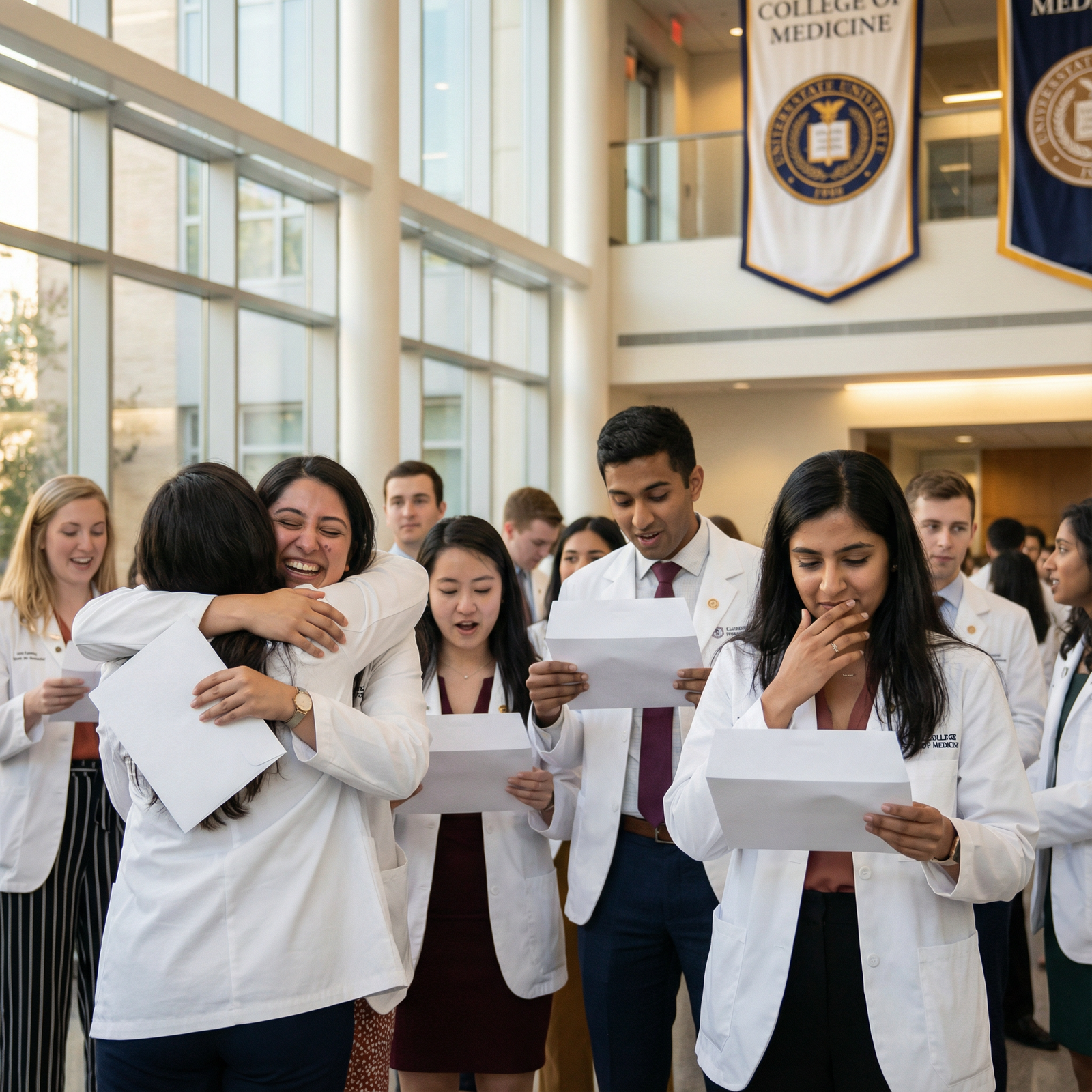
Yeah. This is the part no one talks about on the glossy Match Day photos.
Let’s pick this apart like someone who’s actually lying awake at 2 AM thinking of the worst-case scenario. Because honestly? You’re not crazy for worrying about this. It happens. A lot.
First: What Actually Happens at Match Results Time
Here’s the reality people gloss over:
- Monday at 10:00 AM ET: You find out if you matched (yes/no only).
- Friday at 12:00 PM ET: You find out where you matched.
And no, the world does not pause. Patients don’t disappear. Staff doesn’t magically thin out your clinic schedule just because NRMP hits send.
Programs, schools, and hospitals vary wildly in how they handle this. Some are fantastic: protected time, group viewing, faculty support. Others… shrug and say “Yeah you can check on break, I guess.”
So, three possible setups for you:
- You’re on a rotation that protects the time. (Dream.)
- You’re technically allowed to check, but workload is heavy.
- You’re on call / in clinic / in OR / in something-soul-crushing when the email hits.
You’re worrying about #3. I know.
The Worst-Case Scenarios You’re Imagining (And How They Actually Play Out)
Let me say the quiet part out loud: your brain is already running these simulations.
Scenario 1: You Don’t Match And You’re On Service
This is the one people really panic about.
You’re on rounds. You sneak a glance at your phone at 10:01. The email says: “We are sorry to inform you that you did not match to any position.”
Everything in your body drops out. But you still have a list of patients. Attending is still asking you for overnight events. The nurses still need orders.
Here’s what actually happens in real life when this happens to people (because it does, every year):
- You tell someone immediately. Usually your attending or chief or clerkship director, quietly: “I just got my email. I didn’t match. I need a moment and I need to contact my school.”
- Every decent attending I’ve ever seen in this situation pulls the student out of clinical duties. Maybe not for the whole day, but at least for the first few hours. Often the whole day. No one wants a devastated student trying to manage real patients.
- Your med school has an emergency scramble / SOAP team. They will want to talk to you that morning. That is more important than you seeing your next patient.
- You’re not expected to be “fine.” You’re a human who just had their world yanked sideways.
Is it emotional chaos? Yes. Is it survivable? Also yes. People go through SOAP week on rotations every year and somehow emerge and match in SOAP and go on to be residents.
The real “plan” here is not to magically be unaffected. It’s to give yourself permission now to step away if that email is bad. You aren’t being unprofessional; you’re protecting patients by not trying to practice while barely holding it together.
Scenario 2: You Match But You’re Completely Stuck In Work
Different flavor of stress.
You matched. Objectively good. But you’re:
- In the middle of a new patient eval in clinic
- On the phone with a consultant
- Scrubbing in
- Leading a family meeting
You see the email preview: “Congratulations! You have matched.” Your heart starts pounding. You want to scream and cry and text your mom. Instead you have to finish listening to a 20-minute history about chronic back pain and disability forms.
Real talk: that is frustrating and anticlimactic. But it’s not catastrophic.
What usually happens:
- You mentally cling to the “I matched” line like a life raft.
- You finish the immediate task in front of you (because you’re actually very well trained at compartmentalization).
- As soon as you’re between tasks, you step away. Bathroom, hallway, stairwell, supply closet. Wherever. You breathe. You open the full email. You call someone if you want.
Nobody is going to fail you on a rotation or report you for taking five minutes once they know what you’re checking. Most faculty remember their own Match Day terrorism.
Scenario 3: You Don’t Want To Find Out While You’re Working
This one’s sneakier. You might be thinking:
“What if I just… don’t check? Like, I’ll be on surgery, and I’ll just wait until lunch or after the case. Is that allowed? Or will that make SOAP timing worse? Will my school hate me?”
Honestly? You’re allowed to delay checking the email. There isn’t some NRMP agent monitoring when you open it. But:
- If you don’t match, you really do want to know as early as possible to start SOAP. Your school will be trying to get to you.
- Many schools send their own parallel email or have you log into a portal. Some will literally call or text if they see “didn’t match” and haven’t heard from you.
So hiding from the email only helps if:
- You’re convinced you matched and just want to avoid mental chaos during a case
- Or you’ve already coordinated with your school about what happens if you’re scrubbed in/occupied
But as an anxious person? Waiting doesn’t usually help. It just prolongs the “Schrödinger’s Match result” state.
What You Can Set Up Before Match Week So You’re Not Totally Screwed
Here’s where you can actually lower your stress proactively instead of just stewing.
1. Tell your team ahead of time
I know. You don’t want to be “that” student. But this isn’t being high maintenance; this is basic human planning.
A few days before Match Monday and Friday, say something like:
“Just a heads up, Match results come out Monday at 10 AM and Friday at noon. I’ll be on my phone right around then to check the email. If it’s okay, I might need to step out for a few minutes once they come in.”
Most attendings will respond with:
- “Of course, you should absolutely check.”
- Or they’ll even say, “Let’s plan around that time so you can step away.”
If your attending is weirdly cold about it, at least you know what you’re dealing with. Then loop in your resident or chief so someone has your back.

| Step | Description |
|---|---|
| Step 1 | Before Match Week |
| Step 2 | Tell attending and resident |
| Step 3 | Plan specific break time |
| Step 4 | Arrange coverage with team |
| Step 5 | Step out to check email |
| Step 6 | Return when ready |
| Step 7 | Contact school and step away |
| Step 8 | Protected time allowed |
| Step 9 | Result |
2. Coordinate with your school
Most schools actually expect you to be on a rotation during Match. You’re not the first person in history this has happened to.
Ask your dean’s office or student affairs explicitly:
- “If I’m on call / in clinic when results come out, what do you recommend I do?”
- “If I don’t match, how will you contact me and how fast do we need to talk?”
- “If I do match, is there anything time-sensitive I have to fill out that day?”
Knowing their process makes everything feel less feral.
3. Decide your “where I will be at 10:00/12:00” plan
If you’re on an inpatient service, you might be able to:
- Arrange to be off the unit for a coffee run around that time.
- Time your pre-rounding so you’re doing notes somewhere quiet around 10.
- Start a little earlier so you have a short gap built in.
If you’re in clinic:
- Ask if you can leave a 10–15 minute gap in the schedule around results time.
- If that’s impossible, mentally commit: “I will check between patients, not in the middle of the visit.”
You’re not trying to turn Match into some cinematic event. You’re just trying to avoid reading “You did not match” in front of a patient.
Emotional Contingency Plans: If Things Go Sideways
The real fear isn’t logistical. It’s emotional whiplash. So let’s talk about what you do with your feelings when you’re stuck on service.
If you don’t match and you’re on duty
Step one: you are allowed to stop.
Here’s a script you can use with your attending or resident:
“I just checked my Match email. I didn’t match. My school needs me to get in touch with them about SOAP. Is it okay if I step away from clinical duties for a bit to handle this?”
If they have even a shred of decency, they’ll say yes. If they say something like “Can you finish seeing these patients first?” and you’re barely holding it together, you can say:
“I’m honestly too upset to safely see patients right now. I really need to step away.”
That’s not weakness. That’s professionalism.
Then you:
- Call student affairs immediately.
- Find a private place. Yes, even if it’s a bathroom stall.
- Let yourself cry, swear, shake, whatever. This is a huge hit. You’re not broken for reacting strongly.
- Start taking concrete next steps with your school’s SOAP team.
You can figure out later whether you go back to the rotation that afternoon or the next day. In the moment, you prioritize: safety, your own mental state, and logistics for SOAP.
If you match but can’t “celebrate” yet
This one feels minor, but it can sting. Everyone else posts beaming videos with their family. You’re sitting at a workstation charting, trying to smile while your attending asks for follow-up on their COPD patient.
Give yourself permission to:
- Step into a hallway and text/call 1–2 core people right away. Even 60 seconds. “I matched!!! Will call later!”
- Save the full reaction for later. You’re not “wasting” Match Day because you didn’t scream in an auditorium the instant the email dropped.
You can still celebrate:
- After your shift
- That night
- All week
- For the rest of your life, honestly
The exact minute you open the email doesn’t define the value of what you accomplished.
Friday “Where Did I Match?” While On Service
Everything above mostly focused on Monday’s “if / if not” chaos, but Friday carries its own flavor of panic.
Here’s the extra layer: by Friday, you already know if you matched. The question is where. That means:
- There’s less acute “will I be totally derailed” energy.
- But more “what if I got my last choice / far away / not couples matched where we hoped” energy.
Same approach applies:
- Tell your team ahead of time about noon ET.
- Step out if you can.
- If news is disappointing or complicated (bad geographic fit, away from partner, undesired specialty in SOAP), you’re still allowed to say:
“I just got my Match result and I’m having a really hard time emotionally. Can I step away for a bit and regroup?”
You don’t have to give them your entire Rank List history. “Hard time emotionally” is enough.
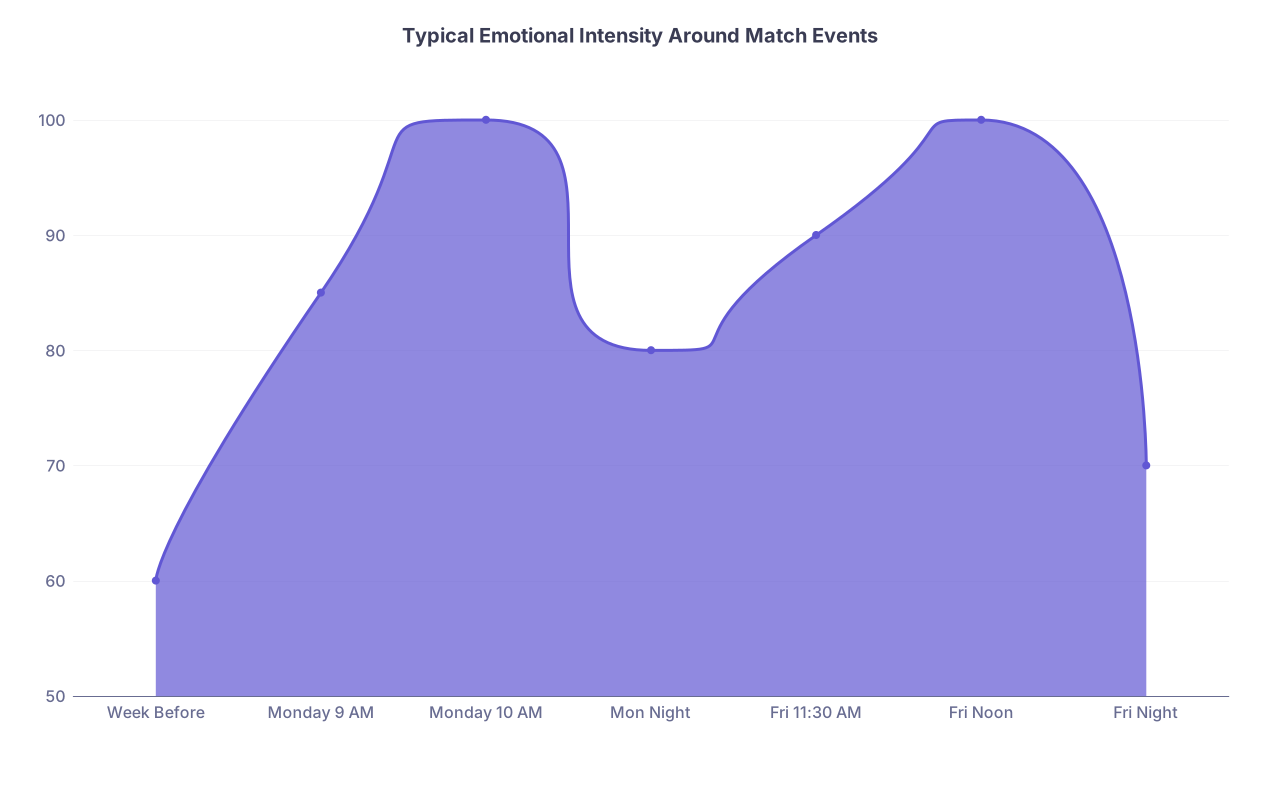
| Category | Value |
|---|---|
| Week Before | 60 |
| Monday 9 AM | 85 |
| Monday 10 AM | 100 |
| Mon Night | 80 |
| Fri 11:30 AM | 90 |
| Fri Noon | 100 |
| Fri Night | 70 |
If Your Team Is Unsupportive Or Clueless
Some attendings are fantastic humans. Some are… extremely not.
If you get pushback like:
- “We’re really busy, can you just check later?”
- “Patient care comes first, this is just an email.”
- Or they roll their eyes at you asking for 5–10 minutes
You are allowed to:
- Loop in your resident, chief, or clerkship director.
- Say, “I understand patient care is important, and I’m committed to that. But this is a once-in-a-career situation and my school expects me to respond promptly.”
Worst-case scenario, if they truly block you, you can:
- Check quietly between tasks.
- Then tell them directly if you didn’t match. That flips the script instantly; no one wants the liability of forcing a devastated student to keep seeing patients.
Is it fair that you even have to think about this? No. But planning for the worst means you’re not completely at the mercy of whatever personality you happen to get that month.
Tiny Things You Can Do To Soothe Your Brain Now
Your anxiety wants control. You can’t control the match outcome, but you can control some logistics around how you receive it.
A few calming moves:
- Decide today whose text or call you want to see first—save them on speed dial.
- Draft two short messages in your head: one if you match (“I matched! Will update later!”) and one if you don’t (“I didn’t match. I’m okay, my school is helping. I’ll reach out when I can.”). You don’t have to send them, but knowing what you’d say helps.
- Pick a physical place in your hospital you’ll go if you need to cry. Yes, literally. A specific stairwell, bathroom, or empty conference room.

| Situation | What You Can Do |
|---|---|
| In a patient room | Wait until you exit, then step away |
| Pre-rounding | Pause notes, step into hallway/stairs |
| In clinic visit | Finish visit, then take a 5–10 min break |
| Scrubbed in | Wait until after case, then check |
| In family meeting | Finish meeting, then step away briefly |
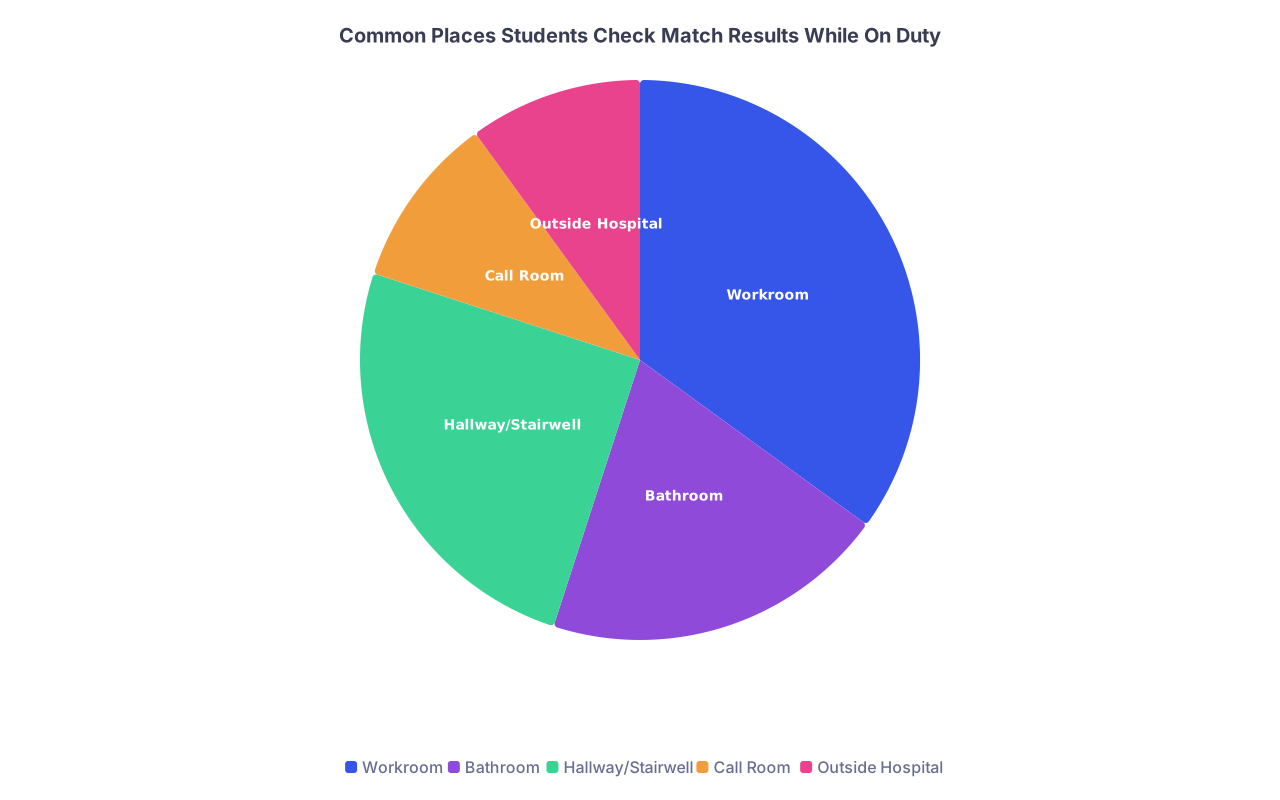
| Category | Value |
|---|---|
| Workroom | 35 |
| Bathroom | 20 |
| Hallway/Stairwell | 25 |
| Call Room | 10 |
| Outside Hospital | 10 |


| Step | Description |
|---|---|
| Step 1 | See Match Email |
| Step 2 | Read Result |
| Step 3 | Wait for short break |
| Step 4 | Brief share with trusted person |
| Step 5 | Contact school and step away |
| Step 6 | Open Now |
| Step 7 | Matched |

FAQ (Exactly 5 Questions)
1. Will I get in trouble for stepping away from clinic or rounds to check my Match result?
Highly unlikely. This is a once-in-a-career event, and most attendings get that. If you frame it politely—“Match results come out at 10, can I take 5–10 minutes around then?”—they almost always say yes. If they don’t, you can still step away between patients or tasks. No one’s going to fail you for needing a brief break for something this big.
2. What if I don’t match and my attending expects me to keep working?
You’re allowed to say no. “I’m too upset to safely see patients right now, and my school needs me to start SOAP planning” is a completely reasonable boundary. If they push back, loop in your resident, chief, or clerkship director. Forcing a devastated student to keep seeing patients is not safe for anyone. I’ve seen programs immediately pull unmatched students off service that day to handle SOAP.
3. I’m on a super malignant rotation. Should I just wait to check until after?
You can wait, but it usually just prolongs the anxiety. And if you don’t match, you’re losing critical SOAP prep time. Better plan: tell your resident in advance, “Match email comes at 10. I may need 5–10 minutes when it hits.” Then check as soon as you’re between tasks, not in the middle of patient care. If it’s bad news, you escalate right away. If it’s good, you go back when you can breathe again.
4. What if my school expects me at a Match event but I’m scheduled in clinic or on call?
Rotations usually trump optional ceremonies. It’s common for students on away rotations, nights, or call to miss the “official” event. Tell your school and clerkship coordinator, “I’m on service and might not be able to come in person—how do you recommend I handle the email?” They’ll understand. Your Match is valid even if you opened that email alone at a workstation at 12:07 PM.
5. How do I keep from completely falling apart in front of patients if the news is bad?
You don’t have to be made of stone. The key is to not read your Match email right before walking into a room. Either check it when you know you have a buffer (before rounds, between patients), or mentally commit to waiting until you can step away. If you accidentally see bad news and feel yourself losing it, excuse yourself as calmly as you can and find a private space. Then inform your team and your school. No one expects you to just “push through” a life-altering email.
Bottom line, three things:
- You’re allowed to step away from patient care briefly to check your Match result, and you’re definitely allowed to step away if you don’t match.
- Plan ahead: tell your team, know your school’s process, and pick a place you’ll go to check or decompress.
- However messy or un-Instagrammable your actual moment is—at a workstation, in a stairwell, between consults—it doesn’t define your worth or your future as a physician.


