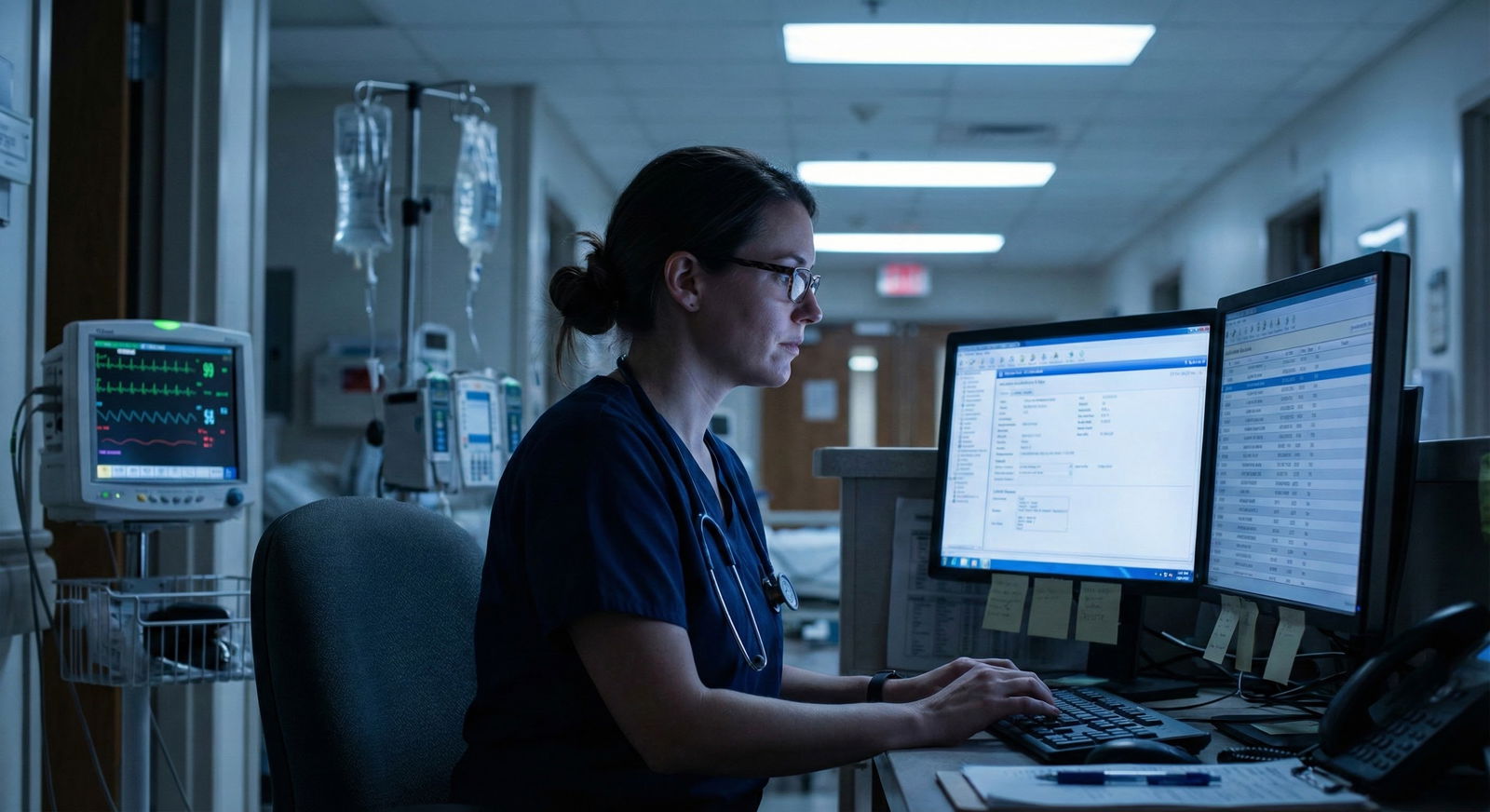
Last week I was talking to a new intern who’d just finished her first true overnight. She said, “I was more scared to walk into that family room after the code than to do compressions on the patient.” And honestly, I get it. Procedures you can learn. ACLS has an algorithm. But walking into a room where someone’s world just ended? At 3 a.m.? With you as “the doctor” even though you still feel like a med student with a badge upgrade?
That’s the part that makes my stomach drop too.
The fear under all the other fears
Let me just name the disaster reel that plays in my head when I think about this:
What if I say the wrong thing and the family never forgives me?
What if they ask, “Did you do everything?” and I don’t know how to answer?
What if they scream at me? Or cry so hard I freeze?
What if they ask me about some lab I haven’t even seen yet?
What if they say, “So you’re telling me my mom is dead?” and I just… blank?
I’ve watched residents come out of family meetings after a bad outcome and just stand in the stairwell, palms shaking, saying, “I don’t ever want to do that again.” But you don’t get that option. Night float doesn’t care if you’re emotionally ready.
Here’s the ugly truth nobody puts on the pretty residency brochures:
On nights, you will be the one walking into rooms with awful news. Many times. Often alone or with very little backup.
What you’re scared of isn’t just “managing families.” You’re scared of:
- Being exposed as not knowing enough
- Being blamed for something that wasn’t your fault
- Losing control of the situation if emotions explode
- Breaking a family by saying a single sentence
The thing I wish someone had told me early: you don’t need perfect words. You need a simple structure, a few key phrases, and permission to be human.
Let’s build that.
What actually happens at 3 a.m. (the real sequence)

| Step | Description |
|---|---|
| Step 1 | Bad event or deterioration |
| Step 2 | Assess patient and stabilize or confirm death |
| Step 3 | Call senior or attending |
| Step 4 | Clarify facts and what to tell family |
| Step 5 | Find family and private space |
| Step 6 | Give warning shot and bad news |
| Step 7 | Silence and emotions |
| Step 8 | Answer questions and next steps |
| Step 9 | Document and debrief with team |
The piece that feels like the monster under the bed is steps E–H. But if you know roughly what those look like, your brain doesn’t have to improvise while you’re terrified.
Picture it.
Code is called. You run (or you’re there already). They’re doing compressions on a 72-year-old with septic shock. You push meds. Someone intubates. After 25 minutes, the attending calls it. “Time of death 02:46.”
Everyone starts walking away. Techs reset the room. The nurse looks at you and says, “Family’s in the waiting room. Do you want me to get them?” And suddenly you realize. There’s no special team coming. You are the person.
- I don’t even know exactly what happened before I got there
- I don’t know what they’ve been told previously
- My attending is already halfway to the elevator
This is where a lot of residents make the same two mistakes:
- They rush straight to the family without taking 60 seconds to get their own head straight.
- They start talking before they know what they’re actually going to say.
You look at the nurse and say, “Give me two minutes, then yes, please bring them to the family room.”
Then you:
- Confirm the bare minimum facts with whoever knows: “What was the admitting diagnosis? Any prior discussions about prognosis? Who’s the primary decision maker?”
- Decide your main sentence. Something like: “I’m so sorry, but your dad’s heart stopped and we weren’t able to get it started again. He died a few minutes ago.”
That one sentence is your anchor. Everything else hangs off that.
The words no one teaches you but you actually need
The fear is that you’ll babble, get too technical, or sound robotic. So steal some phrases that work and keep using them until they feel like yours.
Here’s a simple pattern you can fall back on almost every time.
1. Start with a warning shot
You don’t walk in with, “He died.” It’s too abrupt. Families remember the moment forever. Give their brain half a second to brace.
Something like:
- “I’m afraid I have some very serious news.”
- “Things have taken a very bad turn.”
- “I’m so sorry; I have some difficult news to share.”
Pause. Even 2–3 seconds.
2. Then say the actual words, clearly
This is where residents often hedge: “He’s not responding… we did everything we could… unfortunately, he passed…” and the family is sitting there thinking, “So… is he alive or not?”
Force yourself to use clean, unmistakable language:
- “I’m so sorry. Your mother died a few minutes ago.”
- “Your brother’s heart stopped, and we were not able to restart it. He died at 2:46 a.m.”
Say “died.” “Dead.” Not because you’re cruel, but because confusion is crueler.
You’ll hate hearing yourself say it the first dozen times. That’s normal.
3. Then shut up
Your instinct will be to explain. Fill the space. Justify. Don’t.
Say the sentence. Then be silent.
They might scream, stare, ask “What?” five times in a row, say “No no no no no,” collapse, hit the wall, or go completely blank. All of that is normal. You’re not supposed to fix it in that moment.
Your job is to stay. Not to talk them out of reality.
4. Follow their lead, not your need to explain
If they’re crying and not asking questions, you don’t need to launch into “We did three rounds of epinephrine, the labs showed…”
You can say:
- “I am so, so sorry.”
- “I’m here, and I can answer questions whenever you’re ready.”
- “Would you like to see him?” (if appropriate and allowed on your unit)
If they do ask “Did you do everything?” or “What happened?” you can lean on a simple structure:
- Very short medical summary in plain English
- What you actually did
- The outcome and why things weren’t reversible
Example:
“Earlier tonight your mom’s blood pressure dropped very low because of a severe infection. Despite strong medications and fluids, her heart became too weak and stopped. We started CPR right away, gave multiple medications, and tried for about 25 minutes. Her heart never started beating on its own again. I’m so sorry.”
You don’t need more detail unless they ask.
“What if they get angry… at me?”
This one sits in my chest the hardest. The fear of the son who jumps up and yells, “Where were you when this was happening?” Or the spouse who says, “So you killed him.”
You cannot prevent all anger. Some people need someone to blame because otherwise the world feels too random.
What usually helps:
- Don’t argue about the emotion.
- Don’t defend yourself in the first 60 seconds.
- Buy time and soften the edges.
If someone is shouting, “You let her die!” a calm, honest answer can be:
“I hear how angry and devastated you are. I’m so sorry this happened. I’d like to walk you through exactly what we did, step by step, so you know everything that was tried.”
You’re not admitting fault. You’re showing you’re not hiding.
If someone is really escalating—standing up, getting in your space—you can quietly position yourself closer to the door and have security or nursing aware, but that’s the extreme minority. Most “anger” you’ll see is grief wearing armor.
And if they’re angry and you honestly don’t know all the pre-hospital or pre-admission details because you just met this patient during the code? Say that clearly, not defensively:
“I was called urgently when his heart stopped, so I was there for the resuscitation, but I wasn’t part of his earlier care. I can tell you exactly what happened tonight, and I can also help you talk with the day team or primary doctor tomorrow to go over the bigger picture.”
That’s not incompetence. That’s accurate.
You’re not as alone as it feels (even on nights)
It often looks like you’re completely on your own at 2 a.m., but you have more support than your panicked brain admits—if you use it.
Before you go into the room, you can:
- Call your senior: “I have to tell the family we called the code. Can you walk me through how you’d phrase it?”
- Ask the nurse: “What’s this family like? Is there a main spokesperson they listen to?”
- Ask if chaplain is available. They’re often surprisingly responsive at night.
You’re allowed to say to your senior: “I’ve never done this alone before. Can you come with me the first time?” Some will say no. Many will say yes. Or at least, “I can’t come, but here are the exact words I use.”
The bare minimum I’d want for you is a nurse in the room with you. Even just their presence changes the whole vibe. Ask them directly: “Can you stay in with me while we talk to the family?”
What to do before you ever face this
Most of the terror comes from feeling like you’re going to improvise your way through someone’s worst night of their life. So don’t improvise. Prepare.
Here’s a rough script you can actually practice out loud in your room or your car. Yes, you will feel ridiculous. Do it anyway. Muscle memory beats panic.
Warning shot:
“I’m afraid I have some very serious news.”Clear statement:
“I’m so sorry. Your [relationship] died a few minutes ago.”Silence. Count to 10 slowly in your head if you have to.
Follow-up if they’re ready:
“Earlier tonight, [simple one-sentence explanation of what went wrong]. We did [brief list of key interventions] for about [time]. Despite all of that, [their heart/lungs/brain] were too damaged to recover.”Re-orient:
“I’m so sorry. I can answer any questions you have and help you see them if you’d like.”
Having those building blocks ready means that when you’re exhausted and shaky, you still have something to grab.
How to not fall apart yourself
Here’s the part no one talks about because residency is obsessed with pretending we’re all fine.
Some of these conversations will stick to you. The dad who sobs quietly. The mom who stares at you and says, “I knew this would happen,” like the sentence has been waiting for years. The teenage kids who arrive five minutes too late.
You will walk out and feel like your chest is full of wet sand.
You are allowed to:
- Step into a stairwell and just breathe for 2 minutes
- Tell your senior: “I just had a brutal family conversation. I need a second before I see the next patient.”
- Say to a nurse: “That was rough. Thank you for being in there.”
If you start to feel numb or robotic, you’re not broken. You’re protecting yourself. But if it stays that way and you feel nothing for weeks, or every bad news talk wrecks you for days, that’s not a moral failure either. That’s a sign you need more support: therapy, residency wellness, something outside your own head.
This part of the job is heavy. Even attendings with 20 years in will come out of some conversations and say, “That was awful.”
You’re not the only one lying awake at 4 a.m. replaying your exact words and wondering if you made it worse. We all do that on some level.
What programs actually expect from you
You’re imagining that if you stumble through one bad news conversation, your senior will think you’re unfit or your attending will label you “not strong enough.” That’s not how this works.
What they actually care about:
- That you told the truth clearly
- That you didn’t vanish and leave the family hanging for hours
- That you called them for help when you were in over your head
- That you documented the key facts and time of conversation
They do not expect you to be a grief counselor, a priest, and a poet rolled into one. They expect you to be a beginner who’s willing to learn and who doesn’t run away.
Honestly? The residents who scare me aren’t the ones who are anxious about this. It’s the ones who say, “I don’t see what the big deal is, patients die.” That armor cracks eventually. Hard.
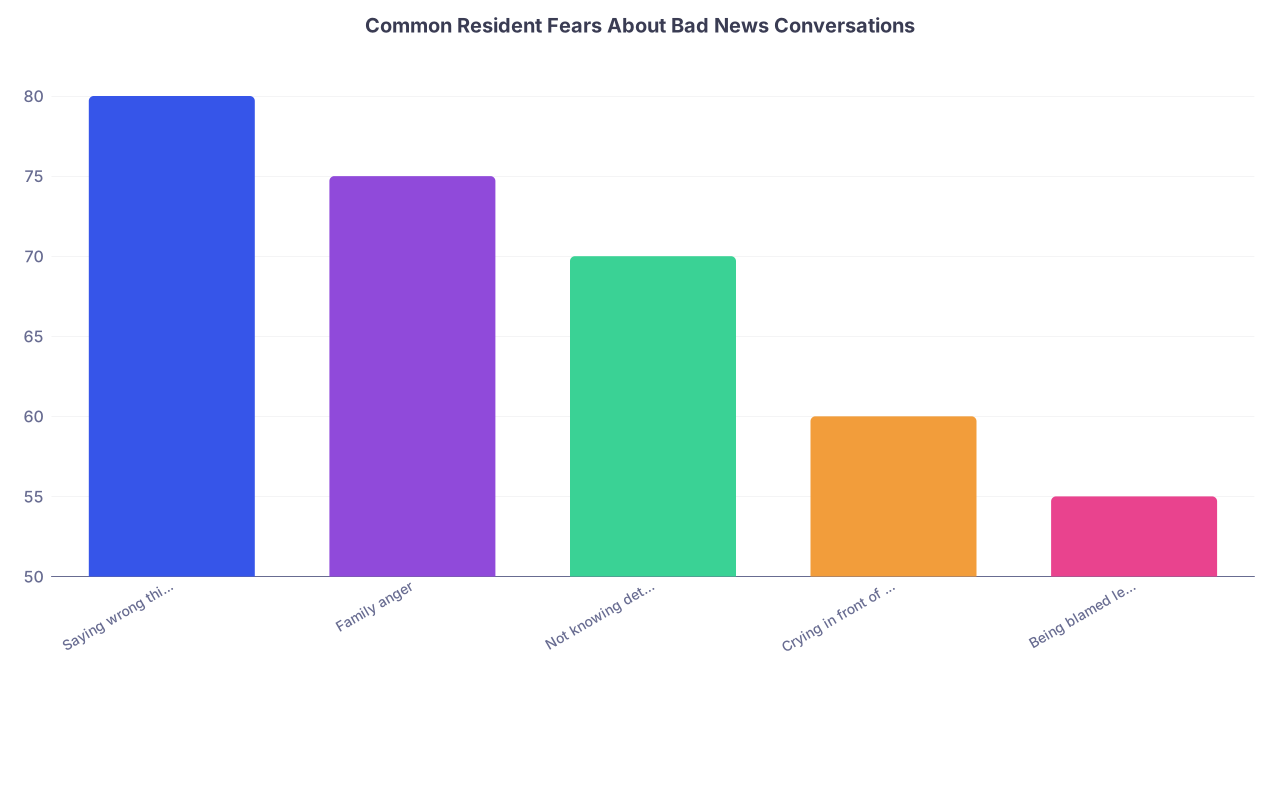
| Category | Value |
|---|---|
| Saying wrong thing | 80 |
| Family anger | 75 |
| Not knowing details | 70 |
| Crying in front of family | 60 |
| Being blamed legally | 55 |

One more uncomfortable truth (that might actually help)
You’re worried that your anxiety about this means you’re not cut out for residency. I’m going to flip that.
If you’re this worried about not hurting families, it tells me one thing: you care. Probably too much for your own comfort. That’s not a liability. That’s the only thing that will keep you from turning into the kind of doctor families remember for the wrong reasons.
You will say things you wish you’d said differently. You will walk out of rooms thinking, “That was clumsy.” You will learn from every one of those nights. Your second year self will be better than your intern self. Your attending self will be better still.
You will never feel “ready” for the first time you walk into a family room and say, “I’m so sorry. He died.” You will just do it scared. And then you’ll do it again, slightly less scared, with slightly steadier hands.
And the families? Most of them won’t remember your exact words. They’ll remember that someone looked them in the eye, didn’t lie, didn’t sugarcoat, and stayed in the room while their world collapsed. That’s you. Even if your voice shakes.
| Situation | Phrase you can use |
|---|---|
| Opening the conversation | "I’m afraid I have some very serious news." |
| Stating death clearly | "I’m so sorry. Your [relative] died a few minutes ago." |
| When they’re in shock | "I know this is a lot. I’m so, so sorry." |
| When they ask what happened | "Earlier tonight… [brief explanation]. We did… [brief]. |
| When they ask if you did everything | "We did everything we could think of to restart their heart and support their body. I can walk you through exactly what we did." |
| When anger comes at you | "I hear how angry and devastated you are. I’m so sorry this happened. I can explain exactly what was done." |
FAQ (exactly 6 questions)
1. What if I start crying in front of the family? Does that make me unprofessional?
If you’re sobbing and can’t speak, that’s a problem. But tears in your eyes, a crack in your voice, or a couple of tears down your face? That’s human. I’ve seen families thank residents who clearly cared. If you feel yourself losing control, you can take a breath and say, “I’m sorry, this is hard,” then refocus. You don’t need to be a stone statue to be professional.
2. What if I don’t know all the details of their hospital course because I just met the patient during the code?
Say that out loud instead of faking it. “I was called urgently when his heart stopped, so I was there for that part, but I wasn’t involved in his earlier care. I can tell you exactly what happened tonight, and I’ll make sure the primary team talks with you tomorrow about the full picture.” That’s honest and safe. Nobody expects you to summarize a two‑week ICU course you weren’t part of.
3. Can I ask the attending to talk to the family instead, especially as an intern?
You can and should ask for help, especially early in the year or with complex situations. But on nights, you won’t always get a full attending presence. Often it’s you plus a senior on the phone. What you can reasonably ask is: “Can you come with me?” or “Can you help me phrase this?” Over time, you’ll do more of these solo. That’s not abandonment; that’s how you grow. It just sucks while you’re getting there.
4. How do I handle it if the family wants to see the body right away and the room is a mess after a code?
You acknowledge it and protect them as much as you can. “We just did a lot of urgent procedures to try to save him, so there are still tubes and some equipment around. You’re welcome to see him, and I can have the nurses help clean up a bit first if you’d prefer.” Then work with nursing: remove obvious equipment if allowed, wipe visible blood, dim the lights, pull up a chair. Small things matter.
5. What if the family keeps asking, ‘But what if you had just…’ and brings up alternative scenarios you can’t fully answer?
You don’t have to litigate every hypothetical at 3 a.m. “Those are really understandable questions. Right now, I can tell you what we did and what happened. If you’d like, I can also make sure the day team or primary doctor reviews everything in more detail with you tomorrow.” If they press, you answer what you do know: “From what I see in the chart and from tonight, even if we had [intervention], I don’t think it would have changed this outcome, and I’m so sorry.”
6. How can I prepare for this before I start residency so I’m not blindsided?
Practice out loud. Seriously. Take a fake case and walk through exactly what you’d say: warning shot, clear statement, short explanation. Watch how experienced attendings do it on your rotations and steal their lines. Ask them, “What do you say in these situations?” Read or watch resources on delivering bad news (SPIKES framework, etc.), but don’t get obsessed with doing it “perfectly.” Your goal is to have 2–3 sentences in your back pocket so that when you’re exhausted and terrified at 3 a.m., you’re not starting from zero.
Open a blank note on your phone right now and type out your own version of: 1) your warning shot sentence, and 2) your clear death statement. Just those two. They’ll feel awful to write. But when your pager goes off some future night, you’ll be glad you didn’t wait to figure them out in the hallway outside a family room.