
It is 00:47. The psych consult note says “restart home meds if medically appropriate.” The nurse is on the phone: “Doc, tele is reading QTc 512. Do you still want the haldol?” The patient is agitated, fighting restraints, oxygen sat dipping when he rips his cannula off.
You are on call. There is no cardiology consult coming at 1 AM to hold your hand. You have to decide: give the psych med, change it, or cancel it. And you need to do it fast, but not stupid.
Let me break this down specifically.
This is how you survive QTc decisions on call.
Step 1: What Does This QTc Actually Mean?
Before you panic about the number, you need to know what you are looking at.
1. Know the cutoffs that matter
You will see a million borderline QTcs in residency. You cannot treat every 460 msec reading like a code. The practical thresholds:
| Situation | Men (msec) | Women (msec) | What it means on call |
|---|---|---|---|
| Normal | < 440 | < 460 | Low risk; routine caution |
| Borderline | 440–470 | 460–480 | Pay attention, especially if adding risk meds |
| Prolonged | 470–500 | 480–500 | Real risk; be conservative |
| High risk | ≥ 500 | ≥ 500 | This is where torsades risk spikes; act now |
Strong opinion: QTc ≥ 500 msec is a red line at the bedside. You do not casually start or keep several QT‑prolonging psych meds at 510 “because psychiatry wants it.” If you do, you own the arrest.
2. Do not blindly trust the machine
The monitor’s “QTc 512” is an estimate, and often wrong. Common garbage:
- Baseline wander
- PVCs
- Atrial fibrillation
- Wide QRS (LBBB, paced, VT)
- HR extremes (tachy >110, brady <50)
If the number will impact a serious medication decision, look at:
- A 12‑lead ECG, not just telemetry.
- The rhythm. Is it AF with variable R‑R? PVCs every other beat? That algorithm is lying to you.
- The QRS width. QT and QRS get confounded.
If you can, manually check one lead with the clearest T wave. You are not doing cardiology fellowship‑grade measurement at midnight. You just need “this is clearly >500” versus “this looks like 460, not 520.”
3. The Bazett problem
Most ECG machines use Bazett’s formula, which overcorrects at:
- HR > 100: machine QTc overshoots
- HR < 60: QTc can look longer than reality
So the classic scenario: agitated, tachy 120, QTc prints as 515. If you slow them with a non‑QT‑active med (e.g., lorazepam, low‑dose morphine if in pain) and repeat the ECG at 80–90 bpm, you often “fix” 30–40 msec just by getting a reasonable heart rate.
Do not ignore a high QTc just because HR is high, but do not send a patient to the ICU (or cancel crucial meds) based solely on a one‑off Bazett QTc during an adrenaline surge.
Step 2: Snapshot of Risk – Is This Patient Safe for QT‑Active Psych Meds?
At 1 AM you do not have time for a thesis. You need a fast risk frame in your head.
I use a mental “torsades triage” score. Not formal, but it works.
QTc value
- ≥ 500: serious concern
- 470–499: moderate concern
- < 470 (men) / < 480 (women): baseline risk only
Electrolytes
- K < 4.0? Fix it.
- Mg < 2.0? Fix it.
- Ca low? Fix if symptomatic or markedly low.
Rhythm and structure
- Bradycardia < 55?
- Known structural heart disease or LV dysfunction?
- History of syncope “out of nowhere”?
- Congenital long QT in chart?
Medication stack
- Number of QT‑prolonging meds already on board
- Any recent med changes? (e.g., stopped beta‑blocker leading to bradycardia)
Acute insults
- Recent cardioversion
- Severe sepsis
- Post‑MI
- Marked starvation, alcohol withdrawal, or severe vomiting / diarrhea
If you have high QTc + multiple hits from this list, you should treat the QTc as live explosives. That is the patient who can go into polymorphic VT if you throw IV haloperidol on top.
Step 3: How Dangerous Is The Psych Med I Am About To Give?
Now the core: not all psych meds are equal for QTc. Some have reputations worse than the data; some quietly cause trouble.
1. Antipsychotics – the usual suspects
Here is the on‑call version.
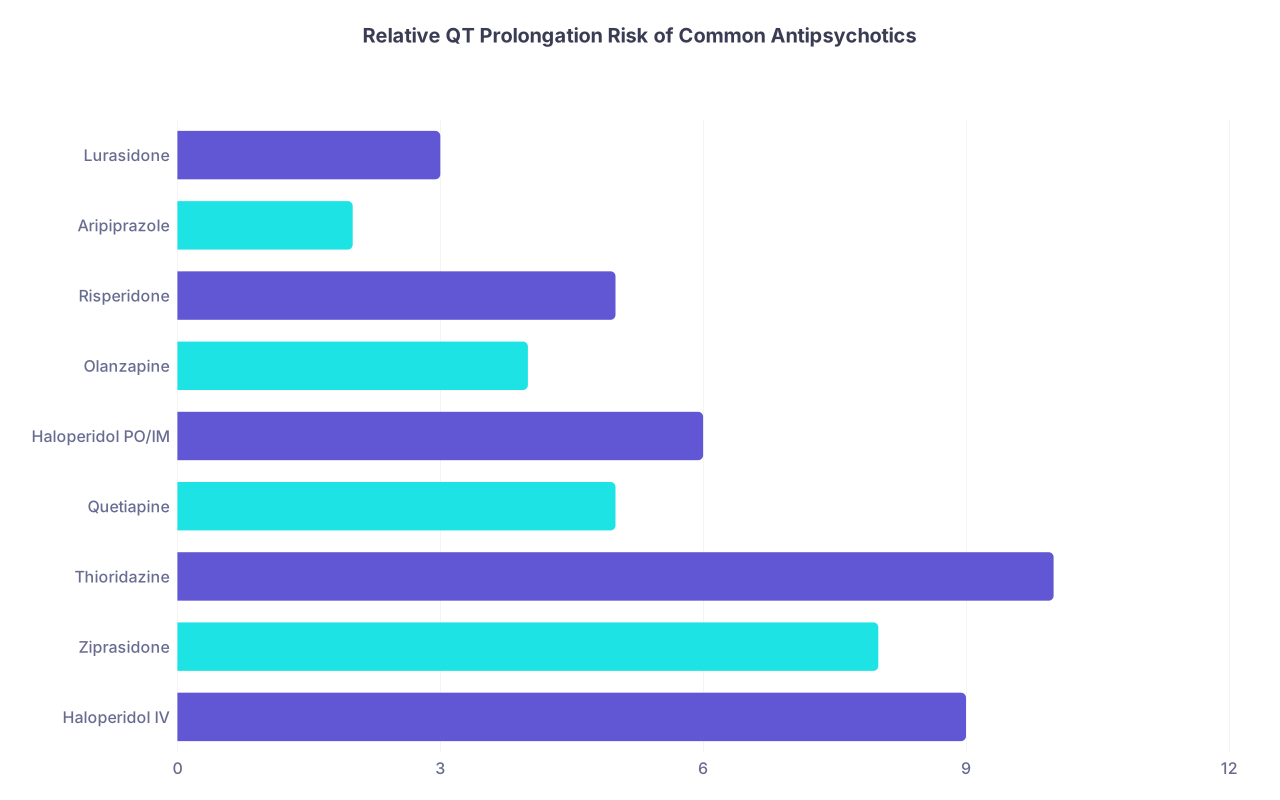
| Category | Value |
|---|---|
| Haloperidol IV | 9 |
| Ziprasidone | 8 |
| Thioridazine | 10 |
| Quetiapine | 5 |
| Haloperidol PO/IM | 6 |
| Olanzapine | 4 |
| Risperidone | 5 |
| Aripiprazole | 2 |
| Lurasidone | 3 |
Scale 1–10, with 10 as “maximal QT issue.” This is not a perfect evidence‑based scale, but it reflects real‑world caution.
Key practical points:
- High risk / avoid when QTc ≥ 500 or already prolonged
- Thioridazine (you almost never see this now; good)
- Ziprasidone (Geodon), especially IV
- IV haloperidol (black‑box warnings, lots of reports)
- Middle group / use with caution
- Quetiapine
- Risperidone
- Haloperidol PO / IM
- Olanzapine (less QT, more metabolic issues)
- Lower QT risk
- Aripiprazole
- Lurasidone
- Clozapine (QT possible, but torsades is rare; it has its own other nightmares)
On call typical question:
“Can I give 5 mg IV Haldol for agitation? QTc is 512.”
My answer: No IV haldol at 512, especially with other QT meds on board. Options instead:
- Oral/IM: olanzapine, aripiprazole
- Benzodiazepines (lorazepam)
- If on chronic haldol and psych insists: push for PO/IM at lower dose, but you still need electrolyte correction and close monitoring. Document the risk conversation.
2. Antidepressants – not all SSRIs are the same
There is a lot of noise here. Simplify it.
High QT concern at moderate doses
- Citalopram
- Escitalopram
Dose dependent; citalopram > 40 mg is usually a “never” in cardiac patients. At 10–20 mg, risk is smaller but not zero.
Moderate / possible QT prolongation
- Sertraline (mild effect, generally preferred in cardiac patients)
- Fluoxetine
- Venlafaxine (especially at high doses)
- Tricyclics: amitriptyline, nortriptyline – they do much more than QT (Na channel blockade)
Relatively lower QT concern
- Bupropion (watch seizures, but QT is not the main problem)
- Mirtazapine (sedation, weight gain, but QT effect minimal in most contexts)
At 1 AM, you are not starting new antidepressants. You are deciding: continue home meds or hold.
I am aggressive about:
- Holding citalopram / escitalopram if QTc ≥ 500, especially in an elderly, malnourished, hypokalemic patient.
- Continuing sertraline with reasonable confidence if QTc < 500 and electrolytes are ok.
- Not touching chronic TCA therapy in a frail, fall‑prone patient with QTc 490. Push this to daytime if possible.
3. Mood stabilizers and others
- Lithium: can affect conduction and cause bradyarrhythmias; less of a straight “QT drug” and more of a general arrhythmia concern at toxicity or in renal impairment. If lithium level high or creatinine spiking, I have a low threshold to hold.
- Valproate, carbamazepine, lamotrigine: QT effects are not the primary cardiac worry. Carbamazepine can cause conduction delay and hyponatremia; valproate interacts with many drugs.
Bottom line: on call your QT anxiety belongs much more with antipsychotics and select antidepressants than with mood stabilizers.
Step 4: Correct What You Can Before You Blame The Psych Med
You cannot change someone’s congenital long QT at 1 AM, but you can fix three things in 20 minutes that dramatically reduce torsades risk.
1. Electrolytes – push them to the “cardiology targets”
Do not accept “normal range” in the lab column.
- Goal K: 4.0–4.5 mEq/L (I personally aim ≥ 4.2 in a high‑risk QT patient)
- Goal Mg: > 2.0 mg/dL (I keep it ≥ 2.2 if QT > 500)
- Goal Ca: check ionized calcium if albumin is very low; correct significant hypocalcemia.
Ordering pattern that actually works:
- If K < 4.0 and they have a line:
- Give 20–40 mEq IV KCl (watch rate and peripheral vs central)
- Recheck in 2–4 hours
- If Mg ≤ 2.0 in a high‑risk patient:
- 2 g MgSO₄ IV over 1–2 hours, even if “low normal”
- In a borderline case and you are about to give a torsades‑risk antipsychotic, I am comfortable giving 1–2 g Mg prophylactically.
Yes, nurses will sometimes roll their eyes. That is fine. QT is not what you negotiate on.
2. Heart rate – watch the bradycardia
Torsades likes:
- Long pause
- Followed by PVC
- On a prolonged QT background
Patients at highest risk:
- On beta‑blockers, clonidine, or digoxin with HR < 55
- Post‑MI or post‑cardioversion with frequent pauses
- Elderly with sinus node dysfunction
If QTc is 510 and HR is 48 on metoprolol, do not just blame the quetiapine. Question the beta‑blocker dose.
On call move: consider reducing / holding AV nodal blocking agents (after thinking about why they are on them), and if needed, transfer to a higher level of care for continuous monitoring if the combination of brady + QT is ugly.
3. Drug interaction cleanup
Look for silent QT offenders you can remove easily:
Common non‑psych QT drugs hiding on your list:
- Ondansetron (especially repeated IV pushes)
- Macrolides: azithromycin, clarithromycin
- Fluoroquinolones: levofloxacin, moxifloxacin
- Antiarrhythmics: amiodarone, sotalol, procainamide, dofetilide
- Methadone
- Certain antifungals (fluconazole, voriconazole)
Classic 1 AM “are you kidding me” regimen:
- Levofloxacin
- Ondansetron q6h PRN
- Methadone
- Quetiapine
- Citalopram
And you are surprised QTc is 515.
You may not be able to stop everything, but you can:
- Switch ondansetron to prochlorperazine or promethazine (still QT risks but differently weighted; check local preferences)
- Ask team to reconsider levofloxacin if there is a ceftriaxone alternative
- At least stop PRN QT‑prolonging meds that clearly are not needed tonight
Step 5: Making The Call – A Simple Night‑Shift Algorithm
Here is how I would structure your thinking on call.

| Step | Description |
|---|---|
| Step 1 | QTc from ECG |
| Step 2 | Correct K and Mg |
| Step 3 | Review QT drugs and bradycardia |
| Step 4 | Avoid or change agent |
| Step 5 | Lowest dose and close monitoring |
| Step 6 | Optimize electrolytes |
| Step 7 | Routine risk |
| Step 8 | Minimize stack |
| Step 9 | Proceed with caution |
| Step 10 | Use usual dosing and monitoring |
| Step 11 | QTc 500 or higher? |
| Step 12 | QTc 470 to 499? |
| Step 13 | High risk antipsychotic? |
| Step 14 | Multiple QT drugs? |
Now translate that into actual bedside choices.
Scenario A: Agitated patient, QTc 480, needs antipsychotic now
What I do:
Check last K, Mg. If not within past few hours and they are high risk, order stat BMP + Mg, but I am not waiting 3 hours if they are about to self‑extubate.
- I might empirically give 1–2 g Mg IV in a clearly dangerous agitation scenario, especially if they are alcohol withdrawal or malnourished.
Avoid high‑risk antipsychotics:
- Skip ziprasidone and IV haloperidol.
- Prefer:
- IM/PO olanzapine
- IM/PO aripiprazole
- PO/IM haloperidol at the lowest effective dose if none of the “safer” options available and you have continuous monitoring.
Add or up‑titrate lorazepam if anxiety/withdrawal is a driver.
Put them on telemetry and actually look at it (do not assume “tele is on” means someone is watching).
Scenario B: Chronic seroquel, QTc 515 on morning ECG, nurse asking if she should give night dose
Here is where most interns overreact and psych gets angry.
What I would do on call:
Look at trend:
- Was QTc 460 last week? Or has it been 500+ for months?
- If this is an acute jump, I am more aggressive.
Check for new stacked drugs or electrolyte problem (often you will find levofloxacin or ondansetron recently added).
If K < 4.0 or Mg ≤ 2.0: correct now. Repeat ECG after correction.
If QTc remains ≥ 500 despite correction and significant stack remains:
- For a scheduled high dose antipsychotic (e.g., quetiapine 600 mg qHS), I would:
- Hold or give a reduced dose (e.g., 200–300 mg) depending on mental status and risk of decompensation.
- Put a clear note: “QTc 515 with multiple QT‑prolonging drugs; tonight dose reduced, discuss regimen with psychiatry in AM.”
- For a scheduled high dose antipsychotic (e.g., quetiapine 600 mg qHS), I would:
If the dose is small (quetiapine 25–50 mg qHS for sleep) and QTc has been chronically borderline:
- I am generally comfortable giving it after correcting electrolytes, if no major new interacting drugs were added. And I document that reasoning.
This is nuance. You are balancing psychiatric stability against arrhythmia risk. But the sharp line is here: if a new, unexplained QTc ≥ 500 appears while you are considering starting a fresh QT‑active med, the answer tonight is no.
Step 6: Monitoring – How Much Is Enough?
Residents either under‑monitor or go ridiculous. Let us calibrate.
1. When do you need continuous telemetry?
You need real‑time monitoring if:
- QTc ≥ 500 and:
- You are giving or continuing a clearly QT‑prolonging antipsychotic
- The patient has significant bradycardia or heart disease
- You cannot rapidly fix electrolytes
- There is a history of torsades or documented polymorphic VT
- High dose IV haloperidol or ziprasidone is being used (which, ideally, you avoid at that QT)
If none of the above and QTc is 470–499 with modest psych doses, a repeat ECG later that day and good electrolyte care are typically enough.
2. How often to repeat ECGs?
On call you aim for enough but not absurd.
Reasonable patterns:
- New QTc ≥ 500 with med changes:
- After electrolyte correction and 4–6 hours of new dosing, repeat a 12‑lead.
- Starting or uptitrating a QT‑risky antipsychotic in a patient who starts in the 460–490 range:
- Get a baseline ECG.
- Repeat within 24 hours or sooner if they have syncope, palpitations, or tele changes.
If someone is super high risk (post‑MI, structural disease, congenital long QT), consider an earlier repeat (2–4 hours) after the first dose. Most of the torsades stories in case reports happen within the first few days of therapy or when adding the final “straw” drug to an already stretched QT.
Step 7: Common On‑Call Pitfalls And How To Not Be That Person
I have watched residents do all of these.
Pitfall 1: Ignoring the baseline ECG
Patient is admitted for pneumonia, gets started on levofloxacin, ondansetron, and then psych adds ziprasidone. No one looks at the admission ECG that already showed QTc 490.
Fix: Before you start or approve a QT‑problematic psych med, skim the last ECG in the chart. It takes 30 seconds.
Pitfall 2: Overreacting to a single ugly QTc on a bad tracing
Wide, noisy telemetry ECG, AF with RVR, machine prints QTc 535. Resident cancels all psych meds and calls rapid response.
Fix: Confirm with a clean 12‑lead. If the T waves are indistinct, U waves fused, or you are in AF with wildly variable R‑R intervals, the automated QTc is unreliable. You treat patient and rhythm, not just the number.
Pitfall 3: “It’s just 2 mg IV Haldol”
You will hear this. Often.
There is nothing “just” about IV haloperidol in a patient with:
- QTc approaching 500
- Methadone on board
- Bradycardia
- Sepsis, hypokalemia, or post‑MI status
One IV dose can be the trigger. Does not mean you never give it; but you give it after correcting what you can, choosing dose carefully, and with tele running.
Pitfall 4: Completely ignoring the psych risk
The other side of the stupidity spectrum: “QTc 505, better to hold all psych meds until Monday.”
If the patient is a violent, delirious, hypoxic ICU case who keeps pulling lines, you cannot safely “hold” everything for days. You are trading a small arrhythmia risk for an immediate airway / brain / safety hazard.
Smart approach:
- Move to lower‑risk agents (e.g., olanzapine, aripiprazole, benzodiazepines) while you clean up other drugs and electrolytes.
- Use environmental and non‑pharm measures where possible: sitter, restraints if truly necessary, lights, noise control.
A Quick Visual Summary: Where The Real Risk Lives
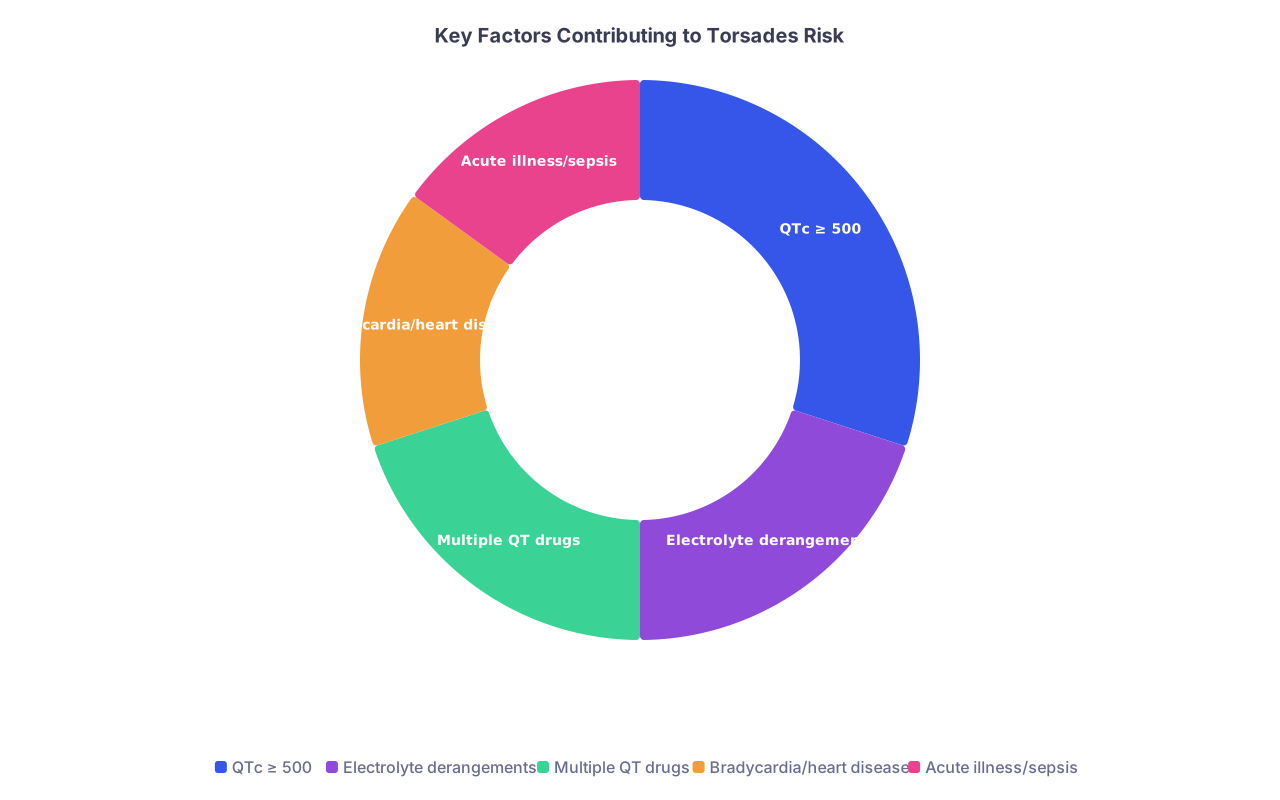
| Category | Value |
|---|---|
| QTc ≥ 500 | 30 |
| Electrolyte derangements | 20 |
| Multiple QT drugs | 20 |
| Bradycardia/heart disease | 15 |
| Acute illness/sepsis | 15 |
Do not obsess over a 1–2 msec difference in QTc on serial ECGs. Obsess over this cluster: long QT, low K/Mg, drug stack, and a sick heart.
Documentation That Protects You (And Your Patient)
On call, your note is your shield. Two or three sentences that show you understood the risk and did something rational go a long way.
Example of strong documentation:
“QTc 512 msec on 12‑lead ECG in patient on citalopram 40 mg, methadone 90 mg, and quetiapine 400 mg HS. K 3.2, Mg 1.7, Ca normal. Gave KCl 40 mEq PO and MgSO4 2 g IV. Held citalopram tonight, continued quetiapine at reduced dose 200 mg given high risk for decompensation. Telemetry monitoring, repeat ECG ordered for AM. Will discuss regimen with psychiatry in morning.”
That shows thought. That is what you want your name under.
Compare that to:
“QTc prolonged, psych meds held.”
Which one do you want a malpractice attorney reading?
Bringing It All Together At 1 AM
You are back in that room. Patient is ripping at lines, tele shows “QTc 512,” nurse is waiting.
You:
- Pull last 12‑lead, check:
- True QTc ~500 or is this junk?
- Heart rate? Rhythm? QRS width?
- Check labs:
- If K < 4.0 or Mg ≤ 2.0, order replacement now.
- Scan meds:
- Identify QT stack: ondansetron, levofloxacin, methadone, citalopram, etc.
- Stop what you can easily stop tonight.
- Choose psych med:
- Avoid IV haloperidol and ziprasidone with QTc ~500 and multiple risk factors.
- Prefer non‑QT‑heavy options (olanzapine IM, lorazepam).
- Telemetry on. Real documentation in chart.
Put in a clear “for psych to address” handoff for the daytime team.
You are not paralyzed by the number anymore. You are operating with a mental framework.
You are in residency now, not pre‑clinical lectures. At 3 PM with the full team and specialists, these decisions are handled in multidisciplinary huddles. At 3 AM, it is you, a nurse, an ECG strip, and an agitated patient.
Once you get comfortable with QTc triage and psych med risk, the night shifts change. The overhead “code blue on 7B” still spikes your adrenaline, but the countless “QTc 503, can I give seroquel?” pages stop feeling like landmines and start feeling like what they are: solvable clinical puzzles.
With that foundation in place, you are ready for the next layer of on‑call survival: triaging chest pain vs. panic attacks, deciding who truly needs a stat head CT for “dizziness,” and learning when to say no to 2 AM “just one more” imaging orders. But that is another set of night pages for another day.