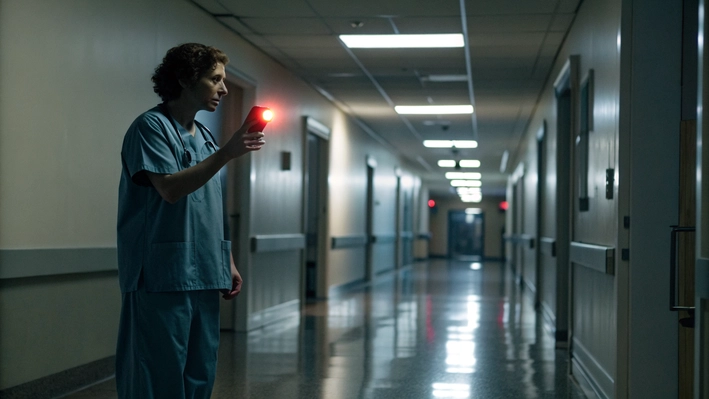
The nightmare you’re terrified of has already happened to other residents—and they survived.
I’m not going to sugarcoat it. Missing a critical page on call is one of those fears that hits you at 2 a.m. and just sits on your chest. You imagine the worst: patient dies, attendings scream, program puts you on probation, rumors spread, career over. Neat little catastrophe spiral.
Let me be clear: falling asleep and missing a page is possible. It does happen. But the story your brain is writing about what happens after is way more catastrophic than reality, most of the time.
Let’s walk through this like the anxious wreck you (and I) are, not like some calm, “it’s all fine” robot.
The Worst-Case Movie Playing in Your Head
You know the script.
You’re on night float. Pager on your hip. You’ve already been awake for… what, 16, 20 hours? You lay down “just for 10 minutes” and then—
Blackout.
In your head, the next scene is always extreme. A rapid response is called. You don’t show up. Attending storms into the call room, flips on the light, yells your name. Nurses are saying, “We paged the resident six times.” Someone writes an incident report. PD hears about it. You’re “unsafe.” You get labeled. You never match into fellowship. Your career is over because you closed your eyes.
That basically sound like the mental monologue?
Here’s what I’ve actually seen instead:
The resident’s pager battery died and they didn’t realize. The nurse escalated to the senior. The patient still got seen. The next morning there was a “hey, what happened with your pager?” conversation. Mildly awkward. Maybe there was an email. Maybe risk management pinged someone. And then… everyone moved on.
Or the resident fell asleep with the pager on vibrate under blankets. Missed one call about constipation or PRN pain meds. Nurse called again. Or called cross-cover. It was logged. Next day: you’re tired, ashamed, paranoid everyone knows. Reality: two people noticed, cared for about 6 minutes, then kept working.
I’m not saying there can’t be serious scenarios. There can. But your brain is treating every potential missed page like the one catastrophic, irreversible, lawsuit-level event. And that’s just not how real life plays out most nights.
What Actually Happens When Someone Misses a Page
Strip the drama. Here’s the usual sequence when a page goes unanswered on the floor at 3 a.m.

| Step | Description |
|---|---|
| Step 1 | Page resident |
| Step 2 | Page again |
| Step 3 | Call cross cover or senior |
| Step 4 | Issue addressed |
| Step 5 | Morning follow up with resident |
| Step 6 | No response |
| Step 7 | Still no response |
Nurses are not sitting there thinking, “I guess we just give up if the intern doesn’t answer.” They have escalation pathways. They use them. They’re usually pretty efficient about it.
Do delays happen? Yes. Can there be consequences? Yes. But the entire safety net of the hospital does not rest solely on your eyelids staying open.
I’ve watched this a bunch of times:
A cross-cover resident finally comes by, breathless, apologizing: “I’m so sorry, I just saw the page.” Nurse shrugs: “It’s okay, we called the senior—patient’s fine, just needed pain meds.” That’s it. No dramatic music. No panel of judges.
The bigger reactions happen not because someone ever missed a page once, but because they:
- Repeatedly don’t answer
- Blow it off when confronted
- Try to cover it up or lie
That’s what gets people into real trouble. Not the single exhausted human error.
How Serious Is It Really? The Spectrum You’re Not Seeing
Your brain is acting like there are only two categories:
- You never miss a page → perfect, safe, good resident
- You miss a page once → dangerous, incompetent, career destroyed
Reality is much messier. Most residents live in the messy middle.
| Scenario | Typical Consequence |
|---|---|
| Non-urgent page, short delay | Mild annoyance, no big issue |
| Non-urgent page, long delay | Nurse frustration, reminder talk |
| Urgent page, brief delay | Senior involved, debrief |
| Urgent page, long delay, no harm | Formal feedback, maybe write-up |
| Urgent page, delay, patient harm | Serious review, QI, possible discipline |
Most of your anxiety is locked onto that last row. The catastrophic one. You’re mentally living there 24/7 even though most missed pages are row one or two.
I’d be lying if I said row five never happens. But residency programs know humans are fallible, systems are messy, and nights are brutal. They do morbidity & mortality, root cause analyses, incident reviews. They look at staffing, handoffs, pager systems, nurse education, everything—not just “blame the intern and move on.”
You’re catastrophizing it into “they’ll destroy my life.” They’re usually thinking “how do we keep this from happening again?”
The Part That Actually Matters: What You Do After
Here’s where people either save themselves or dig a hole.
You wake up. You see the timestamp. 1:17 a.m. Page about “SOB, O2 sat 86%.” It’s 2:05 a.m. now. Your stomach drops. You feel like throwing up. Your first instinct is to freeze and hope nobody noticed or to pretend you “just saw it.”
Don’t do that.
Own it. Immediately.
You:
- Call back the nurse: “Hey, this is Dr. X. I’m seeing your page from 1:17. I am so sorry for the delay—what’s the current situation?”
- Go see the patient now if there’s any clinical concern
- Loop in your senior if it was anything remotely serious: “I missed a page earlier and there was a delay—I’ve just seen the patient, here’s the situation. I want you to be aware.”
- Document honestly. Not “responded promptly.” No spin. Short, factual note if appropriate.
That’s what a safe doctor does. Not a perfect one. A safe one.
I’ve watched seniors and attendings get way more angry when they smell hiding, minimizing, or bullshit than when someone says, “I messed up. Here’s what I did about it. Here’s what I’m changing.”
You can’t undo the delay. You can show that you respond, you learn, and you give a damn.
So… Could I Get Fired for Falling Asleep and Missing a Page?
Your brain wants a binary answer. “Yes, I can be fired” or “No, I am safe forever.” Reality: it depends on pattern, severity, outcome, and how you handle it.
Here’s the uncomfortable but honest take:
- One missed page with no patient harm, you’re remorseful, you change your behavior → highly unlikely you’re fired. You might get a formal counseling, maybe an email, maybe a note in your file. Then life goes on.
- Repeated issues, same story every week, people can’t rely on you → now you’re in probation / remediation / maybe non-renewal territory.
- A catastrophic event with clear negligence and dishonesty around it → yes, people can and do get terminated or referred to boards. That’s not common, but it does happen.
But you’re not scared of patterns. You’re scared of one exhausted night ruining everything.
Programs invest a lot in residents. They don’t want to blow someone up over a single human mistake, especially when systems (brutal hours, awful pager tech, terrible call rooms) are part of the problem.
If your internal monologue is “I never want this to happen, how do I prevent it?” you’re already not the type of resident who gets tossed out casually.
Concrete Things You Can Do So This Stays a Fear, Not a Reality
Anxiety loves vague “be more careful” advice. You need specific, unglamorous tactics.
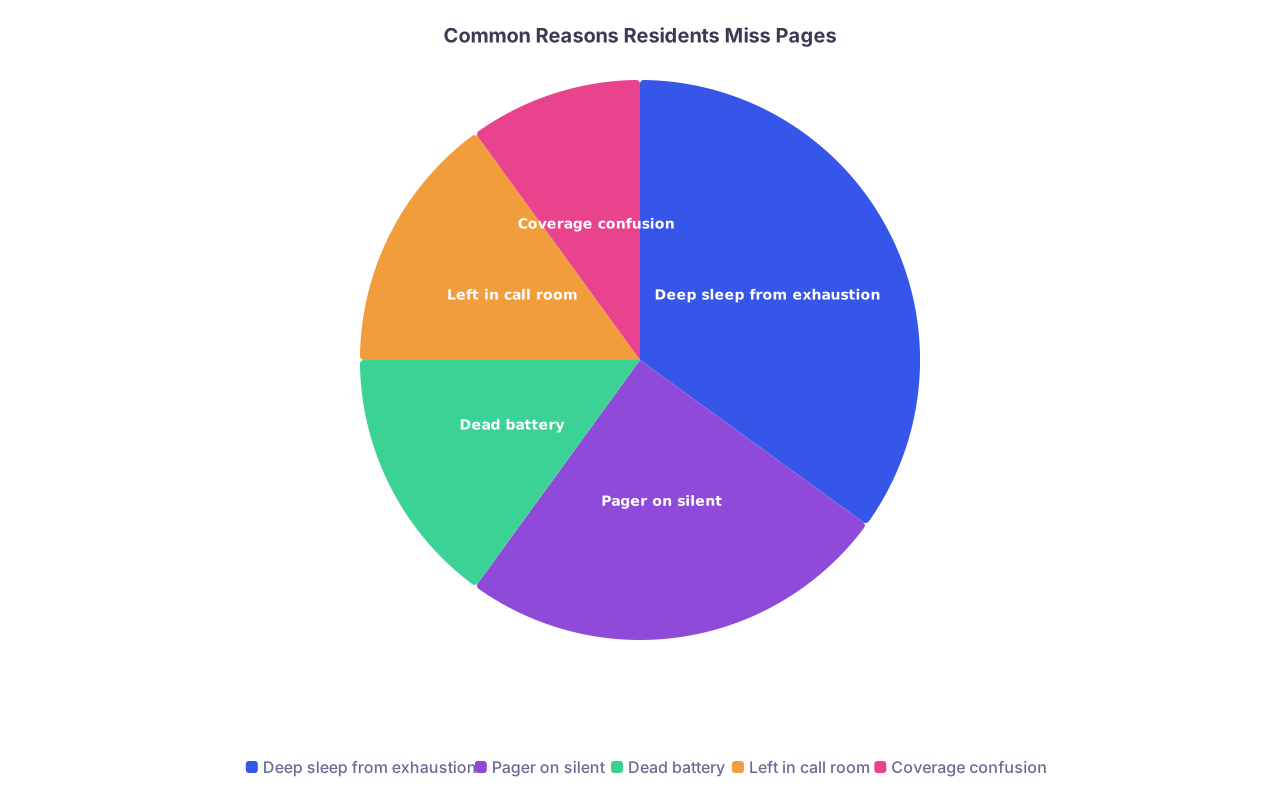
| Category | Value |
|---|---|
| Deep sleep from exhaustion | 35 |
| Pager on silent | 25 |
| Dead battery | 15 |
| Left in call room | 15 |
| Coverage confusion | 10 |
Some non-magical, actually-used tricks:
Keep the pager where it’s physically annoying
Clip it to your scrub top near your neck or shoulder, not your waistband where blankets muffle it. Some people literally attach it with a safety pin to their chest pocket so they can’t roll onto it and silence it.
Double-layer the alert
Pager plus phone call. Many hospitals let you set pages to also send to your phone via app or text. Use it if available. Even if it’s redundant and annoying.
Don’t trust vibrate at 3 a.m.
You think you’re a light sleeper. Then night three of a six-night stretch hits. Put it on loud. Yes, it will wake you up. That’s the point.
Battery paranoia is healthy
Change batteries at the start of a long call even if it’s “still got bars.” Keep a couple of spares in your white coat or bag. Ask other residents where they find them at 2 a.m.—every hospital has some random drawer or secret stash.
Set micro-alarms if you’re crashing hard
You lay down at 1:30 a.m. after a code. You are beyond exhausted. Set your phone alarm for 20–30 minutes with volume loud, separate from the pager. It’s not perfect, but it reduces the window where you’re truly dead asleep.
Tell the nurse you’re going to lie down
On some services, if it’s been quiet, I’ve seen residents say to the charge nurse: “Hey, I’m going to be in the call room for the next hour. If something seems off or I don’t answer right away, can you call the ward phone or my cell too?” Shows goodwill and creates backup.
Know your system’s escalation policy
Ask a senior straight up: “If I don’t answer a page, who do nurses usually call next?” Knowing there is a next step calms the “patient will just die alone” spiral your brain loves.
And the big, boring one: manage your own self-neglect
If you march into a run of nights already half-burned out, dehydrated, underslept, you will be more likely to crash too hard and miss stuff. No, you can’t fix residency. But you can do small, unsexy things: actually eating something before night float, 10-minute nap early in the shift instead of white-knuckling until 4 a.m., caffeine timing so you don’t completely crash.
None of these are foolproof. But you’re not trying for impossible perfection. You’re trying to reduce odds and catch errors quickly.
What If It Already Happened and You’re Losing Sleep Over It?
Maybe your question isn’t hypothetical. Maybe you did miss a page. Or a code. Or a nurse had to escalate because you were dead asleep. Now you’re replaying it on loop.
Here’s how you don’t let one night metastasize into a personality trait in other people’s heads.
First, stop rewriting history 40 different ways
Your brain is doing that thing where you imagine what everyone must be thinking. “They all think I’m lazy.” “They all think I don’t care.” You don’t actually know that. You’re guessing based on your own shame, not evidence.
Second, ask for the real story
If it was anything serious, ask your senior or chief: “Can you walk me through what happened from your perspective? I want to understand and make a plan.” This does two things: gives you actual facts, and shows you’re not in avoidant denial mode.
Third, make a concrete change and say it out loud
“I’ve switched my pager to loud and I’m clipping it to my top now instead of my waistband.”
“I’m setting a 30-minute alarm when I lie down on nights.”
People are way more forgiving when they see behavior change, not just remorse.
Fourth, forgive the version of you that did that
The version of you who missed that page? They weren’t chilling, scrolling TikTok, ignoring calls. They were probably exhausted, overwhelmed, and trying to survive. You can hold yourself accountable and show yourself some basic human mercy.
And if it was truly bad—like incident-report, QI-meeting bad—then you treat it like what it is: a painful, high-stakes lesson that will make you obsessively careful from now on. That’s often how the safest physicians are forged. Not from never messing up, but from never forgetting what it feels like to almost—or actually—hurt someone.
The Ugly Truth: This Fear Means You Actually Care
I know it feels like this anxiety is a weakness. Like if you were stronger, cooler, more “doctorly,” you wouldn’t sit there thinking, “What if I fall asleep and miss a critical page?” every night before call.
I disagree.
The residents who scare me are the ones who shrug off that possibility. “If they really need me, they’ll call again.” Or the ones who brag that they can sleep through anything, like that’s some flex.
Your fear isn’t proof you’re unfit. It’s proof you understand the stakes.
The trick is not letting that fear paralyze you, or convince you that your career hangs by the thread of one night’s sleep. It doesn’t. Your reputation gets built over hundreds of tiny moments: the calls you did answer, the patients you stayed late for, the nurses you treated with respect, the honesty you showed when something went wrong.
You’re terrified of a single failure defining you. It won’t, unless you let it.
So here’s the distilled version to carry into your next call night:
- Yes, missing a critical page is possible—but the hospital has backup systems, and one mistake almost never equals career death.
- Your job isn’t to be flawless; it’s to minimize risk with real habits, own it immediately if it happens, and show you learn fast.
- The fact that this keeps you up at night doesn’t mean you’re not cut out for residency; it’s actually a sign you give a damn—and that’s exactly the kind of person patients want answering the pager at 3 a.m.