

Last January, a fourth-year sat across from a PD at a mid-tier university IM program. Casual second-look, friendly vibe. Halfway through, the PD sighed and said, “If you’d applied last year, you’d have been top 5 on our list. This year… things changed.” The student smiled politely, having no idea that “things changed” meant a new chair had quietly blown up the rank list philosophy two weeks earlier.
You are not competing against “the program” you saw on interview day. You’re competing against the version of that program that exists after leadership meets behind closed doors and rewrites what they care about. And that version might be very different from what they told you on the tour.
Let me walk you through what actually happens.
The Myth vs. The Room Where It Happens
Publicly, programs say the same three things:
- “We use a holistic review.”
- “We care about fit.”
- “We look at the whole application.”
Behind the door during the rank meeting, it sounds more like this:
“Listen, with the new chair coming in July, we can’t take people with marginal Step 2s.”
“We got burned last year on professionalism; no more risk.”
“We’re pushing for more research output; that needs to show up in our list.”
What changed? Leadership. Sometimes one person. Sometimes a whole layer.
And each leadership change quietly reorders who rises and who falls on that rank list.
Here’s the core truth:
By the time the final rank list is certified, the program you applied to is not always the program that is ranking you. New PDs, new chairs, new APDs, or even a new DIO can shift priorities fast. And they do it late. You rarely hear about it in time.
Who Actually Controls the Rank List (Hint: It’s Not Who You Think)
You think the residents who loved you are fighting for you? Sometimes. But they’re not driving the bus.
In most programs, these are the real players:
- Program Director (PD) – ultimate owner of the list
- Associate/Assistant PDs (APDs) – often control the scoring rubric
- Department Chair – doesn’t rank names, but sets the political guardrails
- DIO / GME office – enforces policy, occasionally vetoes patterns (rarely individuals)
- Key Faculty Champions – subspecialty chiefs or power attendings with loud voices
Residents? They’re advisory. Their opinions might move you 5–10 spots. The PD can move you 50.
And when leadership changes—new PD, new chair, new APD—those are the people who quietly rewrite the rules.
| Role | Real Influence on Rank List |
|---|---|
| Program Director | Very High |
| Associate PDs | High |
| Department Chair | Medium (directional) |
| Residents | Low–Medium |
| GME/DIO | Policy, outliers only |
How Leadership Changes Rewrite Priorities Overnight
Let me show you what “things changed” really looks like.
1. New PD: Your Whole Profile Gets Reweighted
A new PD is the single most disruptive factor in ranking philosophy.
Old PD:
“Give me reliable, hardworking, team-oriented residents. I don’t care about big-name med schools.”
New PD (came from a research-heavy institution):
“I want at least 40% of our class with strong research and top 20 med schools. We’re building a brand.”
Outcome? In one cycle:
- Applicants from community med schools drop 20–40 spots on the list.
- High research, high pedigree jumps dramatically, even with average letters.
- The classic “solid, quiet worker” profiles are suddenly less valued.
What you see on interview day: warm, balanced messaging.
What’s happening in December: subtle panic about “improving the program’s metrics” under new leadership.
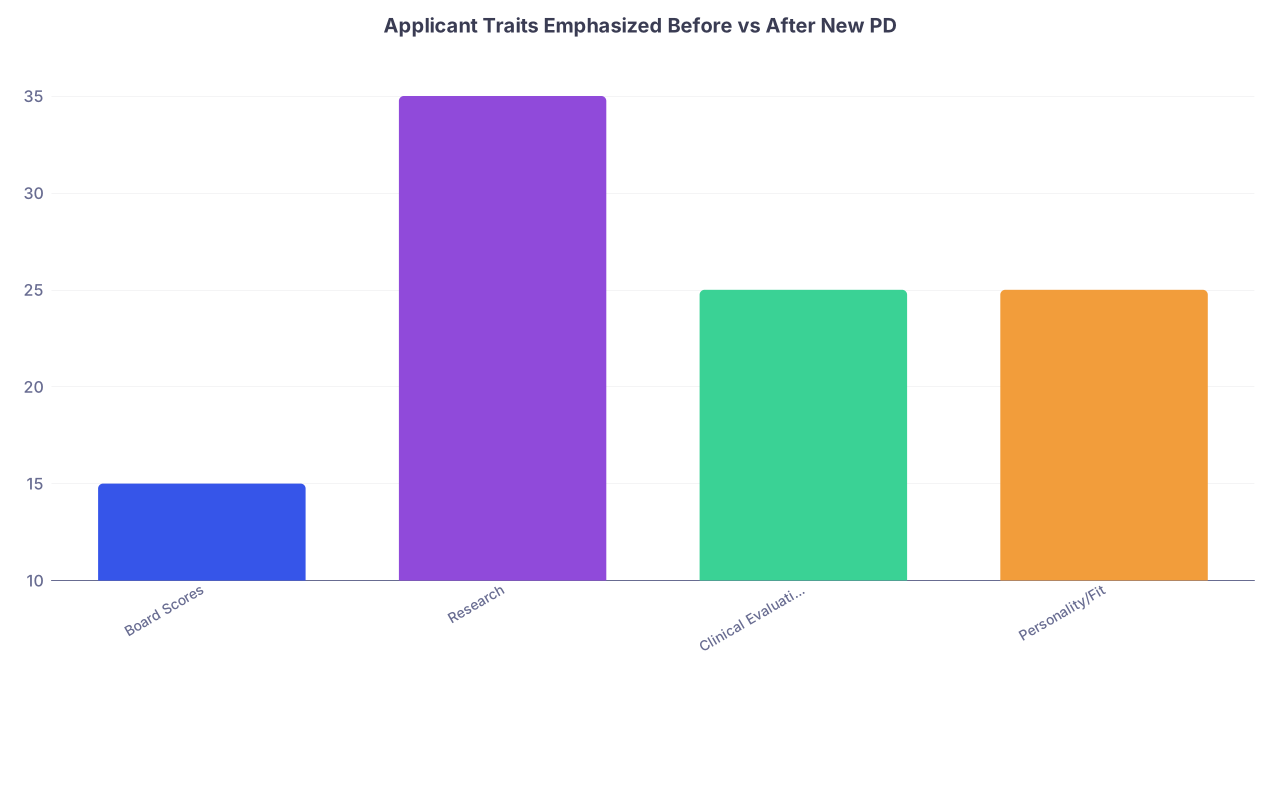
| Category | Value |
|---|---|
| Board Scores | 15 |
| Research | 35 |
| Clinical Evaluations | 25 |
| Personality/Fit | 25 |
(Think of that as the new PD’s emphasis; under the old PD, “Research” might have been 10 and “Clinical Evaluations” 40.)
2. New Department Chair: Strategy Over Individual Fit
Chairs don’t usually tinker with the rank list line by line. They shift the philosophy.
Example I watched unfold at a large IM program:
- Old chair: “Community-focused, strong clinicians, happy residents.”
- New chair: “We’re under pressure for NIH funding, promotion metrics, and fellowship placement.”
In one meeting, the PD came back from a department leadership retreat and said:
“We’re being asked to focus on research productivity and prestige of matched fellows. This has to show up in who we rank.”
Translation: That sweet, 250-Step, no-research, strong-clinician applicant? Now below a 240-Step, 3-first-author-papers applicant on the list.
You’ll never see an email about this. You just feel it in delayed interviews, cooler vibes, or vague comments about “being more competitive this year.”
3. New APDs: The Rubric Gets Rigged (Quietly)
APDs are the people who build or tweak the actual scoring system. When APDs change, the knobs and dials move.
Before:
- Step 2: 20%
- Clinical evals: 30%
- Letters: 20%
- Research: 15%
- Interview: 15%
After an APD with academic bias steps in:
- Step 2: 20%
- Clinical evals: 20%
- Letters: 15%
- Research: 30%
- Interview: 15%
Same applicant pool. Different winners.
The scary part? You’re still being told “holistic” while the weighted spreadsheet is saying otherwise.
The Timeline: When These Shifts Actually Hit Your Application
Here’s the piece nobody spells out: the decisive changes happen late.
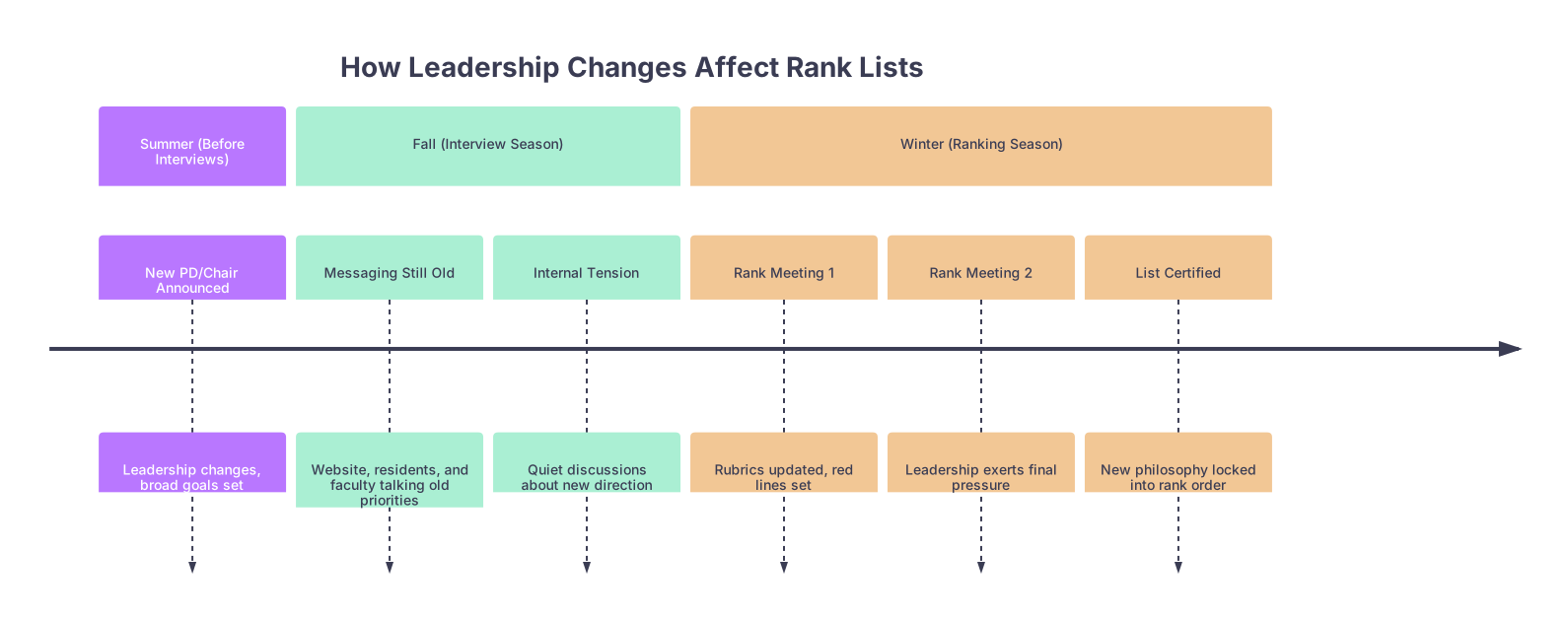
| Period | Event |
|---|---|
| Summer (Before Interviews) - New PD/Chair Announced | Leadership changes, broad goals set |
| Fall (Interview Season) - Messaging Still Old | Website, residents, and faculty talking old priorities |
| Fall (Interview Season) - Internal Tension | Quiet discussions about new direction |
| Winter (Ranking Season) - Rank Meeting 1 | Rubrics updated, red lines set |
| Winter (Ranking Season) - Rank Meeting 2 | Leadership exerts final pressure |
| Winter (Ranking Season) - List Certified | New philosophy locked into rank order |
So you might:
- Interview in October under the old narrative
- Be ranked in January under the new regime
That’s why your “I clicked with everyone, they loved me” experience sometimes turns into a surprise miss on Match Day.
The Quiet Policy Shifts You Never Hear Announced
Some changes are subtle. Nobody calls them “policy,” but they function like it.
Step Cutoffs Are Weaponized Differently
A new PD under pressure about board pass rates can do this in a single meeting:
“Starting this year, no one with Step 2 below 220 goes in the top half of the list. I don’t care how much we liked them.”
Or:
“Failed Step 1? They can only go on the list with unanimous faculty agreement.”
So yes, you were charming. Yes, the residents loved you. But you’re sitting lower on the list because a new PD is terrified of next year’s ACGME board pass report.
Red Flags Become Harder Red
If the previous leadership “believed in second chances,” a new team may not.
I’ve seen a new PD say:
“We had one more professionalism nightmare last year. No more borderline cases. If someone had remediation, I don’t care how glowing the rest is; they’re not worth it.”
One remediation note in your MSPE. Under old leadership? Discussed, weighed. Under new leadership? Quiet categorical “no.”
Home Students and “Known Quantities” Get Reprioritized
Some new leaders come in skeptical of the unknown.
- Old PD: “We like diversity in background. We don’t auto-prioritize home students.”
- New PD: “We’ve been burned by unknowns. I want at least half the class people we or our faculty know well.”
So suddenly:
- Home students surge upward on the list
- Rotators get more weight
- Unknown away applicants with fancy metrics drop
Again: this shifts rank order, not the messaging. You’ll still hear: “We value diversity and holistic review.”
How This Actually Looks in a Rank Meeting
Strip away the myth. Here’s the real conversation.
Rank meeting. Long table. Printed sheets or the giant projected list.
Faculty #1: “I really liked Applicant 43, very genuine, great clinical comments, not a big researcher but will be a great resident.”
New Chair (or PD aligned with them): “Where did they train?”
Faculty #1: “Regional state school.”
Chair: “What about publication history?”
APD: “Just a couple of posters, no first-author.”
Chair: “We said we’re trying to boost academic output. Compare them to Applicant 57.”
Applicant 57: Slightly lower evals. Less charming. But 4 papers and from a “name” school.
The PD pauses, then: “Alright, move 57 above 43. We need more of that profile.”
That one swap seems small. Multiply it by twenty such decisions. Your “top-third” status can evaporate into mid-list quickly.
What You Can Do: Reading the Leadership Winds Before You Rank
You can’t control leadership changes. But you can stop being blind to them.
1. Track Leadership Announcements Like Your Life Depends on It
Because match-wise, it kind of does.
Pay attention to:
- New PD announcements on department or GME websites
- “Message from the Chair” pages getting updated
- Big resignations/retirements in the last 12–18 months
If a program just got a new PD or chair, assume:
The way their seniors describe the program is out of date.
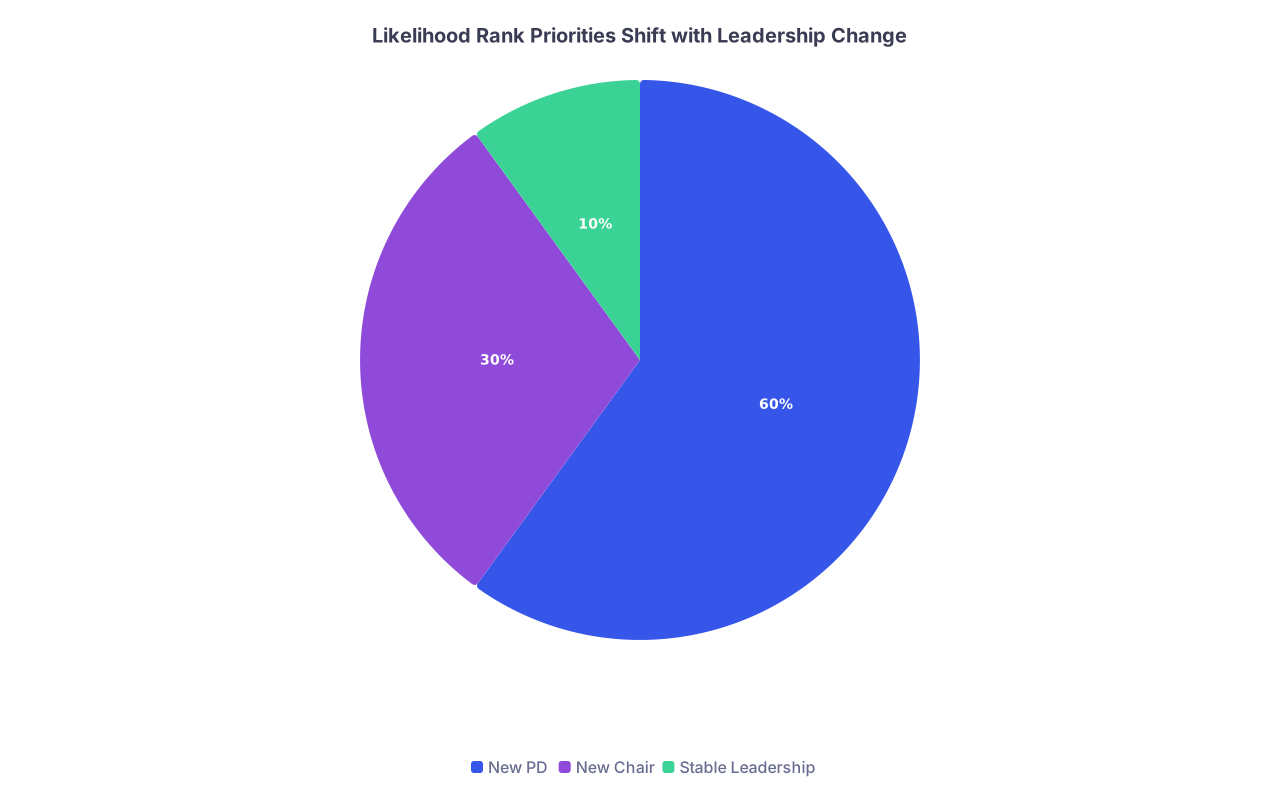
| Category | Value |
|---|---|
| New PD | 60 |
| New Chair | 30 |
| Stable Leadership | 10 |
Roughly: if there’s a new PD, expect major ranking philosophy shifts.
2. Ask Residents the Right Questions (Not the Fluffy Ones)
Stop asking: “What do you like about the program?” That tells you nothing.
Instead:
- “Has anything changed since the new PD/chair came in?”
- “Do you feel the program is becoming more research-heavy / more community-focused / more competitive?”
- “Have you noticed different types of residents getting interviews or matched in the last year or two?”
Residents will often say more than faculty. They’ll hint:
“Yeah, they’re trying to push more research now.”
Or: “Our new PD is big on board scores; they talk about it a lot.”
That’s your signal. Align your expectations accordingly.
3. Listen to How Faculty Sell the Program
Faculty language telegraphs leadership pressure.
Patterns like:
- “We’re really trying to increase our fellowship match.”
- “We’re moving toward being more academic.”
- “We’re focusing on improving our board scores and credentials.”
Each of these is code for something:
- Fellowship match focus → they’ll push research and letters from big names.
- “More academic” → homegrown, research-hungry applicants gain ground.
- “Board scores” → low Step 2 applicants slide down, no matter how “great a fit.”
Match yourself against what they say they’re “trying to improve.”
If what they’re chasing is not what you offer, don’t over-rank them hoping vibes will override strategy. They won’t.
How To Protect Yourself When the Ground Is Shifting
You cannot anticipate every quiet reshuffle. But you can make your rank list more failure-proof.
1. Don’t Overweight One Perfect Interview Day
That magical day where everyone was charming, you crushed every question, and the PD said, “We’d love to have you here”? Good. But leadership shifts can still bury you.
Treat that experience as one data point, not a guarantee.
Anchor your ranking decisions on:
- Stability of leadership
- Alignment of your profile with the direction they describe
- Evidence FROM RECENT GRADS, not just current PGY-2s
2. Hedge Against Volatile Programs
If a program:
- Just changed PD or chair
- Is expanding rapidly
- Recently had accreditation issues or probation whispers
…you should not build your entire rank list strategy around “I’m sure they’ll rank me high.” They’re the ones most likely to be doing last-minute philosophy pivots in January.
Prioritize a mix:
- A few high-upside, unstable-but-attractive programs
- Several solid, stable programs that consistently match people like you
3. Be Realistic About Your “Profile Class”
Programs don’t rank individuals in a vacuum. They think in buckets:
- “Research-heavy, competitive for cards/onc”
- “Solid clinicians, low risk, good team players”
- “Unknown schools but strong letters and grit”
- “Home students – safe, known quantities”
Leadership changes shift which bucket they prioritize.
Ask yourself:
Which bucket am I in?
Then watch which buckets they seem obsessed with when they talk.
If a program keeps saying, “Our fellowship match has exploded, we’re very academics-focused now”—and you have zero research—you’re in their lower-priority bucket. You might still match there if they go deep on the list. But you shouldn’t count on being one of their “must-have” candidates.
A Few Brutal but Honest Realities
Let me just say the things faculty think but don’t tell applicants:
A single powerful leader can move you 100 spots up or down the list.
One strong advocate can rescue you. One anxious chair can sink you.Sometimes the PD will break their own rubric at the last minute.
I’ve seen PDs pull someone up 50 spots after a phone call from a trusted colleague. The spreadsheet isn’t god.Your “fit” matters less when leadership is under pressure.
If they’re worried about losing accreditation, fellowship match stats, or board pass rates, they’ll sacrifice warm, fuzzy “fit” to appease the numbers.Programs occasionally regret these leadership-driven shifts.
I’ve watched a program pivot hard to “research machines,” then complain all year that no one wants to cover nights, and the culture feels cold. Too late. Rank list was certified months ago.You’ll never get a transparent explanation.
No one will email you, “You would’ve matched here under the old PD. Under the new one, you were 35 spots too low.” They just send a form rejection. You’re left thinking you said something wrong in your interview.
Bottom Line: Build Your Rank List Like Leadership Might Change Tomorrow
Because effectively, it already did.
When you sit down to certify your rank list, imagine this:
What if the PD got pulled into a meeting last week and told, “We need more X and less Y.” Does your profile live in their “X” or their “Y”?
You can’t game all the quiet reshuffles. But you can:
- Stop believing the frozen-in-time version of programs you see on interview day
- Start reading leadership shifts as redirection of values, not background noise
- Build a rank list that balances dream programs with ones that steadily take applicants like you, year after year
Programs are changing faster than they admit publicly. Your job is to see around that corner as much as you can.
With that mindset in place, you’re not just guessing where you might match—you’re strategically placing bets based on how programs actually behave when the door closes and the rank list goes up on the screen. The interviews are behind you. The real game now is how you interpret what you saw and heard, and how you stack your list for the world that will exist in March, not the one that existed in October.
And once Match Day hits and you see where you land, that’s when the next layer of insider dynamics begins—how leadership will shape your training once you’re actually in the building. But that’s a story for another day.


