
Your first 30 days as an intern will not “calm down later.”
They will set the habits that either save you or bury you.
Most new interns try to survive on adrenaline and goodwill. They promise themselves they will “get organized once things slow down.” That is the wrong strategy. The chaos does not stop. You just get more responsibility.
You have 30 days to build sustainable organization habits before bad ones calcify. Here is exactly what to do, week by week, and then day by day.
Big Picture: Your 30‑Day Organization Blueprint
At this point you should understand the core problem: survival is not enough. You need a system.
Your first month breaks down into four phases:
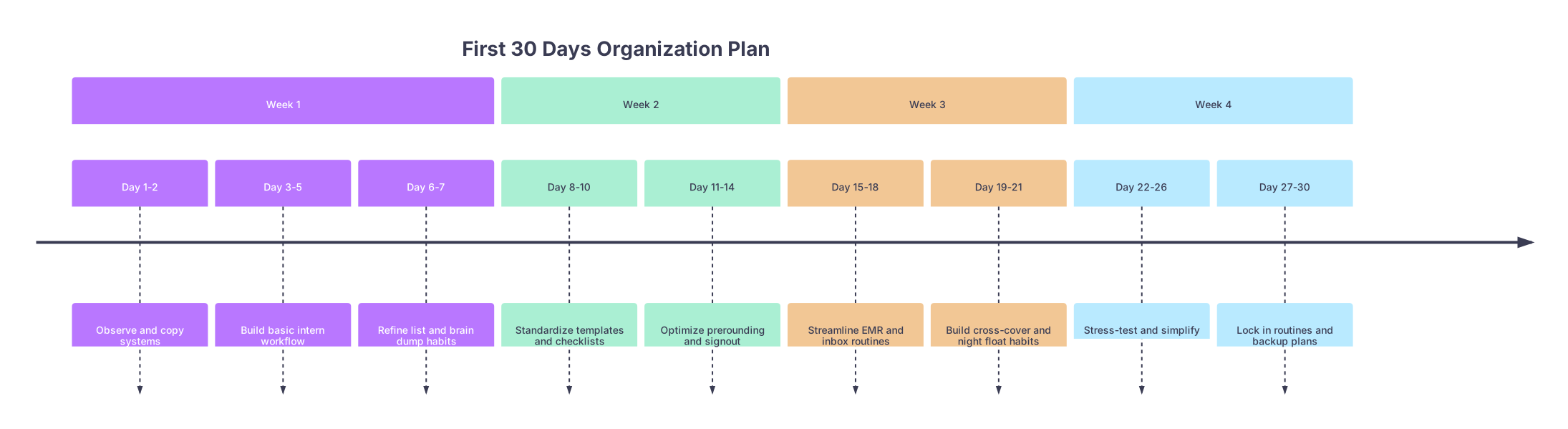
| Period | Event |
|---|---|
| Week 1 - Day 1-2 | Observe and copy systems |
| Week 1 - Day 3-5 | Build basic intern workflow |
| Week 1 - Day 6-7 | Refine list and brain dump habits |
| Week 2 - Day 8-10 | Standardize templates and checklists |
| Week 2 - Day 11-14 | Optimize prerounding and signout |
| Week 3 - Day 15-18 | Streamline EMR and inbox routines |
| Week 3 - Day 19-21 | Build cross-cover and night float habits |
| Week 4 - Day 22-26 | Stress-test and simplify |
| Week 4 - Day 27-30 | Lock in routines and backup plans |
Your guiding rule for the month:
If a task repeats more than twice, it gets a system.
If you rely on memory for it, you are doing it wrong.
Week 1 (Days 1–7): Build a Bare-Minimum Survival System
Your goal this week is not efficiency. It is to create one consistent, simple workflow that you use every single day. No improvising.
Day 1–2: Copy Before You Create
At this point you should not be “innovating.” You are not that special yet.
On Day 1, do three things before pre-rounding:
- Pick your capture tools (and commit for 30 days):
- One pocket notebook or small clipboard
- One EMR “to-do” panel or note
- One phone app for personal life tasks (NOT for patient data)
If you change tools every three days, you will fail. Pick and suffer through the imperfections.
Steal a patient list template.
- Ask a senior: “Can I see your list layout? What absolutely has to be on it?”
- Copy the structure: columns, abbreviations, order.
- Do not design from scratch. This is not graphic design class.
Observe how your senior organizes.
- When do they print lists?
- Where do they write updates during rounds?
- How do they track pending tasks (imaging, labs, consults)?
- Watch their signout handoff.
Write down what you like. Literally a list:
“Senior’s tricks: prints list at 6:30, rewrites daily meds, circles ‘must-do today’ tasks.”
Day 3–5: Create Your Basic Daily Workflow
By midweek, you need a reproducible day structure. It will not be pretty, but it must be consistent.
Morning workflow (target start: 45–60 min before signout):
List reset (5–10 minutes):
- Print or refresh your patient list.
- For each patient, draw a small box for “today’s tasks.”
- Add overnight events from signout.
Preround notes (2–3 minutes per patient):
- Check vitals, I/Os, new labs, overnight notes.
- On your list, write:
- One line: status (“still hypoxic,” “improved pain,” “NPO for OR”)
- One “ask/plan” for rounds (“consider diuresis,” “restart home beta blocker”)
Rounds structure:
- During rounds, you only write in two places:
- Patient list: tasks with boxes
- Notebook: questions or teaching points
- Do not create random sticky notes and extra sheets. That is how pages are missed.
- During rounds, you only write in two places:
Afternoon workflow (post-rounds):
Your mantra: “Turn plans into tasks immediately.”
For each patient:
- Convert the discussed plan into clear tasks with boxes:
- “↑ Lasix 40 IV BID – order”
- “Call daughter – update”
- “GI consult – place order + call”
- Star or highlight anything time-sensitive (e.g., before 12:00 for same-day procedures).
Then batch your work:
- Enter all orders.
- Place all consults and page them in one block.
- Make family calls in one block.
- Then re-scan for “loose ends.”
End-of-day (last 20–30 minutes):
- Update signout as you close tasks, not at 6:59 PM in a panic.
- Confirm:
- Labs needed tomorrow already ordered?
- Imaging scheduled?
- Code status clearly documented?
- “If this, then that” instructions in cross-cover signout.
Day 6–7: Fix What Already Feels Broken
At this point you should be painfully aware of what is not working.
Common failures I see by Day 3:
- Tasks written in 4 different places
- No consistent time to update signout
- “I’ll remember that” lies, followed by missed labs or calls
Weekend reset exercise (takes 20–30 minutes):
On your next lighter day:
- Take yesterday’s list.
- Highlight every task you:
- Almost forgot
- Remembered only because a nurse paged you
- Never wrote down at all
Create a “Never again” mini-checklist in your notebook:
Example:
- After rounds:
- Place all consults
- Check “labs for tomorrow”
- Update signout for sickest 3 patients
This checklist lives on the first page of your notebook for the whole year.
Week 2 (Days 8–14): Standardize Templates and Checklists
Now you have a basic skeleton. In week 2 you turn it into a sustainable system.
At this point you should not be reinventing your workflow every day. You are refining.

Day 8–10: Build Your Core Templates
You need three templates: progress note, signout, and admission.
1. Progress note skeleton (for each service):
In your EMR, create a macro/smart phrase with:
- One-line summary
- Overnight events
- Subjective (symptoms, ROS highlights)
- Objective (vitals brief, key labs, imaging)
- Assessment/Plan by problem
Your habit:
- During rounds, write plans in problem-based format on your list.
- After rounds, paste template → fill per problem directly from the list.
This cuts note-writing time by 30–50%. I have seen interns go from 3 hours of scattered notes to 1–1.5 hours just by doing this.
2. Signout template:
Your signout must answer:
- Why is this patient here?
- What is the worst thing that could happen tonight?
- What should cross-cover do if X occurs?
Build standard fields:
- ID/PMH (1 line)
- Hospital day / status
- Active issues (bullet list)
- Overnight watch items (“If HR > 130 and symptomatic, repeat EKG, call me or cards”)
- Disposition plan
| Template Type | Where It Lives | Primary Purpose |
|---|---|---|
| Progress Note | EMR macro | Faster, structured notes |
| Signout | Signout tool | Safe overnight coverage |
| Admission Note | EMR macro | Consistent H&P structure |
| Daily Checklist | Notebook front | Prevent repeated misses |
3. Admission template:
Do not free-type every H&P like a novel.
Create a macro with:
- HPI scaffolding
- PMH / PSH / Meds / Allergies / Social / Family
- ROS quick template
- Problem-based Assessment & Plan
Your Day 8–10 goal: by the end of an admit, you should not be hunting for sections. The EMR should guide you.
Day 11–14: Optimize Prerounding and Signout
Now you attack the two most time-sensitive periods: early morning and late evening.
Prerounding upgrade:
At this point you should be able to preround without flailing.
Refine with:
- A fixed order: vitals → I/Os → labs → imaging → overnight notes.
- A 30–60 second mental script per patient:
- “Is this patient better, worse, or the same?”
- “What could realistically go wrong today?”
- “What one thing do we need to accomplish?”
Use your list to reflect this. Add small icons or letters:
- ↑ or ↓ for trend
- “D” for discharge work pending
- “!” for unstable
Signout ritual (non-negotiable):
Last 20–30 minutes of the day:
- Re-scan your list:
- Any unchecked boxes? Decide: do now vs. explicitly sign out.
- Update signout:
- Sickest / most unstable patients first.
- Ask yourself:
- “If I were cross-cover, would I curse at this signout?”
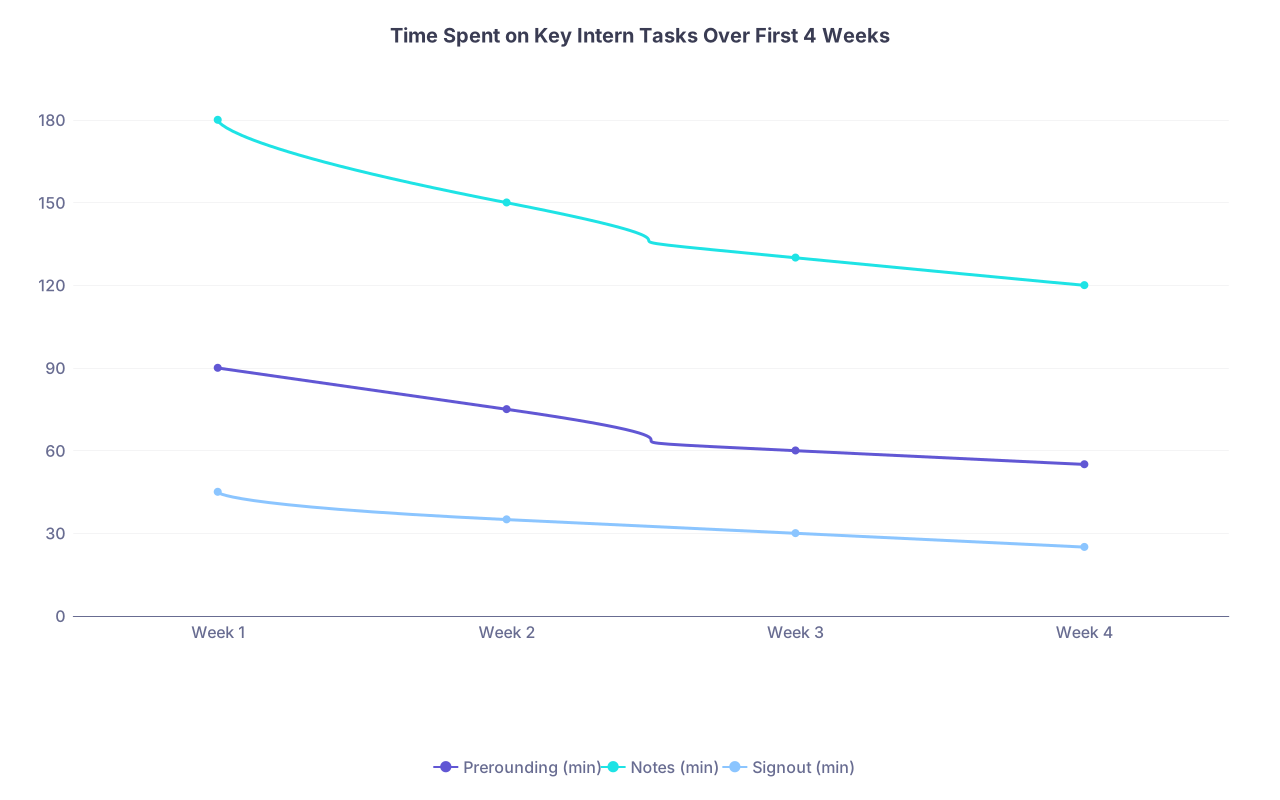
| Category | Prerounding (min) | Notes (min) | Signout (min) |
|---|---|---|---|
| Week 1 | 90 | 180 | 45 |
| Week 2 | 75 | 150 | 35 |
| Week 3 | 60 | 130 | 30 |
| Week 4 | 55 | 120 | 25 |
If you do this consistently, you should see those times dropping by the end of week 2—without cutting corners on safety.
Week 3 (Days 15–21): Control EMR, Inbox, and Cross-Cover
By week 3, the novelty is gone. Fatigue is real. This is where sustainable habits matter.
At this point you should be thinking, “How do I stop the EMR and pages from owning my entire brain?”

Day 15–18: Tame the EMR and Inbox
The EMR will happily steal every free second if you let it.
You need:
Fixed “inbox check” blocks:
- Example:
- Pre-round (quick scan)
- Post-round (deeper)
- Mid-afternoon
- Before signout
- Do not click every lab as it comes in unless it is for a crashing patient.
- Example:
Smart use of EMR tools:
- Build patient “favorites” panel.
- Use result “watch” features when available.
- Save common order sets (e.g., “CHF exacerbation,” “sepsis workup”).
-
- STAT pages → now.
- Nursing questions about plan → now or within 10 min.
- FYI or non-urgent results → next inbox block.
Write a tiny triage key on your badge card or notebook:
- S = stop everything
- U = urgent (10–15 min)
- R = routine (next block)
Day 19–21: Cross-Cover and Night Float Habits
Sooner or later, you will cover 30–60 patients at night. Your organization can either keep them safe or turn your shift into a disaster.
Before your first real cross-cover:
Build a “first pass” page script:
- “What is the patient’s primary issue?”
- “What are vitals now vs baseline?”
- “Any new symptoms?”
- “What has already been tried?”
- “Is this a rapid response candidate?”
Create a quick-note page log:
- Cheap notepad titled “Night pages”
- For each call:
- Time, patient name/MRN, one-line issue, action, follow-up needed
- Draw a box by any that need recheck later. Do not rely on memory.
Cross-cover signout filter:
- When you give signout before going off:
- Ask: “If something goes wrong, what will cross-cover wish they knew?”
- Remove fluff, add contingencies:
- Bad: “Renal following, creatinine up a bit.”
- Better: “AKI on CKD, Cr 2.5 from 1.8, if urine drops or K > 5.5, repeat BMP and call renal fellow.”
- When you give signout before going off:

| Step | Description |
|---|---|
| Step 1 | Receive Page |
| Step 2 | Check Vitals |
| Step 3 | Go See Patient Now |
| Step 4 | Review Chart |
| Step 5 | Consider Rapid Response |
| Step 6 | Simple Issue? |
| Step 7 | Give Orders |
| Step 8 | See Patient |
| Step 9 | Document Briefly |
| Step 10 | Reassess If Needed |
| Step 11 | Unstable? |
Run this mental flow each time until it becomes automatic.
Week 4 (Days 22–30): Stress-Test, Simplify, and Lock It In
By now you have systems. Some are clunky. Some are saving you. Week 4 is about brutal editing.
At this point you should be asking: “What can I remove? What can I automate? What will I actually maintain when I am exhausted?”

Day 22–26: Stress-Test Under Real Fatigue
Pick one heavy call or long day as your test.
During that day, notice:
- Where do tasks leak out of your system?
- When do you start using scrap paper again?
- What are you still keeping in your head?
After the shift (or next morning if you are destroyed), do a 15-minute debrief:
- Circle all tasks you almost missed.
- Ask:
- “Where should this have lived in my system?”
- “What single tweak would have caught it?”
Common fixes I have seen:
- Adding “check micro results” to the afternoon checklist.
- Having a dedicated “pending imaging” box per patient on the list.
- Creating a template sentence in signout for anticipated issues.
Simplify aggressively:
- One notebook, not three.
- One list format, not a new creative layout every week.
- One signout structure for each service.
If something feels clever but you never actually use it on a busy day, kill it.
Day 27–30: Lock in Routines and Backup Plans
End of the first month. Time to formalize the routines that will carry you through the year.
At this point you should be able to describe your typical day in structure, not just chaos.
Define your “Default Day Script”:
Write this out, literally, on a notebook page:
- 06:15–06:25 – Print list, update overnight events, draw task boxes
- 06:25–07:15 – Preround, update list only
- Rounds – Capture plans as problem-based tasks on list
- Post-rounds – Orders and consults block
- X:XX – Notes block with templates
- Mid-afternoon – Inbox check, “loose ends” pass
- Last 30 minutes – Signout update, re-scan list, safety checks
Then add three micro-checklists you will follow daily:
Morning pre-round checklist:
- New overnight labs reviewed
- New imaging read or prelim checked
- Overnight events from signout incorporated
- Sickest patients identified first
Post-round checklist:
- All new orders placed
- All consults ordered and paged
- Family updates identified and scheduled
- Discharge work started early (not at 3 PM)
End-of-day checklist:
- Unchecked task boxes either completed or clearly signed out
- Labs/imaging for tomorrow ordered
- High-risk patients with explicit overnight plans
- Personal life tasks (bills, groceries, etc.) added to non-clinical app
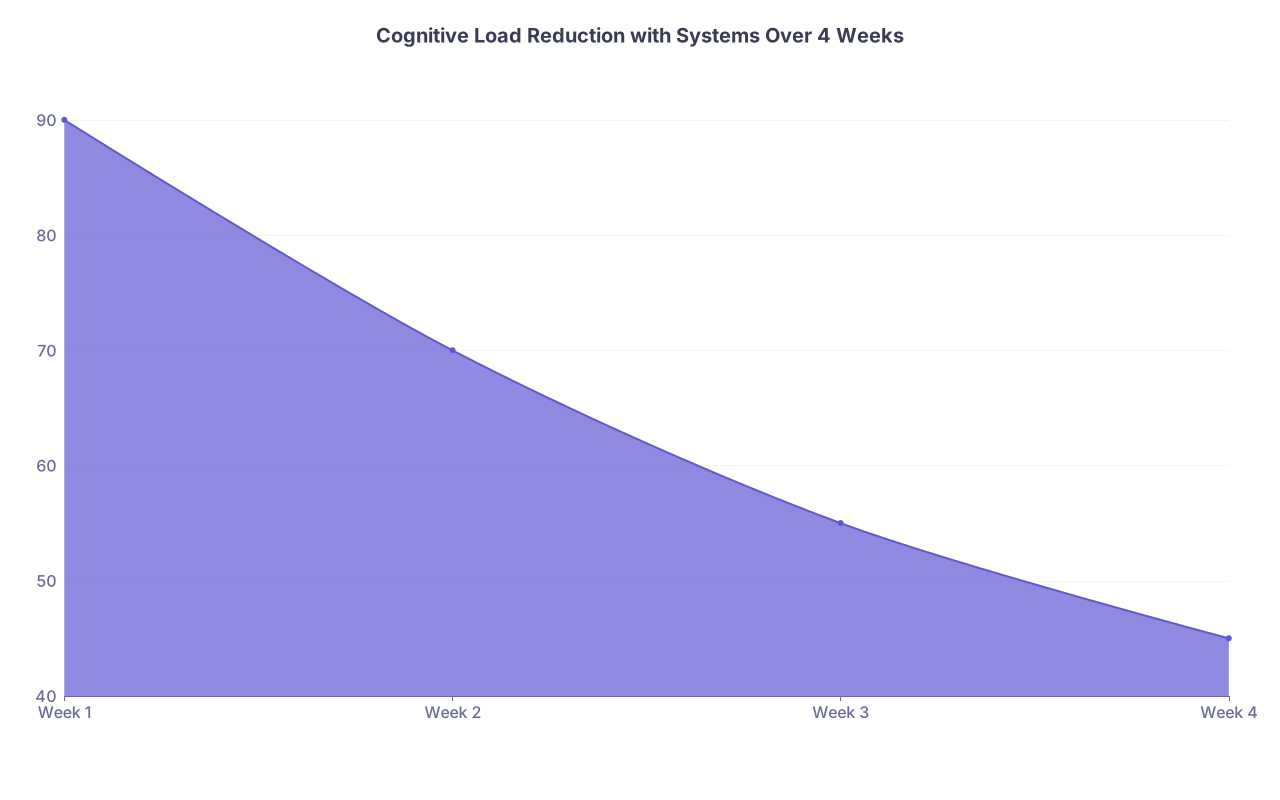
| Category | Value |
|---|---|
| Week 1 | 90 |
| Week 2 | 70 |
| Week 3 | 55 |
| Week 4 | 45 |
Think of that “cognitive load” score as: how much you are keeping in your head vs. in your system. You want it going down.
Final Thoughts: What Must Be True by Day 30
By the end of your first month as an intern:
You are using one consistent daily workflow.
Same tools, same rough schedule, same core checklists. No more reinventing your system every rotation.You write almost nothing “just to remember.”
Every repeated task lives somewhere specific: list, template, or checklist. Your brain is for clinical reasoning, not storage.Your signout and lists keep patients safe even on your worst day.
A tired cross-cover should be able to pick up your signout and know exactly what to worry about and what to do.
If those three are true by Day 30, you are not just surviving. You are building organization habits that will still be working for you as a senior, during fellowship, and frankly, for the rest of your career.