
The worst mistake with second looks isn’t doing too few. It’s doing too many and burning yourself out for almost zero gain.
You’re asking the right question: how many second look visits can you realistically do without wrecking your energy, your budget, or your interview performance?
Let me give you a clear framework.
The Short Answer: Most People Need 0–3 Second Looks
Here’s the blunt truth:
Most applicants should do between 0 and 3 second looks, max.
If you’re trying to hit 5, 7, 10+? You’re almost certainly overextending and wasting time, money, and mental bandwidth.
Use this as a quick rule of thumb:
- Competitive specialties (derm, ortho, plastics, ENT, neurosurgery):
1–3 targeted second looks at your very top realistic programs. - Moderately competitive (EM, anesthesia, OB/GYN, radiology, some IM subspecialties):
0–2 second looks, only if you truly need more info or are borderline for a program. - Less competitive programs or if your list is solid and you’re confident:
0 second looks is completely fine. You won’t tank your match chances by skipping them.
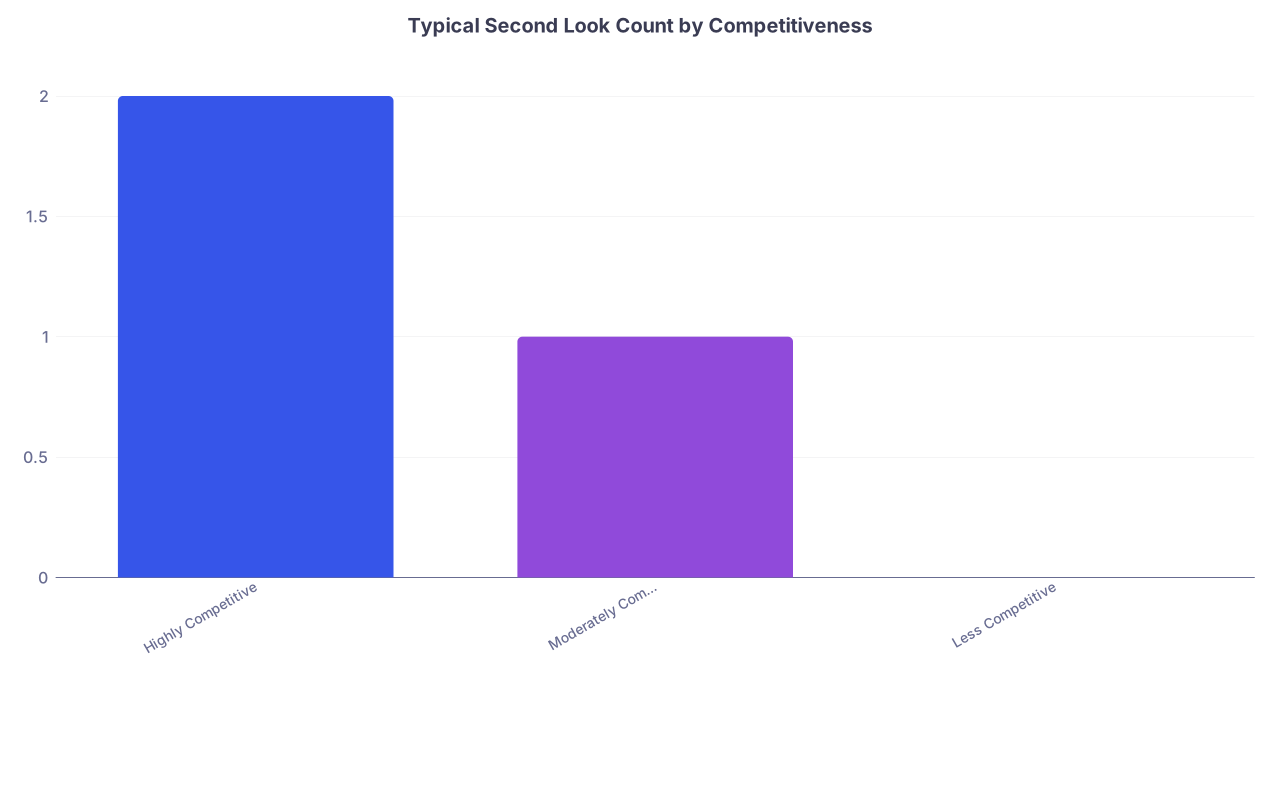
| Category | Value |
|---|---|
| Highly Competitive | 2 |
| Moderately Competitive | 1 |
| Less Competitive | 0 |
If you remember nothing else:
Second looks are optional, situational, and easy to overdo.
What Second Looks Actually Do (and Don’t Do)
Most people wildly overestimate the power of a second look.
Here’s what second looks can realistically do for you:
- Help you compare your top 2–3 programs in a clearer, real-world way
- Let you see day-to-day reality: how residents talk when faculty aren’t around, how late people stay, how the place feels
- Signal genuine interest at some programs that care about that (a minority, but they exist)
- Give you face time with residents and maybe a PD or APD, especially if something about your app is borderline and you want to show commitment
Here’s what they don’t do most of the time:
- They do not magically “save” a weak application
- They rarely bump you from bottom to top of the rank list
- They do not fix red flags or poor interview performance
- They do not guarantee you match at that program
I’ve watched applicants drag themselves through four second looks in two weeks, spend thousands on flights and hotels, and end up saying, “Honestly, my rank list didn’t change.”
That’s what you’re trying to avoid.
The Real Question: What’s Your Goal for Each Second Look?
If you can’t clearly answer, “What am I trying to accomplish by going back to this program?” — don’t go.
Your goals should be one or more of these:
Clarify fit between top programs
Example: You loved two IM programs but aren’t sure which to rank #1. A second look can break the tie.Get information you specifically missed
Example: You didn’t get to see ICU, or never talked to residents with kids, or need clarity about fellowship match.Show interest where it genuinely matters
Some smaller or community-heavy programs really do care about seeing that you’re serious about living in their city or joining their culture.Rebuild a shaky impression (this is rare and high-risk)
If an interview legitimately went off the rails and you have reason to think they’re still interested, a carefully planned second visit can help — but only if invited or clearly welcome.
If your reason is, “Everyone else in my class is doing second looks” or “I’m anxious and it feels like I should do something” — that’s not a good enough reason.

| Step | Description |
|---|---|
| Step 1 | Considering Second Look |
| Step 2 | Skip Second Look |
| Step 3 | Schedule 1 Day Visit |
| Step 4 | Top 3 Program? |
| Step 5 | Clear Goal? |
| Step 6 | Time Money Energy OK? |
When Too Many Second Looks Start Hurting You
Yes, there’s a real downside to overdoing this.
Here’s how overextending usually shows up:
- Money drain: Flights, hotels, Ubers, food. I’ve seen people blow $2–5k easily.
- Time drain: You’re still in med school. You’ve got rotations, exams, maybe even Step 2 or shelf clean-up.
- Burnout: Constant travel in Jan–Feb when you’re already mentally fried from interview season.
- Diminishing returns: By the 3rd or 4th second look, everything blurs together and you don’t remember who said what.
A simple sanity check:
If you’re:
- Missing required school stuff
- Asking classmates to cover your call repeatedly
- Stressing about your credit card balance
- Or you notice you’re cranky and exhausted instead of curious and observant
…you’ve probably hit your limit. For most people, that happens at 2–3 visits, max.

How to Pick Which Programs Deserve a Second Look
You should be ruthless about this. Not every place that interviewed you deserves a revisit.
Rank programs by these three filters:
Realistic match potential
Ones where:- Interview felt solid
- You’re not massively under their usual Step scores/grades
- Specialty competitiveness lines up with your app
True top-of-list potential
Programs that could realistically end up in your top 3–5 on your final rank list.Unanswered questions or unclear vibes
- You’re torn about culture, workload, or location
- You left interview day with a “maybe” instead of a “hell yes” or “nope”
Here’s what that looks like in practice:
| Program Type | Good Second Look Candidate? | Why / Why Not |
|---|---|---|
| Dream program, good interview | Yes | Could be #1, worth deeper look |
| Mid-tier, lukewarm on location | Maybe | Only if you might rank it top 3–5 |
| Safety program, low on list | No | Won't change rank meaningfully |
| Long shot, weak interview | No | Second look won't rescue this |
| Program you already love as #1 | Optional | Go only if you truly want more data |
Notice the pattern: Second looks are for your true contenders, not your entire interview list.
How Long Should a Second Look Be?
You don’t need an entire week. Or even multiple days.
For most people, 1 full day is ideal.
That typically includes:
- Morning conference
- Rounds or clinic with a resident or team
- Lunch with residents (formal or informal)
- Quick meeting with PD/APD if offered or appropriate
- Some time just watching the vibe in work rooms, lounges, call rooms, etc.
More than 1–2 days is rarely useful. It starts to feel like a sub-internship with none of the credit and all of the fatigue.
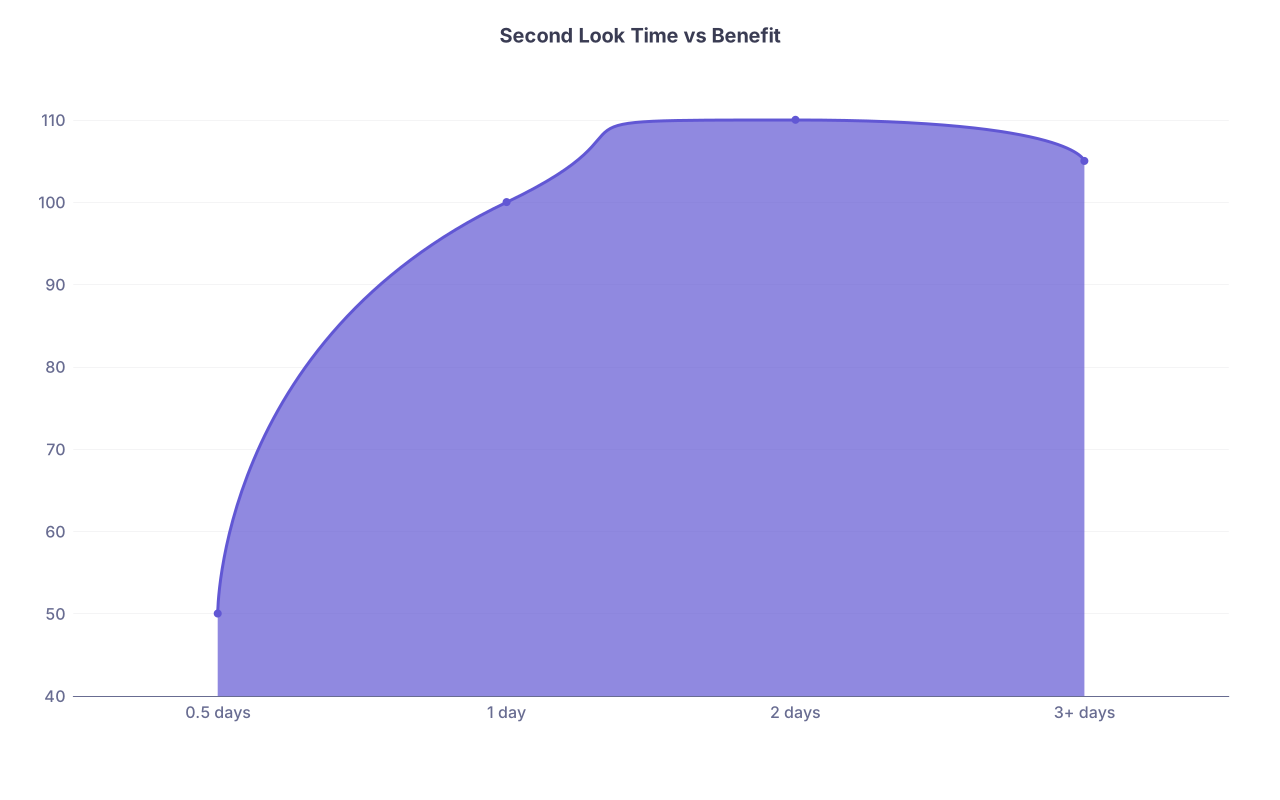
| Category | Value |
|---|---|
| 0.5 days | 50 |
| 1 day | 100 |
| 2 days | 110 |
| 3+ days | 105 |
You can see the idea: huge jump in usefulness from half day to one full day. After that, it levels off.
How Many Second Looks Before You’re “Overextending”?
Let’s translate all this into a practical cap.
Here’s where I’d draw the line for most applicants:
- 1–2 programs: Ideal for almost everyone
- 3 programs: Reasonable upper limit if:
- You’re applying to a highly competitive specialty
- You have genuine uncertainty between several top programs
- You’re not stretching finances or burning out
Once you cross 3 second looks, the risk of overextending goes up fast:
- You’re likely repeating the same questions
- Programs start to blend together in your memory
- Fatigue makes you less observant and less engaged
- Cost jumps significantly, especially with flights
Unless you have an extremely niche, location-constrained situation (e.g., dual-career constraints, kids in school, visa issues), you almost never need more than 3.

How to Get the Most Out of Each Second Look (Without Doing More)
If you keep the total number low, you need to make each one count.
Three things that actually matter:
Prepare specific questions
Dump the generic stuff (“Is your program supportive?”). Instead:- “How often do you stay past your scheduled end time on this rotation?”
- “How easy is it to switch from prelim to categorical here?”
- “How many residents went into [fellowship] in the last 5 years?”
Talk to the right people
Prioritize:- PGY-2 and PGY-3 residents who actually work the tough rotations
- Residents with similar life situations to yours (partners, kids, distance, visas, etc.)
- A chief or APD if offered — you don’t need to stalk them
Take notes immediately after
Right after you leave, sit in a coffee shop or your car and write:- 3 things you liked
- 3 things that worried you
- 1 gut-level sentence: “Feels like a top choice / middle / backup”
Those notes will be gold when you’re staring at your rank list later and everything is blurring together.
A Quick Reality Check: Programs vs You
One last thing people don’t like to admit:
Second looks help you more than they help programs.
Most programs:
- Already formed their main impression of you on interview day
- May not change your rank spot much (or at all) after a second look
- Won’t punish you for not doing a second look
So your question shouldn’t be, “How many second looks do programs expect?”
It should be, “How many second looks help me decide where I actually want to train — without wrecking me in the process?”
For most, the honest answer is: 0–3. Not more.

FAQ: Second Looks Without Overextending
1. Will I hurt my chances if I don’t do any second looks?
No. The vast majority of applicants don’t do second looks and match just fine. Programs know second looks cost time and money. Your interview performance, letters, and application matter far more than whether you showed up again. Second looks are a nice-to-have for your own decision-making, not a core requirement.
2. Should I tell a program I’m coming for a second look, or just show up?
Tell them. Email the coordinator or the contact from your interview invitation. Say you’d like to visit for a second look, give 2–3 date options, and ask what’s reasonable to attend (rounds, conference, etc.). Some programs even have formal second look days. Don’t just wander in; that makes logistics awkward and can backfire.
3. Do virtual “second looks” count or help?
They can help you but they usually don’t move your rank position. A virtual Q&A with residents or a quick Zoom with the PD can clarify questions and give you a sense of vibe. If travel is impossible, a virtual second look is perfectly reasonable and programs understand that reality.
4. Should I second look at a program I already know is my #1?
Only if you feel uneasy about something or want to confirm that gut feeling. If you’re already 100% sure, you don’t need a second look. That said, some people like going back to visualize their future life there. Just don’t pretend it’s “strategic” if it’s really about reassurance. Own that.
5. What if my classmates are doing 5–6 second looks and I’m only doing 1–2?
Let them. Over-application and over-visiting is a cultural disease in medicine right now. It doesn’t mean it’s smart. If you’ve picked your programs thoughtfully, asked targeted questions, and preserved your energy, you’re actually playing this better. Judge your strategy by how clear and calm you feel about your rank list, not by how many flights you booked.
Open your interview list right now and circle the 2–3 programs that could truly end up in your top choices and where you still have real questions. Those are your only candidates for second looks. Everything else? Cross off and stop worrying about it.