
The worst thing you can do during second looks is spray “you’re my top choice!” at every program and think you’re being strategic. You’re not. You’re burning credibility.
Here’s the actual answer: you should only tell a program they’re your true top choice if three things are all true:
- it’s honestly your number one,
- you’d rank them first no matter what, and
- you’re ready for your behavior to match that statement.
If any of those are shaky, don’t say it.
Let’s break down how this works, what’s ethical, what helps, and what quietly hurts you.
The core question: should you say “you’re my top choice”?
Short version:
- Yes – if they are truly, unequivocally your #1 and you’re comfortable committing.
- No – if they’re anywhere from #2 to #10, or you’re “pretty sure,” or you’re hedging.
Residency Match rules (NRMP) say programs and applicants can express interest but can’t demand or rely on promises about ranking. No one is supposed to change their rank list based on verbal commitments. Real life is messier: people absolutely remember who told them “you’re my top choice.”
So you need to think about two layers:
- Ethical and rule‑compliant: You can say “I will rank you highly,” “You’re at the very top of my list,” “I’d be thrilled to match here.” All of that is allowed. What’s not allowed is programs pressuring you for your rank, or you treating your email as a contract.
- Reputation and credibility: Faculty talk. Coordinators talk. If you tell three different PDs they’re your #1 and that somehow surfaces, you look untrustworthy. That can hurt now, and absolutely can hurt later for fellowship, jobs, or letters.
So if you use the phrase “top choice,” treat it like a limited resource. Once. Maybe twice ever in your career.
What programs actually care about during second looks
Second looks aren’t primarily about your verbal declarations. They’re about:
- Fit: Do you mesh with the residents? Do they like you?
- Professionalism: Are you respectful, engaged, and not weirdly intense or entitled?
- Interest: Are you genuinely curious about the program or just checking a box?
- Maturity: Are your questions and interactions at a resident level, not pre‑med tour level?
No PD is sitting there with a tally: “said top choice: +10 points.” They care far more about the vibe residents give them:
- “That applicant seemed really cool and asked good questions.”
- “They were on their phone all day and left early.”
So if you’re trying to impress them, this is the order of operations:
- Show up prepared and present.
- Ask thoughtful, specific questions.
- Be normal and kind to everyone, especially residents and staff.
- If they’re truly your #1, then consider saying so once you’ve confirmed that after the visit.
Your “top choice” line is seasoning, not the main dish.
How to express strong interest without overcommitting
There’s a big middle ground between “you’re my #1” and saying nothing.
If you like a program a lot but aren’t ready to crown them yet, use language that’s:
- Honest
- Positive
- Non‑binding
Phrases that work well:
- “You’re one of the very top programs on my list.”
- “I’d be genuinely thrilled to match here.”
- “After today, I can clearly see myself training here.”
- “This visit confirmed that your program is an excellent fit for what I’m looking for.”
None of those are lies if they’re in your top tier. And they signal interest clearly.
What to avoid if they’re not your clear #1:
- “You’re my top choice.”
- “I’ll rank you first.”
- “This is my dream program” if you’ve already told 4 others the exact same thing.
If you want to be really straightforward and ethically clean, do this:
- Reserve “I will rank you #1” / “You are my top choice” for one program only.
- Use “very highly,” “top tier,” “excellent fit” language for genuine contenders.
- Skip overly effusive language for programs you know will end up in your middle or lower list.
Exact scripts: what to say (and when)
Here’s what you’re really looking for—practical phrases.
If this is your true #1 after your second look
Say this in person to the PD or associate PD if you get a natural moment (end of the day, during a one‑on‑one, or after a Q&A):
“Thank you again for the opportunity to visit. I want to be transparent: after seeing more of the program, I’ve decided your program will be my top choice and I plan to rank you first.”
Follow up with a short email within a few days:
Subject: Thank you for the second look
Dear Dr. [Last Name],
Thank you again for welcoming me back for a second look. The chance to see the residents on service and hear more about [specific feature] really solidified how strong a fit this program is for me.
I want to share that your program is my top choice, and I plan to rank [Program Name] first on my list. Regardless of the outcome, I’m grateful for the opportunity to have interviewed and visited.
Sincerely,
[Your Name], [AAMC/ERAS ID if you want]
That’s clear, honest, and leaves no weird wiggle‑room.
If this is one of your top programs, but not clearly #1
In person:
“I’ve really been impressed with what I’ve seen here. Your residents seem genuinely supported, and the [X feature] stands out compared with other programs I’ve seen. This is absolutely one of the top programs on my list.”
Email:
“My visit confirmed that [Program Name] is one of the top programs on my list, and I’d be very excited to train here.”
You’re signaling strong interest without making a promise you might break.
If you realize during the second look they’ve dropped for you
You don’t need to fake enthusiasm. Be polite, engaged, and stop there.
In person (closing comment):
“Thank you again for hosting us today. I appreciate the chance to learn more and meet your residents.”
Email:
“Thank you again for the opportunity to interview and attend the second look. I enjoyed meeting your residents and seeing more of the program.”
That’s it. No lying, no theatrics.
Common traps that hurt applicants
I’ve watched people torpedo their credibility with “top choice” talk. Here’s where they go wrong.
1. Telling multiple programs they’re #1
Programs do talk. PDs cross paths at conferences, residents have friends at other institutions, coordinators share war stories. It doesn’t take much for:
- “Applicant told us we were their top choice”
to collide with - “That’s weird, they told us that too.”
Does that always happen? No. But if it does, you look dishonest. And people don’t forget that.
2. Over‑the‑top flattery
An email full of breathless praise reads fake:
“This is my absolute dream program, I’ve wanted to be here since I was a child, I’ve never seen such perfection…”
You think you sound passionate. You sound like you copy‑pasted the same thing to 20 places.
Better: specific, grounded comments.
- “Your night float structure and senior support stood out to me compared with other programs.”
- “The longitudinal clinic model is exactly what I’m looking for.”
- “The way your residents talked about autonomy felt very genuine.”
Specific = believable. Vague = generic noise.
3. Making promises you don’t intend to keep
Your rank list is private and protected. NRMP doesn’t “check” whether your email matched your list. But you have to live with your own integrity.
If you say “I will rank you first,” then don’t, your brain will remember that line the day you’re asking them for a fellowship letter or job contact. Not worth it.
Stick to commitments you actually plan to follow.
How much does “you’re my top choice” really matter?
Here’s the part nobody tells you clearly: your statement might help at the margin, but it doesn’t magically fix weaker parts of your app.
Programs rank based on:
- Interview performance
- Letters and application strength
- Perceived fit
- Resident feedback
Your “top choice” line is a soft signal. It can:
- Bump you slightly up if you’re in their middle tier and they have room to weigh interest
- Reinforce a good impression they already had
- Help them feel less worried you’ll leave for another program if you have a stellar app
It won’t:
- Move you from “probably not ranking” to “highly ranked”
- Overcome glaring professionalism issues
- Fix mediocre interview performance
So use it to nudge, not to rescue.
Should you ever say nothing about interest?
Yes. If you’re lukewarm on a program or know they’ll be low on your list, you don’t need to fake strong interest. Show respect. Participate. Ask basic questions. Then walk away.
You don’t get extra credit for pretending a program is your soulmate.
That said, silence across the board (no thank‑you notes, no follow‑up anywhere) can look a little indifferent if many of your peers are sending thoughtful, brief thank‑yous. You don’t have to gush, but one concise email per program you care about is a reasonable standard.
Quick comparison: ways to signal interest
| Approach | Strength of Signal | Risk if Misused |
|---|---|---|
| “You are my top choice” | Very strong | High (credibility) |
| “One of my top programs” | Strong | Low |
| Specific, tailored thank‑you | Moderate | Very low |
| Generic thank‑you to everyone | Weak | Looks insincere |
| No follow‑up at all | None | Neutral to slight - |
Where second looks really matter more than words
Second looks are less about what you say to leadership and more about the data you gather for yourself:
- Do the residents look burned out or generally okay?
- How do they talk about leadership when leadership isn’t around?
- How is the vibe on busy services vs. interview day fluff?
- Are there certain rotations where everyone visibly tenses up when they’re mentioned?
If you spend all your time plotting the perfect “top choice” speech and not actually observing, you’re doing this backwards. Your rank list should be based on reality, not your desire to be wanted.
Visual: how applicants typically signal interest
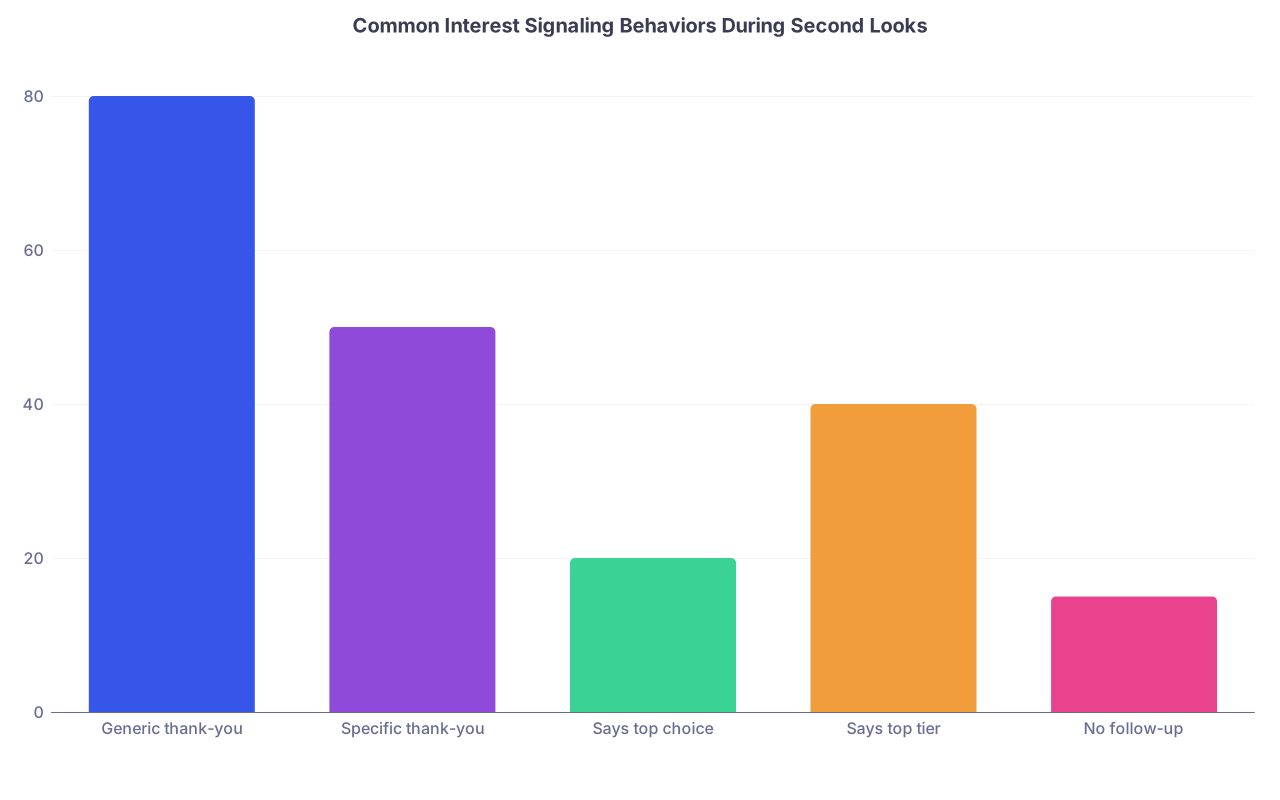
| Category | Value |
|---|---|
| Generic thank-you | 80 |
| Specific thank-you | 50 |
| Says top choice | 20 |
| Says top tier | 40 |
| No follow-up | 15 |
(Percentages here are illustrative, but the pattern is real: more people send generic notes than thoughtful, specific ones.)
Final advice: what I’d tell my own mentee
If you were my mentee, here’s the plan I’d give you:
- Make your rank list based on actual fit, training quality, and your life, not on who you “promised” or who flattered you the most.
- Pick one program that’s truly your #1. Tell them clearly and honestly that you’ll rank them first, in person if possible, and by email.
- For other top programs, send brief, specific messages that show real interest without pretending they’re #1.
- Don’t lie. Ever. This field is smaller than you think, and reputations last.
If something in your gut feels off about saying “you’re my top choice,” that’s your answer. Don’t say it.
FAQ (exactly 5 questions)
1. Is it against NRMP rules to tell a program they’re my top choice?
No. You’re allowed to express your interest and even say you plan to rank a program first. What’s not allowed is programs (or you) treating those statements as binding or pressuring the other side based on them. Rank lists are private and should be made independently, regardless of what’s said.
2. Should I tell a program they’re my top choice if I’m between two places?
No. If you’re legitimately torn, don’t commit verbally. Use “top tier” or “one of my top programs” language for both while you think. Once you’ve actually decided on a single #1 in your own head and on paper, then you can consider telling them they’re your top choice.
3. Do I need to tell any program they’re my top choice to match well?
Absolutely not. Plenty of people match at their #1 without ever using that phrase. Your application strength, interview performance, and fit matter far more than one line in an email. Interest signals can help a little at the margins, but they’re not required to succeed.
4. What if a PD directly asks where I’ll rank them during a second look?
You’re not required to answer with specifics. A safe, honest response: “I’m still finalizing my list, but your program is definitely among my top choices, and I’m very interested.” That respects the rules and doesn’t lock you into a promise you might not keep.
5. Should I send multiple follow‑up emails reminding a program they’re my top choice?
No. One clear message is enough. Repeated emails don’t increase your chances; they just risk making you look anxious or pushy. Say it once, say it clearly, and then focus on building a rational rank list based on where you actually want to train.
Key points to walk away with:
- Only say “you’re my top choice” if it’s 100% true and you’re ready to back it up with your rank list.
- Use honest, specific, non‑binding language to express strong interest at other programs.
- Protect your credibility; in medicine, your word is part of your professional capital.