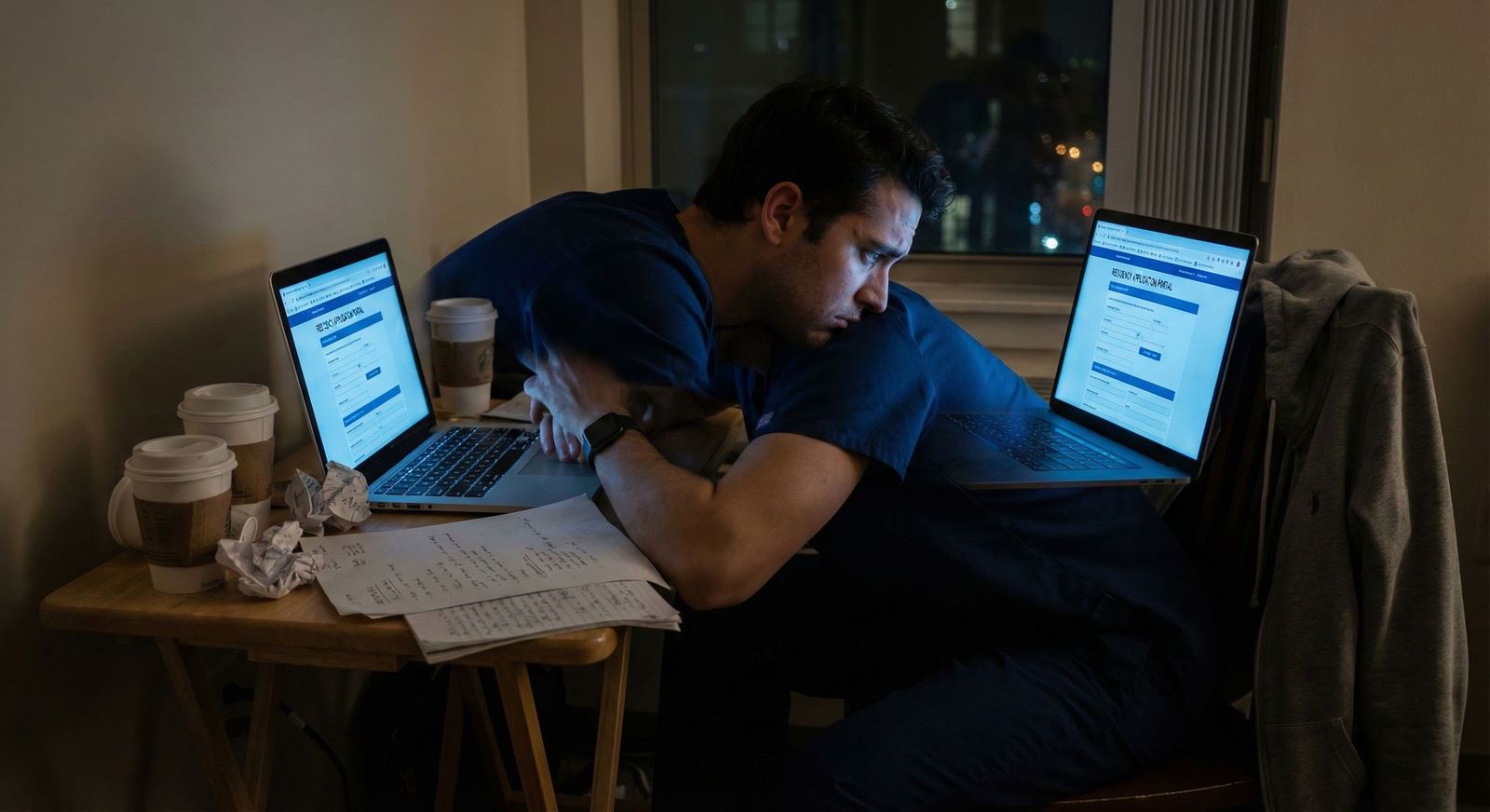
The harsh truth: if your home institution has zero open spots in SOAP, you’ve just lost your biggest built‑in safety net.
You do not have automatic advocates in the room. You don’t have the easy “we know this student, just grab them” pathway. That means you can’t play SOAP on “easy mode.” You have to be deliberate, fast, and ruthless about strategy.
Let’s walk through exactly what to do, step by step, if you’re entering SOAP and your home program(s) have no openings.
1. Understand What You’ve Lost — And What You Haven’t
Home institution positions during SOAP are powerful because:
- Faculty already know you.
- GME can quickly say, “We’ve worked with them, they’re solid.”
- You may get prioritized over unknown applicants with similar stats.
When there are zero home openings, you’re missing:
- An automatic “warm” program to target.
- Faculty who can say, “We’ll try to get you in here if something opens.”
- An easy “if all else fails, we’ll keep you” pathway.
But you still have:
- Your dean’s office and Student Affairs.
- Letters from faculty at your home place and away rotations.
- Any external programs where you rotated, researched, or have connections.
- Your ability to reframe your narrative in your SOAP materials.
So instead of leaning on geography and familiarity, you’ll lean on:
- Speed.
- Breadth.
- Strategy.
- Relationships outside your home.
2. Before SOAP Starts: Get Your House in Order
If you’re reading this before SOAP week and you suspect you might not match, you have a small but critical window. Use it.
Clarify your realistic targets
Be brutally honest. If you’re applying IM with poor Step 2, weak clinical comments, or red flags, you are not fighting for the same spots as a 260/strong applicant.
Make a quick self‑assessment of competitiveness:
| Factor | Strong | Medium | Weak |
|---|---|---|---|
| USMLE/COMLEX | > 240 / 600 | 220–240 | < 220 |
| Clerkship evals | Honors/HP heavy | Mixed | Many passes/concerns |
| Red flags | None | Minor issues | Failures/remediation |
Know which column you mostly fall into. Don’t romanticize it. This determines how wide you cast your net.
Meet with your dean’s office / Student Affairs
You don’t have home spots. You still have home advocates. Use them.
Ask them directly:
- “When the SOAP list comes out, who is going to help me triage and select programs?”
- “Who will be available on Monday to review my updated personal statement and strategy?”
- “Can you tell me which program directors you personally know in my specialty or backup specialties?”
- “If needed, will you call or email PDs on my behalf during SOAP?”
If their answer is vague, press (politely) for specifics:
- Names of PDs they know.
- Which hospitals your grads commonly match into.
- Whether they’re willing to send a short advocacy email.
You can’t get them to invent home spots. But you can get them to unlock external doors.
Prepare a SOAP‑specific personal statement
You want a version that:
- Explicitly addresses why you’re interested in that specialty (or a related backup).
- Acknowledges your growth and maturity, without sounding like an apology letter.
- Is short and specific. 3–4 paragraphs max.
You’ll probably need two flavors:
- Primary specialty SOAP PS (e.g., FM, IM, Psych).
- Backup specialty SOAP PS (e.g., Prelim Medicine, Prelim Surgery, Transitional Year).
Have both ready to edit quickly once you see which programs are unfilled.
3. When the Unfilled List Drops: First 1–2 Hours
This window is everything. You don’t have home spots to default to, so your targeting has to be smart and fast.
Step 1: Immediately categorize programs
With Student Affairs if possible, or a trusted mentor, rapidly chunk the unfilled programs into:
- Core target – reasonable long‑shot but not insane given your profile.
- Stretch – slightly out of your league but maybe worth a few applications.
- Safety / high‑volume – programs that historically take more SOAP applicants, community‑heavy, or in less desired locations.
You’re not choosing by prestige now. You’re choosing by probability.
Look for:
- Community or regional hospitals.
- Programs outside major coastal cities.
- Places with a track record of taking IMGs, DOs, or lower Step scores (if that fits you).
- Programs affiliated with other schools where your dean might know someone.
Step 2: Consider whether to pivot specialties
This is where most people panic and either:
- Pivot to something totally inappropriate for their credentials, or
- Refuse to pivot at all and end up unmatched.
General rule of thumb in SOAP if you have no home safety net:
- If you’re borderline in your specialty and there are very few unfilled categorical spots → you probably need to include prelim / backup specialties.
- If your scores/red flags are significant and your specialty is moderately competitive → you should heavily include prelims, FM, IM, Psych, or categorical back‑ups where possible.
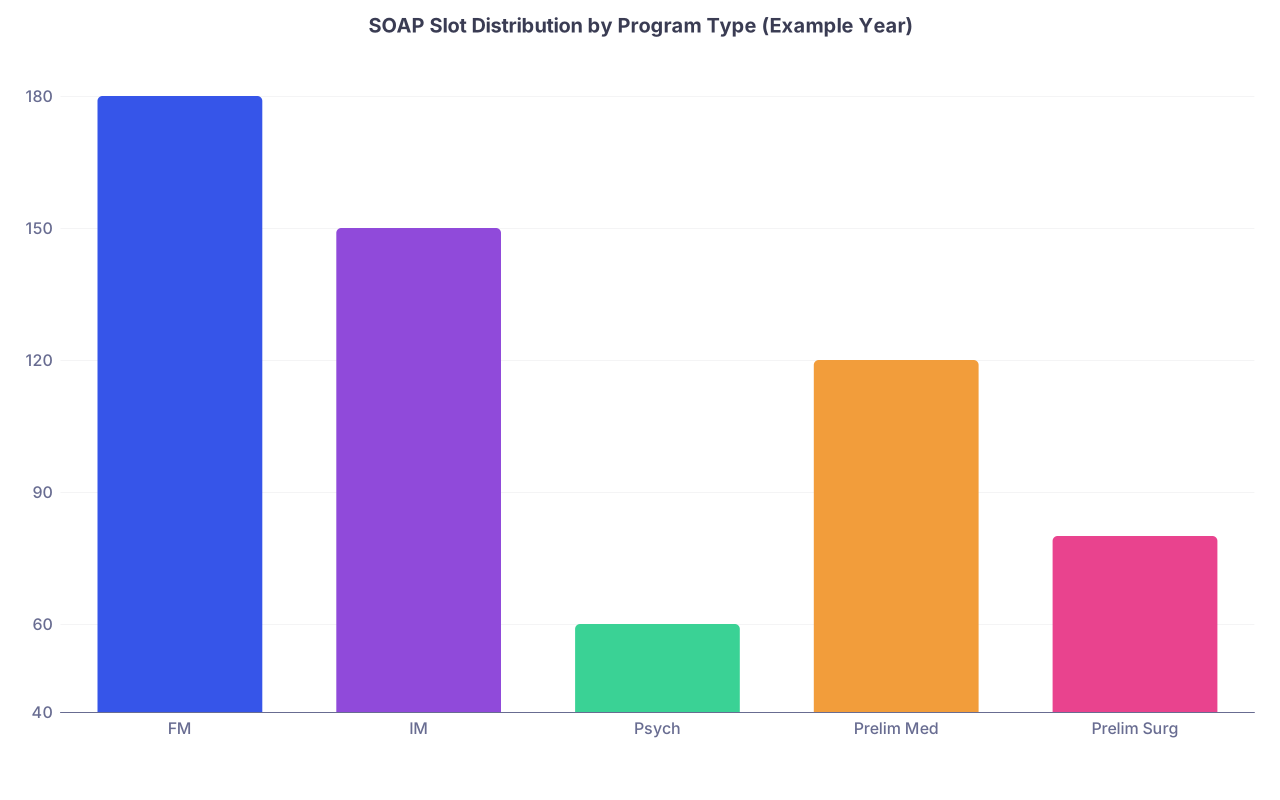
| Category | Value |
|---|---|
| FM | 180 |
| IM | 150 |
| Psych | 60 |
| Prelim Med | 120 |
| Prelim Surg | 80 |
Your goal for SOAP is one year of training in something at a minimum. Categorical if you can, prelim/TY if you must.
4. You Don’t Have Home Spots — So Manufacture “Almost Home” Programs
No openings at your school. You compensate by identifying whatever is closest to home in terms of familiarity or connection.
Think in this exact order:
Places you’ve rotated (aways, sub‑Is):
- These are your next‑best “home” programs.
- Email the attending or chief you worked closely with:
“I’m in SOAP and your program has openings. Would you be willing to let the PD know I’m very interested and would love to be considered?” - Ask Student Affairs if they’ll send a quick note to that PD as well.
Places where faculty know someone:
- “Dr. X, I see [Hospital Y] has SOAP IM spots. Do you know anyone there?”
- If yes: ask explicitly for a short advocacy message:
“Would you be willing to send them a brief email today mentioning me by name?”
Hospitals that commonly take grads from your school:
- Your match list from prior years will show patterns.
- Even if you never rotated there, PDs sometimes trust feeder schools.
You’re trying to create 3–5 programs where you are not just “cold paper,” even if you’ve never set foot there.
5. Application Strategy When You Have No Home Cushion
You usually get up to 45 SOAP applications total. Most people waste them by chasing dream programs that have no reason to look twice.
You can’t afford that.
General breakdown I’ve seen work for students like you
Assuming you need to maximize chances, not prestige:
- 5–10: Places where you have some connection (former rotation, faculty linkage).
- 20–25: Realistic community programs in your specialty or backup.
- 10–15: Prelim Medicine/Surgery or TY spots to secure at least a year.
If you’re very weak in your chosen specialty (e.g., you failed Step 1, had remediation, or poor clinical evals), shift more toward prelim/TY and the least competitive categorical options (FM, IM, Psych).
Do not throw 30 apps at top university programs spread across major cities just because they have unfilled slots. Unfilled ≠ easy. Sometimes they’re unfilled for reasons that don’t help you (late expansion, dual‑board weirdness, etc.).
6. Fixing Your Application On the Fly
You have a narrow chance to improve your ERAS profile for SOAP only. Use it.
Update your personal statement per group
Example structure for a SOAP PS without home spot advantage:
Paragraph 1 – Direct and honest
“Not matching was painful. But the last year of rotations, especially my time on X and Y services, convinced me that I want to build my career in [specialty]. The reasons are concrete: [detail, patient story, role you loved].”
Paragraph 2 – Show evidence you function well clinically
“I consistently handle high patient loads, write clear notes, and I’ve been trusted to run sign‑out under supervision. Evaluations highlight [X, Y strengths].”
Paragraph 3 – Address weaknesses if needed
“Earlier in my training I struggled with [Step 1, time management, etc.]. Since then I’ve [briefly explain remediation, improvement, and recent strong performance].”
Paragraph 4 – Why programs should take a risk on you
“As a SOAP candidate, I know I have to earn any opportunity I’m given. I’m prepared to show up as a hard‑working intern who takes feedback seriously and supports the team.”
You’re not selling perfection. You’re selling reliability and growth.
Tighten your experiences and CV
- Make sure your most clinically relevant experiences are moved to the top.
- If you have updated evaluations, letters, or new responsibilities, check whether your school can help push a short update to programs (some schools do “Dean update” letters for SOAP).
7. Interview Tactics When Nobody “Knows You”
If home had spots, you’d walk into SOAP interviews already somewhat known. You don’t have that. So you compensate with:
- Clarity.
- Humility.
- Evidence.
When they ask: “Why do you think you didn’t match?”
Do not:
- Blame other people.
- Give a 10‑minute monologue.
- Pretend you have no idea when you clearly do.
Do:
- Own the most plausible reason.
- Pair it with what you changed.
Example:
“I overestimated how competitive I was for [specialty] and underapplied to safety programs. My Step 2 was also slightly below average. Since then I’ve focused on showing consistent strong clinical performance and I’ve received strong feedback on my sub‑I and wards rotations. I think I’d be a very solid intern if given the chance.”
When they ask: “Why our program?”
Do your homework. Without home‑field advantage, you have to show you’re not just shotgun‑applying.
You might say:
“I specifically targeted community‑focused programs with strong inpatient training. I like that your residents manage a high‑acuity census and have early responsibility with attending support. Also, your program history of training DOs and IMGs tells me you value work ethic and growth, not just test scores.”
Make them feel chosen, even in SOAP.
8. Manage the Emotional Side Without Letting It Ruin Your Chances
Here’s what I’ve actually seen tank otherwise decent SOAP candidates:
- Desperation in emails: “Please, I’ll do anything, just give me a chance.”
- Anger on the phone with coordinators.
- Long, self‑pitying explanations in interviews.
You’re allowed to be wrecked internally. Just don’t bleed that all over your professional interactions.
Keep all communication:
- Short.
- Clear.
- Respectful.
Example advocacy email to send through a faculty member:
“Dr. Smith, I saw that [Hospital A] has SOAP openings in IM. I’m very interested in their program because of [1–2 specific reasons]. If you feel comfortable doing so, I’d be grateful if you could forward my name or a brief note of support to their PD. Thank you for considering this.”
That’s it. Not a four‑page life story.
9. If SOAP Fails: Do Not Pretend This Didn’t Happen
There’s a non‑zero chance you go through all 4 SOAP rounds and still don’t get a spot. That outcome is brutal, especially with no home plan B.
If that happens, you need a post‑SOAP plan within 1–2 weeks, not three months later.

| Step | Description |
|---|---|
| Step 1 | Unmatched after SOAP |
| Step 2 | Strengthen app 6-12 months |
| Step 3 | Choose new specialty |
| Step 4 | Research, prelim, or observership |
| Step 5 | Reapply next cycle |
| Step 6 | Want same specialty |
Realistic next steps:
- Meet again with Student Affairs with brutal honesty.
- “If I aim for [specialty] again, what specifically has to change?”
- “Is there a backup specialty where my profile is much more realistic?”
- Look at:
- Research positions, especially with strong clinical exposure.
- Non‑ACGME fellowships or prelim spots off‑cycle (yes, they exist).
- Paid clinical roles (scribe, hospitalist extender) that keep you in the ecosystem.
- Fix your biggest deficit:
- Retake Step/COMLEX if possible and appropriate.
- Gain U.S. clinical experience if you’re an IMG.
- Address professionalism issues if there were any.
What you do immediately after SOAP often matters more than what you did the 6 months before.
10. Concrete Priority List For Your Situation
You’re in SOAP. Your home institution has no open spots. Here is your no‑nonsense priority list:
- Sit down with your dean/Student Affairs the same day the unfilled list drops.
- Identify:
- Programs with any connection to you (aways, faculty ties, alumni).
- Realistic community programs in primary/backup specialties.
- Decide whether you are:
- Going all‑in on one specialty, or
- Splitting between that and prelim/TY.
- Draft or tweak 1–2 SOAP‑specific personal statements within a few hours.
- Submit applications early in the first SOAP application window.
- Reach out via faculty to 3–5 programs where you have any chance of “warm” advocacy.
- Prepare tight, honest answers to:
- “Why didn’t you match?”
- “Why our program?”
- “What did you learn from this?”
- During interviews, project:
- Stability.
- Teachability.
- Willingness to work hard, without ego drama.
- If no offer by the final SOAP round, immediately plan a 6–12 month rebuild with your dean’s office.
That’s the playbook when your home institution can’t save you.

FAQs
1. Should I still apply to my home program’s specialty at other institutions even if my own program has no spots?
Yes. The absence of home positions doesn’t mean the entire specialty is closed to you. You should still apply to other programs in that specialty if your profile is at least moderately competitive. But without home spots, you must be more aggressive about including realistic community programs and considering prelim or backup specialties.
2. Is it worth emailing programs directly during SOAP if I have no prior connection?
Cold emails from applicants during SOAP rarely change anything and can irritate busy coordinators. Your energy is better spent asking faculty or your dean to contact programs where they have actual relationships. If you do email on your own, keep it very short, professional, and do it only for a handful of highly targeted programs.
3. How many SOAP applications should go to prelim or transitional year positions?
If you’re at significant risk of going unmatched (weak scores, red flags, or very few categorical spots in your specialty), I’d generally put at least one‑third to one‑half of your SOAP applications into prelim/TY positions. Your goal is to secure some accredited training year; this keeps you in the system and makes you more competitive next cycle.
4. What do I tell my home faculty who ask what happened if I don’t match through SOAP?
Be straightforward but contained. For example: “I went through SOAP but unfortunately did not receive an offer. I’m meeting with Student Affairs to plan the next year so I can strengthen my application. If you have any advice or know of clinical or research roles, I’d really appreciate your guidance.” You’re showing maturity, not excuses.
5. If my home institution opens a spot late (after SOAP), can they still take me?
Occasionally, a late vacancy appears after SOAP closes. Filling that usually involves off‑cycle hiring, GME approval, and sometimes NRMP rules. It’s not simple, but it happens. Stay in polite, periodic contact with your dean and key faculty. Let them know you’re very interested if any late PGY‑1 positions open locally, but don’t bet your entire future on this. Plan as if it will not happen.
Key points:
- No home spots means you must manufacture “warm” programs through away rotations, faculty connections, and realistic targeting.
- Use SOAP applications strategically—prioritize probability, not prestige, and seriously consider prelim/TY positions if your specialty prospects are weak.
- Whether you match in SOAP or not, your follow‑through—in communication, professionalism, and next‑year planning—will define your trajectory more than this single bad week.