
You’re sitting in front of your laptop on Monday of SOAP week. The unmatched email is still sitting in your inbox. You’ve got maybe 1–2 interviews from the regular season, nothing solid, and now ERAS is telling you: “You may apply to up to 45 SOAP programs.”
And the question screaming in your head is:
How many SOAP programs should I actually contact when I only had limited interviews? 10? 20? All 45?
Here’s the direct answer:
If you’re in SOAP with few or no interviews, you should be using all 45 SOAP applications in almost every scenario. The nuance is how you use them and which programs you prioritize.
Let’s break this down in a way that doesn’t waste your time.
The Core Answer: Your Target Number
If you had limited interviews (0–3) before SOAP, you are not in a position to be picky with numbers.
Here’s the rule set I use with applicants in your situation:
- Use all 45 SOAP applications.
- Expect low response rates (often under 20%, sometimes under 10%).
- Plan on casting wide and smart, not wide and random.
Think of it like this: pre‑SOAP, your application already told you that programs aren’t lining up to take you. SOAP is a salvage operation, not an optimization exercise. You don’t optimize a burning house; you get out.
Step 1: Understand How SOAP Actually Works (So You Don’t Play Fantasy Football With Your Future)
You’re not “contacting” programs in SOAP the way people imagine. A few key points:
- You submit up to 45 applications to unfilled programs across rounds.
- Programs review and they contact you if they want to interview.
- You cannot cold-call or email programs during SOAP until after it’s over (NRMP rules).
- Interviews are usually brief and fast. Decisions get made quickly.
So the real question isn’t “How many should I contact?”
It’s: How many should I apply to, and how aggressive should I be?
With limited interviews, the answer is: very aggressive.
Step 2: Match Your Strategy to Your Risk Level
Be honest about where you stand. Here’s a rough, blunt framework.
| Situation | Pre-SOAP Interviews | Competitiveness | SOAP Apps to Use |
|---|---|---|---|
| Very high risk | 0 | Marginal stats, red flags | 45 |
| High risk | 1–2 | Average to below-average | 40–45 |
| Moderate risk | 3–4 | Reasonable profile | 35–45 |
| Low risk | 5+ | Strong profile, unlucky | 25–40 |
If you’re reading this article, odds are you’re in the high or very high risk groups. That means: plan to use all 45.
Step 3: How to Choose Which Programs Get Those 45 Slots
You don’t just shotgun 45 random programs and hope. You prioritize.
Here’s a practical priority order if you have limited interviews:
Primary focus: Less competitive but acceptable specialties
- Family Medicine
- Internal Medicine (community-heavy, not big-name academic)
- Pediatrics (non-top tier)
- Psychiatry (if still open, but getting tighter every year)
- Transitional Year / Preliminary Medicine/Surgery (if you have a PGY-2 plan)
Target programs that regularly have SOAP positions
- Community hospitals
- Newer programs
- Programs in less popular geographic areas or smaller cities
- Places that historically struggle to fill
Lean into your connections, if any
- Hospitals where you rotated
- Hospitals affiliated with your med school
- Places where your faculty know someone and are willing to call after SOAP if you go unmatched (for next cycle)
Building the 45
Use this structure as a starting template:
- 20–30 programs in your main backup specialty (e.g., FM, IM community)
- 5–10 programs in related backup options (e.g., prelim medicine, TY, other primary care fields)
- Remainder in any realistic stretch options that still make sense for your profile
If you’re an IMG or have serious red flags, that top bucket (20–30) probably needs to become 30–40.
Step 4: What If You Still Really Want Your Original Specialty?
Scenario: You applied to Orthopedics, Derm, ENT, or some other field that doesn’t live in SOAP in large numbers. You had 0–2 interviews. You’re now unmatched.
Harsh truth: SOAP is not where you “protect” a highly competitive specialty. SOAP is where you protect your career.
So:
- You can throw a few applications (3–5) at any open positions in your original specialty, but:
- Only if they truly exist
- Only if you’re at least semi-competitive for them
- The bulk (40+) needs to be aimed at programs and specialties where you realistically stand a chance of getting traction.
If you try to use half or more of your SOAP slots on long-shot competitive programs when you already had weak interview numbers, that’s not strategy. That’s denial.
Step 5: Numbers vs. Fit – How Selective Should You Be?
When you’re sitting on limited interviews, “fit” becomes a luxury, not the main filter.
Still, there’s a floor. Don’t apply somewhere you would 100% refuse to attend under any circumstances. But that list should be short.
Here’s how I’d think about it:
You should still apply if:
- It’s not in your preferred city/region, but it’s accredited and decent
- The call schedule looks heavy but survivable
- The hospital is smaller or community-based, not “prestige”
You probably shouldn’t apply if:
- The program has probation/suspension/red-flag accreditation status
- You’ve heard consistent, credible reports of abuse, gross duty hour violations, or residents leaving
- It doesn’t train in the field you can realistically see yourself practicing (unless you’re OK with a true Plan B career path)
Your bar for “acceptable” in SOAP is much lower than in September. Don’t confuse “not ideal” with “unacceptable.”
Step 6: Managing Expectations – Response Rates and Interviews
Let me set expectations, because people underestimate this:
You might apply to 45 SOAP programs and get:
- 8–10 interview invitations if things go well
- 3–5 invites if things are tight
- 0–2 in truly tough scenarios
That’s not because you’re doomed. It’s because:
- Programs are moving fast
- They’re flooded with applicants
- Many unfilled positions are at places that already struggled to attract interest
Your job is to give yourself as many lottery tickets as possible without throwing away realism.
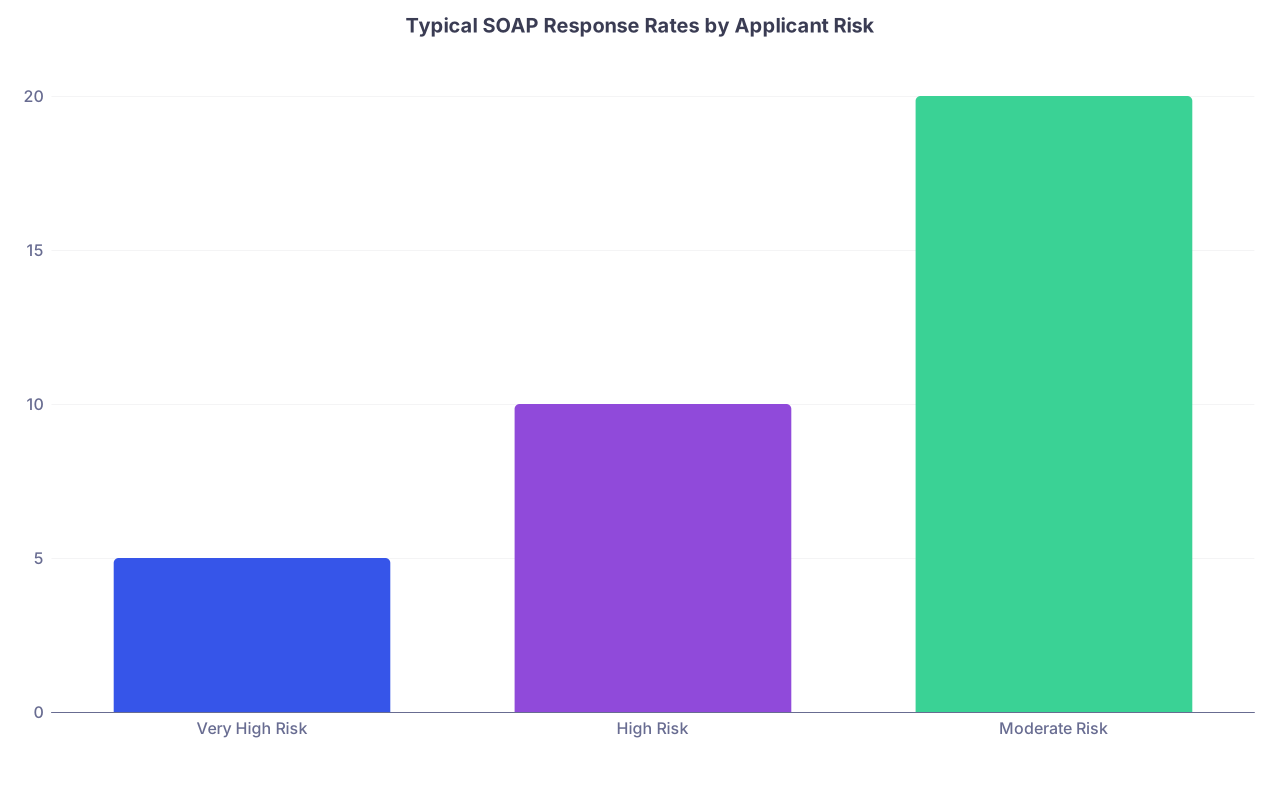
| Category | Value |
|---|---|
| Very High Risk | 5 |
| High Risk | 10 |
| Moderate Risk | 20 |
The chart above is roughly what I’ve seen: if you’re very high risk, a 5% response rate (2–3 programs out of 45) is not shocking. High risk, maybe 10%.
You don’t beat those odds with “fit.” You beat them with volume + reasonable targeting.
Step 7: Special Cases – IMGs, Red Flags, and Low Scores
If any of these apply to you:
- IMG / FMG
- Step failures or low scores
- Gap years, professionalism issues, repeated leaves
- Prior unmatched cycles
You should basically assume:
- You are very high risk in SOAP.
- You should use the full 45 applications.
- You should favor programs and specialties that have historically taken applicants like you.
That usually means:
- Family Medicine, Internal Medicine (community), possibly Pediatrics
- Rural or mid-sized cities
- Newer or smaller programs
You’re playing a numbers game with a handicap. You compensate by being more realistic and more aggressive than your peers.
Step 8: Timing and Rounds – Do You Hold Back Any Applications?
SOAP has multiple rounds. People love to overthink whether they should “save” applications for later rounds.
If you have limited interviews and a risky profile, here’s my stance:
- Use the majority (30–40) in Round 1.
- Keep 5–15 in reserve only if:
- You think some new programs might appear in later rounds that fit you better
- Or you’re very late seeing the unfilled list and genuinely need time to research
What you don’t do:
- Hold 20+ apps back “just in case” something magical shows up later.
- Most spots fill early.
- Later rounds are usually slimmer, not better.
For most high-risk applicants:
By the end of Round 2, you should be done with all 45 applications.
Step 9: How to Actually Rank Programs Within Those 45
When in doubt, prioritize like this:
- Programs in your home state/region or where you have any connection
- Programs in less competitive specialties you’re willing to do
- Programs with a history of taking IMGs or lower stats if that’s you
- Programs in less desirable locations (those often fill last, which is good for you)
Don’t waste hours agonizing over whether Program A or B is your 12th vs 13th application. Just don’t put wildly unrealistic academic or prestige programs ahead of solid, community ones that might actually take you.

Step 10: Mental Framework – How to Think About “Settling”
You’re going to be tempted to under-apply because you’re still emotionally attached to the image of the match you thought you’d have back in September.
Here’s the ugly truth:
Once you’re in SOAP with few interviews, your leverage is gone. This phase isn’t about the perfect program; it’s about avoiding an unmatched year if at all possible.
You can always:
- Lateral move later with a fellowship (e.g., cards, GI, sports, pain)
- Transfer programs in rare cases
- Leverage a solid community program into a good job or future opportunities
You can’t “SOAP your way” into a perfect situation. You can SOAP your way into a training spot and rebuild from there.

| Step | Description |
|---|---|
| Step 1 | Unmatched with limited interviews |
| Step 2 | Use 40 to 45 apps |
| Step 3 | Use 35 to 45 apps |
| Step 4 | Prioritize less competitive specialties |
| Step 5 | Focus on community and new programs |
| Step 6 | Apply mostly in Round 1 |
| Step 7 | Reserve 5 to 15 apps only if needed |
| Step 8 | Risk level |
Quick Example Scenarios
Example 1: US MD, 2 IM interviews, unmatched
- Specialty applied: Categorical IM
- Step scores: Slightly below average
- Plan:
- 25–30 community IM programs
- 10–15 Family Medicine
- Maybe 2–3 TY or prelim spots if there’s a clear PGY-2 plan
- Use all 45
Example 2: IMG, no interviews, applied to multiple specialties
- No US clinical experience, mid-range scores, multiple applications
- Plan:
- 30–35 Family Medicine
- 5–10 IM (community only, IMG friendly)
- Remainder in Pediatrics or TY if viable
- Absolutely use all 45 in first 1–2 rounds
Example 3: US DO, applied to Ortho, 1 ortho interview, unmatched
- Ortho spots in SOAP are rare and brutal
- Plan:
- 3–5 any ortho SOAP spots that appear (if any)
- 25–30 FM/IM programs where you’d actually go
- 10–15 prelim surgery/medicine if you have a PGY‑2 ortho backup plan with a mentor
- Goal: secure a spot, regroup, maybe re-apply after a prelim year if viable
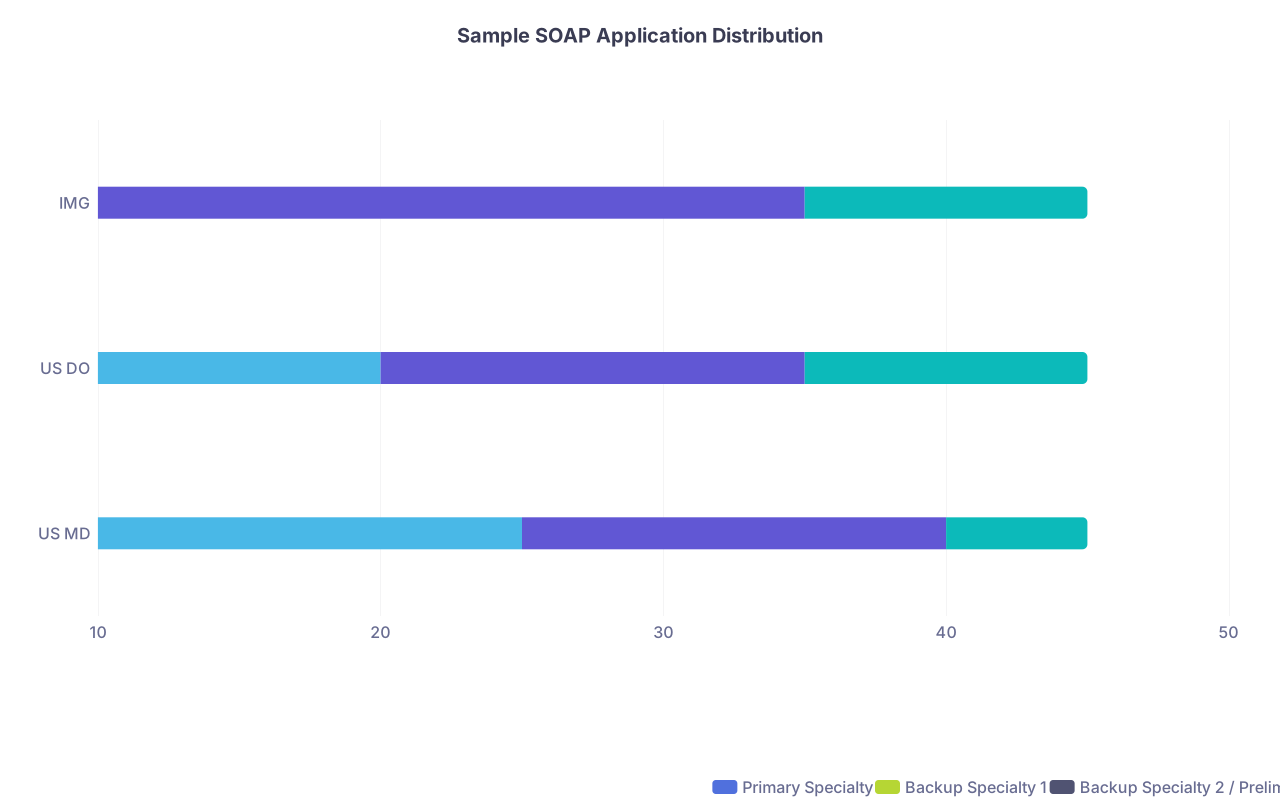
| Category | Primary Specialty | Backup Specialty 1 | Backup Specialty 2 / Prelim |
|---|---|---|---|
| US MD | 25 | 15 | 5 |
| US DO | 20 | 15 | 10 |
| IMG | 10 | 25 | 10 |
FAQ: SOAP With Limited Interviews – 7 Common Questions
1. Is it ever smart to apply to fewer than 30 SOAP programs if I had limited interviews?
Almost never. The only reasonable exception is if there just aren’t 30 programs you’d genuinely consider attending in the unfilled list. For most people in SOAP with minimal interviews, the risk of staying unmatched massively outweighs the risk of “overapplying.”
2. Can I email or call programs directly during SOAP to increase my chances?
No. That’s a fast way to get in trouble. NRMP rules forbid unsolicited contact with programs about positions during SOAP. You send ERAS applications, and they contact you if they’re interested. Program directors are very aware of these rules and will not appreciate workarounds.
3. Should I prioritize programs where my school has sent residents before?
Yes, if they’re on the unfilled list and fit your profile. Prior affiliation gives you a small edge because faculty might informally vouch for you later or the program is already familiar with your school’s training. But don’t ignore other realistic programs just to chase those few “connected” sites.
4. What if I get no calls or interviews after applying to 45 programs?
Then you use SOAP as data. It likely confirms that your current profile (scores, specialty choice, experiences) isn’t competitive enough. Your next step is to plan a stronger re-application: improve exams if possible, add clinical work or research, get better letters, and apply broader and smarter next cycle. But during this SOAP, you still throw everything reasonable at the wall.
5. How do I know if a program is “IMG-friendly” or likely to take someone with my background?
Look at their current residents on the website. If half of them trained abroad, they’re IMG-friendly. If they’re all US MD/DO from big-name schools, they’re probably not your best target. Same goes for people with red flags: look for programs that have historically taken “non-traditional” profiles or newer programs that need to fill spots.
6. Should I avoid prelim/TY spots and only apply to categorical positions?
If you can lock a categorical spot, that’s cleaner. But if your original specialty is competitive and you have advisors/attendings who think a prelim or TY year plus research could realistically get you there next cycle, then including some prelim/TY applications makes sense. What you don’t do is go all-in on prelim/TY with no plan for what happens in PGY‑2.
7. How fast do I need to submit my SOAP applications once the list opens?
Pretty fast. Ideally within a few hours, same day. Programs move quickly. You still need 1–2 hours to triage the list and make a usable plan, but don’t sit on it for a full day trying to craft the perfect list. In SOAP, “good and fast” beats “perfect and late.”
Action step for today:
Open a blank document and draft your SOAP target list structure: write down your main backup specialty, your secondary backup, and roughly how many of your 45 you’ll assign to each. Then, when the unfilled list drops, you’re plugging programs into a plan—not making it up while the clock runs.