The idea that “If you end up in SOAP, your career is over” is lazy, wrong, and not supported by actual outcomes.
I’ve watched people SOAP into prelim medicine spots and later match anesthesia. SOAP into community FM and end up academic faculty at big-name places. SOAP into psych and become fellowship-trained subspecialists. Meanwhile, I’ve seen people who matched “perfectly” on Monday burn out, switch fields, or leave medicine entirely.
SOAP is not the death of your career. It’s the end of one plan and the start of a different path. Those are not the same thing.
Let’s walk through what the data and real trajectories actually show.
What The Numbers Actually Say About “Failure” In SOAP
First, context. Every year, thousands of otherwise competent, reasonable applicants don’t match and enter SOAP. You’re not some rare defective outlier.
Here’s the scale:
| Metric | Approximate Number |
|---|---|
| Total applicants (US + IMG) | ~48,000 |
| Unmatched after main Match | ~8,000–9,000 |
| Positions unfilled entering SOAP | ~2,000–2,500 |
| Positions filled via SOAP | Majority of SOAP slots |
| Applicants completely unmatched after SOAP | Several thousand |
That’s a lot of human beings. Across DO, MD, and IMGs. Many of whom will eventually become practicing physicians.
Key points the doom narrative ignores:
A large fraction of unmatched applicants are concentrated in a few choke points:
- Very competitive specialties (derm, ortho, plastics, ENT, etc.)
- Hyper-saturated regions (California, NYC/Boston with limited community spots)
- Applicants with red flags (Step failures, large gaps, visa issues)
That does not mean they’re incapable of becoming good physicians. It means they lost a statistical arms race.
SOAP fills resident labor needs, not prestige quotas. If there are SOAP positions, it’s because hospitals actually need those residents. You are not being added as some ornamental pity position. You’re being hired because they need your work.
Historical NRMP data shows a non-trivial number of previously unmatched applicants successfully match in a subsequent cycle. Not all, and not instantly, but “you are done forever” simply doesn’t match reality.
The gap between “didn’t match this week” and “career is over” is enormous. People jump it emotionally because it hurts. Not because it’s true.
Myth vs Reality: How SOAP Affects Your Long-Term Career
Let’s tackle the myths head-on.
Myth 1: “SOAP locks you into a bad specialty forever”
Blunt truth: some SOAP choices do close certain doors. But they also open others. And the idea of being permanently trapped is exaggerated.
Here’s how things actually shake out in common scenarios:
| SOAP Outcome | Realistic Future Options |
|---|---|
| Categorical FM/IM | Fellowships, academics, hospitalist, admin roles |
| Prelim Medicine | Re-apply to advanced fields (anesthesia, neuro, rads, etc.) |
| Prelim Surgery | Re-apply surgery, rads, anesthesia, or switch to IM/FM |
| Categorical Psych | Subspecialty fellowships, academic psych, CL psych |
| Transitional Year | Strengthen application and re-apply next year |
Have I seen people stuck? Yes — usually because they made no plan, burned bridges, or continued underperforming.
Have I seen people use SOAP spots as launchpads? Constantly:
- TY → radiology
- Prelim IM → anesthesia
- Prelim surgery → EM (back when EM was more open) or rads
- Categorical FM/IM → cardiology, GI, heme/onc, sports, palliative, hospital leadership
The brake isn’t SOAP. It’s:
- Visa limitations
- Step failures with no remediation narrative
- Chronic poor clinical evals or professionalism issues
- Zero strategy after SOAP (“I guess I’ll just see what happens”)
SOAP gives you a job and a credential pipeline. That’s leverage. You can build from there.
Myth 2: “Programs will assume you’re low quality if you SOAP”
Residents love to mythologize this. It flatters their ego: “I matched on Monday, so I’m inherently superior.” Reality is messier.
Why people end up in SOAP:
- Over-applied to hyper-competitive specialties
- Rank lists too short or geographically constrained
- Poor advising (“Shoot your shot at derm and ortho with a 225”)
- One failed exam or a rough clinical year
- IMG barriers despite solid metrics
- Pure bad luck in a noisy system
Program directors know this. Many of them:
- Have SOAPed residents in their programs right now
- Have colleagues who SOAPed
- Occasionally SOAPed themselves in the early 2000s before Step 1 inflation
What they actually use to judge you after SOAP:
- Your performance in residency (clinical work, feedback, in-service exams)
- Letters from people they trust
- How you explain your path (coherent narrative vs. self-pitying chaos)
- Whether you’ve addressed prior weaknesses
I’ve heard PDs say this almost verbatim:
“I care far more about what they did with the hand they got than about whether they matched on Monday.”
SOAP isn’t an indelible scarlet letter. It’s a line on your timeline. And in a few years, if you’re performing well, most people will not care.
Myth 3: “If you SOAP outside your dream specialty, that dream is dead”
This one is seductive because it gives you permission to reject reality and stay in fantasy: “If I can’t have ortho now, I’ll just wait and magically get it later.” That’s not strategy. That’s denial.
Here’s the pattern I’ve actually seen work:
SOAP into a rational adjacent or flexible spot:
- Prelim surgery or TY if you still truly want surgery/advanced
- Prelim IM or TY if you want anesthesia/rads/neurology
- Categorical IM/FM/psych if you’re open to shifting dreams but still want strong career options
Crush that year:
- Show up early. Be useful. Don’t act like the program is a mistake.
- Get great in-service exam scores.
- Build 2–3 relationships with attendings who will write real letters, not generic fluff.
Re-apply with:
- Updated performance
- Clear explanation: “I over-aimed last year; here’s what I’ve done since to prove I belong”
Do people still match into derm or ortho off a SOAP prelim IM year? Rare, but not zero. For anesthesia, rads, neuro, EM (when it was more open), I’ve seen it regularly.
The uncomfortable truth: sometimes SOAP is the moment you realize your “dream” was built on vibes and prestige, not fit or odds. In that case, the SOAP choice may actually be the first rational move of your career.
What The Data Shows About Specialty and Career Outcomes
Let’s kill this idea that SOAP → low-status specialty → miserable life.
Reality: many of the specialties most represented in SOAP have excellent, flexible career arcs.
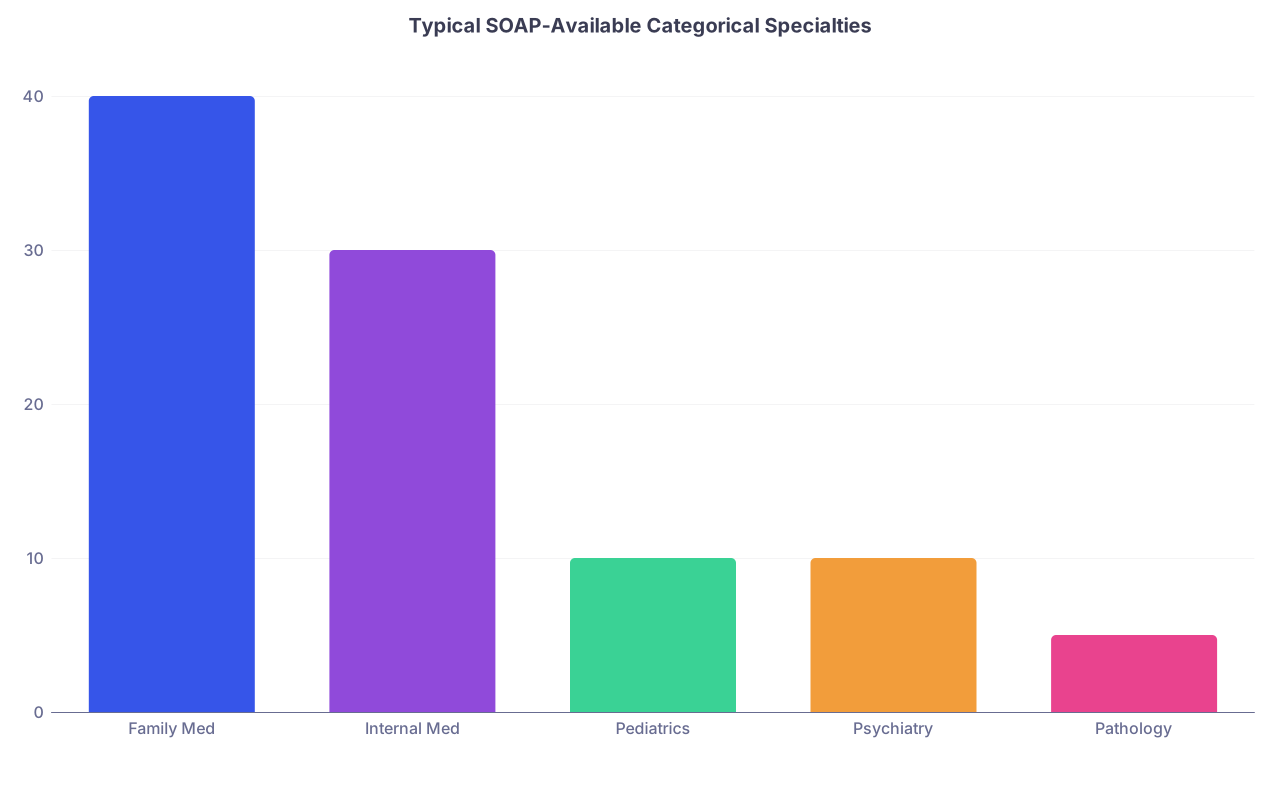
| Category | Value |
|---|---|
| Family Med | 40 |
| Internal Med | 30 |
| Pediatrics | 10 |
| Psychiatry | 10 |
| Pathology | 5 |
Roughly what you see most years: a lot of primary care and some psychiatry, pathology, prelims, etc. You know what these lead to?
- Family Medicine: sports med, palliative, addiction, academic leadership, urgent care, hospitalist, rural medicine with high autonomy.
- Internal Medicine: cardiology, GI, heme/onc, pulmonary/critical care, nephrology, hospitalist-medical director tracks, QI roles.
- Psychiatry: addiction, forensics, CL, child/adolescent, neuropsychiatry, academic positions.
- Pathology: subspecialty fellowships (heme, dermpath, cyto, etc.), lab directorships, industry.
The people telling you “FM or IM means your career is over” either:
- Don’t know how modern medicine is structured
- Are status-obsessed M4s who haven’t seen how hospital politics and admin jobs work
The menu of fellowships and leadership roles that open after a SOAP categorical IM or FM spot is enormous. If you’re good and strategic, your career ceiling is still very high.
How SOAP Actually Changes Your Trajectory (When You Use It Well)
SOAP is a forced pivot. It changes three things more than anything else:
Your geography
You might end up in a place you did not rank or even know existed.
That affects:- Support systems
- Cost of living
- Networking options
Low-cost midwest community program vs expensive coastal big-name: the former might actually help you financially and mentally.
Your timeline
You may be:- Doing a one-year prelim/TY and delaying categorical training
- Entering a categorical field you hadn’t fully considered and figuring out specialization as you go
That’s annoying. It is not fatal. A 1–2 year delay in a 30+ year career is a rounding error if you course-correct properly.
Your narrative
This is where people either salvage or sabotage themselves.Two narratives I’ve heard in real interviews:
Self-sabotage version:
“I was really disappointed, I think the process is unfair, I ended up in SOAP at a program I didn’t want, and it’s been tough.”Salvage version:
“I over-aimed in my first application cycle. When I SOAPed into a prelim IM year, I decided I would treat it like an extended audition. I focused on strengthening my clinical skills, scored in the 80th percentile on the in-service, and got strong letters from faculty who saw me on night float and in the ICU. I’m applying again now with a clearer understanding of where I’m a good fit.”
Program directors remember the second one. The first just confirms their worst fears.
SOAP doesn’t script your narrative. You do.
Using SOAP Intelligently When You Have Limited Interviews
You’re in the danger zone if:
- You had few or no interviews
- You aimed at a competitive specialty
- Your Step/COMLEX are below the mean or you have a failure
- You’re geographically rigid or need a visa
You cannot control all that now. You can control how you enter SOAP.
Here’s the blunt, evidence-aligned playbook:
Prioritize categorical slots over prelim-only unless:
- You are truly committed to an advanced specialty (anesthesia, rads, neuro, etc.)
- Your metrics are reasonably competitive for that field on a second try
- You’re willing to re-locate and grind another application cycle
If you SOAP into prelim/TY:
- Treat it like the hardest working, highest-yield gap year you’ll ever have.
- You’re not “just” a prelim. You’re a full-time audition.
If you SOAP into a categorical you weren’t dreaming about:
- Stop publicly trashing the specialty. Residents talk. Faculty see screenshots.
- Lean in for at least 6–12 months. Do the job well enough that if you later pivot, you have allies, not enemies.
Use data, not vibes, for second attempts:
- Look at NRMP program director surveys: what do they care about now?
- Ask your current PD or faculty for specific feedback: “If I apply to X next year, what would you need to see from me?”
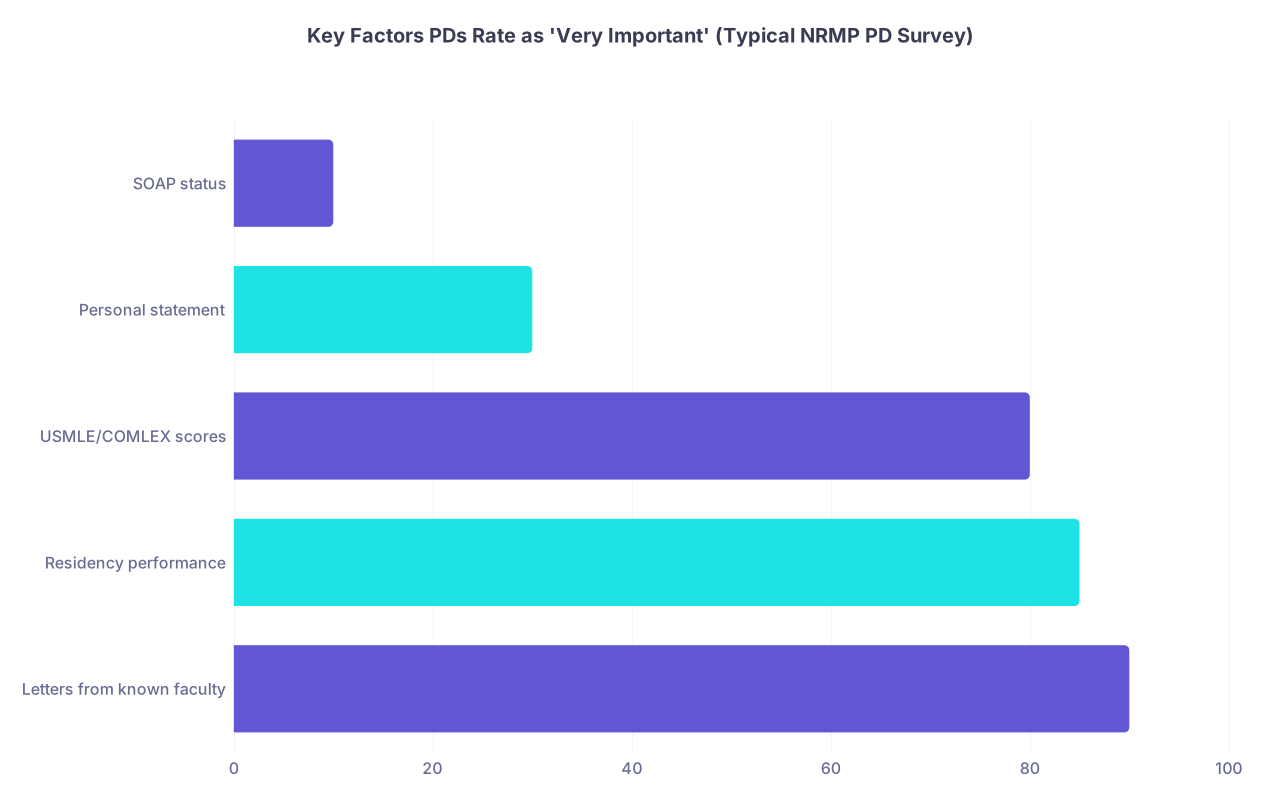
| Category | Value |
|---|---|
| Letters from known faculty | 90 |
| Residency performance | 85 |
| USMLE/COMLEX scores | 80 |
| Personal statement | 30 |
| SOAP status | 10 |
Those numbers aren’t exact, but the pattern is right: performance and letters crush the significance of whether you SOAPed.
The Psychological Trap: Shame vs Strategy
The real damage of SOAP isn’t on your CV. It’s in your head.
I’ve watched people do far more harm to their future by:
- Disengaging in their SOAP year (“It’s not my real specialty, who cares”)
- Isolating from peers and mentors out of shame
- Obsessively comparing themselves to old classmates on Instagram
- Refusing to plan a realistic future because they’re clinging to a fantasy timeline
All that does one thing: it converts a temporary setback into a genuine career limiter.
The people who come out ahead after SOAP usually share three traits:
- Radical acceptance within a week or two. They feel awful, then they move to “OK, what now?”
- Ruthless honesty. They admit where they miscalculated: overreaching, ignoring red flags, under-studying.
- Tactical mindset. They treat the SOAP year like an opportunity to gather leverage: evaluations, letters, new skills, new network.
SOAP isn’t the end. It’s the fork where you either grow up fast, or you start a long, slow spiral of resentment and excuses.
When SOAP Might Truly Indicate A Deeper Problem
Let’s be fair. Sometimes SOAP is not just “bad luck.”
If all of these are true:
- Below-average scores and failed exams
- Mediocre or concerning clinical evaluations
- Poor communication or professionalism issues on record
- Repeated failures at standardized exams
Then yes, SOAP is a big red flag about fit or readiness for residency.
That still doesn’t mean your life is over. It means:
- You may need remedial work (test-taking support, mental health treatment, coaching)
- You may need to reconsider specialty choices aggressively
- In some cases, you may need to reconsider clinical medicine and look at non-clinical roles
What it does not mean: “You are worthless and will never have a meaningful career.” That narrative is emotional, not factual.
The Reality Check You Actually Need
Let me be direct.
If you’re in SOAP or at high risk for it, you’re not seeing your career clearly right now. You’re seeing:
- Debt totals
- Classmates’ ecstatic Match posts
- Parents asking, “So did you match?”
- A voice in your head saying, “You blew it.”
The evidence does not support “career over.” It supports something less dramatic and more uncomfortable:
Your path will be:
- Less linear than you imagined
- Slightly longer in time
- More dependent on your behavior over the next 1–3 years than on your Match Week result
SOAP is a stress test of your resilience, not an obituary.
Bottom Line: What’s Actually True About SOAP
Two or three points. That’s it:
SOAP is a setback and a pivot, not a permanent sentence. Plenty of physicians with strong, interesting careers started there. The system is noisy and imperfect; it does not perfectly sort “good” from “bad” doctors on Match Monday.
Your outcomes from SOAP depend far more on how you perform afterward than on the label itself. A SOAP prelim who crushes it can climb. A Monday match who coasts can stall. Residency performance, letters, and narrative matter more than whether you entered via SOAP.
The smart move isn’t to catastrophize; it’s to use SOAP tactically. Pick spots that keep doors open, then perform like your future depends on it—because it does. Not because SOAP ruined your career, but because what you do next is the real sorting mechanism.