Worried You Have No ‘Spike’ Without a Step 1 Score? Options Left
What if every other applicant suddenly has a clear “wow factor” and all you’ve got is… vibes and fatigue?
That’s what it feels like in the Step 1 pass/fail era, right? Like before, at least you could say, “Okay, my 250 is my spike.” Now Step 1 is pass/fail and you’re staring at your CV thinking:
“I don’t have a high Step 1 score. I don’t have huge-name research. I don’t have a gold medal in anything. Do I have… anything?”
Let me say the quiet part out loud: a lot of us are terrified we’re just “background noise” in this new system.
Let’s tear into this. Because there are options left—but you need to be strategic, not just “hopeful.”
Reality Check: What Losing Step 1 As a Number Actually Did
The fantasy version: “Now programs will look at applicants holistically. They’ll care about character, growth, resilience.”
The real version I’ve seen and heard from residents and PDs:
- Step 2 CK suddenly became the new filter.
- Research and “productivity” got even more inflated.
- Home programs and connections matter more.
- People with no obvious “spike” feel more lost than ever.
And you’re stuck in the middle thinking: I passed Step 1. Cool. But that doesn’t differentiate me. So where’s my edge supposed to come from?
Here’s the ugly truth: most people don’t have a clean, shiny spike. They have a messy collection of medium things they’re trying to sell as a story.
The difference between people who get interviews and people who get ghosted? Not who is “objectively” better. It’s who can turn what they do have into a clear narrative of value.
That’s the game now.
So… What Counts as a “Spike” in the Pass/Fail Era?
The word “spike” is kind of toxic, honestly. It makes you think of some insane single achievement: 270, 10 first-author pubs, national award, MD/PhD with a Cell paper.
Most people don’t have that. And never will.
Programs aren’t actually only looking for that. What they’re really scanning for is:
- A recognizable hook (something memorable about you)
- Evidence of sustained effort in something
- Proof you won’t be a problem: you can learn, work, show up, not implode at 3 a.m.
In the pass/fail era, “spikes” can look like:
- A strong Step 2 CK + decent research in the specialty
- Heavy clinical involvement with legit letters from people who actually know you
- Niche but real depth: QI work, curriculum design, advocacy, big leadership, or teaching
- A nontraditional path with real-life accomplishments: nursing, engineering, tech, military, startup, etc.
It doesn’t have to be glamorous. It just has to be:
- Real,
- Coherent, and
- Obvious on paper.
Right now you’re probably scared yours is none of those. So let’s go through what you can still build.
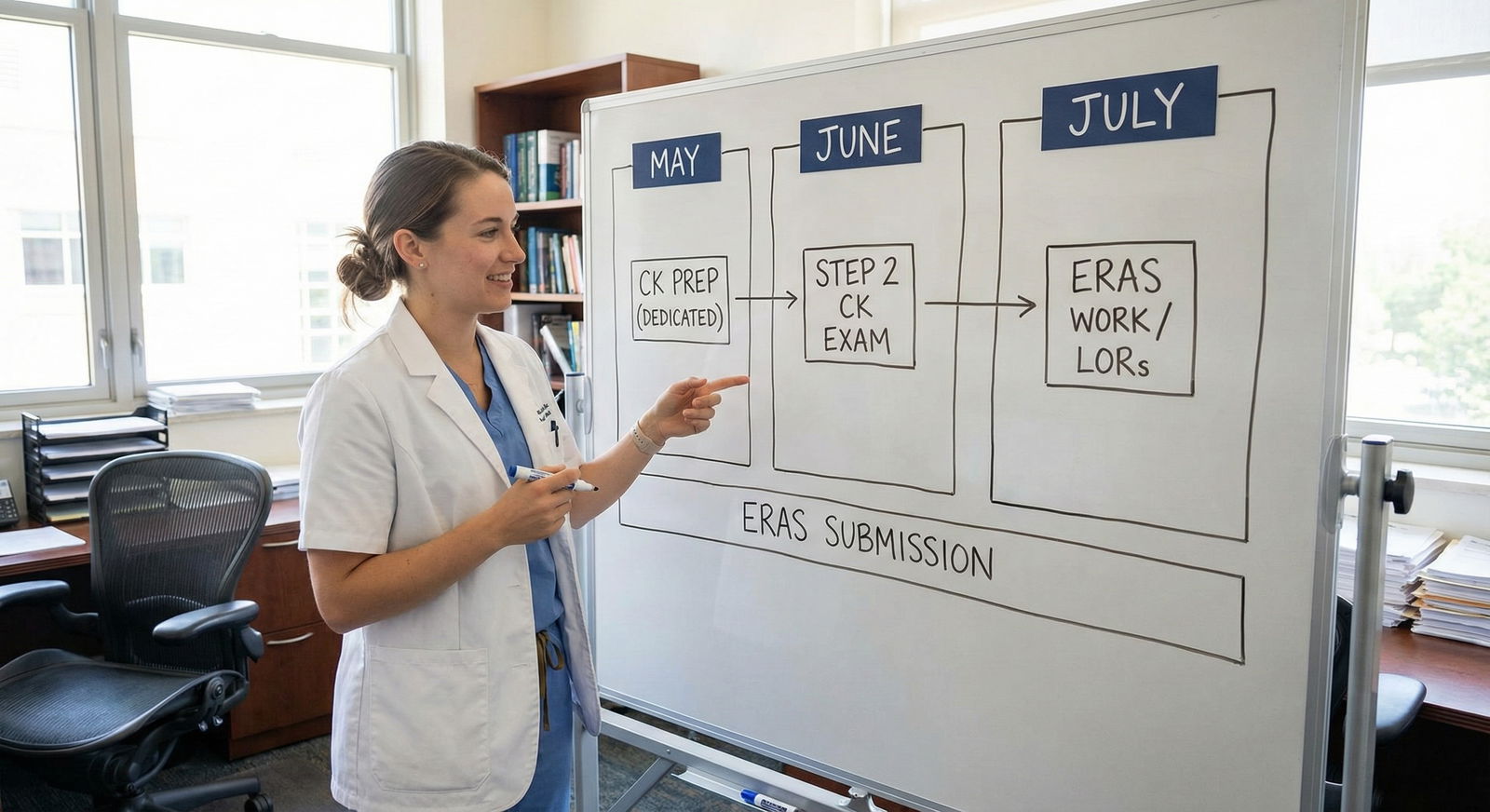
Option 1: Turn Step 2 CK into Your New Spike (Even If It’s Not 270+)
Step 2 CK is now the most brutal shortcut PDs use. They won’t admit it loudly, but residents talk. Filters happen.
Is a strong Step 2 CK your magical golden ticket? No. But it’s one of the few things still under your control that reliably moves the needle.
If you’re pre–Step 2:
This is your biggest lever. Straight up.
You don’t need a 270, but if you can position yourself in the “solid and safe” category for your target specialty, that alone becomes:
- Your academic reassurance
- Your easy-to-spot strength
- Your shield against the “no Step 1 score” anxiety spiral
, Extracurriculars](https://cdn.residencyadvisor.com/images/articles_svg/chart-relative-impact-of-application-components-perceive-4510.svg "Relative Impact of Application Components (Perceived by Applicants)")
| Category | Value |
|---|---|
| Step 2 CK | 35 |
| Research | 25 |
| Letters | 20 |
| [Clerkship Grades](https://residencyadvisor.com/resources/step1-pass-fail-era/clerkship-grades-vs-step-2-what-pds-privately-say-they-trust-most) | 15 |
| Extracurriculars | 5 |
People overcomplicate Step 2. The mindset is simple:
- You passed Step 1. Good. That means you can handle the content.
- Step 2 is now your proof of ceiling.
If you’ve already taken Step 2 and it’s not amazing? Deep breath. Then we shift your spike away from “numbers” and toward “depth in something else.” You’re not done. You just lost one weapon and have to sharpen another.
Option 2: Build a Micro-Spike in a Narrow Lane (Faster Than You Think)
You probably won’t become “Nationally Known Expert in X” as an MS3/MS4. But you can become:
“The student who was weirdly consistent and serious about [very specific thing]” in 6–12 months.
That’s doable.
Pick a lane that:
- Actually exists at your institution
- Has at least one faculty member active in it
- You can show tangible output in
Examples:
- For IM: sepsis protocols, transitions of care, diabetes management in underserved populations
- For EM: simulation, ultrasound curriculum, event medicine, EMS
- For surgery: ERAS protocols, post-op pain pathways, OR efficiencies
- For psych: integrated behavioral health, med student wellness, perinatal mental health
- For peds: vaccine hesitancy, NICU follow-up, teens and mental health
Then do this:
- Find one faculty person touching that space.
- Offer to do annoying but useful work: chart reviews, literature summaries, making data collection forms, building teaching materials.
- Stick with that topic for more than one project.
Suddenly your “spike” becomes:
“This student has been actively working on perioperative pain management QI for 9 months, has a poster, abstract submitted, and a letter from Dr. X saying they were the engine behind the project.”
Not glamorous. But that’s a spike.
Option 3: Leverage What You Already Have… But Make It Legible
Sometimes your “no spike” problem is actually a “nothing looks connected” problem.
Your CV might look like this:
- One random cardiology project
- Volunteering with a free clinic
- Peer tutoring
- A wellness committee role
- Some scattered shadowing from M1
And in your head you’re like: this is just noise.
But you can frame this into a story if you stop underselling it.
Example: you actually care about access to care / vulnerable populations. Then your narrative can be:
“Everything I do circles back to improving access and advocacy.”
And you show that through:
- Free clinic work (direct patient care)
- QI in something relevant (clinic flow, follow-up, telehealth)
- A small research project that touches health disparities or outcomes
- Leadership in something that affects underserved patients or stressed learners
Your spike doesn’t have to be “I am the top X in Y.”
It can be “I have clear, consistent direction and I show up for it over and over.”
If a PD can summarize you in one sentence, you’re ahead of half the pool.
Option 4: Use Letters of Recommendation as Your Secret Weapon
You know what quietly functions as a spike? A letter that basically says:
“This student is in the top 5–10% I’ve worked with in the last 5–10 years, and here are three specific reasons why.”
Most students treat letters like a background requirement. In the pass/fail era, they’re a differentiator.
You want:
- At least one letter where the writer really knows you
- Ideally from someone in your target specialty
- With concrete stories: specific patient, specific project, specific crisis you handled
That doesn’t require prestige. It requires presence.
So when you’re on rotations:
- Volunteer for the annoying tasks (calling families, following up results, tracking down old records).
- Ask for feedback early and actually change based on it.
- Tell one or two attendings clearly: “I’m really interested in [specialty]. I’d love to work hard with you and, if I earn it, ask for a letter later.”
Then earn that letter. That letter becomes your spike: “Outstanding team player with real work ethic and reliability.”
Sounds soft. Programs care a lot more than they admit.
Option 5: Timing and Strategy — Not Just “Hope”
You can’t control that Step 1 is pass/fail. You can control when you apply, where you apply, and how prepared you are.
Here’s where strategy becomes your spike.
If you’re not ready—Step 2 weak, no clear narrative, no real depth—one brutally honest option: delay.
Not for vibes. For a plan.

| Step | Description |
|---|---|
| Step 1 | Evaluate CV honestly |
| Step 2 | Apply this cycle |
| Step 3 | Apply broadly and adjust expectations |
| Step 4 | Take research or chief year |
| Step 5 | Build Step 2, research, letters |
| Step 6 | Any clear strength? |
| Step 7 | Willing to add 6-12 months? |
I’ve seen people salvage entire trajectories with:
- A dedicated research year
- A chief year
- An MPH or an extra year tied to projects and clinical exposure
Is that accessible to everyone? No. Does it cost time and money and sanity? Yes. But if you’re gunning for a competitive specialty and you truly have no spike, it may be the difference between “didn’t match” and “matched at a solid place.”
If you are applying soon:
- Apply broadly. Broader than you want to.
- Include mid-tier and community programs.
- Seriously consider a parallel plan (e.g., prelim IM if you’re obsessed with a competitive field, or a backup specialty).
That’s not “giving up.” That’s protecting your future self from being completely stuck.
Option 6: Nontraditional Backgrounds as Built-In Spikes
If you’re a nontraditional student and you’ve been hiding that, stop.
You worked as a nurse, paramedic, PA, engineer, teacher, military, programmer, whatever—that’s not fluff. That’s depth.
Your problem might be that you’re not owning it.
Turn it into a spike by:
- Showing continuity: how those skills directly improved your work in med school or on rotations.
- Getting a letter from someone who supervised you in that prior life if it’s relevant.
- Tying your specialty interest to that background in a non-cringey way.
Example: former ICU nurse applying to anesthesia:
- You already understand vent management, hemodynamics, family dynamics
- You’ve seen good and bad anesthesia teams and know the impact
- You did a QI project that came straight from something you saw working the floor
Suddenly you aren’t just “another applicant.” You’re the ICU nurse–turned–MS4 with a coherent story.
That is absolutely a spike.
Where People Waste Time Instead of Building a Spike
I’m just going to say this because I’ve watched people burn a year:
- Random one-off clubs you don’t care about
- Starting “organizations” that exist for your CV and nothing else
- Abstracts or posters with zero follow-up, never mentioned again
- Massive, vague “interest in research” without ever finishing a single project
If it doesn’t build toward your identity as a future [specialty] physician, and it doesn’t show consistency or responsibility, it’s probably not worth betting heavily on this late.
Do fewer things. But deeper. And visible on paper.
How to Figure Out What Spike You Might Already Have
If you’re reading this with that pit-in-stomach feeling, do this exercise. Brutally, no fluff.
Take a blank page and write:
- Things I’ve actually done that took more than 3 months of effort
- Things people specifically praised me for (quotes if you remember them)
- Patients or projects that stuck in my head because they mattered to me
Then ask:
- Is there a pattern?
- Could someone describe me in a sentence from this?
- If I showed this to a resident in my target specialty, could they say, “Yeah, that fits”?
If yes, your spike might be “hidden” but real. You just need to tell your story like it matters.
If no, then you’re not doomed—you’re just not done building. Which sucks, but at least it’s actionable.
| Spike Type | What It Looks Like | How Long To Build |
|---|---|---|
| Strong Step 2 CK | Score above specialty avg | 3–6 months |
| Research/QI Depth | 2–3 related projects | 6–18 months |
| Clinical Reputation | Standout evals + letters | 6–12 months |
| Teaching/Leadership | Concrete roles + outcomes | 6–18 months |
| Advocacy/Service | Long-term consistent work | 12+ months |
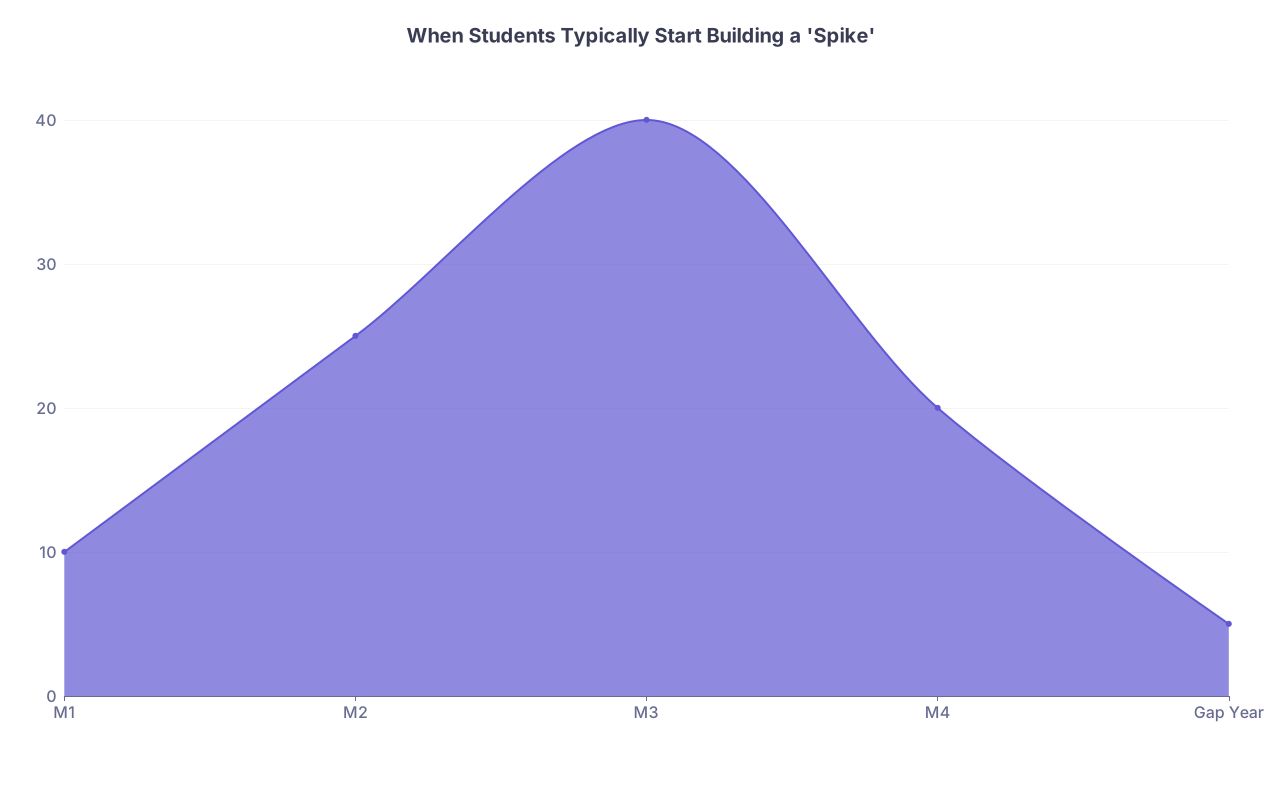
| Category | Value |
|---|---|
| M1 | 10 |
| M2 | 25 |
| M3 | 40 |
| M4 | 20 |
| Gap Year | 5 |
The Ugly Fear Underneath All This
Here’s what you’re probably actually afraid of:
“It’s not that I don’t have a spike. It’s that maybe I’m just… average. And average doesn’t match.”
I hate how much that resonates. Because the system kind of makes you feel that way on purpose.
But average on paper is not the same as average in real life. Programs need:
- People who care about patients at 4 a.m.
- People who aren’t miserable to work with
- People who don’t implode the first time they get yelled at or see something awful
- People you can trust to do the scut and still show up again the next day
Those people? Often don’t have giant, flashy spikes.
So your job becomes: don’t try to cosplay as someone you’re not. Instead, build one or two clear, believable strengths and then relentlessly highlight them.
You don’t need to be a brand. You just need to not be a blur.

FAQ (Exactly 6 Questions)
1. Is it basically over for me if I don’t have a traditional “spike” right now?
No. But it is over if you just keep doomscrolling and don’t change your behavior. You can absolutely build a micro-spike in 6–12 months: a focused research niche, a strong Step 2 CK, standout letters, or a coherent advocacy/clinical story. The clock is the real enemy, not your lack of some genius-level accomplishment.
2. Can strong letters really compensate for not having a Step 1 score or a huge Step 2?
They can’t completely erase weak metrics in ultra-competitive fields, but they matter way more than students think. A detailed, specific, enthusiastic letter from someone respected in the field can pull you out of the “generic applicant” pile. Especially if it matches the rest of your story: your clinical evals, your projects, your personal statement.
3. Should I take a research or gap year just to create a spike?
Only if:
- You’re aiming at a competitive specialty,
- Your current application is truly flat (no strong Step 2, no depth, no letters), and
- You can get into a legit position with real mentorship and output.
A poorly structured “research year” with no publications, weak mentorship, and no clinical involvement is not a spike. It’s just a delay.
4. What if my Step 2 CK is already mediocre—am I just stuck as “average”?
You’re not stuck, but your spike probably can’t be “board scores” anymore. Shift your focus to: clinical excellence (honors, strong narratives in letters), continuity in a niche (QI, teaching, advocacy), and applying strategically (broader list, realistic programs, maybe backup or prelim options). You’re not out; you’re just forced to be more intentional with everything else.
5. Does having no first-author publications kill my chances of having a research “spike”?
No. Programs know med students don’t control authorship politics. What matters: did you stick with projects long enough to finish anything? Posters, abstracts, co-authorships, small QI outputs still count if they’re coherent and themed. A consistent body of work in one area is way more convincing than one random first-author case report in something unrelated.
6. How do I know if my “story” as an applicant is actually coming through?
Test it. Ask a resident or faculty you trust: “If you skimmed my CV and personal statement for 2 minutes, how would you describe me in one short sentence?” If they can’t, your story isn’t clear. Then you revise: tighten your personal statement, group related activities, highlight repeated themes, and make sure your letters reflect the same person you’re trying to present.
Years from now, you won’t remember this exact wave of panic about not having a spike. You’ll remember whether you let that fear freeze you—or push you to build something real you can stand behind.